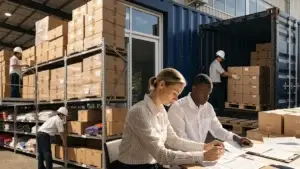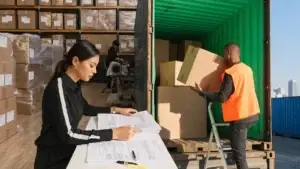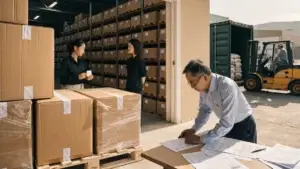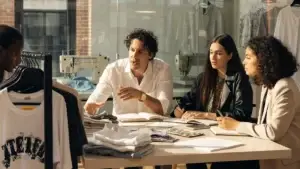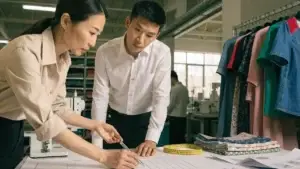
You flip through a lookbook from a competitor brand and see the exact chunky knit cardigan you wanted to launch this fall. Your stomach drops because you have been stuck in email threads for six weeks just trying to get a fabric swatch. You are sitting in your office in New York while your supplier is asleep in Shanghai. The season waits for no one, and you have already missed three production slots. I have seen too many brand owners settle for mediocre fall stock simply because remote sourcing felt impossible.
Yes, you can source a complete fall collection from Shanghai Fumao without ever boarding a plane. We have built a remote sampling system that uses high-definition video walkthroughs, digital color spectrophotometry, and express courier swatch kits. We replicate the in-person factory experience through structured virtual meetings where you see the yarns, feel the hand feel of the fabrics via overnighted samples, and approve bulk production from your desk. You maintain full creative control from thousands of miles away.
You should not let travel costs or time zones limit your access to competitive manufacturing. Let me walk you through the exact steps we use to design, fit, and ship fall apparel for brands that never visit our physical location in China.
What Are the First Steps to Source Fall Apparel from China Remotely?
The first 72 hours of a remote sourcing project decide whether you hit your fall delivery window or miss it entirely. Last August, a contemporary womenswear brand from Chicago reached out to us panicked. Their previous supplier in Bangladesh flooded, and they needed a 12-piece fall capsule designed and produced in 90 days. We compressed the typical timeline by immediately moving them to a structured digital tech pack process.
Start by sending us a line sheet or a mood board with your target retail price points and fabric preferences. We do not need final sketches. We need a clear merchandise plan that shows the mix of woven jackets, knit sweaters, and bottoms. We then assign a dedicated merchandiser who works on your time zone—usually Eastern Standard Time—to translate your concept into a bill of materials within 48 hours. The first step is always alignment on fabric sourcing and target FOB.
If you send vague descriptions like "soft sweater, warm color," we waste a week guessing. If you send a reference photo with a rough sketch and a target cost, we can pull existing stock fabrics immediately.
How Do You Communicate a Garment Design Idea Without a Tech Pack?
Not every brand owner knows how to draw a flat sketch in Illustrator. That is totally fine. We accept reference samples. If you have a competitor's jacket that has the perfect silhouette, mail it to our Shanghai office via DHL. We will tear it down, analyze the seam construction, measure every panel, and build a digital pattern from that physical reference.
If you do not have a physical sample, we use a live video fitting session. You hold up the inspiration garment to your webcam. We screen-share our product development page in real-time. Our pattern maker sketches over your screenshot, adding comments like "drop shoulder by 1 inch" or "increase sleeve circumference by 2 cm." We capture these annotated screenshots and turn them into a preliminary tech pack within 24 hours. This method eliminates the back-and-forth that kills remote collaborations. You speak. We draw. You approve.
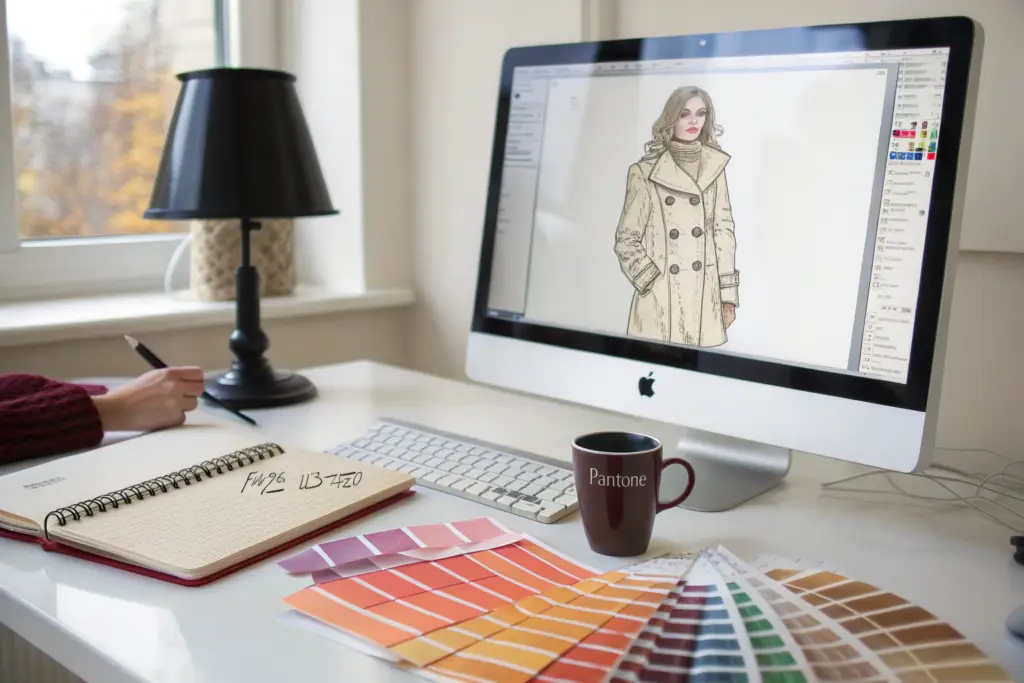
The most critical tool here is a digital color spectrophotometer. You cannot rely on a iPhone photo for color approval. A red sweater looks burgundy in a dim office and orange in direct sunlight. We mail you a physical Pantone TCX swatch palette. You pick the exact color code, like 19-1650 TCX, and we match our lab dip to that immutable digital standard under a D65 light booth. This removes subjectivity from the color conversation.
What Information Must a Fall Collection Merchandise Plan Include?
A merchandise plan is not just a list of items. It is a financial map. To give you an accurate FOB quote, we need to see the weighted average cost across your collection. You cannot have ten cashmere pieces and two cotton T-shirts and expect the average cost to stay flat.
We ask for these six data points per style:
- Fabric content and approximate weight, like "80% wool 20% nylon, 450 GSM."
- Target FOB price, like "$22.00 for a woven blouse."
- MOQ per color, usually 300 pieces per style/color.
- Delivery date, specifically the in-warehouse date in your country.
- Primary trims, such as YKK zippers or horn buttons.
- Packaging requirements, like hang tags, fold-over elastic, or poly bags.
With these variables, we build a costing sheet that shows you the aggregate margin. We often find that moving a style from 100% merino wool to a merino-acrylic blend saves 25% on raw material cost without sacrificing the visual hand feel. We flag these cost-engineering opportunities early so you can make informed trade-offs before we cut the first sample.
How Does the Virtual Sampling Process Work for Fall Jackets and Knits?
Sampling is where remote sourcing usually breaks down. A sample ships from China, arrives in the US after five days, the brand fits it, writes comments, mails it back, and the factory revises it. That loop takes at least three weeks. Three loops, and you have burned over two months. For fall collections with a hard August delivery deadline, that timeline is a death sentence.
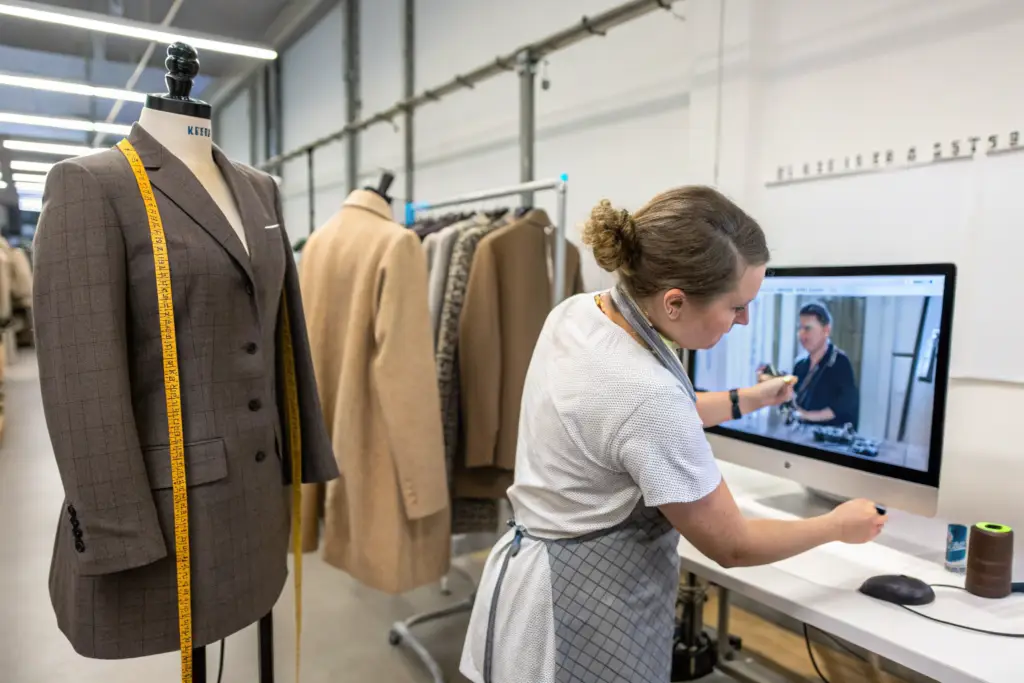
At Shanghai Fumao, we run a live virtual fitting model. We hire local fit models who match your standard size chart, usually a US Size Small or Medium. We put the first prototype on the model, stream high-definition video via WeChat or Zoom, and you direct us in real time. You say "tighten the armhole by half an inch" or "shorten the skirt length by three centimeters," and our pattern maker pins it live on camera. You see the adjustment immediately.
We then digitize the revised pattern, cut a second sample the same afternoon, and ship it to you overnight for physical approval. The physical sample confirms what you saw on screen.
How Do You Approve a Fall Jacket Fit Without Touching It?
Touching a jacket tells you about the drape, the stiffness, and the lining slip. None of that transmits through a camera lens. So we ship you a "fit box" before we start sampling. This box contains our standard fall fabrication swatches: a wool melton, a polyester twill lining, a quilted nylon interlining, and shoulder pad samples. You pin these swatches to your wall and touch them while watching our video stream.
During the live fit session, we show the jacket on a rotating mannequin first. You mark up a screenshot using a digital whiteboard tool. Then we move to the fit model. She raises her arms forward, crosses them, and sits down. You watch for pulling across the back yoke or gaping at the collar. These dynamic tests reveal fit issues that a static photo hides. We then ship the revised sample to you via DHL Express, which takes about 3 business days to most US addresses. You try it on your own fit model, take high-res photos, and send a one-email approval or rejection.
Here is how our remote sampling timeline stacks up against traditional shipping:
| Sampling Step | Traditional Back-and-Forth | Fumao Virtual Process |
|---|---|---|
| Initial Prototype Creation | 10 days | 7 days |
| Fit Review & Feedback | 14 days (ship + review) | 1 day (live video call) |
| Pattern Revision | 5 days | 4 hours |
| Second Prototype | 10 days | 3 days (express ship) |
| Total Time to Approved Sample | 39 days | 15 days |
We cut the sampling timeline by over 60% simply by removing the physical shipping loops from the revision stage. You still touch the final sample. You just do not wait for every intermediate iteration to travel across the ocean.
Can You Approve Knitwear Samples Remotely Without Feeling the Yarn?
Knitwear is harder than woven jackets because the hand feel defines the perceived value. A cashmere blend that pills after three wears destroys your brand's credibility. We handle this by sending you a "yarn storyboard" before the knitting sample starts.
Our yarn supplier creates miniature knit-downs, small 10cm x 10cm swatches, in every colorway you spec. We express mail these knit-downs to you in a bound folder with the yarn content percentages printed on the back. You rub them against your cheek, stretch them, and crush them in your palm. Does the wool prickle? Does the acrylic feel greasy? You approve the exact yarn lot number from these tactile swatches.
Then, during the virtual sample review, we zoom our macro lens onto the tension of the rib hem and the gauge of the cable pattern. You see the stitch density in extreme detail. We also send a video of a technician aggressively pilling the fabric on a Martindale machine. You watch the surface fuzz develop in real-time. If the pill rating drops below a 3-4 after 2,000 rubs, we reject the yarn lot and switch to a tighter-twist alternative. This data replaces the instinctual "it feels nice" judgment with quantifiable textile performance.
How Do You Ensure Quality Control When You Cannot Visit the Factory?
Blind trust kills remote partnerships. I tell every new client the same thing: "Do not trust me. Verify me." Last fall, a Portland outerwear brand ordered 800 quilted vests from us. They had never visited our factory. They were nervous about fill power in the insulation. We sent them a 15-minute unedited video of our QC team cutting open a random sample from bulk and weighing the down fill on a calibrated scale. That video sealed the trust.
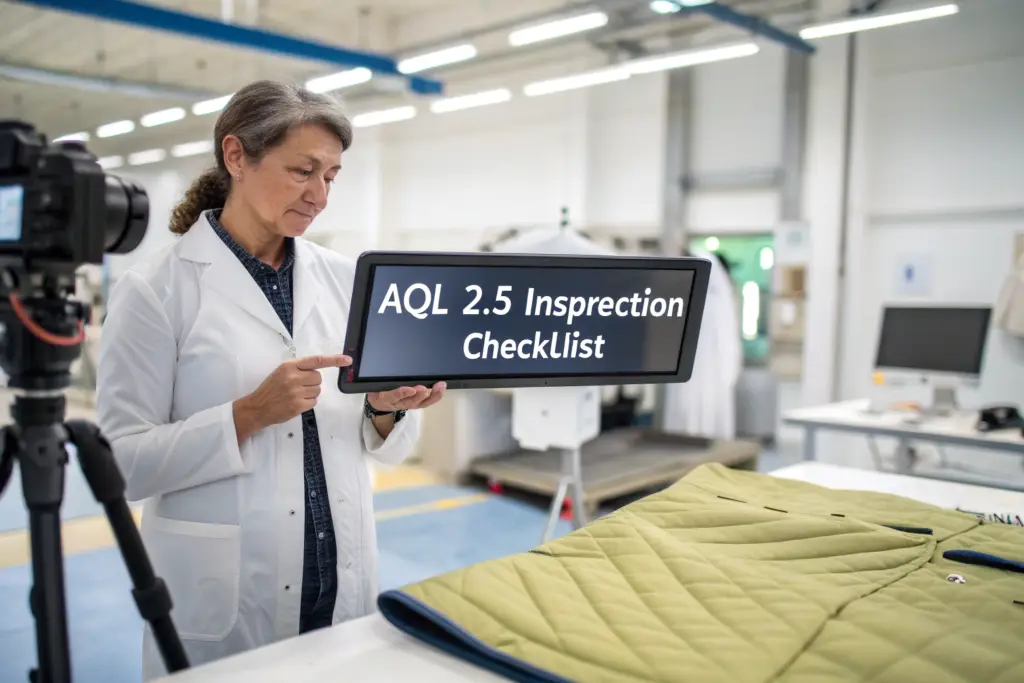
We provide three independent verification methods for remote quality control. First, we offer an AQL 2.5 pre-shipment inspection conducted by a third-party service like QIMA or Bureau Veritas, which sends the report directly to your email. Second, we stream live from our internal QC checkpoints without any editing cuts, using a head-mounted GoPro camera on our inspector. Third, we ship you a photo sample—the actual production piece pulled from the final packing line—for your physical sign-off before we load the container.
This three-layer system means you have your eyes on the product, a neutral third-party auditor's eyes, and our internal team's accountability all simultaneously.
What Should a Remote Third-Party Inspection Report Include for Fall Apparel?
A third-party inspection report is a boring PDF, but if you know how to read it, it tells you everything about your shipment. You need to request a specific inspection scope beyond standard visual checks.
For a fall weight wool coat, the inspection report must include:
- Visual checks: General appearance, color shade matching against the approved lab dip under D65 lighting.
- Function checks: Zipper operation 10 times, snap button pull force, pocket bag strength.
- Measurement checks: Key points of measure against your approved size spec, including shoulder slope, sleeve length, and sweep width.
- Safety checks: Needle detection test passed, no broken needle fragments in the garment.
- Special tests: Interlining adhesion test. For fused jackets, the inspector rubs the front panel to verify the fusible interlining does not create a bubble.
We agree on a defect classification table before inspection. A loose thread is a minor defect; a mismatched plaid at the side seam is a major defect. If the major defect count exceeds the AQL 2.5 threshold, we fail the lot and quarantine the goods for 100% re-inspection. You do not pay for failed goods. You only pay for the re-inspection fee, which is typically around $300 USD for an 800-piece audit.
How Do We Prevent Fabric Shrinkage Issues in Fall Shipments Remotely?
You cannot feel fabric shrinkage through a Zoom call. So we ship you a pre-wash swatch test report. Before we cut bulk fabric for your fall joggers or sweaters, we take a 50cm x 50cm square of the approved fabric, measure it, and wash it 3 times according to the care label instructions. We measure it again. The difference is the shrinkage percentage.
For a cotton-spandex french terry used in fall hoodies, a 5% length shrinkage is typical if the fabric was not pre-shrunk. If we do not pre-shrink that fabric, your size Large hoodie becomes a Medium after three home laundry cycles. We insist on a fabric wash test before bulk cutting. We email you the before-and-after measurements in a simple table:
| Measurement | Before Wash | After 3 Washes | Shrinkage % |
|---|---|---|---|
| Length (cm) | 50.0 | 47.8 | -4.4% |
| Width (cm) | 50.0 | 48.5 | -3.0% |
If the shrinkage exceeds 3%, we either reject the fabric roll and demand a re-finish from the mill, or we digitally adjust the pattern to add that percentage back into the length and width. You approve the adjustment remotely. Your joggers arrive at the correct post-wash dimensions, not the pre-wash dimensions that look good only on the cutting table. This [fabric shrinkage test] is a non-negotiable step in our fall [garment quality assurance] protocol.
What Are the Payment Terms and How Do You Manage Remote Transactions Safely?
Money anxiety kills more deals than bad fabric. You are wiring tens of thousands of dollars to a company on the other side of the world. I understand the knot in your stomach before you click "send." A footwear brand owner from Denver told me last month that his previous supplier took a 30% deposit and then stopped answering emails for six weeks. He had no recourse.
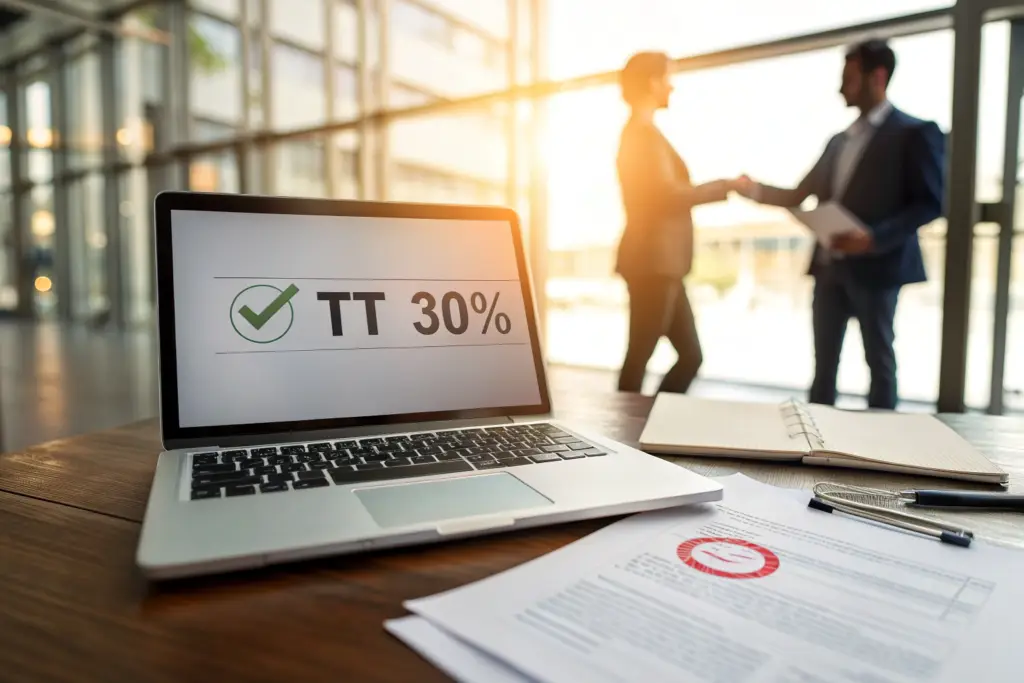
Our standard payment structure is a 30% deposit to initiate raw material purchasing, and a 70% balance payment before shipment. We accept Telegraphic Transfer (T/T) and Letters of Credit at Sight for orders above $50,000. We send you a digital progress tracker that shows your deposit converting into yarn, then into greige fabric, then into finished garments, so your money has a visible trail. For first-time clients, we recommend starting with a small trial order of 300 pieces per style to build comfort.
Transparency in the payment process is not just about trust; it is about creating a legal paper trail that protects both parties.
Is a 30/70 T/T Payment Safe with a New Chinese Supplier?
A 30/70 T/T structure is the industry standard, but safety depends on what happens between the deposit and the balance payment. A risky supplier uses your deposit to pay off old debts. A safe supplier uses your deposit exclusively for your raw materials and sends you proof of that expenditure.
We send you a material procurement report two weeks after deposit receipt. This report includes the yarn supplier's invoice, the dye house work order, and a photo of the greige fabric rolls on the pallet, clearly tagged with your brand's PO number in the warehouse. You see your investment physically manifested as textile inventory. This proof of material ownership is your security. If we fail to ship, you own the fabric. You can demand we transfer those physical rolls to a new supplier, though we have never defaulted on a balance shipment.
Here is a safe transaction timeline for a remote fall order:
| Milestone | Action by Fumao | Payment from Buyer |
|---|---|---|
| PO Signing | Issue Proforma Invoice | 30% Deposit via T/T |
| Week 2 | Procure Yarn, Send Photos | 0% |
| Week 4 | Bulk Cutting Starts | 0% |
| Week 7 | Final Inspection Passed | 70% Balance via T/T |
| Week 8 | Container Loading & Bill of Lading | 0% |
We never ask for 100% upfront payment. That is a red flag. We also do not ask for payment via Western Union or personal PayPal accounts. All transactions go through our registered company bank account in Shanghai, matching the name on the export license. If a supplier ever insists on sending money to a Hong Kong account that does not match the factory name, walk away. That structure exists to obscure the money trail, not to facilitate trade.
Can You Pay with a Letter of Credit for a Fall Collection Order?
Yes. For any order exceeding $50,000 USD, we accept an irrevocable Letter of Credit at Sight. This method binds a bank on your side and a bank on our side. We do not get paid until we present a clean set of shipping documents that strictly match the LC terms.
This protects you against non-shipment. If we fail to load the vessel by the latest ship date stated in the LC, the bank will not release funds to us. The LC also verifies document compliance. You can specify requirements within the LC text, such as "Inspection Certificate issued by XYZ Third Party required." We must present that exact certificate to get paid. No certificate, no money. This turns your payment into a contractual checklist rather than a bet on goodwill.
I encourage first-time buyers to start with T/T for a small trial run of maybe 500 pieces. Once you see how our DDP logistics and remote quality control function, we can scale up to a seasonal 5,000-piece order under a Letter of Credit. The banking fees add about 0.5% to 1% to the transaction cost, but the peace of mind for a $75,000 seasonal buy is worth far more than those fees.
Conclusion
Remote sourcing is not a compromise; it is a competitive advantage when you work with a factory that treats distance as a process problem to solve. We walked through the digital tech pack handoff, the live virtual fitting sessions that slash sampling time by 24 days, the three-layer quality control framework that lets you approve bulk from your living room, and the secure 30/70 T/T payment structure backed by material procurement proof. You do not need a plane ticket to access a fully managed fall apparel supply chain.
The brands that thrive in remote partnerships are the ones that communicate with specificity, demand third-party data instead of sales promises, and partner with a factory that films the down fill being weighed instead of just sending a finished photo. Fall collections have hard deadlines, but distance does not have to be the reason you miss the delivery window.
At Shanghai Fumao, we product-develop wool coats, quilted vests, and chunky knit sweaters for brands that never walk our factory floor but approve every stitch through structured digital collaboration. If you are sitting on fall sketches and need a partner to turn them into certified, shipped inventory by August, send an email to Elaine, our Business Director. She will schedule a 30-minute video introduction, walk you through our remote sampling workflow, and mail you a seasonal yarn swatch book this same week. Start your fall sourcing conversation at code>elaine@fumaoclothing.com</code. Let us build the collection together, screen to screen to store.