Four years ago, a London-based brand owner spent $45,000 on a "We Are Sustainable" marketing campaign. She hired a top-tier creative agency, produced a cinematic brand film with sweeping drone shots of untouched forests, and printed "Eco-Friendly" in gold foil on every hangtag. The campaign launched beautifully. Then a 19-year-old climate activist on TikTok posted a 90-second video tearing the brand apart. The activist had purchased one of the brand's jackets, cut open the lining, and found a standard polyethylene terephthalate interlining that would never biodegrade. She posted the factory's name, the fabric composition, and the brand's vague "eco" claims side-by-side. The video hit 2.4 million views. The brand's wholesale orders were cancelled by three European department stores within a week. The marketing budget did not save her. It destroyed her. Because sustainable marketing without a verifiable, auditable manufacturing truth is not marketing. It is publicly documented greenwashing that the internet will dissect, fact-check, and punish.
To market sustainable clothing successfully to global buyers, you must build your entire narrative around a single, independently verifiable "Proof Point"—a specific GOTS transaction certificate number, a measured water reduction volume per garment compared to the conventional industry baseline, or a fully traceable, scannable QR code that shows the buyer the exact spinning mill, dye house, and sewing station where the garment was made—and then distribute that proof point through a transparent digital supply chain story, not through vague, unsubstantiated adjectives like "eco-friendly" or "green."
At Shanghai Fumao, I have learned that the most powerful sustainable marketing tool is not a beautiful campaign image. It is a factory audit report that a buyer can verify on their phone in thirty seconds.
What Specific Certifications Do Global Wholesale Buyers Actually Trust and Demand?
A Dubai-based multi-brand retailer told me bluntly during a sourcing meeting: "I see fifty brands every season claiming they are sustainable. Forty-nine of them hand me a self-made 'Sustainability Promise' PDF designed in Canva. Only one hands me a GOTS certificate with a valid, verifiable license number. Guess which one gets the purchase order." This buyer was not being cynical. She was protecting her own business. If her store stocks a falsely labeled "organic" garment, the consumer protection authority in the UAE can fine her, delist her products, and damage her retail license. Global wholesale buyers are not looking for inspiring sustainability stories. They are looking for auditable, legally defensible certification shields that protect their own procurement department from accusations of greenwashing.
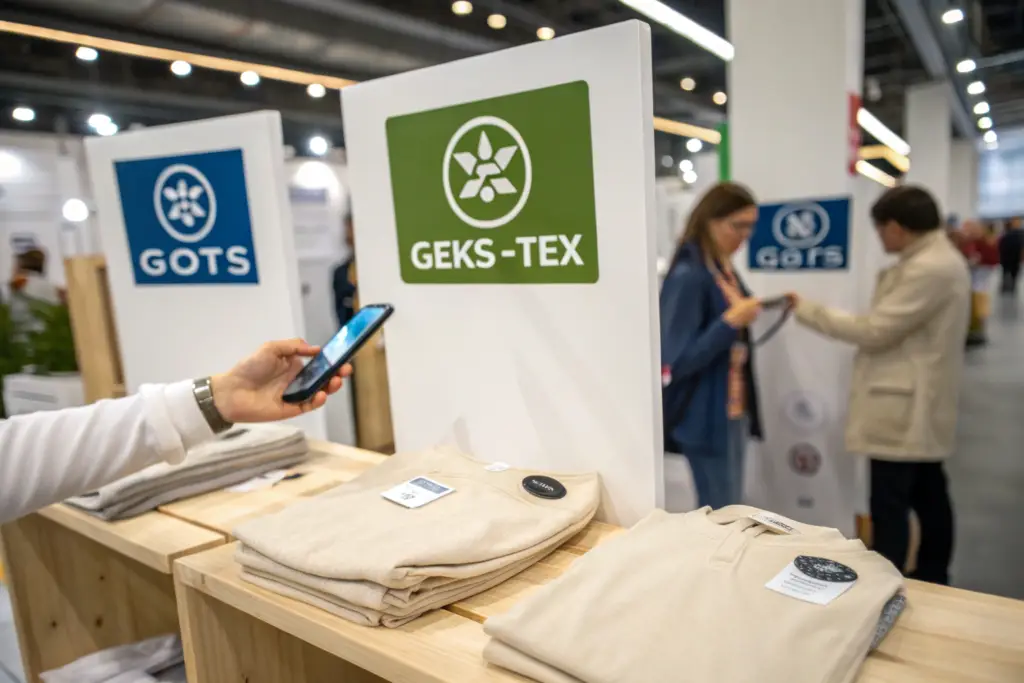
The certifications that global wholesale buyers truly trust and demand are the Global Organic Textile Standard (GOTS) for organic fiber content claims, the OEKO-TEX Standard 100 Appendix 6 for verified chemical safety on skin-contact garments, the Global Recycled Standard (GRS) for post-consumer recycled polyester content, and the Fair Trade Certified or SA8000 standard for social compliance, each validated not by a paper copy but by a live, scannable QR code link to the certifying body's public registry database.
The certificate is not a decoration for your showroom wall. It is a dynamic digital record that the buyer's compliance officer checks every single season before approving a new vendor.
Why Is a GOTS Transaction Certificate More Powerful Than a GOTS Scope Certificate in a Buyer Meeting?
A Scope Certificate (SC) proves a factory is authorized to handle GOTS-certified organic fiber. A Transaction Certificate (TC) proves that a specific, named batch of your garments actually used organic fiber from a specific, certified source. I have walked into buyer meetings and placed both documents on the table. The buyer's sustainability manager immediately ignores the SC and reaches for the TC. The TC contains the input-output weight reconciliation that mathematically proves the garment is organic. At Shanghai Fumao, I always provide the TC linked to the exact purchase order number the buyer is reviewing, not a generic, corporate-level SC from three years ago.
How Does an OEKO-TEX Appendix 6 Certification Differ From a Standard Appendix 4 for Infant Clothing?
A standard OEKO-TEX Appendix 4 covers general adult clothing. But if a buyer is sourcing baby garments, European legislation demands the stricter Appendix 6 certification. This tests for a far more extensive list of restricted substances, specifically those harmful when an infant mouth the fabric or when the garment is in prolonged contact with immature skin. When a German children's wear buyer visited our factory, she didn't ask "Are you certified?" She asked "Show me the Appendix 6 certificate number, and I will verify it now on the OEKO-TEX label check portal." I handed her my tablet with the portal already open. She entered the number, saw the valid status, and approved us as a vendor within ten minutes.
How Do You Build a Compelling "Fabric Provenance" Story That Justifies a Premium Wholesale Price?
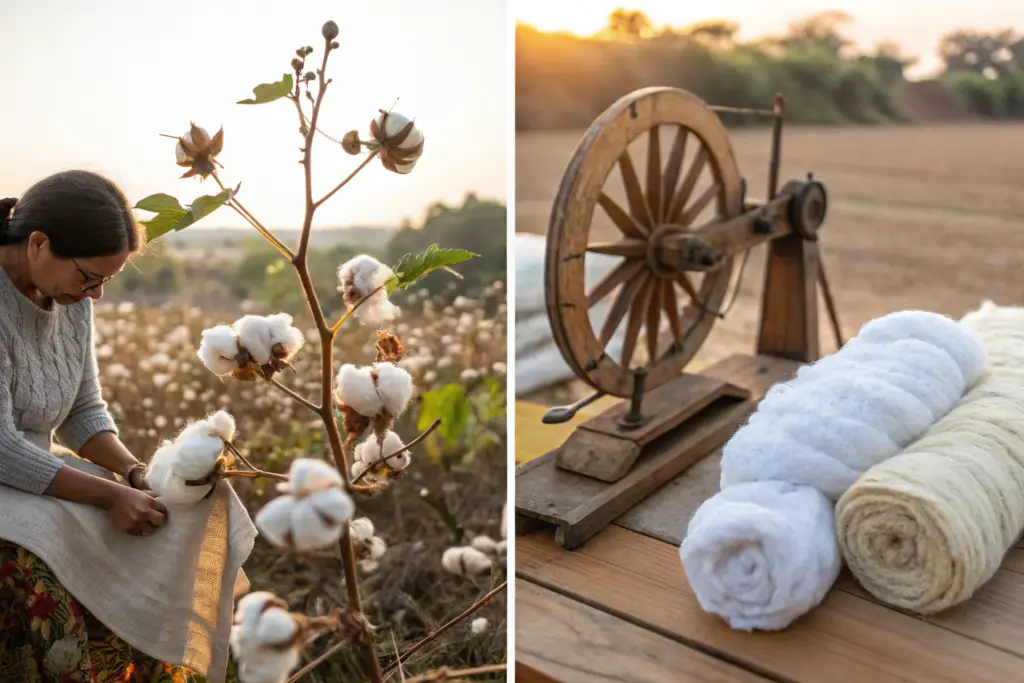
A Copenhagen-based brand I produce for sells a simple, undyed organic cotton t-shirt for €89. Their competitors sell a visually similar, "sustainable" cotton t-shirt for €34. The Copenhagen brand consistently sells out their inventory within ten days of a restock, while the €34 competitors run 30% clearance markdowns. The difference is not the cotton. The difference is that the Copenhagen brand's product page does not say "Made with organic cotton." It tells the specific story of a single, named cotton farm cooperative in the Aegean region of Turkey, with a photograph and a short video interview of the farmer, his soil regeneration practices, and his annual rainfall data. The buyer is not paying €89 for the physical t-shirt. They are paying for the emotional and ethical certainty that they know exactly whose hands touched the seed that grew the fiber on their skin.
To build a compelling fabric provenance story that justifies a premium wholesale price, you must identify a single, named, and photographed raw material source—a specific farm, a specific spinner, a specific dye house—and document their human faces, their geographical location coordinates, and one specific, measured ecological improvement they have achieved, then embed this narrative inside the garment's digital product passport as a short, visually-driven "Origin Journey" that the retail sales associate can show to the end consumer in under sixty seconds.
The story must be specific enough that a skeptical buyer can theoretically visit the farm. "Organic cotton from India" is a commodity. "Cotton from the Vasudha Cooperative, Aurangabad, Maharashtra, grown under rain-fed conditions with a 35% lower water footprint than the regional average" is a provenance story that no competitor can copy.
Why Does a Named Human Face in the Supply Chain Create an Irresistible Emotional Hook?
A generic "Made by Fair Trade workers" label is an abstraction. A specific photograph of Maya, a 34-year-old seamstress who has worked at Shanghai Fumao for nine years, who stitches the brand's bestselling dress, and whose daughter is now attending university on a scholarship funded by the factory's social program—this specific human detail transforms the garment from a commodity into a relationship. A Canadian brand we partner with prints a tiny, discreet QR code on the inside hem that opens a 90-second video portrait of the sewing team who assembled that specific batch. Their wholesale buyers report that retail staff use this video at the point of sale. The customer watches a real person and feels the warm connection. The premium price feels not only justified, but generous.
How Does a "Chemical Input Transparency" Document Turn a Skeptical Buyer Into a Brand Advocate?
A professional buyer from a Dutch sustainable department store once challenged me: "Your organic cotton is certified, but what about the dyes?" I showed her our dye house's chemical input inventory for her specific batch—a list of every single chemical substance used in the wet processing, including the exact concentration of the low-impact fiber-reactive dye and the biodegradable silicone softener. I showed her the corresponding Material Safety Data Sheets. She photographed the document with her phone, sent it to her head office's chemical compliance team, and received approval within an hour. She later told me in a follow-up email that this single document, voluntarily provided without being requested, had convinced her internal team to upgrade our brand partner from a "test order" to a "featured sustainable vendor" on their e-commerce platform.
What Digital Marketing Content Format Converts the Highest Number of Global Wholesale Sustainability Buyers?
A Melbourne-based brand owner spent $12,000 on a glossy, high-production-value sustainability lookbook. It was beautiful. It was printed on recycled paper. It was shipped to 200 wholesale buyers. The response rate was 3%. Six months later, the same brand owner spent $0 on a LinkedIn post. He simply recorded a 4-minute, unedited, handheld smartphone video of himself walking through our dye house, showing the wastewater treatment plant, pointing at the clear water exiting the filtration system, and explaining in his own voice: "This is where the water from our navy dye batch comes out clean." The LinkedIn video was viewed 47,000 times, shared by three major sustainable fashion journalists, and generated 19 direct wholesale inquiries from buyers in seven countries within the first week. The $12,000 lookbook communicated "marketing budget." The $0 smartphone video communicated "unfiltered truth."
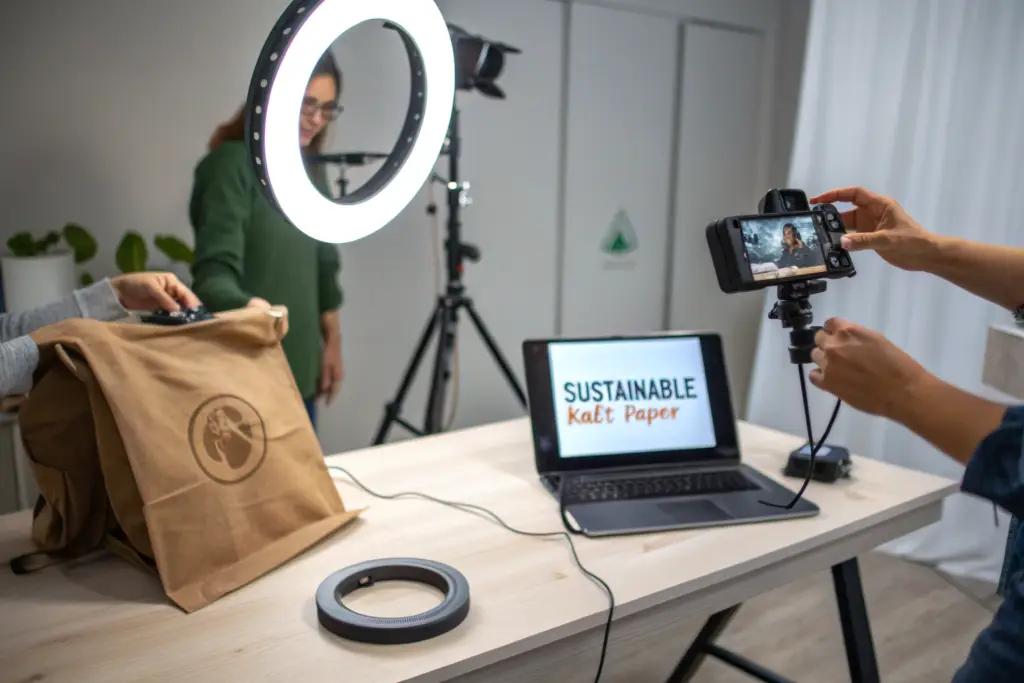
The digital marketing content format that converts the highest number of global wholesale sustainability buyers is the unscripted, unpolished, factory-floor "Process Walk" video, shot on a smartphone in landscape orientation, where the brand founder or factory manager physically walks through a specific production station, explains what is being done at that exact moment in simple, non-technical language, and visibly demonstrates a measurable environmental outcome—such as a water meter reading or a recycling bin weight—in a single, continuous, unedited take that buyers perceive as authentic evidence rather than produced advertising.
Wholesale buyers are professionals who have seen thousands of polished marketing campaigns. Their BS detector is calibrated at an expert level. An unedited video with imperfect lighting and a genuine voice speaking extemporaneously bypasses their advertising cynicism entirely.
Why Does a "Water Meter Close-Up" Generate More Trust Than a Life Cycle Assessment PDF?
A 40-page Life Cycle Assessment (LCA) conducted by a third-party consultancy is a valuable document, but a buyer will skim the executive summary and file it away. A 12-second close-up video of the digital water meter on our dye house's main inlet pipe, showing exactly 2,847 liters consumed for a specific dye batch, followed by the outlet pipe meter showing 2,103 liters recovered and recycled after treatment, creates an immediate, visceral trust. The buyer can see the physical meter. The buyer can read the numbers with their own eyes. I sometimes hold a current newspaper next to the meter to prove the video is recent and unedited. My brand buyers use this meter footage in their own wholesale presentations, and it closes deals faster than any report.
How Does a "Defect Transparency" Video Build More Credibility Than a Perfect Product Showcase?
Counter-intuitively, showing a minor defect and explaining how the factory corrected it tells a more powerful sustainability story than showing a flawless product. Last year, I filmed a short video explaining how a specific dye lot had a 4% shade variation, how our QC team flagged it, and how we re-dyed the entire batch rather than shipping substandard goods and wasting the fabric. The video showed the rejected, imperfect pieces and the corrected final batch. A Dutch buyer emailed me after watching it: "We have never seen a factory voluntarily show us a defect. We now trust your QC process more than any 'Zero Defect' certificate." This specific garment defect transparency video convinced the buyer to shift their entire organic cotton shirting program to our production line, a $90,000 annual account.
How Should You Price Sustainable Garments to Capture the True Value Without Losing the Wholesale Contract?
A New York sustainable fashion founder once told me her wholesale pricing strategy, and it explained why she was perpetually cash-poor despite winning sustainability awards. She was pricing her organic cotton trench coat at exactly the same wholesale multiplier as her conventional polyester competitor—2.4 times the FOB cost. Her FOB was higher because the organic fabric, the GOTS certification, the fair trade labor premium, and the biodegradable packaging added 38% to her base cost. Her wholesale price was higher, but her margin percentage was identical. The competitor had no certification costs, no fair labor premiums, and cheaper petrochemical fabric. The sustainable brand was effectively absorbing the entire cost of doing good, while the conventional brand retained the identical profit structure. She was not marketing sustainability. She was subsidizing it.
To price sustainable garments correctly, you must add a distinct "Sustainability Line Item" to your wholesale cost sheet that transparently isolates the specific cost of the GOTS certification audit, the organic fiber premium, the fair trade labor differential, and the water treatment surcharge, and then explain to the wholesale buyer that this line item is not a negotiable margin buffer but the auditable cost of verified ethical production, which their own retail customers are statistically willing to pay a 15-25% premium for at the point of sale, as documented by multiple independent consumer studies.
The fatal pricing error is to bury your sustainability costs in a generic, high FOB price and hope the buyer "appreciates" your ethics. Buyers do not appreciate hidden costs. They appreciate transparent line items they can explain to their own finance director.

How Does a "Cost of Compliance" Line Item Reframe a Price Objection Into a Value Conversation?
When a wholesale buyer says "Your sustainable hoodie is $4.50 more expensive than the conventional alternative," a generic answer is "We use better materials." A powerful answer is to slide a single-page document across the table: "This $4.50 difference breaks down into $1.80 for the GOTS-certified organic cotton fabric premium, $1.20 for the Fair Trade sewing floor labor differential, $0.70 for the closed-loop water treatment system at the dye house, and $0.80 for the annual OEKO-TEX certification audit cost per unit." The buyer now understands that the price difference is not a margin grab; it is a bill of materials for ethics. They can take this exact document and present it to their own retail accounts as a value justification. My most successful sustainable brand buyer partners use this line-item cost sheet as a wholesale sales tool, not a negotiation obstacle.
What Is the Proven Retail Premium That Consumers Actually Pay for a Verified Sustainable Garment?
A 2023 McKinsey consumer survey found that European and North American consumers, when presented with a verified, transparent sustainability claim with specific data, are willing to pay a 15-25% premium. But the key word is "verified." A vague "eco-friendly" label commands a near-zero premium because consumers are skeptical of greenwashing. A garment with a scannable digital passport showing the organic farm's GPS coordinates commands the full 25%. This data point should be printed on your wholesale line sheet.
Conclusion
Marketing sustainable clothing to global buyers is a discipline of radical transparency, not creative storytelling. The professional wholesale buyer in a German department store, a Dubai boutique chain, or a Canadian e-commerce platform has seen every shade of greenwash. They have been burned by fake organic certificates, false water-reduction claims, and "fair trade" labels that were purchased, not earned. Their default emotional posture toward your sustainability claim is deep, evidence-backed skepticism. The only way to convert that skepticism into a purchase order is to hand them the specific, verifiable proof they cannot refute.
At Shanghai Fumao, I have invested in the certifications, the digital traceability infrastructure, the water meter cameras, and the open-book costing templates because I understand that the modern sustainable buyer is a forensic accountant, not a romantic poet. They want a scannable GOTS transaction certificate, a chemical input inventory, a water-meter close-up video, and a transparent cost breakdown that separates ethics from margin.
If you are preparing to pitch a sustainable collection to a major global buyer, you do not need more beautiful marketing assets. You need more auditable manufacturing proof. I invite you to contact our Business Director, Elaine. She can share with you the exact digital documentation package—certificates, traceability videos, cost breakdown templates—that our brand partners use to win wholesale contracts with the most demanding buyers in Europe and North America. Reach Elaine directly at: elaine@fumaoclothing.com. Let your proof, not your promise, do the marketing.