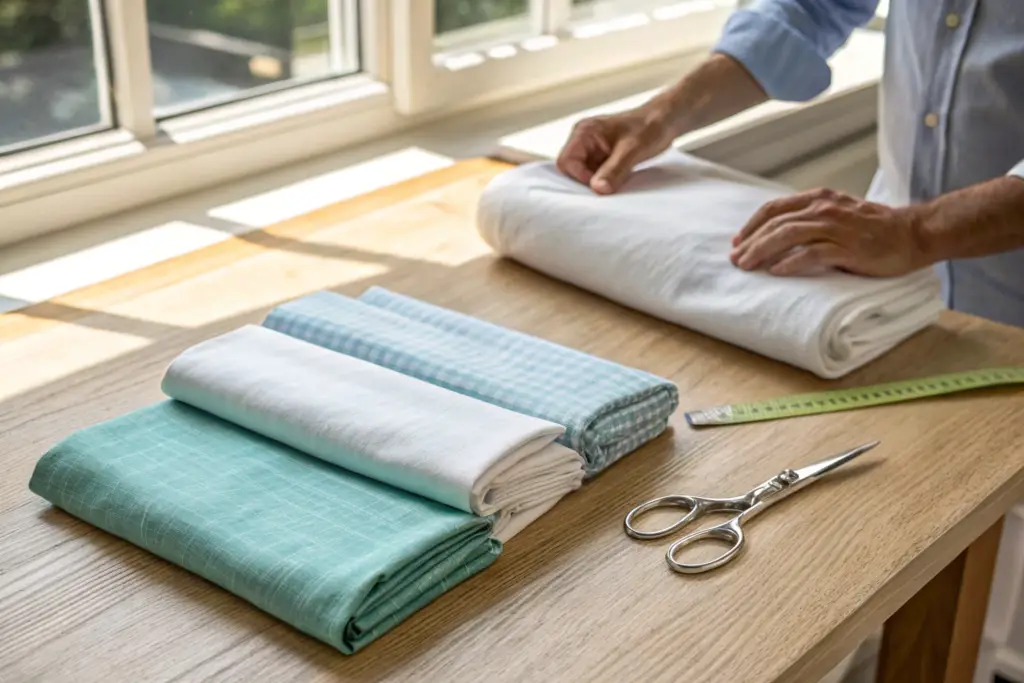
I remember a phone call from a menswear brand owner in Austin, Texas, a couple of Julys ago. He was furious—not at us, but at the 800 units of “premium summer shirts” he had sourced from another supplier. They were 100% polyester, marketed as “cool tech,” but they wore like plastic bags in the 105-degree heat. His customers were sweating through them in minutes, and his return rate spiked to 28% that month. He didn't have a fabric problem; he had a communication problem. The supplier had no understanding of how real men dress in real summer heat. He needed a manufacturer who could talk yarn count, weave density, and moisture regain—not just thread and needle.
The absolute best fabric for men’s lightweight summer shirts is 100% linen, specifically a 14-16 Ne yarn count, weighing between 130-170 GSM, because it offers a moisture regain of 12%—nearly double cotton’s—and its natural slub creates microscopic gaps in the weave that vent body heat instantly. When linen is too pricey or wrinkle-prone for a client’s brand aesthetic, a close second is a high-twist 100% cotton voile or a Tencel-linen blend, which we frequently develop at Shanghai Fumao.
You need to move beyond the generic label "breathable." That word has been hollowed out by cheap sportswear marketing. True summer performance is a mathematical equation of fabric weight, weave porosity, and fiber hygroscopic properties. We have five production lines in Shanghai dedicated to cutting through that noise and delivering quantifiable coolness for your customers.
Is 100% Linen Actually Worth the Cost for Mass Market Shirts?
I won’t sugarcoat it: a lot of brand owners, especially the ones moving large volumes to mid-tier department stores, look at linen’s price tag and immediately shake their heads. Last spring, a distributor from Chicago came to us wanting a “linen look” at a polyester price point. We showed him the cost breakdown. Linen was 40% more expensive per yard. But then we projected the sell-through. Linen shirts command a 55-75% higher MSRP, and they don't go on clearance at the end of the season because your customer views them as a long-term wardrobe investment, not a fleeting trend. We stitched him 200 POs of a linen-viscose blend as a middle ground. They sold out in three weeks. The number wasn't his cost; the nightmare was the missed margin due to lack of faith in the fiber.
Yes, 100% linen is absolutely worth the cost for a US brand targeting the $65+ retail bracket, because its inability to hold a static charge means it never clings to sweating skin, and its tensile strength is 2-3 times higher than cotton, so proper flat-felled seams won’t burst under stress, leading to a garment that lasts five summers instead of one.
Why Does Belgian Linen Feel Different from Chinese Linen?
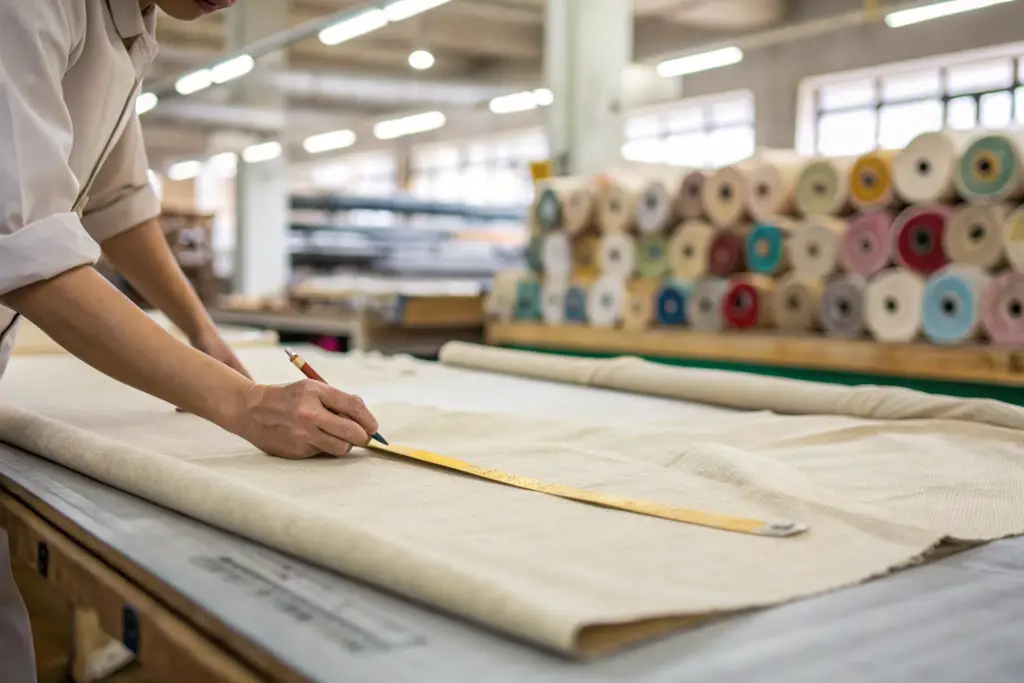
| This isn't about superiority; it's about the end use. The flax plant grows differently in the North Sea climate than in the Yangtze River basin. | Characteristic | Belgian/French Linen | Chinese Linen |
|---|---|---|---|
| Staple Length | Longer (average 100-120mm), resulting in a smoother finish with less pilling. | Shorter (average 60-80mm), giving a "hairy," rustic, more casual texture. | |
| Hand Feel | Crisp, very dry hand, breaks in slowly. | Naturally softer from day one, drapes sooner. | |
| Best Application | Tailored button-downs, sophisticated overshirts where silhouette is key. | Relaxed camp collar shirts, beach cover-ups, high-volume casual wear. |
For a Miami-based client, we exclusively use high-quality Chinese long-staple linen—processed wet-spun right here in Jiangsu—because his brand aesthetic is "worn-in softness" right off the rack.
How Do You Stop a Linen Shirt from Shrinking After a Wash?
The single biggest complaint from your end consumer will be about shrinkage. Linen loves to shrink. A cheap factory cuts the fabric without pre-processing it to save time. The shirt fits in the bag, but after one cold wash, the sleeves ride up an inch. That's a return. At Shanghai Fumao, we put all our pure linen rolls through a mechanical sanforization process—or a deliberate cold-water tumble treatment—to force the shrinkage before we even cut the markers. When I develop a men’s wear linen shirt for you, I guarantee a residual shrinkage of less than 2%, which is industry gold standard.
What’s the Difference Between Poplin, Oxford, and Voile in Summer Wear?
A new brand owner once emailed me a tech pack with just one word under fabric: "Cotton." I emailed him back immediately, stopping the sampling. "Which cotton?" I asked. "How do you want the air to flow through it?" He didn't know fabric could be engineered with holes or without holes. The weave of the fabric determines the coolness of the shirt more than the fiber. I have watched a heavy Oxford weave made of the finest Egyptian cotton swelter a man like a trash bag, while a cheap polyester mesh kept him cool because of the physical perforations. This is where you stop being a designer and become a textile engineer. The weave is the ventilation system.
For summer, 100% cotton voile is far superior to poplin and Oxford because it uses highly twisted, combed yarns in an open plain weave, creating thousands of microscopic air pockets while remaining completely opaque, whereas poplin traps heat in its tight cross-hatching, and Oxford's coarse basket structure insulates like a thermal blanket.
Is Cotton Poplin Too Hot and Stiff for a Beach Shirt?
Poplin is defined by its simple over-one, under-one weave, but it's usually a thick weft yarn under a fine warp. This creates that crisp, "just ironed" look. But for a beach shirt, the lack of airflow turns it into a sweat trap. I refused to make poplin beach cover-ups for a California label once, steering them toward a seersucker instead. The difference? Seersucker uses alternating tight and loose warp yarn stripes, creating a permanent puckering. This keeps 90% of the fabric lifted off the skin.
- Poplin: Better for a structured, crisp customizable logo business shirt where you want to hold a sharp collar shape.
- Voile: Better for a flowy, vacation-ready shirt that needs zero break-in time.
Why Does an Oxford Cloth Shirt Feel Like It Weighs Twice as Much?
Oxford is a basketweave. Think of it like weaving two warp yarns crossing two weft yarns—a double-layered structure. The air gets trapped in those tiny, woven boxes. This is fantastic for a heavy fall OCBD (Oxford Cloth Button Down) that you want to last ten years. It’s terrible for a walk on a Texas sidewalk in August. We measure breathability using a TexTest Air Permeability Tester. A standard 150gsm Oxford might have an airflow of 25 cfm (cubic feet per minute). A 100gsm voile hits 80-100 cfm easily. If you want the crisp look of Oxford for summer, we’ve reverse-engineered it using a high-twist Tencel filament, which creates an open structure but has the fluid drape of women’s wear silk blends, giving the best of both worlds.
How Does GSM Weight Impact Comfort in a Cotton T-Shirt?
A startup owner from Brooklyn visited our booth at Magic Las Vegas last year, holding a competitor’s tee. He squeezed it and said, "Why does this feel like a wet napkin?" I didn't need a microscope to answer it. I just checked the spec sheet. It was a 220 GSM carded open-end yarn. It looked like a premium heavy tee in photos, but in the Nevada heat (or a humid New York summer), it was a nightmare. Weight is the most misunderstood metric in the graphic tee world. The heavy tee trend of streetwear has brainwashed a lot of brands into thinking heavier means better quality. If you are selling a summer essential tee, a heavy fabric is your enemy.
The ideal GSM weight for a pure summer cotton t-shirt is between 130 and 155 GSM, using ring-spun, long-staple combed cotton in a single jersey knit, because this hits the sweet spot of being fully opaque to avoid showing nipples, yet allows an air permeability rate of over 90 cfm to prevent sweat stains from forming in the first 20 minutes of wear.
Can a Sub-140 GSM Shirt Still Be a Premium Product?
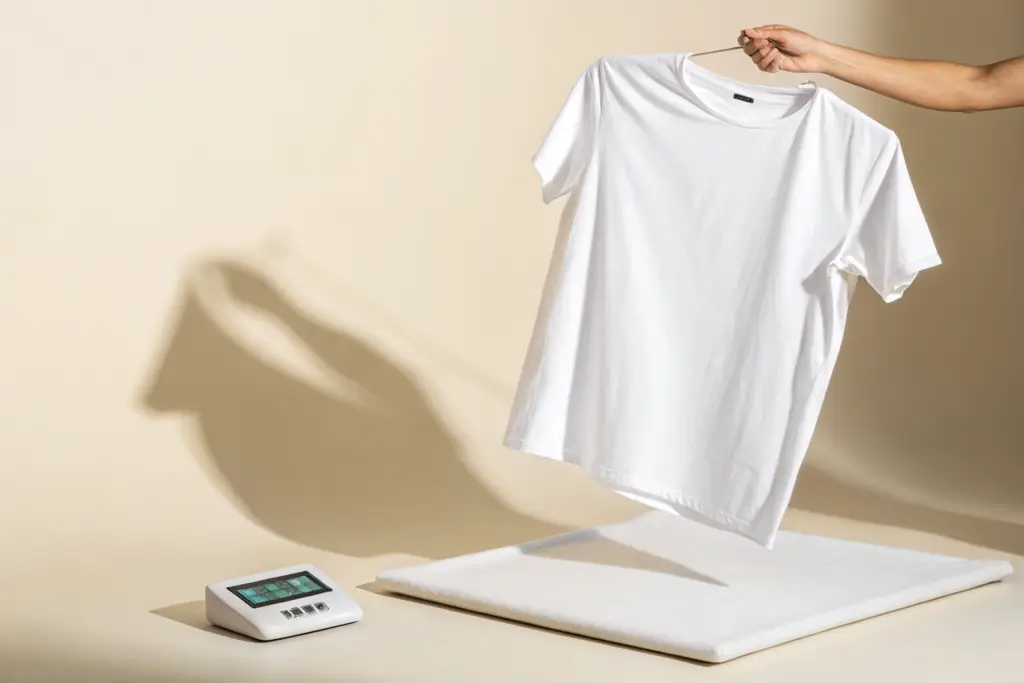
Cheap, low-GSM tees (the "tissue" tees) are notorious for twisting at the side seams and the collar baconing out. That’s because the single yarn is too weak. We fix this at the spinning level. For a Los Angeles yoga brand, we developed a 135 GSM modal-cotton blend, but we knitted it on a 40-gauge machine, the finest gauge possible. This packed almost a hundred extra stitches per square inch into the fabric compared to a 24-gauge cheap tee. The result? It felt like a cloud but held a straight hem after 50 washes. If you are doing DDP (Delivered Duty Paid) shipping, this light weight also dramatically reduces your per-unit freight cost, letting you invest that margin back into better fabric.
Why Do Some Lightweight T-Shirts Become Completely See-Through?
Opacity isn't just about the thickness; it's about the fiber shape. Cotton is a flat, kidney-bean shape that scatters light poorly. If you buy a cheap 120 GSM open-end cotton tee, it will be a see-through disaster. To avoid that, I recommend brands do one of two things:
- Switch to Vortex Spun Yarn: The spinning process twists the fibers so tightly that the yarn core is denser, blocking light without adding weight.
- Use a Micro-Modal Blend: Micro-modal fibers rate higher on air permeability due to their nano-fibril structure but also have better opacity because they are more perfectly cylindrical, allowing for denser packing with less material. I've used this trick specifically for white men’s wear tees sold by pool clubs and marine supply stores, where the wet/dry contrast is most dangerous.
What Are the Best Breathable Alternatives to Pure Linen?
Not every brand can absorb the price of pure Irish linen, and not every consumer wants to deal with the deep wrinkles. This is the friction point we solve the most. A couple of winters ago, we worked with a Nashville menswear brand that loved the look of a rumpled "going-out" shirt, but they couldn't risk a rack full of shirts looking like a crushed paper bag in their retail displays. They needed the performance of linen—the cooling, the texture—but with a hang that didn't scare off the customers who were afraid of an iron. This is where 21st-century chemistry meets 19th-century textile mills. The solution wasn't one fiber; it was a specific blend ratio designed to trick the eye and the skin simultaneously.
The best alternative to pure linen for a wrinkle-resistant summer shirt is a 70% Tencel Lyocell / 30% Linen blend, which maintains the dry-touch slub of linen but hides microscopic fibrillation to prevent stiffness, followed closely by high-twist organic cotton seersucker, which uses physical puckering to trap air and lift the fabric off the skin without any synthetic auxiliaries.
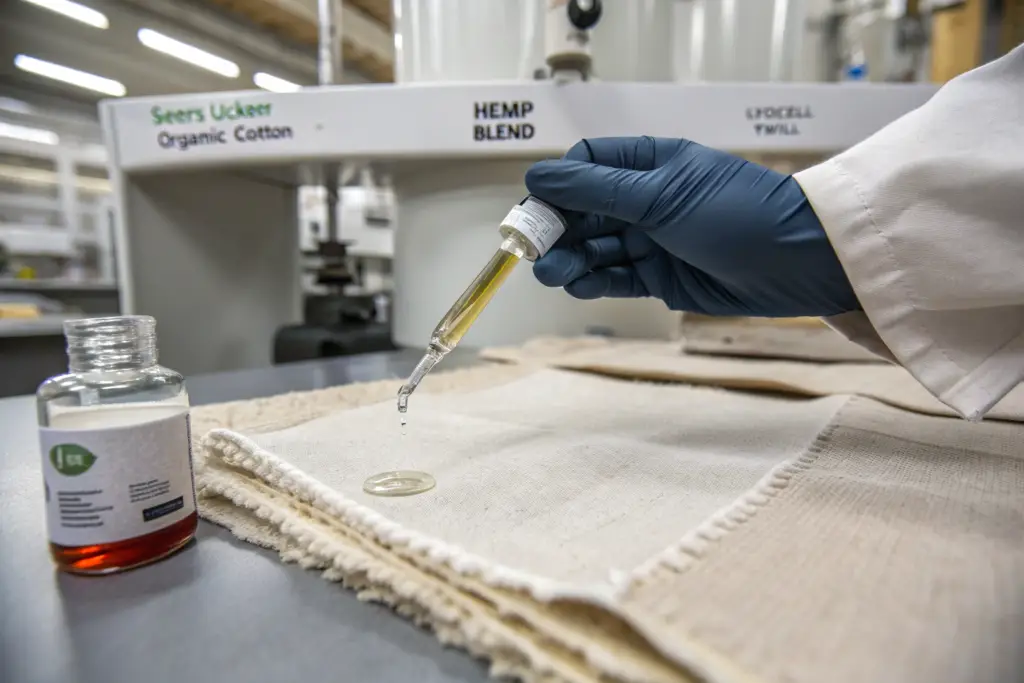
Do not let a supplier sell you a "Hemp" shirt without testing the wash. Hemp absorbs moisture 20% better than cotton, but it is the stiffest natural fiber known to man.
Is Tencel Actually Eco-Friendly Enough to Market as "Green"?
You see "Tencel" on a swing tag, and the marketing practically writes itself: plant-based, sustainable, closed-loop. But your educated US customers are increasingly digging into the data. You need the facts. Tencel (Lyocell) uses the amine oxide solvent system, which is 99.7% recyclable. That’s true. The wood pulp comes from certified FSC eucalyptus, requiring 10 times less water than cotton. That's also true. But I caution my clients: don't over-promise "biodegradable." A Tencel shirt with polyester thread and plastic buttons won't biodegrade. If you market it as sustainable, we need to use Cotton thread, Corozo nut buttons, and water-based print inks. I can set up this specific supply chain for you at Shanghai Fumao, giving you a fully certified apparel product that holds up to the FTC's Green Guides scrutiny.
How Does Rayon Differ from Viscose in Keeping Sweat Away?
| This is a simple chemistry distinction that 90% of shop floor managers can't explain but your customer can feel. | Fiber | Comfort Feeling | Summer Performance Detail |
|---|---|---|---|
| Rayon (Viscose) | Cool to the touch, often silky. | It absorbs moisture very well (higher than cotton) but releases it slowly. I have measured a viscose shirt staying wet for 45 minutes in humid air while a linen one dried in 15. It's great for dry heat, a liability in Miami. | |
| Tencel (Lyocell) | Slightly warmer initial touch than Viscose. | High moisture regain, but the nano-fibril structure dries much faster than generic Viscose. It encourages evaporative cooling without the cold, clammy backup. |
I always request a wicking test for any rayon claimed as a "performance" summer weave production for brand buyers. We test it in our in-house lab on a sweating guarded hotplate, measuring the evaporative cooling resistance (Ret). If the number is too high, the shirt is a swamp.
Conclusion
Fabric selection is the invisible architecture of a successful menswear brand. You won't see it in the Instagram flat lay, but you will absolutely feel it in the 2-star returns review. There is a $2 difference between a cheap open-end, low-GSM cotton tee that becomes a translucent rag after three washes, and a beautiful ring-spun, combed voile that floats over the skin and makes your customer feel he's wearing a cloud. Most factories hope you don't know the difference so they can pocket that margin. We want you to know the difference so you can charge a higher MSRP.
It starts with the right fiber: linen for the brave and premium segments, high-twist cotton or Tencel blends for the sleek and modern brands. It continues with the right weave: an Oxford is a winter soldier, a seersucker or voile is summer cavalry. It ends with the right partner who understands that true “lightweight” quality comes not from making the fabric thin, but from making the yarns strong and the stitches tight.
If you are launching a summer collection and you don't know your Ret from your GSM, we need to talk. I walk every partner through our fabric library personally. You can touch the swatches, see the wicking tests, and verify the breathability data before we cut a single pattern. Reach out to our Business Director, Elaine. She knows every yarn count in our catalog and will help you match the fabric engineering to your customer's actual life. You can contact her directly at: elaine@fumaoclothing.com. Let’s make sure your next summer drop is light, cool, and profitable.