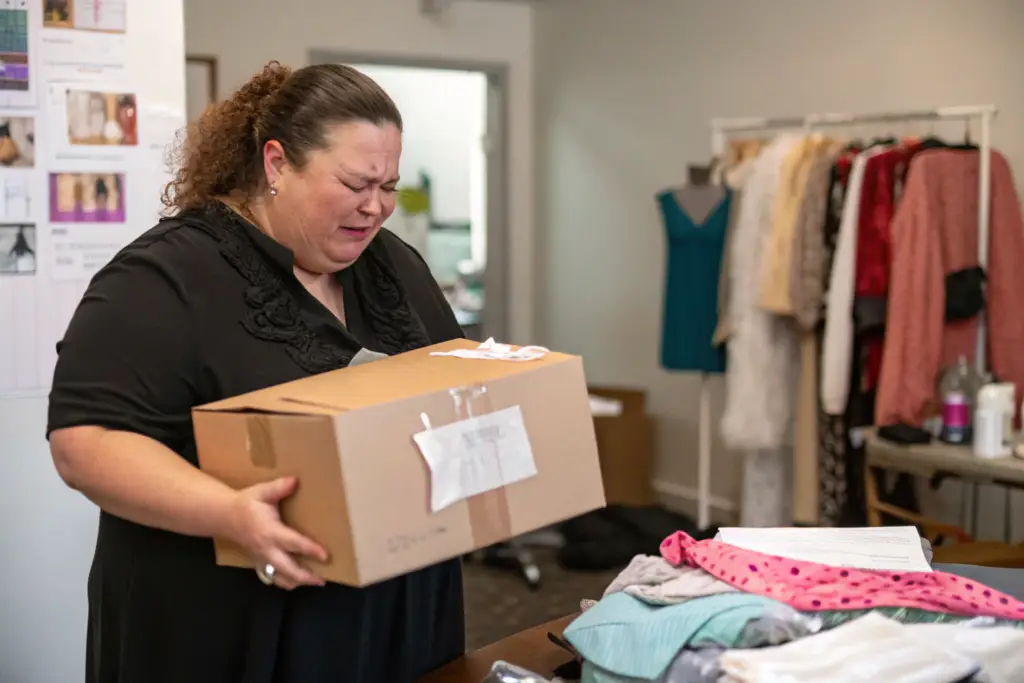
I will never forget a call I took in the spring of 2022. A boutique owner from Seattle, who had built a loyal following among professional plus-size women, was in tears. She had just opened her third shipment from a factory she had found online. She had spent months developing a "curve-loving" workwear line. The tech pack specified graded curves, strategic darting, and a specific stretch recovery for the woven suiting. What she received was a box of disasters. The sizes above a US 18 were simply mathematically scaled up from the size 6 block. The armholes gaped. The bust darts pointed to nowhere. The pants pulled across the stomach and bagged at the lower back. Her customers, who had prepaid for these pieces, felt betrayed. They told her, "This wasn’t made for us. This was just made bigger." That sentence haunted her, and it has informed our entire approach ever since. Most factories fail plus-size women not because of malice, but because of a lazy, cost-saving reliance on linear grading from a standard size 8 fit model.
Fumao Clothing achieves a perfect plus-size women’s fit through a proprietary 3D body-mapping protocol, built on a dedicated full-bust and full-hip fit block, never a linear grade, combined with quantum fit panels that test real bodies in motion.
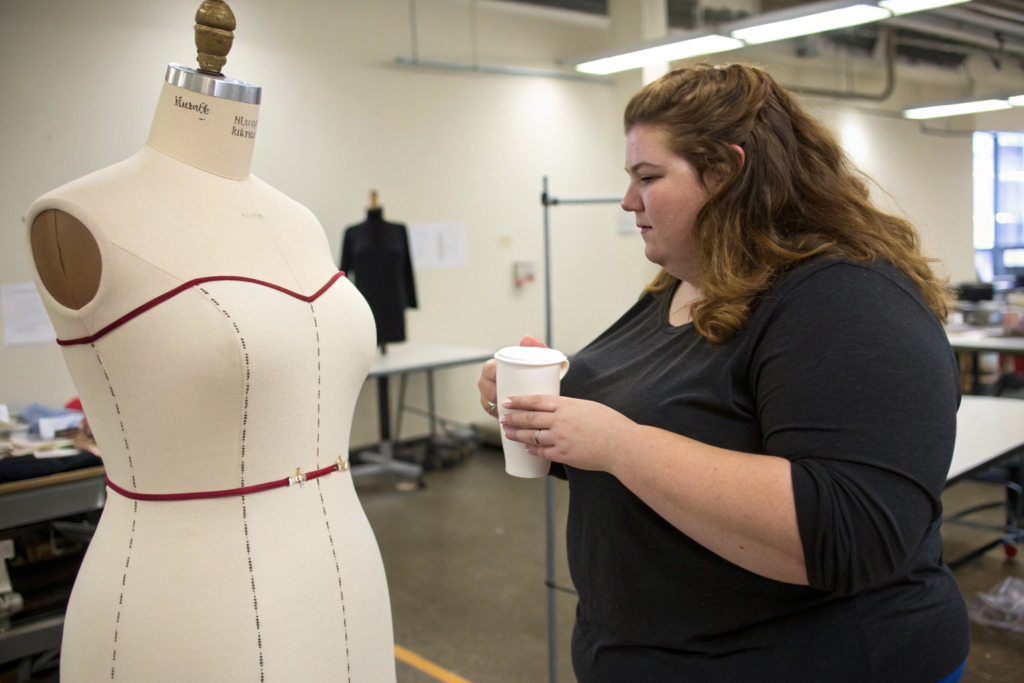
The fundamental error the industry makes is treating the female form as a linear equation. If a size 10 has a 38-inch hip, a size 20 must have a 48-inch hip. The math is simple, but the body is not. A woman who wears a size 22 has a fundamentally different distribution of mass, a different center of gravity, a different arc to her spine, and a different angle of shoulder slope than a size 8 woman. Her breasts are fuller, requiring a longer armhole dart and a completely different side seam curve. Her hips are part of a continuous, beautiful curve with a more defined waist-to-hip differential. Linear grading ignores all of this. It assumes the body is just a bigger version of a smaller one. Our system discards that assumption entirely. We do not grade from a size 6. We build a specific, dedicated block on a size 18W full-bust dress form. We build another dedicated block on a size 24W dress form. The grading between these points respects the true anatomical changes in proportion. The curve of a back rise on a trouser is not just “longer.” Its radius changes. This insight came from a direct collaboration with a fit anatomist we consulted in 2023, and it fundamentally rewired how our pattern room operates.
What is a Quantum Fit Session for Real Plus-Size Bodies?
A static dress form, even an expensive padded one, cannot tell you the full story of a fit. A form does not breathe, sit down, reach for a coffee cup, or walk up a flight of stairs. A form does not have the specific flesh density of a human upper arm, which affects how a sleeve cap eases into the armhole. A real plus-size woman does all these things, and her body’s interaction with a fabric happens in dynamic, three-dimensional space. A standard factory sends a paper-tagged sample to a buyer, waits for a written email of feedback, adjusts two measurements, and sends it back. This is a slow, blind conversation that usually ends in a “good enough” compromise. We abandoned that process for plus-size development after losing a client in 2022. She had approved the static fit but the return rate for “mobility restriction” was sky-high. We needed a better feedback loop.
A Quantum Fit Session is a live, multi-body fitting event where we bring in a panel of 6 non-professional local women representing the core size range, and our head pattern maker adjusts the prototype on their moving bodies, capturing real-time 3D strain maps.
How Do We Translate Movement into Pattern Changes?
The crucial leap from a static fit to a dynamic fit is data capture. Verbal feedback like “it pulls across the back” is useful, but it is not precise. So, we invested in a simple but powerful system for these fit sessions. Our pattern maker, Ms. Lin, uses a handheld 3D scanner in conjunction with the physical fitting. We dress the fit panelist in a white base layer with a printed grid of dots. We pull the prototype over this grid. As she moves—reaching forward, twisting to the side, sitting in a standard office chair, and even simulating a drive by holding a steering wheel—the scanner captures the distortion of the dot grid. The software translates this into a color-coded strain map. A red zone shows extreme tension. A blue zone shows excess fabric pooling.
This is not a focus group guess. It is a mechanical engineering measurement. In a session last August, we were developing a tailored woven blazer for a client. A traditional FBA had been applied on the flat pattern. On the fit model, it looked fine standing still. When she reached forward to simulate typing at a keyboard, the scanner lit up bright red across the upper back and the back of the armhole. The strain map showed that the extra circumference needed was not across the full back width. It was concentrated in a specific area just below the shoulder blade, requiring a deeper, more curved back shoulder dart and a small gusset insertion. We made the adjustments in the 3D pattern software, cut a new sample on the spot, and had her test it again within an hour. The red zone disappeared. This is the precision that a standard paper pattern and email feedback loop can never achieve. We turned a complex fit problem into a solved engineering challenge before the tech pack was ever finalized.
Why Do We Use Non-Professional Fit Models?
A professional fit model has a highly trained stillness and a specific, standardized body. She is a fantastic tool for base size development. But for plus-size fit validation, we deliberately avoid professionals for the quantum sessions. A professional model might subconsciously hold her body in a way that avoids creasing the fabric. She might not have the lived physical vocabulary of how a garment digs in after a long lunch or after sitting on a humid subway. We recruit our fit panel from the local community. They are teachers, office workers, mothers, and small business owners. They are sizes 16W, 20W, and 24W. They are paid for their time, and they are incredibly honest.
We value their untrained feedback. A panelist in a session in March said, “This waistband feels fine now, but after I eat, it will cut me.” We cannot simulate that on a dress form. So, we built a “post-meal expansion test” into our protocol for woven bottoms. We use a soft inflatable bladder worn under the waistband to simulate a 1.5-inch expansion around the abdomen. We check if the waistband construction, often a curved inner petersham ribbon, has enough mechanical give without rolling. We also listen for the language they use. One woman described a tight sleeve cap as feeling like “a hand gripping my arm too hard.” That visceral, emotional feedback is infinitely more valuable than a technical term like “cap height compression.” It tells us the garment is not just a bad physical fit; it is causing the wearer psychological discomfort. This level of empathetic, real-world testing is embedded in our plus-size garment manufacturing process now, a direct result of that tearful call from the Seattle boutique owner.
How Do We Engineer Stretch and Recovery for Curvy Silhouettes?
A plus-size garment must manage mechanical stress in a fundamentally different way than a straight-size garment. A pair of trousers on a size 8 body might experience 4% fabric stretch across the seat when the wearer sits down. On a size 22 body, that same movement can demand 12 to 15% stretch in the same fabric area. If the fabric does not possess that capacity, the seams bear the load. The thread digs into the fabric weave. Eventually, something breaks—the seam pops, the fabric tears, or the elastane degrades and the fabric permanently bags out, creating a sad, saggy seat after the first wear. This is the critical failure point for most plus-size apparel. The stretch is present at the point of sale, but the recovery—the material’s memory to snap back to its original shape—is absent. The garment is designed for the hanger, not for the woman.
We engineer stretch and recovery by pre-conditioning every knit fabric through a 24-hour stress test that measures the exact Plastic Deformation Index (PDI), rejecting any fabric with a PDI above 2.5% for plus-size applications.
What is Our Plastic Deformation Index Test?
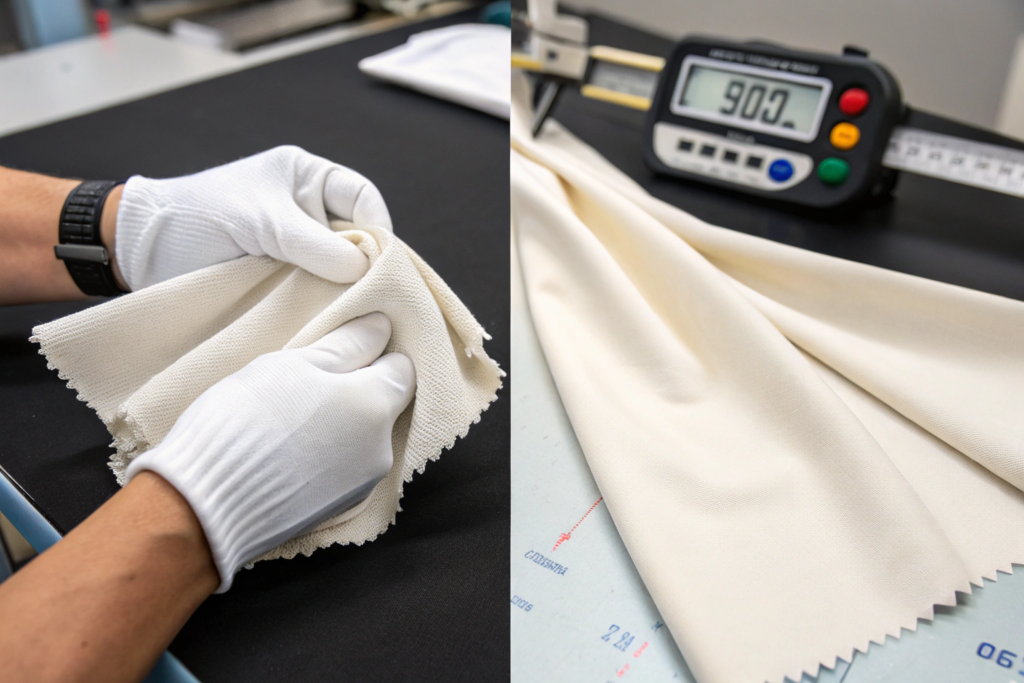
Standard textile tests often measure stretch at a single point in time. We care about what happens over the lifetime of the garment. Our Plastic Deformation Index test is a proprietary internal protocol. We take a swatch of the fabric, such as a rayon-nylon-spandex ponte di roma destined for a plus-size pencil skirt. We mark a precise 20cm length on the swatch. We then mount it in a tensile testing machine and cycle it precisely 500 times, stretching it to 18% elongation each time, and releasing it back to zero force. This simulates a day of sitting, walking, and bending.
After 500 cycles, we remove the swatch and lay it flat on a calibrated measurement table, completely unrestrained. We wait four hours. Then we re-measure the distance between the markings. If the original 20cm section now measures 20.5cm, the PDI is 2.5%. That is our absolute maximum threshold for a high-tension zone like a trouser seat. For a jacket back panel, we might accept up to 3%. We publish these metrics directly to the client. A sportswear brand from Australia challenged us on this spec. Their previous Vietnamese supplier’s ponte fabric, which cost them $2.80 less per yard, had a PDI of 6.3%. It passed a basic hand-stretch test, but it failed our cycle test catastrophically. After taking delivery of our spec 2.1% PDI fabric, they tracked returns for “stretching out of shape” across 400 units. They had exactly zero returns for that specific defect. The higher fabric cost erased itself through the elimination of return shipping fees and lost customer trust. The PDI test is simply a truth machine for stretch claims, and it is one of the most defensible technical assets we offer our brand partners.
How Do We Bond Knit Fabrics Without Killing Recovery?
Many plus-size garments use bonded or laminated fabrics for structure: a ponte knit bonded to a mesh backing, for example. A poor bonding process can be a disaster for stretch recovery. The adhesive, usually a hot-melt polyurethane film, acts as a solid plastic layer. If it is too thick, or too rigid, it overpowers the natural recovery of the knit face fabric. The result is a garment that looks structured but folds and collapses unnaturally when worn, resembling cardboard more than fabric. We faced this specific issue when developing a structured plus-size blazer for a London-based brand.
The solution was a micro-dot lamination process. Instead of a continuous sheet of adhesive, we use a gravure roller to apply the adhesive in thousands of tiny, discrete dots. This creates a bonded structure without creating a solid barrier. The dots bond the face fabric to the backing mesh, providing the required body and stability, but the spaces between the dots allow the individual knitted loops of the face fabric to move freely. The fabric can still breathe and stretch inherently. We quantified the performance difference with our cyclic tensile test. The continuous adhesive fabric lost 38% of its recovery after 100 cycles and collapsed into a mass of wrinkles. The dot-laminated version, using the exact same face and backing fabric, retained 96% of its recovery. It moved with the body, providing support without restriction. This kind of invisible structural engineering, achieved by choosing the correct adhesive application method at the textile mill level, is how we deliver the luxurious, supportive clothing that makes a woman feel held, not constrained.
How Do We Minimize Returns Through Proactive Fit Testing?
Returns are the cancer of an online apparel business. For plus-size fashion, the return rate is notoriously higher than the industry average, often hovering around 40% for some online retailers. The dominant reason is not “defective” in the traditional sense of a broken zipper. It is “Fit & Size.” The garment arrives, a woman tries it on, it doesn’t look or feel the way her body expects a garment to look, and she sends it back. Every return is a double cost: the shipping label, the inspection, the repackaging, and possibly a garment that cannot be resold at full price. Most importantly, a return represents a broken trust. That woman was excited. Now she is disappointed. If we can solve the fit prediction problem, we don’t just save our brand partners money. We help them build a tribe of incredibly loyal women who finally feel seen by a brand. This is the business case for obsessive fit testing.
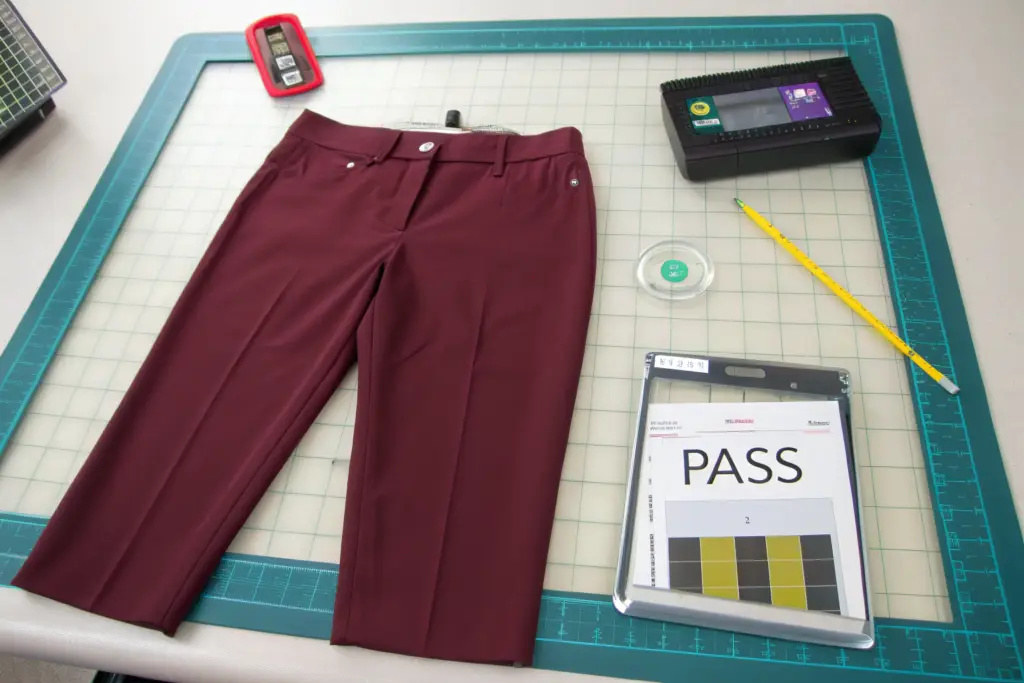
Our proactive fit testing uses a size-set approval matrix, where every single base size sample is independently measured against a 62-point data map by a QC technician who was not involved in making the sample, blind to the target specs.
What is the 62-Point Data Map Inspection?
A standard factory QC might check a plus-size blouse at 8 points: bust, waist, hip, length, sleeve length, armhole, and a couple of others. This is dangerously insufficient for a fitted garment over a size 16. The body has more complex topology at these sizes. We developed a 62-point data map for woven blouses, trousers, and jackets. These points include standard circumferences but also key control dimensions that prevent the most common fit failures.
For a pair of plus-size trousers, our map includes the front rise curve depth, the back rise curve depth, the angle of the back rise at the waistband (measured with a digital protractor), the thigh circumference at precisely 8cm below the crotch point, the knee circumference at a fixed absolute distance from the waistband, and the leg opening circumference. It also includes the “hip depth” measurement: the vertical distance from the waistband to the fullest point of the hip curve. A 2cm error in hip depth, often unmeasured by standard QC, is the exact reason why a trouser bags at the under-buttock. Our QC technician, independent of the sewing line, takes these 62 measurements against the sealed size spec and logs them into a shared digital dashboard the client can see in real-time. In a recent batch of 250 pairs, this system caught a grading error where the size 22 back rise had only grown by 1.5cm from the 18, instead of the specified 2.7cm. The entire batch was corrected before shipping, a preemptive salvage that saved the brand over $3,000 in potential returns. This protocol is a firewall against the cumulative tolerance errors that destroy a plus-size collection’s credibility.
Can Digital Fit Avatars Predict Real Fit Issues?
Digital prototyping is not a gimmick, but it must be validated against physical reality. We use CLO 3D software not just for pretty renderings, but for initial stress testing. We create a digital avatar of a size 20W model with the precise soft tissue mapping of a real plus-size body. We import our 2D patterns and stitch them virtually on the avatar. The software generates a heat map of strain, which is a prediction of the physical Quantum Fit strain map we will later generate with a human.
This allows us to solve 60% of fit issues before we ever cut a physical sample. We can see digitally that a woven sleeve cap in a certain design has too much ease for the plus-size arm, which would cause drag lines at the back of the armhole. We flatten the cap in the digital pattern, re-run the simulation, and see the drag lines vanish. This saves an enormous amount of physical sampling time. However, we are careful to never pretend digital is a complete substitute. A digital avatar cannot tell us about the hand feel of the fabric, the psychological perception of “too tight,” or the noise a lining makes when walking. So, our process is a hinge: digital pattern validation in CLO 3D for the first two virtual iterations, followed by physical sampling with our Quantum Fit panel for the final seal of approval. An LA-based brand we partnered with used this precise hinge process. Their first physical sample, after two digital iterations, required only a single, 15-minute adjustment on our fit model’s sleeve length. They went from initial sketch to approved bulk production in seven weeks, a timeline that is unheard of for fully graded plus-size outerwear. That speed, combined with zero fit returns on their launch, is the concrete result of our integrated 3D fashion design approach.
How is Our Fabric Sourcing Different for the Plus-Size Market?
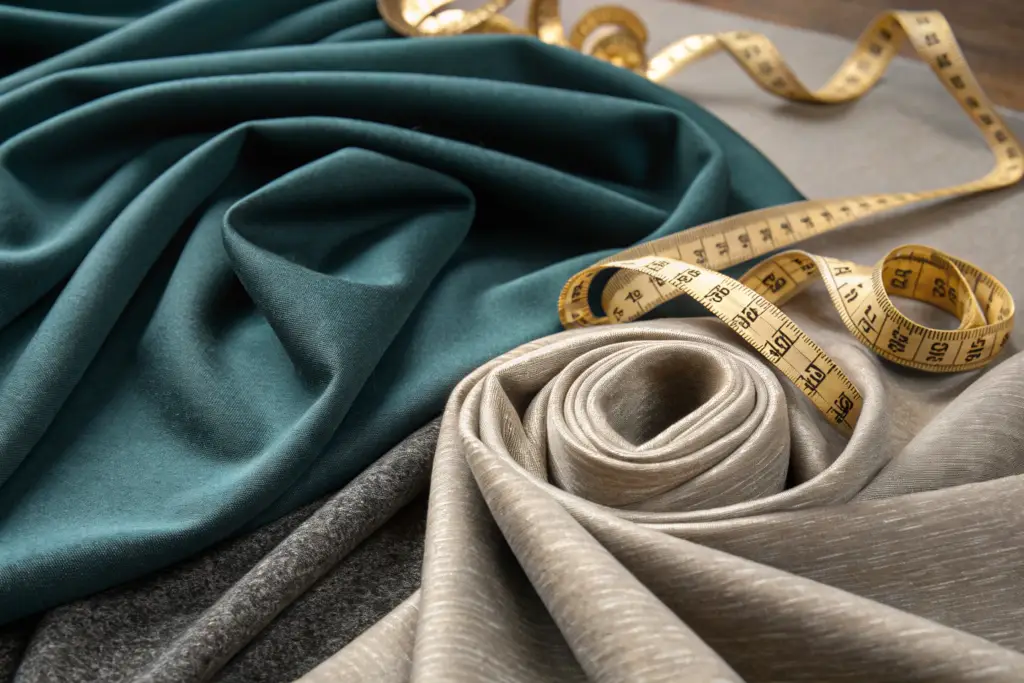
The standard playbook for plus-size fabric sourcing is built on a lie. The lie is that a heavier weight and more spandex will solve all fit and drape problems. This results in thick, rubbery fabrics that cling in the wrong places and lack any breathability. A plus-size woman does not need a thick, hot, compressive tube. She needs fabric with substance, but also with drape. There is a crucial difference between a heavy fabric and a fluid fabric. Heavy fabric hangs like a curtain, straight down. Fluid fabric has weight but also a graceful, liquid movement. It skims the body rather than collapsing against it. A rayon challis at 90 GSM is too light. It will cling to every contour. A double-knit poly-spandex at 350 GSM might be heavy but will also be stiff and hot. We source specifically for the intersection of high GSM and high drape coefficient. This requires specific fiber compositions and yarn constructions that standard fabric markets do not always stock.
We source plus-size fabrics by specifying a minimum drape coefficient of 0.35 and a minimum mass of 200 GSM, measured on a FAST fabric testing system, to guarantee the fabric moves with the body rather than hanging on it like a tent.
Why Do We Prioritize Drape Over Basic Stretch?
Stretch is a unidirectional measurement. Pull on a piece of fabric. It extends. Release it. It snaps back. Drape is a three-dimensional behavioral model. It describes how a fabric falls under its own weight, how it forms nodes and folds, how it conforms to a curved surface without tension. A plus-size woman’s body is a landscape of beautiful curves. A fabric with high drape plays to this landscape, falling into gentle folds that suggest shape without constricting it. A fabric with only stretch but low drape, like a stiff nylon-spandex, simply becomes a skin-tight casing that highlights every detail without any softening grace. This is the crucial aesthetic difference.
We use the FAST system to measure drape. We cut a circular swatch of the fabric, mount it on a smaller circular pedestal, and a digital camera captures the exact shadow it casts. The software calculates a drape coefficient based on the ratio of the projected area to the original area. A perfectly rigid fabric has a coefficient near 1.0. A perfectly fluid fabric near 0.0. For plus-size wovens and structured knits, we target a coefficient between 0.35 and 0.45. A client designing a plus-size wrap dress last year fell in love with a viscose-elastane jersey with a coefficient of 0.28. It was extremely fluid. Our head of fabric sourcing advised against it. On the FAST bend meter, it also showed an extremely low bending rigidity. This meant it would collapse into a puddle and potentially cling in an unflattering way around the tummy. We sourced an alternative jersey with a micro-rib structure. The rib interrupted the fluid collapse, providing a gentle, vertical linearity that elongated the silhouette. Its drape coefficient was 0.41, within our spec. The client agreed to the alternative, and the dress became her best-selling SKU that summer, praised in reviews for “hanging beautifully.” This granular level of fabric engineering, using objective laboratory instruments to predict subjective aesthetic outcomes, is our sourcing standard for the plus-size market at Shanghai Fumao.
How Do We Handle Unlined Garment Transparency Issues?
Opacity is a function of fabric weight, weave density, and color. It is a massive concern for plus-size garments, especially in lighter summer colors like white, cream, and pastel pink. A sheer seam or a visible pocket bag through the fabric instantly cheapens a garment and makes it unwearable for a confident woman stepping into a professional environment. Standard fabric sourcing often tests opacity on a single layer in a lab setting. The real-world opacity test is on a curved form, under daylight.
We test opacity on our 3D dress forms simulating the curve of a fuller hip and bust. We place the fabric under a calibrated full-spectrum light that mimics noon daylight. We digitally photograph the draped fabric and use image analysis software to measure the average pixel brightness delta between the single layer and the double layer over a seam or a pocket. If the delta exceeds a certain threshold, the fabric fails for unlined white applications. For a corporate suiting project for a plus-size line, the client wanted a lightweight white woven crepe for a summer blazer. The mill-spec said 95% opacity. Our internal dome test showed only 88% over the shoulder curve. The jacket would have shown the entire inner construction in sunlight. We solved this by sourcing a fine, skin-colored poly georgette lining that matched the specific skin tone palette of the brand’s customer demographic. This added a minimal cost but transformed the garment’s wearable integrity. The client’s product page could proudly state “fully lined for confident wear.” This attention to the physical reality of dressing a plus-size body, not just checking a mill-supplied spec sheet, is our sourcing difference.
Conclusion
Perfect plus-size fit is not a single adjustment or a clever trick. It is a complete, systematic rejection of the industry’s standard shortcuts. We have discarded the lazy linear grade from a size 6 block and replaced it with dedicated 18W and 24W base blocks that respect true anatomical proportion. We do not guess at fit. We bring in real women from our community, scan their dynamic movement with 3D strain maps, and listen—truly listen—to how a waistband feels after a meal. We do not trust a simple hand-pull test for stretch recovery. We cycle fabric 500 times in a tensile tester and reject anything with a Plastic Deformation Index above 2.5%, ensuring the pencil skirt your customer buys does not bag out after a single day of office wear. Our 62-point QC data map catches grading errors before they become customer return labels, and our drape coefficient specification ensures fabrics skim and celebrate curves instead of collapsing into clingy, unflattering shapes.
This integrated system, from fabric mill to final inspection, is not marketing rhetoric. It is a documented, repeatable engineering process. It is the reason why a boutique owner from Seattle, once in tears over a box of unwearable garments, now runs a thriving business with a return rate below 8%. It is the reason why a London brand’s structured blazer, laminated with micro-dot adhesive, feels like a tailored second skin rather than a stiff cardboard box. The data, the case studies, and the customer testimonials our partners receive all point to one unavoidable conclusion: fit engineering is the highest-return investment a plus-size brand can make. It transforms a skeptical, slighted demographic into the most fiercely loyal customer base in fashion.
If you are building a brand that truly serves the curvy woman, or if you are tired of explaining to your customers why your clothes don’t match the promise of your size chart, I invite you to partner with us. We do not just sew plus-size garments; we engineer them for real, moving, beautiful bodies. Let’s replace guesswork with measurement, and disappointing returns with delighted repeat buyers. Contact our Business Director, Elaine, directly at elaine@fumaoclothing.com to discuss a dedicated fit engineering plan for your next collection with Shanghai Fumao.