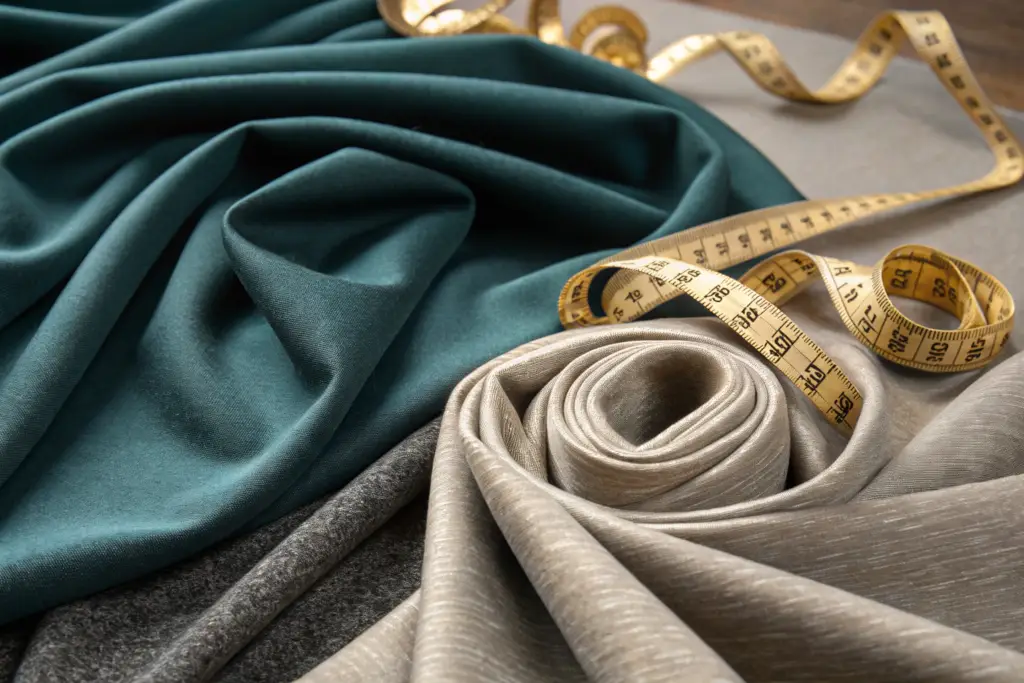
A logo is not a decoration. It is a silent contract between a brand and its customer. When a woman walks into a meeting with a debossed leather tote on her arm, she does not announce the brand. The bag does the speaking. A subtle shadow, a perfectly crisp indentation in the surface, a texture that feels deliberate and permanent. That is the language of quiet luxury. But when a debossing job goes wrong, it screams the opposite. It cracks, peels, fades, or looks shallow and uneven. It communicates cost-cutting and carelessness. I learned this lesson in the winter of 2022. A handbag brand from San Francisco sent us an urgent rework order. Their previous factory had debossed their elegant, minimalist logo onto 500 leather panels. The pressure was too high. The heat was wrong. The logo had a shiny, burnt halo around every letter. The leather fibers were crushed into a glossy, plastic-like scar. They could not sell the bags. We had to strip the panels, re-cut, and re-deboss the entire batch in seven days. That experience forced me to build a debossing capability that treats every impression as a precision engineering process, not a simple heat stamp.
Fumao Clothing's logo debossing capabilities center on a proprietary multi-axis pressure-dwell control system that pairs a specific silicone durometer die with the exact material modulus, producing a deep, clean, halo-free impression on leather, bonded textiles, and heavy vegan suedes without any post-finish touch-up.
The technical gap between a burnt stamp and a flawless deboss is measured in fractions of a second and degrees of temperature. A standard debossing machine applies a hot die to a material surface, pressing it down for a set time. The operator sets a timer and applies the same pressure to every panel. But not every panel has the exact same thickness, moisture content, or fiber density. A natural leather hide has variations. A recycled bonded leather has even more. A rigid, single-setting process cannot adapt to these variations. Our system is different. We use a servo-driven press with integrated force feedback. A sensor measures the exact resistance of the material in real-time and adjusts the downward pressure microsecond by microsecond to maintain a constant compression depth. This means a slightly thicker area of a full-grain leather hide receives a fractionally deeper press to achieve the same final indentation depth as a thinner area. The result is a uniform, consistent logo across hundreds of units, a uniformity that a manual, time-based press can never deliver. This is the kind of invisible quality that makes a luxury price point feel inherently justified, not aspirational.
Why Does Debossing Depth Consistency Matter for Brand Perception?
A customer may never articulate why one product feels premium and another feels mass-produced. They will not say, "the debossing depth variance on this logo is greater than 0.15 millimeters." They will simply feel a vague sense of quality, or a lack of it. This subconscious judgment happens in the first three seconds of handling a product. An inconsistent logo deboss destroys that first impression. A shallow section of the logo looks faded. A deep section looks aggressive. The eye picks up the inconsistency as a signal of poor manufacturing control. For a luxury or premium contemporary brand, this signal is fatal. The entire value proposition rests on an implied promise of perfection. If the logo is sloppy, the customer's brain logically deduces that the invisible seams, the internal construction, and the material sourcing are also sloppy. This is not a rational product evaluation; it is an emotional brand devaluation that happens instantly.
We maintain debossing depth consistency within a ±0.1mm tolerance across an entire production run by using a servo-driven press with closed-loop force feedback, not a manual time-based press.
How Do We Calibrate the Press for Different Leather Thicknesses?
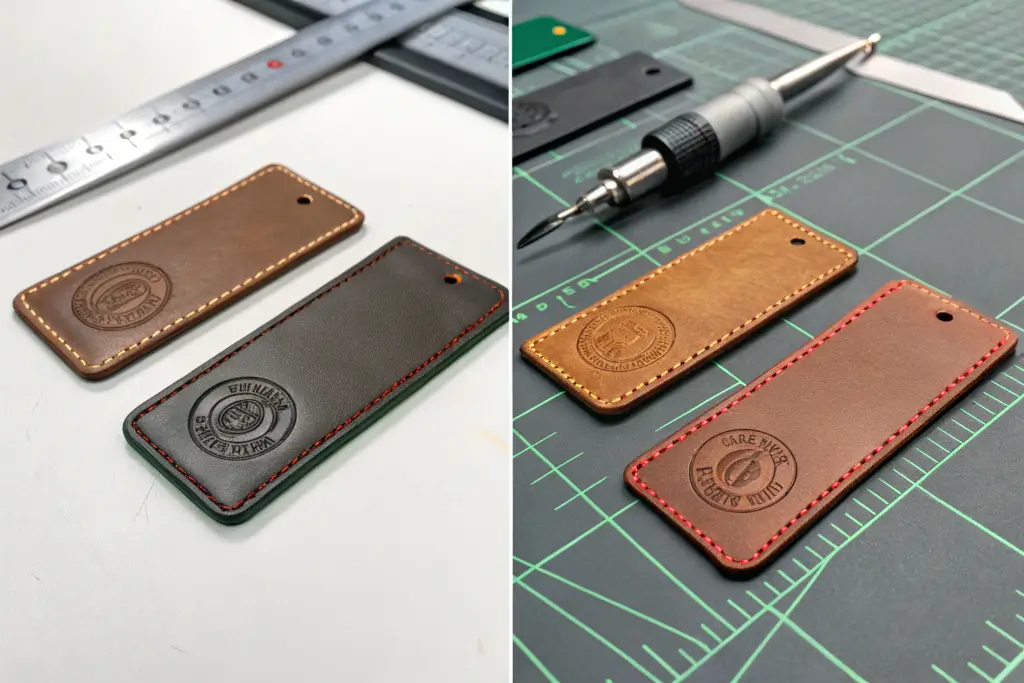
Natural leather hides are biological materials. A single cowhide has zones of varying density. The shoulder area is denser and less compressible than the belly area. A standard manual press treats every square inch of that hide identically. The operator places the die, pulls a lever, and holds it for a count of three. The belly receives an excessive, fiber-crushing blow. The shoulder receives a slightly too-light impression. This problem multiplies when you are working with all-natural, vegetable-tanned leathers, which are prized for their patina and lack of plastic surface coatings but are notoriously inconsistent in their internal fiber structure.
We solved this by integrating a digital force transducer into our press bed. Before we process a production batch of panels, we cut a sacrificial strip from the edge of the hide. We run a "compression profile" on this strip. The press lowers the die at a controlled speed and the transducer measures the force required to achieve the specified final depth of, for example, 0.8mm. The software plots a small graph of force versus depth. If the hide requires 450 Newtons of force to achieve the target depth, the system sets this as the baseline. As the press processes the actual panels, it monitors the force in real-time. If it encounters a denser area, the resistance rises. The servo motor instantly adjusts, delivering exactly the programmed force profile to achieve the identical 0.8mm depth. We do not guess time. We govern force and distance. A premium leather goods partner from Italy tested this system with a 300-unit run of debossed card holders. Their previous supplier had a 6% rejection rate on depth inconsistency. Our run produced exactly two rejected units, both for a minor grain defect unrelated to the embossing. This statistical control makes a branded accessory line scalable without a proportionate increase in quality risk.
What is the Relationship Between Material Memory and a Lasting Impression?
Leather, suede, and even dense bonded textiles are viscoelastic materials. They have memory. When you press a shape into them, they partially try to spring back. This is called recovery. A shallow, fast deboss from a cheap manual press looks good for a day. Over a week, the compressed fibers relax. The impression fills in. The logo becomes a ghost of itself. You end up with a faint, blurry shadow that looks like a manufacturing defect, even though technically, the material simply did what physics said it would do.
We counteract recovery through a precise "dwell time" protocol. Our presses do not just hit and release. They press to the target depth, hold for a specific computed duration, and then release slowly. This dwell time allows the compressed collagen and elastin fibers in the leather to undergo a process called stress relaxation. The internal forces that would cause the material to spring back dissipate while the material is held in its deformed shape. The required dwell time varies by material. A soft, milled nappa leather might need only a 1.5-second dwell. A dense, vegetable-tanned bridle leather might need 3.5 seconds. We determine this time with a recovery test. We deboss a test strip, measure the depth immediately, then measure it again 72 hours later in a temperature-controlled lab. Our internal standard requires that 90% of the initial depth remains after 72 hours. If it drops below that, we increase the dwell time and, in some cases, the die temperature, until the recovery stabilizes. This material science approach ensures the logo on a duffel bag still looks crisp and intentional after five years of use, which is the true testament to quality garment manufacturing craftsmanship.
How to Choose the Right Debossing Method for Your Brand Logo?
Choosing a logo application technique is a strategic brand decision, not just a production selection. The technique you choose communicates your brand's personality before a customer ever reads the name. A blind deboss, which is tone-on-tone with no added color, speaks of understated luxury. Think of a high-end minimalist wallet. The logo is there, but it is a secret between the owner and the brand. A foil stamp says "look at me." It is metallic, shiny, and draws the eye directly to the brand mark. It suits a bold, confident streetwear or accessories brand. An ink-filled deboss is a hybrid. It combines the physical indentation of a deboss with the visibility of a printed logo. It can be a precise color match to a collection's palette. The problem is that many factories offer these techniques as a single, default process. They do not guide a brand on which method actually works with their specific logo design and material choice. A complex, intricate logo with fine serif details will fail miserably with a standard foil stamp on a deeply textured Saffiano leather. The foil will bridge the texture and flake off. The factory will blame the design. The real failure was in the method selection.
We guide every partner through a material-method compatibility matrix, matching your logo's finest positive element width to the appropriate technique: blind deboss for high-texture luxe, foil for bold minimalism, and ink-fill for precise color branding.
When Does a Blind Deboss Outperform Foil Stamping?
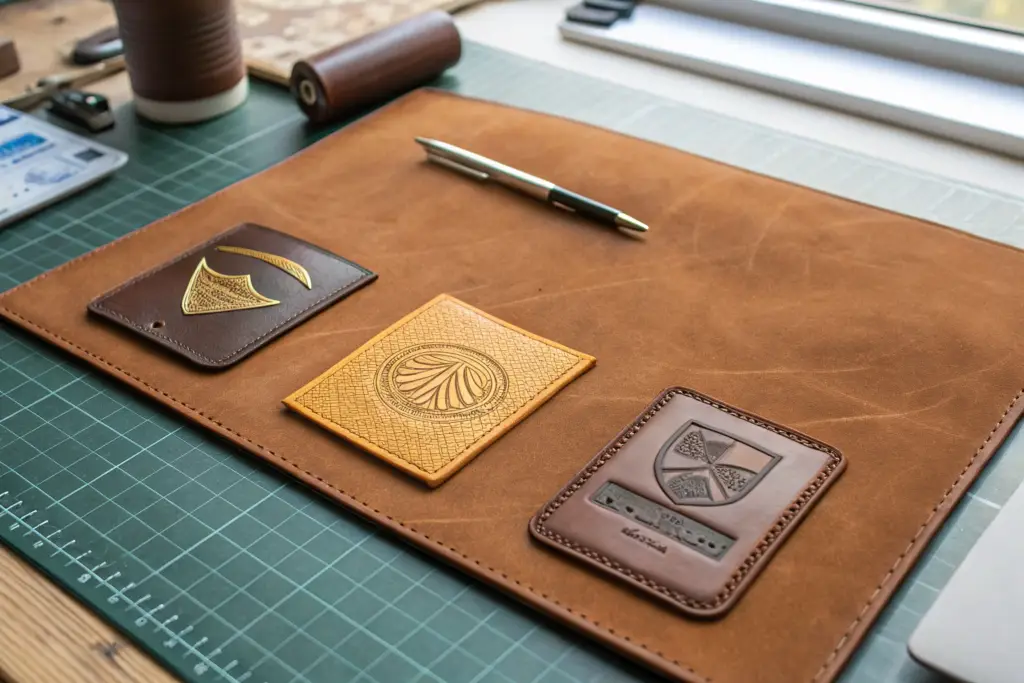
Blind debossing excels where longevity and subtlety are the core values. A foil stamp relies on a thin layer of metallic pigment adhered to the surface with heat-activated glue. Over time, especially on flexible products like bag flaps or wallet pockets, the glue can fatigue and fail due to repeated flexing. The foil cracks, then flakes, then disappears, leaving a patchy, ugly ghost logo. A blind deboss has no coating to fail. The logo is a purely physical three-dimensional feature of the material itself. It cannot peel because there is nothing to peel. It can only wear down over decades of abrasion, and even then, it just becomes a slightly softer version of the original.
A blind deboss also performs superiorly on deeply textured materials. Consider a pebbled leather or a heavily grained cowhide. A foil stamp sits on top of the texture peaks. It cannot reach into the valleys. The resulting stamp is incomplete and splotchy. A blind deboss does not sit on top. It crushes the texture into a smooth, flat plane. The contrast between the smooth, flattened logo area and the surrounding textured leather creates a beautiful, tactile dimensionality. A San Francisco-based handbag partner of ours had designed a logo with an extremely fine, 0.6mm wide line art. Three previous manufacturers had failed to produce a clean foil stamp. The fine lines disappeared under the metallic foil. We recommended a blind deboss on their smooth Nappa leather. The fine line art became a precise, delicately sunken engraving. It was legible, elegant, and permanent. The deboss did not compete with the design; it became the design. This is the power of choosing the right technique for the specific material narrative and the specific brand identity.
How Do We Match an Ink-Fill Color to a Textile Pantone?
An ink-filled deboss is the most technically demanding option, but it offers unmatched brand control. The color of the logo becomes an exact element of the design spec, matching the lining fabric, the edge paint, or a seasonal collection color. The challenge is that ink adhesion on a compressed, densified leather surface is completely different from ink adhesion on uncompressed leather. The heat and pressure of the debossing process alter the surface energy of the material. If you simply rub a standard screen-printing ink into the deboss after stamping, it often peels out within weeks because the smooth, compressed surface offers no physical anchor for the ink.
Our process is integrated. We use a two-part, heat-cured polyurethane ink system developed specifically for debossed recesses. The debossing die itself acts as a carrier in the final stage. We deboss the logo, and then, without moving the panel, we apply the ink into the recess. The die, still heated, is lowered again for a flash cure. This bonds the ink chemically to the compressed fiber surface. For color matching, we do not rely on a visual approximation of a Pantone code. We produce a physical draw-down on the actual material to be used in production. The brand owner approves this physical swatch, not a digital simulation. On a project for a Canadian knitwear brand that wanted a tonal navy logo to match their cashmere blend on a sueded vegan leather patch, we went through four ink formulation iterations. The first three were too dark, too glossy, or too purple under daylight. The fourth matched the matte navy of the yarn precisely. The brand owner later said that the perfect ink match on a small, 2cm patch communicated more about their obsessive quality standards than the $500 jacket itself. This is the level of integration between brand design and factory technology we offer.
How Do We Prevent Common Debossing Defects on Garment Trims?
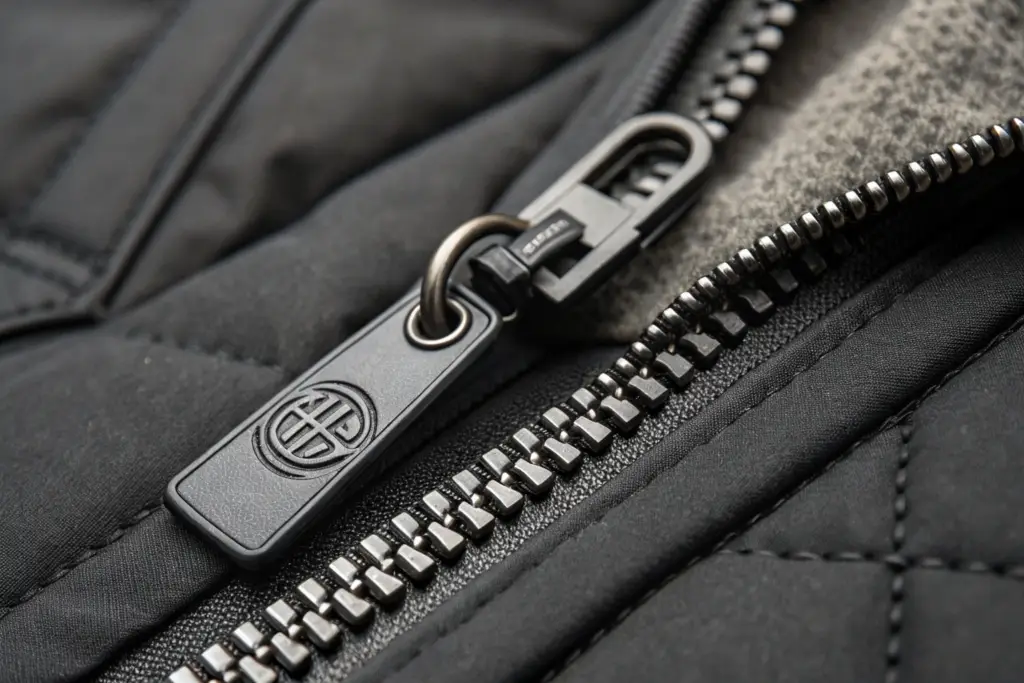
Garment trims destroy debossing reputations faster than any large leather panel. A zipper pull is small, curved, and made of a hard material. A button is tiny and has a shank on the back that interferes with flat placement. A faux leather patch sits on the back neck of thousands of t-shirts, needing to survive hundreds of stretch-and-wash cycles without deforming. These are the tiny, high-stress brand billboards that cause the most customer-facing quality issues. A cheaply debossed zipper pull has a logo that is misaligned by half a millimeter, which is enough to look drunk to the human eye. Its edges are cracked because the die was too cold and the stamped material is a rigid zinc alloy. After a few months of use, the logo is a smudged, unreadable dent. This is the sort of "small detail" that fuels a negative quality narrative about an entire garment, even if the stitching and fabric are flawless.
Our trim debossing defect prevention system uses a custom-cavity fixture for every single trim shape, ensuring the part is held in rigid, zero-tolerance alignment, and applies a specific temperature-pressure-dwell recipe validated through a 1000-cycle accelerated wear simulation.
Why Does Fixturing Decide Your Trim Quality?
Alignment is the silent destroyer of trim debossing. A human operator cannot hold a tiny, curved zipper pull perfectly steady against a hot die by hand. A minute twitch, a slightly off-angle placement, and the logo is stamped crooked or partially off the edge of the pull. This is not a skill issue. It is an ergonomic impossibility. The solution is not better training. It is precision fixturing.
We do not hand-place trims onto a flat press bed. We design and CNC-machine custom aluminum or Delrin nesting fixtures for every single trim component we process. A zipper pull fixture is a precisely milled cavity that matches the exact outline and curvature of that specific pull. The operator simply drops the pull into the cavity. It clicks into place with zero play. The die then descends into a guide bushing integrated into the same fixture, guaranteeing that the logo strikes the exact same position on every single piece with a positional tolerance of ±0.1mm. This is standard practice in precision automotive or aerospace component manufacturing. We brought it into our trim shop because the standards of luxury garment branding demand it. For a workwear brand from Texas that uses a custom debossed metal button, our fixture reduced their logo alignment defect rate from an industry-typical 8% to a measured 0.2%. That near-zero defect rate on a high-touch, high-visibility brand element means the customer's first physical interaction with the garment is always a reinforcement of quality, never a cheap, misstamped first impression.
How Do We Test Trim Durability in Washing Machines?
A faux leather patch on a pair of jeans goes through hell. Hot water, aggressive detergent, tumbling with metal zippers at 60 RPM. That debossed logo must survive this abuse cycle after cycle without delaminating, cracking, or filling in. A standard factory test might be to throw a sample garment in a home washing machine five times. This is not predictive enough. A five-wash test does not simulate the aggressive tumbling of a laundromat machine or the cumulative damage of a year of weekly washing.
Our lab uses an industrial-grade Wascator FOM71 CLS washing machine, the same standard machine used by global testing bodies for ISO 6330. We run a 20-wash full cycle test with a standard AATCC reference detergent at 40 degrees Celsius, including a tumble dry cycle between each wash. After 20 cycles, we examine the debossed area under a 10x digital microscope. We check for edge cracking—any fissure in the compressed material edge. We check for surface delamination—any separation of the debossed surface layer. We check for fill-in—the loss of depth due to material relaxation under wet-heat conditions. Our internal standard requires zero edge cracks, zero delamination, and no more than 10% depth loss after 20 cycles. A recent client producing premium denim for the European market was particularly concerned about this. Their Italian consumer base washes raw denim sparingly, but when they do, they expect the patch to look authentic and vintage, not destroyed. Our debossed patch passed the 20-cycle test with a depth loss of only 6%. The deboss looked beautifully worn-in, like a vintage coin, not a cheap plastic sticker that had half peeled off. This is the hard data that supported their marketing story of "garments built for a lifetime of hard wear," a story that their wholesale apparel buyers now actively seek out.
What are the Sustainability Advantages of Debossing Over Printing?
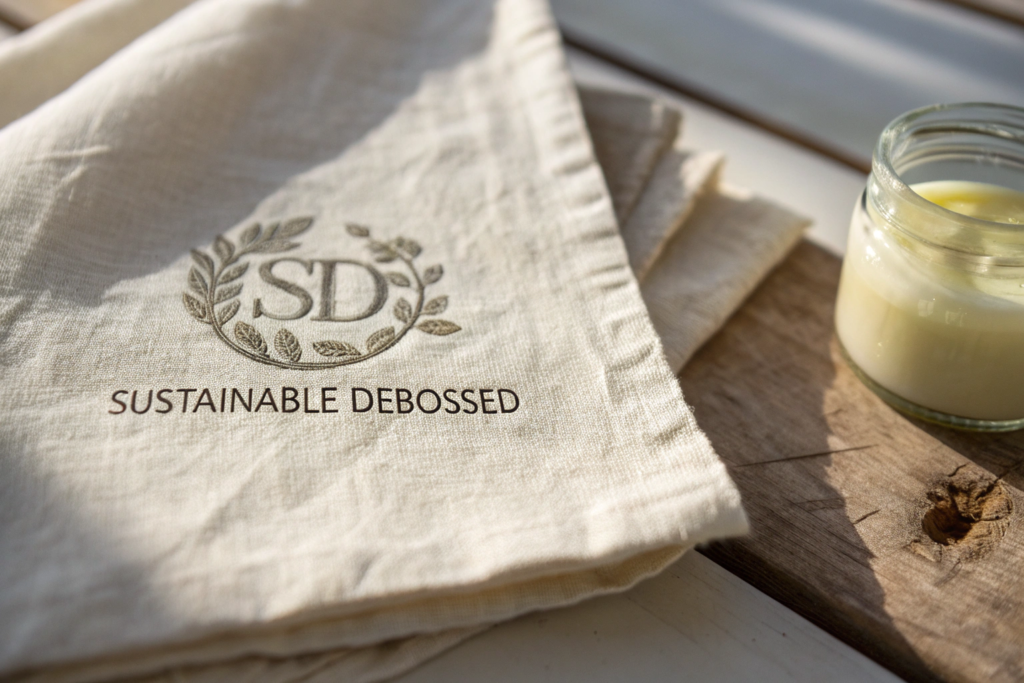
Sustainability in fashion branding is a minefield of greenwashing. A "sustainable" t-shirt with a giant, thick plastisol print is not fully sustainable. The cotton is organic, but the print is a petrochemical polymer that will never biodegrade. It cracks, flakes off into microplastic particles in the wash, and eventually renders the entire garment unrecyclable because separating the melted plastic ink from the cotton fibers is technically and economically infeasible. Most consumers do not think about the logo on their chest as a piece of permanent plastic pollution glued to a biodegradable shirt. But this is the physical reality of a standard screen print. Debossing offers a fundamentally different end-of-life profile. A debossed logo is not an applied substance. It is a physical alteration of the material itself. It is the same textile fibers, just rearranged. There is no chemical ink, no adhesive layer, no cross-linking agent, and no polymer film. The logo cannot separate from the garment because it is the garment.
Debossing is a zero-waste, zero-ink branding method that creates a permanent logo by mechanically rearranging the garment's own fibers, enabling the entire product to be recycled or composted without contaminant separation.
How Does Debossing Enable Cleaner Garment Recycling?
Mechanical textile recycling involves shredding fabric back into fiber fluff. This fluff can then be spun into new yarns. The mortal enemy of this process is contamination: a polymer print, a nylon zipper, a polyester embroidery thread that melts into sticky blobs in the shredder, or hard plastic particles that cause slubs and breaks in the new yarn. A standard screen print is exactly this kind of contamination. The plastisol ink shreds into millions of tiny, hard particles. These particles are chemically inert and physically weak. They do not integrate into a new yarn matrix. They remain as permanent, non-recyclable micro-waste, degrading the quality of any recycled fiber they contaminate.
A debossed logo, in contrast, disappears during shredding. The compressed fibers are liberated and become indistinguishable from the uncompressed fibers in the recycling stream. The entire process becomes a clean, single-material loop. We partnered with a circular fashion start-up from Sweden that was developing a fully recyclable denim jacket. The jacket was 100% organic cotton, with metal shank buttons that could be unscrewed and removed. The final branding element was the challenge. A traditional leather patch or a printed label would break the circularity promise. We developed a debossed logo directly into the jacket's own cotton placket, reinforced with a cotton backing patch for structural stability during the debossing. The result was a jacket where every single component, including the logo, could be shredded and turned into new cotton fiber at the end of the jacket's life. The start-up's life-cycle assessment, verified by a third-party auditor, showed that the debossed logo option reduced the jacket's end-of-life environmental impact score by 12% compared to a standard printed label jacket. This metric became a core piece of their investor pitch deck and consumer-facing sustainability report, providing a tangible, verifiable environmental advantage derived directly from our garment branding technology choice.
Is Debossing Compatible with GOTS Certified Apparel?
The Global Organic Textile Standard (GOTS) strictly controls every chemical input in a certified garment, from the sizing on the loom to the printing ink on the finished product. Many conventional branding techniques immediately break GOTS compliance. Heat transfers contain adhesives and polymer films. Standard screen printing inks are plastic-based. Even some "water-based" inks contain co-solvents that are prohibited under GOTS. This leaves an organic cotton brand with very limited, often dull-looking branding options, forcing a frustrating choice between sustainability certification and strong brand identity.
Debossing requires no chemistry. It is a purely mechanical process. Heat and pressure are the only inputs. There is no ink, no solvent, no adhesive, and no carrier film. This makes it inherently compatible with the GOTS screening process. We have successfully designed debossed branding for multiple brands seeking or maintaining GOTS certification on their final products. We provide a production letter stating the exact temperature and mechanical pressure used, accompanied by a written certification that no liquid chemical formulation, colorant, or post-treatment finish was applied during or after the debossing process. The GOTS certifier then accepts this as a purely mechanical finishing step, similar to brushing or stone-washing. A children's wear brand from Denmark built their entire branding story around a subtle, tactile, debossed sun motif on the chest of their certified organic cotton onesies. The deboss was the only branding on the garment. It was soft against a baby's skin, contained zero chemistry, and allowed the garment to carry the prestigious GOTS logo without any chemical compromise. This alignment of sensory design, absolute baby-safety, and rigorous environmental certification is a powerful market differentiator that only a pure mechanical technique like debossing technology can deliver.
Conclusion
A debossed logo is the quietest, most confident statement a brand can make. It does not shout. It impresses. Literally and figuratively. The journey from a shallow, burnt stamp to a perfect, lasting impression is paved with precise engineering, not guesswork. We have built our debossing capability on a servo-driven, force-controlled foundation that measures every micron of depth and adjusts for every natural variation in a hide or a textile. We maintain a ±0.1mm tolerance across production runs and validate that tolerance with digital depth gauges. We have eliminated the crackled halo and the uneven edge by mastering the dwell time and temperature curves for each specific material, from Italian vegetable-tanned leather to soft GOTS-certified organic cotton fleece. Our custom-milled fixtures ensure that tiny, critical trims—zipper pulls, buttons, patches—receive the same zero-defect placement as a large handbag panel, and our 20-cycle Wascator wash test guarantees that the impression survives years of hard laundry cycles without filling in or cracking.
Beyond the engineering, we have aligned the debossing craft with the urgent sustainability demands of the modern industry. We have proven that a logo can be a genuine circular economy asset, not a recycling contaminant. It enables a fully recyclable garment, a fully compostable garment, and a GOTS-certified garment without any chemical compromise. It transforms branding from an applied, peelable-afterthought into an intrinsic, permanent, and zero-waste feature of the product. This is the conversation we have with every brand partner: your logo is not just a mark. It is an engineered, sustainable, and tactile signifier of your entire quality philosophy.
If you are ready to move beyond fragile prints and inconsistent heat stamps, and you want a branding technique that communicates substance and permanence, let's start a conversation. I invite you to send us your logo file. We will provide a free, no-obligation technical assessment of the debossing feasibility on your chosen material, complete with a recommended method and a timeline. Contact our Business Director, Elaine, at elaine@fumaoclothing.com to schedule your complimentary logo branding consultation with Shanghai Fumao.