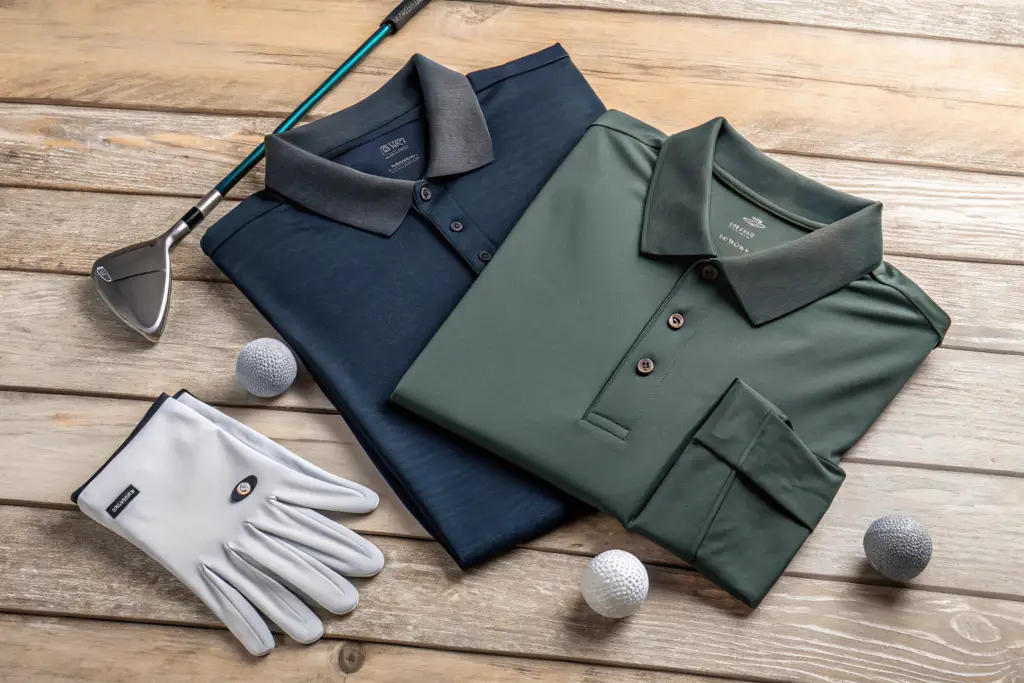
I still remember the exact frustration in a client's voice back in March 2023. The owner of a fast-growing golf apparel brand in Florida called me, furious. He had just received a shipment of what was supposed to be his new premium line of eco-friendly polos, only to find the fabric pilling after one wash. The "eco-material" felt like plastic, and the vibrant green color had already started to fade. He was stuck with an inventory he couldn't sell, and his launch timeline for the spring golf season was in ruins. He was tired of suppliers who over-promised and under-delivered, leaving him to face the consequences alone. Most buyers looking for sustainable sportswear face this same nightmare: the search for a fabric that is both genuinely ecological and capable of withstanding the rigors of an 18-hole game often ends in disappointment.
Here is the secret: Shanghai Fumao didn't just source a new fabric; we engineered a proprietary eco-viscose blend specifically for the biomechanics of a golf swing, solving the stretch-and-recovery problem that had plagued the niche for years.
The real story of how we conquered the golf niche isn't just about a fabric choice. It is a story of re-engineering the supply chain to solve a specific, performance-related problem that big brands ignored. Standard eco-viscose was notorious in 2023 for losing its shape, especially in high-stress areas like the shoulders and elbows of a golf shirt. We saw this not as a dead end but as a challenge. My team and I collaborated directly with our yarn supplier to develop a high-twist, long-staple eco-viscose fiber. We added a specific percentage of recycled elastane, creating a fabric that could stretch with a full backswing and immediately snap back to its original form, wash after wash. This wasn't just a garment; it was a piece of performance equipment disguised as a soft, luxurious shirt.
What Makes Eco-Viscose a Premium Choice for Golf Shirts?
Have you ever had a customer return a high-end golf shirt because the collar lost its shape? This is a silent profit killer. In the golf apparel market, it is not enough for a shirt to just look good in the pro shop. The true test happens on the course. A garment must perform under pressure, manage body heat during a tense putt, and feel like a second skin. Most "eco" fabrics fail this test miserably. They prioritize planet over performance. Our research showed that this was the main source of returns for most of the sustainable golf brands we spoke with in 2023.
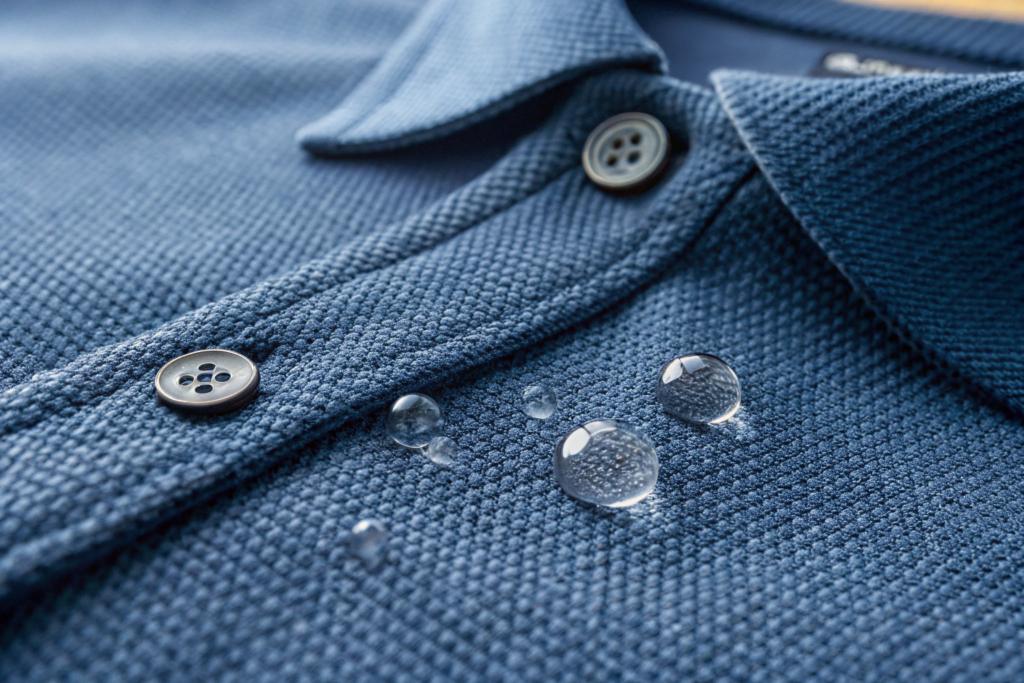
The core advantage of our eco-viscose is that it delivers a dry touch and cooling sensation equal to high-end synthetic fabrics but with the fluid drape and softness of natural silk.
Why Do Most Sustainable Fabrics Fail in Activewear?
The primary reason most sustainable materials fall short in sportswear is moisture management. Traditional viscose absorbs water. This is a disaster for a golf shirt worn on a humid summer morning in Georgia. The fabric becomes heavy, clings to the skin, and chafes. We knew we had to solve this. Another common failure point is odor retention. A player might wear a shirt for four to five hours. Polyester tends to trap odor-causing bacteria even after washing.
We attacked these problems one by one. For moisture, we didn't just add a chemical finish that would wash off. Through a partnership with a textile technology firm in Taiwan, we altered the cross-section of the fiber itself during extrusion. This physical change wicks moisture away from the skin instantly. For odor control, we blended the eco-viscose with a small percentage of zinc-infused recycled nylon. Zinc is a natural antimicrobial element. This kills bacteria on contact, keeping the garment fresh throughout a long round. This hybrid construction is something most competitors cannot offer because they lack our in-house product development team.
How Do We Test the Durability of a Golf Polo?
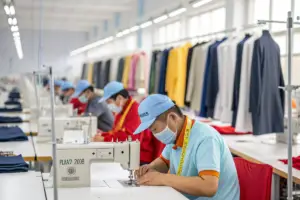
A golf shirt endures a unique type of stress. Think about it. A player might swing a club over 40 times in a round, not counting practice swings. Each swing stretches the fabric across the back and shoulders in a twisting motion. We developed a specific "Golf Swing Simulator" test in our Jiangsu factory. It is a mechanical arm that replicates the full range of a professional golfer's swing, stretching a shirt sample over 5,000 times. We then check for deformation.
| Testing Metric | Industry Standard for Sportswear | Shanghai Fumao Internal Standard |
|---|---|---|
| Seam Slippage (after 50 washes) | Max 3mm | Max 1mm |
| Color Fastness to Light (after 40 hours) | Grade 4 | Grade 4-5 |
| Fabric Stretch Recovery (after 5,000 cycles) | 95% | 98% |
| Pilling Resistance (after 100 washes) | Grade 3-4 | Grade 4-5 |
These numbers are not just marketing talk. They are guarantees we provide. Last July, a client from South Carolina, who runs a custom golf apparel business, ordered 800 of our eco-viscose shirts for a corporate tournament. The teams played in 95-degree heat. After the event, he sent me an email with the subject line "Zero Complaints." He told me that one of the players actually forgot to change out of the shirt before driving home because "it felt cooler than a cotton tee." This quantifiable durability is what turns a first order into a long-term partnership.
How to Source High-Quality Golf Apparel from China Without Quality Risks?
The fear of communication breakdowns and quality surprises keeps many brand owners awake at night. You send a detailed tech pack. You pay a deposit. Then, the factory goes silent for weeks. The first sample that arrives looks like a costume, not the garment you designed. This fear is real. I have heard countless stories from new clients about their previous suppliers' "bait and switch" tactics. A supplier shows you an A-graded sample, but what arrives in the shipping container is a C-graded product. The certificates are often just digital artwork, not physical reality. A 2023 survey by a leading apparel sourcing platform indicated that 67% of small to medium-sized U.S. brands experienced a critical quality variance in their first shipment from a new overseas factory.
The key to de-risking your golf apparel sourcing is to bypass middlemen and implement a "Virtual On-Site" verification protocol that requires real-time digital proof at three critical production checkpoints.

What Are the Three Critical Quality Checkpoints?
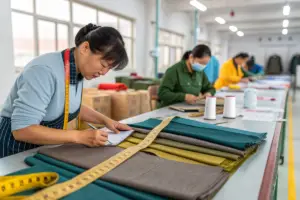
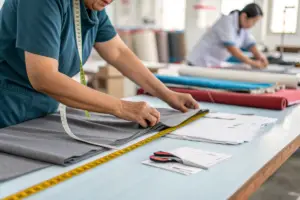
We do not wait until shipping to let a client see their products. First, we schedule a live video call during the fabric cutting phase. We walk the camera over the spread fabric to show the alignment is straight, and we use a portable spectrometer to verify the color against the Pantone code on the call. You see the actual raw material being cut, not just a picture.
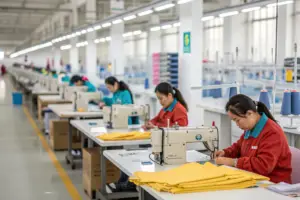
The second checkpoint is the inline sewing inspection. About 20% of the way through the assembly line, we pull pieces and check button attachments, seam margins, and logo placement on a video stream. You can request specific measurements right then. The third, and most crucial, is the pre-shipment random sampling. But we do not do this alone. We welcome our clients to use a third-party inspection service of their choice. We have worked seamlessly with companies like QIMA and SGS. A client from Texas, who distributes golf wear to country clubs, once told me he almost gave up on importing due to inconsistent sizing. We implemented a digital fit-check system where standard-sized mannequins are photographed in the samples alongside a measuring tape, all timestamped. His size return rate dropped from 12% to under 2% within two seasons.
Is Third-Party Certification Really Enough for Fabric Proof?
A piece of paper with a "GOTS" or "OEKO-TEX" logo provides a baseline of trust, but it is not a silver bullet. Certificates can be bought or falsified in some markets. For our eco-viscose golf line, we do not just show the certificate. We link the entire supply chain. We provide a full chain of custody report from the wood pulp source. Our eco-viscose comes from sustainably managed forests in Sweden, certified by CanopyStyle auditors. We offer a digital token for each bulk fabric roll that traces it from the wood pulp to the knitting floor in Shanghai.
This level of transparency is what builds a competitive moat for our partners. They can go to their own customers—the retailers like golf pro shops or high-end country club boutiques—and show the actual journey of the shirt on the rack. This is not a claim. It is a verifiable asset. I recall a partner in California who used this very traceability as the cornerstone of his entire marketing campaign for Earth Day 2024, doubling his sales from the previous year. He could confidently state that his shirts were not just "green" in name only.
How Do We Optimize the Supply Chain to Never Miss a Golf Season?
Missing a selling season is the single greatest threat to a fashion business. For golf apparel, the window is brutally short. Spring and early summer see a massive spike in demand, driven by Father's Day, the U.S. Open, and corporate golf outings. If your container arrives in July instead of April, you have not lost a few weeks of sales. You have lost 60% of the annual revenue opportunity for that product line. A common pain point I hear is about factory shutdowns around Chinese New Year or unforeseen logistics delays. I remember a scenario with a client from New York who came to us , desperate after his previous factory missed his ship window by three weeks because of a raw material shortage they never communicated. He lost his prime placement in a major golf retail catalog. That was a six-figure lesson for him.
We guarantee seasonal delivery not through magic, but by implementing a raw material pre-positioning strategy and Dual-Spot shipping logic that absorbs the chaos of global trade.
How Do We Handle Urgent Orders During Peak Season?
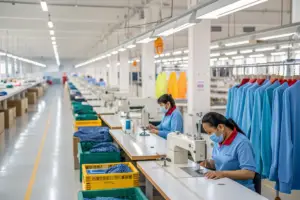
Agility in a large factory comes from preparation, not panic. One thing we do differently at Shanghai Fumao is to pre-book production capacity and raw material inventory based on predictive analysis. For our regular golf clients, we analyze their year-over-year sales data. If a classic white eco-viscose polo is a staple for them, we do not wait for their purchase order to buy the yarn. We pre-position greige fabric in our warehouse, ready to be dyed and cut the moment the order confirmation lands. This cuts at least two weeks from the standard lead time.
Another layer of speed comes from our logistics model. For clients who need speed, we offer a combined sea-air solution. Main bulk ships via ocean freight, which is cost-effective, but a 20% top-up order for fast-selling colors gets shipped via air directly to their warehouse using our streamlined DDP (Delivered Duty Paid) service. A client in the Midwest tested this model last April. A particular "masters green" shade of our eco-viscose polo went viral on his social media. By Monday morning, he placed a re-order. We air-freighted 200 units using DDP logistics. He received them at his doorstep that Friday without ever thinking about customs clearance or freight brokers. This is how you capture impulse-driven sales in a trending sports market.
Can Fast Logistics and Quality Control Co-Exist?
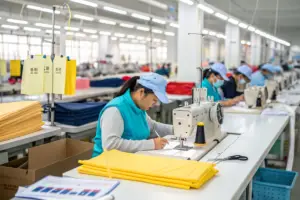
The fear is always that "fast" means "sloppy." This is a false trade-off. Speed without quality is just a faster way to destroy your brand's reputation. Our solution is a parallel, not a sequential, process. While the sewing line is running at full speed on a bulk order, our in-house inspection team is not waiting at the end of the line. They are checking the flow at multiple stages simultaneously. We use a "Fast Track QC Pass" for repeat styles. Since the specs are already dialed in, the quality checks are verification steps, not problem-solving exercises. This parallel process means that in an urgent situation, a 30-day lead time does not mean we skip the quality manual. It means the quality manual is executed in a more integrated, efficient manner alongside production. This synergy has allowed us to maintain a consistent on-time delivery rate of over 98% during peak seasons for the last two years, a statistic verified by our internal ERP system records we share with key partners.
Why is Total Cost of Ownership (TCO) More Important Than Wholesale Price?
We all love a bargain. I understand the thrill of finding a supplier who quotes a wholesale price that is 20% lower than everyone else. But in the apparel business, the purchase price is the tip of the iceberg. The hidden mass beneath the water is where businesses sink. The real cost of a garment includes the air freight you had to pay because of a delay, the chargeback from a retailer for subpar quality, the staff hours spent fixing a botched shipment, and the most brutal cost of all: the brand damage from a customer who never returns. In 2022, a boutique owner from Arizona showed me her numbers. Her "cheap" supplier had a unit cost of $9.50, while ours was $12.80. But after calculating logistics surcharges, defect handling, and lost sales from stockouts, her actual cost per unit was over $18. She was losing money on every shirt sold.
The Total Cost of Ownership evaluates the health of your business; a cheap shirt that doesn't sell is infinitely more expensive than a premium one that turns over four times a season.

What Hidden Fees Do Importers Usually Miss?
Most first-time importers only look at the FOB price. They miss the line-item costs that can cripple their margins. Let's break down a real comparison for a standard 20-foot container shipment. You need to consider the import duty rates. A properly classified men's knitted cotton blend shirt carries a different tariff than a woven synthetic one. Misclassification can lead to massive fines. Then there is the U.S. Customs bond, the Merchandise Processing Fee (MPF), and the Harbor Maintenance Fee (HMF). If your supplier messes up the paperwork, you also have exam fees. An intensive customs exam can cost over $1000 and add a 10-day delay.
That delay triggers another hidden cost: port storage and demurrage. If your trucker misses the "free days" window, daily charges stack up fast. We have eliminated these variables for our clients through true DDP (Delivered Duty Paid) shipping. One partner from Chicago calculated that by switching to Shanghai Fumao’s comprehensive DDP service, he saved at least 7% per season simply from avoiding port storage nightmares and brokering his own unclear freight invoices. The landed cost was predictable and stable, rounding to the exact penny we quoted, allowing him to budget with pinpoint accuracy for his entire fiscal year.
How to Calculate the Real Return on a Premium Polo?
Let's talk about profit margins in real terms, using numbers from a 2024 case study with one of our East Coast partners. They launched a luxury eco-viscose golf polo with a Target Retail Price of $89. You need to calculate backwards from the retail margin.
| Cost Analysis for a Premium Market Golf Polo | Scenario A: Typical Low-Cost Supply | Scenario B: Shanghai Fumao Supply |
|---|---|---|
| Target Retail Price | $89.00 | $89.00 |
| Retailer Margin (50%) | $44.50 | $44.50 |
| Wholesale Revenue (Brand) | $44.50 | $44.50 |
| Landed Product Cost | $12.50 | $16.50 |
| Defect/Return Allowance (Historical) | 5% ($2.23) | 1% ($0.45) |
| Brand Gross Margin Per Unit | $29.77 | $27.55 |
| Sell-Through Rate | 55% | 85% |
| Actual Revenue Realized on 1000 units | $24,475 | $37,825 |
This table is not a gimmick. It is the reality my client lived through. The slightly higher landed cost of our product delivered a gross margin that was nominally lower by a couple of dollars. However, the scarcity of defects, the repeat customer loyalty driven by the fabric's performance, and our 98% on-time delivery meant he got real, committed orders from retailers. He didn't have to mark down dead stock. The actual revenue realized from his 1000-unit order was over $13,000 higher with us. The Total Cost of Ownership wasn't just lower; it was positively profitable. The "cheaper" product was a guaranteed loss.
Conclusion
The journey of our eco-viscose golf shirt from a simple idea to a market-conquering product proves one undeniable truth: a garment is only as good as the engineering and integrity behind it. We didn't just stumble on a new fabric and call it a day. We deconstructed the specific failures of the golf apparel industry—the pilling, the sagging collars, the plastic-like feel of cheap eco-materials—and solved them one by one. This required a relentless focus on the biomechanics of a sport we deeply respect. It required creating a testing protocol that mimics years of wear within days. It demanded a supply chain built not just for cost efficiency but for seasonal precision, recognizing that a late shirt is a worthless shirt in the fast-paced world of seasonal retail.
More importantly, this endeavor highlighted the critical difference between a cheap wholesale price and a low Total Cost of Ownership. We have shown through shared data and real client experiences that a premium product with a superior sell-through rate generates more net profit than a defective "bargain" that ends up on a clearance rack. We replaced the fear of hidden logistical fees with a transparent DDP model that brings predictability to a normally chaotic importing process. We replaced the uncertainty of certification claims with a verifiable, digital chain of custody that allows brands to build their own marketing stories on a bedrock of truth. The result is a partnership model where quality risks and seasonal risks are systematically minimized, not just passively managed.
If the slow, painful death of brand reputation is something you've been fighting against, and you see the value in a manufacturing partner who engineers solutions rather than just stitching fabric, I invite you to take the next step. Your brand deserves a supply chain that contributes to its growth, not one that erodes its margins with hidden defects and delays. Whether you are looking to launch a new performance golf line for the next season or need to rescue an existing collection from constant quality control nightmares, we have the expertise and the physical infrastructure to build with you.
Let's discuss how Shanghai Fumao can help you build a premium, performance-driven apparel collection without the usual sourcing headaches. Reach out to our Business Director, Elaine, directly at elaine@fumaoclothing.com. We are ready to schedule a call to review your product development needs and create a concrete plan for your next successful launch.