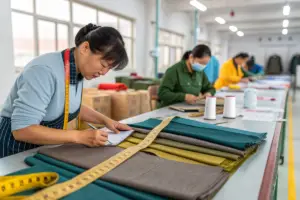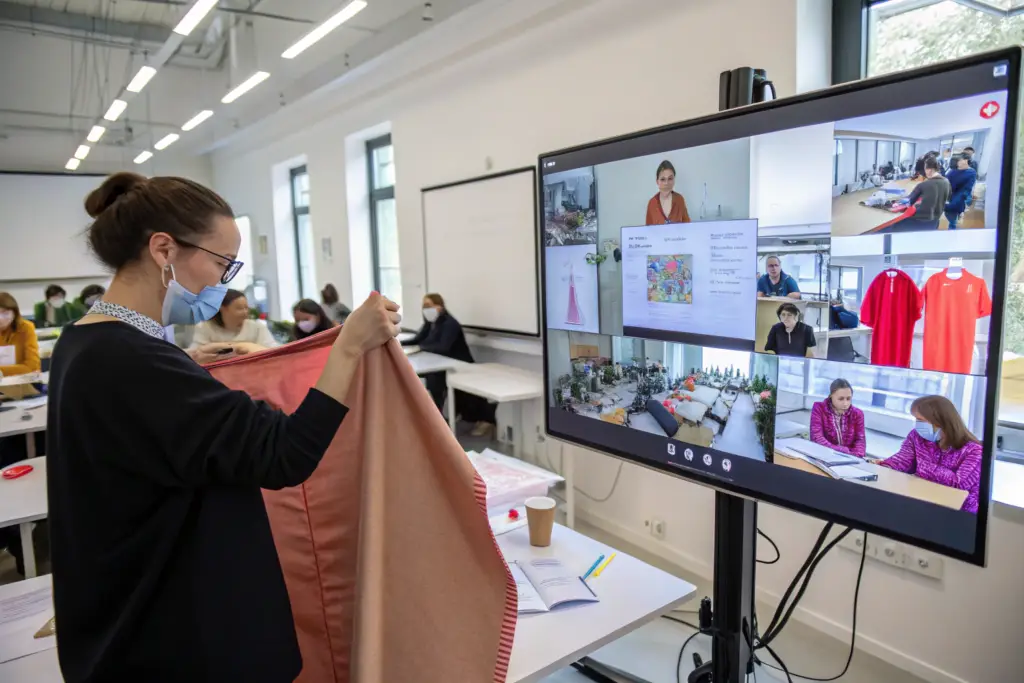
I used to think factory tours were a privilege reserved for big-brand buyers with fat travel budgets. A plane ticket, a hotel booking, and three days carved out of a busy calendar. Then, in the autumn of 2023, I received a strange request. A professor from a fashion business school in Antwerp emailed us. She was teaching a module on sustainable supply chains. Her students had read one of our technical blog posts about eco-viscose shrinkage control. Her question was simple and unprecedented: "Can my class of 40 students walk through your sample development process? We do not have the travel funds. Can we do it digitally?" My first instinct was hesitation. A live, unscripted video walk-through of our R&D space felt risky. What if the Wi-Fi dropped? What if the questions were too aggressive? But I remembered the core promise I made to my team years ago: radical transparency is our only true marketing. I said yes.
European fashion students tour our sample room online because we have built a live, interactive educational bridge that replaces expensive physical field trips with a high-definition, one-hour deep dive into real garment engineering.
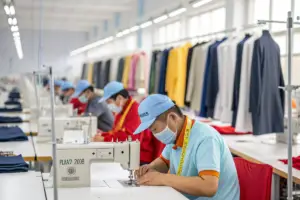
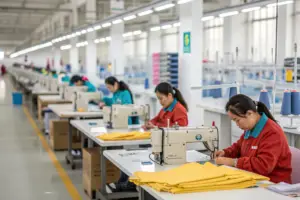
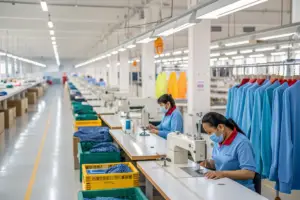
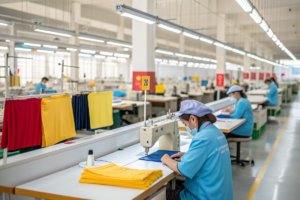
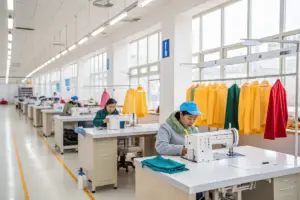
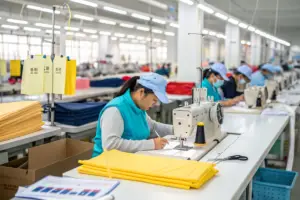
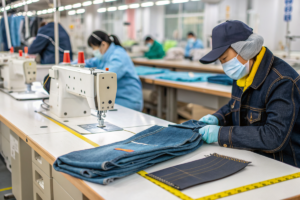
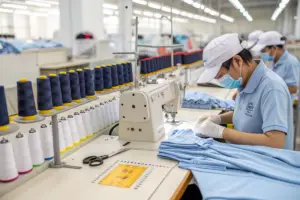
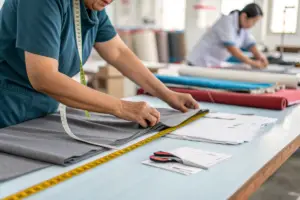
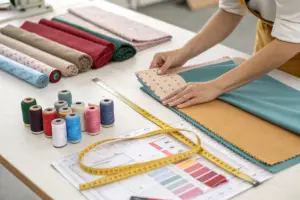
Young designers are not just looking for a supplier file to download. They are searching for empirical knowledge they can touch through a screen. They have read textbook chapters on how a tech pack translates into a physical sample, but they have never actually heard the hum of a Merrow stitch machine finishing a collar. This gap between academic theory and factory-floor reality is huge. Our virtual sample room tour fills that gap. We do not just show a shiny showroom. We walk the tablet camera right onto the floor where the prototypes live and breathe. We zoom in on the failure rack: the shirts that pilled, the jackets with wavy zippers, the patterns that graded badly. This is the education that a static textbook image cannot provide. It demonstrates competency without a sales pitch, and for students entering a job market saturated with greenwashing claims, this unscripted proof is the most valuable currency we can offer.
What Digital Tools Power an Interactive Factory Tour?
A standard Zoom call with bad audio is not a factory tour. It is just a frustrating guessing game. I learned this the hard way during our first test run with a single intern back in January 2024. The video lagged every time we walked past a metal rack, and the fabric textures looked like pixelated soup on her screen. I realized that this digital bridge would collapse instantly if the tools were not as professional as the product we were trying to showcase. A fashion student who uses an iPhone 15 Pro Max to stream high-motion dance videos on TikTok will not accept a grainy 720p feed when looking at a cashmere blend. The standard for visual trust has gone up. So, we took our IT and production teams and rethought what a virtual reality tour actually needed to feel authentic to a Gen-Z European audience.
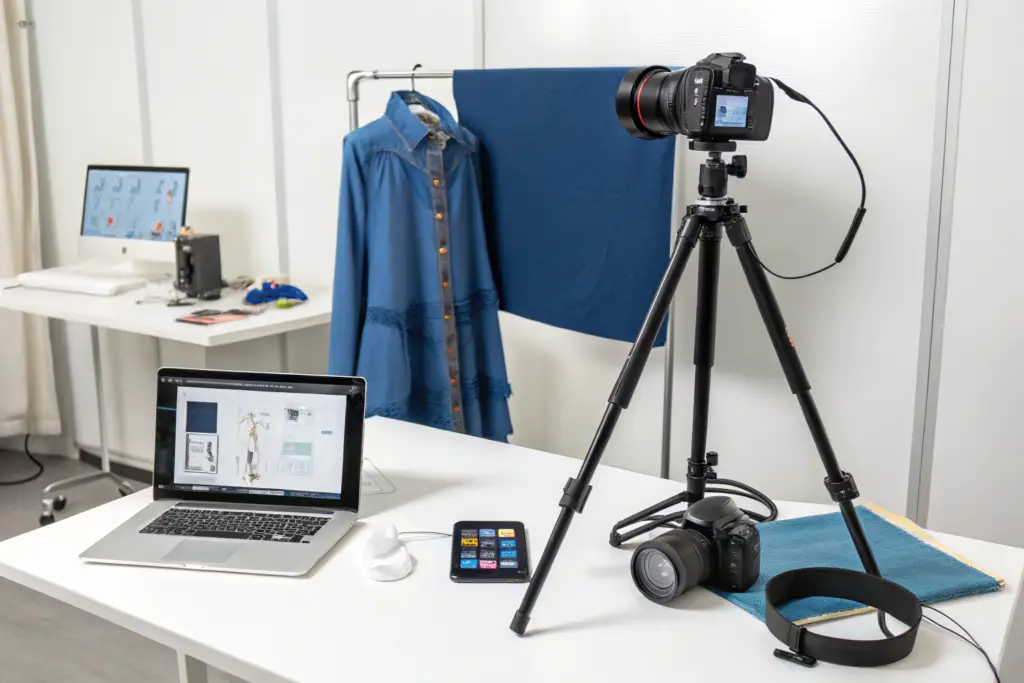
The backbone of our interactive tour is a wearable gimbal-stabilized 4K setup paired with a dedicated fiber optic line, so when we zoom in on a seam, you count the stitches, not the pixels.
How Does Live Macro Lensing Change the Trust Factor?
Trust in apparel sourcing is built on two things: the macro vision and the micro detail. The macro vision is the clean cutting table and the organized fabric library. The micro detail is the stitch density and the yarn twist. We integrated a macro probe lens into our tour setup. When a student from Germany asked about the difference between a chain stitch and a lock stitch on a knit polo, I did not just explain it verbally. Our technician, Mr. Wang, switched the video feed to the macro lens. He placed the two seam samples under it. The students saw, in real-time, the structural loops of the chain stitch and how they allow for natural stretch. They saw the straight, interlocking path of the lock stitch and understood its use on a woven collar stand.
Here is a simple table that breaks down the key equipment we invested in, which changed the game for us:
| Equipment | Problem We Solved | Impact on Student Trust |
|---|---|---|
| DJI Gimbal & Sony 4K Cam | Shaky, blurry hand-held footage | Walk-and-talk segments feel cinematic and focused |
| Macro Probe Lens | Inability to show stitch/weave detail | Students can verify fabric density claims live |
| Wireless Lapel Mic | Echoey, loud factory background noise | Instructors speak in normal tones; audience stays engaged |
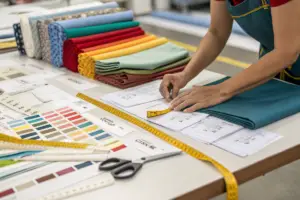
| Portable Spectrometer | Color inaccuracy on screens | Students see digital color readings matched to physical Pantone chips |
The spectrometer was actually a request from a student in Antwerp during our second tour. She said, "Mr. Zhang, I know my screen calibration is off. How do I know this 'navy' is not actually a dark purple?" We adapted. On the next tour, we added a live X-Rite spectrometer reading. We hold it to the fabric, and the digital screen shares the exact CIELAB value with the students. This is not a prerecorded marketing video. This is interactive, real-time problem-solving.
Most factory tours, whether physical or digital, are curated highlight reels. You see the best-selling jacket and the 10,000-unit order being packed. You do not see the pile of twisted collars and the cracked print failures. I decided early on that this traditional approach would be useless for students. They need to learn how a garment fails to understand how to design durable products. So, we created a permanent "Failure Analysis" station in our sample room, and it is the most popular stop on every tour.
On a thumb-up rack, we hang samples that failed internal testing. One is a recycled polyester polo that developed severe pilling after just 20 simulated wash cycles in our testing machine. Next to it hangs our successful eco-viscose blend polo, which passed 100 cycles with a grade 4.5 rating. We pass the macro lens over both. The difference is visceral. We also show a puffer jacket with a zipper that failed after 2,000 pull tests. The individual zipper teeth cracked because of an incorrect chain tension setting during attachment. We show the data from the testing machine log. This raw, unfiltered honesty does something powerful. It silences the skeptic. A professor from London College of Fashion told me after his class’s tour: "You gave my students more practical manufacturing knowledge in 90 minutes than they got in a semester of theoretical lectures." That comment alone validated the entire investment in our digital transparency infrastructure.
How Does a Virtual Sample Room Visit Replace a Physical Factory Audit?
A physical factory audit is a snapshot in time. It is a Tuesday afternoon in March. The factory knows the auditor is coming. The floor is mopped, and the fire exits are clear. But what happens on Wednesday night, at 10 p.m., when a rush order is running late? This is the question that haunts ethical sourcing managers. A static audit report, usually a PDF scanned into an email, has a short shelf-life of trust. It also costs a significant amount of money. For a small brand or a student launching a Kickstarter project, spending three thousand dollars on international travel for a one-day audit is impossible. The financial math simply does not work. Yet, the ethical risk remains the same. They need to know: Are the people making my clothes safe? Is this factory actually capable of the precision it claims?
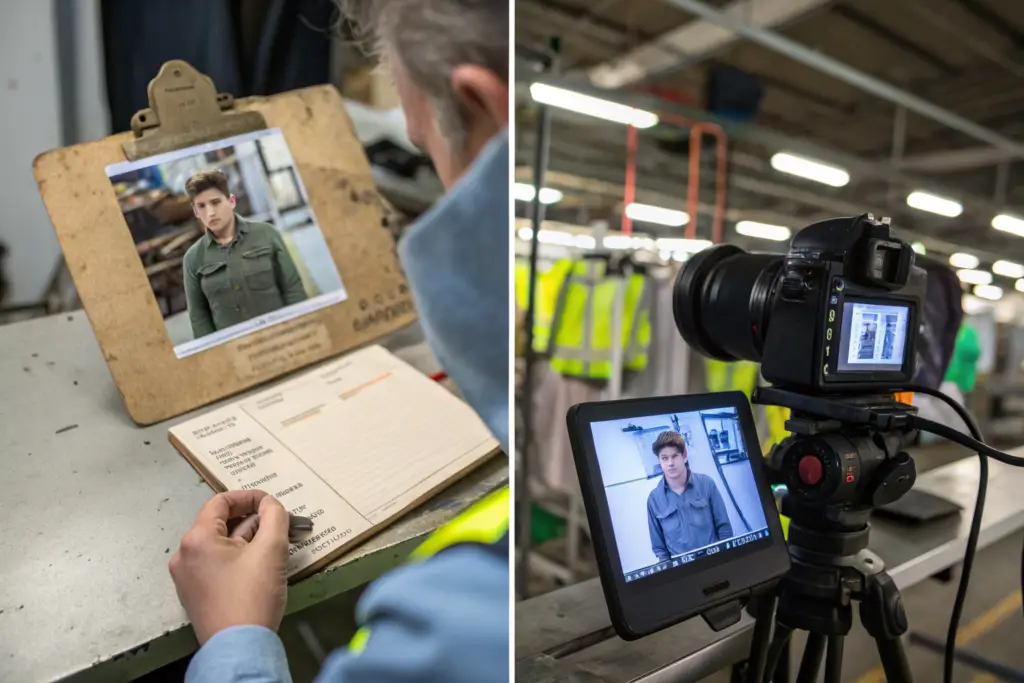
A live, interactive virtual sample room visit bypasses the staged nature of scheduled audits by allowing an educator or buyer to ask a worker on the spot about their blind-stitch machine settings or to see the real-time fire drill log.
Can We Verify Ethical Compliance Through a Screen?
This is the hardest question to answer, and I do not pretend a screen can catch everything. But we can catch a lot more than a fixed-camera audit. The key is the unscripted moment. On one tour with a group of sustainability students from Amsterdam, a student asked a sensitive question directly to our floor supervisor: "Where do the fabric scraps on that cutting table go?" Without hesitation, our supervisor waved the camera operator over to a clearly marked recycling station. She showed the digital logbook on a tablet next to the baler, which recorded the exact weight of the waste bales collected that week. It was not a prepared slide. It was a physical, verifiable artifact seen in real-time.
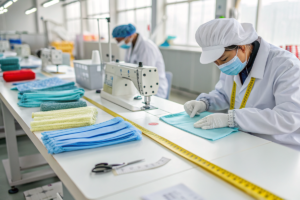
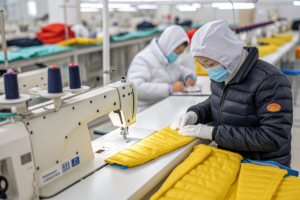
We also demonstrate worker safety. We walk the camera into the needle guards area near the sewing stations. You can see the metal guards, the protective glasses, and the well-lit environment. But the most powerful evidence is the worker interaction. We do not script these. The professor from Antwerp asked to speak to a stitcher. Our technician, Ms. Li, came on the mic. The professor asked, "How long have you worked here? Can you show me your workstation?" Ms. Li showed her organized space, her personal tools, and the production ticket for a designer polo order. The students could see the ergonomic chair she used. This kind of direct, unmediated access provides a layer of social verification that a pre-written audit statement from a third-party firm cannot emotionally replicate. It makes the compliance report a living document.
What Are the Educational Benefits Beyond Compliance?
The replacement of a physical audit is not just about risk mitigation; it is about a superior learning outcome. A branded buyer wants a simple pass/fail grade. A student wants to understand the "why." Virtual tours allow a depth of exploration that physical visits often restrict due to time constraints. In a physical tour, a group of 20 people crowd around a pattern maker. Most cannot see the detail. In a virtual tour, the 4K macro lens becomes everyone’s eyes simultaneously.
We also utilize screen sharing for deep dives into technical specifications. A student from a design course in Milan challenged us during the tech pack segment of the tour. He shared his own Adobe Illustrator file with us via a secure link. Our pattern maker, Mr. Chen, opened it live, looked at the armhole curve, and said, "This curve lacks a proper notch marker. If you lower this drop by 1.5 cm, you will solve the bunching you probably see in the armpit." The student confirmed the bunching was a problem in his prototype. This kind of direct, collaborative correction, happening across 8,000 miles in real-time, is something a dusty audit checklist can never provide. It transforms a prospective business relationship into an educational mentorship. This is why educators bring their classes to Shanghai Fumao every semester. We have replaced the dog-and-pony show with a functioning knowledge exchange.
What Do Students Learn About Eco-Material Engineering?
The most dangerous myth in sustainable fashion is that using an "eco" fiber is a simple plug-and-play substitution. A student buys a bolt of organic cotton, makes a shirt, and assumes the sustainability box is checked. The real world of eco-material engineering is far more brutal and chemical. It involves tensile strength curves, alkaline pH levels, and the glass transition temperatures of recycled polymers. These are not topics that ignite romance, but they are the topics that dictate whether an eco-garment survives its first trip through a home washing machine or turns into a twisted, baggy rag. When we first opened our sample room to European universities, I was surprised by how quickly the questions moved past simple "is this organic?" into very specific chemical and mechanical engineering territory.
The deepest learning happens when students witness the tension between a fabric's biodegradability claim and its durability performance, and we show them how we solve that conflict through mechanical finishing, not toxic chemistry.
How Do We Demonstrate Biodegradable vs. Durable Trade-offs?
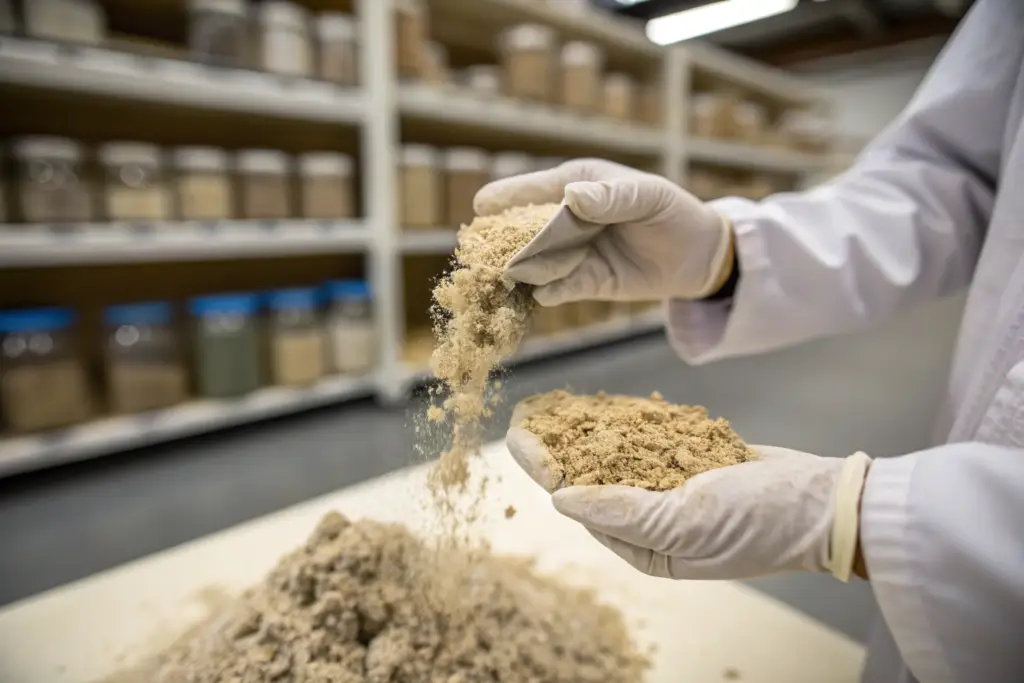
A truly compostable shirt will, by definition, start to break down in warm, humid conditions. A golf course in Florida is warm and humid. This is a problem. We created a specific demonstration for this apparent paradox. We take two swatches of fabric. One is a standard, chemically-finished biodegradable viscose. The other is our structurally-modified eco-viscose blend. The students see both. They feel both through the macro lens.
Then, we pull up the data from our accelerated aging chamber. We simulate the heat, moisture, and friction of 50 wash-and-wear cycles in 48 hours. The standard biodegradable fabric shows a significant loss of tensile strength. The fibers have started to fibrillate. The surface is fuzzy. It will not survive a full season. Our modified viscose, where we changed the polymer chain orientation during spinning, shows minimal strength loss. The secret is that we did not make it non-biodegradable; we made it durable enough for a long user life. We explain that a garment worn for three years has a lower annualized footprint than one that falls apart in three months, even if the latter is technically compostable in a lab. We show students an independent third-party report analyzing this exact comparison. The report concludes that extending the active use phase of a garment by 24 months reduces its carbon footprint by 20-30%, regardless of its raw material. This shifts their focus from a single "eco" label to a holistic model of resource efficiency and circularity.
What Radical Transparency Looks Like in Yarn Sourcing?
For many students, "yarn sourcing" is an abstract line item on a sourcing checklist. They do not see the physical tags and shipping documents that connect a finished garment to a specific tree in Sweden. We make this visible. We show them the physical fiber bales in our warehouse. Each bale has a QR code. We scan the code live with a tablet. It opens a digital chain of custody document. The students see the forest management certificate of the dissolving wood pulp supplier in Domsjö, Sweden. They see the name of the vessel that shipped the viscose staple fiber from the Lenzing group to our port in Shanghai.
This is not a slide deck. This is a live, unscripted scan of a physical, verifiable object. The journey continues. We show them the blending process for our signature recycled elastane. We explain how we source post-industrial nylon waste from a factory 200 kilometers from our facility to reduce the transportation miles of the raw waste. A student from a Swedish university actually recognized the forest region on the certificate once. He said his family had a summer house near there. That moment of personal connection, linking a fashion class in Stockholm to a physical forest supply chain by witnessing the digital birth certificate of a material, is something we can never plan. It just happens when you commit to showing the raw documents, not just polished sustainability reports. This is how we teach the difference between sourcing evidence and sourcing claims.
How Does This Virtual Experience Convert a Student into a Future Partner?
When an engineering student from Aachen or a design student from Florence joins a tour, I do not see a one-time visitor. I see a potential future design director, a future brand founder, or a future sourcing consultant. This long-term vision shapes everything about the interaction. I remember a specific case. In February 2024, a master's student from a Berlin design school attended a tour. She was quiet, mostly listening. At the end, she asked one question: "If I have a seam sealing problem on a recycled poly fabric, can I send you a picture?" I gave her my direct contact. Six months later, she emailed me. Not just with a picture, but with a full tech pack. She had graduated, launched her own sustainable outerwear brand with a small pre-seed investment, and her first production PO was ready. She chose us not because we were the cheapest, but because we were the factory she already knew and trusted from a screen.
The virtual sample room tour plants a seed of technical credibility that germinates when that student is ready to launch a brand, turning our factory into their default, de-risked first manufacturing choice.

How Does Early Technical Mentorship Build Loyalty?
Loyalty in the garment supply chain is almost dead. Buyers hop between suppliers on Alibaba for a five-cent price difference. This transactional chaos consumes a lot of energy. Mentorship is the antidote. When we invest engineering time in someone who has not even incorporated their business yet, the return is not immediate. But the long-term bond is unbreakable.
On a tour, a group of students from a fashion technology course struggled to grasp the concept of a full garment cost breakdown. Instead of skipping the topic, our costing specialist, Elara, shared her screen. She pulled up a live Excel spreadsheet for a generic cotton hoodie. She broke down every single cost element: CMT (Cut, Make, Trim), fabric consumption, yarn cost, washing charges, testing amortization, and the specific FOB (Free on Board) margin. The students asked direct questions. "What if I use a bamboo fleece? How does the shrinkage allowance change the fabric consumption?" She adjusted the numbers live. They saw the profit squeeze in real-time. This is a practical business skill that a school rarely teaches with this depth. That experience creates a cognitive anchor. When that student thinks about their first collection, they will remember the CMT transparency of Shanghai Fumao. They will not email five random suppliers. They will email Elara. They are not just comparing a price; they are comparing a known, trusted process against an unknown gamble.
What Partnership Models Do We Offer Graduates?
The traditional wholesale model is too heavy for a fresh graduate with a brilliant design but limited cash flow. They cannot afford a 300-piece minimum order quantity per style. Yet, small brands are the future of the industry. To serve them, we developed a structured internal incubator pathway. We explain this towards the end of the tour.
We offer a Graduated MOQ (High MOQ Purchase) system. The first order might be a collaborative sampling run. We produce just the size-set samples with them, charging a reasonable fee for the technical work, but no bulk order requirement. The second stage is a pilot run. We open a small section of a line for them, often 100 pieces per style, using our DDP shipping to their doorstep. The cost per unit is higher, but the risk is contained. The third stage is full integration. By then, their brand has market validation. This pathway is a direct result of feedback from European students on our tours who explicitly told us the standard apparel manufacturing MOQs were killing their dreams. They wanted a partner who could scale with them.
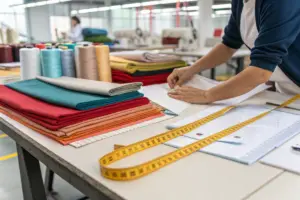
We also connect them to our fabric deadstock library for their initial capsule collection. Unused, high-end materials from previous bulk productions that are perfectly usable. This reduces their fabric minimums and aligns with the circularity principles we teach. This system turns our factory into a responsive platform, not a rigid vendor. And it consistently turns a curious student into a loyal, long-term commercial partner.
Conclusion
The journey from a curious email from an Antwerp professor in 2023 to a semesterly fixture for European design and business schools has reshaped how we view our factory's role. We are no longer just a production unit hidden behind a computer screen trading emails. Through a wearable 4K rig, a macro lens, and a commitment to unscripted dialogue, we have transformed our sample room into a global classroom. We have proved that a factory's true quality is not just measured by its stitch density but by its willingness to expose its failures, explain its engineering trade-offs, and demonstrate its ethical practices in real-time, with no safety net.
This virtual bridge has done more than educate; it has changed the fundamental dynamics of trust in garment sourcing for the next generation. We showed students how to read a CIELAB color value to verify a navy isn't purple. We walked them through a live costing sheet to show where their margins live and die. We scanned a bale of Swedish wood pulp and traced it to their screen, proving that a genuine chain of custody is a living document, not a static certificate. Most powerfully, we mentored quiet, attentive students who later returned as brand founders, fully prepared with tech packs and a deep, hard-earned trust in our production capabilities. This long-term cultivation is the opposite of the transactional, price-swapping culture that dominates our industry.
If you are an educator teaching the next generation of fashion professionals, or a student yourself who demands more than a textbook can offer, I invite you to stop guessing about your supply chain and start seeing it. The traditional barriers of geography, travel budget, and factory secrecy do not need to separate you from the empirical knowledge of real garment engineering. You can explore everything from a failed prototype rack to a digital fiber passport, all in one interactive, high-definition session, led by technicians who have spent their lives mastering their craft.
Let’s build a smarter, more honest apparel industry together, starting with a single virtual tour. Reach out to our Business Director, Elaine, at elaine@fumaoclothing.com to schedule a live session for your class or incubator. We are ready to connect the theoretical world of your design studio directly to the concrete reality of our Shanghai Fumao production floor.