Three seasons ago, a San Francisco-based contemporary womenswear brand signed off on a pre-production sample that was absolutely beautiful. The sample was sewn by the factory's most experienced sample maker, using a perfectly calibrated single-needle machine, under the direct supervision of the production manager. The fit was flawless. The stitching was immaculate. The brand owner approved it and released the 5,000-unit bulk order. Eight weeks later, the bulk shipment arrived. The sleeves were 1.5cm shorter than the sample. The collar points were blunted, not sharp. The hem had a visible waviness. The sample, it turned out, had been made under artisanal, one-off conditions that could never be replicated on a high-speed production line. The brand had approved a fantasy, not a manufacturing reality.
The absolute best proven way to request perfect clothing samples before approving bulk production is to demand a "Production Mimetic Sample," which is a pre-production sample sewn on the actual bulk production line by the assigned line operator at the standard line speed, using the exact bulk fabric lot, the exact bulk trim components, and the exact machine settings that will produce the 5,000-unit order, accompanied by a signed "Golden Sample Certificate" that legally binds the factory to replicate this exact sample's measurements, stitch density, and finishing quality across every single unit in the bulk shipment.
At Shanghai Fumao, I stopped allowing our sample room to make pre-production samples for brand approval years ago. The sample room makes development samples for fit and design iteration. The production line makes the final approval sample, because only the production line knows its own speed constraints and machine personalities.
Why Is a "Production Mimetic Sample" Radically Different From a Sample Room Prototype?
A Melbourne-based workwear brand once received a pre-production sample that was so perfect it belonged in a glass museum case. The topstitching was ruler-straight, every seam intersection was geometrically flawless, and the bar-tacks at stress points were dense and uniform. The brand owner, understandably, approved it immediately. The bulk order that followed was good, but it was not that sample. He accused the factory of bait-and-switch. The factory owner was genuinely confused because he had delivered his best sample maker's work. The problem was structural: the sample maker had spent three hours on a single shirt, sewing at a slow, deliberate pace with a semi-automatic machine that the production line did not use.
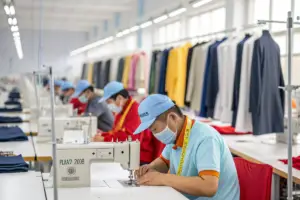
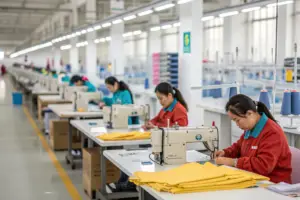
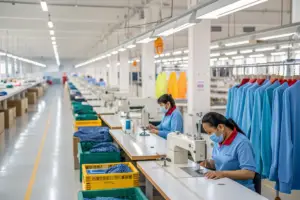
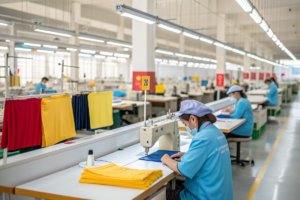
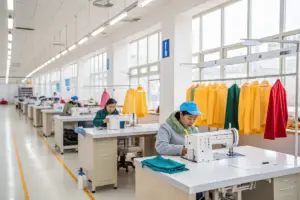
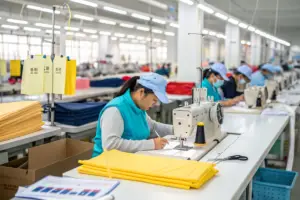
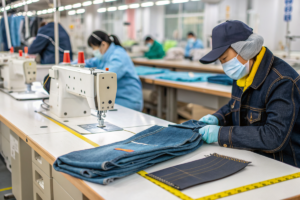
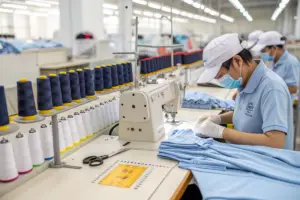
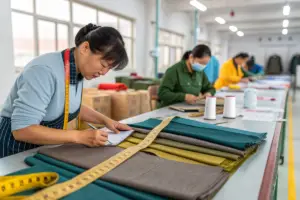
A Production Mimetic Sample is radically different from a sample room prototype because it is sewn under a strict "Real Line Conditions" protocol: the assigned line operator sews the sample on her specific, daily-use sewing machine at the line's standard output speed of 6-8 units per hour, using the same thread tension dial settings and presser foot pressure she will use when she sews all 5,000 units, revealing any inherent speed-related quality degradation, machine calibration drift, or construction sequence bottleneck before the bulk fabric is cut.
The sample room prototype proves the design works. The Production Mimetic Sample proves the factory's actual, specific, named production line can replicate that design 5,000 times on a tight schedule.
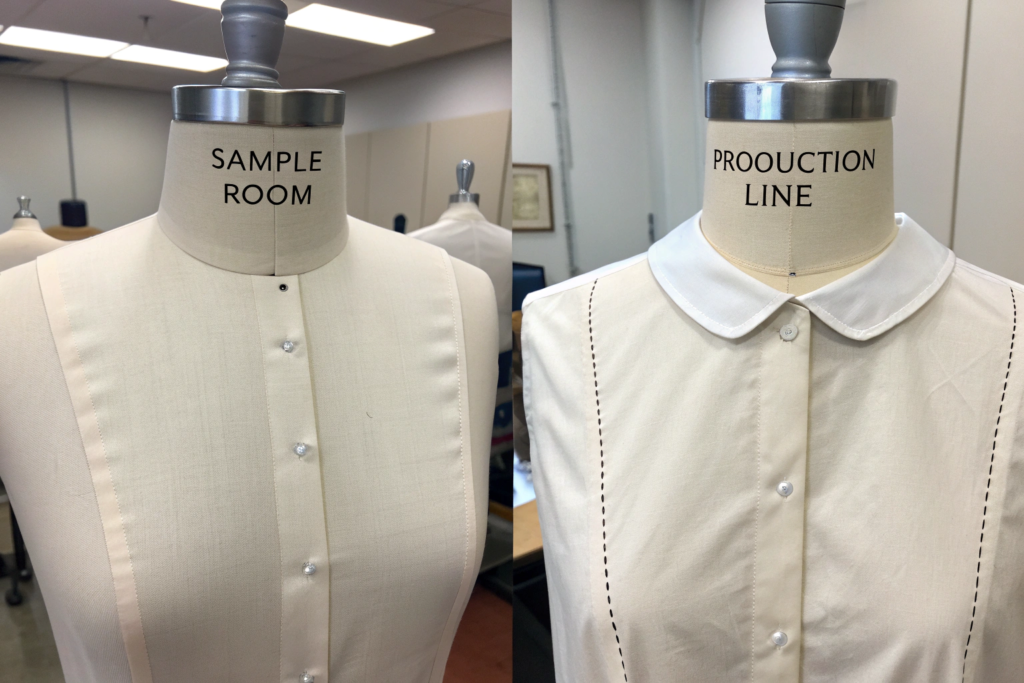
How Does Sewing Speed Change a Garment's Dimensional Accuracy?
A skilled sample maker sewing at a slow, deliberate pace can guide a slightly curved seam into a perfectly straight line by manually adjusting the fabric feed every few millimeters. A production operator sewing at 4,000 stitches per minute cannot make these micro-adjustments. The fabric feeds through the machine at a constant rate determined by the differential feed setting. If the Production Mimetic Sample, sewn at speed, reveals that a specific seam tends to curve or stretch, we adjust the feed dog setting or add a temporary adhesive stabilizer before bulk production begins.
Why Must the Sample Be Sewn by the Specifically Named Operator Who Will Run the Bulk Line?
Each operator develops a unique, personal rhythm and a specific hand-feeding technique that can introduce a deviation of 1-2mm on seam allowances. The brand's approved spec sheet tolerance might be +/- 2mm on a critical seam. If the sample maker's hand technique is 1.5mm different from the assigned production operator's technique, the bulk order will inherently fail the tolerance. By locking the specific operator's name to the approved sample, I create a direct accountability chain.
What Exact Measurement and Documentation Package Guarantees the Sample Is a True "Golden Sample"?
A London-based premium knitwear brand once discovered, mid-dispute, that their "approved sample" had no legal standing because the approval had been communicated via a casual WhatsApp message: "Looks great, go ahead with production." The factory had shipped 3,000 units with a chest measurement 3cm smaller than the original spec. The brand claimed deviation from the sample. The factory pointed to the signed tech pack measurement chart and said they followed the written spec exactly. The sample itself, which sat in the brand owner's office, had never been officially measured, documented, sealed, or signed by both parties.
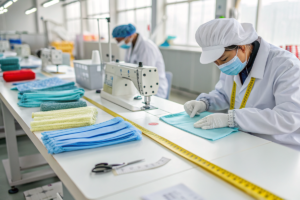
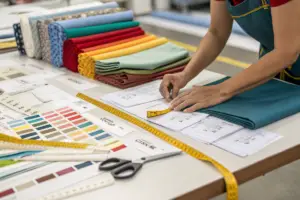
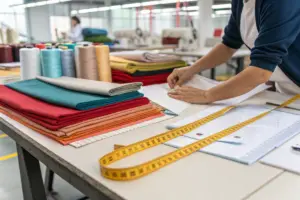
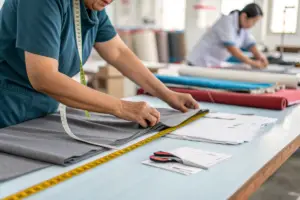
The exact measurement and documentation package that guarantees a sample is a true Golden Sample consists of a sealed, tamper-proof physical sample with a holographic security tag signed across the seal by both the brand owner and the factory director, a co-signed Measurement Confirmation Document listing fifteen critical measurement points with the exact millimeter readings for the sample, and a high-resolution, timestamped digital photo archive showing the sample laid flat on a calibrated grid mat with the tape measure visibly pinned at each measurement point, all cross-referenced to the original tech pack specification and any approved pattern amendments.
A Golden Sample is not a sample; it is a legally admissible physical reference standard. If a bulk order arrives and a dispute arises, the Golden Sample is removed from its sealed bag, measured under neutral conditions, and compared directly to the bulk units.
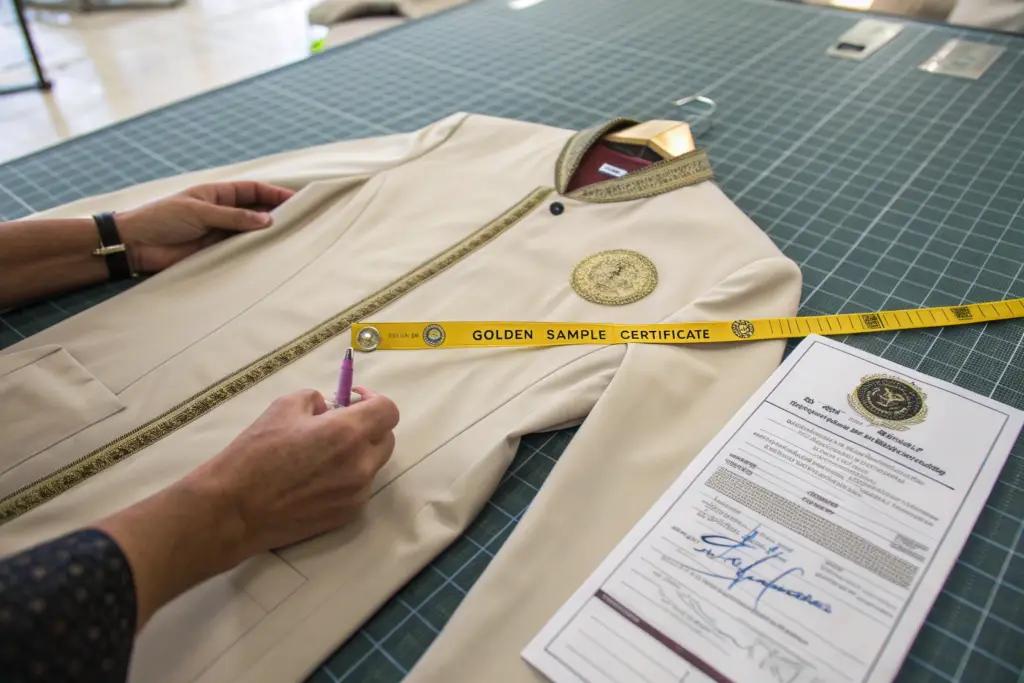
How Does a "Tamper-Proof Holographic Seal" Prevent a Factory From Swapping the Sample After Dispute?
A standard paper hangtag can be removed and re-attached to a different garment. A tamper-proof holographic security seal, the kind used for forensic evidence bags, is signed across the seal with a permanent marker. Any attempt to peel the seal off the fabric destroys the hologram's structural integrity, leaving a visible "VOID" pattern on the garment and the seal. The sample is then sealed inside a clear, tamper-proof plastic evidence bag with the same signed seal. I order these seals from the same supplier that serves hospital pharmacies.
What Are the Fifteen Non-Negotiable Measurement Points on a True Golden Sample Certificate?
The measurement points must cover every dimension that affects fit and visual proportion. For a woven shirt, the list includes: Center Back Length, Chest (1" below armhole), Waist, Bottom Hem Sweep, Shoulder Width (point-to-point), Sleeve Length (from shoulder point), Armhole Curve (measured along the seam), Bicep (measured perpendicular), Sleeve Opening, Neck Width (seam to seam), Front Neck Drop, Back Neck Drop, Collar Point Length, Collar Spread, and Placket Width. Every point is documented with a photo and a millimeter measurement.
How Do You Verify the Entire Trim and Component Chain Matches the Approved Sample Exactly?
A Texas-based western wear brand almost shipped 2,000 shirts with a catastrophic hidden defect. The pre-production sample had used a specific, high-quality branded mother-of-pearl snap button that had been sourced from a Japanese trim supplier. The brand approved the sample. Unknown to the brand, the factory's purchasing department, looking to save costs on the bulk order, sourced a visually identical but structurally inferior snap from a local Chinese market. The snaps looked identical on the exterior. When the brand owner happened to test a random bulk shirt, the snap shattered under the same pull force that the approved sample's snap had survived effortlessly.
To verify the entire trim and component chain matches the approved sample exactly, you must demand a "Trim Bible" alongside the Golden Sample: a single sheet of heavy cardstock onto which is physically affixed a specimen of every single trim component used in the approved sample—one button, one snap, one zipper pull, one length of sewing thread taped with the brand name visible, the exact care label, and the exact hangtag—with each specimen signed across the boundary onto the cardstock by both the brand owner and the factory quality manager, and accompanied by the supplier's original invoice for that specific component batch.
A button is not a button. A snap is not a snap. The Trim Bible prevents the factory from substituting a cheaper, visually similar component during bulk production, because any substitution would tear the signature line on the cardstock.
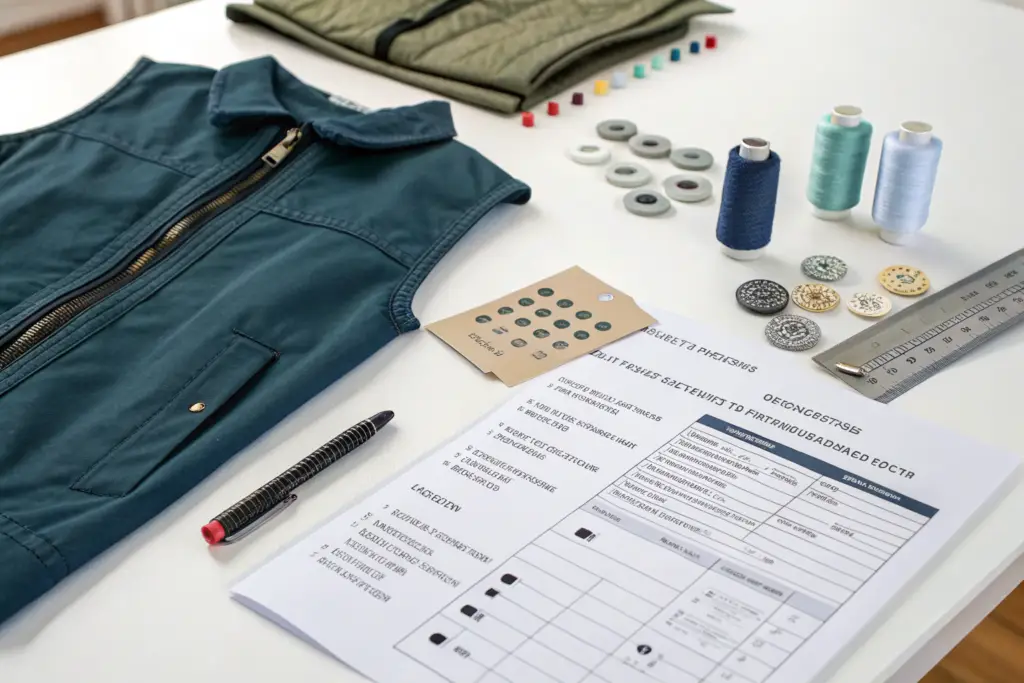
How Does a "Thread Burn Test" on the Trim Bible Confirm the Sewing Thread Was Not Swapped?
The Trim Bible includes a short, specific length of sewing thread. If a brand suspects the bulk order was sewn with a different, cheaper thread, they can pull a thread from a bulk garment and place it next to the Trim Bible thread. A simple lighter flame applied to both threads simultaneously reveals the difference: 100% cotton thread burns to a soft grey ash. 100% nylon thread melts into a hard, black plastic bead. Polyester core-spun thread melts and leaves a small fused residue. The test takes five seconds and cannot be faked.
Why Must the Trim Bible Include the Original Supplier's Invoice, Not Just the Component Specimen?
A factory could theoretically buy a small quantity of the expensive, approved button, attach it to the Trim Bible, and then purchase a bulk quantity of the cheap, identical-looking button for production. The supplier's invoice traces the component to a specific supplier SKU and batch number. If the bulk order's buttons are not from the same batch, the invoice chain breaks.
What Is a "Pre-Production Line Trial Run" and Why Does It Catch the Last Hidden Defect?
A Vancouver-based technical outerwear brand approved a perfect Golden Sample of a seam-sealed rain jacket. The sample was water-tight, beautifully constructed, and dimensionally perfect. The bulk order of 2,000 units was produced, shipped, and immediately returned by customers complaining of leaks at the shoulder seams. The cause was a near-invisible failure that only emerged when the seam-sealing machine operated continuously for 200 units at full speed: the heating element would overheat and slightly thin the seam tape application on the shoulder curve. The single, perfect sample had been made when the machine was cold.
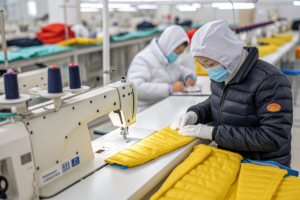
A Pre-Production Line Trial Run is a mandatory final verification step where the assigned bulk production team sews exactly ten units at full line speed, using the exact bulk materials, and then subjects those ten units to a destructive quality audit—cutting open seams, measuring stitch densities, testing snaps and zippers to failure—before the line is authorized to begin sewing the full 2,000-unit batch, catching any systemic defect that only emerges when the line operates continuously for an extended period.
The single sample is a photograph. The 10-unit trial is a short film. It reveals the machine's behavior over a sustained production rhythm.
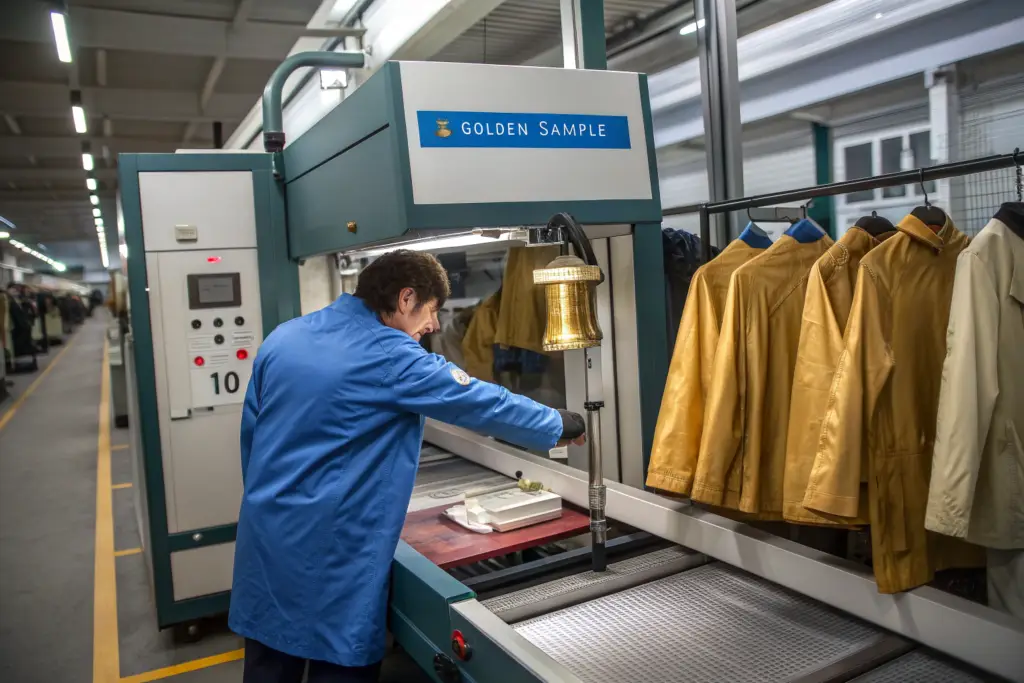
How Does a "Ten-Unit Destructive Audit" Reveal a Seam Strength Degradation Over Continuous Operation?
The auditor randomly selects three of the ten trial units and uses a hydraulic tensile tester to pull each critical seam—shoulder, side, armhole, crotch—until it ruptures. The force at rupture is recorded. If unit one's shoulder seam ruptures at 28 Newtons, but unit ten's shoulder seam ruptures at 22 Newtons, the machine's stitching consistency is degrading. The line is stopped, the machine is recalibrated, and another 10-unit trial is run until the rupture values are stable across all ten.
Why Does a "Machine Temperature Log" During the Trial Prevent the Seam Tape Overheating Problem?
For processes like seam taping, ultrasonic welding, or heat-transfer label application, we attach a digital temperature data logger to the machine's heating element. The logger records the temperature every thirty seconds during the 10-unit trial. A stable line maintains a temperature within +/- 3 degrees Celsius of the set point. A line that drifts upward by 8 degrees Celsius over ten units will drift even further over 2,000 units.
Conclusion
The perfect clothing sample is not the most beautiful, hand-crafted prototype the factory can produce in its sample room under ideal conditions. That is a showpiece, not a manufacturing reference. The true, legally binding, commercially safe sample is the Production Mimetic Sample, sewn at speed on the real line by the real operator, documented with fifteen millimeter-level measurements on a co-signed Golden Sample Certificate, linked to a Trim Bible that physically archives every button, thread, and zipper, and validated by a 10-unit line trial run that simulates sustained production conditions.
At Shanghai Fumao, I have integrated all four of these protocols into our standard pre-production process for every new brand buyer. I do not ask a partner to approve bulk production based on a sample room prototype. I present the Production Mimetic Sample, the Golden Seal, the Trim Bible, and the 10-unit trial data, all documented and transparent, and then I ask for the signature.
If you are preparing to approve samples for your next bulk production order, and you want the approval to mean something legally, dimensionally, and chemically, contact our Business Director, Elaine. She can walk you through our Golden Sample documentation package, show you a specimen Trim Bible, and explain how our Production Mimetic Sample protocol has eliminated the "sample was perfect, bulk was wrong" dispute for our partners. Reach Elaine at: elaine@fumaoclothing.com. Approve a garment that your production line can actually make.