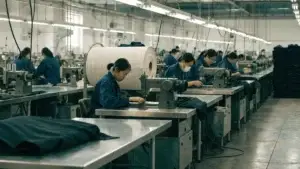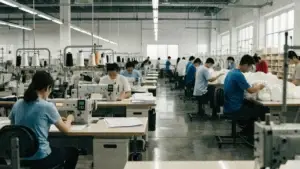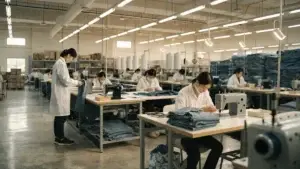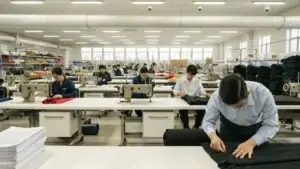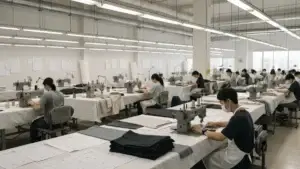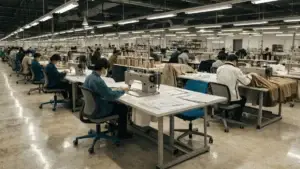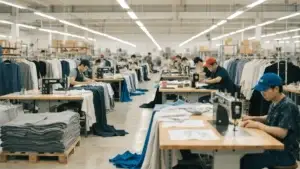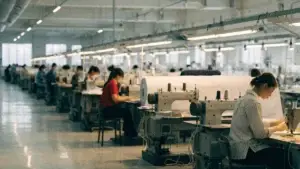
You have just received the final inspection report for your bulk order. It failed. The report says 15% of the 3,000 units have the same crooked pocket. The goods are already packed in cartons. The factory offers to "fix it," but that means a delay of weeks, a massive rework cost, and a frantic scramble to salvage your season. You feel helpless. A veteran QC director once told me, "Waiting until the end to check quality is like waiting for the autopsy to tell you the patient is dead. True quality control is a living, breathing process on the factory floor. It stops the disease while the patient is still on the operating table."
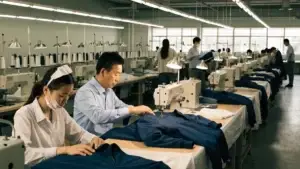
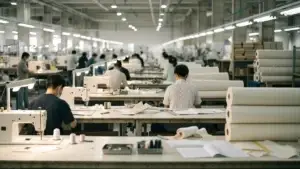
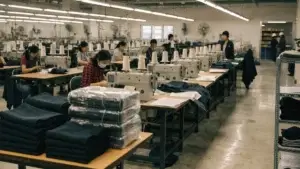
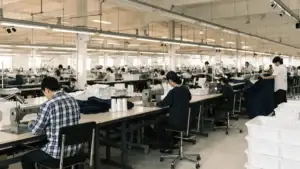
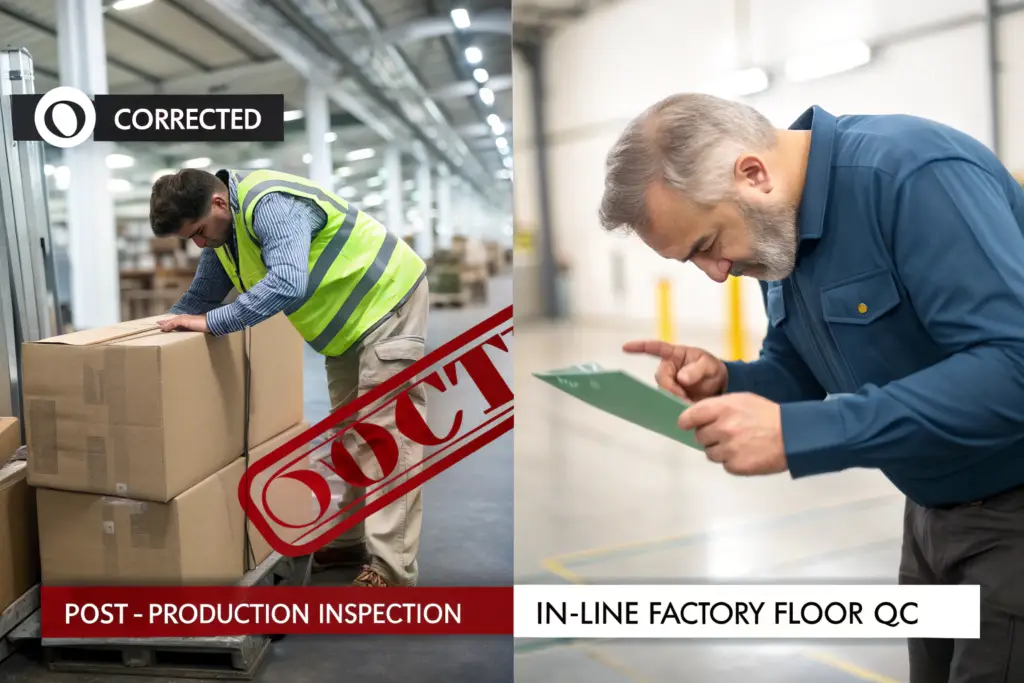
Factory floor quality control is heavily superior to post-production inspection because it is proactive and preventative, not reactive and diagnostic. In-line QC identifies errors at their source, in real-time, during the sewing process. This allows for an immediate root cause correction, preventing a single mistake from being replicated across hundreds or thousands of units. Post-production inspection only finds the problem after the damage is done, leaving you with the costly and time-consuming options of rework, discounting, or scrapping the entire batch. One is a process of continuous improvement; the other is a process of statistical acceptance of failure.
At Shanghai Fumao, our entire quality system is built on this fundamental principle. Our investment in proactive, in-line, and on-the-spot QC is what protects our B2B partners from the devastating costs and delays of end-of-line failures. Let me explain the profound difference between these two philosophies and why you must insist on a factory that lives by the "prevent, don't inspect" mantra.
How Does In-Line QC Stop a Single Error from Becoming a Batch Disaster?
The fundamental difference between the two methods is the concept of "Time to Detection." Post-production inspection discovers a defect weeks after it was first created, during which time the error has been systematically replicated by a sewer performing hundreds of repetitions. In-line QC compresses the time to detection to minutes. It is the difference between stopping a small leak with a wrench and rebuilding the entire house after it has flooded.
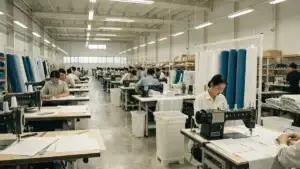
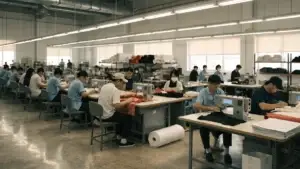
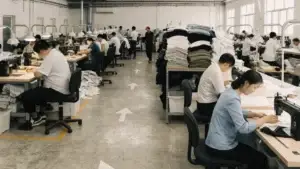
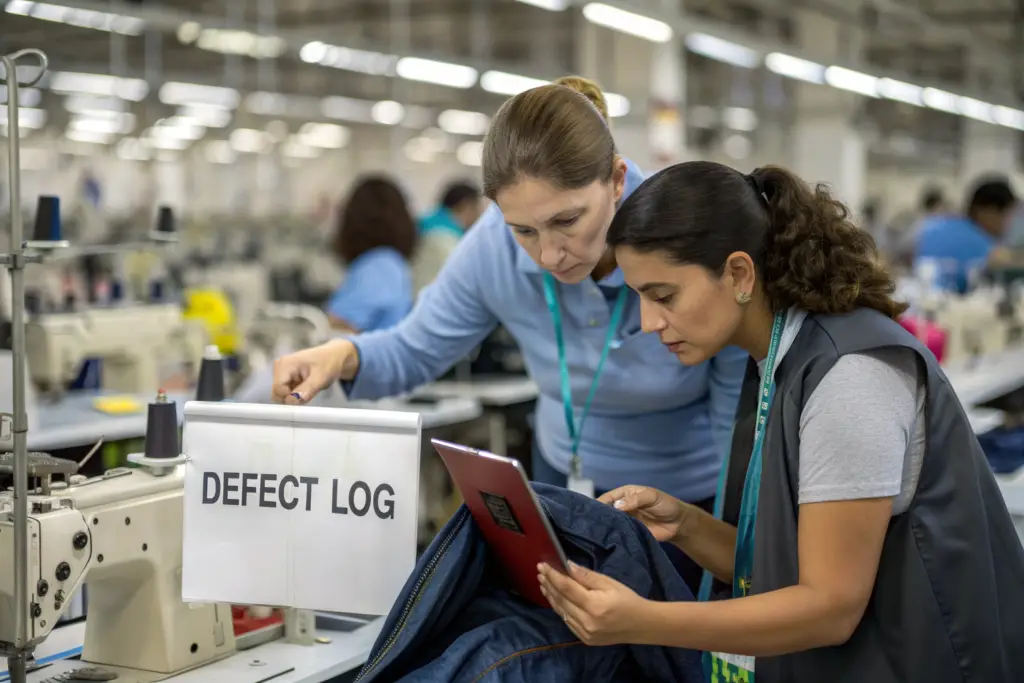
In-line QC stops a batch disaster by collapsing the time between error creation and error detection. A roving inspector patrolling the floor pulls a sample from a sewer's bundle every hour. If they spot an error—a stitch beginning to drift, a pocket being set a millimeter too low—they do not wait. They immediately stop the operator, show them the issue against the Sealed Sample, and ensure a correction is made. This prevents the error from being repeated on the next 600 units in that sewer's bundle, containing the defect to a single, easily fixable unit instead of a batch of thousands.
I recall a situation on one of our men's shirting lines. An in-line inspector noticed that the collar points on a batch of shirts were starting to look slightly blunted, not as sharp and crisp as the Sealed Sample. She immediately stopped the operator. The issue was traced to a worn folder on the collar turning machine. The folder was replaced in 10 minutes. The two affected shirts were reworked. The next 2,000 shirts had perfect, razor-sharp collars. In a factory that only inspected at the end, all 2,002 shirts would have been defective, requiring massive, costly rework or scrapping. This is the economic power of proactive in-line QC .
What Is the Root Cause Analysis and How Does It Prevent Recurrence?
A great in-line inspector does not just fix the symptom; they help identify the root cause. Was the error due to a worn machine part? An incorrect machine setting? An operator who needs a quick retraining? By identifying and fixing the source of the error, the in-line process ensures the same mistake does not reappear on the next shift or the next order. This is the foundation of continuous improvement. This is a key part of our quality culture .
How Is the "Sealed Sample" the In-Line Inspector's Most Critical Tool?
The in-line inspector does not rely on memory. They carry a high-resolution photo of the approved Sealed Sample on their tablet, or they physically walk the line with the sample itself. For every check, they are doing a direct, visual, side-by-side comparison. The sample is not locked in an office; it is the legal, physical standard present on the factory floor, ensuring no "quality drift" occurs. This is the anchor of our sample-to-bulk consistency .
What Are the Catastrophic Hidden Costs of Relying Solely on Post-Production Inspection?
The true danger of relying only on a final inspection is not the cost of the inspection itself, but the catastrophic impact of a failure. When your entire production run is complete and packed, and it fails the statistical audit, you are left with a set of terrible choices. Each one is a direct and painful financial loss. You are no longer managing quality; you are managing a crisis.
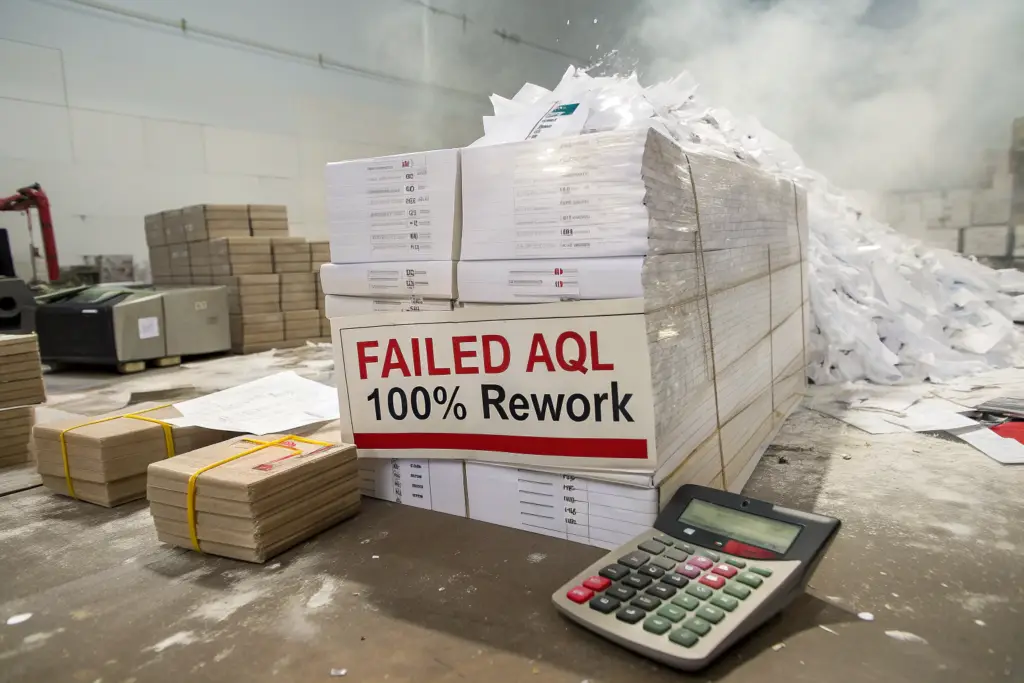
The hidden costs of a failed post-production inspection are immense. You face three terrible options: 1) A massively expensive and slow 100% rework, requiring every carton to be opened, every unit inspected and repaired, causing weeks of delay and ballooning labor costs. 2) Shipping the defective goods and facing an avalanche of customer returns, negative reviews, and a permanently damaged brand reputation. 3) Scrapping the entire order and taking a total loss. None of these options exist with effective in-line QC, where the problem is fixed at the source for pennies.
A brand I worked with relied on a factory that only did a final AQL check. Their entire 2,500-unit order of printed dresses failed because the print registration was off. The factory's solution was a 100% rework, which took three weeks and cost them an extra $4,500 in labor. They missed their delivery window to their key retail account and were hit with chargebacks. A $4,500 problem became a $25,000 loss. If that factory had an in-line inspector checking the print quality as the first units came off the press, the problem would have been caught and corrected in 15 minutes. This is the brutal math of end-of-line failure. This is why our factory floor QC is non-negotiable.
Why Is a Final AQL Inspection Only Useful as a "System Audit," Not a Primary Defense?
A final AQL (Acceptable Quality Limit) inspection is a valuable statistical tool that tells you the quality level of the lot. It is a snapshot of the final product. However, it is a diagnostic tool, not a preventative one. It should be used to verify that your in-line QC system is working, not as a replacement for it. A pass confirms your process; a fail means your process is broken. Relying on it as your only defense is like only checking your blood pressure once a year. This is our philosophy of multi-layered quality assurance .
How Does a Failed Final Inspection Destroy Your Relationship with Your Retail Buyers?
A late shipment full of defects is the quickest way to lose a wholesale account. The buyer does not care that you are "reworking the order." They have a hole on their sales floor. They lose revenue, and you make them look bad. Their trust in your brand's reliability is shattered, often permanently. Preventing this through in-line QC is not just about product quality; it is about partnership integrity. This is a core part of our brand protection .
How Does In-Line QC Empower and Build a Skilled, Quality-Focused Workforce?
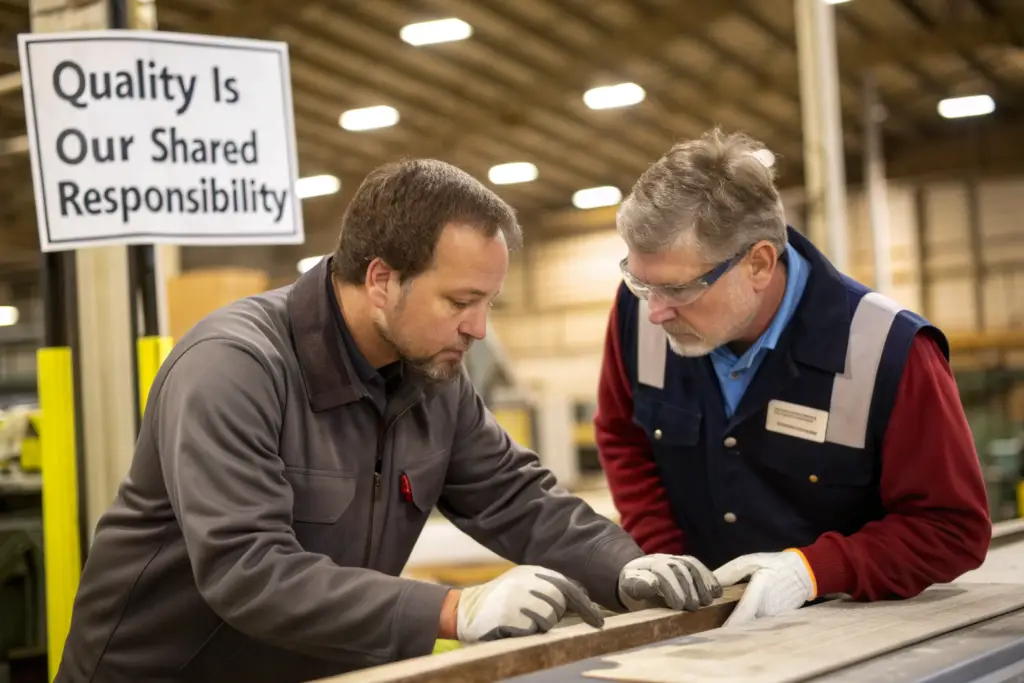
A post-production inspection model is inherently adversarial, creating a "us vs. them" dynamic between production and QC. In-line QC, done well, is the opposite. It integrates quality into the production process and transforms the inspector from a "gotcha" cop at the end of the line into a supportive, real-time coach. This shifts the entire culture of the factory floor, turning every operator into a quality-conscious team member, not just a volume producer.
In-line QC builds a quality-focused workforce by transforming the inspector into a coach. Instead of punishing an operator for a bin of defective work at the end of the day, the inspector provides immediate, on-the-spot feedback and training. This empowers the worker to understand the "why" behind the standard, improving their skills and making them an active participant in the quality process, not a passive cog. This leads to a more skilled, more engaged, and more stable workforce with lower turnover.
On our floor, you will see our QC inspectors spending as much time training and communicating as they do inspecting. They understand that their job is not just to catch errors, but to prevent them from happening in the first place by building the skills of our team. This creates a positive feedback loop where quality improves organically over time. This is the people-centric foundation of our world-class quality system .
How Does This Coaching Model Reduce Worker Turnover?
A worker who is constantly criticized and penalized for mistakes will become stressed, demoralized, and will eventually leave. A worker who is supported, trained, and empowered to do their job correctly will feel valued and invested in their work. This leads to dramatically lower turnover, which means a more experienced, stable, and consistently high-performing workforce for your production. This is a direct, competitive advantage of our ethical manufacturing model .
How Do In-Line QC Inspectors Use Data to "Reward" Quality, Not Just Punish Failure?
Our inspectors track data not just on defects, but on consistent excellence. When a sewer consistently produces work with zero errors, that is noted. It becomes a basis for recognition, bonuses, and career advancement. This positive reinforcement creates a culture where quality is a shared, celebrated goal, not just a negative, punitive threshold. This is the future of quality-driven manufacturing .
How Does Fumao's Multi-Layered QC System Make Post-Production Failures a Rarity?
We do not offer a single-point QC defense. We offer a comprehensive, multi-layered fortress. Our system is designed so that a major issue is virtually impossible to reach the final packed carton. By layering rigorous incoming inspection, proactive in-line coaching and auditing, and a final, statistical AQL verification, we create a manufacturing environment where quality is engineered into the process from the start, not inspected at the finish.
Fumao's multi-layered QC system makes post-production failures a rarity. Our process is a series of preventative barriers. The first barrier is rigorous Incoming Inspection of all materials, ensuring we never cut flawed fabric. The second, and most critical, is our proactive In-Line QC, where errors are caught and corrected in real-time during sewing. The final barrier is the Final AQL Inspection, which serves as a statistical audit to verify the effectiveness of the first two barriers. This integrated system provides our B2B partners with a level of quality security that a single-stage, end-of-line check can never achieve.
A brand founder told us, "Your QC reports are the most boring, and therefore the most beautiful, documents I receive. There are never any surprises. The in-line data is always clean, and the final AQL is always a formality. You've made quality so predictable that I've stopped worrying about it entirely. That trust is worth more to me than any price." This is the peace of mind that a world-class, multi-layered QC system delivers. This is the standard of our trusted manufacturing partnership .
How Do We Make Our In-Line QC Data Transparent and Verifiable for Our Partners?
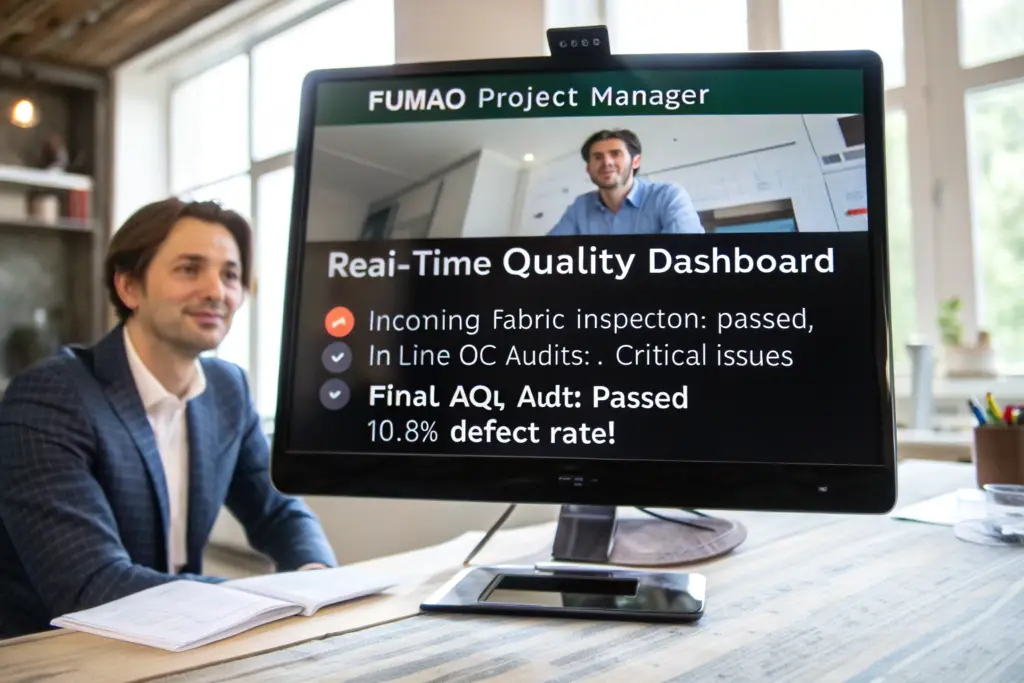
Our in-line inspectors use tablets to log all checks, defects, and corrective actions in real-time. This data is fed into a live dashboard that our partners can access. You can see the quality of your product being built, in real-time, from anywhere in the world. This is radical transparency in action. This is a key part of our digital quality management system .
What Is a "Quality Passport" and How Does It Document Your Product's Journey?
For premium orders, we can provide a "Quality Passport"—a digital document that compiles all QC data from the run, including incoming fabric inspection, in-line audit results, and the final AQL report. It provides a complete, verifiable, and auditable trail of the quality assurance process for your specific production run. This is the ultimate level of our quality transparency .
Conclusion
Factory floor quality control is not just superior to post-production inspection; it is a fundamentally different and more intelligent philosophy of manufacturing. It is the difference between proactive, surgical prevention and reactive, catastrophic diagnosis. The choice between the two models is the choice between a predictable, stable supply chain and one built on a foundation of constant, costly, and brand-damaging surprises.
At Shanghai Fumao, we have built our entire operational culture around the proactive, in-line, and human-centered model. Our multi-layered system, our transparent data, and our commitment to continuous improvement ensure that quality is not an event at the end of the line, but a living, breathing reality on our factory floor every single day. We protect your brand not by finding your failures, but by preventing them.
If you are ready to partner with a manufacturer whose quality system is designed to prevent problems, not just document them, let's talk. Our Business Director, Elaine, can walk you through our in-line QC process and show you our real-time quality data. Please email Elaine at: elaine@fumaoclothing.com.