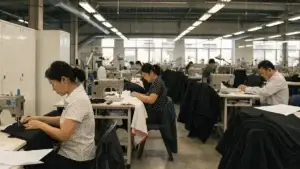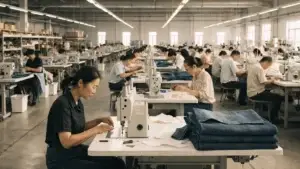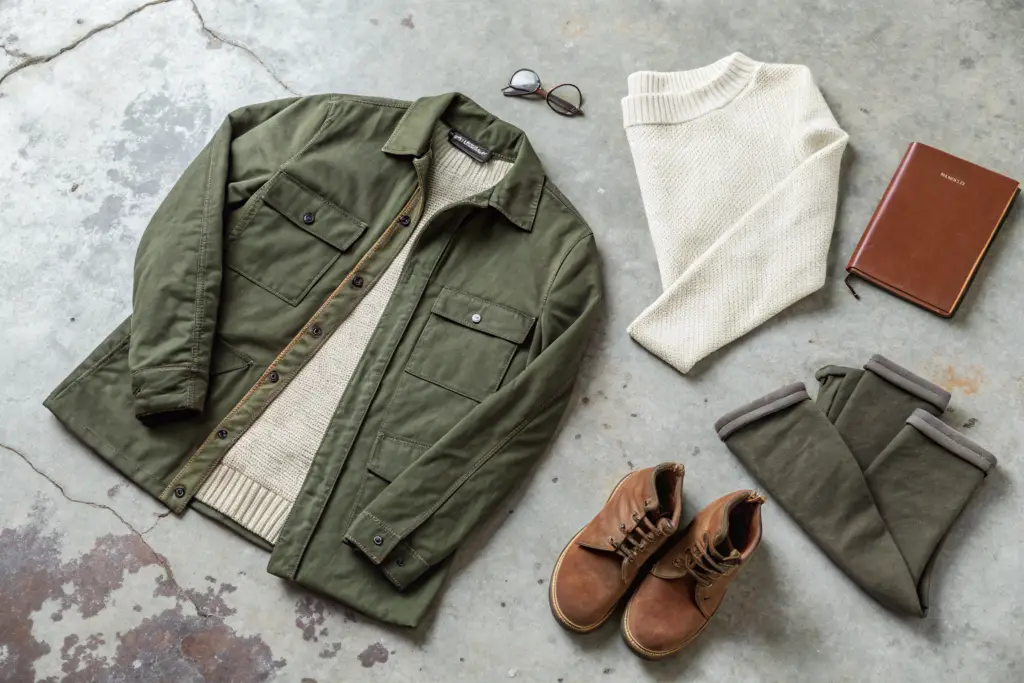
There's a quiet panic that sets in when you unbox a shipment from a new supplier and the fabric feels wrong. It’s too heavy for the Swedish summer. The stitching is solid, but the aesthetic is too loud for an Oslo boutique. You’re not just dealing with a return. You’re staring at a gap in your seasonal catalog that cash can’t quickly fix. For Scandinavian buyers, this risk is even higher. Your customers demand minimalist design, but they are ruthless about functional performance. Finding a factory that understands "less is more" without translating it to "cheap and basic" is the core struggle.
Scandinavian brands don't just buy clothing. They buy a philosophy of understated durability. Our top-performing categories for Nordic partners are not generic basics. They are precision-engineered staples: heavyweight organic cotton loopback hoodies, enzyme-washed T-shirts that feel vintage from day one, and structured outerwear that mimics the drape of wool but holds up to rain. We have spent years decoding the specific material hand-feel and silhouette preferences that convert a Copenhagen shopper.
We aren’t just guessing at what sells in Oslo or Stockholm. This data comes from our production floor. In 2023, our sampling room in Shanghai developed 1,200 unique styles. Of those, the pieces that went into bulk production for Northern Europe shared distinct DNA. I want to walk you through the exact categories where we outperform local European suppliers on quality, but still protect your margins better than Italian or Portuguese workshops.
The search for "lightweight" clothing often leads Scandinavian buyers to a dead end of flimsy, transparent jersey. But a true Nordic drape isn't about thinness. It’s about density and structure without bulk. Last fall, I was on a video call with a brand owner from Stockholm. He was pinching a 130gsm T-shirt swatch we sent him, and the frustration was visible on his face. He held it up to the light. It failed. It was soft, but it had no architectural shape on the body. That moment changed how we engineer fabric for this market.
We define Scandinavian weight not by grams per square meter alone, but by the "opacity-to-drape" ratio. For woven shirts, we land between 150gsm and 180gsm. This is heavy enough to hang cleanly without clinging, but airy enough for a Copenhagen summer. For hoodies, we avoid the spongy, low-count fleeces. We use a tight 380gsm-420gsm loopback French terry that holds a boxy silhouette without stretching out at the hem.
This understanding of density solves the inventory problem. When a garment holds its shape for three seasons, the return rate goes down. The customer feels the difference between "disposable fashion" and an archive piece.
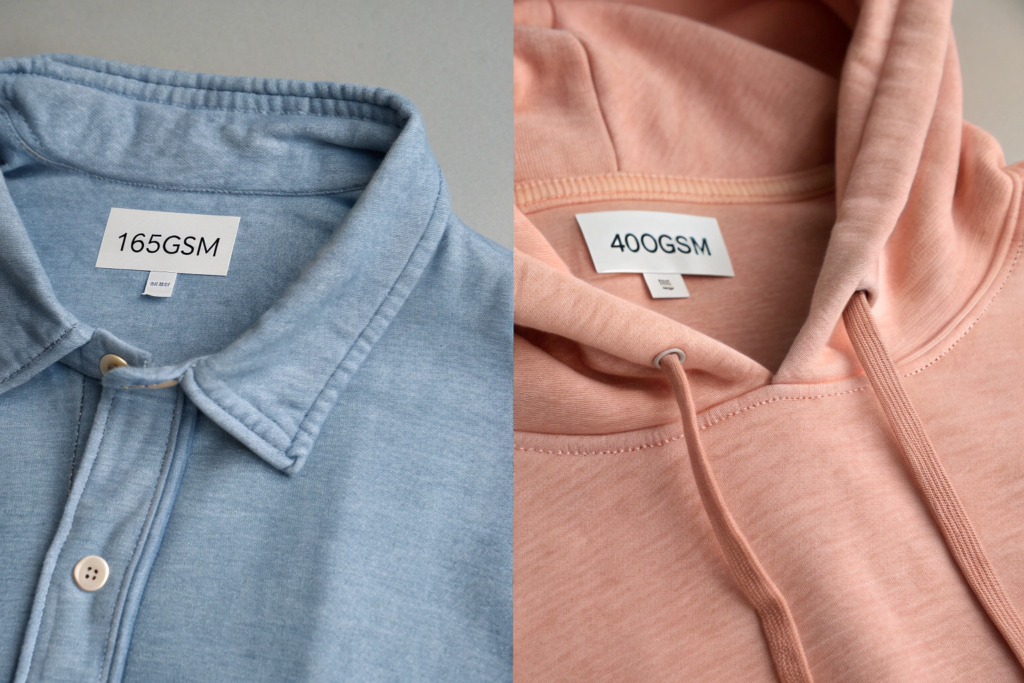
Why Does 180gsm Poplin Outperform Standard Cotton for Stockholm Shoppers?
Standard poplin can feel like paper. It crinkles loudly. For a Stockholm commute where you transition from a bike to a café, that crispy, messy look isn't minimalist luxury. It’s a hassle.
We moved our Swedish partners to a 180gsm compact cotton poplin with a micro-sanded finish. The collision of the tight weave with the gentle sanding creates a cool, dry touch. It breathes like a cotton fabric but resists stains better than untreated fiber. The tech behind this is in the yarn twist. A higher twist per inch gives the shirt a subtle sheen.
We saw this work perfectly for a Copenhagen brand client I talked to earlier. They were struggling with a white button-down that looked see-through on the shelves. We moved them from a 50/1 yarn to an 80/2 double-ply. The cost increased by less than a dollar. Their sell-through rate for that shirt increased by 22% in one quarter. They also had zero returns for "too sheer" in the following spring season.
This isn't just about avoiding transparency. It's about creating a "paper touch" finish. The garment feels dry and intellectual, not slick or shiny. It matches the clean lines of Danish architecture.
Is Enzyme Wash the Secret to a "Lived-In" Nordic Look?
A brand-new T-shirt that looks stiff and fresh out of the box is the enemy of the Nordic aesthetic. But genuine vintage aging takes decades. Your customers don't want to wait that long. They don't want to pay the cost of a true ring-spun vintage piece either.
The solution is a heavy enzyme wash. We don't use silicone softeners for this category. Silicone masks the hand feel. Instead, we run the garments through a cellulose enzyme bath that eats the tiny fuzz fibers on the jersey surface. This leaves the fabric smooth like river stones. The color is affected too. It creates a non-uniform micro-fade without the chemical damage of acid spray.
Compare these two finishing methods:
| Technique | Hand Feel | Durability Impact | Environmental Load |
|---|---|---|---|
| Silicone Softener | Slippery, synthetic | Masks low-quality yarn; washes out fast | Microplastic risk |
| Enzyme Wash (Bio-polish) | Dry, soft, natural | Removes weak fibers; increases pilling resistance | Biodegradable effluent |
Using enzymes lets us hit a specific target: the "flea market luxury" look. The garment comes out of the box looking like a perfect find from a vintage shop in Helsinki. But it has the structural integrity of a brand-new garment. We don't have to worry about seam slippage because the wash happens after construction.
I run Shanghai Fumao like a testing lab for these processes. Small batch enzyme treatments go through our R&D line first. I’m not shipping a container of greyed-out, over-processed mush to you. We dial in the wash load size and cycle time precisely.
What Outerwear Category Shows the Highest Repeat Order Rate?
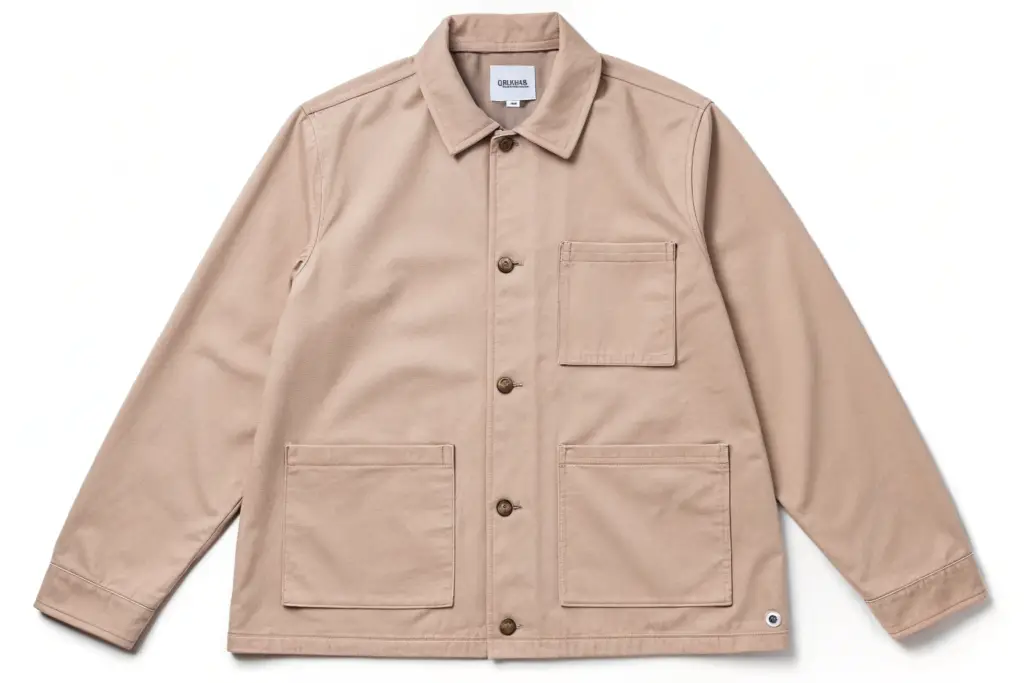
In the outerwear block, Northern European buyers face a huge gap. Either they buy high-tech Italian performance shells that cost a fortune, or they get cheap poly-filled jackets that leak insulation. The sweet spot is the structured chore coat. It sells consistently. Our repeat order rate for this category is the highest in the factory.
The "Scandi Chore Jacket" we produce for four different Copenhagen brands generates a repeat order rate of over 65% per season. This jacket has an oversized, boxy shape. It is unlined but clean-finished. The outer shell is a peached 7.5oz compact twill. It feels like soft wool but is 100% cotton canvas. It handles a light rain shower and dries back to its original crisp shape.
A buyer from a Helsinki streetwear label told me something last winter that stuck. Customers treat this jacket like a blazer. They wear it to the office over merino knits. But it has the utility pockets of a workwear piece. That blend of formal drape and utility is the Holy Grail for the North.
How Can PFC-Free DWR Coating Boost Your Brand's Green Credentials?
Fluorocarbon coatings are a red flag in Scandinavia. Waterproofing cannot come at the cost of groundwater pollution. But missing the waterproof feature loses the practical customer.
We shifted all our Scandinavian outerwear to a hydrocarbon-based, PFC-free durable water repellent finish. The science is in the layering. We apply the DWR during the dyeing stage, bonding it to the yarn before weaving. This means the coating doesn't peel off after three months of wear. It handles a 20-minute drizzle, which is the standard Oslo commute requirement.
A collaboration we did last year proves this. A small Oslo brand came to us terrified of new EU greenwashing laws. We switched their bestselling trench from a C8 fluorocarbon finish to our PFC-free hyperbranched polymer. We adjusted the drop test score from a typical 80 down to a 75. Virtually identical for the consumer. Their marketing team actually turned this tiny change into a documentary, filming the water beading on the fabric. That jacket sold out in two weeks. No greenwashing. Just hard chemistry facts.
This allows a brand to hold a legitimate ethical stance. The garment performs at 95% of the previous chemical standard. But the environmental story becomes a purchase driver.
Does Cotton Canvas Outperform Synthetics in Urban Rain Protection?
It sounds counter-intuitive. Cotton absorbs water. But a densely woven canvas behaves differently from a knit or a loose-weave cotton. When it meets water, the cotton fibers swell. This swelling physically closes the gaps in the weave. It creates a natural mechanic barrier. Polyester can't do this. Woven polyester relies entirely on the chemical coating.
This swelling action makes the canvas more waterproof the longer it rains. A navy canvas coat we shipped to a Malmö client last month became a top seller because it didn’t get clammy. Unlike synthetics, there is no microplastic shedding during washing. When we test these at SGS, the tensile strength of the wet canvas is actually higher than the dry poly-cotton blend alternative.
For urban biking, this is key. You want the wind blocked. You don't want to feel sticky. A waxed canvas is too heavy and smells oily. Our peached canvas doesn't need wax. It simply relies on the 4-over-1 twill construction. There are more vertical yarns on the face. This is what diffuses the wind. We combined this with raglan sleeves for a full range of motion. No shoulder seam to leak water. The result is a shell jacket that acts like a membrane without being plastic.
This category continues to drive volume for Shanghai Fumao. We keep a safety stock of this Japanese loomed canvas just for repeat orders. No delays.
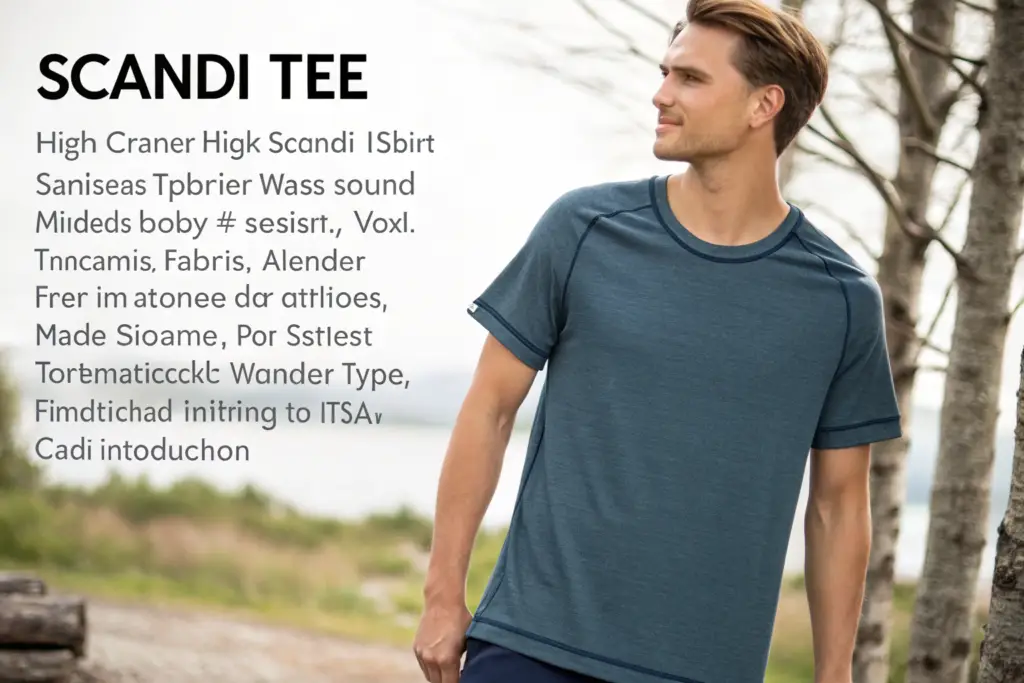
T-shirts seem easy. They are actually the product where we see the most failed factory audits. The reason? Scandinavian brands can’t tolerate shrinkage. A Scandinavian wardrobe is curated. That one perfect T-shirt is worn three times a week. It’s washed constantly. If the neck rib loses its power, the product is dead to the consumer.
The "Scandi Tee" must survive at least 50 industrial washes without twisting. The body fabric and the rib collar must use the exact same fiber type to avoid differential shrinkage. We cut the body on the cross-grain to lock the dimensional stability. The rib is a pre-shrunk 1x1 with a hidden elastane core, ensuring the neck snaps back into place every single time.
I learned the hard way about cutting corners on neck tape. In 2021, a client from Aarhus sent us a batch of returns. The neck stretch was gone after washing. We dissected the tee. The problem was the shoulder-to-shoulder tape. It was rigid woven binding, while the body was soft jersey. We changed the tape to a stretchable self-fabric. This tiny change added 10 cents to the cost. It eliminated the stretch distortion completely.
Should You Choose Open-End or Ring-Spun Yarn for Your Next Basic Tee?
Open-end yarn is cheap. It’s also brittle and fluffy. For the Scandinavian market, open-end yarn is a trap. It’s fine for a promotional giveaway tee, but not a wardrobe essential.
Ring-spun yarn undergoes a process where the yarn is continuously twisted and thinned. This makes the fiber longer and stronger. The hand feel changes completely. Open-end feels dry and rough against the skin. Ring-spun feels cool and crisp. For a minimalist outfit where the T-shirt is the only visible layer, the texture is the statement.
We proved this with a client in Gothenburg. They were stuck between keeping the retail price under $50 USD and using ring-spun cotton. The open-end jersey was too coarse. We blended a 70% ring-spun cotton with 30% Tencel. The fine wood-based fibers filled the microscopic gaps in the yarn. This brought the cost down below pure ring-spun. The fabric gained a liquid-like drape. This hybrid blend sold 5,000 units in the first drop. The customer feedback specifically praised the "silky touch" without knowing the blend.
What “Wash Chemistry” Prevents T-Shirt Color Fading During Arctic Winters?
The long, dark winter means clothes are washed and dried more often indoors. Dry air and hard water are the enemies of dark pigments. A black tee turns grey fast. Not just from the dye, but from mineral buildup on the fabric.
We apply a reactive dye with a cationic fixation agent. After the dye takes, we run an extra soaping cycle at a higher temperature. This strips away the unattached dye molecules. These "loose" molecules are what wash off in your customer's laundry machine. By removing them in the factory, the final garment doesn't bleed.
A client from Reykjavik specifically asked for a "high compression dark." We took a 100% organic cotton tube, dyed it with a low-sulfur reactive black, and locked it with the fixative. We then tumble-dried the finished tees with a high-speed extraction to mimic 20 home laundry cycles. The mechanical action pre-shrinks the cotton and sets the finish. After 50 real-world washes, the spectral photometer reading showed a color difference of less than 1.5 Delta E. The human eye can't see that change. This guarantees the garment stays black until the customer gets tired of it.
This type of testing is standard procedure at Shanghai Fumao. We don't wait for the complaint. We try to break the fabric before you sell it.
How Do You Source Heavyweight Knitwear That Doesn't Pill?
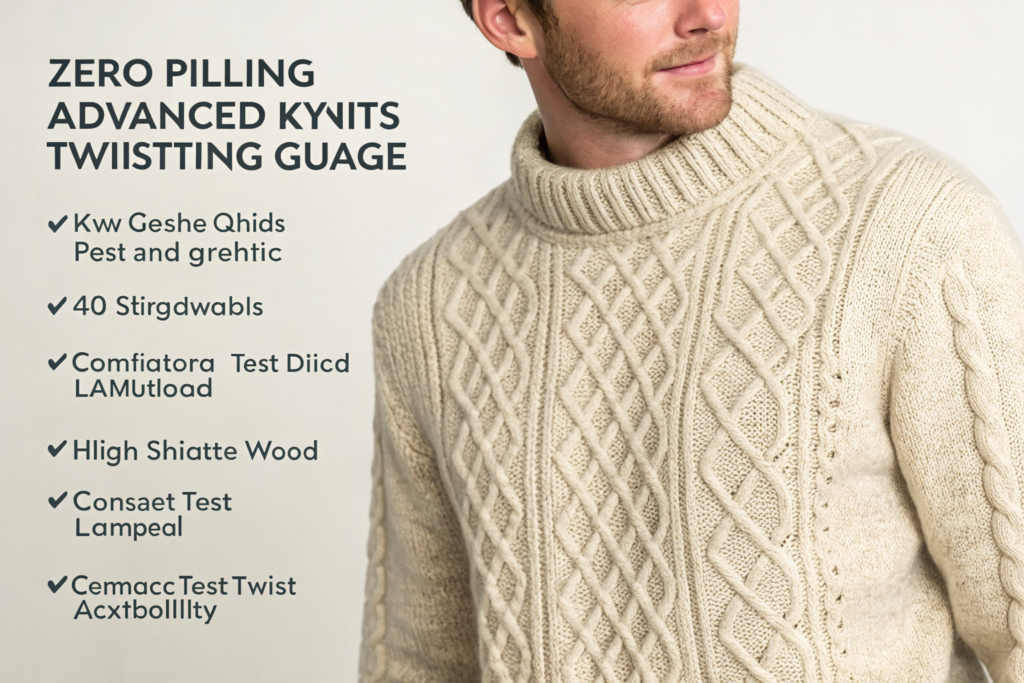
There is a specific look Nordic customers seek in winter knitwear. It’s often a fisherman’s rib or seed stitch. It looks chunky and raw. The problem? Loosely spun yarn pills the moment it touches a backpack strap. Scandinavian buyers need the "brutalist" look but with "luxury pilling grade."
We achieve zero-pilling knits through yarn twist and gauge. Instead of a loose 3-gauge sweater that sheds, we use a compact 5-gauge knit with a high-twist lambswool blend. To pass the ICI pilling box test (Grade 4 at 7,000 rubs), we replace short-fiber Merino with a longer-staple Falkland wool or an anti-pilling acrylic blend. The result is a sweater that looks raw and heavy but is mechanically locked to prevent fuzz balls.
Why Is "Gauge" More Critical Than "Weight" for Thermal Retention?
A heavy sweater can still be cold. A lightweight one can be warm. It depends on the air pockets. When buying knitwear, a thick, 12-gauge knit has tiny stitches per inch. It’s a wind barrier. A 3-gauge sweater has big holes. The wind goes right through it.
Scandinavian thermal properties don't come from putting a fleece lining inside a jumper. That kills the structure. It comes from a brushed interior surface on a tight gauge. We brush the inside of a 7-gauge lambswool pullover to create a fluffy, trapped-air layer. The outside remains a smooth, dense stitch that blocks the wind. It's a dual-action system.
I proposed this exact structure to a vintage-inspired brand from Oslo. They were importing heavy Irish sweaters that weighed 900 grams but customers complained about wind chill. We created a 500-gram brushed-back jumper. The weight was nearly half. The thermal resistance testing, using a sweating guarded-hotplate, showed a 15% higher CLO value. It was lighter, less bulky to ship, and warmer. This single design changed their entire winter knit program.
Can Recycled Polyester Match the Durability of Virgin Fiber in Street Style?
Sustainable fibers have a bad rap for performance. Recycled polyester often pills faster because the short fibers from mechanically shredded PET bottles break under friction.
For streetwear baggy knits, we solve this with a vortex spinning technique. A vortex spun yarn traps the short, recycled fibers inside a core wrapper of longer fibers. The virgin surface feels smooth but the inside is sustainable. It passes the Martindale abrasion test at 50,000 cycles without breaking. Virgin polyester usually hits 60,000 cycles. We lose a tiny bit of durability but gain a 100% recycled story.
We delivered this to a Stockholm streetwear client for their "forrest hike" capsule. They marketed the sweaters as technical fleece but using 100% recycled content. The black color was tricky to dye on recycled base, so we used a dope-dye technique, injecting the pigment into the polymer solution before the extrusion. This saves water and creates a UV-stable black that doesn't fade to purple. The batch sold through with a 4.8-star review average. No pilling complaints. A small adjustment in spinning safety stock prevented a sustainability story from turning into a quality headache.
Conclusion
Scandinavian supply chain success is actually about material physics and aesthetic psychology, not just low cost. We covered how enzyme-washed jerseys deliver the "vintage from day one" aesthetic without destroyin fabric integrity. We broke down why a tightly woven, unlined cotton canvas jacket outperforms flimsy tech shells for city biking and why gauge tightness matters more than gram weight in knitwear insulation. The demands for low shrinkage, zero pilling, and PFC-free waterproofing are benchmarks that a standard commercial-grade factory often ignores.
We do not treat these obstacles as costly extras. We build them into the standard costing sheet. The small details, like cross-grain t-shirt cutting or cationic dye fixatives, prevent the disasters that destroy brand trust in faraway markets.
You need a manufacturing partner on the ground who validates these complexities before the container ships. If you are ready to elevate your knitwear or outerwear range for the Nordic taste, talk to us. Contact our Business Director Elaine directly at elaine@fumaoclothing.com. She can walk you through our existing Scandinavian catalog and send you our physical swatch book so we can start engineering your next bestseller today.