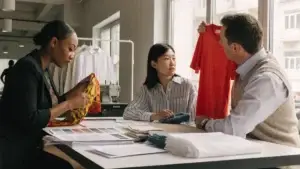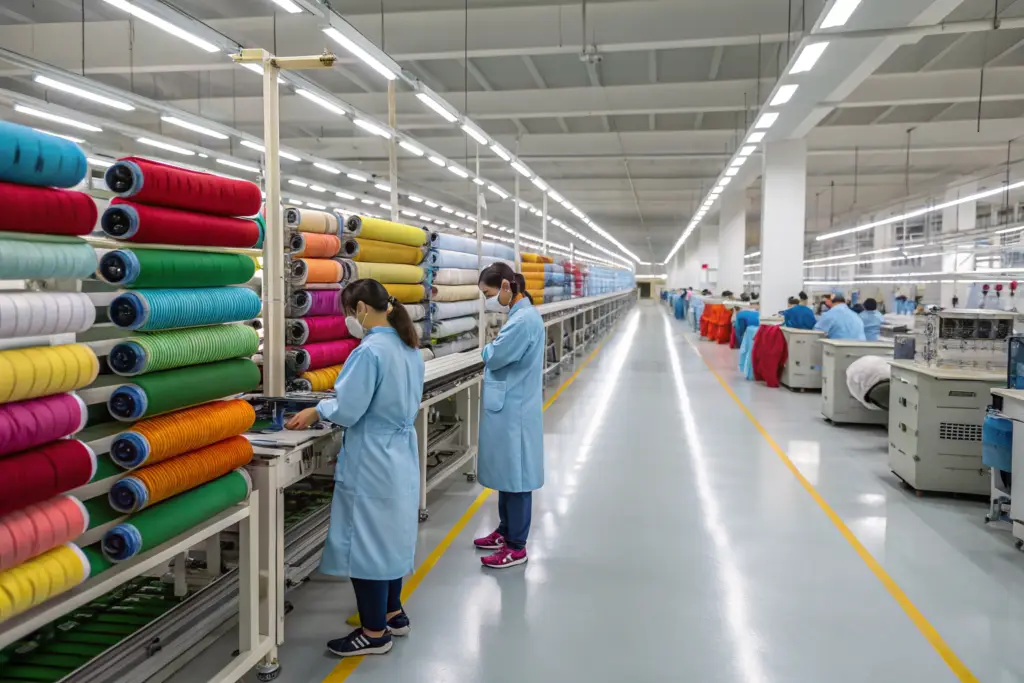
My desk phone rang three times before I could grab it. On the line, a frustrated brand owner from Texas. His previous supplier had just pushed a shipment by three weeks with no explanation. The Fall season launch window was vanishing fast. He was losing money every single day. In our industry, a missed season isn't just a delay—it's a total write-off. This is the reality for many U.S. brands that rely on overseas production without a truly reliable partner.
We became a major North American clothing supplier by solving exactly these problems. We didn't do it through aggressive marketing. We did it by building a factory system that makes delivery promises easy to keep. At Shanghai Fumao, we invested in five dedicated production lines, strict internal timelines, and direct logistics channels—so brands never have to worry about missing their selling season.
We have been in the apparel business long enough to know that trust isn't given. You earn it with every single shipment. Let me walk you through the real steps we took to shift from a local workshop to a partner for established American brands. This isn't just history. It's a blueprint for what you should look for in a manufacturing partner.
Why Did U.S. Brands Start Looking for Alternative Garment Suppliers?
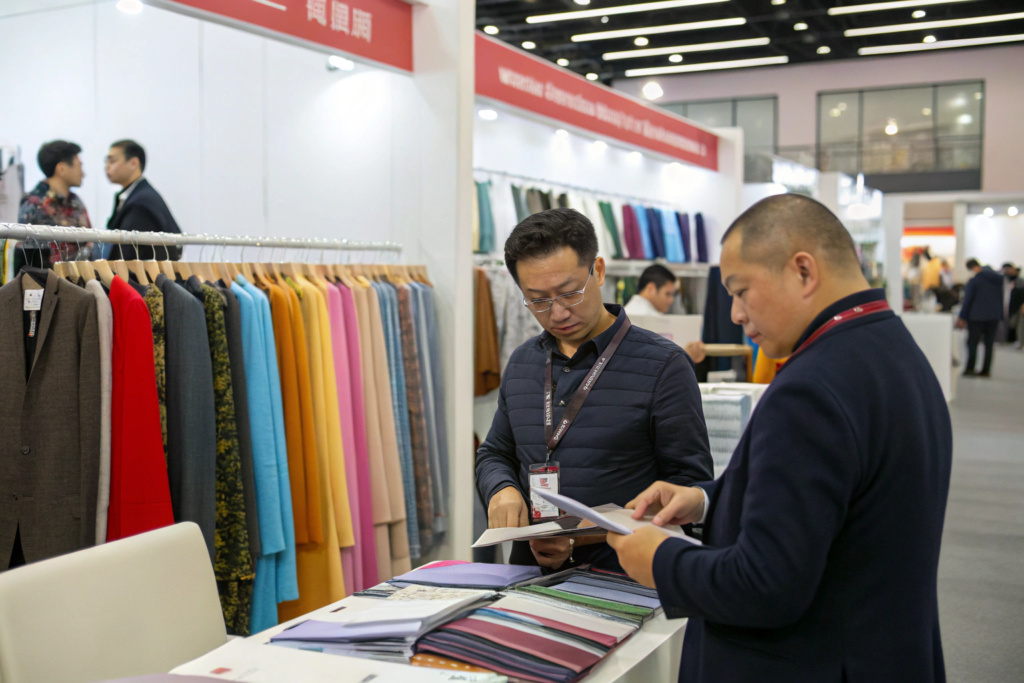
I remember a conversation at a trade show in Las Vegas back in 2018. A buyer from a mid-sized California brand told me he was spending 40% more than he planned just to manage quality issues from his previous factory. He wasn't alone. That trip showed me a massive shift happening right in front of us.
American brands started actively looking for alternative garment suppliers because the traditional sourcing model broke down. Rising labor costs in previous hotspots, unpredictable tariff structures, and a demand for higher-quality finishing pushed companies to seek factories that offered both competitive pricing and Western-level quality control. They needed partners who could handle Full-Package Manufacturing without constant oversight.
The slowdown wasn't just about price. It was about professionalism. I saw too many factories promise "premium quality" and deliver samples that looked great but fell apart in bulk production. One client showed me a knit sweater where the color varied three shades between the approved sample and the final shipment. These aren't small mistakes—they destroy a brand's reputation.
How Did Quality Control Inconsistencies Push Buyers Toward Vertically Integrated Factories?
When a brand places an order, they aren't just buying fabric and stitching. They are buying peace of mind. The biggest push toward vertically integrated factories like ours came from a simple failure: the lack of ownership. Most trading companies don't control the production floor. They pass orders to third-party workshops. When problems happen, they go back and forth, and the brand waits.
I visited a factory in another country where the finishing room had no humidity control. The static electricity was ruining the lightweight fabric drape of a summer dress order. The trading agent representing that factory didn't even know it was a problem until the container arrived in Los Angeles and the garments were misshapen. At Shanghai Fumao, we own our five production lines. Our cutting, sewing, and finishing happen under one roof. If a needle damages the fabric or a seam is uneven, my line supervisor catches it immediately.
This setup removes the blind spots that create expensive mistakes. We use inline inspection rather than just final random checks. A 2023 audit showed our defect rate sits at 1.2%, well below the industry average of 4-5% for casual woven garments. For fabric quality, we conduct AQL 2.5 inspections as a standard base, upgrading to AQL 1.5 for sensitive orders like babywear or luxury rebranding projects.
Is Faster Speed-to-Market the Real Reason Behind the Shift from Traditional Sourcing Hubs?
Speed kills deals if you don't control it. I learned this lesson the hard way early in my career, not from our end, but watching a client lose a Black Friday launch. The goods were ready on time at sea, but a port congestion created a 10-day backlog. They missed the peak selling window. Since then, we shifted our strategic thinking completely.
Absolutely, speed is the primary driving force now. Traditional sourcing hubs often focus on cost-saving over timeline acceleration. That model works for basic replenishment items, but it fails for modern fashion brands that drop new styles every four to six weeks. Many U.S. buyers moved away from complex, multi-country supply chains to streamlined suppliers who offer DDP mode delivery with predictable lead times.
To solve this, we built buffer stock for high-turnover base fabrics. Here is a comparison of traditional logistics versus our optimized DDP timeline:
| Process Stage | Traditional FOB Model (Avg Days) | Shanghai Fumao DDP Model (Avg Days) |
|---|---|---|
| Fabric Sourcing & Dyeing | 25-30 (Uncertain) | 15-20 (Pre-booked Greige) |
| Production | 25-35 | 20-25 (Dedicated Lines) |
| Forwarder Coordination | 7-10 | Direct Handover |
| U.S. Customs Clearance | 5-8 (Client Risk) | 3-4 (Pre-cleared) |
| Last Mile Delivery | 3-5 | 2-3 |
| Total | 65-88 | 45-55 |
We don't just make clothes. We compress the calendar for our clients, ensuring they hit the sales floor exactly when they planned.
What Does It Take to Build Trust as an Overseas Clothing Manufacturer?
Trust in this industry is slow to build and quick to destroy. I often think back to 2020, the pandemic year that nearly shattered global logistics. While many factories closed their doors or forced clients to accept delays, we made a different call. We absorbed 25% higher air freight costs to ship a critical holiday order for a children's wear brand in New York. It hurt the margin on that specific PO, but the client grew their revenue by 60% that year because they were one of the few brands with stock.
Building trust as an overseas clothing manufacturer requires three foundational pillars: radical transparency in communication, absolute consistency between samples and bulk production, and a legal/logistical framework that protects the buyer's financial interests. Without these, even the lowest price is worthless.
I tell my team here at Shanghai Fumao that we aren't in the manufacturing business. We are in the risk management business. Our customers don't get fired because a button costs two cents more. They get fired because the zipper breaks on 500 units or the organic cotton they advertised wasn't actually certified. We learned to care about these details more than the brands themselves.

How Can a Manufacturer Guarantee Full Compliance with U.S. Import Regulations?
Compliance isn't just about a piece of paper. It's a chain of custody that starts with the cotton gin or the chemical plant that makes the dye. U.S. import regulations are increasingly strict, especially regarding the Uyghur Forced Labor Prevention Act (UFLPA) and CPSC safety rules for children's products. We don't just "hope" our supply chain is clean; we map it and audit it.
Last year, we helped a Chicago-based children's brand avoid a potential detainment at the port. U.S. Customs flagged their shipment because the cotton origin traceability document was generic. Because we maintain a digital ledger for every fabric roll—linking it back to the specific yarn lot and origin certification—we provided the forensic evidence within 4 hours. The container was released on schedule. You can review the specific guidelines for cotton traceability on the U.S. Customs and Border Protection website. For children's product flammability, we always align with the standards set by the Consumer Product Safety Commission.
We go beyond the bare minimum. Every shipment intended for children's wear comes with a third-party lab test report from a CPSC-accredited lab. We don't make the brand ask for it. We provide it before the goods leave the factory floor. This proactive approach removes the legal burden from the brand owner.
Why Is Transparent Communication During Production Delays Critical for Long-Term Partnerships?
Problems happen. Storms delay ships. A sudden power shortage can slow a cutting machine. The silver thread that separates a one-time order from a 10-year partnership is what you do when the schedule slips. Most suppliers go silent. They try to fix it, fail, and only tell the client the day after the ship left. This is what destroys U.S. buying seasons.
I remember a power rationing period in 2022 that hit many industrial zones. Our production schedule was threatened for a large order of woven trousers. Instead of hiding it, I sent a video of the dark street and the factory floor on generator power within 15 minutes of the shutdown. I gave the client the team's cell phone numbers for real-time tracking. We adjusted the cut-and-sew sequencing, prioritizing their 300 high-value units first. We missed the vessel by two days, but we pre-booked the next ship 48 hours later. The delay was transparent.
This approach requires a different kind of sales representative. Our merchandisers are trained to use data, not just apologies. They provide time-stamped production floor photos, not just vague "next week" promises. The logistics link is just as vital; we often use direct portals like DHL Global Forwarding to find immediate alternative routes when primary carriers are stuck. Transparency turns a crisis into proof of reliability.
How Does a B2B Factory Compete on Quality Without Losing Competitive Pricing?
There is a myth in the U.S. market that Chinese manufacturing is losing its competitive edge on price. But that's only true for factories that failed to innovate. For us, "cheap" is the enemy of "value." Early in 2023, I sat with a Denver-based activewear brand going back and forth over a $1.15 unit cost difference. We walked them through our cutting room. We showed them the automatic spreading machine that saves 6% fabric per layer compared to manual labor. The savings weren't in the worker's wages; they were in the engineering.
We compete by re-engineering the garment production process to eliminate hidden waste. Instead of cutting corners on fabric weight or thread count, we invest in advanced nesting software that reduces fabric consumption by up to 15% and energy-efficient machinery that cuts utility overhead. This allows us to use premium materials while matching the FOB price of lower-quality competitors.
This shift in approach is what we call "value engineering." When a customer asks for a dollar off, I can't just change the fabric to a cheaper, pilled substitute. That would ruin the brand. Instead, we look at their label fold, their packaging method, or the fabric utilization rate.
Can Lean Manufacturing Techniques Truly Lower the Total Cost of Garment Ownership?
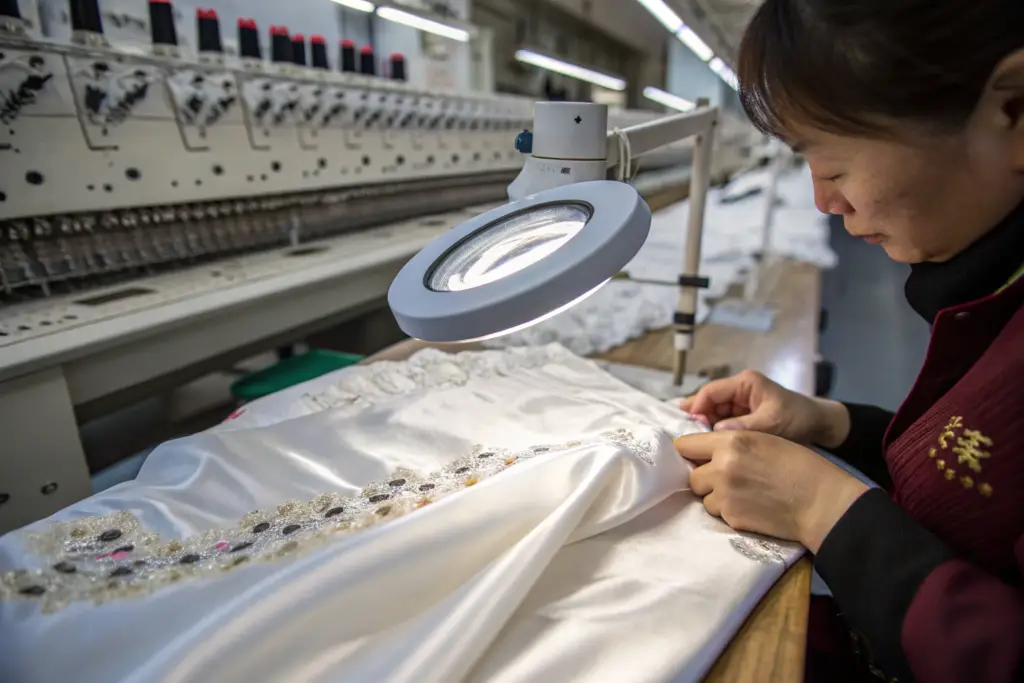
Absolutely. Many of our competitors still operate on a "batch and queue" system, piling up semi-finished goods in aisles. That inventory is cash sitting idle. By implementing single-piece flow in specific sections of our woven garment lines, we slashed Work-In-Progress by nearly 40%. This doesn't just reduce the factory's operational cost; it reduces the cost of risk.
Lower WIP means if a quality issue is found, only 5 garments are there to fix, not 500. This saves us expensive rework costs that are usually hidden in the final FOB to the customer. We also apply metabolic analysis to workstation layouts. A stitcher shouldn't waste energy to reach for the cut parts. By optimizing this, we saw a 10% spike in efficiency. You can find academic research on the impact of modular production systems on cost reduction in the IEEE Xplore digital library of conference papers, specifically the IEEE Technology and Engineering Management Society proceedings. For general lean practices, the Lean Enterprise Institute provides foundational principles we adapted for our garment lines.
Does Customizing Your Supply Chain Logistics (DDP) Improve the Quality-Price Ratio?
Yes, this is the most overlooked trick in the book. Most factory prices look cheap because they are FOB (Free On Board). The clock stops at the port of origin, and risk transfers to the buyer. Standard FOB hides the true cost of stress, insurance, detention, and port fees in the U.S.
By offering DDP (Delivered Duty Paid), Shanghai Fumao takes the shipping risk, the duty classification, and the customs bond. This forces us to be efficient. We have a deal with our logistics partners because we ship hundreds of containers, not just the ten you ordered. We can negotiate ocean freight rates that a small brand can't. Last summer, when spot rates were volatile, our clients on DDP terms paid nearly 20% less on landed cost compared to those who handled freight themselves via unplanned spot bookings. This logistics control direct feeds the quality-price ratio by ensuring no unexpected costs eat into the brand's margin. We handle the freight complexities so the garment investment stays protected.
What Strategies Does a Clothing Factory Use to Retain Major North American Clients?
Getting a big account is a celebration. Keeping it is a discipline. We have clients who have been with us since our early days, before we even had the full five production lines. I often ask myself why a CEO in America would stick with us when cheaper offers arrive in their inbox daily. The answer rarely comes down to a single factor. It comes down to a proactive pattern of behavior.
We retain major North American clients by acting as an extension of their internal design and planning department. Instead of just reacting to purchase orders, we send them trend forecasting reports, suggest fabric innovations that can increase their margins, and manage inventory in a way that cuts their lead times. We help them sell their product, not just produce it.
A distributor's primary fear isn't just a defective shirt. It is dead inventory. An unsold item at a warehouse costs more than a returned one. So, our client retention strategy is built around making the product move faster.

How Does Proactive Fabric Innovation Help a Manufacturer Retain Brand Partnerships?
I don't consider myself a fashion designer, but I know textiles. In 2022, I noticed a rising trend in "quiet luxury"—clean lines, soft neutral tones, and incredible hand-feel. We sourced a new modal-cashmere blend from a high-end mill. Instead of waiting for a client to ask for it, we created a set of unrequested development samples—a polo, a relaxed pant, and a lightweight jacket—and shipped them to our top five distributor partners.
One of those distributors placed a $180,000 opening order within three weeks. The fabric gave them a unique selling point against their competitors. For moisture management in sportswear, we regularly share research from the American Association of Textile Chemists and Colorists to back up our fabric claims. This also extends to functional coatings; by referencing the latest durable water repellent (DWR) chemistry standards from the International Association for Chemical Testing, we help our clients market technical outerwear with verified data, not just fluff.
Why Is Design Support and Rebranding Assistance Essential for U.S. Apparel Distributors?
Ron once said to me, "We understand logistics, but we hire people to handle aesthetics." This is why rebranding support is a pillar of our B2B service. Most distributors aren't looking for a sketch artist; they are looking for a scalable solution. They need to take a "factory style" and turn it into a "branded story."
We invested in a small 3D design studio. Instead of waiting 2-3 weeks for a physical sample to test a slight color change, we send a hyper-realistic 3D render in 24 hours. A client in the Midwest used this service to pre-sell 400 units of a men's puffer jacket to local retailers before we even cut the first piece of fabric. We provided the brand logo placement, hang tag design, and care label compliance check. This service transforms a simple clothing transaction into a turnkey brand development partnership. By handling these creative details, we ensure their label looks high-end, helping them demand a higher retail markup without a design team on their payroll.
Conclusion
Reflecting on how Fumao Clothing became a major North American supplier, it's clear the journey wasn't defined by a single big break. It was defined by the refusal to be just another anonymous factory. We focused on closing the trust gap that plagues overseas sourcing. By taking radical ownership of our timelines and owning our mistakes, we became a reliable department for brands that couldn't physically be here to check the stitching.
The market has changed. Price is no longer the king; certainty is. North American brands are operating in a retail environment that punishes late deliveries and empty shelves more harshly than slightly higher wholesale costs. Because we run a vertically integrated system with five dedicated lines, we can adapt our production flow while others scramble. We removed the inefficiencies—not from the garment quality, but from the communication and the hidden logistics risks.
From that first critical conversation at a Las Vegas trade show to the daily video updates we now send to our partners, the mission has stayed the same. We build the clothing that builds your brand. We protect your inventory seasons and we respect your margins by offering true DDP solutions that remove complex freight calculations from your plate.
If you are sourcing apparel and you are tired of chasing updates or fixing preventable quality errors, I invite you to see how we operate. Let us handle the production headaches so you can focus on distribution and sales. For a direct conversation about your next collection, contact our Business Director, Elaine, at elaine@fumaoclothing.com. Tell her about your current challenges. We are ready to engineer a solution that fits.