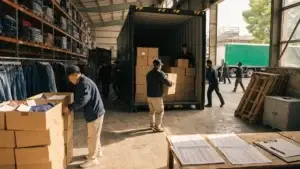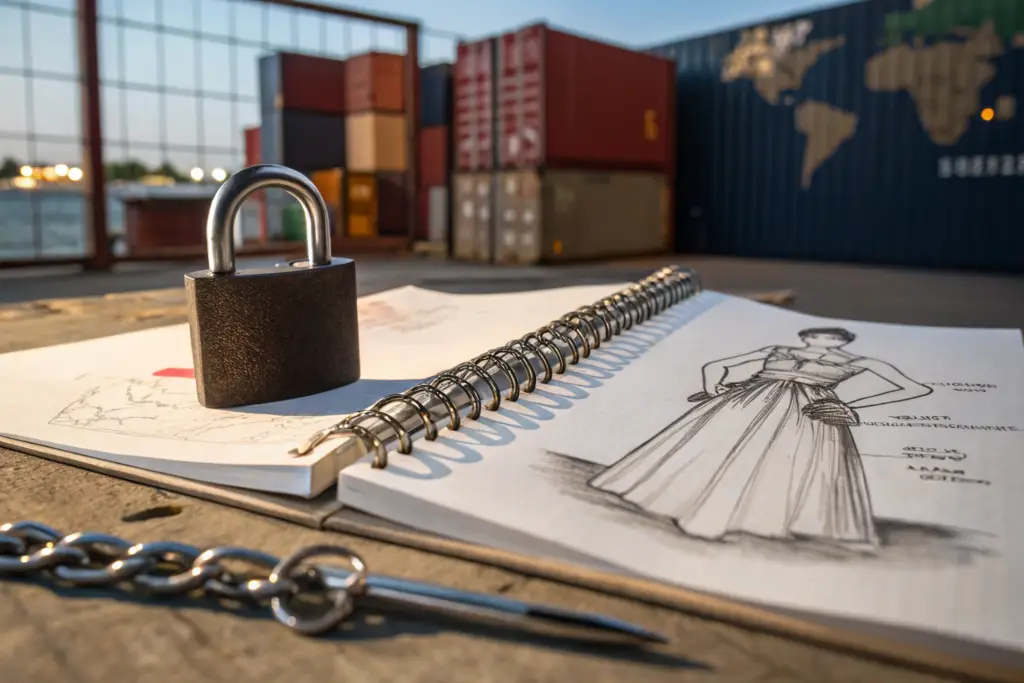
Three years ago, a designer from Los Angeles walked into my showroom with a look of exhaustion I recognized immediately. She had spent six months developing a unique print for a women's resort collection. The print was hand-painted, digitally rendered, and absolutely distinctive. She produced the collection with a factory she found online. Four weeks after her launch, she saw her exact print on a competitor's website, sold at half her price. The factory had sold her screens to a local trading company. She had no contract, no NDA, and no recourse. She came to me not just to find a new manufacturer, but to learn how to make sure it never happened again.
The best strategies to protect your designs when working with overseas factories are a layered combination of legal instruments, operational controls, and relationship management. This includes registered intellectual property rights in the factory's home country, split manufacturing across multiple facilities, and digital design file management with embedded traceable watermarks. No single measure is foolproof, but a multi-layered defense makes your designs so difficult and risky to steal that most factories will not attempt it.
Design theft is not a hypothetical risk. It is a daily reality in the global garment industry. A successful design is a valuable asset. An unscrupulous factory owner can sell your pattern, your print, or your entire tech pack to a domestic brand within hours of receiving it. The legal systems in different countries operate at different speeds and with different levels of enforcement. Relying on litigation after a theft has occurred is a losing strategy. The winning strategy is to prevent the theft from happening in the first place, and to make the cost of stealing your designs higher than the benefit. At Shanghai Fumao, we have built our reputation on respecting our clients' intellectual property. We sign NDAs, we segregate client materials, and we never, ever share one client's designs with another. Let me share the strategies that work.
How Can You Legally Enforce IP Rights Across Chinese Manufacturing Jurisdictions?
The first instinct of many Western brand owners is to rely on their home country's intellectual property laws. A US copyright registration, a European design patent. These are valuable, but they have limited direct enforcement power in China. If a Chinese factory steals your design and sells it to a Chinese brand that only sells domestically within China, your US registration is almost useless. You must register your intellectual property in China to have standing in a Chinese court. This is not a political statement. It is a practical legal reality.
Enforcing IP rights across Chinese manufacturing jurisdictions requires registering your designs, trademarks, and copyrights directly with the China National Intellectual Property Administration (CNIPA). A registered Chinese design patent gives you the legal right to sue an infringing factory in a Chinese court and to request enforcement actions from local authorities. Without this registration, you are asking a Chinese judge to enforce a foreign right, which is procedurally complex and often unsuccessful.
The process is not as expensive or as slow as many brand owners assume. A Chinese design patent application can cost a few hundred US dollars and, if the paperwork is complete, can be granted within six to twelve months. This is a small investment relative to the potential loss of an entire collection's exclusivity. The key is to file before you disclose the design to any factory. Once the design is publicly disclosed, it may no longer be considered novel, which is a requirement for patent protection.
What Types of IP Registration Are Available for Garment Designs in China?
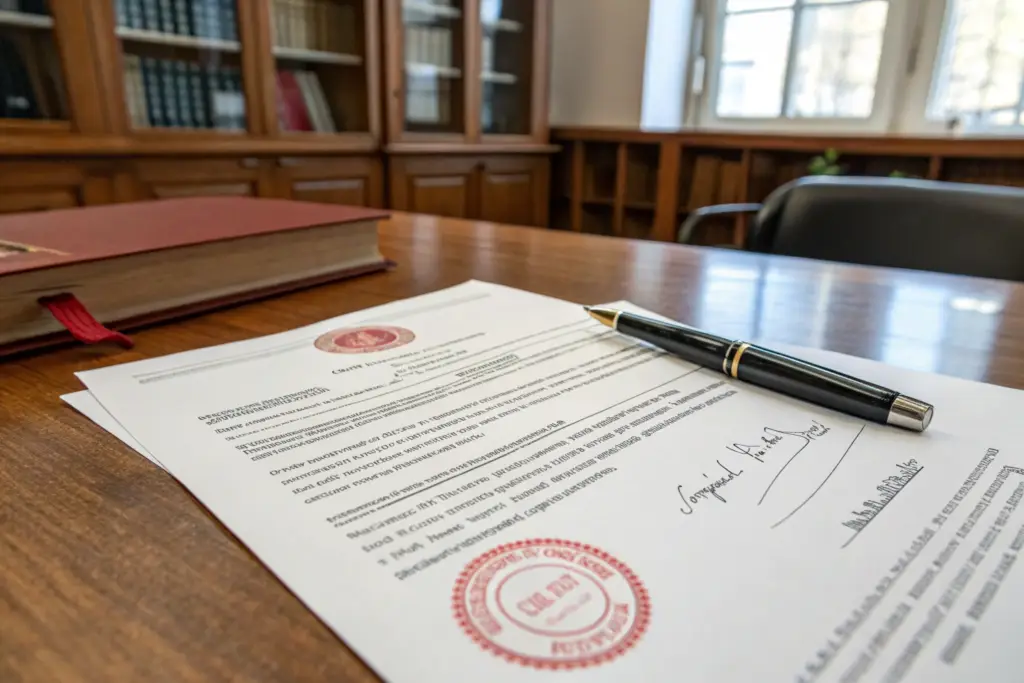
There are three main types of intellectual property registration available in China that apply to garment designs: design patents, copyright, and trademarks. Each protects a different aspect of your work, and the strongest protection comes from using all three in combination.
A design patent protects the visual ornamental appearance of a product. For apparel, this covers the unique shape, pattern, or ornamentation of a garment. A distinctive sleeve silhouette, a unique collar construction, an original surface print. A design patent gives you a ten-year exclusive right in China. It is the strongest protection against direct copying of your garment's visual appearance.
Copyright protects original artistic works. In China, copyright can be voluntarily registered with the Copyright Protection Center of China. For a fashion brand, this covers your textile prints, your embroidery designs, your original artwork that appears on the garment. Copyright registration creates a public record of your ownership and a date of creation, which is invaluable evidence in an infringement dispute.
Trademarks protect your brand name and logo. Registering your trademark in China is essential if you sell directly to Chinese consumers or if you manufacture in China and want to prevent your factory from using your brand name on unauthorized production. This is the most well-known form of IP protection, but it only protects your brand identifiers, not the design of the garment itself.
I worked with a European designer who had a signature sleeve design, a specific fluted shape that was central to her brand identity. Before we began sampling, she filed a Chinese design patent for the sleeve shape and a copyright registration for the print that accompanied it. She invested approximately $1,200 in the registrations. A year later, she found a copy of her dress on a Chinese e-commerce platform. Her lawyer sent the CNIPA registration certificates to the platform, and the infringing listing was removed within 48 hours. She never had to go to court. The registration alone was enough to enforce her rights through the platform's IP complaint system. This is the practical power of having local registration.
How Does a Bilingual NDA Create a Real Deterrent Effect?
A Non-Disclosure Agreement is a contract. It creates a legal obligation of confidentiality between you and the factory. The deterrent effect of an NDA depends on whether the factory believes it can be enforced against them. A vague, one-page agreement in English that the factory owner signs without reading has zero deterrent effect. A detailed, bilingual NDA in Chinese and English, with specific definitions of what constitutes confidential information, specific penalties for breach, and a dispute resolution clause that names a specific Chinese arbitration body, has a very real deterrent effect.
The key is specificity. A weak NDA says, "The factory shall not disclose confidential information." A strong NDA says, "The factory shall not disclose, reproduce, or use for any purpose other than the fulfillment of Order #4521, the following specific items: all tech pack documents, digital pattern files, print artwork files, fabric mill contacts, and finished garment samples. Breach of this clause will result in liquidated damages of [a specific, meaningful sum] per incident, payable within 30 days, with disputes resolved by arbitration at [named institution] in Shanghai."
The bilingual format is critical. The factory owner must be able to read and understand the obligations in their native language. The Chinese version is the version a Chinese court will look at. The English version is for your understanding. Both should state that in the event of a conflict, the Chinese version prevails. This gives the factory owner no excuse of misunderstanding.
A factory that signs a strong, bilingual NDA is signaling that they take the legal relationship seriously. A factory that refuses to sign, or that will only sign a watered-down version, is signaling that they want the option to misuse your information. The refusal is a red flag as valuable as the signed agreement is as a green flag. A detailed NDA, developed with an understanding of local legal practice, can be reviewed by a lawyer familiar with Chinese contract law to ensure its enforceability.
What Operational Workflow Tactics Limit a Factory's Ability to Copy Your Line?
Legal protections are necessary but not sufficient. A factory owner who is determined to copy your design will ignore a piece of paper and gamble that you will not sue. The most effective protection is operational: structuring the manufacturing workflow so that no single factory has access to your complete design. If the factory only ever sees a component of your garment, or an incomplete version, they cannot produce a copy that is good enough to compete with your original.
Operational tactics to limit a factory's ability to copy your line include split manufacturing, where key components are produced in separate facilities and assembled at a trusted partner, raw material control, where you supply proprietary fabrics and trims directly, and access compartmentalization within the factory, where workers see only the pieces they are sewing, not the finished garment. These tactics make copying your product operationally difficult and economically unattractive.
The goal is to increase the complexity and cost of copying. A factory that has to reverse-engineer your garment from incomplete components, source matching trims from unknown suppliers, and achieve the same quality without your specifications will face a cost and effort barrier. Most copycats are lazy. They target easy, complete information. Deny them that ease.
How Does "Split Manufacturing" Work for High-Stakes Designs?
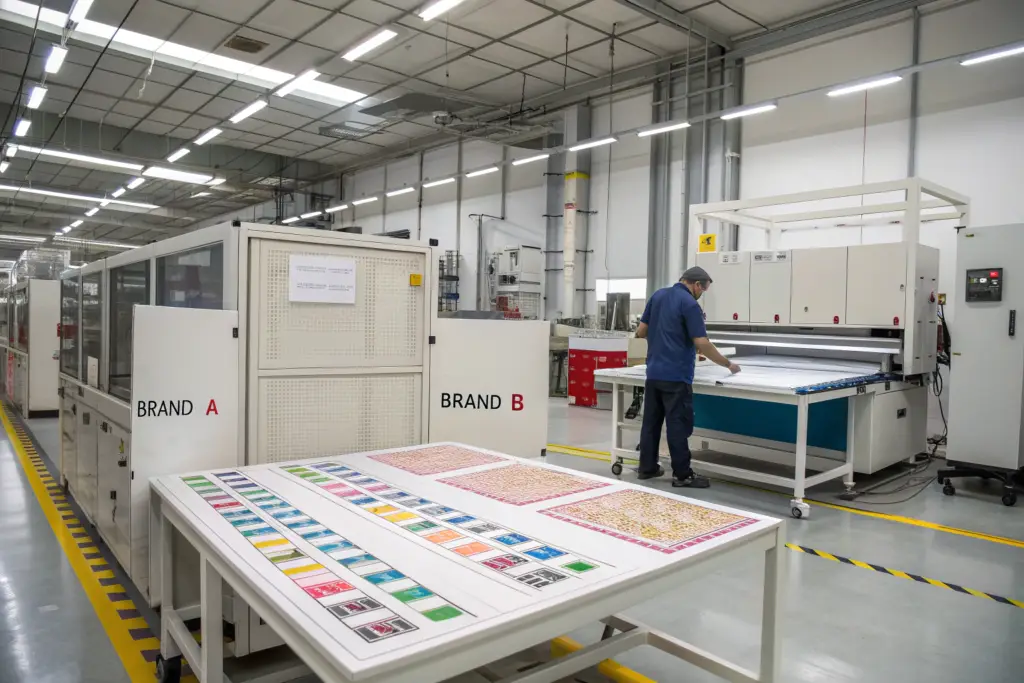
Split manufacturing is the practice of separating the production of your garment across two or more facilities, so that no single factory has the complete product. The classic split is between cut-make-trim facilities and finishing facilities. But for high-stakes designs, the split can be more granular.
One effective split is to produce your print fabric in one province and your solid fabric in another, then send both to a third facility only for cutting and sewing. The cutting facility never knows the source of the fabric. The fabric mills never know the final garment design. This protects your fabric sourcing network and your silhouette simultaneously.
Another split is to manufacture the garment with a generic label and no branding, then apply the branded hangtags, labels, and packaging yourself, either in your own distribution center or through a separate, trusted finishing partner. The manufacturing factory produces a generic white-label garment. They do not know your brand name. If they copy the garment, they are copying a generic product without the brand appeal that drives its market value.
I advised a premium menswear brand that used a split strategy for their signature blazers. The fabric was woven by a specialty mill in Jiangsu. The buttons were custom-molded by a separate trim supplier and shipped directly to the brand's warehouse. The blazers were manufactured by us at Shanghai Fumao, but with plain, unbranded labels. When the finished blazers arrived at the brand's US warehouse, their team steamed them, sewed in the branded labels, attached the custom buttons, and packaged them in the branded boxes. No single supplier had the complete branded product. The blazer shell without the buttons and branding was a much less attractive target for copying. The brand invested in this complex workflow because their designs were the core of their competitive advantage. They have never had a copy incident.
Why Should You Control Your Own Trims, Labels, and Packaging Supply?
Trims, labels, and packaging are the most easily copied elements of a brand's identity. A factory that has access to your exact hangtag, your custom-printed care label, and your branded polybag can produce an unauthorized run that is visually indistinguishable from your genuine product. Removing these items from the factory's supply chain removes their ability to create a perfect counterfeit.
Supply the trims yourself, or have your trim supplier ship directly to you, not to the factory. You then provide the factory with only the exact quantity of trims needed for your specific order, plus a small, defined overage for production wastage. The factory cannot run extra units because they do not have extra branded trims. If they run extra units, they will be unbranded, and thus significantly less valuable.
A client of mine produces luxury silk scarves. The scarves are printed and hemmed in China, but all the branded labels and the signature embossed gift boxes are made in Italy and shipped directly to her distribution center in the Netherlands. The Chinese factory never touches her branding. She provides a specific count of plain care labels that only contain the legally required fiber content and wash instructions, not her brand name. The factory ships the scarves in bulk polybags. Her team in the Netherlands inspects each scarf, attaches the branded label, folds it into the Italian gift box, and seals it. This process adds cost and labor, but her brand's exclusivity is her entire business model. She considers the extra logistics cost to be the premium she pays for security. She has operated this way for five years with zero leaks.
The tech pack is the blueprint of your garment. It contains every specification a factory needs to manufacture your product: the flat sketch, the measurement graded spec, the stitch types, the seam finishes, the bill of materials, the trim codes. In the wrong hands, a complete tech pack is a license to manufacture an exact copy. Most design theft begins with a digital file being forwarded from a sales representative's email to an external address. Digital file control is not just IT hygiene. It is IP defense.
Effective digital file management practices to prevent unauthorized sharing include using secure file-sharing platforms with download restrictions and access expiry dates, embedding dynamic watermarks with the recipient's name and date on every page of the tech pack, and maintaining a strict policy of never sending complete tech packs to anyone who does not absolutely need the full specification. Partial information shared on a need-to-know basis is inherently more secure than a monolithic file.
The email attachment is the enemy of IP security. Once a PDF leaves your outbox, you have lost control of it. It can be forwarded, downloaded, printed, and stored without your knowledge. The foundation of digital security is moving away from email attachments entirely and into controlled-access platforms.

How Do Dynamic Watermarks Deter Leaking of Your Design Files?
A static watermark is a fixed image or text added to a document. It is easily removed with basic PDF editing software. A dynamic watermark is generated uniquely for each document view or download. It contains the recipient's name, email address, the date and time of access, and a unique tracking code. If the document is leaked, the watermark identifies the exact source of the leak.
Dynamic watermarking creates a powerful psychological deterrent. A factory employee who knows their name is embedded on every page they view is far less likely to forward that file externally. The risk of being identified and losing their job, and potentially facing legal action, outweighs the potential benefit of selling the file. The watermark turns an anonymous, traceless act into a personally identifiable one.
We use a secure platform to share tech packs with our clients and, crucially, to receive tech packs from them. The platform applies dynamic watermarks automatically. When our pattern maker opens the tech pack, their name and the date are overlaid across the page in a semi-transparent pattern that is impossible to remove without destroying the underlying drawing. If a tech pack ever appeared on a competitor's desk, we could trace it back to the specific individual and the specific time of access. In five years of using this system, we have never had a leak. The deterrent effect is absolute because the consequence is certain.
The most secure file is one that cannot be downloaded. Granting "view only" access on your file-sharing platform prevents the recipient from saving a local copy to their hard drive, a USB stick, or a personal cloud account. They can look at the document on the screen, but they cannot take it with them. Combined with dynamic watermarking, this makes the document almost useless to a potential thief. They would have to photograph the screen with their phone, resulting in a low-quality, distorted image that is worthless for manufacturing purposes.
Expiry dates add another layer of control. Set the access to expire after a defined period, such as the duration of the sampling phase or the production run. Once the order is complete, the factory's access to the tech pack is automatically revoked. They no longer have a legitimate reason to view the file, and the system enforces that.
A brand owner I work with sets her tech pack access to expire 30 days after the bulk shipment date. The factory has access during the active production period. After the goods are shipped, the file locks. If the factory needs to review something for a reorder, the access is re-granted with a new expiry. This practice prevents the accumulation of old design files in factory computers, which are a tempting target for internal theft. The factory's records are automatically cleaned of her IP after each season, reducing the attack surface for a data breach. Secure file management practices like these are becoming standard in industries that deal with sensitive intellectual property, a trend driven by the increasing sophistication of cyber threats and the availability of user-friendly secure platforms.
How Can Relationship Building and Incentive Structures Reduce the Risk of IP Theft?
All the legal contracts and operational controls in the world cannot completely eliminate the risk of IP theft. The human element is always present. A factory owner who feels exploited, squeezed on price, and treated as a disposable vendor has a weaker moral and relational barrier to crossing the line into copying. A factory owner who feels respected, valued, and invested in a long-term partnership has a strong positive incentive to protect the relationship. The most secure supply chain is one where the factory sees your success as their success.
Building a relationship that reduces IP theft risk involves treating the factory as a strategic partner, not a commodity vendor. This includes offering fair pricing that allows the factory a healthy margin, providing consistent order volume to create mutual dependency, and structuring incentive payments tied to exclusivity and security performance. When the factory has more to lose from betraying your trust than they stand to gain from a one-off copy sale, the rational business decision is to protect your IP.
This is not about being soft. It is about being strategically aligned. A factory that depends on your repeat business for 20% of its annual revenue is not going to risk that revenue stream by selling your designs to a competitor. The immediate payout from design theft is almost always smaller than the lifetime value of a reliable, long-term client. Make that math explicit in your relationship.

What Is an "Exclusivity Incentive" and How Does It Work Financially?
An exclusivity incentive is a structured financial arrangement that rewards the factory for maintaining the confidentiality and exclusivity of your designs. It is a positive incentive, not a penalty. It aligns the factory's financial interest with your IP security.
One effective model is an annual exclusivity bonus. The contract specifies that if the factory completes the year with no documented instances of design leakage, unauthorized production, or confidential information sharing, the factory receives a bonus, calculated as a percentage of the total order value for that year. The bonus might be 2% or 3% of the annual billing. This is a significant, tangible reward for integrity.
Another model is a long-term contract with guaranteed minimum volumes, contingent on IP security. The factory knows that as long as they protect your designs, they have a secure revenue stream for the next three years. The guaranteed future income is far more valuable than the uncertain, one-off profit from selling a design to a third party.
We have an arrangement with several of our key clients that functions as a de facto exclusivity incentive. They have committed their seasonal production to us, and we have committed our capacity to them. Our business relationship is too valuable to either side to risk damaging it with an act of IP theft. The mutual dependency creates security that no contract clause could match.
How Do You Vet a Factory's Reputation for IP Integrity Before Partnering?
Reputation in the industry is a powerful filter. A factory that has stolen designs in the past has a reputation for it. The information circulates among brand owners, sourcing agents, and even other factories. The task is to access this informal information network before you commit to a partnership.
Ask for references, as we discussed in a previous article, but ask specifically about IP security. "Have you ever had a design leak from this factory? Do you know of anyone who has?" Direct questions about IP are more revealing than general questions about quality.
Talk to other brand owners in your network. Attend trade shows and ask peers about their manufacturing partners. The garment industry is a surprisingly small world. A factory that has burned one brand owner is often known by many. This informal vetting is as important as any formal database search.
Finally, observe the factory's own IP practices. A factory that respects your IP will demonstrate it in their daily operations. They will have a clean, organized design room with segregated client materials. Their staff will ask permission before sharing any design information internally. They will proactively offer an NDA before you even ask. These behavioral signals are more telling than any written policy. At Shanghai Fumao, we welcome these observations. We are proud of our protocols and we want prospective clients to see them in action. A factory that is transparent about its IP practices is a factory that has built a culture of respect for client property. A factory that is secretive or dismissive about IP is a factory that does not take it seriously.
Conclusion
Protecting your designs when working with overseas factories is not a single action. It is a system. The system has four layers, and each layer reinforces the others. The first layer is legal: registering your design patents, copyrights, and trademarks in the factory's home jurisdiction, and executing detailed, bilingual NDAs that create a real, enforceable obligation. The second layer is operational: splitting your manufacturing across multiple facilities, controlling your own trims and branding, and compartmentalizing information so that no single factory has your complete product. The third layer is digital: moving away from email attachments to secure platforms with dynamic watermarks, view-only access, and automatic file expiry. The fourth layer is relational: building partnerships based on fair pricing, mutual dependency, and positive incentives for integrity.
A factory that faces all four of these layers simultaneously confronts a daunting barrier. The legal layer threatens formal consequences. The operational layer makes copying technically difficult and economically unattractive. The digital layer makes leaking traceable and personally risky. The relational layer makes the partnership too valuable to jeopardize. Together, these layers shift the risk calculation. The rational choice for the factory is to protect your IP, not to exploit it.
At Shanghai Fumao, we have internalized all four layers. We sign strong NDAs. We segregate client materials and welcome split manufacturing arrangements. We use secure digital platforms for all design file exchanges. And, most importantly, we build relationships that are worth more than any short-term gain from IP theft. Our business is built on the trust of the brand owners who choose us as their long-term manufacturing partner. We protect that trust with every decision we make.
If you are developing a new collection and want to discuss how to structure a secure manufacturing partnership, I invite you to contact our Business Director, Elaine. She can share our standard NDA template, walk you through our digital file security protocols, and discuss how we can integrate your specific IP protection needs into our workflow. Reach Elaine at elaine@fumaoclothing.com. Your designs are your most valuable asset. Let's build a partnership that protects them completely.