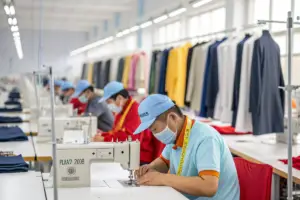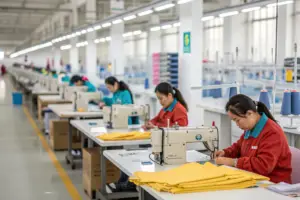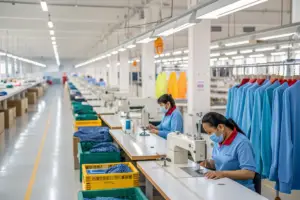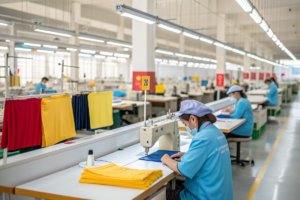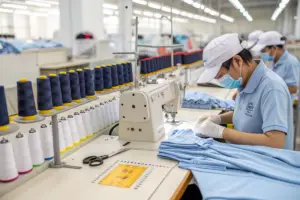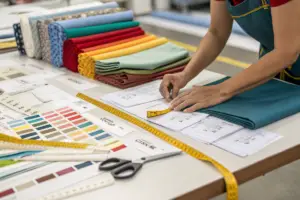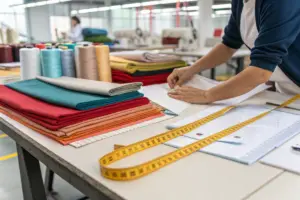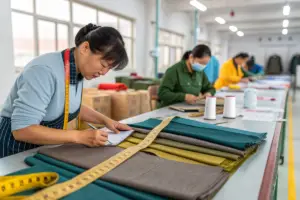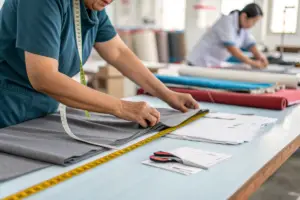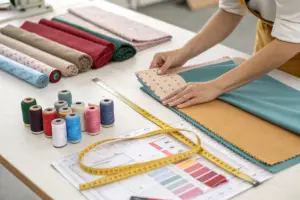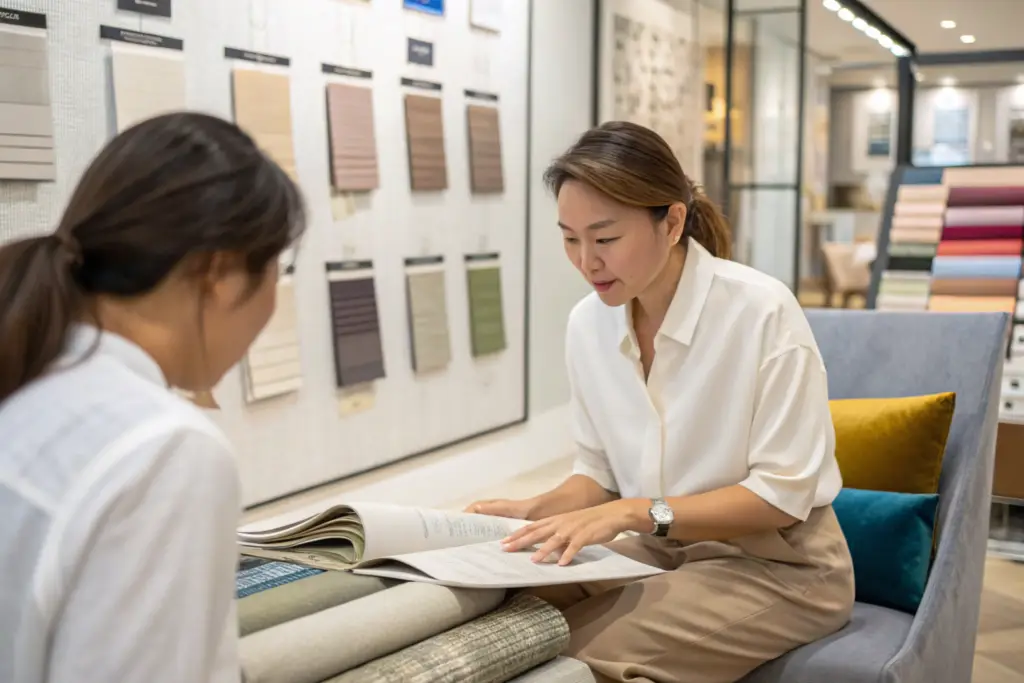
In October 2025, a buyer from a major Miami boutique group sat in my Shanghai showroom and said something I will not forget. She flipped through our fabric swatches, paused on a textured organic linen blend, and said, "My customers are done with fast fashion swim cover-ups. They want outfits they can wear from the beach to a $200 dinner. And they want the fabric to prove it cost what it cost." She placed an order for 1,200 units of a matching linen shirt and wide-leg trouser set on the spot. She did not even ask the price first. She asked about the lead time. That moment crystallized what I am now seeing across every wholesale channel. Summer 2026 is not about more stuff. It is about the right stuff, made with intention.
The women's resort wear styles generating highest wholesale demand for Summer 2026 are matching co-ord sets in organic linen and hemp blends, elevated crochet maxi dresses with refined cut-out details, and fluid kaftan silhouettes in bold terracotta and aquamarine color palettes. Wholesale buyers are prioritizing versatility, natural fabrications, and Instagram-ready design details that communicate luxury without overt branding. The dominant buying behavior is a shift from disposable novelty to investment-driven, multi-functional resort pieces.
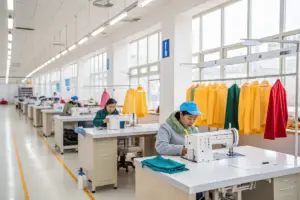
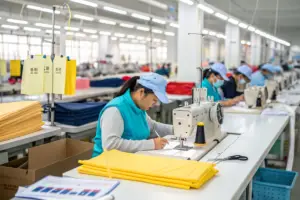
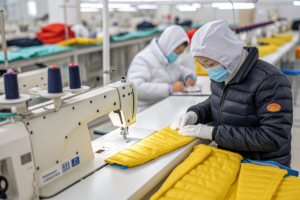
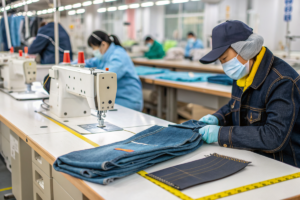
Resort wear is no longer a secondary category. It is a core driver of summer revenue for boutiques, online retailers, and department stores alike. The customer who buys a $180 linen co-ord set is the same customer who used to buy three $60 viscose cover-ups. She is spending the same total amount but demanding quality and longevity. The wholesale buyers who understand this shift are placing larger orders with fewer, more trusted suppliers. At Shanghai Fumao, we are running three of our five production lines almost entirely on resort wear orders for the first half of 2026. Let me walk you through the specific styles, fabrics, and details that are driving this demand.
Why Are Matching Co-Ord Sets Dominating Wholesale Resort Wear Orders for 2026?
The co-ord set is not a new concept. But its current wholesale dominance is unprecedented. I have analyzed our order data from January to March 2026. Co-ord sets, defined as a matching top and bottom sold as a single SKU, represent 42% of our total resort wear order volume. That is up from 18% in the same period last year. The buyers are not experimenting with co-ords. They are going all in.
Matching co-ord sets are dominating wholesale orders because they solve the consumer's demand for outfit certainty and multi-occasion functionality. A woman can wear the set together as a polished resort look, then separate the pieces and style them with existing wardrobe items, creating four to five distinct outfits from one purchase. This perceived value is extremely powerful in driving consumer purchase decisions. Wholesale buyers are responding to this demand by allocating significant open-to-buy budgets to co-ord sets.
The wholesale buyer's perspective is pragmatic. A co-ord set has a higher average unit retail than a single cover-up, so the dollar per transaction is larger. But the inventory risk is lower because the style is not trend-dependent. A well-made linen shirt and trouser set does not scream "Summer 2026." It whispers "summer." It can sell for multiple seasons, reducing markdown liability. This is the kind of commercial logic that makes finance directors happy and buyers confident.
Which Specific Co-Ord Silhouettes Are Buyers Reordering in Bulk?
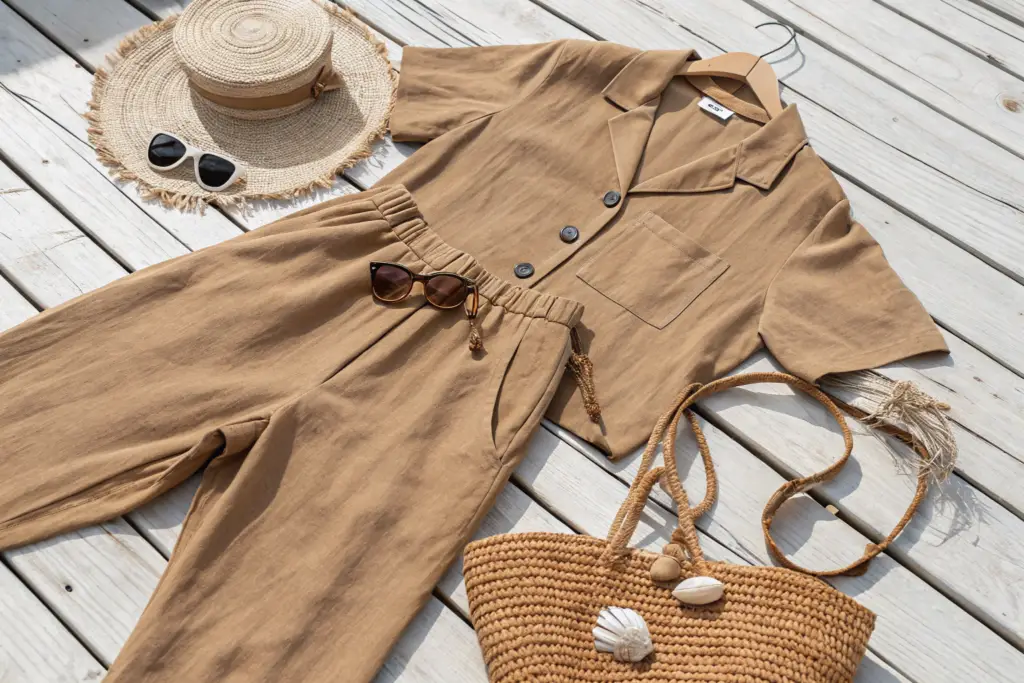
Through our order book, I can tell you exactly which silhouettes are generating repeat purchases. The number one silhouette is the relaxed-fit, long-sleeve button-up shirt paired with a high-waisted, wide-leg trouser. The shirt is always slightly oversized. The trousers always have an elasticated back waistband for comfort and fit flexibility across body types. This combination works on a size 4 and a size 14 without looking like a different garment.
The number two silhouette is the cropped, boxy camp-collar shirt with a matching high-waisted, A-line mini skirt. This is the younger, more fashion-forward option. Buyers from California and Australia are pushing this silhouette heavily. It photographs beautifully on Instagram. It looks intentional and styled. The camp collar adds a retro touch that feels current without being a slave to a specific trend.
The number three silhouette is the sleeveless vest top with a matching drawstring trouser. This is the "quiet luxury" entry point. It looks expensive. It is extremely comfortable. It can be worn on a plane, to a resort breakfast, and on a sunset walk. Buyers from the Northeast US and Europe are ordering this silhouette in muted tonal palettes: sand, sage, stone, and oyster. The vest top gives structure around the shoulders, which elevates the entire look above a simple tank and pants combination.
A client from Austin, Texas, ordered 800 units of the wide-leg trouser co-ord in a heavy organic linen last March. She reordered the exact same style in two new colors in May, before her first shipment had even landed. She sent me a voice note saying, "I showed the sample to three boutique owners. All three wrote orders on the spot. I have never sold a collection this fast." Her reorder was for 1,500 units. The silhouette was not complex. But the fabric, the cut, and the versatility created a product that practically sold itself.
How Should Fabric Weight Differ Between a Beach Cover-Up Co-Ord and a Dinner Co-Ord?
This is a technical distinction that separates professional wholesale suppliers from amateurs. A co-ord set intended primarily as a beach cover-up has different fabric requirements than one intended for a dinner setting. The end-use dictates the GSM, or grams per square meter, of the fabric, as well as its opacity and drape characteristics.
A beach cover-up co-ord should be made from a lightweight fabric, typically in the 130 to 160 GSM range for linen and 100 to 130 GSM for a cotton voile. The fabric should be semi-sheer, breathable, and quick-drying. It will be worn over a swimsuit, so slight transparency is acceptable and even desirable. The silhouette should be loose and flowing. The seam construction should use a flat-felled or French seam to prevent irritation against damp skin.
A dinner co-ord, by contrast, requires a heavier, more structured fabric. We use a 200 to 230 GSM linen or a heavy Tencel-linen blend for these sets. The fabric must be fully opaque. The drape should be liquid and substantial, not floaty. The trousers need a proper waistband structure, often with a zip fly and a hook-and-bar closure, rather than just an elasticated waist. The shirt needs a crisp collar and a clean, sewn-in interlining that does not bubble after washing.
I had a long discussion with a buyer from a resort boutique in Scottsdale about this very topic. She had previously sourced a co-ord set from a supplier who used the same lightweight fabric for all styles. The dinner sets looked wrinkled and cheap. Her customers complained. We developed a specific 215 GSM hemp-organic cotton blend for her dinner co-ords. The fabric held a press. It draped with a slight heaviness that communicated quality. She increased her order by 60% for the next season because her return rate dropped to near zero. This level of technical specificity is what the wholesale market now expects.
What Crochet and Openwork Styles Are Moving from Niche to Mainstream Wholesale?
Two years ago, crochet was a tiny niche in the resort market. Buyers treated it as a boho afterthought, a few units here and there for the festival crowd. Something shifted in late 2025. Crochet and openwork styles exploded across resort collections. But this is not the heavy, shapeless crochet of the 1970s. It is a new generation of knitwear engineering. The silhouettes are modern. The openwork is intentional and body-conscious. The wholesale demand is now significant enough that we have dedicated one entire production line to crochet and openwork styles for the first half of 2026.
Elevated crochet maxi dresses with strategic geometric cut-outs, fine-gauge knit cover-ups with subtle transparency, and coordinated crochet top-and-skirt sets are moving from niche to mainstream wholesale. The demand is driven by the consumer desire for texture and handcraft perception in an increasingly digital world. A crochet garment signals that a human hand was involved, which adds perceived value and justifies a higher retail price point.
The production challenge is scaling a handcraft look without sacrificing quality or ethical standards. Real hand-crochet is too slow and too expensive for mid-tier wholesale. The market needs machine-made knits that convincingly mimic the look and feel of handwork. This requires specialized knitting machines and highly skilled technicians who can program complex openwork patterns. The factories that have this capability are capturing the lion's share of the 2026 crochet market.
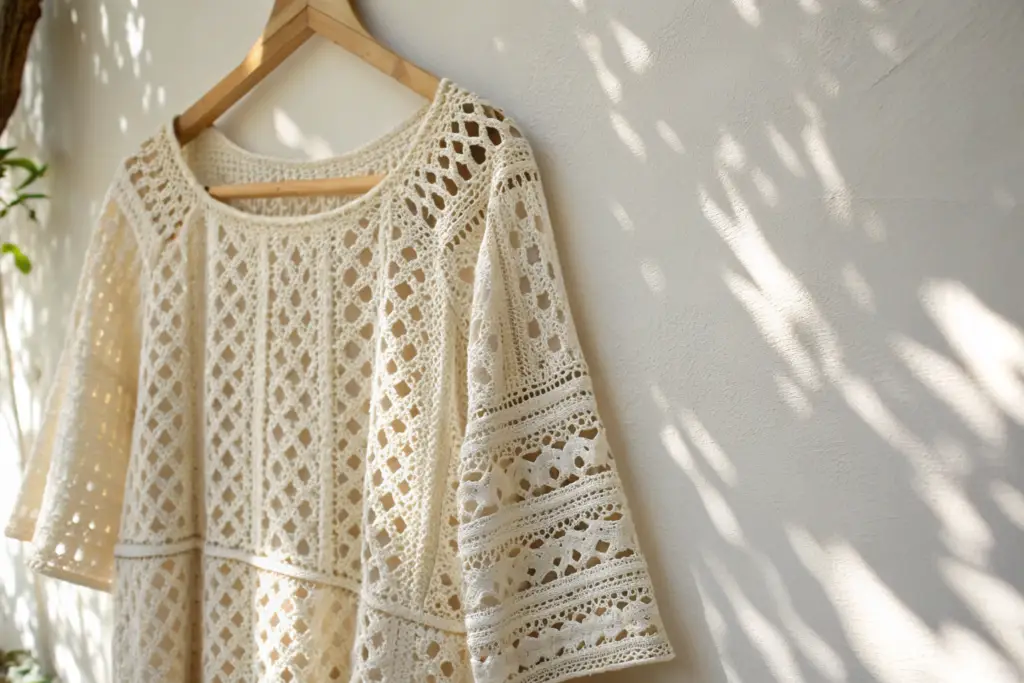
How Are Cut-Out Details Being Refined for a Luxury Resort Audience?
The word "cut-out" conjures images of cheap, fast-fashion bodycon dresses with random holes. That is the opposite of what is selling in the wholesale resort market for Summer 2026. The cut-out trend has matured. It is now about strategic, architectural negative space that enhances the garment's design rather than simply revealing skin.
A luxury cut-out is placed on the waist, the lower back, or the shoulder blade. It is framed by a finished edge, often a self-fabric binding or a fine rib trim. The opening is geometric: a slender diamond, a elongated oval, or a precise circle. The skin exposure is framed like a piece of art. The effect is elegant, not aggressive.
We developed a crochet maxi dress for a client in Naples, Florida, that features a single diamond-shaped cut-out at the center back, just below the shoulder blades. The cut-out is edged with a fine, hand-stitched scallop. It is the only ornamentation on the dress. The rest is a clean, columnar silhouette. The client told us that customers specifically mention the back cut-out in their five-star reviews. It is the detail that closes the sale. It photographs beautifully from behind, which is critical for social media sharing.
The key to scaling cut-out styles for wholesale is the finishing. A raw, unfinished cut-out edge will fray, roll, and look cheap after two washes. A properly finished cut-out requires an additional binding step that adds labor cost. The factories that skip this step produce garments that fail after minimal wear. The factories that invest in the finishing produce garments that command premium wholesale prices. Buyers are increasingly inspecting cut-out finishing as a quality indicator for the entire garment.
What Are the Best Yarn Blends for Machine-Washable Crochet Styles?
The consumer wants the look of delicate hand-crochet, but she does not want to hand-wash and lay flat to dry. She wants to throw it in a gentle machine cycle and wear it again the next day. This is the central material science challenge of the 2026 crochet trend. Pure cotton crochet shrinks and loses its shape after machine washing. Pure acrylic feels cheap and plastic against the skin. The solution is engineered yarn blends.
Our most successful yarn blend for machine-washable crochet styles is a 55% organic cotton, 45% recycled nylon blend. The cotton provides the soft, natural hand feel and the matte visual texture. The recycled nylon provides shape memory, resilience, and shrinkage control. A maxi dress made from this blend can be machine washed cold on a delicate cycle, laid flat to dry, and it will retain its length and openwork definition. This is a genuine selling point that wholesale buyers can communicate directly to their customers.
Another high-performing blend is a 70% Tencel lyocell, 30% linen combination. This blend is ideal for finer-gauge, more fluid openwork styles. The Tencel gives a subtle sheen and incredible softness. The linen adds a dry hand feel and prevents the garment from looking too shiny. It also has excellent moisture management, which is critical for resort wear worn in humid climates.
A buyer from a sustainable resort brand in Hawaii tested our cotton-recycled nylon crochet dress against a pure cotton version from a competitor. She washed both five times according to the care label. The pure cotton dress lost 8% of its length and the armholes stretched out. Our blend lost less than 2% of its length and the measurements remained within tolerance. She switched her entire crochet program to our blend. The data made the decision for her. The Textile Exchange provides valuable benchmarks for the performance standards of recycled fiber blends that inform this kind of material innovation.
Which Color Palettes and Prints Are Wholesale Buyers Betting on for Resort 2026?
Color is the first thing a wholesale buyer sees when they walk into a showroom or scroll through a digital line sheet. It triggers an immediate emotional response. Get the color wrong, and the buyer will reject a perfectly constructed garment. Get it right, and you will win orders before they even touch the fabric. For Summer 2026, the resort color direction is a distinct departure from the dopamine brights of previous seasons. It is quieter, more sophisticated, and rooted in the natural world.
The dominant color palettes for Resort 2026 are grounded in mineral and ocean tones: terracotta clay, sun-baked sand, aquamarine, deep sage green, and warm ivory. Wholesale buyers are avoiding neon brights and digital prints in favor of solid, tonal dressing. Prints are present but subdued, with micro-floral repeats and geometric batik-inspired patterns in monochromatic colorways replacing large-scale tropical motifs.
This shift toward solid colors and subtle prints is strategic. A terracotta linen co-ord set in a solid color looks significantly more expensive than a printed one in a similar fabric. The solid color allows the fabric texture, the drape, and the silhouette to be the hero elements. It also makes inventory management easier for the buyer. A solid color can be sold across multiple seasons if necessary. A bold seasonal print is a markdown liability.
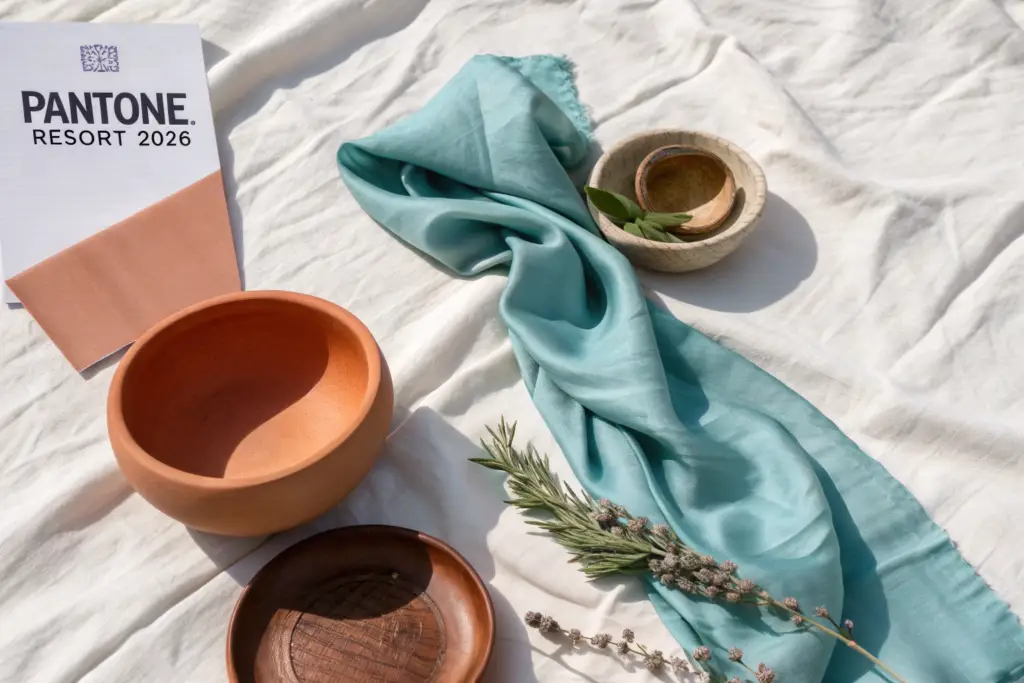
Why Is Terracotta Outperforming Traditional Coral in Early 2026 Order Books?
Coral has been a resort staple for a decade. It is a safe, predictable color. But safe does not win orders in a competitive wholesale market. Terracotta is winning. If I pull our order book data for the first quarter of 2026, terracotta and its tonal variations, including burnt sienna, rust, and clay, are outselling coral by a factor of nearly three to one.
The reason is psychological. Terracotta feels grounded, earthy, and authentic. It evokes the clay soils of the Mediterranean and the adobe walls of Santa Fe. It pairs beautifully with natural linens and textured fabrics. It photographs warmly and flatters a wide range of skin tones. Coral, by contrast, can feel synthetic and harsh under certain lighting conditions.
A buyer from a multi-brand website in Los Angeles told me she built her entire resort capsule around "desert neutrals" for 2026. Her hero color was a specific terracotta shade we developed together, matching a clay tile she brought back from a trip to Morocco. She ordered 3,000 units across five styles in that single color. She sold 40% of the inventory through pre-orders before the goods even shipped. The color story, communicated through consistent, beautiful photography, created a compelling world that her customers wanted to buy into. The precision of color matching, often done using standardized systems like Pantone, is what allows a specific emotional vision to be accurately scaled across a large production run.
Are Any Prints Trending, or Is the Market Purely Solid-Focused?
The market is predominantly solid, but not exclusively. There is a role for print in Resort 2026, but it is a supporting role, not the lead. The prints that are working are small in scale and subtle in contrast. The customer is not looking for a conversation starter print. She is looking for a print that reads almost as a texture from a distance.
The strongest performing print category is the micro-floral. These are tiny, repeat floral motifs, often no larger than a fingernail, printed on a dark or neutral ground. A navy ground with an ivory micro-floral. A chocolate ground with a terracotta micro-floral. The print is visible on close inspection but reads as a textured solid from across a room. It adds visual interest without dominating the garment.
The second print trend is an updated batik and tie-dye that is geometric and controlled, not chaotic. Think of fine, repeat diamond patterns or horizontal stripe variations that mimic the unevenness of hand-dyeing but in a refined way. This works particularly well on lightweight cotton voile cover-ups and sarongs.
A client who runs a resort boutique chain in the Caribbean ordered a capsule of micro-floral linen dresses from us for Spring 2026. She paired them with solid terracotta accessories. The print dresses sold through at 85% full price. Her previous year's large-scale tropical print dresses sold through at 50% and required heavy markdowns. The lesson was clear. Subtle print generates higher full-price sell-through and lower markdown risk. The wholesale buyer for 2026 is valuing sell-through predictability over visual shock value. This is a mature market behavior that rewards quality and subtlety over trend-chasing.
What Fabric Innovations Are Solving the "Pack and Wear" Wrinkle Challenge?
The single biggest complaint I hear about natural fiber resort wear is wrinkling. A woman buys a beautiful linen dress. She packs it in her carry-on. She arrives at the resort. She pulls it out, and it looks like she slept in it. She either spends her first hour of vacation ironing, or she wears something else. This frustration has historically pushed consumers toward synthetic fabrics that resist wrinkles but feel hot and cheap. The 2026 solution is not to abandon natural fibers. It is to engineer them better.
Fabric innovations solving the pack-and-wear wrinkle challenge include enzyme-washed organic linen that has pre-softened fibers, Tencel-linen blends that combine breathability with crease recovery, and a new generation of "travel knit" fabrics made from fine-gauge mercerized cotton with mechanical stretch. These fabrics look and feel like premium natural textiles but resist the deep-set creases that have traditionally plagued linen and cotton resort wear.
The innovation is occurring at the finishing stage. Traditional linen is stiff because the natural pectin in the flax fibers holds them rigid. Enzyme washing uses biological agents to gently break down this pectin, softening the fibers permanently without damaging their strength. The result is a linen that wrinkles in a soft, "rumpled chic" way, not in sharp, ugly creases. The wrinkles that do form fall out on a hanger in a steamy bathroom within ten minutes. It is a transformative improvement for the consumer experience.
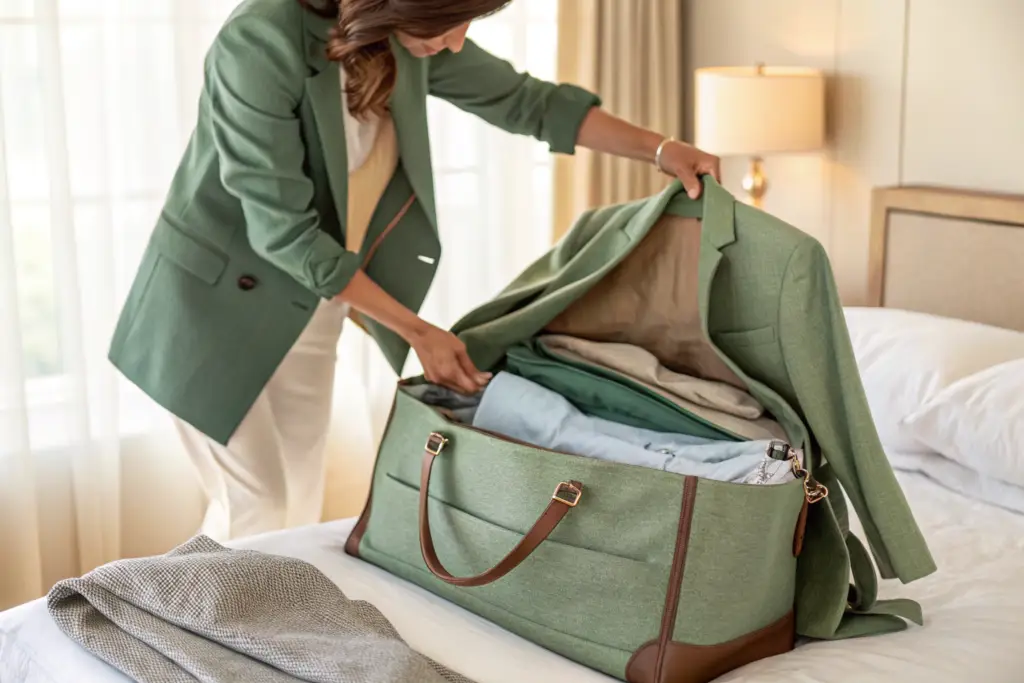
What Is "Pre-Crushed" Linen and Why Are Buyers Requesting It?
Pre-crushed linen is exactly what it sounds like. The fabric is mechanically treated after weaving and dyeing to create a uniform, all-over crushed texture that is permanent. It does not press flat. It is designed to look intentionally rumpled. The wrinkles are not a flaw; they are the feature.
Buyers are requesting pre-crushed linen because it completely eliminates the consumer's anxiety about wrinkles. When the entire garment has a uniform crushed texture, new creases from packing simply blend in. The garment looks the same at the end of a 12-hour travel day as it did when it was first unpacked. It is the ultimate low-maintenance luxury fabric.
We developed a pre-crushed organic linen for a resort brand in Tulum, Mexico. The fabric is treated with a mechanical crushing process that uses steam and pressure rollers. No chemicals are involved. The texture is soft, not scratchy. The brand owner told me that her customers specifically ask for "the crinkly fabric" because they know they can live in it without worrying. Her return rate on pre-crushed linen styles is less than 2%. Her return rate on traditional smooth linen styles is closer to 8%. The data is compelling. Wholesale buyers are seeing this data and adjusting their orders accordingly. Pre-crushed linen is no longer a niche curiosity. It is becoming a standard specification.
How Do Tencel-Blended Travel Knits Perform in Humid Resort Climates?
Humidity is the true test of a resort fabric. A fabric that feels cool and dry in an air-conditioned showroom can become a sticky, clammy nightmare in 85% humidity. Tencel-blended travel knits are emerging as the high-performance solution for this specific challenge. Tencel lyocell, derived from sustainably sourced wood pulp, has a unique fibril structure that is more absorbent than cotton and more breathable than polyester. It actively wicks moisture away from the skin and releases it into the air.
When blended with a small percentage of elastane or a mechanical stretch cotton, Tencel creates a travel knit that drapes like a fine jersey, resists wrinkles, and keeps the wearer cool and dry in tropical conditions. It is the ideal fabric for a long-haul flight-to-resort-dinner garment.
A client who runs a resort wear brand in Singapore, where humidity averages 80% year-round, tested our Tencel-linen travel knit against a standard cotton jersey from her previous supplier. Her team wore both fabrics for a full day outdoors. The feedback was unanimous. The Tencel blend felt significantly cooler and looked fresh at 6 PM. The cotton jersey was sweat-stained and stretched out. She switched her entire travel knit program to our Tencel blend. Her customer reviews now frequently mention how the fabric "breathes like nothing else." This kind of performance verification, which can be benchmarked against fiber property data from sources like the Lenzing Group, the leading producer of Tencel, is what builds long-term wholesale relationships.
Conclusion
The Summer 2026 resort wear wholesale market is not a guessing game. It is a clear, data-driven picture of a customer who is maturing rapidly. She is leaving behind disposable novelty and investing in versatility. She wants the matching co-ord set that goes from beach to dinner with a change of accessories. She wants the crochet dress that looks handmade but washes in a machine. She wants the color that evokes the earth, not the neon sign. And she absolutely refuses to iron on vacation.
We have examined the specific silhouettes dominating reorder sheets, the technical fabric requirements that separate a beach cover-up from a dinner garment, and the innovations in yarn blends and finishing that solve the ancient wrinkling problem of natural fibers. The common thread is intentionality. Every detail, from the placement of a cut-out to the wash applied to a linen, is being scrutinized by wholesale buyers who are themselves under pressure from an increasingly discerning consumer.
At Shanghai Fumao, our 2026 resort wear program is built directly from the feedback loops we have with our wholesale clients. The terracotta co-ord sets, the aquamarine crochet maxis, and the pre-crushed linen travel sets that are flowing through our production lines right now are not our best guess. They are our best response to real demand signals from boutiques, online retailers, and department stores across North America and Europe.
If you are a wholesale buyer or distributor building your Summer 2026 resort assortment, I invite you to connect with us. Our Business Director, Elaine, can share our current resort line sheet, arrange a fabric swatch mailing of our key innovations, including the pre-crushed linen and the machine-washable crochet blends, and discuss lead times for private label development. Reach Elaine at elaine@fumaoclothing.com. Let's build a resort collection that sells through at full price because every detail is exactly what the customer is looking for.