You have designed an adorable line of kids' playwear. The colors are fun. The styles are cute. You launch with excitement. Then, the emails from parents start rolling in. "The knees wore out after two weeks." "The seam split when my son was climbing." "Is this fabric safe? It smells funny." Your heart sinks. You realize that designing for a child is fundamentally different from designing for an adult. A brand owner told me, "I learned the hard way that kids' clothes are basically safety equipment with style. Durability and safety aren't just 'nice-to-haves'; they are the entire product."
Making kids' playwear both durable and safe is a non-negotiable engineering challenge. It requires a multi-faceted approach: 1) Sourcing certified safe materials (OEKO-TEX Standard 100, Class I), 2) Engineering reinforced construction at high-stress points (reinforced knees, safety stitches, bar tacks), and 3) Implementing rigorous quality control testing that simulates real-world playground abuse, not just a static inspection. It is a combination of material science, smart design, and disciplined manufacturing.
At Shanghai Fumao, we specialize in manufacturing kids' wear that can survive the beautiful chaos of childhood. We know that a parent's trust is earned one wash, one climb, one tumble at a time. Let me share the specific, non-negotiable strategies we use to engineer playwear that is both a soft, safe haven and an indestructible suit of armor for active kids.
Why Is Certified Chemical Safety the Absolute First Priority for Playwear?
Before we talk about reinforced knees or tough seams, we must start with the invisible threat: chemicals. A child's skin is thinner and more permeable than an adult's. They put everything in their mouths. Their developing bodies are more vulnerable to toxins. A garment that is durable but made with unsafe dyes or finishes is a danger, not a product. This is the non-negotiable foundation of all kids' wear.
Certified chemical safety is the absolute first priority for kids' playwear. The non-negotiable standard is OEKO-TEX Standard 100, Class I certification. This independent certification verifies that every component of the garment—fabric, thread, buttons, zippers, prints—has been tested for a comprehensive list of harmful substances and is absolutely safe for the most sensitive skin, including babies and toddlers. This is the shield that protects both the child and the brand.
I recall a brand founder who came to us after a terrifying experience. Her previous factory had used non-compliant snaps on a line of baby rompers. The snaps contained lead above the legal CPSIA limit. The entire shipment was seized by US Customs and destroyed. The financial loss was devastating, but the thought of a child being harmed by her product was worse. When she partnered with us, the first thing we provided was the OEKO-TEX Class I certificate for every material and trim. This is not just a piece of paper; it is your brand's insurance policy and your moral compass. This is the foundation of our safe kids' wear manufacturing .
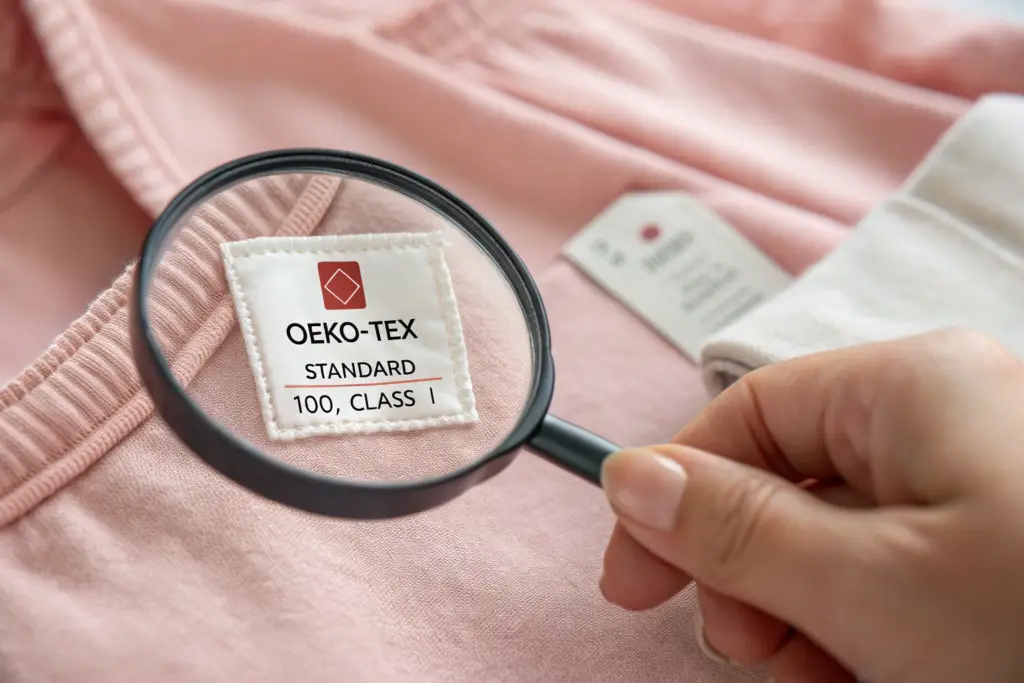
What Is the Difference Between OEKO-TEX Class I and Class II?
This is a crucial distinction for kids' wear. OEKO-TEX Standard 100 has four product classes based on the intended use and the sensitivity of the wearer's skin.
- Class I: The strictest standard. For items for babies and toddlers up to 36 months. This is the only acceptable standard for any garment intended for this age group.
- Class II: For items with direct and prolonged skin contact (e.g., underwear, t-shirts, leggings for older children and adults).
For any playwear that could be worn by a child 3 and under, Class I is non-negotiable. We ensure all our fabric and trim suppliers for kids' lines meet this strictest standard.
How Do You Ensure Trims (Zippers, Snaps, Buttons) Are Also Safe?
The fabric can be perfectly safe, but a lead-containing snap or a phthalate-laden zipper tape ruins the entire garment. Our sourcing team requires OEKO-TEX Standard 100, Class I certificates or equivalent third-party lab test reports for all trims used in kids' wear. This is not an afterthought; it is a core part of our material compliance program .
What Construction Techniques Create "Indestructible" Playwear?
Safe materials are the foundation, but they are useless if the garment falls apart on the first adventure. Kids' playwear is subjected to forces that would destroy most adult fashion. The seams, the knees, and the pocket corners are under constant, extreme stress. Standard construction techniques are not enough. You must engineer for the playground.
Durable playwear construction relies on three key techniques: 1) Safety Stitches (5-thread overlock) on all main seams, which are far stronger and more elastic than standard lockstitches and prevent seams from popping. 2) Reinforced Knees, which are a second layer of durable fabric sewn into the highest-wear area, often with chafe-free flatlock seams. 3) Bar Tacks, which are dense, zig-zag stitches placed at the ends of seams and pocket corners to prevent tearing.
A distributor of outdoor kids' wear has built his entire brand reputation on his signature reinforced knee patch. It is not just a design element; it is an engineering solution. He uses a durable, abrasion-resistant nylon blend for the patch and attaches it with a flatlock seam to minimize bulk and irritation. Parents specifically seek out his brand because they know these pants will survive a season of playgrounds and hiking. They are willing to pay a premium for that promise. We execute this detail flawlessly, making it a key part of his brand's quality promise .

Why Is a Safety Stitch (5-Thread Overlock) Non-Negotiable for Playwear Seams?
A standard lockstitch (the straight stitch you see on a woven shirt) has very little elasticity. When a child squats, climbs, or stretches, a lockstitch seam on a knit fabric will simply "pop" or break. A 5-thread safety stitch combines an overlock stitch with a separate, independent chainstitch. This creates a seam that is both incredibly strong and highly elastic. It stretches with the child. It is the industry standard for any garment that will be subjected to stress. This is our standard for all main seams in our kids' activewear .
How Are Bar Tacks Used to Prevent Rips at Critical Stress Points?
A bar tack is a very dense, short, zig-zag stitch, typically 1/2" to 1" long. You see them on the corners of pockets, the base of zipper flies, and the ends of belt loops. Their purpose is to reinforce the end of a seam, which is a natural point where a tear is most likely to start. The concentrated stitching acts like a rivet, distributing the force and preventing the seam from pulling apart. We apply bar tacks liberally to our playwear at all critical stress points. This is a small detail that makes a massive difference in longevity.
How Can You Design Playwear for Safety Beyond Just the Materials?
Safety in kids' wear extends beyond just non-toxic materials. It is also about smart, proactive design that anticipates and mitigates common hazards. This is where a deep understanding of how children actually move and play informs the design process. It is about eliminating potential dangers before they even exist.
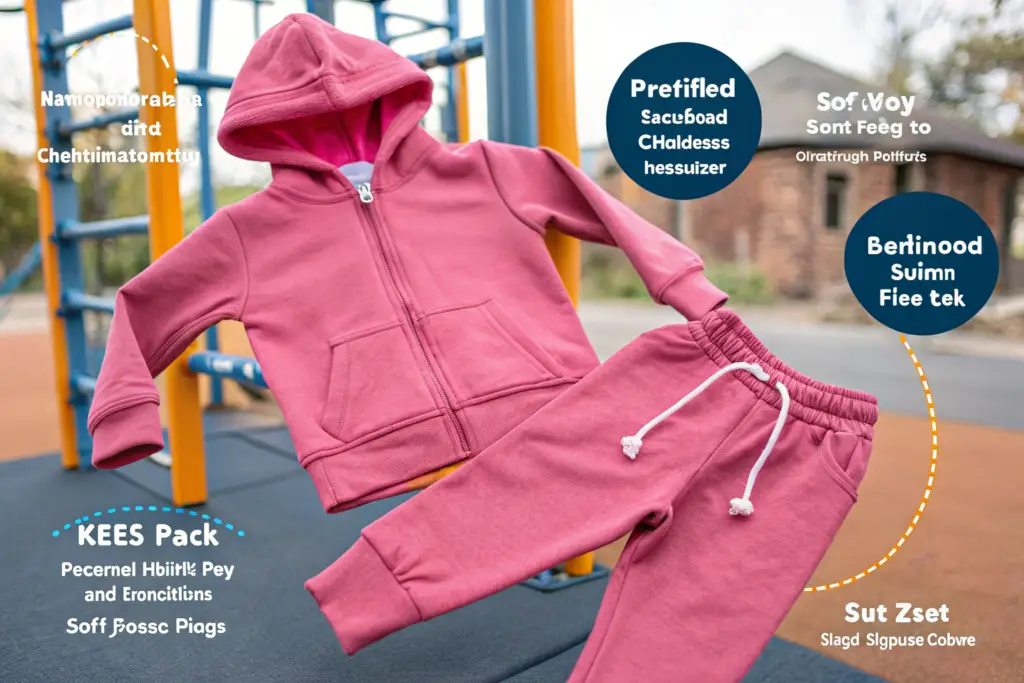
Designing for safety involves anticipating hazards. Key principles include: avoiding long, loose drawstrings around the neck or hood, which are a strangulation risk (replace with elastic or snaps); using non-functional or securely stitched-down drawcords at the waist; and incorporating reflective elements on outerwear for visibility during low-light conditions. These design choices are just as important as material safety.
I recall a brand that designed a beautiful kids' hoodie with a thick, trendy drawstring. We gently advised them that for the US market, such drawstrings are a violation of CPSC guidelines for children's outerwear and a known safety hazard. They were initially disappointed but understood the risk. We helped them redesign the hood with a clean, elasticated trim. It looked just as stylish and was completely safe. The brand owner later told me a customer specifically thanked them for making a "safe hoodie" because her daughter had a scary experience with a drawstring getting caught on playground equipment. That feedback was priceless. This is the kind of proactive safety-focused design we encourage.
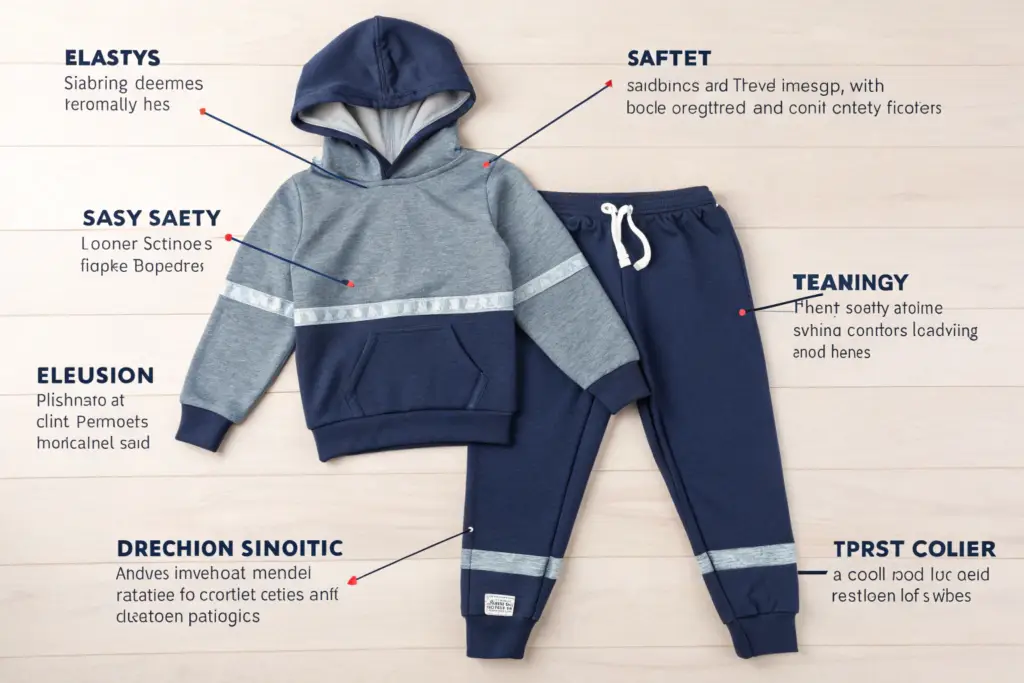
What Are the CPSC Guidelines for Drawstrings on Kids' Clothing?
The U.S. Consumer Product Safety Commission (CPSC) has strict guidelines. Drawstrings at the hood and neck area on children's upper outerwear sizes 2T to 12 are considered a substantial strangulation hazard and are effectively banned. Waist drawstrings must be limited in length and often require bar tacks to prevent them from being pulled out. We are experts in these regulations and ensure all our kids' wear is fully compliant. This is a key part of our brand protection services.
Why Are Reflective Details a Valuable Safety Feature for Playwear?
For any garment that might be worn during dawn, dusk, or evening play, reflective details are a simple but powerful safety addition. A small reflective logo, piping, or print can significantly increase a child's visibility to drivers, making them safer when walking or biking. It is a functional detail that also signals a thoughtful, performance-oriented brand. The cost is minimal, but the added value for parents is immense.
How Does Fumao's Quality Control Simulate Real-World "Kid Testing"?
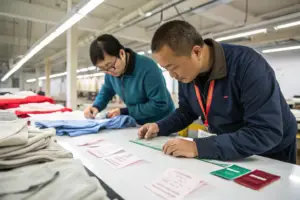
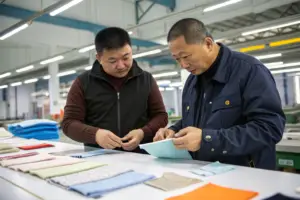
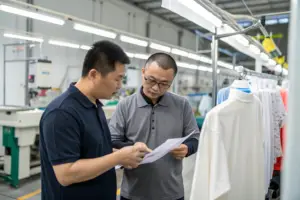
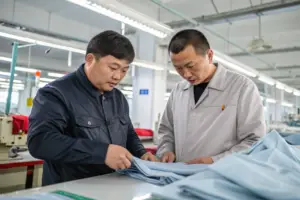
You cannot wait for a 5-year-old to tell you the knees wore out or the color faded. You need to know before the garment leaves the factory. Our quality control for kids' playwear is designed to simulate the worst-case scenarios of the playground, the sandbox, and the washing machine. It is a scientific, data-driven approach to durability.
Fumao's QC for playwear goes beyond standard AQL visual inspections. We perform specific physical tests that simulate real-world child wear, including: ASTM D1683 for seam strength, the Martindale test for abrasion and pilling resistance (critical for knees), and rigorous wash testing over 20+ cycles to verify colorfastness and dimensional stability. We also perform practical tests, like stretching seams over a calibrated dome to simulate active movement.
Before we approve a new playwear style for bulk production, we send seam samples to a certified lab for ASTM D1683 testing. The report tells us the exact pounds of force required to break the seam. We have established minimum performance standards that are significantly higher than for adult fashion. If a sample fails, we adjust the stitch type, thread, or seam construction and test again. We also do a manual abrasion test on knee fabrics. This data-driven discipline ensures our B2B partners' products are truly built to last. This is the engine of our performance quality assurance .
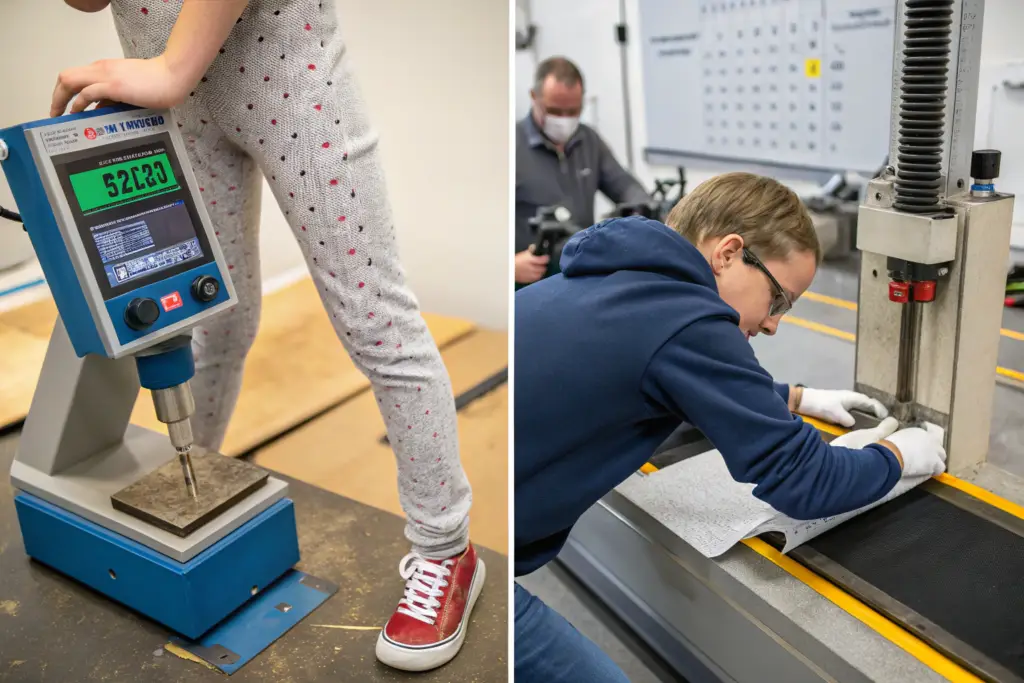
What Is the ASTM D1683 Seam Strength Test?
This is the industry-standard test for measuring the strength of a sewn seam. A specialized machine grips the fabric on either side of the seam and pulls it apart at a controlled speed until the seam breaks. The machine measures the Maximum Force (lbf or N) required to cause failure. It provides objective, comparable data, removing all subjectivity from the question, "Is this seam strong enough for a kid?"
How Does the Martindale Test Predict Long-Term Durability of Knees?
The Martindale Abrasion and Pilling Tester is a machine that rubs a sample of fabric against a standard abrasive surface in a controlled, circular motion for thousands of cycles. This simulates the repetitive friction and wear that a child's knee or elbow experiences. After the test, the fabric is evaluated for surface wear, holes, and pilling. A fabric destined for playwear knees must achieve a high rating on this test. This is a key part of our fabric durability testing .
Conclusion
Making kids' playwear that is both durable and safe is a profound responsibility. It requires a holistic approach that starts with certified safe materials, is built upon reinforced, engineered construction, and is verified by rigorous testing that mimics the beautiful chaos of a child's life. It is about understanding that a parent's trust is the most valuable currency.
At Shanghai Fumao, we do not take this responsibility lightly. Our entire process, from fabric sourcing to final inspection, is designed to create garments that are a safe, soft haven and a suit of indestructible armor. We are the partner that helps B2B brands build a reputation for quality and safety that parents will trust and children will love.
If you are ready to develop a playwear line that can survive the playground and win the trust of parents, let's talk. Our Business Director, Elaine, can walk you through our material standards and quality assurance protocols. Please email Elaine at: elaine@fumaoclothing.com.