You have found the perfect blank t-shirt. The fit is great. The price is right. You order 500 units. But after three washes, the surface is covered in tiny, unsightly fuzz balls. The shirt looks old and cheap. Your customers complain. You realize you made a critical error: you didn't specify the cotton quality. A brand owner told me, "I thought '100% cotton' was all I needed to know. I learned the hard way that how that cotton is processed is everything. Carded vs. Combed is the difference between a shirt that lasts and one that falls apart."
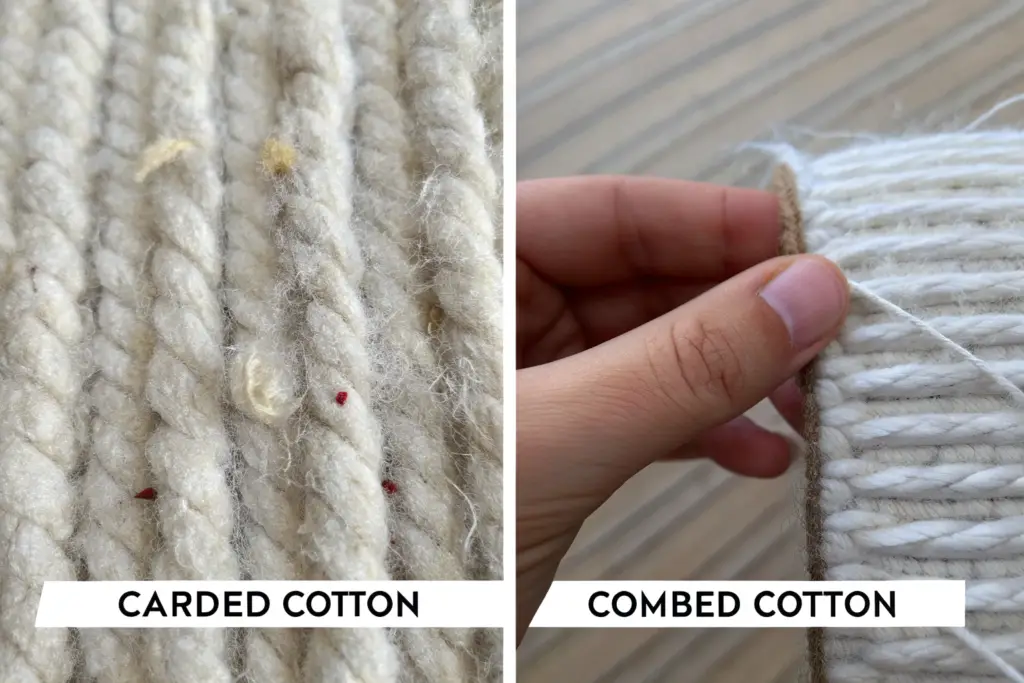
The difference between combed and carded cotton lies in the manufacturing process. Carded cotton is the less expensive, standard process where fibers are roughly aligned, leaving behind short fibers and impurities. This results in a fuzzier, weaker yarn that is prone to pilling. Combed cotton undergoes an additional, meticulous step where the yarn is literally combed with fine brushes to remove all short fibers and impurities. The result is a significantly smoother, stronger, and more lustrous yarn that resists pilling and feels incredibly soft against the skin.
At Shanghai Fumao, we guide our B2B partners on this critical distinction every day. For any brand focused on top quality and longevity, especially in private label basics, understanding this difference is not a minor detail—it is a foundational choice. Let me explain exactly what happens in these two processes and why choosing combed cotton is one of the smartest investments you can make in your product's perceived value and durability.
What Exactly Happens During the Carding and Combing Processes?
To truly understand the difference, you have to visualize what happens to the raw cotton fibers. Both processes start with cleaning the cotton, but they then diverge significantly. Carding is the essential first step for all cotton yarn. Combing is an additional, premium step that only the best cotton undergoes. This extra step is what separates a commodity fabric from a premium one.
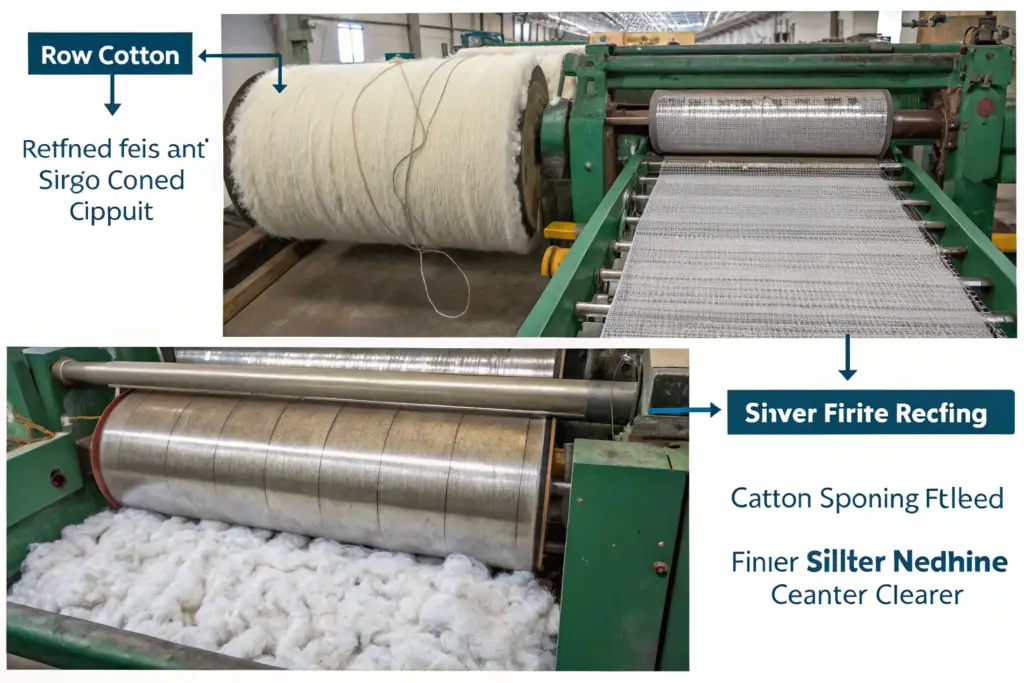
Carding is the foundational process where cleaned cotton fibers are passed through a machine with large, wire-covered rollers. This separates and roughly aligns the fibers into a soft, untwisted rope called a "sliver." However, this process leaves behind many short fibers, neps (tiny tangles), and plant impurities. Combing is a subsequent, more refined process. The carded sliver is passed through a combing machine, which uses fine, needle-like teeth to meticulously comb out and remove all the short fibers (those less than 1 inch) and any remaining impurities. This leaves behind only the longest, strongest, and most uniform fibers.
I recall a men's wear client who was frustrated with the pilling on his otherwise well-designed basic tees. He was using a carded cotton to hit a lower price point. We showed him, side-by-side, a swatch of his carded fabric and a swatch of our combed ring-spun cotton. The difference in smoothness was immediately obvious, even to the untrained eye. We explained the combing process and how it removes the short fibers that cause pilling. He switched to combed cotton for his core program. His return rate for "fabric pilling" dropped by over 80% the following season. The process matters. This is a key part of our fabric education for partners.
Why Are Short Fibers the Enemy of a Quality Garment?
Short cotton fibers (less than 1 inch) are the primary cause of several quality issues. Because they are not long enough to be firmly twisted into the yarn, they work their way loose over time, especially with washing and abrasion. These loose ends then tangle together on the surface of the fabric, forming those unsightly little balls known as pills. By removing these short fibers, combing dramatically increases the yarn's resistance to pilling.
What Are "Neps" and Why Does Removing Them Matter?
Neps are tiny, tangled knots of immature or dead cotton fibers. In a carded yarn, these neps remain and create small, hard imperfections on the fabric's surface. They feel rough and can affect the evenness of dyeing. The combing process is highly effective at removing these neps, resulting in a cleaner, more uniform, and incredibly smooth yarn. This is the secret behind the luxurious handfeel of premium apparel. This is the level of detail we focus on in our quality control .
How Does the Choice Impact the Look, Feel, and Durability of a Garment?
The difference between a carded and combed cotton garment is not just a technical spec on a sheet. It is a tangible, sensory experience that the customer feels every time they touch the fabric and sees every time they pull it out of the wash. This difference directly impacts their perception of your brand's quality and their long-term satisfaction. It is the difference between a disposable commodity and a cherished favorite.
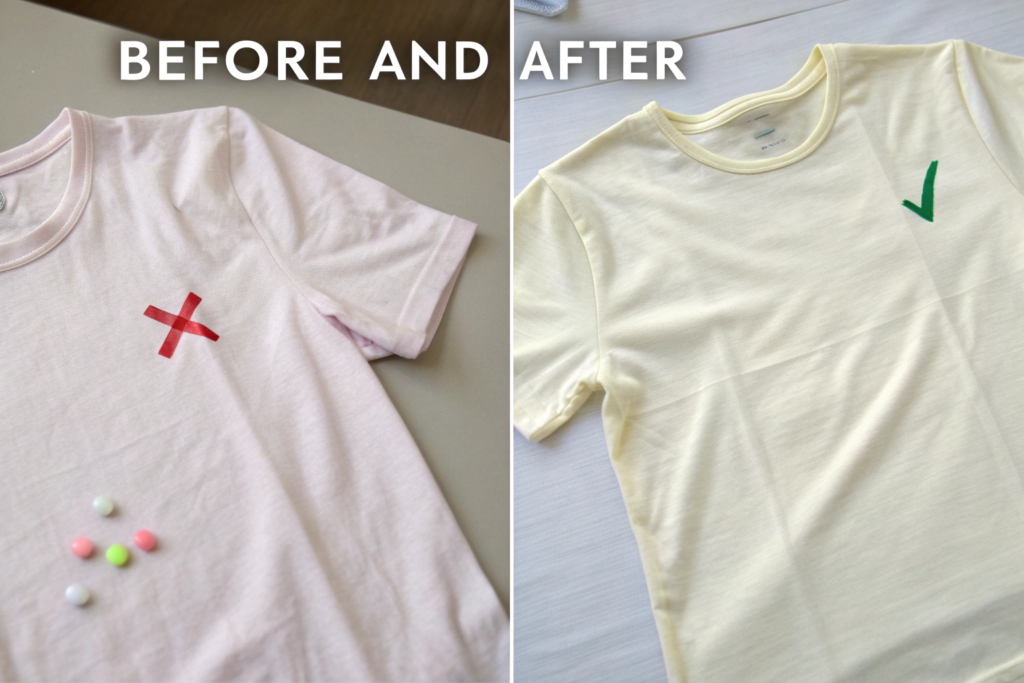
Combed cotton garments are immediately distinguishable by their superior smoothness, softness, and subtle luster. They feel luxurious against the skin. They hold dye better, resulting in richer, more vibrant colors. Most importantly, they are significantly more durable and resistant to pilling, maintaining their premium appearance wash after wash. Carded cotton garments feel rougher, look duller, and are far more prone to developing a worn, pilled look very quickly.
A women's wear brand we work with switched their best-selling basic tee from a 30/1 carded cotton to a 30/1 combed cotton. The cost increase was modest (about 15%). But the impact on customer perception was immense. Reviews started pouring in: "This is the softest t-shirt I own." "Washes beautifully, no pilling!" The brand was able to increase the retail price by 20% and saw their return rate on that SKU drop to under 2%. The combed cotton upgrade paid for itself many times over and solidified their reputation for top quality. This is the ROI of choosing premium materials. This is why we advocate for combed cotton in all our premium basics .
How Does Combed Cotton Affect Print Quality and Color Vibrancy?
The smooth, even surface of combed cotton provides a superior canvas for printing. A rough, fuzzy carded surface scatters light and absorbs ink unevenly, leading to prints that can look dull or slightly blurry. The clean surface of combed cotton allows for sharper, more vibrant prints, whether it's a complex digital print or a crisp screen print. Colors also appear richer and more saturated on combed cotton because the smooth fibers reflect light more uniformly. This is a key consideration for any custom printing project.
Is the Difference Noticeable to the Average Consumer?
Absolutely. While they may not know the terms "carded" or "combed," their fingers know the difference instantly. They can feel the superior softness and smoothness. And they will certainly notice when their shirt doesn't develop a fuzzy, pilled surface after a few washes. This tactile and visual experience shapes their entire perception of your brand's value. It is one of the most powerful, yet often overlooked, ways to build customer loyalty.
What About Ring-Spun Cotton? How Does It Compare?
The conversation about cotton quality does not end with carding vs. combing. The method used to spin the combed fibers into yarn is the next critical factor. This is where ring-spun cotton comes in. You will often see "combed ring-spun" cotton listed as a premium feature. Understanding this term completes the picture of what makes a truly exceptional cotton fabric.
While combing refines the fiber, ring-spinning refines the yarn. Ring-spinning is a slower, more expensive process that twists the fibers tighter and more uniformly than the faster, cheaper open-end spinning method. This creates a much stronger, finer, and incredibly soft yarn. The combination of "combed" (removing short fibers) and "ring-spun" (tightly twisting the long fibers) results in the absolute highest quality cotton fabric: exceptionally soft, durable, and pill-resistant.
Think of it this way: Carded open-end cotton is the entry-level, commodity option. Combed ring-spun is the premium, gold-standard option. It is the fabric used by the world's best brands for their core basics. A distributor we work with markets his t-shirts specifically as "Combed Ring-Spun Cotton." He has educated his customers on what this means, and they actively seek it out. It is a powerful, verifiable quality claim that justifies his premium price point. This is the kind of material transparency we encourage for our private label partners .
What Is the Difference Between Open-End and Ring-Spun Yarn?
This is a crucial distinction in yarn formation:
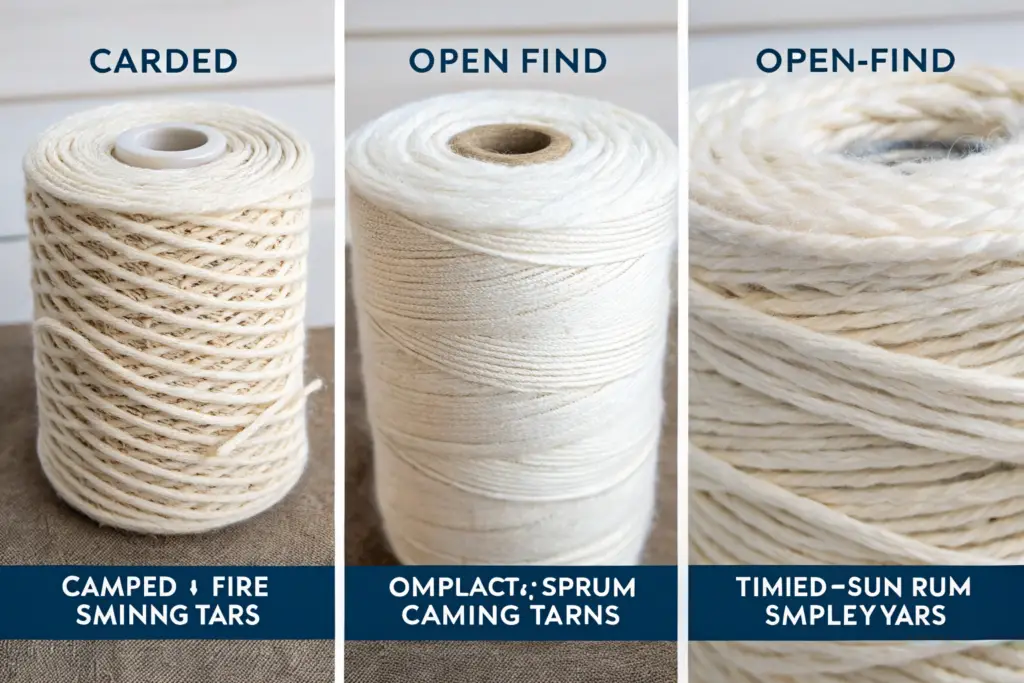
- Open-End (or Rotor) Spinning: A high-speed, low-cost process. Fibers are fed into a rapidly rotating rotor, which twists them into yarn. The resulting yarn is fuzzier, weaker, and less uniform. It is often used for cheaper, mass-market goods like basic fleece.
- Ring-Spinning: A slower, more expensive, traditional process. The fibers are drawn out and twisted by a rotating ring and traveler. This creates a much tighter, stronger, smoother, and finer yarn. It is the gold standard for premium apparel.
When you combine combing (fiber refinement) with ring-spinning (yarn refinement), you achieve the pinnacle of cotton quality. This is our standard recommendation for any brand focused on a premium feel.
What Does "Compact Ring-Spun" Mean?
This is an even more advanced variation of ring-spinning. In the compact process, the fibers are further condensed and aligned just before they are twisted. This virtually eliminates any "spinning triangle" of loose fibers, resulting in a yarn with even less hairiness, greater strength, and a remarkably smooth, silky handfeel. It is the ultimate expression of cotton yarn technology. We can source these ultra-premium yarns for our luxury apparel partners .
How Does Fumao Guide Brands in Making the Right Cotton Selection?
The world of cotton can be confusing, with terms like carded, combed, open-end, and ring-spun. You should not have to become a textile engineer to make the right choice for your brand. Our role is to demystify these terms, provide tactile samples, and guide you to the perfect cotton quality based on your product's intended use, your target price point, and your brand's promise of quality.
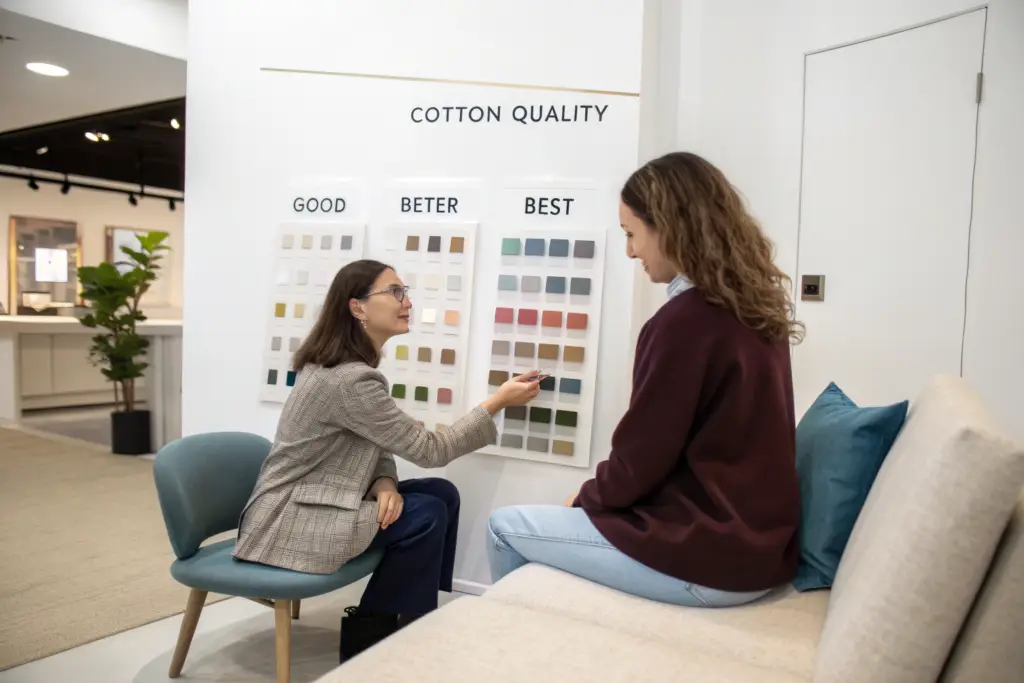
Fumao guides brands by making the abstract tangible. We provide side-by-side swatch comparisons of carded vs. combed, and open-end vs. ring-spun fabrics. We explain the performance and cost trade-offs in clear, practical terms. Our goal is to empower our B2B partners to make an informed decision that aligns with their brand identity—whether they need a cost-effective basic or an ultra-premium, luxury handfeel.
A new brand founder was overwhelmed by the cotton options. She just knew she wanted her tees to feel "soft and high-quality." We sent her a "Cotton 101" swatch kit. It included swatches of carded open-end, combed ring-spun, and a luxurious combed compact ring-spun. She could feel the step-change in quality between each level. She chose the combed ring-spun. It hit the perfect balance of premium feel and cost for her target market. She told us, "I didn't need to know all the technical terms. I just needed to feel the difference." That is our goal. To guide you with expertise and a tactile, sensory experience. This is the value of our curated material selection .
What Is the Cost Difference Between Carded and Combed Ring-Spun Cotton?
You can expect to pay a premium for combed ring-spun cotton over basic carded open-end. The cost difference can range from 15% to 30% more per yard, depending on the specific yarn count and the mill. However, this cost must be viewed as an investment. The reduction in returns, the increased customer satisfaction, and the ability to command a higher retail price almost always yield a positive return on this investment. We provide transparent costing so you can make an informed financial decision. This is part of our transparent pricing policy.
Can You Recommend the Right Cotton for My Specific Product?
Absolutely. This is what we do. We ask about the product type, the target customer, the desired handfeel, and the price point. Based on this, we provide a clear, tailored recommendation. For a premium everyday tee, we almost always recommend a combed ring-spun cotton. For a budget-friendly promotional tee, a carded open-end might be appropriate. For a luxury capsule, we might suggest a combed compact ring-spun. We are your expert guide in navigating the world of cotton. This is the essence of our product development partnership .
Conclusion
The choice between combed and carded cotton is a decision that echoes through the entire lifecycle of your garment. It determines the initial handfeel, the long-term durability, and the customer's lasting impression of your brand's quality. While carded cotton serves a purpose in the market, combed cotton—especially combed ring-spun—is the unequivocal choice for any brand seeking to build a reputation for superior softness, lasting quality, and genuine value.
At Shanghai Fumao, we believe that the best brands are built on the best materials. We are committed to guiding our B2B partners through these critical choices, providing the expertise, the tactile samples, and the transparent information needed to select the perfect fabric for their vision and their customer.
If you want to feel the difference for yourself and discuss the right cotton for your next collection, let's talk. Our Business Director, Elaine, can send you a swatch kit and provide expert guidance. Please email Elaine at: elaine@fumaoclothing.com.