You have designed a beautiful collection. The fabrics are luxurious. The fit is impeccable. Now you face the final, critical decision: how to apply your brand's logo. Do you choose the timeless, dimensional texture of embroidery? Or the smooth, versatile finish of printing? It is not a simple question. A brand owner told me, "I thought embroidery was always 'more premium.' Then I put a heavy embroidered logo on a delicate silk blouse, and it completely ruined the drape. It looked cheap and stiff. I learned the hard way that 'better' depends entirely on the garment."
For premium clothing, neither embroidery nor printing is universally "better." The superior choice depends entirely on the fabric, the garment's intended use, and the desired brand aesthetic. Embroidery excels on heavier, structured fabrics (like outerwear, polos, and sweatshirts) where its texture and durability add a perceived value of craftsmanship. High-end printing techniques (like water-based screen printing or foil) are superior for lightweight, fluid fabrics (like silk, Tencel, and fine jerseys) where they preserve the garment's drape and soft handfeel.
At Shanghai Fumao, we specialize in executing both techniques at the highest level. We guide our B2B partners through this decision every day, ensuring the decoration method enhances the garment's luxury, rather than detracting from it. Let me walk you through the nuanced trade-offs between premium embroidery and premium printing, so you can make the perfect choice for every piece in your private label collection.
When Does Embroidery Elevate a Garment's Perceived Value?
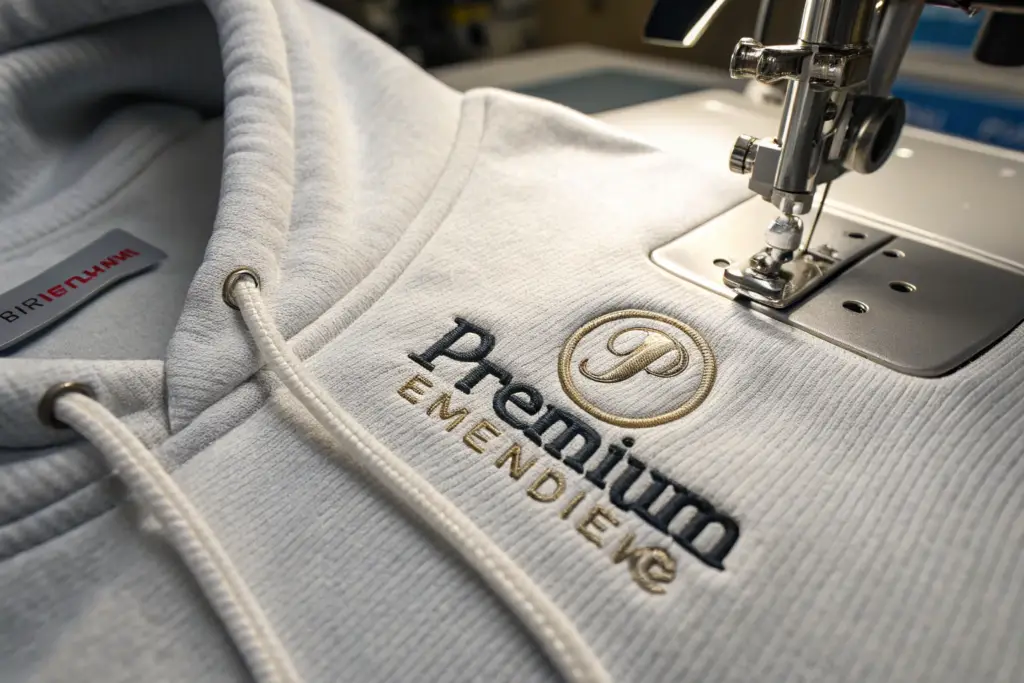
There is a reason why you find embroidery on professional polo shirts, premium headwear, and luxury outerwear. It has a unique, undeniable power to communicate craftsmanship and durability. The dimensional, tactile quality of thread on fabric signals a level of care and investment that a flat print often cannot match. It feels substantial. It feels permanent. It feels like it belongs on a piece of clothing meant to last.
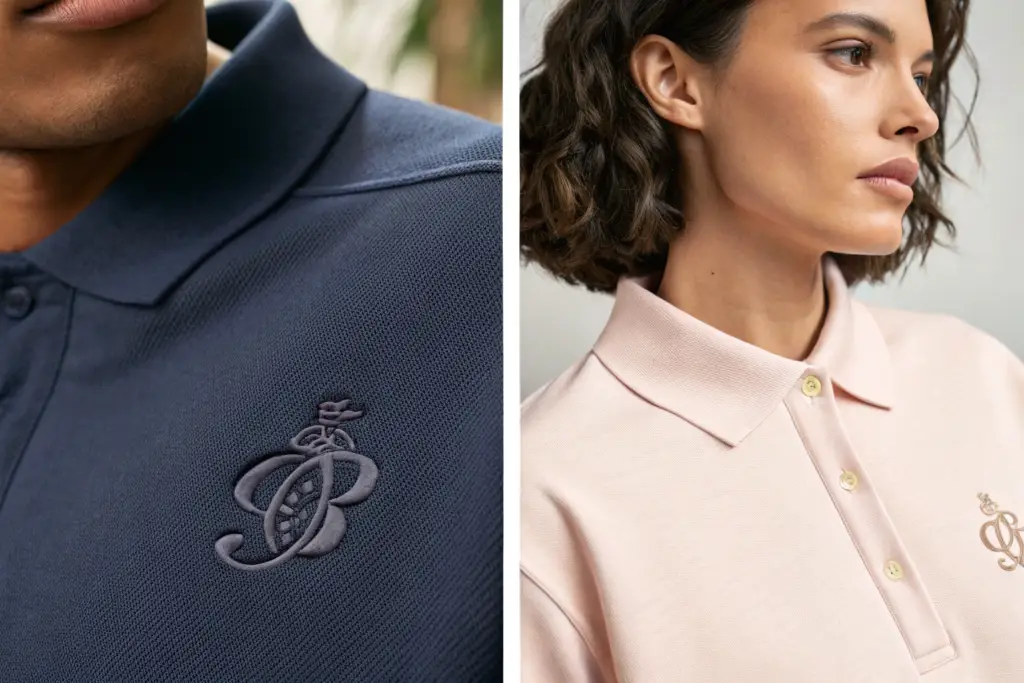
Embroidery elevates perceived value most effectively on heavier-weight, structured garments. It excels on fabrics like pique cotton (polos), heavy fleece (sweatshirts), canvas (jackets), and twill (caps). The texture of the embroidery adds a dimensional, "built-to-last" quality that aligns perfectly with these garments' intended use and aesthetic. It is the gold standard for left-chest logos, where its small scale and crisp detail create a classic, professional look.
A men's wear brand we work with transitioned their core oxford shirt program from a printed label to a small, tonal embroidery of their brand icon on the chest. The change was subtle, but the impact was significant. Customer feedback frequently mentioned the "high-quality embroidered logo." The brand was able to increase their retail price by 8% on that SKU, with no increase in returns. The embroidery signaled a higher level of quality. It was a small detail that paid for itself many times over. This is the power of matching the decoration method to the garment and the brand's promise. For techniques like this, our customization services are essential.
What Are the Hallmarks of a "Premium" Embroidery Job?
Not all embroidery is created equal. A cheap, low-stitch-count logo with loose threads looks worse than a simple print. Premium embroidery is defined by:
- High Stitch Count: More stitches create a denser, richer, more dimensional logo.
- Clean Digitizing: The design file is expertly translated into stitches, ensuring smooth curves and sharp corners.
- Proper Tension: The thread tension is perfectly balanced, so the fabric doesn't pucker, and there are no loose loops on the front or back.
- Appropriate Backing: The right stabilizer is used for the specific fabric to prevent stretching and distortion.
We obsess over these details. Our in-house digitizers and embroidery technicians are masters of their craft. This is a key part of our quality control for premium goods.
On Which Fabrics Should You Avoid Embroidery?
This is just as important as knowing where it excels. Avoid heavy or dense embroidery on:
- Lightweight, fluid fabrics: Silk, Tencel, viscose crepe. The weight of the embroidery will destroy the beautiful drape of the garment.
- Very thin, fine-gauge knits: The needle perforations can damage the fabric and cause puckering.
- Performance stretch fabrics (unless using a specialized technique): The non-stretchy embroidery can restrict the fabric's stretch and cause it to "tunnel."
Putting a heavy embroidered logo on a delicate silk blouse is a classic mistake. It makes the garment feel stiff, cheap, and poorly designed. In these cases, a high-end print is almost always the superior choice.
When Is High-End Printing the Superior Choice for Luxury Apparel?
The world of printing is vast, ranging from cheap, crack-prone plastisol transfers to exquisite, high-end techniques that are the epitome of modern luxury. To dismiss all printing as "less premium" is to ignore the sophisticated methods used by the world's top fashion houses. For many garments, a flawlessly executed print is not just an alternative to embroidery; it is the only choice that preserves the integrity of the design and the fabric.
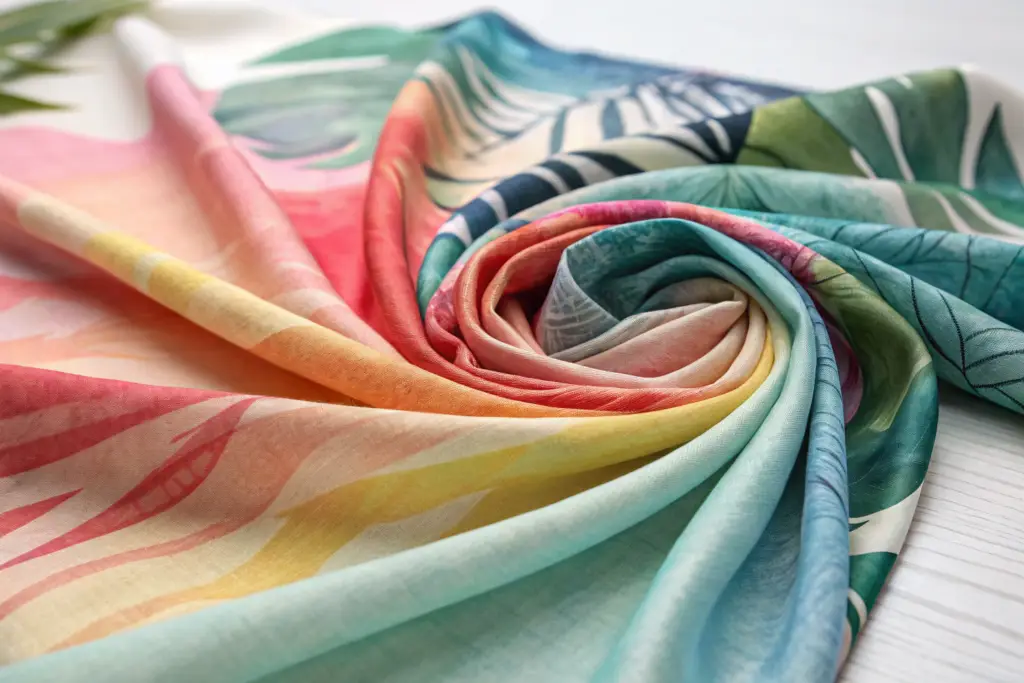
High-end printing is superior for luxury apparel when the goal is to preserve the handfeel and drape of a fluid, lightweight fabric. Techniques like water-based or discharge screen printing and digital printing create a result with zero handfeel—the ink becomes part of the fabric. This is essential for silk, Tencel, and fine jerseys. Additionally, printing allows for complex, multi-color, or photorealistic designs that are impossible to achieve with embroidery.
A women's wear client who specializes in luxurious, bias-cut silk slip dresses would never dream of putting an embroidered logo on her pieces. The weight would ruin the liquid drape that is the hallmark of her brand. Instead, she uses a subtle, tonal digital print of her brand name on the interior facing. It is an elegant, hidden detail. For her seasonal statement pieces, she uses large-scale, art-driven digital prints that cover the entire garment. This is only possible with printing. The technique allows her to express her creative vision fully. For these applications, our custom printing capabilities are essential.
What Are the Premium Printing Techniques That Rival Embroidery?
Several printing methods offer a luxury feel and finish:
- Water-Based & Discharge Inks: These inks dye the fabric fibers, resulting in a print with zero handfeel. It is incredibly soft and will never crack or peel. It is the gold standard for premium tees and fleece.
- High-Density (HD) Print: This technique builds up layers of ink to create a raised, 3D, almost sculptural effect. It offers the texture of embroidery but with a smooth, rubberized feel. It is a favorite for modern streetwear and minimalist branding.
- Metallic Foil: A sleek, reflective finish that adds a touch of glamour and is perfect for special editions or holiday capsules.
- Puff Print: A specialty ink that expands when heated, creating a soft, raised, dimensional effect.
These techniques demonstrate that "printing" can be just as luxurious and intentional as embroidery.
Why Is Print the Only Option for Large-Scale, All-Over Designs?
This is a simple matter of physics and cost. Embroidering an entire yard of fabric with an all-over pattern would be prohibitively expensive, incredibly heavy, and would completely destroy the fabric's drape. Sublimation and digital printing are the only viable methods for creating vibrant, edge-to-edge designs on garments. This is the standard for activewear, swimwear, and any fashion piece featuring a bold, all-over graphic. This is why we have invested heavily in our printing technology .
How Do Cost and Durability Compare Between the Two Methods?
Beyond aesthetics, the decision between embroidery and printing involves practical considerations of cost, durability, and order quantity. Understanding these trade-offs is essential for making a smart business decision that protects your margins and meets your customer's expectations for longevity. There is no single right answer; it is a strategic choice based on your specific product and volume.
Embroidery typically has a higher setup cost (digitizing fee) but a moderate per-unit cost that is driven by stitch count. It is exceptionally durable and often outlasts the garment itself. Screen printing has a setup cost for each color (screen fee) but a very low per-unit cost at high volumes, making it ideal for simple logos on large orders. Digital printing has no setup fees, making it cost-effective for small runs and complex, multi-color designs, but it has a higher per-unit cost.
A distributor we work with places a large annual order for 5,000 premium polo shirts with a one-color left-chest logo. He chooses embroidery every time. The digitizing fee is a one-time cost, and the per-unit embroidery cost is reasonable at that volume. The durability of the embroidery is a key selling point for his corporate clients, who want their uniforms to look professional for years. For a small brand launching a complex, art-driven t-shirt in a run of 100 units, digital printing is the only financially viable choice. We guide our clients through this cost-benefit analysis for every project.
| Feature | Premium Embroidery | Premium Screen Print | Premium Digital Print |
|---|---|---|---|
| Best For | Left-chest logos, hats, outerwear, heavy fabrics | Bulk orders, simple bold designs, spot colors | Small orders, photorealistic/complex designs, soft fabrics |
| Cost at Volume (1,000+ units) | Moderate | Lowest | High |
| Setup Fee | Digitizing Fee ($50-$150) | Screen Fee ($25-$50 per color) | None |
| Durability | Excellent (Outlasts garment) | Good to Excellent (depends on ink/cure) | Good (Best on natural fibers) |
| Handfeel | Textured, dimensional | Soft to slightly textured | Zero Handfeel |
How Does Stitch Count Drive Embroidery Cost?
The cost of embroidery is primarily driven by stitch count—the total number of needle penetrations in the design. A large, solid logo has a high stitch count and will cost more than a small, outlined logo. The digitizer calculates the stitch count from your artwork. We always provide the estimated stitch count and the per-unit cost before you commit, allowing you to adjust the design if needed to meet a budget. This is part of our transparent pricing .
Which Method Offers Better Long-Term Durability?
Generally, embroidery is the clear winner for sheer durability. The polyester or rayon thread is incredibly strong and resistant to abrasion, washing, and fading. A well-made embroidered logo will look good for the life of the garment. A screen print, especially a high-quality one with proper curing, is also very durable but can eventually show wear, cracking, or fading after many washes. Digital prints on cotton are quite durable but may fade faster than a screen print on synthetic blends. The intended use and care of the garment should inform this part of the decision.
How Does Fumao Guide Brands to the Perfect Decoration Choice?
The choice between embroidery and printing can feel overwhelming, especially with the nuances of fabric compatibility, cost, and durability. You should not have to become a decoration expert. Your manufacturing partner should be that expert for you. Our role is to listen to your vision, understand your brand and your budget, and then guide you to the perfect technical solution.
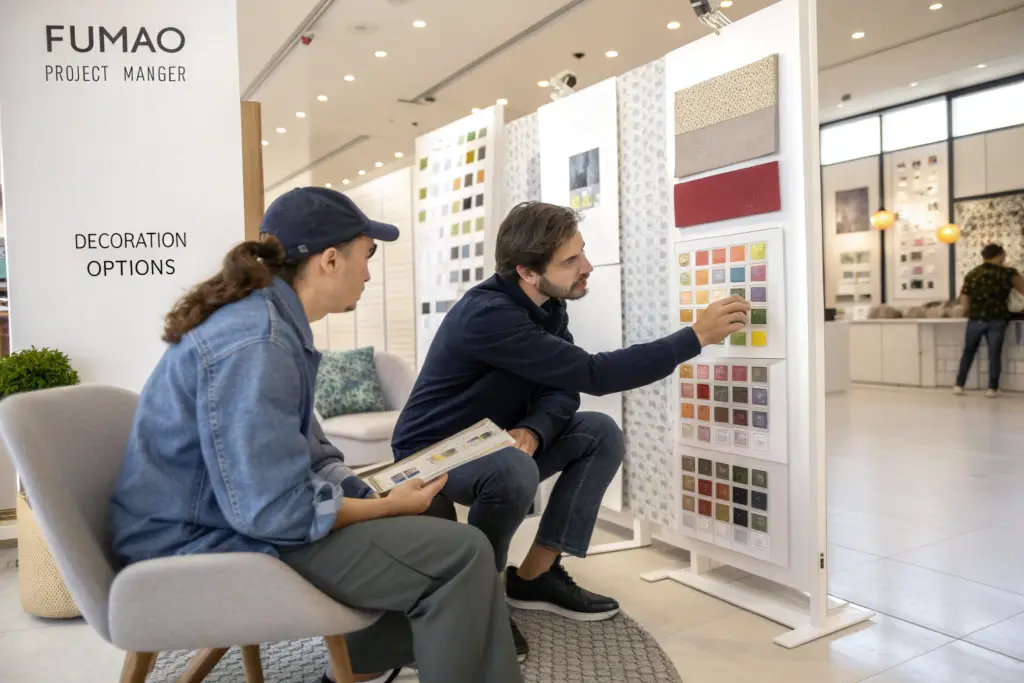
Fumao guides brands by first understanding the specific garment, fabric, and desired aesthetic. We then present curated, tactile options. For a heavy fleece hoodie, we might show samples of high-density embroidery, tonal puff print, and a soft water-based screen print, explaining the pros and cons of each for that specific application. We provide transparent cost and durability data, empowering the brand owner to make a confident, informed decision that aligns with their vision and their budget.
A new brand founder came to us wanting a "premium logo" on her line of organic cotton tees. She assumed embroidery was the only way to go. We showed her a sample of a beautifully executed, super-soft water-based screen print next to an embroidered sample on her chosen fabric. She could immediately feel the difference. The screen print was completely smooth and preserved the soft, drapey handfeel of her tee. The embroidery, while nice, felt slightly heavy and stiff in comparison. She chose the screen print and was thrilled with the result. She later told us, "I would have made a huge mistake without your guidance." That is our goal. We are the technical partner that helps you make the right choice for your brand's unique identity .
What Questions Should a Brand Ask Themselves Before Deciding?
We guide our clients through a simple self-assessment:
- What is the primary fabric? (Heavy & structured vs. Lightweight & fluid)
- Where is the decoration going? (Left chest vs. large back graphic)
- What is the intended use and lifespan of the garment? (Everyday basic vs. Special occasion piece)
- What is the core message of my brand? (Classic craftsmanship vs. Modern minimalism)
The answers to these questions usually point clearly to the superior option.
Can You Combine Embroidery and Printing on the Same Garment?
Absolutely. This can be a powerful design statement. For example, a bold, screen-printed graphic on the back of a jacket, paired with a small, tonal embroidered logo on the chest. Or a printed design with a small embroidered accent detail. This mixed-media approach creates a unique, highly premium, and intentional look. We have the in-house capabilities to execute these complex, multi-process projects seamlessly. This is the kind of advanced decoration service we offer.
Conclusion
In the world of premium clothing, the question is not "Is embroidery better than printing?" The question is, "Which technique is better for this specific garment, on this specific fabric, for this specific brand?" Embroidery is the champion of texture, durability, and classic craftsmanship on structured pieces. High-end printing is the master of softness, fluidity, and complex, modern design on delicate and performance fabrics.
At Shanghai Fumao, we do not have a bias. We have deep expertise in both. Our commitment is to guide our B2B partners to the perfect decoration choice that elevates their design, aligns with their brand identity, and fits their budget. We are the technical partner who ensures that the final detail is as flawless as the garment itself.
If you are weighing the options for your next collection and want expert guidance, let's talk. Our Business Director, Elaine, can share our decoration portfolio and help you make the perfect choice for your brand. Please email Elaine at: elaine@fumaoclothing.com.