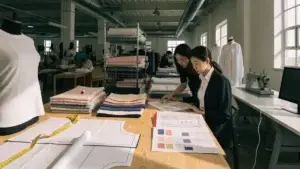
You are sitting in your office in Los Angeles, London, or Sydney. You have a brand name, a logo, and a vision for a clothing line. You know you need to manufacture overseas to hit your margins. You type "Private Label Apparel China" into Google. You are met with a tidal wave of options: Alibaba listings, trade company websites, factory direct emails. It is overwhelming. You do not know who to trust. You do not know the process. A brand owner I spoke with recently said, "The idea of managing production from 7,000 miles away felt like trying to conduct an orchestra through a keyhole." That is the challenge. That is also exactly what we solve.
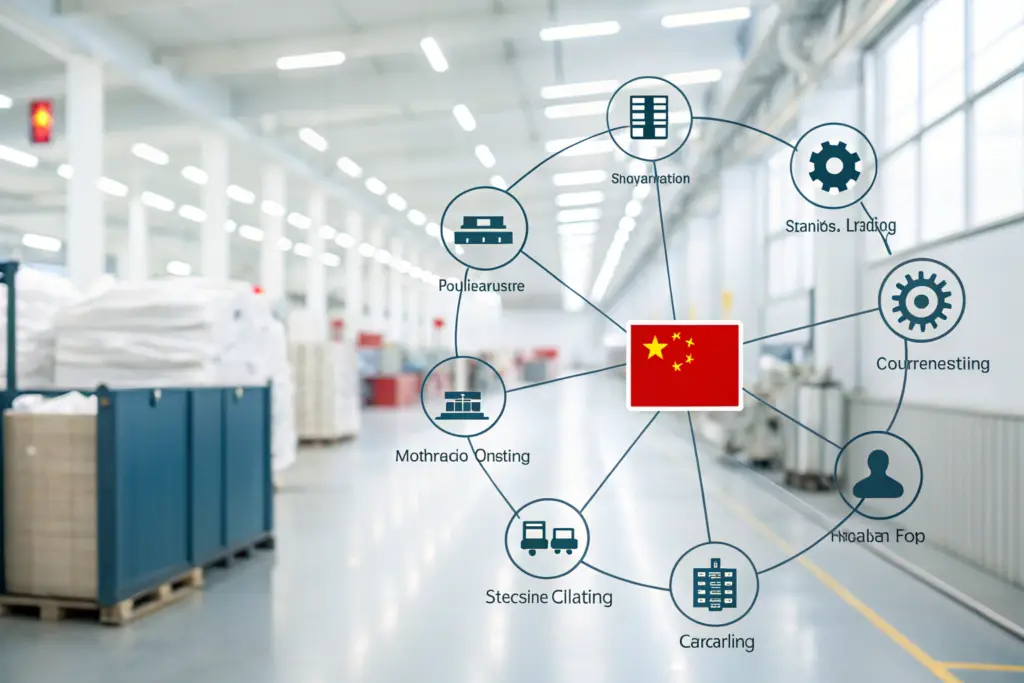
Private label apparel production in China works through a structured, multi-step collaboration between the brand and the manufacturer. The process flows from Design & Development (Tech Pack creation, fabric sourcing) to Sampling & Approval (Fit samples, PP samples) to Bulk Production (Cutting, Sewing, Finishing) and finally to Quality Control & Logistics (Inspection, DDP Shipping). The key is finding a partner who manages this entire ecosystem transparently.
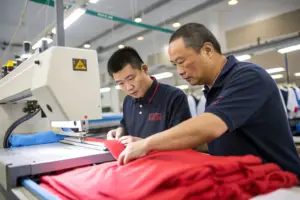
China is the world's apparel workshop because it has an unmatched ecosystem: the fabric mills, the trim suppliers, the dye houses, and the skilled workforce are all concentrated within a few hundred miles. This is what enables the speed and complexity that private label requires. At Shanghai Fumao, we are a native part of this ecosystem. We are the bridge between your creative vision in the West and the manufacturing reality in the East. Let me walk you through exactly how the journey works, step by step, demystifying the process of making clothes in China.
What Are the Initial Steps to Start a Private Label Project in China?
You do not just email a sketch and get a price. The most successful private label projects start with a structured onboarding process. This is where expectations are set, and the foundation for efficient communication is built. Skipping this step leads to the hidden costs and delays we have discussed in other articles.
Starting a private label project in China requires: A clear Project Brief (defining the product type, target FOB price, and estimated quantity), a signed NDA and Manufacturing Agreement to protect your IP, and a detailed Kick-off Call to align on the timeline and communication protocols.
I recall a distributor who came to us after a failed project with another Chinese factory. The problem? He had never defined a target price. The factory developed a beautiful sample using premium fabric. The quoted bulk price was double his retail budget. He wasted three months and $800 in sampling fees. In our first conversation, we asked: "What is your target retail price, and what is your required margin?" We worked backward from there. We proposed fabric and construction options that met his budget before we cut the first sample. This is the discipline required for successful private label apparel production. This aligns with the professional standards of global sourcing best practices.

What Information Should a "Project Brief" Include?
A strong Project Brief does not need to be a 20-page document. It needs to answer five key questions:
- What is the product? (e.g., "Women's woven midi dress with puff sleeve.")
- What is the target FOB price? (e.g., "$8.50 - $9.50 per unit.")
- What is the initial order quantity? (e.g., "500 units per color, 3 colors.")
- What is the inspiration? (Provide 3-5 reference images or links.)
- What is the timeline goal? (e.g., "Need delivery by March 1st for Spring launch.")
This brief allows us to quickly assess if the project is a fit for our 5 production lines and our sourcing network. It saves everyone time and focuses the conversation on what is actually achievable. This is the first step in building a long-term partnership.
Why Is the Kick-Off Call So Critical?
The Kick-Off Call is where the Project Brief comes to life. It is a video call between you, our Project Manager, and often our head pattern maker. We screen-share the reference images. You point to the specific details you love. "I like the sleeve on this dress, but the neckline on this other one." We ask clarifying questions: "How do you feel about a concealed zipper versus an exposed one?"
This real-time conversation builds a shared mental model of the garment. It is far more efficient than a chain of 50 emails. It also establishes a personal connection. You see our faces. We see yours. This human connection is the bedrock of trust in B2B manufacturing.
How Do Chinese Factories Source Fabrics and Trims for Private Label?
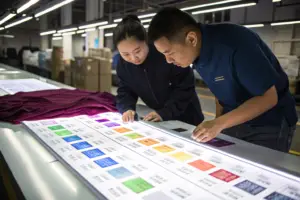
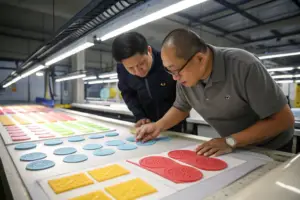
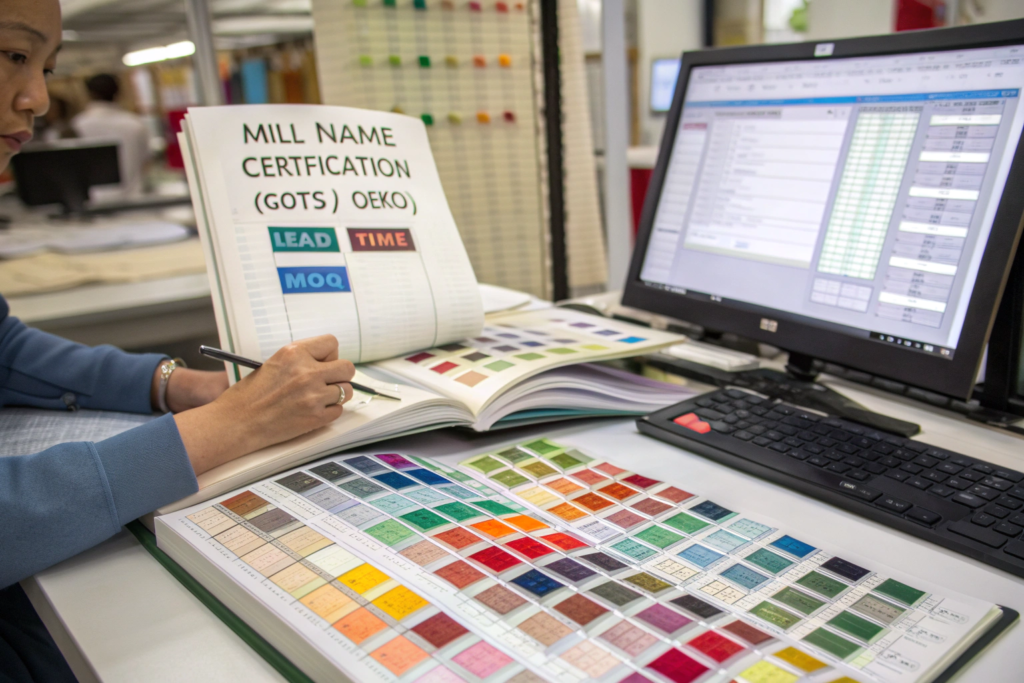
This is where the "China Advantage" is most tangible. Within a 200-mile radius of Shanghai, you can find a mill that specializes in recycled polyester, a factory that only makes YKK zippers, and a dye house that can match any Pantone color. Accessing this ecosystem as an outsider is nearly impossible. Accessing it through a well-connected clothing manufacturer is seamless.
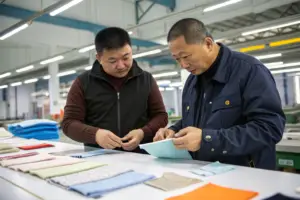
Chinese factories source fabrics and trims through a network of long-term, pre-vetted supplier relationships. The factory's sourcing team presents the brand with curated options based on the target price and aesthetic. They manage the ordering, the quality inspection of raw materials, and the logistics of getting everything to the factory floor on time.
For a recent men's wear project, a client wanted a specific "slub texture" jersey for a vintage-style tee. They had seen it on a competitor's garment. Our sourcing team took the reference. We visited three different knitting mills in the Shaoxing textile district. We found the exact slub yarn and created a custom fabric just for that client. That level of customization is only possible because we are physically present in the ecosystem. This is the value of private label in China. You are not limited to stock fabrics. You can create your own, even with relatively low MOQs.
How Does the Factory Ensure the Quality of Raw Materials?
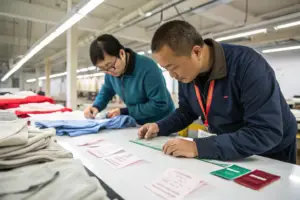
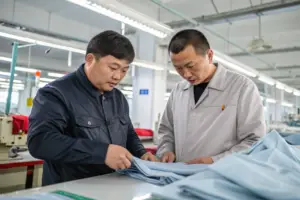
Trust, but verify. We do not just take the mill's word that the fabric is 100% Cotton or that the dye is OEKO-TEX certified. Every roll of fabric that enters our warehouse is inspected. We check:
- Weight (GSM): Using a precise digital cutter and scale.
- Shrinkage: Performing a wash test on a sample cut from the roll.
- Colorfastness: Conducting a crocking test.
- Certification: Verifying the mill's certificate is current and valid.
If a roll fails inspection, it is rejected and returned to the mill. This protects our private label clients from the bulk fabric issues we discussed earlier. This rigorous incoming inspection is a hallmark of a professional clothing manufacturer.
What Happens If a Custom Trim Has a Long Lead Time?
Custom buttons, branded zipper pulls, and special hangtags often have lead times of 15-25 days. If you wait until the fabric is ready to order these, you will delay the entire project.
Our Project Managers use a parallel sourcing strategy. The day the Tech Pack is finalized, we order the custom trims. They are in production while we are dyeing the fabric and cutting the samples. By the time the bulk fabric hits the cutting table, the trims are already in our warehouse, inspected and ready. This proactive management of the supply chain is how we achieve reliable delivery for private label apparel production.
How Does the Sampling Process Work for Overseas Private Label Clients?
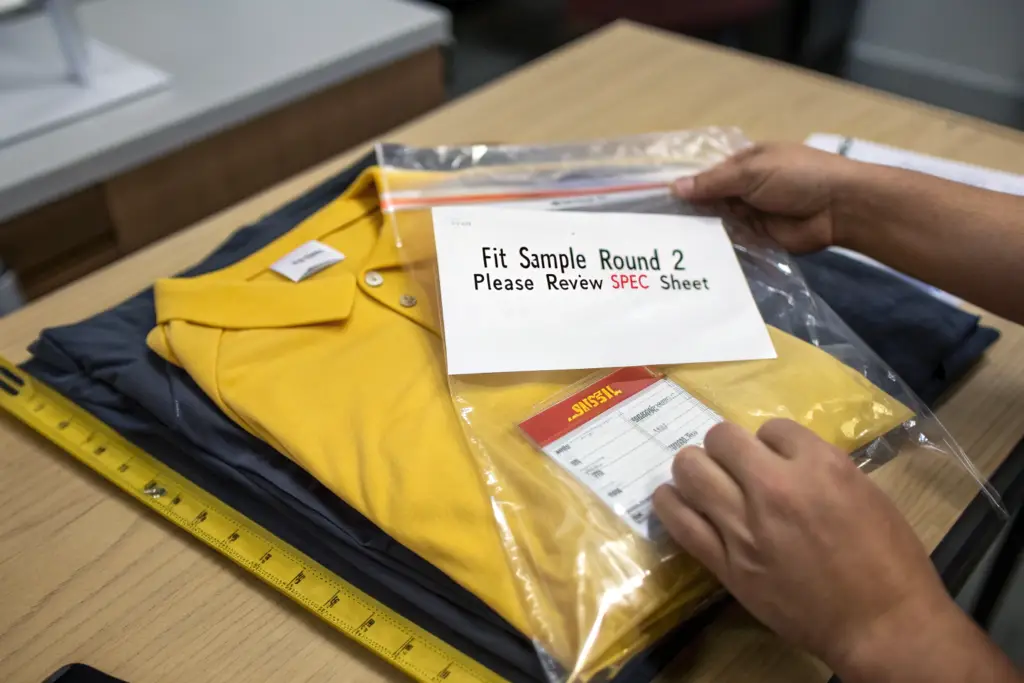
You cannot touch a photo. For private label clients overseas, the physical sample is the primary tool for evaluating fit, fabric handfeel, and quality. We have perfected a process that makes this remote review as efficient and accurate as possible.
The sampling process for overseas clients involves: Creation of the physical sample based on the approved Tech Pack, Shipment via express courier (3-5 days), Client review using the provided Measurement Report, and Communication of revisions via annotated photos and a formal Revision Sheet.
I recall a women's wear client in London who needed to approve a sample quickly. We shipped the sample on a Monday. It arrived on Thursday. She had a fit model ready. She sent us an email on Friday with three photos: one showing the shoulder seam sitting too far back, with a red line drawn where it should be. Another showing the sleeve length measured against a ruler. Her feedback was precise and visual. We updated the pattern over the weekend. Sample #2 shipped the following Tuesday. This rapid iteration is what allows private label brands to develop collections in weeks, not months.
How Should an Overseas Client Provide Fit Feedback?
Vague language is the enemy of speed. Saying "The sleeve feels weird" is not helpful. Effective feedback uses the Point of Measure (POM) language from the spec sheet.
For example: "Refer to POM 'D' (Bicep Circumference). Current sample measures 13 inches flat. Target is 14 inches flat. Please increase by 1 inch total circumference." Including a photo with the area circled and the tape measure visible is even better. This kind of precise, data-driven feedback eliminates guesswork and ensures the pattern maker makes the exact correction you want on the first try. This is how we manage efficient communication across 7,000 miles.
What Is the Role of the "Measurement Report" Shipped with the Sample?
Every sample we ship includes a printed Measurement Report. This is a table that lists every POM from the spec sheet. It has three columns: Target Spec, Tolerance (+/-) , and Actual Measurement (taken by our QC team).
Before you even put the garment on a body, you look at this report. It tells you immediately if the sample was made correctly. If the chest measures 20 inches but the target is 19 inches, you know it is off-spec before you see it on the fit model. This report holds us accountable and gives you objective data to anchor your subjective fit evaluation. It is a critical tool for quality control in private label manufacturing.
How Is Bulk Production Managed for Consistent Quality and Delivery?
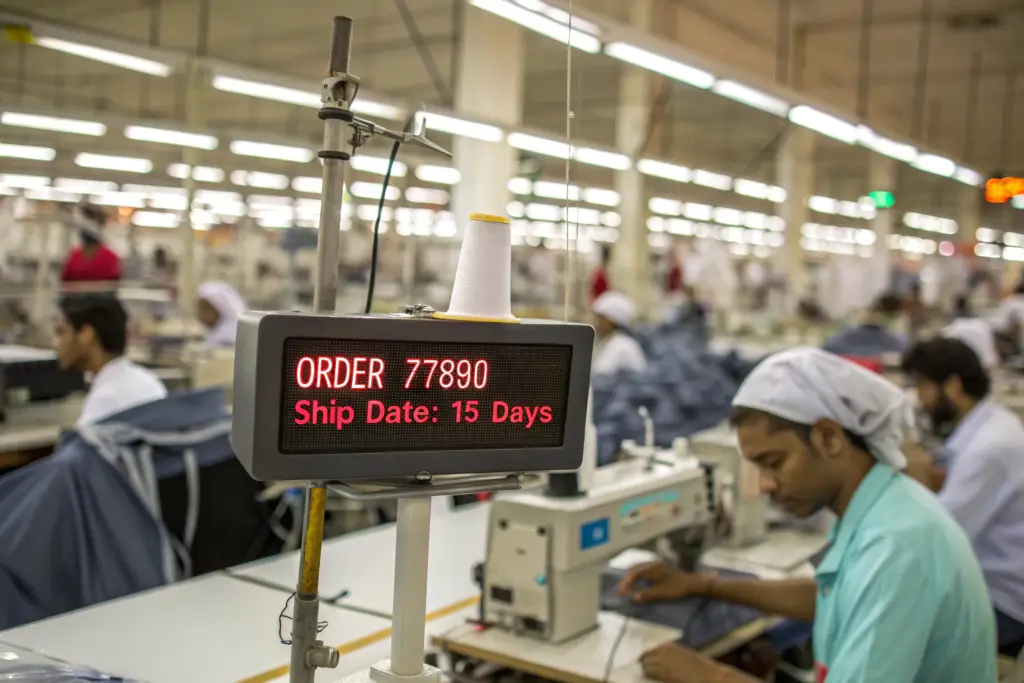
The sample is approved. Now the clock is ticking. This is where the operational excellence of the factory is truly tested. Managing bulk production for private label is about orchestrating hundreds of moving parts—fabric rolls, trim kits, operator schedules, machine maintenance—to converge on a single ship date.
Bulk production is managed through a detailed Production Timeline, broken down by week. The Project Manager uses this timeline to track progress, identify bottlenecks, and provide weekly updates to the client. In-line quality inspections ensure that the entire batch matches the approved PP Sample.
We use a Production Dashboard to track this. The cutting room knows they must finish by Wednesday to feed the sewing line on Thursday. The sewing supervisor knows the target daily output is 800 units. If output falls to 750, the Project Manager investigates immediately. Is a machine down? Is an operator out sick? Is the fabric causing issues? This proactive, data-driven management prevents small problems from becoming delayed shipments. This is the discipline required for reliable delivery in the fast-paced world of US fashion.
What Happens If a Quality Issue Is Found During Bulk Sewing?
This is where In-Line Inspection proves its value. Our roving QC inspectors walk the line continuously. They do not wait until the end of the day.
If an inspector finds three units with the same defect—for example, a crooked collar stitch—they immediately alert the line supervisor. The supervisor stops the line. They check the machine setup. They retrain the operator. They fix the root cause before 500 more units are sewn incorrectly. This is far more efficient than finding 500 defective units at the final inspection and having to repair or scrap them. This is how we protect your profit margin and ensure top quality.
How Do You Handle Last-Minute Changes or Rush Orders?
In a perfect world, there are no last-minute changes. In the real world of fashion, they happen. A retailer asks for a special hangtag. You realize the polybag needs a suffocation warning label.
For small changes that do not affect the garment construction, we do our best to accommodate. We have strong relationships with local trim vendors who can turn around rush orders. However, changes that affect cutting or sewing (e.g., "Change the pocket shape") will impact the delivery date. We are transparent about this. We present the options: "We can make this change, but it will push the ship date by 5 days." You make the business decision. This transparency is key to a strong B2B relationship.
Conclusion
Private label apparel production in China is a sophisticated, high-touch partnership. It is not a vending machine where you put in a sketch and a garment pops out. It is a collaborative process that leverages the unparalleled manufacturing ecosystem of China—the mills, the trims, the skilled labor—to bring your unique brand vision to life.
The journey from Project Brief to delivered cartons requires a clothing manufacturer who acts as more than just a factory. It requires a partner who manages the complexity, communicates with transparency, and guards your quality as if it were their own. At Shanghai Fumao, we have spent years refining our processes to make this journey as smooth and predictable as possible for our B2B partners in North America and Europe.
You should not have to learn how to navigate the textile markets of Shaoxing or the logistics of the Port of Shanghai. That is our job. Your job is to build a brand that customers love.
If you are ready to start your private label journey with a partner who manages the complexity of China production with Western-style transparency and accountability, let's talk. Our Business Director, Elaine, can answer your specific questions and provide a clear roadmap for your project. Please email Elaine at: elaine@fumaoclothing.com.