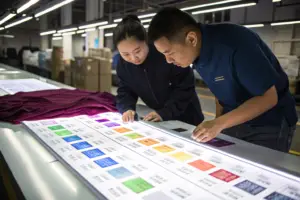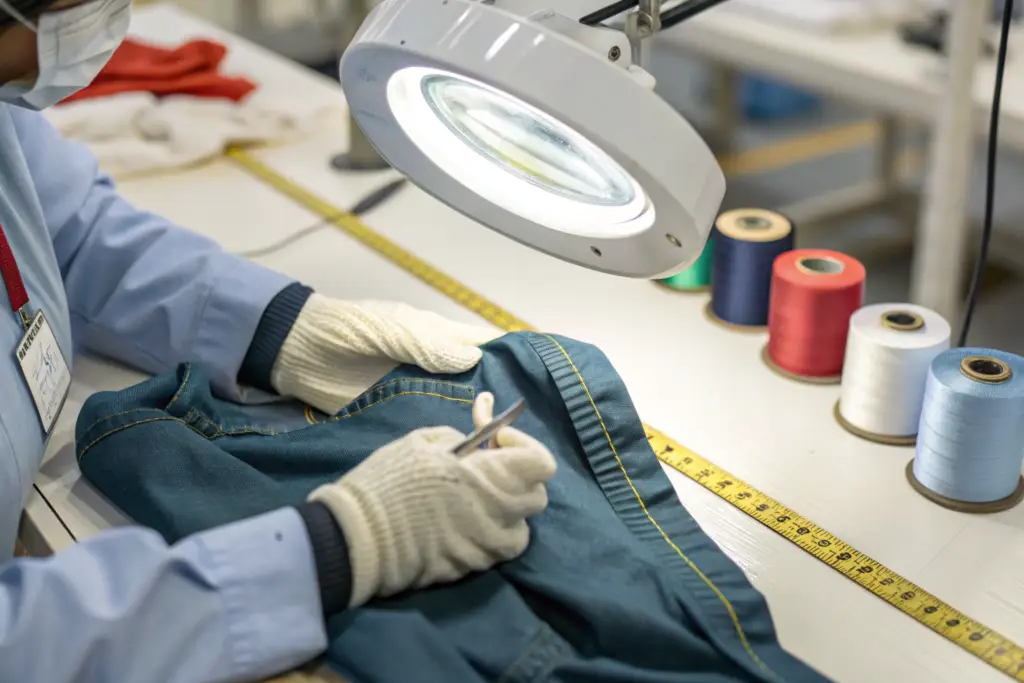
Last year, I got a panicked WhatsApp message at 3 AM my time. A brand owner in Florida had just opened a container of 12,000 units. The approved sample was a rich navy blue. The bulk production was a faded, purplish indigo. It was a dye lot disaster. He had a photoshoot scheduled for Monday. The goods were unsellable to his key account. He lost not just the cost of the goods, but the trust of his retail buyer. This is the nightmare that keeps importers awake at night.
Strict quality control is the biggest challenge in international apparel sourcing because it requires the perfect alignment of three separate, difficult variables: raw material consistency across thousands of yards of fabric, skilled labor discipline across dozens of sewing operators, and transparent communication across a 12-hour time zone difference. When any one of these breaks down—when the yarn count is slightly off, when a mechanic sets the machine tension too loose, or when a problem is hidden instead of reported—the entire order is compromised. And unlike a local supplier, you cannot simply drive across town to inspect the problem.
I run five production lines at Shanghai Fumao. I have seen where the cracks form. I have seen how a small variance in a mill's spinning process becomes a massive problem six weeks later on a sewing floor. You want to know why this is the hardest part of sourcing from China, Vietnam, or India. I want to show you the hidden layers of complexity that go far beyond just checking a seam on a finished garment.
What Are the Most Common Hidden Quality Defects in Bulk Apparel Production?
You look at a photo of a sample and think, "Looks good." Then you receive 5,000 units and wonder why the fit is different. The defects that kill a brand are rarely the obvious holes or broken zippers. Those get caught. The killers are the invisible, systemic issues that affect every single piece in the order.
I remember a shipment of men's polo shirts for a client in Texas. The sample was perfect. The bulk arrived and the collar stood up stiff and awkward, completely different from the sample's soft roll. The buyer was furious. He thought we changed the construction. We hadn't. We traced it back to the interlining. The sample room used a roll of soft, premium fusible interlining. The bulk production team used a different roll from a new supplier that was 20% stiffer but cost the same. Nobody flagged the change. That is the challenge. The defect is not in the sewing. It is in the sourcing of the hidden components you never see.
How Does Fabric Shrinkage and Colorfastness Vary by Material Type?
This is the science part that many brand owners skip because it seems boring. But shrinkage is where your return rate lives. A customer buys a women's wear blouse in a size Medium. She washes it once. Now it fits like a Small. She leaves a one-star review and never buys from you again.
Different fabric types behave completely differently. You cannot apply one standard to everything. Here is a realistic look at how common materials shift after home laundering:
| Material Type | Typical Shrinkage (Unwashed) | Colorfastness Risk | Mitigation Strategy |
|---|---|---|---|
| 100% Cotton Jersey | 5-7% | High (Reactive dyes can bleed) | Compensate in pattern making. Use reactive dye with proper fixation. |
| Cotton/Polyester Blend | 2-3% | Medium | Less shrinkage, but pilling risk increases with short-staple polyester. |
| Viscose/Rayon | 8-10% (Can be more) | Medium | Requires significant over-sizing. Must be dry-cleaned or hand-washed for best retention. |
| Polyester Fleece | <1% | Low (Dope dyed is best) | Shrinkage is not the issue; torque or twisting of the fabric is. |
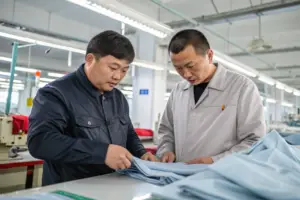
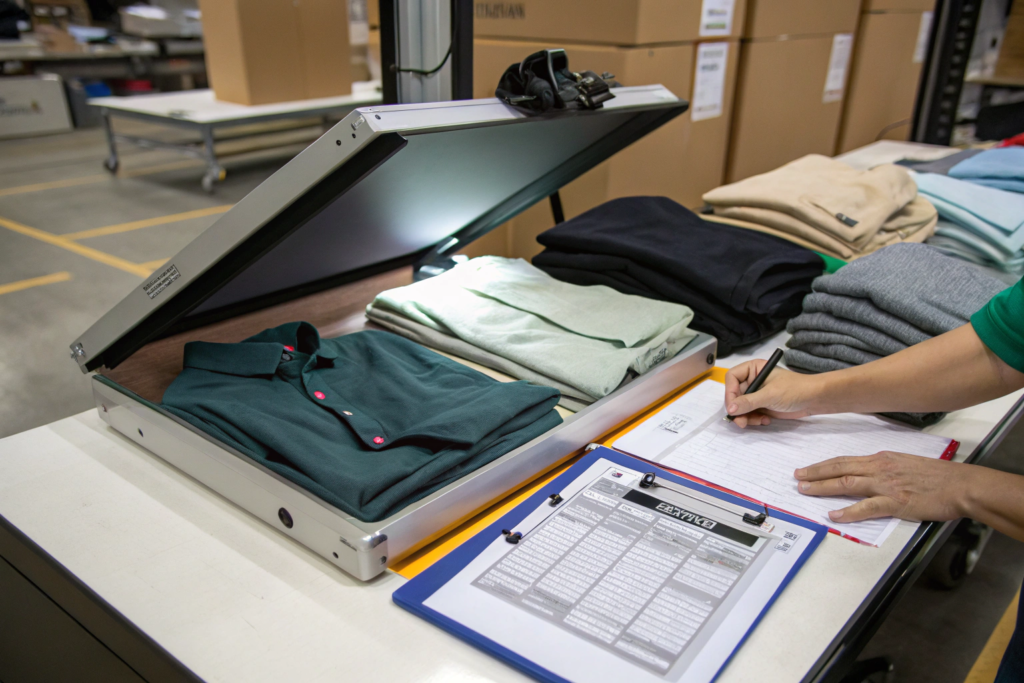
At Shanghai Fumao, we run a shrinkage test on every single dye lot before we cut the fabric. We cut a square, mark it, wash it according to AATCC standards, and measure the difference. We then adjust the pattern markers digitally. If the fabric shrinks 6%, the pattern for a 40-inch chest is printed to a 42.4-inch cut size. This is basic garment manufacturing hygiene, but you would be shocked how many factories skip this step to save 30 minutes. They just cut to the spec sheet and ship the problem to you.
Why Do Stitch Defects Like Skipped Stitches Increase with Synthetic Blends?
You love the performance of a poly-spandex blend for activewear. It stretches. It wicks. But it is a nightmare for seam integrity if the machine settings are wrong. Natural cotton fibers are forgiving. They swell and grip the thread. Synthetic fibers are slippery.
When a sewing machine needle pierces a tight polyester weave, if the needle is even slightly dull or if the timing between the needle and the looper is off by a millimeter, you get a "skipped stitch." It looks like a tiny dash instead of a solid line. In a stretchy legging, that skipped stitch becomes a hole the first time the customer squats.
We control this by strict needle change policies. On synthetic blends, we change needles every 4 hours of run time instead of every 8 hours for cotton. We also use ball-point needles specifically designed for knits so they push fibers aside rather than cutting through the yarn. This is a small cost—pennies per garment—that prevents thousands of dollars in returns. If you are sourcing custom apparel with technical fabrics, you must ask your supplier about their needle policy. If they don't have one, find a new supplier.
How Do Communication Gaps and Time Zones Undermine QC Standards?
You send an email at 9 AM in New York. I am asleep in Shanghai. I wake up, read it, but maybe I don't understand the nuance. I ask my assistant to translate or interpret. She sends a reply at 4 PM your time. You read it the next morning. A simple question about the zipper pull color has taken 48 hours to get a vague answer.
This latency is where quality dies. When a problem happens on the cutting table at 10 AM Shanghai time, and we need an answer now, but you are in a dinner meeting, we have two choices: stop the line and wait (costing you delivery time) or make a guess and keep moving (costing you quality). Most factories will choose to keep moving. They will make an assumption. And often, that assumption is wrong.

How Can a "Golden Sample" Prevent Misinterpretation of Specs?
I insist that every new brand buyers client sends us a physical Golden Sample. Not a digital file. A physical garment. Why? Because words fail.
You write on the spec sheet: "Soft hand feel." What is soft? To a Chinese fabric sourcer, a soft polyester microfiber feels like a cloud. To an American consumer, soft means a worn-in, brushed cotton flannel. We are speaking different sensory languages.
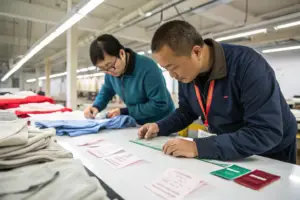
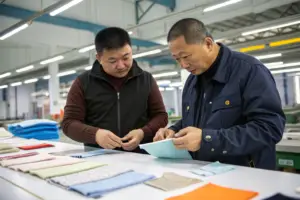
The Golden Sample sits in our QC department in a sealed bag. It is the law. When the bulk fabric arrives, we compare it physically to the Golden Sample. We don't rely on the lab report alone. We rub the two fabrics together. We check the drape. This physical reference eliminates the "I thought you meant..." conversation. Last season, a clothing manufacturer partner of ours ran a batch of knitwear that felt slightly coarse compared to the Golden Sample. We rejected the fabric before cutting. The brand owner in LA never even knew there was a near-miss. That is the silence of a good process. For more on this critical step, see this guide on developing a tech pack and golden sample from industry experts.
What Role Do Weekly Production Photos and Videos Play in Trust?
You cannot fly to China every week. I cannot fly to your office. But we can show you the production line.
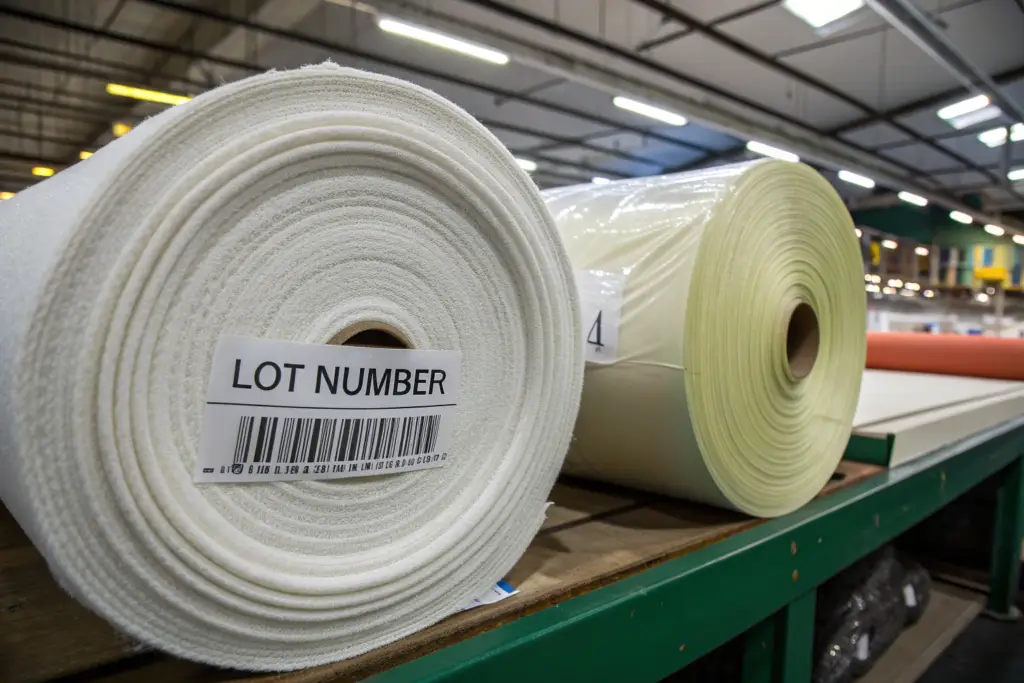
I send a weekly update every Friday morning Shanghai time. It is a simple WeTransfer link with 10-15 photos and a 30-second video clip. The photos show: Your fabric roll with the lot number visible. Your cut pieces stacked on the table. Your sewing machine operators working on your specific style.
This is not a marketing gimmick. It is a forcing function for us. Knowing that I have to take a photo of your order on Thursday forces my line supervisor to make sure your order is actually running and looks good. It creates accountability. For you, it provides visual evidence that your wholesale order is not just a line on a spreadsheet. It is real cloth moving through a real factory. This transparency is what separates a true clothing partner from a faceless trading company.
Why Is Raw Material Consistency the Root Cause of Most QC Failures?
If you trace back every major quality failure I have seen in 15 years, 70% of them start with the yarn. The garment is just the final expression of the raw material. If the yarn is weak, the seam will pucker. If the yarn count is wrong, the weight will be off. If the yarn has too much nep, the surface will look hairy and cheap.
You buy a T-shirt manufacturing order based on a sample made from "Fabric Lot A." But when we go into bulk production six weeks later, the mill sends us "Fabric Lot B." The mill says it's the same. The spec sheet says it's the same. But it is not the same. The cotton might be from a different region of Xinjiang or India. The growing season might have been drier. The fiber length might be 2mm shorter on average. That tiny difference changes how the fabric takes dye and how it wears over time.
How Do Yarn Count and Fiber Length Impact Garment Durability?
This is inside baseball, but you need to understand it. Yarn count is the thickness of the thread. But more important is the staple length of the cotton fiber.
The Pilling Problem Explained
Pilling is those little fuzz balls that form on a sweater after a few wears. You think it's because of the wash. It is actually because of the fiber length. Short fibers work their way out of the yarn bundle, break, and tangle into pills. Long fibers stay locked in the twist.
Here is a simple table showing the relationship between fiber and performance:
| Cotton Type | Staple Length | Best Use | Durability Outcome |
|---|---|---|---|
| Upland Cotton | Short (20-24mm) | Basic fleece, cheap tees. | High pilling. Feels soft initially, degrades fast. |
| Combed Cotton | Medium (25-28mm) | Men's wear tees, polos. | Medium pilling. Removes short fibers via combing process. |
| Supima / Giza | Long (35mm+) | Luxury women's wear, fine gauge sweaters. | Minimal pilling. Keeps shape and smoothness for years. |
When you ask for "100% cotton" and we quote a price, the difference is often in the combing process and the staple length. A cheap garment skips combing. It feels great in the bag, but it looks terrible after three laundry cycles. At Shanghai Fumao, we specify the staple length in our mill contracts. We test the incoming greige goods with a Uster tester to verify the uniformity. It is the only way to guarantee the jacket you sell today doesn't look like a dishrag by next season.
What Testing Certifications Guarantee Fabric Weight and Composition?
You order 180gsm jersey. The fabric arrives and feels thin. You weigh it and it's 165gsm. The factory says, "It's within tolerance." You feel cheated.
This is why you need third-party verification that is attached to the specific production lot, not just a generic mill certificate from three years ago. The certifications that matter for fabric integrity are:
- ASTM D3776 / ISO 3801: This is the standard for measuring fabric weight. It tells you exactly the grams per square meter or ounces per square yard. Without this, "180gsm" is just a promise.
- AATCC 20A: This is the fiber analysis test. It uses a microscope or chemical dissolution to tell you if the fabric is really 100% cotton or if there is hidden polyester blended in. Yes, some mills cheat the blend to save money.
- OEKO-TEX Standard 100: This is about chemical safety, not weight. But it is a marker of a mill that cares about process control. You cannot pass OEKO-TEX if you are using cheap, unregulated dyes that bleed.
For custom logo and private label clothing orders going to North America, we provide these test reports from Intertek or SGS for every single dye lot. You don't just take our word for it. You take the lab's word for it. This is the layer of protection that prevents the Florida dye lot disaster I mentioned at the start. For a deeper understanding of textile testing standards, visit the American Association of Textile Chemists and Colorists.
How Can Third-Party Inspections Close the Trust Gap in International Sourcing?
You are 7,000 miles away. You need eyes on the ground that don't work for me. I understand this completely. Even though I run a factory with a strong internal QC team, I want you to hire a third-party inspection company. It protects both of us.
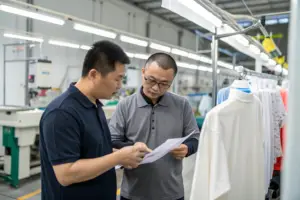
If you find a defect later, and we both have a report from an independent inspector saying "AQL 2.5 Passed," we can have a factual conversation about remedy. Without that report, it's my word against yours. That's a bad place for a business relationship to be. Third-party inspection is the insurance policy for the wholesale supply chain.

What Is the Difference Between AQL 2.5 and AQL 4.0 for Apparel?
AQL stands for Acceptable Quality Level. It is a statistical sampling method. It does not mean "check every piece." It means "check this many pieces, and if you find this many defects, fail the lot."
The numbers matter immensely. Here is the practical difference for apparel sourcing:
| AQL Level | Defect Tolerance | When to Use It | Risk Profile |
|---|---|---|---|
| AQL 1.5 | Very Strict (0-1 major defects per 125 pcs) | High-end outerwear, luxury jackets, medical garments. | You want near perfection. Cost is higher due to stricter control. |
| AQL 2.5 | Standard Commercial | Most general clothing, men's wear, women's wear, knitwear. | This is the industry standard for North American brand quality. |
| AQL 4.0 | Lenient (10+ major defects per 125 pcs) | Promotional giveaways, very cheap fast fashion. | You accept that a certain percentage of goods will be unsellable. |
I recommend AQL 2.5 for garment orders, but with a Zero Tolerance policy on Critical Defects. A critical defect is something that harms the user—a broken needle tip left in the garment, or a sharp burr on a zipper. One critical defect in the sample size means the entire lot fails, regardless of the math. You should never accept a lower standard for safety. For a detailed breakdown of these tables, refer to the ISO 2859-1 standard which governs sampling procedures.
When Should You Request an Inline Inspection vs. a Final Random Inspection?
Most importers only do a Final Random Inspection. They wait until the bulk apparel orders are 100% finished and packed. This is a mistake.
The FRI Trap
You do a Final Inspection on Friday. The inspector finds that 30% of the custom logo prints are off-center. The container is supposed to leave on Monday. You have a choice: Ship the bad goods and deal with the fallout, or delay the shipment by 3 weeks to rework. Both options cost you money and stress.
The Inline Solution
An Inline Inspection happens when 20-30% of the order is finished. The inspector goes to the line while they are sewing. They catch the off-center print problem on the first 500 units. They tell the factory to stop, adjust the screen printer, and fix the remaining 4,500 units before they are made. The shipment date stays intact.
We had a run of activewear shorts with a specific pocket binding. The inspector caught that the binding was stretching out the leg opening during the inline check. We fixed the folder on the machine that afternoon. The final inspection passed easily. The brand owner received perfect shorts and never heard about the issue. That is the value of catching it early. I always advise my brand buyers to budget for at least one inline check per production run. It saves the cost of the final inspection many times over.
Conclusion
Quality control across an ocean is not a single checkpoint. It is a chain that stretches from the cotton field in Xinjiang to the sewing floor in Shanghai to the warehouse in New Jersey. The biggest challenge is keeping every single link of that chain strong when you cannot physically touch it every day.
We looked at the hidden defects that photos don't capture, like shrinkage and skipped stitches on synthetic blends. We talked about how the 12-hour time zone gap creates a communication vacuum that can be filled with bad assumptions. We dug into the root cause of most problems: raw material variance that starts at the yarn level before a single stitch is sewn. And we explored how third-party inspections and clear AQL standards provide the objective data you need to sleep at night.
Strict QC is not just about catching bad pieces. It is about building a system that prevents them from being made in the first place. At my factory, we see our role as your production partner, not just your vendor. That means we want to catch the problem with the fabric lot before you ever see a photo of the garment. It means we want to send you that weekly video so you know the line is moving smoothly.
If you are tired of opening containers and getting surprises, let's talk about how we structure our QC process differently. We can walk you through our AQL protocols and our fabric testing documentation. You can reach our Business Director Elaine directly at elaine@fumaoclothing.com. She can arrange a call to review how we maintain quality from the first yarn to the final box, ensuring what you sell matches what you designed.