If you have ever bought a beautiful, expensive-looking sweater only to find a scratchy, plastic tag that feels like sandpaper on your neck, you know exactly what I am talking about. You cut it out. The scissors slip. You nick the seam. Now you have a hole in a $100 sweater and a tag in the trash. That moment of frustration is what your customer remembers, not the clever design of the sleeve. For a distributor, that cheap tag is a silent brand killer.
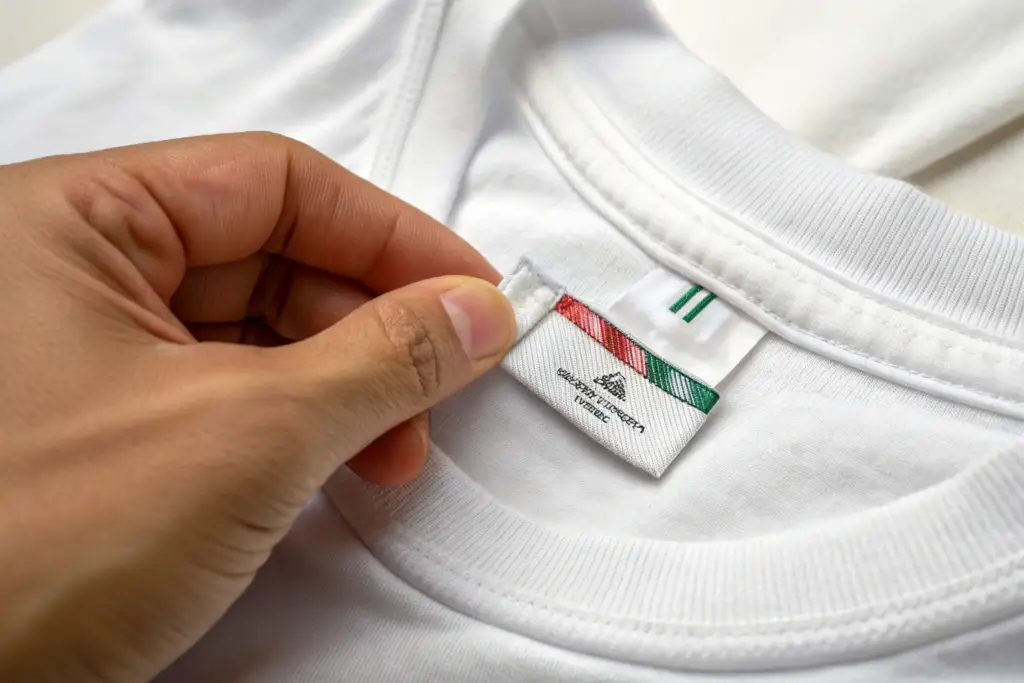
A customized care label is not just a legal requirement for the FTC. It is a tactile and visual anchor point that signals quality, authenticity, and brand intentionality. When a consumer compares two similar garments, the one with a soft, branded, and well-stitched care label will consistently justify a higher retail price point in the buyer's mind. It transforms a generic import into a branded asset.
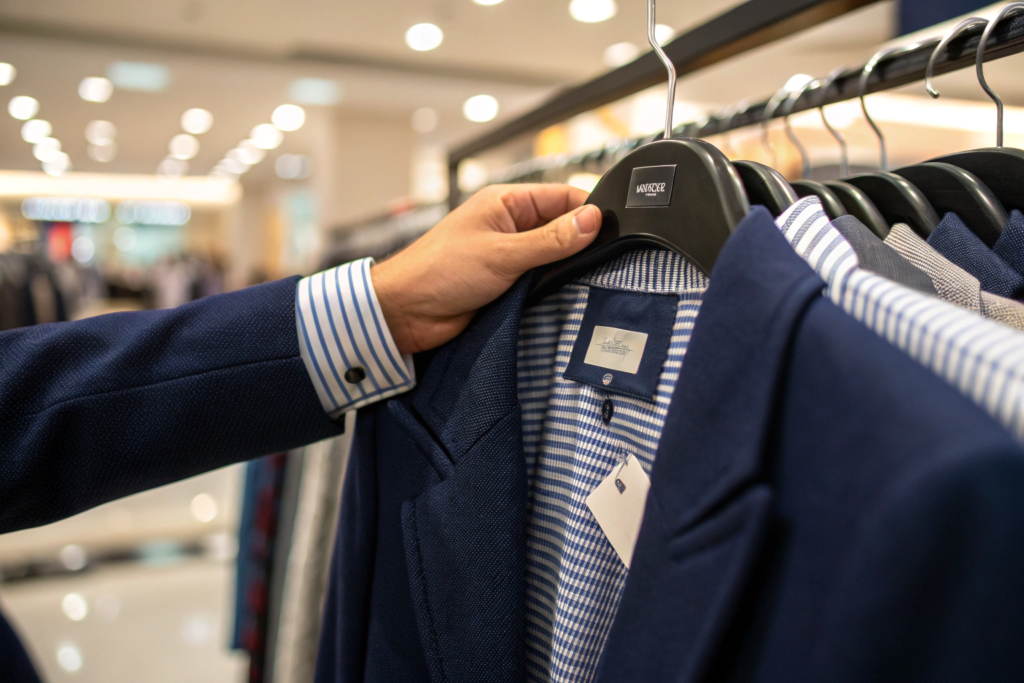
I have walked through enough American department stores to know that the "hand feel" test starts before the customer even tries on the garment. They touch the collar. They look at the inside neck. That little piece of fabric tells them if this brand cares about details or just cares about cutting costs. Let me show you how this small component changes the entire value equation.
How Does a Care Label Influence a Shopper's First Impression of Quality?
First impressions in apparel are made in about seven seconds. In a physical retail store or even in an unboxing video, the first thing a shopper inspects after seeing the color is the neckline. They do this instinctively to check the size and the fabric content. What they find there sets the expectation for the entire garment.
A generic, heat-sealed transfer print or a stiff, frayed paper tag immediately codes the garment as "mass market discount." In contrast, a soft, woven label with a subtle brand accent and clear, legible typography codes the garment as "specialty boutique" or "premium." This subconscious coding allows distributors to command a 15-25% higher markup on otherwise identical private label apparel.
What Are the Psychological Triggers Hidden in a Small Label?
I worked with a client from Nashville two years ago who was launching a line of "elevated basics"—simple t-shirts and hoodies. He wanted to sell them for $68, competing with brands like Buck Mason. He had the heavy-weight fabric and the perfect fit. But he sent me a photo of his competitor's label and asked, "Why does this feel like a $70 shirt?"
We deconstructed the psychology of the competitor's care label. It wasn't complicated, but it was intentional. Here is what we found:
| Label Element | Generic Low-Cost Option | Premium Perceived Option | Psychological Impact on Buyer |
|---|---|---|---|
| Material | Stiff, shiny polyester. | Soft, matte polyester satin or organic cotton twill tape. | Softness = Quality. Scratchy = Cheap. It's that simple. |
| Information Layout | Cramped, tiny text. | Bilingual layout with breathing room. | Clear text suggests transparency and confidence in the product. |
| Color | Black on White. | Brand accent color matched to drawcord or inner yoke taping. | Color coordination shows design oversight. It feels "finished." |
| Attachment | Single needle chainstitch (easily unravels). | Lockstitch folded into the seam allowance (clean finish). | A raw edge on a label screams "cut me out." A clean fold says "leave me in." |
The psychology of packaging studies show that haptic feedback (touch) is a primary driver of perceived luxury. We sourced a soft satin woven label with his logo debossed in a matching navy tone. We folded the edges under before sewing. The cost difference was less than $0.07 per unit. When he sent out his first batch of samples to influencers, three different people commented on the "buttery soft label" in their unboxing stories. That $0.07 investment bought him word-of-mouth that a "100% Cotton" transfer print could never achieve.
Why Do Generic Care Labels Lead to Higher Return Rates?
This is a practical, warehouse-level issue that distributors often overlook. Returns are the margin killer of e-commerce. And one of the top reasons for apparel returns is "Item not as described" or "Poor quality."
A generic care label contributes to this in two specific ways:
- The "Scratch & Cut" Return: If the label is uncomfortable against the skin, the customer will cut it out. Many customers use kitchen scissors. They cut into the garment seam or the fabric of the collar. Once the garment is damaged by the customer trying to remove the label, they cannot return it. So instead of returning it, they leave a 1-star review titled "ITCHY TAG RUINED IT." That review is permanent and costs you far more than the return shipping.
- The "Wash & Destroy" Return: Generic labels often use low-quality ink that fades after three washes. The washing instructions become illegible. The customer guesses the wash cycle. They shrink the wool blend or melt the acrylic. They then return the item claiming it was "defective." You eat the cost.
I recall a specific batch of women's sleepwear we produced for a brand in Oregon. The initial samples used a standard white care label. The brand owner wore the sample to bed for one night to test it. She emailed me at 6:00 AM my time: "Elaine, the label is a dealbreaker. It feels like a mosquito bite on my ribcage."
We switched the label placement to the lower side seam (a common premium trick) and changed the material to a super-soft woven recycled polyester label. The result? The return rate for "discomfort" on that sleepwear line dropped to near zero. The label didn't just convey quality; it removed a friction point from the user experience.
What Are the Legal Requirements for Care Labels in the USA?
I have seen entire shipments held at the Port of Long Beach because a distributor tried to save two cents per unit by skipping proper care labeling. US Customs and Border Protection (CBP) and the Federal Trade Commission (FTC) treat care labels as non-negotiable requirements. You cannot sell a textile garment in the United States without one, and it must be permanent.
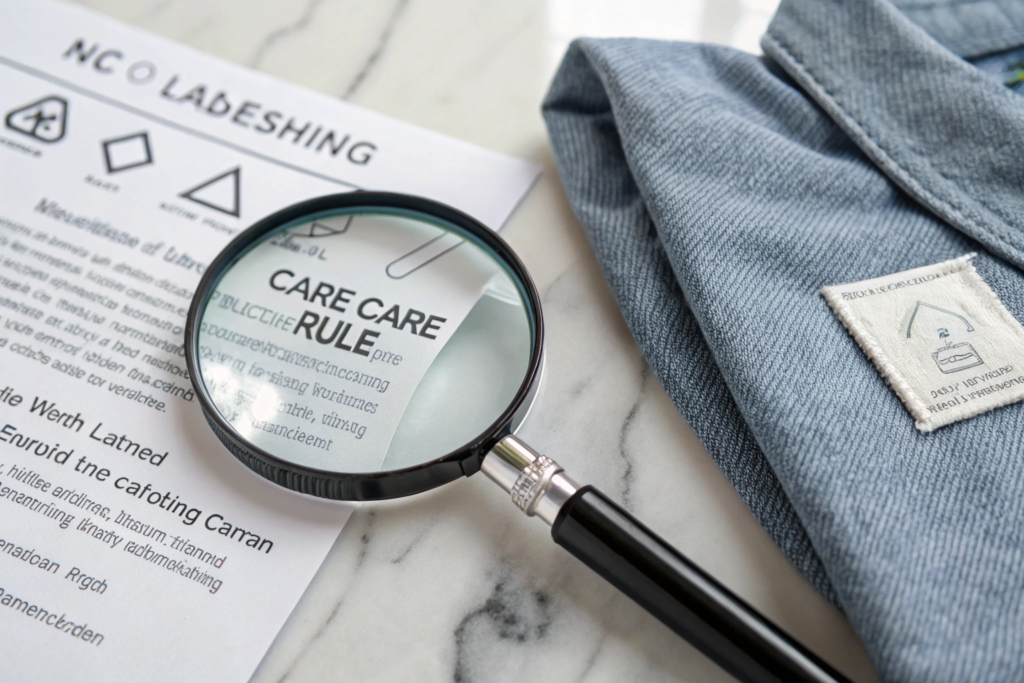
The FTC's Care Labeling Rule (16 CFR Part 423) mandates that manufacturers and importers of apparel must attach a legible care label with complete instructions for regular use. Failing to provide a label with accurate washing, bleaching, drying, and ironing instructions can result in fines, stop-sale orders, and significant brand liability if a consumer damages the garment by following bad advice.
Which FTC Care Symbols Are Mandatory and Which Are Optional?
The United States is one of the few major markets that still relies heavily on Written Instructions in English. While the rest of the world uses the five-symbol ISO system exclusively, US law requires the words.
However, the use of ASTM D5489 Standard Guide for Care Symbols is strongly encouraged as a supplement to the text. It helps with international distribution if you also sell to Canada or Europe.
Here is the breakdown of what must be on a US-bound care label from our compliance team at Shanghai Fumao:
| Care Aspect | FTC Requirement (Mandatory) | Common Mistake Made by New Importers |
|---|---|---|
| Washing | Must state method (Machine, Hand) and Water Temperature (Hot, Warm, Cold). | Saying "Machine Wash" only. You must specify "Machine Wash Cold" to protect dyes. |
| Bleaching | Must state "Only non-chlorine bleach when needed" or "Do not bleach." | Assuming all white shirts can be bleached. Oxygen bleach vs. Chlorine bleach are legal distinctions. |
| Drying | Must state method (Tumble Dry, Line Dry, Drip Dry) and Heat Setting (Low, Medium, High). | Saying "Tumble Dry." You must add "Tumble Dry Low" for knits to prevent shrinkage. |
| Ironing | Must state temperature (Low, Medium, High) or "Do not iron." | Omitting this for "wrinkle-free" shirts that actually do need a touch-up. |
| Warnings | Must state if a process will harm the garment. e.g., "Wash with like colors" or "Do not wring." | Assuming the customer knows red dye bleeds. They don't. You must warn them. |
The full text of the FTC Care Labeling Rule is available online. I recommend every distributor bookmark it. Last fall, a client in Miami had a shipment flagged because the label only had symbols. The CBP officer required a commercial invoice addendum with an English translation of the symbols. It held up the delivery for four days and cost $450 in customs exam fees. All because we didn't catch that the client's graphic designer used the European-only symbol template.
What Is the Difference Between a Care Label and a Country of Origin Label?
This is a point of confusion that leads to many costly re-work orders. These are two separate labels with two separate legal requirements, although they are often combined into one piece of fabric to save seam space.
| Label Type | Legal Requirement | Required Info | Penalty for Non-Compliance |
|---|---|---|---|
| Care Label | FTC 16 CFR 423 | Washing, Bleaching, Drying, Ironing instructions. | Stop-sale order. Fines up to $50,120 per violation. |
| Country of Origin | 19 USC 1304 (Tariff Act) | "Made in China" (or Vietnam, etc.) in English, conspicuous, permanent. | Seizure of goods. 10% ad valorem markup on duty plus storage fees. |
The Care Label tells you how to treat the shirt. The Origin Label tells you where it came from. You must have both. And the origin label must be on the outside of the packaging if the garment neck is covered by a turtleneck or the package is sealed.
At Shanghai Fumao, we print a Combined Label for most clients. This is a single woven label that includes:
- Brand Logo (Custom)
- RN Number (Client's FTC Registration Number)
- Fabric Content (e.g., 100% Cotton)
- Care Instructions (in English)
- "Made in China"
We do this to reduce the bulk in the neck seam. We verify the RN Number database before production to ensure the client is legally registered as the distributor. This protects you from a scenario where a factory uses their own RN number and then gets flagged by a retailer's compliance department for "unregistered vendor."
How Can Private Label Care Tags Strengthen Your Brand Identity?
The care label is one of the few surfaces on a garment that the customer is guaranteed to look at after purchase. They look at it on laundry day. They look at it when packing for a trip. They look at it when deciding if they should hand-wash that silk blouse or risk the delicate cycle. This is free, guaranteed real estate for brand reinforcement.
Private label care tags transform a functional legal disclaimer into a subtle brand statement. By incorporating brand colors, a signature font, or a small brand motto onto the care label, distributors create a cohesive, "designed" product experience. This attention to detail reduces the perception of the garment as a "generic blank" and elevates it to a proprietary, curated piece.

Does a Branded Care Label Reduce the Risk of Returns?
Yes, and for a reason that isn't immediately obvious. A branded label builds trust in the accuracy of the instructions. When a customer sees a cheap, generic-looking label that says "Dry Clean Only," they often ignore it. They think, "This is just a cheap shirt. The factory just put that on there to cover themselves. I'll wash it on gentle."
When they ignore the instruction and ruin the shirt, they return it to you claiming it "fell apart in the wash."
But when that same instruction—"Dry Clean Only"—is printed on a beautiful, soft label that matches the brand's aesthetic, the customer's psychology changes. They think, "This is a nice piece. The brand cares about details. They probably put 'Dry Clean Only' for a real reason. I should follow this."
I witnessed this firsthand with a client who launched a line of linen-blend blazers. Linen is notorious for shrinking if you look at water wrong. The first production run used a standard white label with "Dry Clean Only." The return rate for shrinkage was 8%. We looked at the reviews. Customers were saying, "I washed it on cold and it shrunk." They ignored the label.
For the second run, we printed the care instructions on a small Cotton Twill Tape label with the brand's signature burgundy thread. It looked intentional. It looked premium. The "Dry Clean Only" text was prominent but elegant. The return rate for shrinkage on that run dropped to under 3%. The label didn't change the fabric. It changed the customer's behavior because it looked like advice worth taking. This aligns with research on brand trust and compliance.
How Can You Use Care Labels for Inventory Management?
This is an advanced strategy we use for distributors who sell to multiple different boutiques under the same private label program. You can use the care label as a Hidden SKU Identifier.
Here is how it works at Shanghai Fumao:
We add a tiny, discreet code at the very bottom of the care label. It is printed in a color that matches the label background (e.g., dark navy text on a navy satin label). It is almost invisible unless you are looking for it under bright light. The code might look like "SS24-B1."
This code does not interfere with the FTC requirements. It is not the RN number. It is an internal batch code for the distributor.
Here is why this is valuable for a wholesaler:
| Use Case | Benefit of Hidden Label Code |
|---|---|
| Season Identification | You can tell at a glance if a returned item is from Spring 2024 or Spring 2025 without opening the polybag. |
| Factory Batch Traceability | If a specific batch of fabric pills, you can trace the exact production week and notify only those 50 boutiques, not the whole 500-store network. |
| Unauthorized Diverting | If a retailer you sell to at wholesale prices starts selling on Amazon at a discount, the hidden code on the label proves the goods came from your allocation. |
We added this for a large uniform distributor in the Midwest. They had an issue where a specific run of 300 polo shirts had a slightly misaligned logo embroidery. It was a minor defect only visible upon close inspection. They couldn't recall all 5,000 shirts in the warehouse. But because the care label had a tiny "BATCH A" woven in, the warehouse team sorted the 300 affected shirts in one afternoon. This saved them from shipping a "second-quality" item to a premium client.
How Do You Ensure the Care Label Matches the Actual Fabric Performance?
This is where many distributors get into legal and reputational trouble. They design a beautiful care label with instructions that look right. But the instructions are not based on the actual lab test results of the bulk fabric. They are copied from a competitor's website. If the label says "Machine Wash Warm" and the fabric shrinks 10% in warm water, the label is wrong. And the distributor is legally liable for that error.
The copy on the care label must be the direct output of standardized physical testing. At minimum, every fabric batch should undergo AATCC 135 (Dimensional Change) and AATCC 61 (Colorfastness) tests. The specific temperature and drying method recommended on the label must reflect the conditions under which the fabric passed those tests.
What Happens When a Care Label Contradicts the Fabric Test?
I recall a specific issue with a men's swimwear brand from Florida in early 2025. They ordered a beautiful recycled polyester microfiber fabric. The standard industry care label for swim trunks is "Machine Wash Cold, Line Dry."
The client designed a label with "Machine Wash Warm, Tumble Dry Low" because they thought it sounded more convenient for the customer. They didn't want to scare the buyer with "Line Dry."
We ran the fabric through the lab. The test results showed that at 40°C (Warm Water), the elastane (spandex) in the fabric lost 15% of its recovery power. The trunks would bag out after three wears.
We sent the client the data. The choice was:
- Use the "Convenient" label and face returns for baggy, worn-out trunks.
- Use the accurate "Line Dry" label and have a product that lasts two seasons.
The client wisely chose Option 2. The care label is a contract with the customer. It says: "Do this, and the garment will perform as expected." If you break that contract, the customer returns the product.
Here is a table we use internally at Shanghai Fumao to match test results to label copy:
| Fabric Behavior in Lab Test (AATCC 135) | Recommended FTC Care Label Wording |
|---|---|
| Shrinkage < 2% at 40°C. Colorfast > Grade 4. | "Machine Wash Warm. Tumble Dry Medium." |
| Shrinkage < 3% at 30°C. Colorfast > Grade 3.5. | "Machine Wash Cold. Tumble Dry Low." |
| Shrinkage > 5% at 30°C. Or Spandex loss. | "Machine Wash Cold. Line Dry." |
| Dye Crocking < Grade 3 (Wet). | "Wash Separately Before Wearing. Do Not Bleach." |
We always recommend erring on the side of caution. Telling a customer to "Line Dry" might lose a few sales due to perceived inconvenience. But shipping a shirt that shrinks 2 inches in length will lose you all future sales from that customer and their friends.
How Often Should You Update Care Labels for Core Styles?
Distributors who run re-order programs for the same SKU year after year often get lazy with label updates. They assume the fabric from the mill is the same as last year. Cotton is a natural fiber. Yarn quality and dye lots change between harvests and seasons.
We have a policy at Shanghai Fumao: Re-validate care instructions every 12 months or every new mill dye lot, whichever comes first.
This is not just a best practice. It is part of our internal ISO 9001 quality management documentation. Last year, a client re-ordered 2,000 units of a best-selling linen tunic. The previous year's label said "Machine Wash Cold Gentle Cycle."
We ran a new shrinkage test on the incoming linen roll. The new batch of linen had a looser weave and was shrinking at 6% in cold water instead of the previous 4%. That extra 2% made the tunic a full inch shorter in the body length.
We flagged it. We updated the care label to "Hand Wash Cold. Lay Flat to Dry." We also increased the pattern length by 1 inch to compensate for the known shrinkage.
The client was initially annoyed at the pattern change. "But it's a re-order! Don't change anything!" But when they received the goods, the fit was consistent with the previous year. If we had used the old pattern and the old label, those tunics would have been midriff-baring after one wash. That is the value of treating the care label as a living document tied to current lab test data.
Conclusion
A customized care label is one of the smallest line items on a garment's bill of materials. It costs pennies. But it carries an outsized weight in customer perception, legal compliance, and brand equity. It is the last thing the customer sees before they wear the garment and the first thing they look for when they wash it.
The shift from a generic, scratchy white tag to a soft, branded, and accurate woven label is not just an upgrade. It is a signal. It tells the customer that you, the distributor, did not cut corners. It tells them that the "Made in China" label is a mark of thoughtful manufacturing, not anonymous mass production. It tells them that the washing instructions are there to protect their investment, not just to cover your liability.
At Shanghai Fumao, we view the care label as the final signature on a well-made garment. We work with our clients to ensure that the label's material, typography, and content align with the quality of the fabric it is attached to. Whether it is a hidden batch code for inventory control or a soft satin tag that doesn't irritate the skin, these details matter.
If you are ready to elevate your private label program and ensure your care labels reflect the true value of your garments, we are here to help.
For a consultation on custom label design, compliance review, or to request a sample pack of our label material options, please contact our Business Director, Elaine. She can guide you through the process of creating a care label that protects your brand and enhances your product. Reach out directly at elaine@fumaoclothing.com.