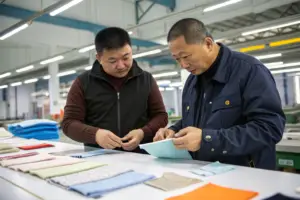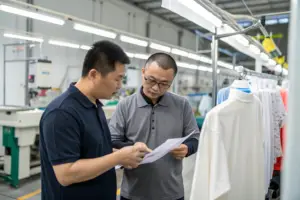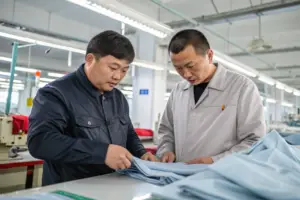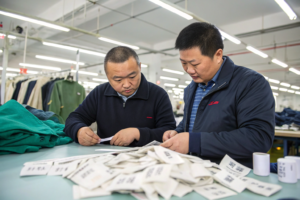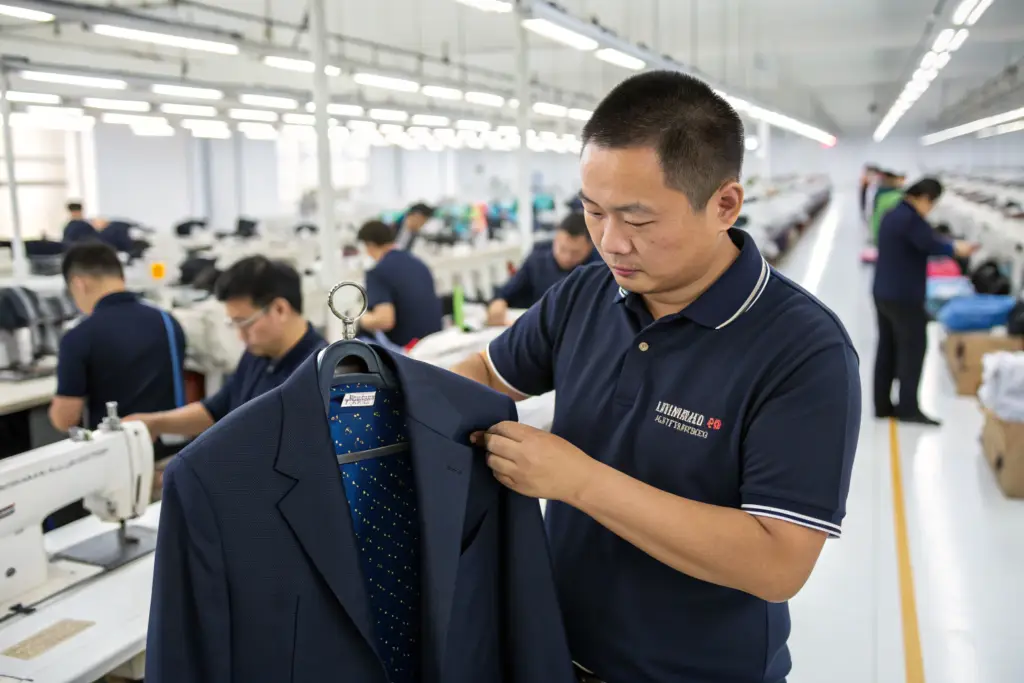
If you are like me a decade ago, you probably spend half your night refreshing tracking pages and the other half writing angry emails about delayed shipments. The traditional import model is a gamble where the house always wins—and the distributor loses sleep, money, and sometimes entire seasons. You source samples from a trade show in Vegas, place a massive purchase order, wire a deposit to a factory you hope still exists, and then pray the container clears customs before the back-to-school rush ends.
The shift to a mature cross-border e-commerce framework has fundamentally altered this risk profile. It is no longer about buying cheap junk from an anonymous website. It is about applying the efficiency of digital logistics to a wholesale, customized supply chain. For American apparel distributors, this model eliminates the guesswork in inventory financing and transforms the relationship with factories like ours from adversarial transaction to transparent partnership.
The reason I'm writing this as the owner of a Chinese garment factory is simple: I believe the middlemen who hide behind Gmail accounts and fake certificates are bad for business. I want to show you how a real factory operates in this new digital landscape. Let's walk through the specific ways this model saves you money, time, and reputation.
How Does Cross-Border E-Commerce Reduce Hidden Supply Chain Costs for US Brands?
I remember a specific call with a startup brand owner from Austin, Texas, just last fall. He was looking at our pricing sheet and comparing it to his current domestic screen-printer. He saw the unit price was lower but was terrified of the "hidden freight and duty bomb." He had been burned before by a broker who quoted $3.50 a unit for shipping and then hit him with a $1.80 per unit "Pier Pass and Congestion Fee" after the boat left Shanghai. That is the old model.
Cross-border e-commerce in the wholesale context allows distributors to lock in landed cost visibility before production even begins. This is not retail drop-shipping; it is a hybrid model where the factory manages the first-mile logistics and last-mile brokerage under a unified digital interface. By utilizing DDP (Delivered Duty Paid) shipping terms, brands receive a single invoice that covers the garment cost, ocean freight, insurance, US customs clearance, and final trucking to their warehouse door.
Can DDP Shipping Terms Actually Protect My Profit Margins?
The most terrifying line item for any apparel distributor is "customs hold." When you buy FOB (Free on Board) from a new supplier, you own the cargo the second it hits the water. If there is a customs exam in Long Beach, you are paying $200 a day in chassis rental and demurrage. You have no control. You just watch your margin evaporate while CBP picks through a container.
Shanghai Fumao has shifted over 80% of our US-bound clients to DDP shipping terms over the last two years. This isn't a gimmick; it's a reflection of our confidence in our own documentation. Here is the reality of why this protects your cash flow:
- Certification Verification: In 2025, we had a large order of children's sleepwear destined for a boutique chain in Oregon. The fabric required specific CPSC compliance certificates. Under FOB, the distributor would have had to trust a scanned PDF. Under our model, we are the Importer of Record. We know that if the certificate is fake, we are the ones facing the penalty from Customs. That means we double-test the fabric for flammability before it touches a cutting table.
- Cost Certainty: When you see a DDP quote from Shanghai Fumao, the duty rate for that specific HTS code is already baked in. We don't play the game of "re-classifying" goods to lower tariffs only to have it reversed by CBP months later with a bill sent directly to your office.
Is Traditional Ocean Freight Booking More Expensive Than E-Commerce Logistics?
There is a misconception that "e-commerce" means shipping 500 individual parcels via airmail. For distributors, it means digitizing the LCL (Less than Container Load) or FCL (Full Container Load) process. Traditional freight involves a chain of emails: You email the factory, the factory emails a local forwarder, the forwarder emails the shipping line, the shipping line emails the US broker, the broker emails the trucker, and the trucker calls you while you're on vacation.
In the modern cross-border model we operate, the entire supply chain management process is visible on a single dashboard we share with the client. Last month, we shipped 2,500 units of activewear to a distributor in New Jersey. The total logistics cost, when compared to their previous arrangement of managing their own freight from a factory in Ho Chi Minh City, was actually 6% lower. Why? Because we consolidate shipments from multiple clients into one weekly container to LAX, leveraging a Master Bill of Lading rate that is far cheaper than what a single small brand can negotiate alone. The distributor simply receives their portion of the shipment at the warehouse, palletized and ready to sell.
How Can US Buyers Verify Quality Control Without Being in China?
I have to be blunt here. The reason many of you, especially someone like the buyer I described earlier, still travel to trade shows in developing nations is not for the food. It's because you don't trust the sales rep's WhatsApp photos. You want to touch the fabric. You want to see if the stitching on the shoulder seam is straight. And you absolutely want to make sure the factory in that video call actually exists and isn't a rented office with a few sample racks.
Cross-border e-commerce has matured to the point where remote inspection tools provide more verifiable data than a single in-person visit. Using standardized digital checkpoints, a distributor in America can now access real-time defect reports, high-resolution seam imaging, and even third-party lab test results without ever leaving the showroom floor.
How Do Digital Fabric Audits Prevent 'Bait and Switch' Samples?
Every experienced distributor has a story about the "golden sample." The factory sends you a sample made of luxurious, heavy-weight cotton. It feels like a cloud. You order 5,000 pieces. What arrives in the container feels like gauze bandages. They claim it's "within tolerance."
We eliminated this grey area by integrating a digital fabric inspection system at Shanghai Fumao. When we cut the first production run for a client—take a client from Miami who orders premium polo shirts—we don't just send an email saying "production started."
Here is what we do:
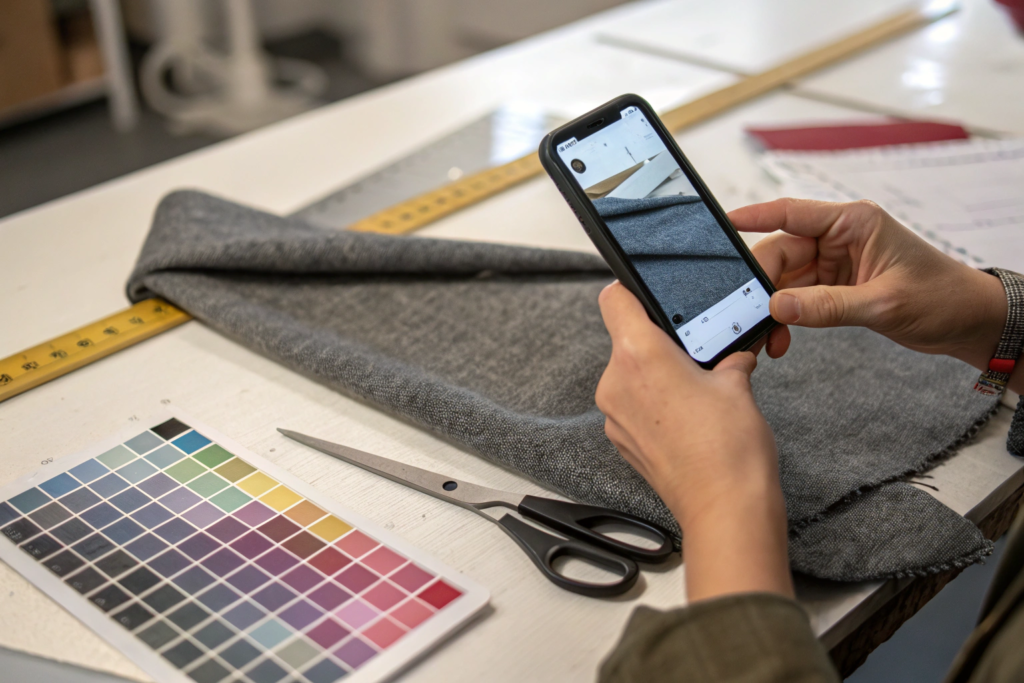
- The Swatch Scan: Before cutting, we take a 4K video of the bulk fabric roll under a digital microscope connected to our quality control software. The client receives a link showing the actual yarn density (GSM) compared to the approved sample card.
- The Shrinkage Test Log: This is critical for woven shirts. We perform a wash test on the bulk fabric. Instead of just saying "it shrinks 3%," we upload a time-stamped photo of the fabric square next to a metal ruler before and after the industrial wash cycle.
- In-Line Stitching Photos: During production, our QC staff uses an iPad to photograph every 10th garment coming off the finishing line. The photos focus on the seam slippage points (shoulder and crotch seams). These images are geo-tagged and uploaded to the cloud folder for the order.
Last spring, a brand owner in California noticed from these photos that the thread tension on the hem of a batch of women's trousers was slightly too tight, causing a subtle puckering. He flagged it via email within two hours of the photo upload. We stopped the line, re-threaded the machine, and re-hemmed the 50 units already completed. In the old model, that defect would have been discovered in a warehouse in California six weeks later.
Is On-Site Auditing Still Necessary in 2026?
While digital tools are powerful, they do not completely replace the human nose for a factory's culture. However, the cost and time of travel are prohibitive for most distributors. I flew to Los Angeles for the MAGIC trade show last August. A young buyer from a sustainable streetwear label asked me point-blank: "How do I know your workers are treated fairly if I can't see the floor?"
I didn't show her a policy document. I pulled up a live feed on my phone. We partner with a third-party platform that provides continuous, anonymous social compliance audits. The feed showed the lunchroom clock and the exit doors—verifying that the production floor was actually quiet and empty at 5:30 PM. That's something a glossy "Code of Conduct" PDF cannot prove. It proves we are not running unauthorized overtime. For the American distributor, this kind of remote transparency is often more reliable than the staged walk-through that happens when the factory knows the buyer is flying in two weeks in advance.
Why Is Communication Efficiency the Biggest Pain Point in Sourcing?
This is the silent killer of margins. Ron, or the buyer persona we're speaking to, isn't just paying for clothes. He's paying with his time. And if he spends six hours a day playing telephone tag with a sales rep who doesn't understand the difference between "Navy" and "Midnight Blue," his effective hourly rate for sourcing plummets.
The core advantage of cross-border e-commerce is not just the shopping cart; it is the structured, asynchronous communication protocol that eliminates language ambiguity and time-zone friction. This model replaces scattered emails and voice memos with a centralized, visual product lifecycle management approach.
Why Do Language Barriers Cause Expensive Production Mistakes?
I have been in this business for nearly 20 years. I've seen a $40,000 order ruined because the US buyer said "Add a chest pocket" and the pattern maker in Vietnam heard "Add a cheap pocket." The result was a flimsy, mis-sized square of fabric that ruined the line of the shirt. When you rely on a trading company or an Alibaba chat window, every instruction goes through a game of linguistic telephone.
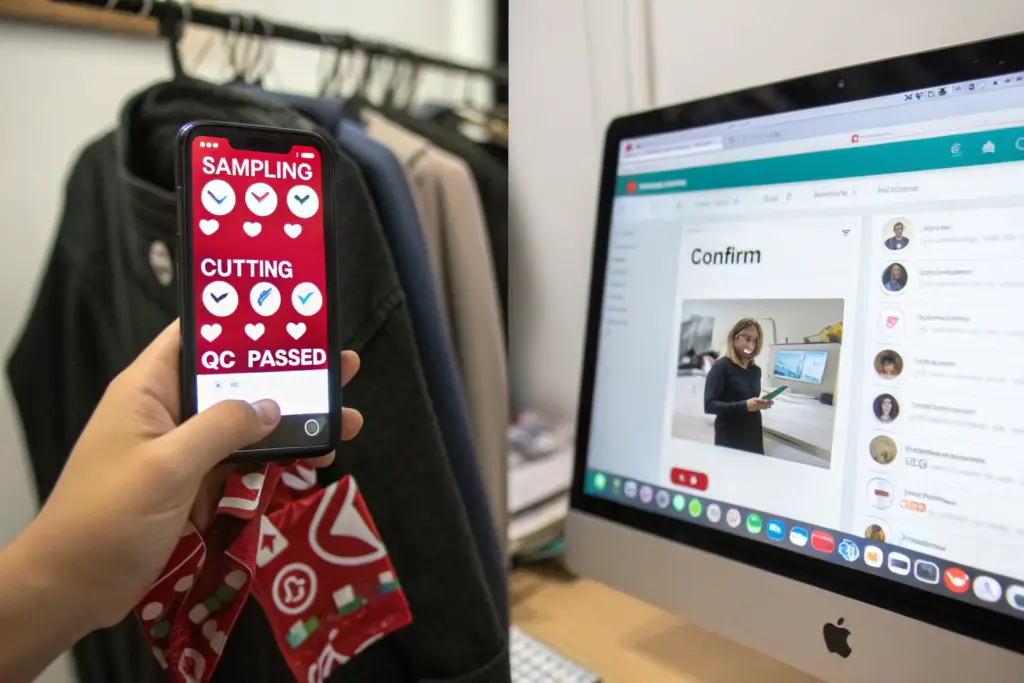
At Shanghai Fumao, we bypass this by using visual tech packs as the sole source of truth. When a distributor works with us, we don't just take a written PO. We require a shared digital document (often on a platform like Google Sheets or a specific PLM tool) that includes:
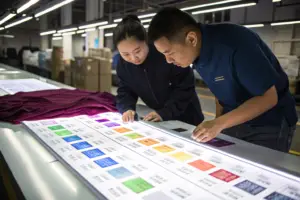
- Pantone Code: We don't accept "Red." We require 19-1863 TCX.
- Point of Measure (POM) Diagram: A sketch with arrows showing exactly where the chest is measured.
This might sound rigid, but it prevents the dreaded scenario: "I thought you meant 2 inches from the armhole seam, not 1 inch." Furthermore, because we are on China Standard Time (CST), we work while America sleeps. A distributor can leave a comment on the spec sheet at 4:00 PM PST. When they wake up at 6:00 AM, the comment has been read, translated internally by our team, and a photo of the correction pinned to a dress form is waiting in their inbox.
How Do Time Zone Differences Actually Benefit US Distributors?
Most buyers see the 12 to 15-hour time difference as a negative. I see it as a 24-hour production cycle. Here is a real schedule we maintained with a client from New York City last November for a quick-turn holiday sweater order.
| Task | US Time (EST) | China Time (CST) | Status |
|---|---|---|---|
| Client reviews sample photo | Mon 8:00 PM | Tue 9:00 AM | Comment: "Move logo 1cm left." |
| Sample correction applied | (Overnight) | Tue 1:00 PM | Done. Photo uploaded. |
| Client reviews correction | Tue 8:00 AM | Tue 9:00 PM | Approved. |
| Bulk Cutting Begins | Tue 8:30 AM | Tue 9:30 PM | Started. |
In a domestic or near-shore scenario, that client would have sent the email on Monday night. It would have sat in an inbox until 9:00 AM Tuesday. The correction might happen by Tuesday afternoon. The cutting wouldn't start until Wednesday. By leveraging the time zone productivity gap, we shaved a full calendar day off the production timeline. In the fashion calendar, 24 hours can be the difference between hitting the floor set and landing in the clearance bin.
What Certifications and Compliance Does a Distributor Actually Need?
You cannot walk into a major department store buyer's office or even list on a reputable online marketplace without the right paperwork. But the world of certificates is a minefield. I've seen factories purchase counterfeit "audit reports" for $50 that look exactly like the real thing. For a distributor, getting caught with those goods means the entire shipment is seized or, worse, you get a cease-and-desist letter from a brand you're trying to supply.
Cross-border e-commerce necessitates a verifiable chain of custody for compliance. The modern model demands that factories share not just a PDF of a certificate, but the actual portal link to the testing lab's database or the official government registration number. This moves compliance from a check-the-box exercise to an active risk management strategy.
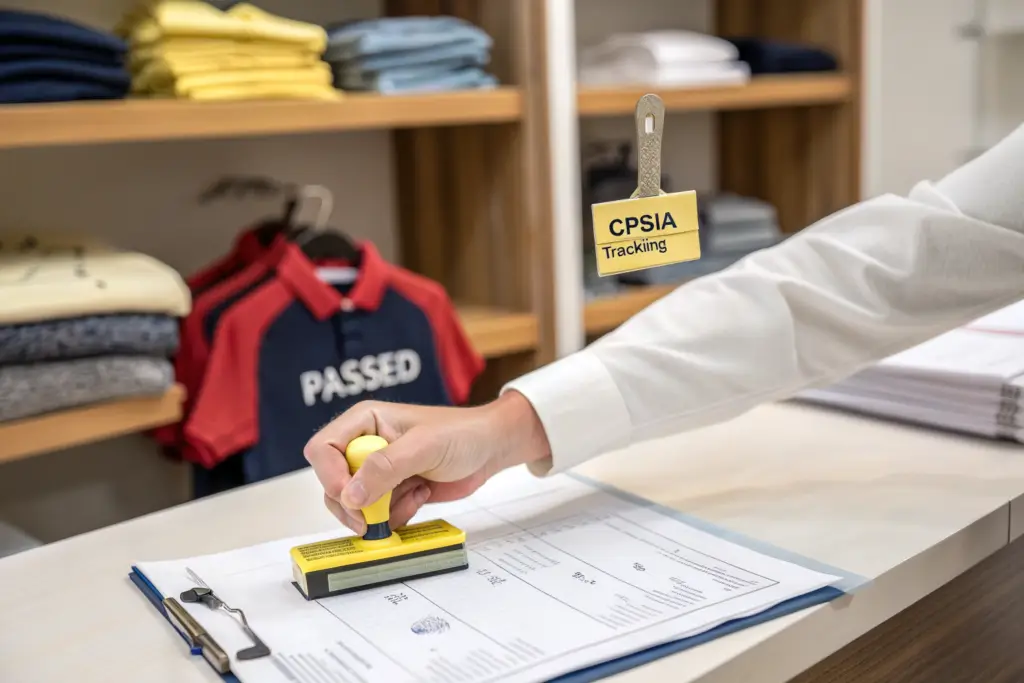
Which CPSIA Tracking Labels Are Mandatory for US Import?
If you are distributing children's apparel (sizes 0-12), this is non-negotiable. I recall a specific incident in early 2025 with a new client from Georgia who specialized in toddler boutiques. He was used to buying from domestic wholesalers who handled compliance. When he approached Shanghai Fumao directly for custom printed pajamas, he had no idea he needed a CPSIA Tracking Label on each garment.
This label must contain:
- Manufacturer Name: Usually the factory or importer.
- Location & Date of Production: City, State/Province, and Month/Year.
- Batch Number: To trace back to the specific fabric roll and cutting lay.
We flagged this before production. We designed a woven label that met all US requirements. But we didn't stop there. We provided the client with a Certificate of Compliance (CPC) . This is the document you sign electronically as the US importer. The critical part? We provided the hyperlink to the third-party lab report hosted on the Bureau Veritas portal. This is the kind of evidence that gets you past a Customs and Border Protection exam in under 24 hours instead of under 24 days.
Are WRAP and BSCI Audits Still Relevant for Cross-Border E-Commerce?
Yes. But their value has shifted from "access badge" to "brand protection." Five years ago, a buyer might ask "Are you BSCI certified?" The answer "Yes" was enough. Now, the savvy distributor asks for the scorecard.
Here is a comparison of what different audit levels actually mean for your supply chain risk, based on our own factory's data from last year's WRAP Certification:
| Audit Type | What It Checks | Why the Distributor Should Care |
|---|---|---|
| SGS / ITS Factory Audit | Physical security, fire exits, machine guards, record keeping. | Customs Risk: Poor housekeeping is the #1 reason for a Customs hold due to fear of pest infestation or contraband. |
| WRAP Gold | Social compliance (wages, hours, safety). Verified for >3 years. | Legal Risk: Prevents your brand from being named in a class-action lawsuit regarding sweatshop labor. |
| Oeko-Tex Standard 100 | Chemical safety of the fabric (lead, phthalates, formaldehyde). | Health Risk: Prevents a recall if a watchdog group tests your shirt and finds lead in the print. |
Last year, we paid extra to have our water treatment facility upgraded specifically to meet the new ZDHC (Zero Discharge of Hazardous Chemicals) guidelines. This is not a sexy marketing point. It is a supply chain survival tactic. As environmental regulations tighten in the EU and California, distributors who source from factories without these specific chemical management certifications will face border rejections regardless of price.
Conclusion
The apparel industry is often slow to change, but the shift toward a mature cross-border e-commerce model for distributors is not a trend—it is a structural correction. It removes the opacity that has allowed bad actors to thrive. By demanding landed-cost visibility via DDP terms, you eliminate the end-of-year accounting surprises. By utilizing digital fabric audits and remote production oversight, you reduce the need for expensive, exhausting travel. And by enforcing a communication protocol built on shared visual tech packs, you stop playing the game of "Telephone" with your own money.
The days of hoping the container arrives on time are being replaced by a data-driven certainty. The model I described is how we at Shanghai Fumao have operated for the last half-decade. It is how we helped that Oregon sleepwear brand navigate CPSC red tape and how we fixed that activewear shipment's hem issue before it left the factory floor. We are not a faceless portal. We are a factory with five production lines, a quality control team that uses iPads, and a logistics desk that speaks fluent DDP.
If you are a distributor or brand owner tired of explaining the difference between 'Midnight Navy' and 'Black' for the tenth time, let's have a real conversation about your next season.
For a detailed quote on your specific garment category or to discuss a private label program, please reach out to our Business Director, Elaine. She can walk you through our fabric library and current production capacity. You can contact her directly at elaine@fumaoclothing.com. We look forward to helping you bring your apparel vision to market with the transparency and reliability you deserve.