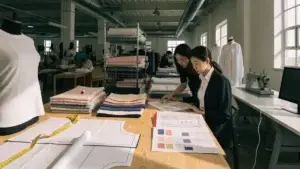
You launch a beautiful collection of cotton poplin shirts. The fit is perfect. The reviews are great. Then, three weeks later, the returns start. "Shrank two sizes!" "Sleeves are now 3/4 length!" "Unwearable after one wash." You are confused. The sample washed fine. You check the bulk inventory. You wash a shirt. It comes out of the dryer looking like it belongs to a child. Your heart sinks. You have just learned the hardest lesson in apparel manufacturing. Fabric is not static. It is a living material with memory. If the factory does not actively manage shrinkage through specific processes, the garment will shrink when the customer washes it at home. You cannot blame the customer. You can only control the manufacturing process.
The main causes of fabric shrinkage are latent tensions in the yarn and fabric structure that are released when exposed to moisture and heat in home laundering. The three primary mechanisms are: (1) Relaxation Shrinkage. This occurs when the tension applied to yarns during spinning, weaving, or knitting is finally released. The fibers, which were stretched tight, relax back to their natural state. This is the most common cause of initial shrinkage. (2) Felting Shrinkage. This is specific to wool and animal hair fibers. The heat, moisture, and mechanical action of washing cause the microscopic scales on the fibers to interlock and tighten, permanently shrinking the garment. (3) Consolidation Shrinkage. This occurs when the fibers themselves swell from water absorption, pushing the yarns closer together and making the fabric denser and smaller. Preventing these requires factory-level interventions: Sanforizing (compressive shrinkage for wovens), Compacting (for knits), and rigorous Pre-Wash Testing of bulk fabric lots.
At Shanghai Fumao, shrinkage control is not an afterthought. It is a core part of our fabric sourcing and pre-production process. Let me explain exactly what happens to your fabric and how we stop it from ruining your brand.
What Is "Relaxation Shrinkage" and Why Does It Happen Even to "Pre-Shrunk" Fabric?
You buy fabric labeled "Pre-Shrunk." You assume it will not shrink. You are wrong. "Pre-Shrunk" is a relative term. It usually means the fabric has been processed to control shrinkage within a certain tolerance (e.g., 3% or less). It does not mean zero shrinkage. Why? Because of Relaxation Shrinkage. Imagine the journey of a cotton fiber. It is harvested. It is spun into yarn under high tension. The yarn is woven into fabric under more tension. The fabric is rolled onto a giant bolt, again under tension. That fiber has been stretched for months. It wants to relax. When the customer washes it in warm water and throws it in a hot dryer, the fiber finally gets its chance. It snaps back to its relaxed length. The garment shrinks. This is not a defect in the fabric. It is physics. The factory's job is to force this relaxation to happen before the fabric is cut.
Relaxation shrinkage happens because textile manufacturing is a process of continuous tension. To prevent it from affecting the finished garment, factories must induce "Controlled Relaxation" through specific finishing processes. For woven fabrics, the standard is "Sanforizing" or "Compressive Shrinkage." The fabric is passed over a thick, stretched rubber belt. The belt is then allowed to contract, physically compressing the fabric along its length and forcing the yarns closer together. A Sanforized label guarantees residual shrinkage of less than 1-2%. For knit fabrics, the process is "Compacting." The fabric is passed through a steam box and then between two rollers. The second roller moves slower than the first, pushing the fabric back on itself and compacting the loops. Without compacting, cotton jersey can shrink 8-10% in length. With proper compacting, it is controlled to under 5%. These processes are not optional for quality basics.
At Shanghai Fumao, we only source shirting from mills that provide Sanforized fabric, and we verify the shrinkage rate in our own wash tests before cutting.
How Does the "Sanforizing" Machine Actually Work?
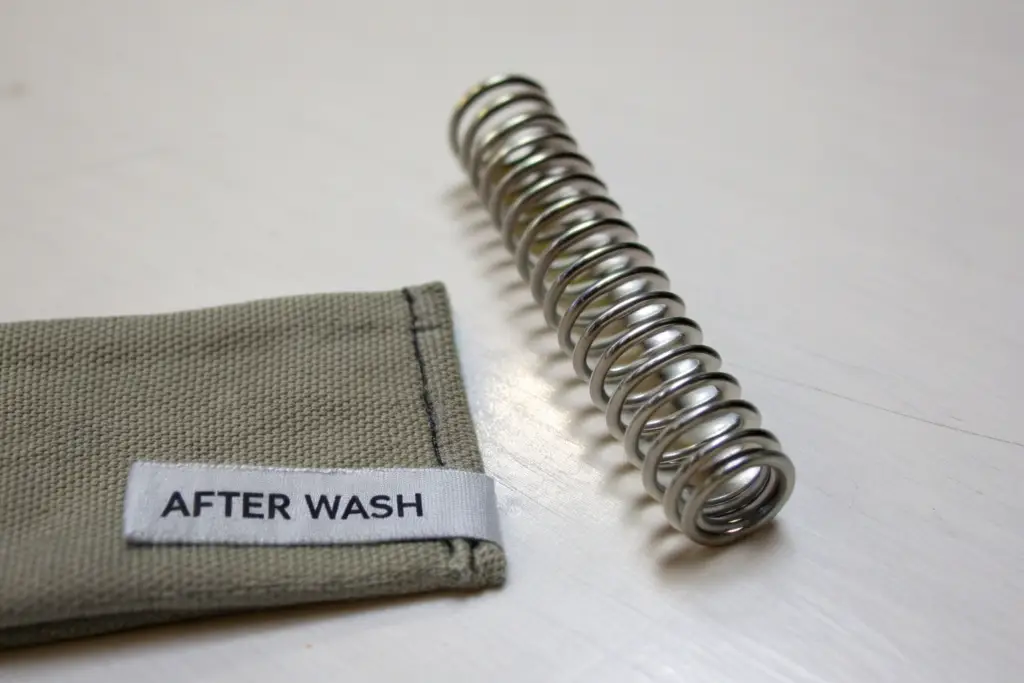
This machine is a marvel of mechanical engineering. It was invented by Sanford Cluett in 1930 and remains the gold standard for woven shrinkage control.
The fabric enters the machine. It is moistened with steam. The steam relaxes the fibers. The fabric then passes between a thick, continuous rubber belt and a heated metal cylinder. The rubber belt is stretched before it meets the fabric. As the belt wraps around the cylinder, it is allowed to contract back to its unstretched thickness. The fabric, squeezed between the contracting belt and the cylinder, is forced to shorten along with the belt.
The amount of shrinkage induced is controlled by the thickness of the rubber belt and the speed of the machine. A factory running this machine correctly can deliver fabric with residual shrinkage consistently under 1%.
If a factory tells you they "don't know" if the fabric is Sanforized, or if the price seems too good to be true, the fabric has likely skipped this expensive process. It will shrink in the customer's dryer.
I recall a client who tried to save $0.40 per yard on a poplin shirting by using a non-Sanforized greige goods. The first wash test showed 7% shrinkage. A size Large shirt would have become a size Small. We rejected the fabric. The cost of the Sanforized version was far less than the cost of 2,000 returned shirts.
What Is the Difference Between "Relaxation" and "Progressive" Shrinkage?
This distinction is critical for managing customer expectations.
Relaxation Shrinkage happens in the first one or two washes. It is the release of manufacturing tension. A good factory manages this so it is minimal (1-3%) and accounted for in the pattern sizing.
Progressive Shrinkage happens over many washes. It is the slow, continued tightening of the fabric. This is often caused by Felting in wool or by the use of weak, short-staple cotton fibers that continue to tangle and contract.
You cannot fully stop progressive shrinkage in natural fibers. But you can minimize it by using high-quality, long-staple fibers. Cheap, short-staple cotton has more fiber ends. These ends tangle more easily in the wash, pulling the fabric tighter over time.
This is why a cheap t-shirt becomes a belly shirt after a year, but a premium Supima t-shirt maintains its length. The fiber quality dictates the long-term dimensional stability.
How Do Factories Prevent "Felting Shrinkage" in Wool and Cashmere Garments?
You develop a beautiful merino wool sweater. It is soft. It is expensive. You tell customers to hand wash cold. Some listen. Some do not. One careless wash in warm water with agitation, and the sweater comes out felted. It is thick, stiff, and three sizes smaller. This is Felting Shrinkage. It is irreversible. The customer blames you. The care label said "Hand Wash Cold." The customer sees that as a suggestion, not a law. To truly prevent felting, the factory must intervene at the fiber level. The solution is a treatment that removes or smooths the microscopic scales on the wool fiber. Without scales, the fibers cannot interlock and felt.
Factories prevent felting shrinkage in wool garments through a chemical or enzymatic process called "Anti-Felting Treatment" or "Superwash" finish. The two main methods are: (1) Chlorine-Hercosett Treatment. The wool fibers are exposed to a mild chlorine solution that smooths down the surface scales. A polymer resin (Hercosett) is then applied to coat the fiber, permanently masking the scales. This is the standard for "Machine Washable Wool." (2) Enzymatic Treatment. A more environmentally friendly method uses protease enzymes to "eat" the tips of the scales, smoothing the fiber without harsh chemicals. In addition to fiber treatment, the factory can also control "Consolidation Shrinkage" in wool by using a process called "Crabbing" for woven wool fabrics, where the fabric is set under tension in hot water to stabilize its dimensions before cutting. Without these treatments, a wool garment is a ticking time bomb in the customer's laundry room.
At Shanghai Fumao, when we produce wool outerwear or knitwear, we only use yarns that are certified "Machine Washable" or "Superwash" unless the client specifically requests untreated wool for a specific texture.
How Does the "Superwash" Treatment Change the Wool Fiber?
Under a microscope, an untreated wool fiber looks like a pine cone or a stack of overlapping roof shingles. These scales all point in one direction.
When wool is agitated in water, the fibers move against each other. The scales catch and lock. The fiber can only move in one direction—tighter. The fabric compresses and mats together.
The Superwash process removes this mechanism. The chlorine bath gently eats away the sharp edges of the scales. The polymer coating fills in the gaps. The fiber becomes smooth. It behaves more like cotton or synthetic in the wash. The scales cannot catch.
The trade-off is a slight change in hand feel. Untreated wool has a slightly "toothier," more natural grip. Superwash wool feels slicker and softer. For a consumer product like a merino base layer or a baby cashmere blanket, the trade-off is worth it. The risk of felting is too high.
I worked with a brand that made luxury travel wraps. They initially used untreated cashmere. The return rate for shrinkage was 12%. They switched to a Superwash cashmere blend. The return rate dropped to 2%. The customers loved that they could just throw it in the wash. The convenience was part of the luxury.
What Is "Crabbing" and How Does It Stabilize Woven Woolens?
Crabbing is a traditional finishing process for wool suiting and coating fabrics. It is the woven equivalent of Sanforizing, but for wool.
The wool fabric is wound onto a large perforated drum. It is submerged in near-boiling water or exposed to steam while under tension. This process "sets" the fabric. It relieves the internal stresses in the yarns that would otherwise cause the fabric to shrink or distort when later exposed to moisture and heat (like in a rain shower or steam ironing).
Without crabbing, a wool blazer might shrink unpredictably when pressed at the dry cleaners. The seams might pucker. The lapel might bubble. Crabbing ensures the fabric is dimensionally stable before the pattern pieces are cut.
This is an invisible quality step. A cheap wool coat from a fast fashion brand skips proper crabbing. It looks good on the rack. After one season of dry cleaning, it looks distorted and tired. A quality coat holds its shape for a decade.
How Do Factories Test and Control Shrinkage in Bulk Production?
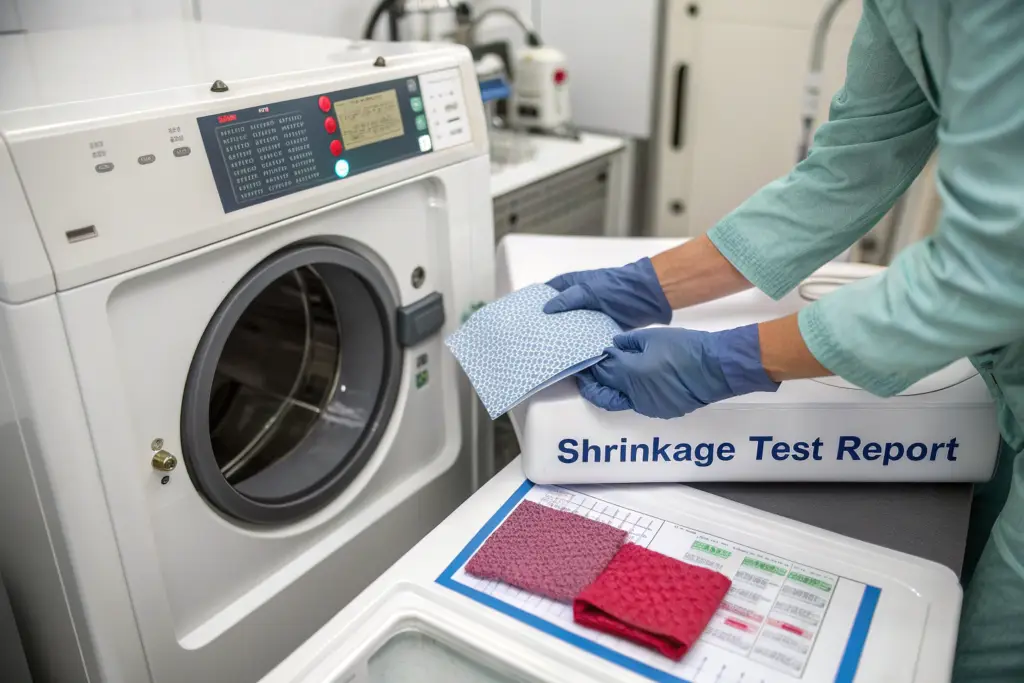
The mill says the fabric is "Pre-Shrunk." The swatch you washed at home seemed fine. But how do you know the bulk fabric will behave the same way? You do not. You must test. You must test every single dye lot. A factory that is serious about quality has an in-house wash lab or uses a certified third-party lab. They do not guess. They cut a square of fabric from the bulk roll. They mark it precisely. They wash it according to a standardized test method. They dry it. They measure it again. They calculate the percentage of shrinkage. If it exceeds your agreed tolerance, they reject the fabric lot. This is the only way to prevent the "Three Weeks Later" return nightmare.
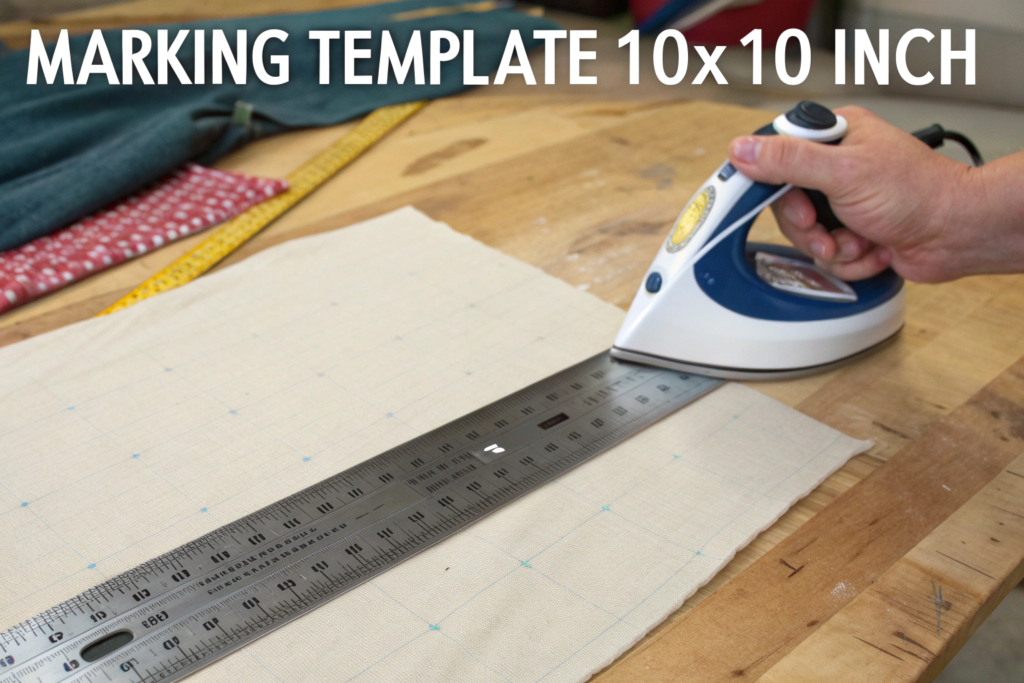
Factories control shrinkage in bulk production by adhering to standardized test methods, primarily AATCC 135 (for wovens and knits) or AATCC 150 (for knits specifically). The process is: (1) Sampling. A technician cuts a minimum of three specimens from different parts of the bulk fabric roll. (2) Benchmarking. A precise 10-inch by 10-inch (or 25cm x 25cm) square is marked on the fabric using an indelible marker and a metal template. (3) Conditioning. The fabric is left in a standard atmosphere (65% humidity, 70°F) for several hours to normalize. (4) Laundering. The fabric is washed and dried according to the care label instructions (e.g., Machine Wash Warm, Tumble Dry Medium). This is repeated for 3-5 cycles to measure progressive shrinkage. (5) Measurement. The distance between the marks is re-measured. A post-wash measurement of 9.5 inches indicates 5% shrinkage. The factory should provide this test report for every bulk fabric lot.
At Shanghai Fumao, we perform AATCC 135 shrinkage testing on every incoming bulk fabric roll. If a lot fails, we quarantine it and return it to the mill.
What Is the Difference Between AATCC 135 and Just "Washing a Swatch at Home"?
A home wash test is better than nothing. But it is not standardized. Your water temperature might be 105°F. Your dryer might run hot. The customer's machine is different.
The AATCC 135 test uses a specific washing machine model, a specific water temperature tolerance, and a specific standardized detergent. The drying is done in a specific tumble dryer with a controlled exhaust temperature.
This standardization allows you to compare apples to apples. A 3% shrinkage result in an AATCC 135 test means the fabric will perform predictably across thousands of different home machines. It is the industry standard for a reason.
I always ask potential new factories: "Do you have an in-house AATCC 135 wash lab?" If the answer is no, I ask: "Which third-party lab do you use for shrinkage certification?" If they cannot answer either question, they are not controlling shrinkage. They are hoping for the best.
How Do You Account for "Shrinkage Allowance" in the Pattern?
Even the best fabric shrinks a little. You must plan for this.
If the fabric test shows 3% length shrinkage, the pattern maker adds a Shrinkage Allowance to the pattern.
For example, the finished garment spec calls for a 28-inch body length. With 3% shrinkage, the cut panel needs to be 28 inches plus 3% (0.84 inches). The pattern is made for a 28.84-inch panel. The fabric shrinks 3% in the wash. The final garment measures exactly 28 inches.
This is why fit consistency is a partnership between the fabric mill, the cutting room, and the sewing line. If the cutting room uses the standard pattern but the fabric shrinkage is 5% instead of 3%, the garment will be too short.
We had a situation with a modal blend jersey. The mill certificate claimed 3% shrinkage. Our in-house test showed 5% shrinkage. We adjusted the pattern for that specific dye lot. The client never knew there was an issue. The garments arrived fitting perfectly. This is the value of in-house testing.
| Fabric Type | Common Shrinkage Risk | Prevention Method | Factory Test Standard |
|---|---|---|---|
| Cotton Woven | 3-5% (Unfinished) | Sanforizing | AATCC 135 (<2% residual) |
| Cotton Jersey | 8-10% (Unfinished) | Compacting | AATCC 150 (<5% residual) |
| Wool Woven | Felting/Distortion | Crabbing & Superwash | AATCC 99 (Dimensional Change) |
| Viscose/Rayon | 5-8% Relaxation | Anti-Shrink Resin Finish | AATCC 135 (Requires gentle cycle) |
How Can You (The Buyer) Verify a Factory's Shrinkage Control Claims?
You cannot fly to the factory. You cannot run the AATCC 135 test yourself. But you can ask for the evidence. A trustworthy factory will have this evidence ready. A factory that is guessing will hesitate. You need to ask specific questions that require specific, documented answers. Do not ask, "Does this fabric shrink?" Ask, "Can you send me the AATCC 135 test report for the bulk fabric lot you intend to cut for my order?" This is a binary question. They either have the report, or they do not. If they do not, you have your answer.
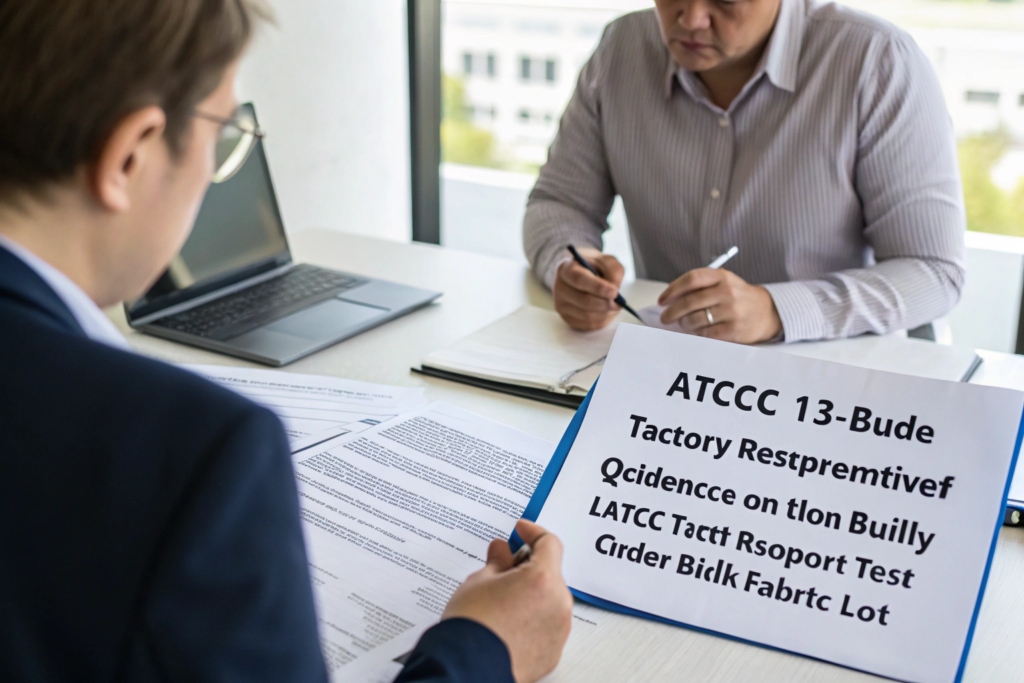
Verifying a factory's shrinkage control claims remotely requires requesting specific, dated documentation for your unique production lot. The three documents to request are: (1) Mill Shrinkage Certificate. The mill provides this with the fabric shipment. It states the finishing process (Sanforized/Compact) and the residual shrinkage percentage. (2) Factory In-House Wash Test Report. This is more valuable. It is the factory's own verification of the mill's claim. It should include a photo of the marked swatch before and after washing, the date, and the calculated percentage. (3) Cutting Room Shrinkage Allowance Note. Ask: "What shrinkage allowance has been applied to the pattern for this specific lot?" This shows they have translated the test data into action. If a factory cannot produce these three items, they are managing shrinkage reactively (waiting for you to complain) rather than proactively.
At Shanghai Fumao, we provide a "Pre-Production Quality Packet" to all new clients. It includes the bulk fabric shrinkage test report for their specific dye lot.
What Should a Legitimate "Shrinkage Test Report" Photo Show?
When you request a photo, do not accept a blurry picture of a tape measure. Demand a specific format.
The photo should show:
- The Marked Fabric: The 10x10 inch square clearly marked with permanent ink.
- The "Before" Measurement: A ruler or tape measure showing the 10-inch mark.
- The "After" Measurement: The same fabric, post-wash, with the ruler showing the new distance (e.g., 9.6 inches).
- The Test ID: A piece of paper in the frame with the date, your PO number, and the fabric lot number.
This format prevents the factory from sending a generic "stock photo" of a good test result. It ties the test to your specific fabric.
I have a client who does this for every order. He calls it his "Shrinkage Selfie." He says it takes 30 seconds to request and gives him 100% peace of mind. It also signals to the factory that he is watching.
How Do You Specify Shrinkage Tolerance in a Purchase Order?
Do not just write "Pre-Shrunk Fabric." That is legally vague.
Write: "Fabric must be Sanforized/Compacted to ensure residual shrinkage of no more than 3% in length and 2% in width after 3 home launderings per AATCC 135 (Warm Wash / Tumble Dry Medium). Factory to provide bulk lot test report prior to cutting."
This sentence is a contract. It defines the test method. It defines the tolerance. It defines the documentation required. If the factory agrees to the PO, they are legally bound to this standard.
If the goods arrive and you find they shrink 6%, you have a clear, documented breach of contract. You are entitled to a credit or a rework. Without this sentence in the PO, you are relying on the factory's goodwill.
Conclusion
Fabric shrinkage is a predictable, manageable variable in apparel manufacturing. It only becomes a brand-destroying crisis when it is ignored or mismanaged. We have unpacked the science of Relaxation Shrinkage, the invisible tension in every fiber that waits for the first warm wash to snap back. We have explored the specific menace of Felting Shrinkage in wool and the chemical and mechanical shields—Superwash and Crabbing—that factories use to stop it. We have walked through the disciplined protocol of AATCC 135 testing, the factory's crystal ball that predicts how the garment will behave in the customer's home. And we have armed you with the specific questions and documentation requests that separate a proactive factory partner from a reactive one.
At Shanghai Fumao, we believe that a garment should fit as well on its fiftieth wash as it does on the first try-on. This is not magic. It is process. It is Sanforized fabric, compacted knits, and wash tests run on every dye lot.
If you are tired of dealing with shrinkage complaints and returns, the solution is upstream. It is in the fabric finishing and the pre-production testing. We invite you to partner with a factory that treats dimensional stability as a non-negotiable standard.
To learn more about our shrinkage control protocols or to request a sample of our Pre-Production Quality Packet, please contact our Business Director, Elaine. She can walk you through our testing lab procedures and provide sample test reports.
Email: elaine@fumaoclothing.com