You launched a great product. A flattering dress in a nice color. It sells well. Three months later, you are scrolling Instagram. You see an ad from a competitor. It is your dress. Same silhouette. Same hemline. Same color. They are selling it for $12 less. Your stomach drops. You feel robbed. You were not robbed. You were copied. You built your business on a commodity silhouette that any factory can make for anyone. You had no Moat. In business, a moat is a defensible competitive advantage. For an apparel brand, the moat is not the basic design. It is the combination of proprietary fit, exclusive fabric, and identifiable construction that is too expensive or too complex for a copycat to replicate profitably. This is how you build a signature style.
Developing a signature apparel style that competitors cannot copy requires shifting the design focus from "Silhouette" (which is easy to photograph and copy) to "Proprietary Inputs and Processes" (which are invisible to the camera). The five elements of an uncopiable style are: (1) Proprietary Fit Blocks. Developing your own in-house graded spec sheet for a specific body type that becomes the "Brand X Fit." Copyists can steal the design, but they cannot steal the fit because they do not have your pattern library. (2) Exclusive Mill Partnerships. Working with a mill to develop a custom yarn dye, a unique slub texture, or a proprietary blend (e.g., "Brand X Cashmere-Silk"). This fabric is not available on the open market. (3) Signature Construction Details. A specific stitch, a hidden bartack, or an interior binding color that is a brand signature. These details are costly to reverse-engineer. (4) Custom Trim. Developing a custom zipper pull, button shape, or drawcord tip that carries your logo or a unique shape. Molds for custom trim are expensive and require minimums that deter fast fashion copycats. (5) Supply Chain Velocity. Being able to restock and iterate faster than the copycat can get a sample made.
At Shanghai Fumao, we help our clients build these moats. We do not just sew their designs. We help them engineer their defensible advantage. Let me show you exactly how to protect your creative work.
Why Are "Proprietary Fit Blocks" a Stronger Moat Than a Unique Silhouette?
A silhouette is the outline of the garment. An A-line dress. A wide-leg pant. It is a shape. It is public domain. You cannot own a shape. A Fit Block is the specific set of measurements and curves that define how that shape sits on a body. It is the angle of the shoulder slope. It is the depth of the armhole. It is the curve of the hip. This is the secret sauce. This is why a Theory blazer fits differently than a Zara blazer, even if they look similar in a photo. The customer who tries on the copycat version feels the difference immediately. The sleeves are tight. The shoulders pull. They return it. They come back to you. The fit block is the reason they stay.
Proprietary fit blocks are a stronger moat than a unique silhouette because they are invisible to the copyist's camera but intensely felt by the customer. A competitor can buy your garment, rip the seams, and trace the pieces. This is called "knocking off." But they cannot easily reverse-engineer the grading. They might get the size Medium to fit like yours. But their size Small and size Large will be off. Why? Because grading is the incremental change between sizes. Your brand might have a specific rule for how much the armhole depth increases from a Small to a Medium. That rule is the result of years of fit feedback from your specific customer demographic. The copyist does not have that data. They use a generic grade rule. The result is a copy that only fits well in the sample size. The rest of the size run fails. This inconsistency destroys the copyist's credibility while reinforcing yours.
At Shanghai Fumao, we archive our clients' graded spec sheets. We treat them as intellectual property. We never share one client's fit block with another.
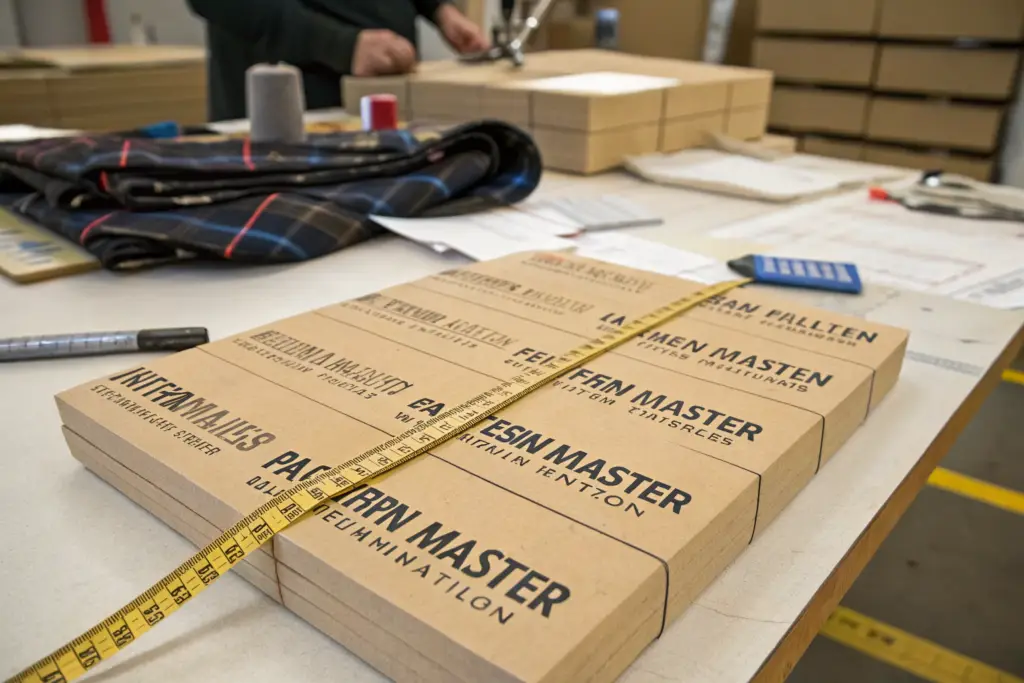
How Do You Build a Proprietary Fit Block Over Time?
You do not need to be a master pattern maker. You need to be a meticulous data collector.
Start with a base size (e.g., Medium) from a standard block. Produce it. Sell it. Collect returns data. Read the reviews.
Year 1 Feedback: "Sleeves are too long." -> Action: Reduce sleeve length by 0.75 inches on all sizes.
Year 2 Feedback: "Tight across the upper back." -> Action: Add 0.5 inches to Cross Back measurement.
Year 3 Feedback: "Perfect fit." -> Action: Lock the spec sheet. This is now the "Brand X Signature Fit."
This iterative process creates a fit that is tuned to your customer. A copyist who buys one garment and traces it in Year 3 gets the result of this tuning, but they do not get the data. They do not know why the sleeve is that specific length. If they try to modify the design for a new style, they will lose the fit. You, however, can apply your proprietary block to new styles—a blouse, a jacket, a dress—and they will all have that recognizable "Brand X" feel.
I worked with a brand that built a cult following around their perfect white shirt. Competitors tried to copy it. They failed. The brand's block had a unique armhole shape that allowed a full range of motion without pulling. The copyists traced the shirt flat. They did not understand the 3D curve of the sleeve cap. The copies looked the same on the hanger. They felt completely different on the body. The brand's moat was deep.
This is a legitimate concern. You send your graded spec sheet to the factory. They produce for you. They also produce for other brands.
You need a contractual and operational moat.
First, your Manufacturing Agreement should state that the factory cannot use your patterns, spec sheets, or fit blocks for any other client.
Second, you can compartmentalize production. The cutting is done in one facility. The sewing is done in another. Neither has the full "recipe."
Third, you work with a factory that has a reputation for integrity. A factory that leaks one client's fit block to another will not stay in business long.
At Shanghai Fumao, we have a strict internal firewall. Client A's pattern files are not accessible to the team working on Client B's order. This is a basic tenet of professional manufacturing.
How Do You Source "Exclusive" Fabric That Isn't Available on Alibaba?
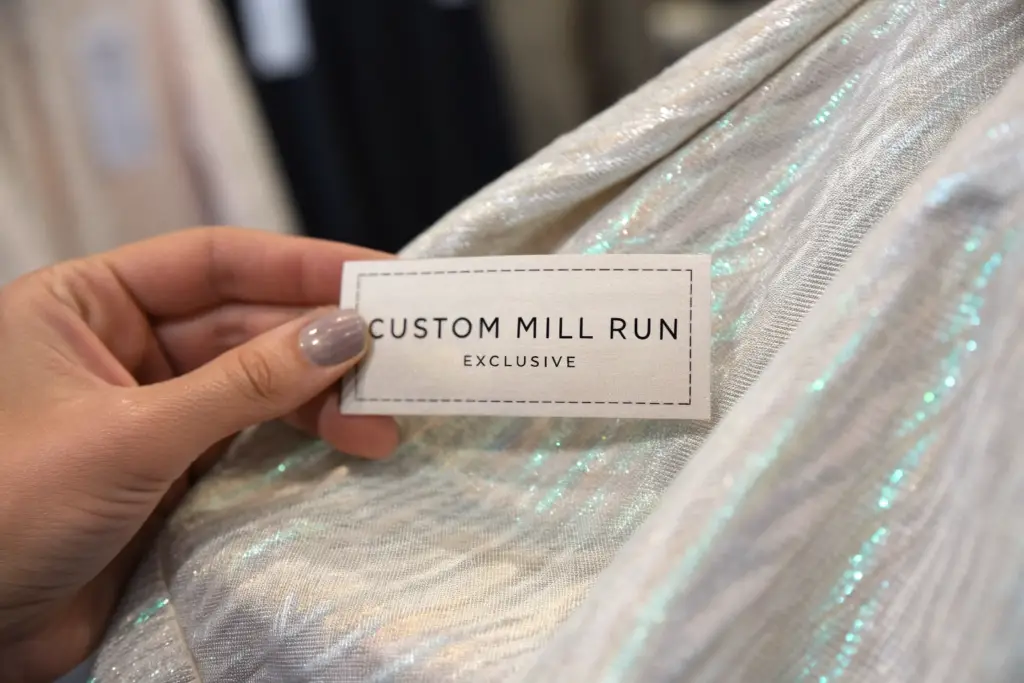
You find a beautiful fabric on Alibaba. You order it. You make a dress. It sells. A competitor finds the same fabric on Alibaba. They make the same dress. The fabric is the product. If the fabric is a commodity available to anyone with a credit card, your style is not defensible. You need to move "upstream." You need to work with a mill or a sourcing partner to develop fabric that is only for you. This sounds expensive. It does not have to be. It can be as simple as taking a stock base fabric and applying a unique Garment Dye or Special Wash. Or it can be as complex as developing a custom yarn-dyed stripe. The goal is to create a textile that cannot be found on a B2B marketplace.
Sourcing exclusive fabric requires shifting from "Stock Lot" buying to "Mill Partnership" or "Engineered Finish." The three primary methods for creating fabric exclusivity are: (1) Custom Dye Lot on Stock Base. You work with a dye house to create a unique color on a standard base fabric (e.g., a specific shade of "Dusty Olive" on 40s jersey). The color is exclusive, but the base is not. This is the lowest-cost entry point. (2) Engineered Finish. You take a stock fabric and apply a unique wash or mechanical finish. A "Crinkle Finish" on a standard poplin or a "Sueded Peach Finish" on a twill. The finish changes the hand feel and appearance. (3) Custom Yarn Development. You work with a spinner and knitter/weaver to create a fabric with a unique blend (e.g., 70% Tencel / 30% Linen), a unique slub pattern, or a custom stripe repeat. This requires higher minimums (often 1,000+ yards) but creates an almost uncopiable fabric. The copyist would need to order the same custom run from the mill, which is cost-prohibitive for a fast follower.
At Shanghai Fumao, we have relationships with mills that allow our clients to book exclusive dye lots and develop custom finishes with manageable minimums.
How Does "Garment Dye" Create an Instant Moat?
Garment dye is the process of sewing the garment in a raw, undyed state (PFD - Prepared for Dye) and then dyeing the finished garment in a large vat.
This creates a specific, washed-down, vintage look. More importantly, it creates a moat. The color is unique. The wash effect is unique to that specific dye lot.
A copyist can buy a similar garment, but they cannot match the exact "Garment Dyed Olive" color. They can get close. But if a customer wants to add the matching pant to their suit, they must buy from you. The copyist's version will not match the color of the jacket they already own.
I worked with a brand that built their entire aesthetic around Garment Dyed French Terry. Every season, they released a new, limited color palette. Customers collected the pieces. Competitors tried to knock off the styles, but they could never match the specific, nuanced colors. The brand's customers could spot a fake immediately because the color was "off." That color moat was worth millions in repeat sales.
What Is a "Custom Slub" and Why Is It Hard to Copy?
A slub is a thick, nubby irregularity in a yarn. It gives fabric a textured, "natural" look.
You can work with a mill to create a Custom Slub Pattern. You specify the frequency and thickness of the slubs. The mill creates a specific yarn for you.
Copying this is extremely difficult. A competitor would need to take a sample of your fabric to a mill and say, "Make this." The mill would need to reverse-engineer the yarn. It is expensive and time-consuming. Fast fashion copyists do not have the time or the margins to do this.
I recall a client who developed a custom slub linen blend for her resort wear line. The fabric had a distinct, irregular texture that was the hallmark of the brand. A major retailer knocked off the dress silhouette. But they used a standard, flat linen. The copy looked like a cheap costume next to the original. Customers commented on the retailer's post, "This looks nothing like the real one." The custom slub was the brand's silent trademark.
What Are "Signature Construction Details" That Signal Authenticity?
You see two trench coats. They look identical from ten feet away. You walk closer. You look at the buttons. One has cheap, shiny plastic. The other has matte Corozo nut buttons with a subtle engraved logo. You look at the collar. One has a wavy, puckered seam. The other has a razor-sharp edge with a tiny 1/16 inch topstitch. You know instantly which one is the original. These are signature construction details. They are the "tells" of quality. They are difficult to copy because they require specialized machinery, skilled labor, and expensive trim. Fast fashion factories are optimized for speed and low cost. They cannot execute these details profitably.
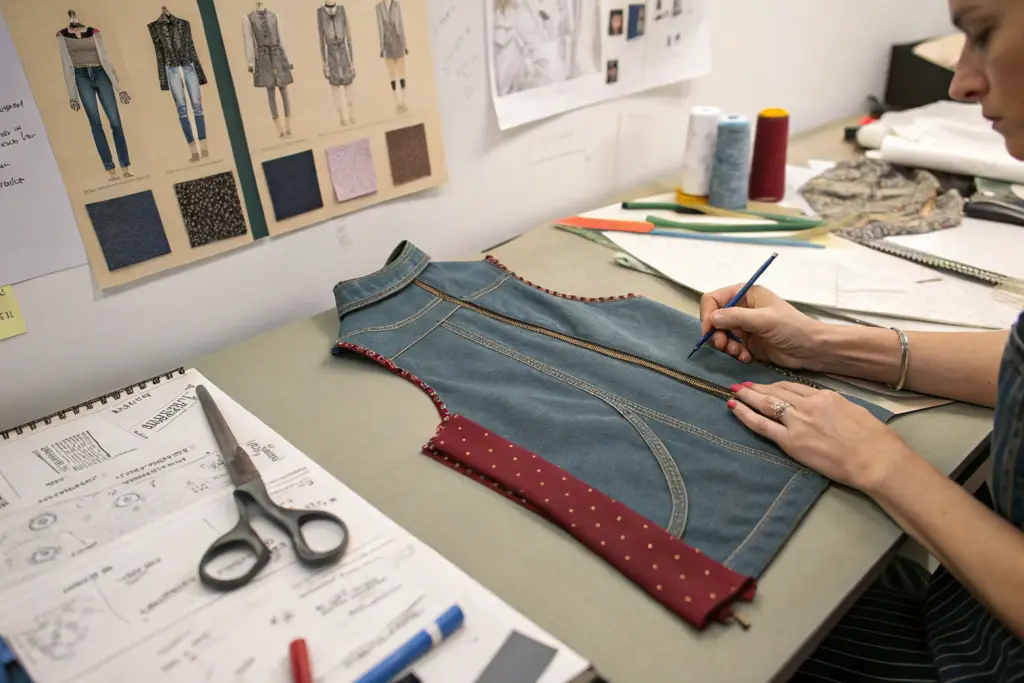
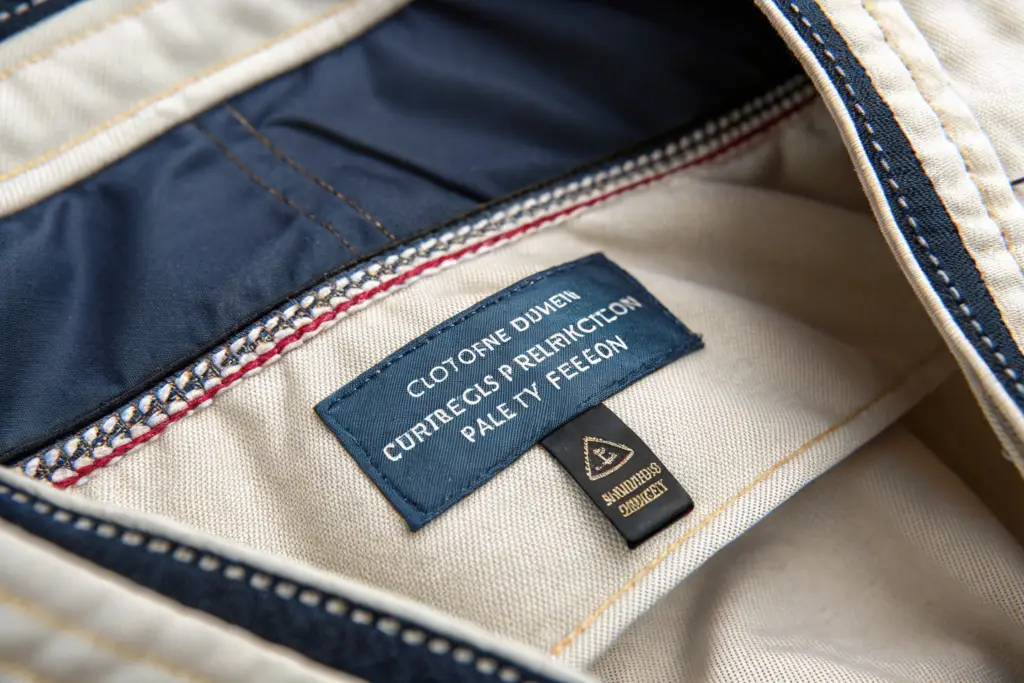
Signature construction details signal authenticity by creating a "Complexity Barrier." The specific details that deter copying include: (1) Narrow Topstitching. A 1/16 inch or 1/8 inch edge stitch requires a specialized folder guide on the sewing machine and a slower, more skilled operator. Copyists use a standard 1/4 inch stitch, which looks clunky. (2) French Seams or Flat-Felled Seams. These interior seam finishes hide raw edges and create a clean, durable inside. They require two passes of sewing per seam, doubling the labor cost. Copyists use a single-pass overlock (serged) seam. (3) Custom Trim. A button with a custom logo, a zipper pull with a unique shape, or a drawstring with a branded metal tip. The mold for a custom button costs $500-$1,000. A copyist will use a generic replacement. (4) Signature Lining or Binding. A specific color or print used for the interior pocket bag or the neck binding. This is a hidden brand signature that copyists overlook.
At Shanghai Fumao, we have the specialized machines and skilled operators to execute these "unnecessary" details. We know that the details are the brand.
Why Is a "French Seam" a Copyist's Nightmare?
A French seam is a beautiful, enclosed seam. The raw edge is completely hidden. It is used on delicate fabrics like silk and chiffon.
To sew a French seam, the operator sews the seam wrong sides together first, trims the allowance, and then sews it right sides together to enclose the edge. It takes twice as long as a standard seam.
A fast fashion factory producing a $15 blouse cannot afford the labor time for French seams. They use a serger. The inside of the blouse is a mess of scratchy thread. The copy is visually similar on the outside but fails the "touch test" instantly.
I advise my clients making silk or premium cotton dresses to specify French seams in their tech pack. It is a red flag to a copyist. They look at the tech pack, see "French Seam All Major Seams," and realize their labor cost just doubled. They either skip it (producing an inferior copy) or they try it and fail (producing a puckered mess). Either way, your original stands apart.
How Do You Use "Invisible" Details to Authenticate Your Product?
This is a powerful anti-counterfeiting and brand protection strategy. You add a detail that only you and your loyal customers know about.
Examples:
- The inside of the pocket bag is always a specific signature print (e.g., a tiny star pattern).
- The bartack reinforcing the pocket corner is always sewn with a specific number of stitches (e.g., 28 stitches, which is denser than standard).
- The care label is sewn into a specific seam (e.g., the left side seam, 2 inches up from the hem).
These details cost you pennies. They are invisible to the casual copyist. But they allow you to authenticate a garment if a customer asks, "I bought this secondhand. Is it real?" You can say, "Check the inside of the left pocket. Is there a star print?" This level of care builds insane brand loyalty.
I know a brand that does this. Their Facebook group is full of customers showing off the "secret star print" in their pockets. It is a badge of honor. It is a community. No copyist can fake that.
| Copyist Tactic | Your Moat Strategy | Why It Works |
|---|---|---|
| Trace Silhouette | Proprietary Fit Block | Fit differs across size run; copy fails on real bodies. |
| Buy Fabric on Alibaba | Custom Dye or Slub | Fabric is not commercially available. |
| Photograph Exterior | Signature Interior Finish | Copy looks cheap inside; fails "touch test." |
| Use Generic Buttons | Custom Molded Trim | Mold cost is prohibitive for small run copies. |
How Do You Use Supply Chain Velocity to Outrun the Copyists?
You release a new style. It is a hit. You know the copyists are already working. You have a four-week head start before the first knockoff appears on Shein or Amazon. How do you maximize that lead time? You do not wait to sell out before reordering. You have a Rapid Restock process in place with your factory. You keep core fabrics in stock. You keep your pattern on file. You can cut a new order within 48 hours of the first sell-out signal. While the copyist is still waiting for their sample to arrive from their trading company, you are already restocking your bestseller. You flood the market with the authentic product. By the time the copy arrives, the buzz has moved on, or the customer has already bought from you.
Supply chain velocity protects against copyists by collapsing the window of opportunity for the knockoff. The specific operational advantages include: (1) Fabric Greige Goods Reserving. You commit to a mill to hold a certain amount of undyed fabric (greige) for you. When a color sells out, you can dye and finish a new batch in 2-3 weeks instead of 8-10 weeks. (2) Pattern Digitization. Your patterns are stored digitally and ready for immediate nesting and cutting. There is no delay for pattern digitizing or grading. (3) Trim Inventory. You hold safety stock of your custom buttons and zippers. You are never delayed by trim reorder lead times. (4) Dedicated Production Capacity. Your factory partner understands that restocks of winning styles are the highest priority. They have a system to slot in a 500-unit restock without disrupting the main schedule. This agility is the ultimate weapon against slow-moving copycats.
At Shanghai Fumao, we work with our clients to establish a "Restock Fast Track" program. We know that speed to market is a form of intellectual property protection.
How Does "Greige Goods Reserving" Work?
Greige goods (pronounced "gray") are the raw, unfinished fabric straight off the loom or knitting machine. It is beige or off-white.
You find a fabric you love. You do not know which colors will sell best. You commit to a quantity of greige goods with the mill. You pay a deposit.
When your "Sage Green" sells out in three days, you do not wait 60 days for new fabric to be woven. You instruct the mill to take 500 yards of the reserved greige and dye it Sage Green. The dye process takes 2-3 weeks.
This is how the best DTC brands maintain "in stock" rates on their core items. It requires upfront cash flow and a good relationship with the mill. It is a strategic advantage that a copyist—who operates on a shoestring, order-by-order basis—simply cannot replicate.
I had a client whose ribbed knit tank went viral on TikTok. They sold out of 800 units in 6 hours. Because they had reserved greige with us, we were able to start dyeing the restock fabric the next morning. Three weeks later, they had 1,200 more units online. The copyists were still two months away from shipping. The brand captured the entire wave of demand.
Why Is "Pattern Digitization" a Speed Moat?
If your pattern is just a piece of cardboard, it takes hours to digitize it for an automated cutter. If your pattern is already a digital file, it takes minutes.
Every time you make a revision to the fit, the digital file is updated. The factory does not need to remake a physical pattern. They just load the latest Rev 4 file into the cutter.
This saves days of lead time on every restock. Over the course of a year, those saved days compound. You are able to iterate and restock faster than the competition.
We maintain a secure digital library of our clients' patterns. When a restock PO comes in, we can be cutting fabric within 24 hours. That speed is a moat.
Conclusion
Developing a signature apparel style that competitors cannot easily copy is a strategic choice. It is a decision to compete on depth rather than surface. You cannot stop someone from copying the shape of your sleeve. But you can make it impossible for them to copy the feel of that sleeve on the body. You cannot stop someone from finding a similar color. But you can ensure their color is never quite right because yours is a custom dye lot.
We have built the moat layer by layer. We started with the Proprietary Fit Block, the invisible architecture of comfort. We moved to Exclusive Fabric, the tactile and visual signature that cannot be bought on Alibaba. We reinforced it with Signature Construction Details, the hidden hallmarks of quality that fast fashion cannot afford to replicate. And we deployed Supply Chain Velocity, the speed to restock that outruns the copyist's timeline.
At Shanghai Fumao, we do not want to manufacture commodities. We want to help build brands with defensible, long-term value. We are equipped to support the development of custom fits, the sourcing of exclusive fabrics, and the execution of complex construction details that form the bedrock of an uncopiable style.
If you are ready to move beyond basic cut-and-sew and start building the moat around your brand, we are here to partner with you. Let's engineer the details that make your clothes unmistakably yours.
To discuss how we can help you develop proprietary elements for your next collection, reach out to our Business Director, Elaine. She can walk you through our capabilities in custom development, exclusive mill partnerships, and rapid restock programs.
Email: elaine@fumaoclothing.com