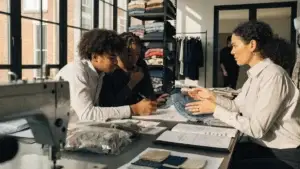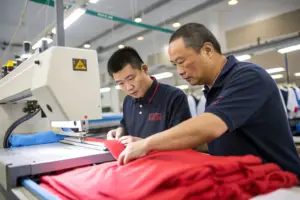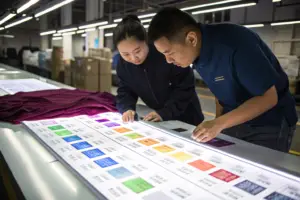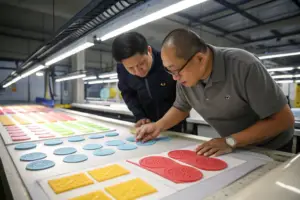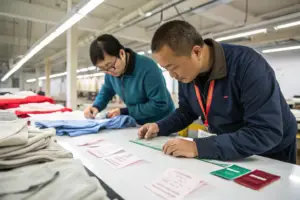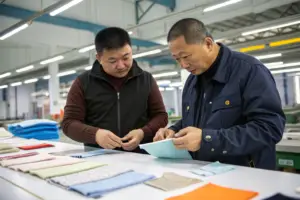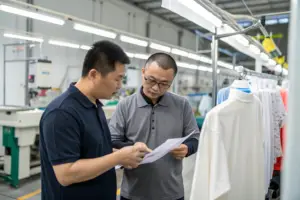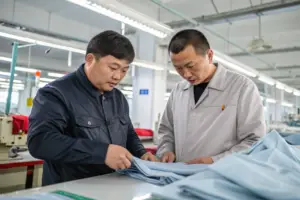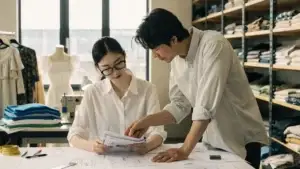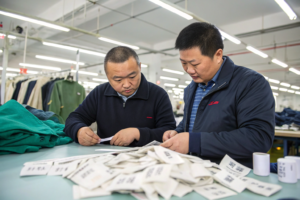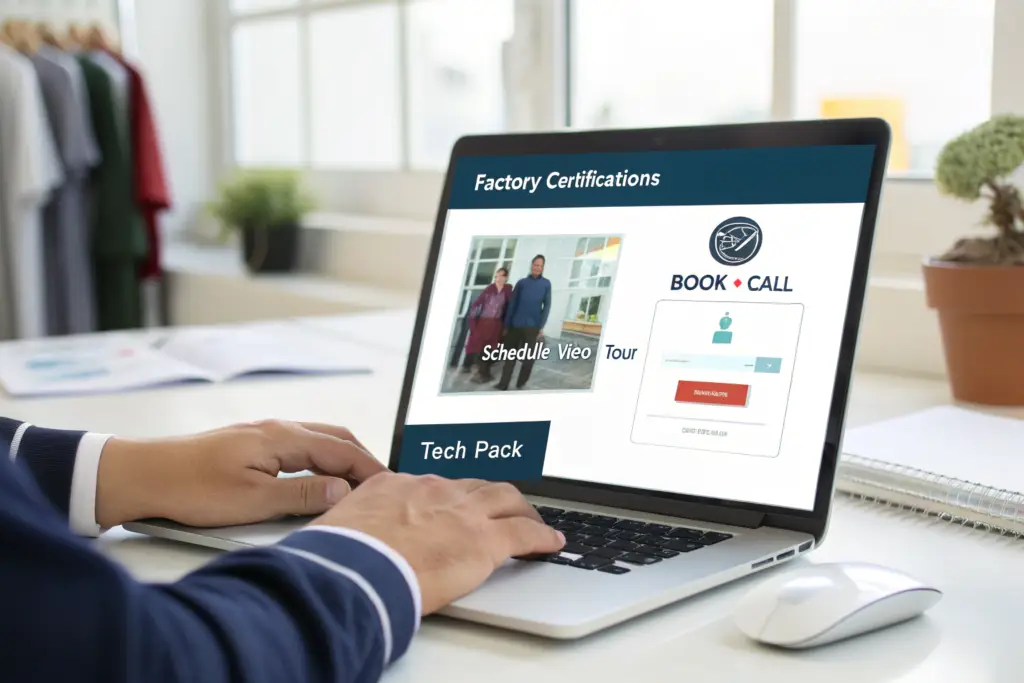
You are a high volume buyer. You are not browsing. You are vetting. You have a budget of $50,000 to spend on this order. You cannot afford to make a mistake. You land on a supplier's website. It has a stock photo of a smiling model in a white shirt. The "About Us" page says "We are a leading manufacturer." The contact page is a generic web form. You feel nothing. No trust. You click away. Now imagine landing on a different site. You see a photo of the actual factory floor with the owner's name in the caption. You see a downloadable tech pack template. You see a list of specific machinery with photos. You see a "Schedule Video Tour" button. You feel a shift. You feel like you can verify this business. This is the difference between a website that generates leads and a website that closes high volume orders.
A B2B clothing website becomes trustworthy to high volume buyers when it prioritizes "Operational Transparency" and "Technical Authority" over aesthetic polish. The five non-negotiable elements that signal trust are: (1) Original Factory Imagery showing the actual production floor, cutting tables, and QC stations with identifiable staff members (not stock photos), (2) Detailed Capability Pages organized by garment category (e.g., "Men's Tailored Jackets" or "Activewear Cut and Sew") listing specific machine types and monthly capacity, (3) A clearly stated "Minimum Order Quantity (MOQ)" policy and a transparent pricing framework that sets realistic expectations, (4) Verifiable Third-Party Certifications such as BSCI, WRAP, or GOTS displayed with license numbers and validity dates, and (5) Direct Access Signals including a "Schedule a Video Audit" link, a direct email address for a named Business Development Manager, and a physical address that can be verified on Google Maps. High volume buyers are looking for reasons to eliminate risk. A website that hides this information is self-selecting out of serious consideration.
At Shanghai Fumao, we rebuilt our website specifically to answer these unspoken questions before the buyer even has to ask. Let me walk you through the psychology of the B2B buyer and how your website can build instant credibility.
Why Do Stock Photos and Generic "About Us" Pages Kill High Volume Trust?
You see a beautiful website. Hero image of a fashion sketch. Team photos of diverse, smiling people in suits. It looks like a Silicon Valley startup. You are a buyer for a 500-unit order of workwear. You want to see dirt. You want to see fabric dust. You want to see the slightly messy reality of a place where things are actually made. Stock photos are a signal of a trading company, not a factory. A trading company has no control over production. They are a middleman. A real factory has a real floor, and they are proud to show it, warts and all. The "About Us" page that says "We put quality first" is meaningless. Every website says that. The "About Us" page that says "Our cutting room has three 12-meter Gerber automated tables and we spread 50,000 yards of fabric weekly" is meaningful.
Stock photos and generic copy kill trust because they fail the "Verifiability Test" that high volume buyers subconsciously apply. A buyer sourcing $100,000 in inventory needs to believe that the entity on the other side of the ocean is real and stable. Stock photos suggest the business has something to hide or lacks pride in its own facility. The alternative is "Gritty Authenticity." This includes photos of the actual factory canteen, the maintenance logbook on the wall, or a slightly blurred action shot of a worker guiding fabric through a fusing machine. These images are not magazine-perfect, but they are true. Additionally, the "About Us" narrative should be data-driven. Instead of "We have years of experience," write "Established 2008. 5 production lines. 120 skilled operators. Specialized in woven outerwear." This specific, boring data is far more persuasive than aspirational fluff.
At Shanghai Fumao, our website features real photos of our floor taken with a smartphone. We update them monthly. We want buyers to see the current state of the line.
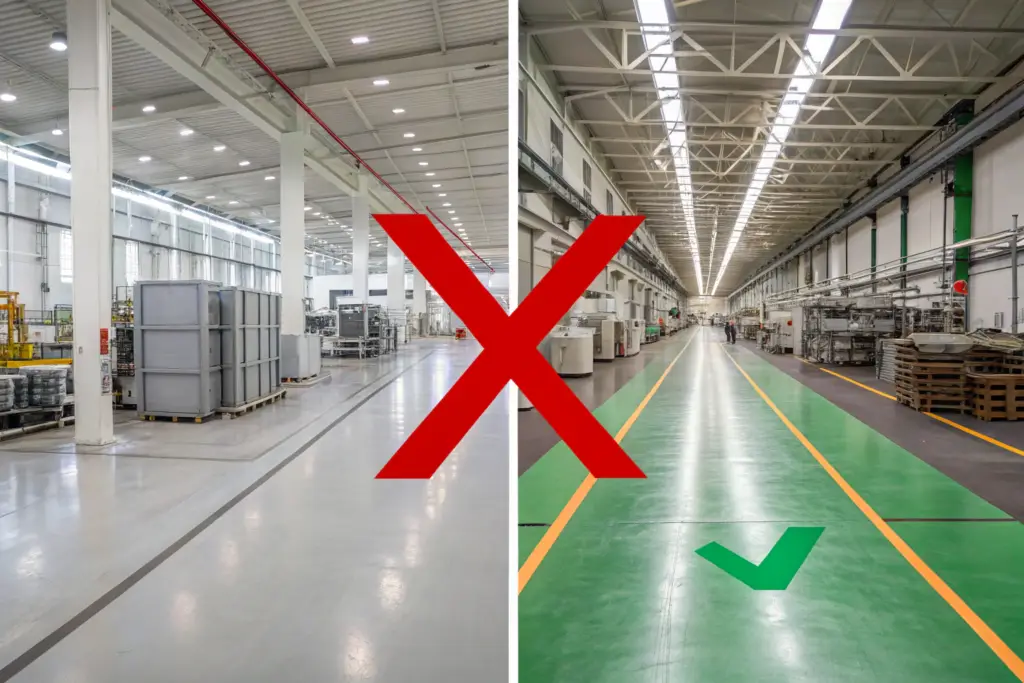
What Should a "Real Factory" Photo Gallery Contain?
You do not need a professional photographer. You need a smartphone and good lighting. The content of the photo is what matters.
A trust-building factory gallery includes:
- The Cutting Table: A wide shot showing a full lay of fabric with the paper marker on top. This proves you cut in-house.
- The Fusing Machine: A close-up of the collar interlining going through the heated rollers. This proves specialization.
- The QC Station: A photo of the light table with a garment laid flat and a measuring tape on it. This proves process.
- The Rework Rack: Yes, the rack of mistakes. A photo of garments with arrow stickers showing flaws. This proves honesty.
- The Staff: A photo of the Production Manager, named, holding a clipboard. This proves accountability.
I had a client who told me he chose our factory over a cheaper quote specifically because of a photo on our website. It was a photo of our fabric inspection machine with a roll of deadstock being checked. He said, "I saw that machine and I knew you wouldn't cut stained fabric for my order." That one photo, which took 30 seconds to take, closed a deal worth thousands of dollars.
How Do You Write an "About Us" Page That Reads Like a Due Diligence Report?
High volume buyers are skimming for data points. Make them easy to find.
Use bullet points. Use numbers.
Bad: "Shanghai Fumao is a premier garment manufacturer dedicated to quality."
Good: "Shanghai Fumao operates a 15,000 sq ft facility in Shanghai with 5 dedicated production lines. Annual output: 300,000 units. We employ 120 skilled workers with an average tenure of 6 years. Our in-house capabilities include automated cutting, digital pattern making, and a 5-person QC team."
This paragraph is not exciting. It is not creative. It is credible. It answers the buyer's first five questions without them having to send an email. This is the foundation of B2B trust. You are not selling a dream. You are selling a reliable supply chain.
How Do Specific MOQ and Pricing Signals Filter Serious Buyers from Sample Collectors?
You are a high volume buyer. You do not want to waste time emailing a factory only to find out they have a 5,000 unit MOQ when you need 500. Or worse, you want 5,000 units and they are a small sample room that can only handle 100. Hidden MOQ information is a time-waster. It signals that the factory is either desperate for any lead (so they hide the high MOQ until you are hooked) or they are so small they do not have a standard policy. Trustworthy websites state their MOQ framework clearly. Even better, they state their optimal volume. They say, "We specialize in orders of 800-3,000 units per style." This signals that they know their own operational sweet spot.
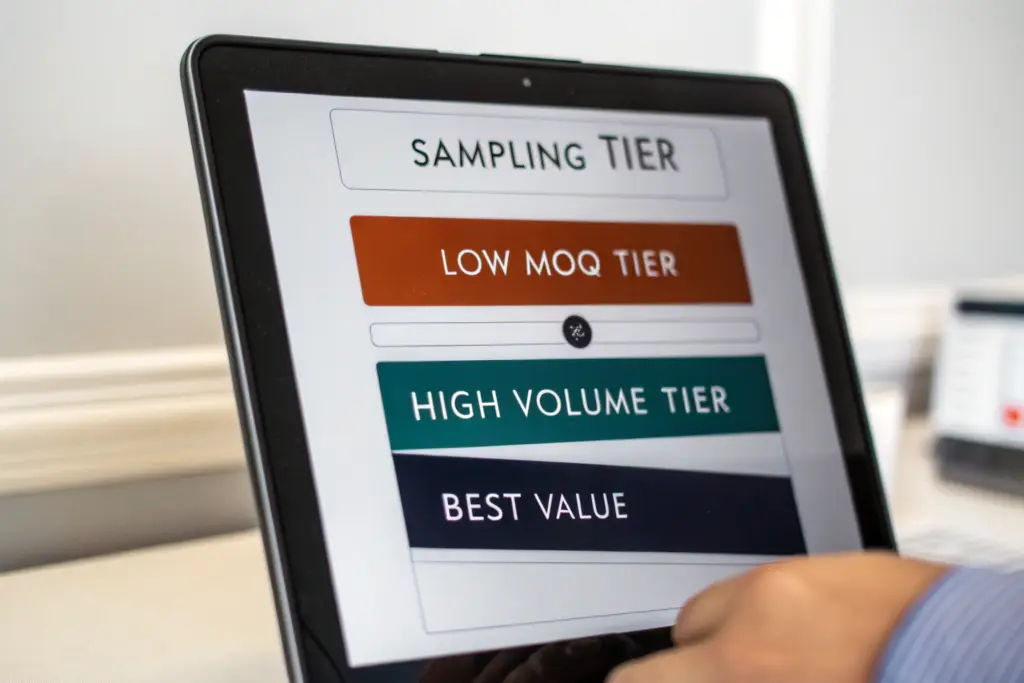
Specific MOQ and pricing signals filter serious buyers by establishing a "Qualification Threshold." Trustworthy B2B clothing websites clearly delineate between service levels. They might state: "Sampling Service: Available for pre-production approval. Cost $150 + Shipping. Bulk MOQ: 300 units per style, 150 units per color." This level of specificity immediately filters out the individual wanting a single custom dress for a party. It signals that the factory values its production capacity and is not desperate for micro-orders. Furthermore, transparent pricing frameworks, even if approximate, build trust. A statement like "Bulk FOB prices typically range from $8.50 - $18.00 depending on fabric and complexity" sets realistic expectations. High volume buyers know that a $5 hoodie is impossible. A site that promises $5 hoodies is a liar. A site that explains why the price is $15 builds trust through education.
At Shanghai Fumao, we publish our standard MOQ and a guide to pricing factors. It saves us hours of email triage and ensures every inquiry we receive is from a qualified potential partner.
Why Is a "Sampling Fee" Policy a Green Flag for High Volume Buyers?
A high volume buyer understands that sampling costs money. Pattern making, fabric sourcing, and single-unit sewing are labor-intensive. A factory that offers "Free Samples" to anyone who asks is either a trading company sending out stock samples, or they are building the sample cost into the bulk price (which means the buyer pays for it anyway).
A clear, reasonable sampling policy is a sign of a professional operation.
Good policy: "Sampling Fee: $150 - $300 per style (credited back against bulk orders over 500 units). Lead time: 7-10 business days."
This policy says: "We value our sample room time. If you are serious, this fee is a deposit on our partnership." High volume buyers respect this. They see it as a barrier to entry that keeps the factory focused on real opportunities.
I recall a buyer from a major US workwear brand who told me he specifically looked for websites that charged for samples. He said, "If they give free samples to everyone, their sample room is a zoo and my bulk order will get lost in the noise." That perspective changed how I view the "Free Sample" request.
How Does a "Pricing Guide" Build Trust Without Giving an Exact Quote?
You cannot give an exact quote online. Too many variables. But you can explain the variables.
A trustworthy site includes a page titled "Understanding Pricing" or "Cost Factors."
It explains:
- Fabric: "Cotton poplin base price vs. Silk charmeuse premium."
- Quantity: "Price breaks at 500, 1,000, and 3,000 units."
- Construction: "Basic t-shirt (4 operations) vs. Tailored blazer (40 operations)."
This educates the buyer. It manages expectations. It positions the factory as an expert partner, not just a cut-and-sew shop.
We added this page to our site last year. The quality of our inbound inquiries improved dramatically. Buyers were coming to the conversation already understanding that a lined jacket costs more than a t-shirt. We could skip the basic education and jump straight to specific product engineering. This is the value of a trustworthy B2B website. It pre-qualifies and pre-educates.
Why Do "Technical Capability" Pages Close More Deals Than Lookbooks?
Many B2B clothing websites look like retail fashion sites. Big, beautiful hero images of models on beaches. This is a mistake. The buyer for a workwear brand does not care about your beach photoshoot. They care about whether you have a fusing press and a bartack machine. They want to see the "boring" pages. They want to see a list of your equipment. They want to know if you have in-house embroidery or if you outsource it. A website that hides this technical information behind a generic "Contact Us" form is signaling that they are a trading company that does not actually know what happens on the floor. The pages that close deals are the "Machinery" page, the "Quality Control" page, and the "Case Studies" page.
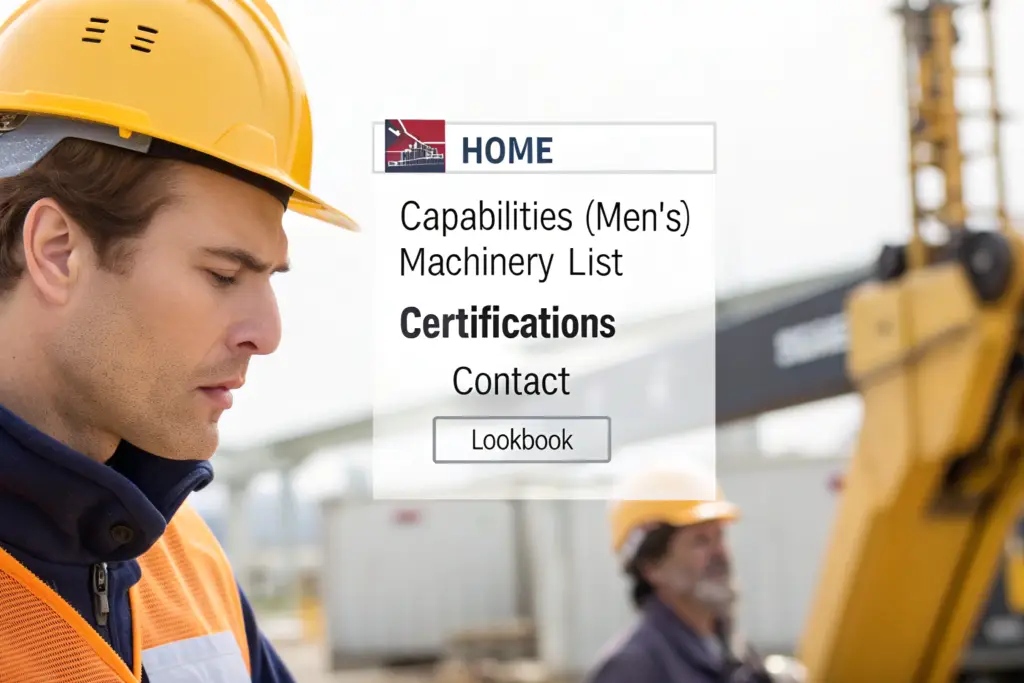
Technical Capability pages close more deals than lookbooks because they address the specific "Production Anxiety" of the high volume buyer. The buyer has a mental checklist of equipment required for their product. A dedicated "Capabilities" section should break down services by garment category. Under "Men's Tailored Shirts," list: "Single-needle lockstitch machines, edge guide folders, lockstitch buttonhole machine, continuous fusing press." Under "Activewear," list: "Flatlock machines, coverstitch hemming, 4-thread overlock." This allows the buyer to self-verify within 30 seconds. Furthermore, a "Quality Assurance" page should detail the AQL inspection level, the measurement tolerance table, and photos of the QC light table in use. This level of detail demonstrates that the factory has systematized quality, not just a "final check." High volume buyers are not buying a product; they are buying a predictable process.
At Shanghai Fumao, our "Our Factory" section has more traffic than our "Product Gallery." That tells you what professional buyers actually care about.
What Should a "Machinery List" Page Include?
This page should be boring and detailed. It is a spec sheet for your factory.
Include:
- Cutting Room: "2 x Gerber Z1 Automated Cutters, 1 x 12m Manual Spreading Table."
- Sewing Floor: "45 x Juki DDL-9000 Lockstitch, 10 x Pegasus Flatseamers, 5 x Juki Bartack Machines."
- Finishing: "3 x Vacuum Pressing Tables, Industrial Steam Boiler."
This list is a credential. It tells a technical buyer exactly what you can and cannot do. If a buyer is looking for a factory that can do heavy denim hemming, they will look for "Union Special Hemmer" on the list. If they see it, they will email you. If they do not, they will move on. This saves everyone time.
We updated our machinery list with specific model numbers. A buyer from a heritage denim brand found us because we listed our Union Special 43200G hemmer. He said, "I've been looking for a factory in China that has that exact machine for six months." That one line of text on a buried page was worth a $40,000 order.
Why Are "Case Studies" (Anonymized) More Powerful Than Testimonials?
Testimonials say "Great quality!" That is worthless. Anyone can write that.
A Case Study tells a story of a problem solved.
Format:
- Client Profile: "US-Based DTC Menswear Brand."
- Challenge: "Inconsistent collar roll on oxford shirts. Return rate 12%."
- Solution: "Replaced sew-in interlining with fusible weft insertion interlining. Adjusted collar band pattern by 3 degrees."
- Result: "Return rate dropped to 3%. Re-order quantity doubled."
This is a narrative of competence. It shows you understand the engineering of clothing, not just the sewing. High volume buyers read case studies as proof of expertise.
We have a case study on our site about solving linen shrinkage for a resort wear brand. A buyer from a similar brand read it and emailed us saying, "We have the exact same problem. Can you help?" The case study did the selling for us.
How Do "Direct Access" Signals (Video Tour Links, Named Contacts) Reduce Perceived Risk?
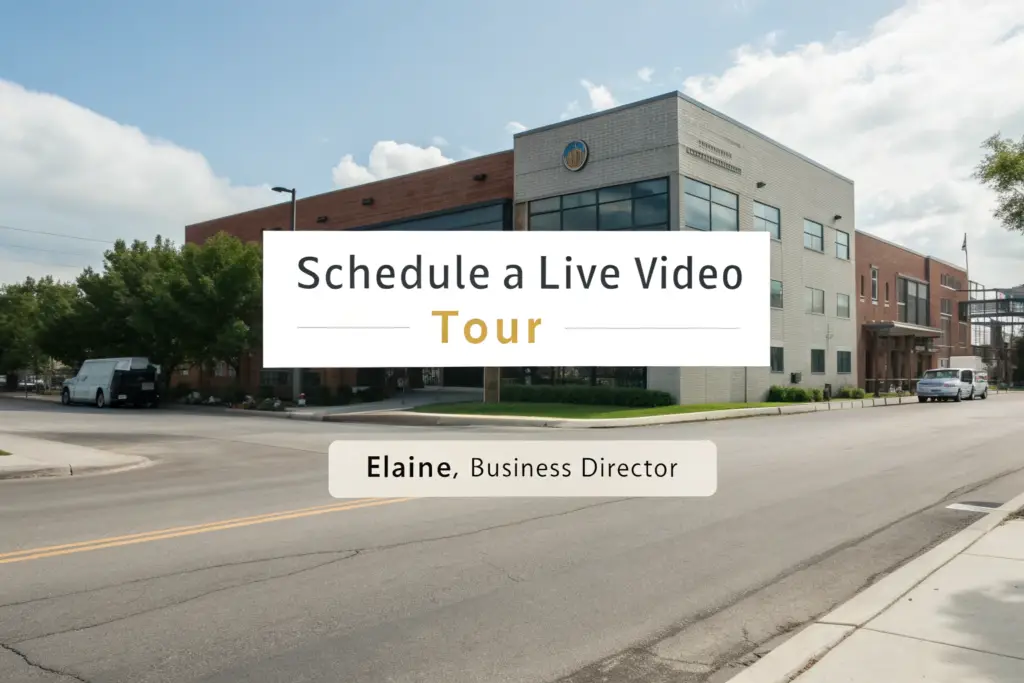
The biggest fear of a high volume buyer wiring $20,000 to a new supplier is that the supplier does not exist. That the website is a facade. That the factory is a P.O. Box. You must demolish this fear with "Direct Access" signals. You must make it easy for the buyer to verify your physical reality. A "Contact Us" form is a black hole. It signals that you are hiding. A "Schedule a Video Tour with Our Production Manager" button signals that you are proud of your facility and want to show it off. A direct email address for a named individual signals accountability. A Google Maps link that shows a real building in an industrial zone signals permanence.
Direct Access signals reduce perceived risk by providing a "Verification Path" that bypasses the sales funnel. The most powerful signals are: (1) A "Book a Video Audit" button integrated with Calendly or a similar scheduling tool. This allows the buyer to see the factory floor tomorrow, not after a week of email tag. (2) Named Contacts with direct emails. Instead of "sales@factory.com," use "elaine@shanghaigarment.com." This personalizes the interaction and creates a single point of accountability. (3) Google Maps Integration. Embed a map showing the satellite view of the factory location. Buyers will zoom in to see the loading docks and the trucks. It confirms this is an active industrial site. (4) Social Proof from the Factory Floor. A link to an Instagram account that posts daily "on the line" videos and photos of completed orders being packed. This is unscripted, ongoing proof of life.
At Shanghai Fumao, we made the "Book a Video Tour" button one of the most prominent elements on our site. It is the single highest-converting action a new buyer can take.
Why Is a "Book a Video Tour" Button More Trustworthy Than a Contact Form?
A contact form says: "Tell us who you are, and maybe we will get back to you."
A video tour scheduler says: "Come inside. Look around. Right now."
This is a massive psychological shift. It demonstrates supreme confidence in the operation. It says, "We have nothing to hide."
When a buyer books a tour on our site, they get a confirmation email with a Zoom link and the name of the Production Supervisor who will walk them through. They do not get a sales rep in an office. They get the person who manages the sewing line. This is raw, unfiltered access. It is the ultimate trust signal.
I had a buyer from Canada book a tour for the next morning. He watched our cutting master align a pattern for 20 minutes. He asked to see the inside of the fusing machine. We showed him. He placed a $30,000 trial order at the end of the call. He said, "I've been sourcing for ten years. No one has ever just let me watch the cutting room." That is the power of direct access.
This is a tiny detail with a huge impact. A buyer gets a quote. It seems good. They scroll to the footer. They see an address: "No. 188, Lane 123, Some Road, Shanghai." That is a jumble of letters and numbers.
They see a Google Maps link. They click it. They see a large industrial building with a loading dock and a truck parked outside. They zoom in. They see a sign with characters that match the company name. Their anxiety drops by 50%. They have just independently verified that the factory is a real place.
If the Google Maps link leads to a residential apartment or a virtual office building, they click away.
We ensure our Google Maps pin is accurate and that our building is clearly visible from the street view. It is a form of passive verification that works 24/7.
| Website Element | Low Trust Signal | High Trust Signal |
|---|---|---|
| Imagery | Stock photos of models | Candid photos of cutting floor with staff |
| Contact | Generic "info@" email form | Named director email & "Book Video Tour" button |
| MOQ/Pricing | "Contact us for pricing" | Published MOQ tiers & cost factor guide |
| Capabilities | "We make everything" | Specific machinery list by category |
| Location | Text address only | Embedded Google Maps with street view |
Conclusion
A trustworthy B2B clothing website for high volume buyers is not a fashion magazine. It is a due diligence document. It is a transparent window into the physical reality of the factory floor. The buyers you want—the ones with large, recurring budgets—are scanning your site looking for reasons to say "no." They are looking for stock photos, hidden MOQs, and generic contact forms. They are looking for ambiguity. Your job is to eliminate that ambiguity.
We have explored why gritty, real factory photos build more confidence than polished lookbooks. We have seen how transparent MOQ and pricing frameworks pre-qualify inquiries and save everyone time. We have identified that technical capability pages and machinery lists speak directly to the production anxiety of the buyer. And we have recognized that direct access signals, like a "Book a Video Tour" button and a Google Maps link, provide the independent verification that closes the trust gap.
At Shanghai Fumao, we designed our website with this exact buyer psychology in mind. We want you to see our floor, know our machines, and understand our process before you even speak to us. We believe that an educated buyer is the best partner.
If you are a high volume buyer vetting potential manufacturing partners, we invite you to experience this level of transparency firsthand. Visit our website. Review our machinery list. And when you are ready, click the "Book a Video Tour" button. We will walk you through our facility and answer every technical question you have.
You can also reach out directly to me, Elaine, our Business Director. I am the person who will answer your email and coordinate your tour. No gatekeepers. No automated replies.
Email: elaine@fumaoclothing.com