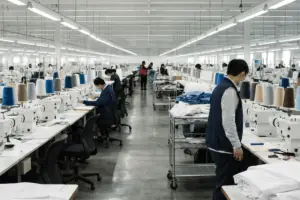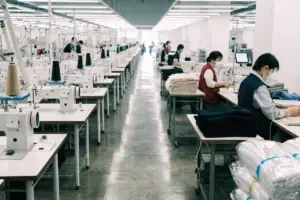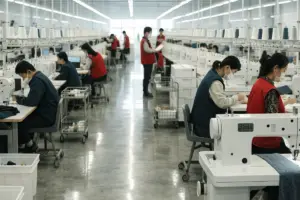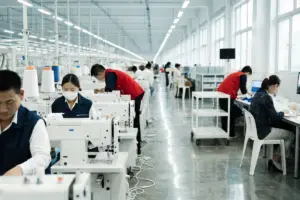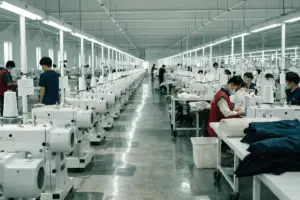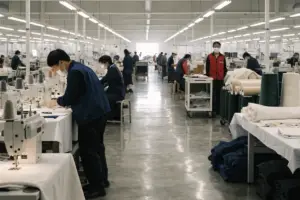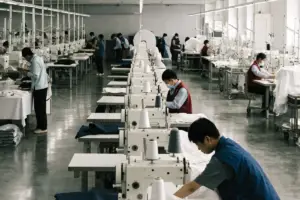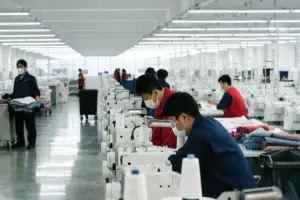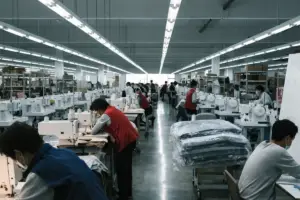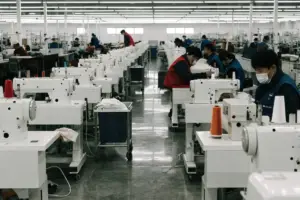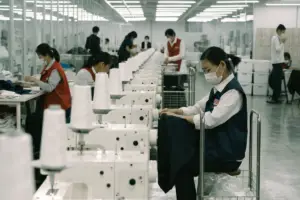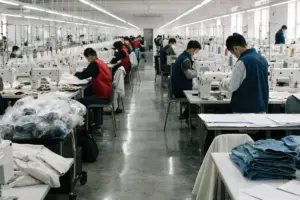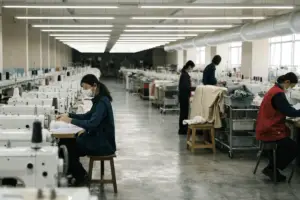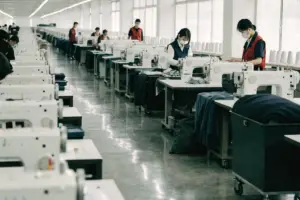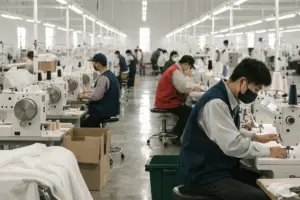
You cannot fly to China right now. Or Vietnam. Or India. You need to vet a factory. You schedule a video tour. The sales rep walks through the facility holding their phone. You see sewing machines. You see fabric rolls. You see people. It all looks fine. You end the call feeling… nothing. You have no more information than you had before. You do not know if those machines are for show. You do not know if the quality control system is real. You just saw what they wanted you to see. A video tour is a powerful tool, but only if you know exactly what to look for and exactly what to ask. If you let the factory dictate the tour, you will get a highlight reel. You need to direct the tour.
The essential questions to ask a clothing factory during a video tour are designed to verify three specific capabilities: (1) Specialized Equipment relevant to your product category, (2) In-Process Quality Control systems, and (3) Raw Material Traceability. Instead of passive observation, you must make specific requests: "Please show me the fusing machine in operation right now," "Walk over to the cutting table and show me the marker paper on top of the fabric stack," and "Zoom in on that worker’s seam guide so I can see the edge." Additionally, you must ask about their current production: "What brands are on that cutting ticket on the table? Can you hold it up to the camera?" The goal is to catch a glimpse of the factory’s unscripted reality. You are looking for confirmation that they actually specialize in your type of garment, not just that they have a few sample machines set up in a corner.
At Shanghai Fumao, we welcome video tours. We prefer them. We will walk you through our cutting floor, our fusing station, and our inline QC checkpoint. Let me give you the exact script to use so you can separate the real factories from the trading companies with a camera.
How Can You Verify the Factory’s Specialization in Your Specific Garment Type?
The factory says, "We make everything. Knits, wovens, denim, activewear." This is a red flag. A factory that makes everything usually specializes in nothing. A true men’s shirting factory looks different from a true activewear factory. The machinery is different. The layout is different. The lighting is different. During a video tour, you must see evidence of your product category being made in volume. You are looking for the specific tools and workstations that are non-negotiable for your garment type. If you are making tailored jackets, you need to see a fusing press and a collar turning station. If you are making leggings, you need to see flatlock machines and a lot of spandex blend fabric on the shelves.
Verifying specialization during a video tour requires asking the guide to show you the "sample room" and the "finishing area" rather than just the main sewing line. In the sample room, ask to see the physical paper patterns for a style similar to yours. Hold it up. Look at the curve of the armhole or the crotch point. Does it look professional? In the finishing area, ask to see the pressing tables. Are they using vacuum boards with steam boilers, or are they using domestic hand irons? For specific categories, request to see: (1) For Wovens: A fusing press for collars and cuffs, (2) For Knits: A fabric relaxation area where cut panels are resting before sewing, (3) For Denim: The laundry/wash sampling area, and (4) For Outerwear: The down-filling machine or sealed seam taping machine. If the guide hesitates or says "That area is closed today," you are likely not speaking to a specialist.
At Shanghai Fumao, we can show you our dedicated fusing press for men’s shirts or our specialized walking foot machines for stretch fabrics within seconds of you asking.
What Does a Real Men’s Shirt Factory Look Like on Camera?
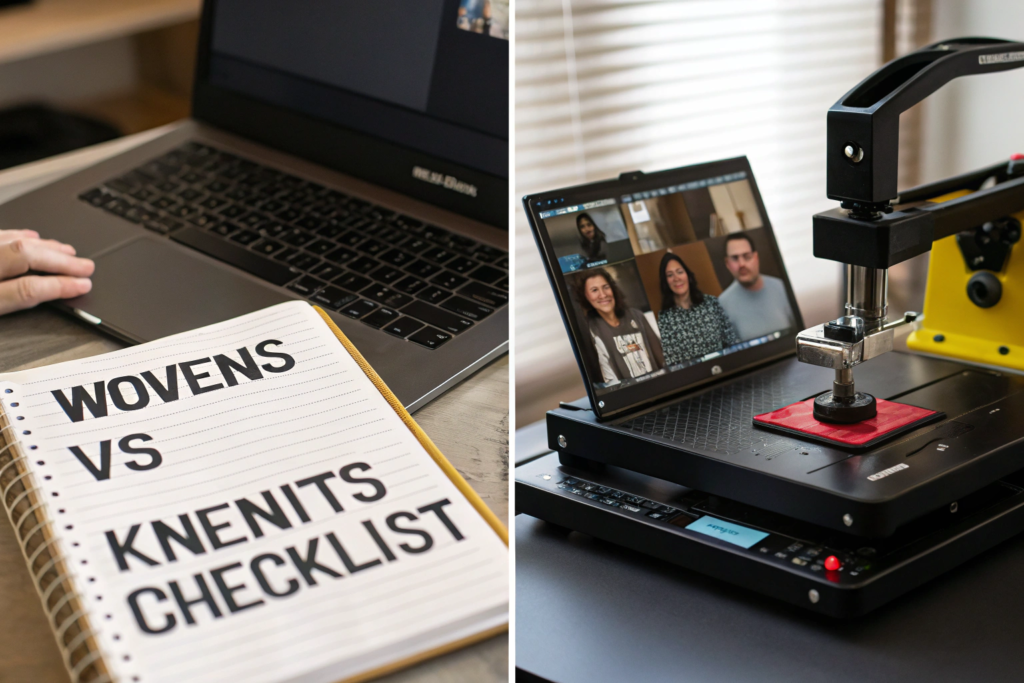
You are making button-up shirts. You need to see a fusing machine. This is the large, heated roller press that bonds the interlining to the collar and cuff fabric. It is the size of a small car. You cannot miss it.
If you are on a video tour and you ask to see the fusing machine, and the guide walks you over to a small hand iron or a clamshell heat press, you are not in a shirt factory. You are in a general sewing shop that is about to ruin your collars.
Also, look at the sewing machines. Shirt factories use specialized machines. You should see rows of single-needle lockstitch machines with edge guides. These are metal folders that precisely fold the fabric for the placket and hem. You should see a buttonhole machine that looks like a small, precise robot. Ask the guide: "Is that a lockstitch or chainstitch buttonhole machine?" A lockstitch is for dress shirts. A chainstitch is for denim. If they do not know the difference, they are not a shirt specialist.
I recall a video tour with a potential partner for a client making oxford cloth shirts. We asked to see the collar turning station. The guide walked us to a table where a worker was using a plastic point turner. That is a red flag. A proper shirt factory uses a collar turning machine with compressed air. It shoots air to blow the collar point out perfectly sharp. We saw the compressed air machine. We approved the factory. The shirts came out with razor-sharp collar points. This level of detail is visible on a video tour if you know what to ask for.
What Does a Real Activewear or Knit Factory Look Like on Camera?
Activewear requires stretch. Stretch fabric requires different handling.
During the video tour, look at the floor near the cutting tables. Is the fabric stacked high? Or is it laid out in low, relaxed layers? High stacks (50+ layers) of knit fabric lead to compression and inaccurate cutting. A good knit factory spreads fewer layers (20-30) and may use a vacuum compression table to hold the slippery fabric still.
Ask to see the sewing machines. You should see a high proportion of flatlock machines (for seams that lie flat against the skin) and coverstitch machines (for hemming yoga pants and t-shirts). If you only see regular lockstitch machines, the factory is not equipped for performance stretch.
Also, ask to see the fabric storage. Activewear fabric is mostly synthetic (polyester/spandex). It needs to be stored in a climate-controlled area. If you see rolls of white fabric sitting in direct sunlight by a window, it will yellow.
Last year, we toured a facility for a client’s seamless activewear line. We asked to see the circular knitting machines. The guide walked us into a separate, air-conditioned room with specialized machinery. That was the confirmation we needed. A general cut-and-sew shop cannot make seamless garments. You need the specific circular knit machines. Seeing them on camera was the only way to verify the capability.
How Do You Uncover the Truth About In-Line Quality Control Processes?
Every factory says they have "strict quality control." They will show you a table at the end of the line with some women checking for loose threads. That is not quality control. That is a final inspection. By the time a garment reaches the final table, the defect is already sewn in. You need to see evidence of In-Line Quality Control. This means measuring the garment during the sewing process, not just after it is finished. You want to see workers stopping to check their own work against a measurement guide. You want to see a roving QC supervisor with a tablet or clipboard checking pieces right at the sewing machine.
Uncovering the truth about in-line QC during a video tour requires asking to see the "First Piece" or "Pilot Run" area. Say to the guide: "Can you show me the first piece off the line from this morning? The one the supervisor signed off on?" A factory with a real QC system will have a specific rack or table where the first garment sewn by each operator is held for approval. Ask to see the tag attached to that garment. It should have measurements written on it and a supervisor’s signature or stamp. If they cannot produce this, or if they point to the final inspection table at the end of the line, they do not have true in-process control. Also, ask to see the "Defect Bin" or "Rework Rack." Every factory makes mistakes. A transparent factory has a designated area where defective pieces are held for repair. Seeing this area (and seeing it has some items in it) is actually a positive sign of honesty.
At Shanghai Fumao, our QC supervisor carries a tablet that records measurements in real-time. We can show you the digital log during the video tour.
Why Is the "First Piece Approval" Station the Most Important Stop on the Tour?
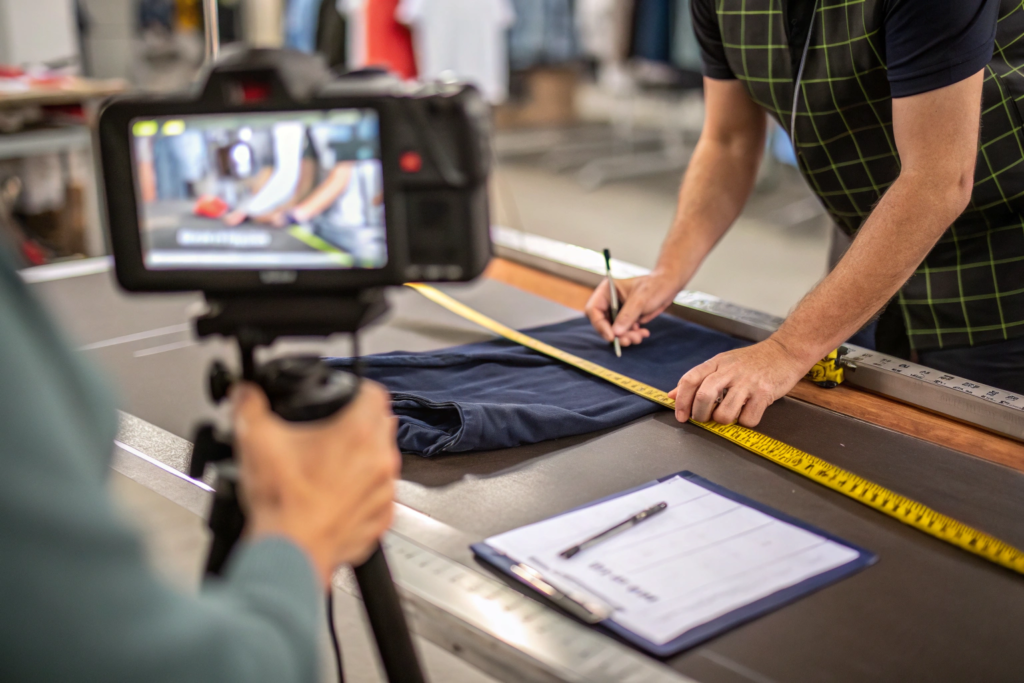
This is the single most predictive indicator of consistent sizing. When the operator sits down at their machine to start sewing a new style, the first piece they complete is taken to the supervisor.
The supervisor lays it on a flat measurement table. They measure the critical points: chest, length, sleeve. They compare it to the specification sheet. They write the actual measurements on a "First Piece Ticket." Only after this ticket is signed does the operator sew the remaining 199 pieces.
If this process is skipped, the operator might sew 200 pieces with the seam guide set 1/4 inch too wide. You end up with a full size run of "Large" shirts that measure like "Extra Large."
During the tour, point to an operator who has just finished a garment. Ask the guide: "Can we see the first piece ticket for that style?" If the guide looks confused, that process does not exist. If they walk over and pull a ticket off a nearby board, you have found a factory that understands consistency.
I did a video audit with a client for her wrap dress order. We asked to see the first piece of the size Medium. The supervisor held it up and showed the ticket. The armhole depth was noted as "+0.25 inches – ACCEPTED." This showed us that they were actively measuring and documenting. It gave us confidence to place the order. The bulk production arrived exactly within tolerance.
What Does the "Rework Rack" Tell You About a Factory’s Honesty?
You want to see a rework rack or a repair station. You do not want to see it empty. An empty repair rack means one of two things: either the factory is absolutely perfect (impossible) or they are hiding their mistakes and shipping them anyway.
Ask: "Where do the garments go that need a button resewn or a seam fixed?" The guide should walk you to a specific sewing machine or a table with a pile of garments. Look at the pile. Are the defects marked with arrow stickers? A good factory uses small red or white arrow stickers to pinpoint the exact location of the flaw. This makes it easy for the repair worker to find the issue quickly.
If the guide says, "Oh, we don’t have any defects right now," that is a red flag. You can respond, "Great, can you show me the area where they usually are processed?"
I recall touring a facility that had a well-organized rework station. There were about 15 garments on the rack, each with a small sticker indicating the issue: "Loose thread," "Button missing," "Pocket misalign." This was reassuring. It meant their final inspection was catching things and there was a system to fix them. A factory that hides this process is a factory that will ship you the loose button and hope you do not notice.
How Do You Assess Fabric Storage and Raw Material Management?
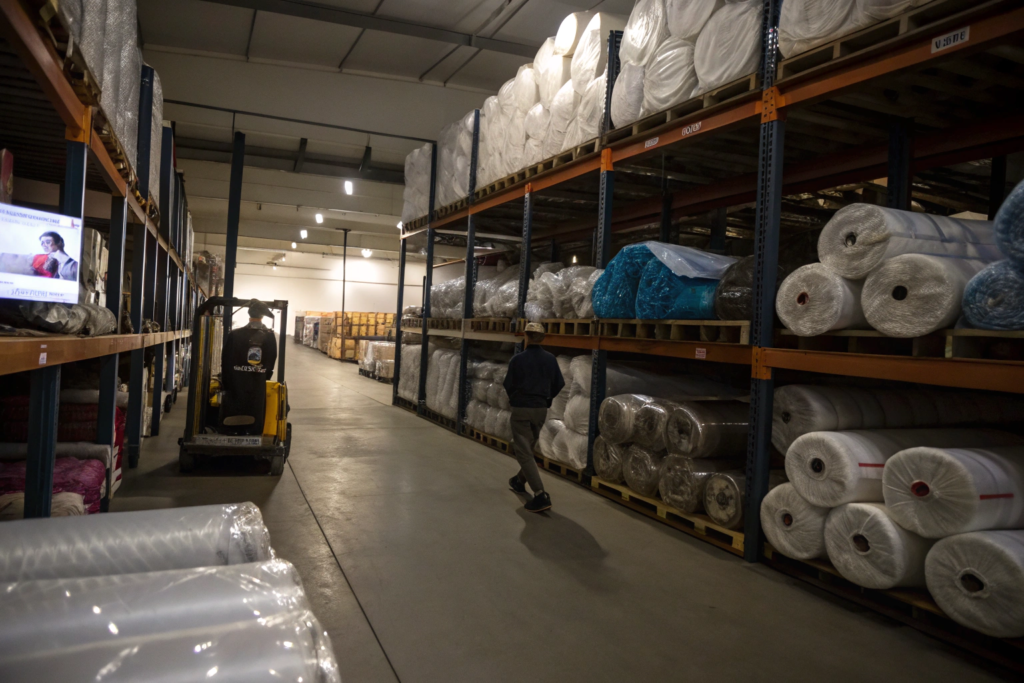
You focus on the sewing machines. You forget about the fabric. But the fabric is the majority of your cost. How a factory stores its raw materials tells you everything about how they value your product. If you see fabric rolls standing on end on a dirty concrete floor, unprotected, walk away. That fabric is getting dirty, absorbing moisture, and distorting. If you see rolls stacked horizontally on industrial shelving, covered in plastic, in a clean area, you are in a professional facility. You also need to ask about Lot Control. If you order custom dyed fabric, can the factory trace which roll went into which carton? This is essential for managing quality issues later.
Assessing fabric storage and material management during a video tour requires asking to see the "Fabric Warehouse" or "Grey Goods Storage," not just the cutting room. Specific observations to make include: (1) Are rolls stored on pallets or shelving off the ground? Fabric touching concrete absorbs moisture and dirt. (2) Is there a visible "Shade Banding" system? Look for rolls with colored tape on the end. This indicates they have been inspected under light and grouped by dye lot to prevent shade variation within a production run. (3) Ask to see the "Fabric Inspection Machine." Every roll of fabric, especially deadstock or custom dye, should be run through a light table inspection machine before cutting. Ask the guide to turn on the light table and run a piece of fabric through it. If they do not have one, or if it is buried in a corner covered in dust, they are not inspecting fabric for flaws before cutting.
At Shanghai Fumao, we have a dedicated fabric inspection room. We can show you a roll being inspected in real-time during the video call.
What Is "Shade Banding" and Why Must You See Evidence of It?
Fabric dyed in different lots (batches) can vary slightly in shade. If you sew a front panel from Lot A and a sleeve from Lot B, the garment will look like a patchwork quilt under certain lighting.
Shade banding is the process of checking every roll under a standardized light box and marking rolls that are identical with the same number or color code. During the video tour, walk over to the fabric shelves. Zoom in on the end of the rolls. Do you see stickers or colored tape? Ask: "What do those colored stickers mean?" The answer should be: "This is our shade banding system. All ‘Green Sticker’ rolls are from the same dye lot and match perfectly."
If the guide says, "We just cut whatever roll is next," you have a problem. You will get shade variation in your shipment.
I remember a client who received navy blue blazers with sleeves that were a slightly different shade than the body. It was subtle but noticeable. The factory had not shade banded the fabric. They cut the body from one roll and the sleeves from another. The client had to discount the entire run by 40%. A simple question about the stickers on the rolls during a video tour could have prevented this disaster.
Why Does the Fabric Inspection Machine Matter for Deadstock and Custom Dye?
If you are using deadstock fabric or a custom milled color, the fabric inspection machine is non-negotiable. This machine has a slanted, frosted glass surface with bright lights underneath. The operator runs the fabric over the glass. Any holes, stains, or weaving flaws become instantly visible.
During the video tour, ask to see this machine. Ask the guide: "Can you turn on the light and show me how you mark a flaw?" You should see the operator placing a small sticker or a piece of tape on the selvedge (the edge of the fabric) to mark the flaw. This ensures the cutter can avoid that section when laying out the pattern pieces.
If the factory does not have this machine, they are cutting blind. They are hoping the fabric is perfect. This is an unacceptable risk for a professional brand. We use our inspection machine on every single roll of deadstock we process. It takes time, but it saves the cost of ruined garments. Seeing this machine on a video tour is a sign of a mature, risk-averse factory partner.
How Can You Gauge the Factory’s Management Culture and Communication Style?
You are not just hiring a factory. You are entering a long-distance relationship. You will communicate with these people weekly, sometimes daily. If the video tour feels like pulling teeth, it will only get worse when there is a problem with the order. Pay attention to the soft signals. Does the salesperson translate your questions accurately, or do they give a short, vague answer without consulting the floor manager? Does the floor manager make eye contact with the camera? Is the environment calm and focused, or chaotic and rushed? You want to see a factory where the management is present on the floor, not just sitting in an office.
Gauging management culture during a video tour relies on observing the interaction between the guide, the supervisors, and the workers. Make a specific request that requires the guide to interact with the floor manager: "Can you ask the cutting master how many layers he spreads for this rayon fabric?" Watch the dynamic. Does the guide respect the technical staff? Does the cutting master answer confidently? Also, assess the overall "Visual Management" of the factory. Are there whiteboards with production targets and defect rates visible on the walls? A factory that tracks data and displays it publicly is a factory that manages by metrics, not by gut feel. Finally, ask the guide: "What happens if I need to speak directly to the pattern maker about a fit issue?" A partner-oriented factory will say, "You can speak to her now" or "We will set up a WeChat group." A transactional factory will say, "Just send us an email with photos."
At Shanghai Fumao, we encourage direct communication. We can bring the pattern maker or cutting master onto the video call to answer technical questions in real-time.
What Are the Signs of a "Metrics-Driven" Factory Culture?
Look for whiteboards. Look for computer screens on the production floor. These are signs of a factory that uses Lean Manufacturing or Six Sigma principles.
A good factory will have a large whiteboard near the cutting tables and sewing lines. It will show:
- Daily Target Output: 500 units
- Actual Output: 487 units
- Defect Rate: 3.2%
This shows they are tracking performance. They know if they are ahead or behind schedule. They know their quality numbers.
Ask the guide: "Can you walk me over to the production whiteboard and explain what the numbers mean today?" If they can explain the metrics, they are involved in management. If the board is blank or covered in old doodles, it is just for show.
I did a video tour of a factory in Vietnam last year. The whiteboard showed the "Right First Time" percentage for each sewing line. Line A was at 94%. Line B was at 88%. The manager explained that Line B was training new operators. This level of transparency was incredible. It showed they were constantly measuring and improving. We placed a significant order with them and the quality was exactly as the board predicted.
Why Is Direct Access to the Pattern Maker a Green Flag?
The pattern maker is the architect of your garment. The sales rep is the real estate agent. You want to talk to the architect.
During the tour, ask: "Is the pattern maker available? I would like to ask a quick question about grading." A confident factory will hand the phone to the pattern maker or schedule a separate call with them. A middleman factory will say, "She is very busy, but you can send us the changes."
Direct access to the pattern maker means fewer errors in translation. You can explain why you need the armhole curve a certain way. They can explain why a certain seam might pucker. This technical dialogue is the foundation of a successful long-term partnership.
We always connect our clients directly with our pattern room during development. It saves weeks of back-and-forth emails. Seeing the pattern maker on the video tour, holding up a ruler and a pattern piece, is one of the strongest signals that you are dealing with a real manufacturing partner.
| Tour Observation | What It Indicates (Good Sign) | What It Indicates (Red Flag) |
|---|---|---|
| Whiteboard with Metrics | Factory manages by data; tracks quality. | Blank board or no board at all. |
| Rework Rack with Stickers | Transparent defect handling system. | No rack, or guide claims "zero defects." |
| Access to Pattern Maker | Direct technical communication channel. | "Too busy" or "Send an email instead." |
| Floor Manager Eye Contact | Confidence and accountability. | Manager avoids camera; lets sales rep talk. |
Conclusion
A video tour is not a passive viewing experience. It is an active investigation. The camera is your eyes, but you must direct the gaze. The essential questions we covered today are designed to cut through the polished surface and reveal the operational reality of the factory. You learned to look for the specialized machinery that matches your product category—the fusing press for shirts, the flatlock machine for activewear. You learned to demand evidence of in-line quality control, specifically the "First Piece Approval" ticket that guarantees consistent sizing. You learned to inspect the fabric storage for shade banding stickers and to ask for a demonstration of the fabric inspection light table. And you learned to read the soft signals of management culture, from the whiteboards on the wall to the accessibility of the pattern maker.
At Shanghai Fumao, we do not fear these questions. We welcome them. We have built our factory on the principles of transparency and technical excellence. When you schedule a video tour with us, we will walk you through our cutting room and show you the vacuum tables. We will take you to the sewing line and show you the first piece ticket for the current order. We will let you speak to our QC manager. We believe that an educated buyer is the best partner.
If you are currently vetting suppliers and you want to schedule a video tour of a facility that can answer all of these essential questions with confidence, we invite you to reach out. We can show you the difference between a factory that just sews clothes and a factory that engineers them.
You can contact our Business Director, Elaine, to schedule a video walkthrough of our facility. She can coordinate with our production team to ensure the right technical staff are available to answer your specific questions.
Email: elaine@fumaoclothing.com