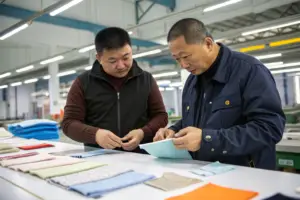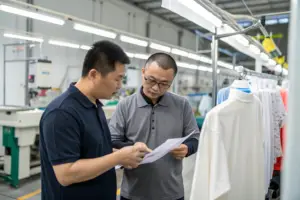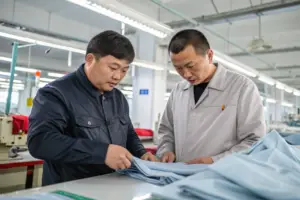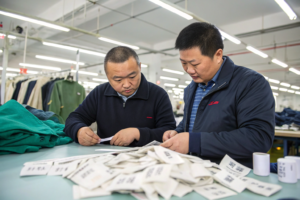
You receive your bulk order. You lay the pieces out to do a quality check. You pick up two of the same sleeve. One matches the pattern curve perfectly. The other has a wavy edge. You look at the hem of a shirt. It is supposed to be straight. It dips slightly on one side. You check the notches on the collar stand. They do not align with the notches on the collar. You realize the entire production run is slightly "off." The sewing is fine. The fabric is fine. But the fit is inconsistent. You call the factory. They tell you, "The cutter was having a busy day." This is not an acceptable answer when you are holding 2,000 units of unsellable inventory.
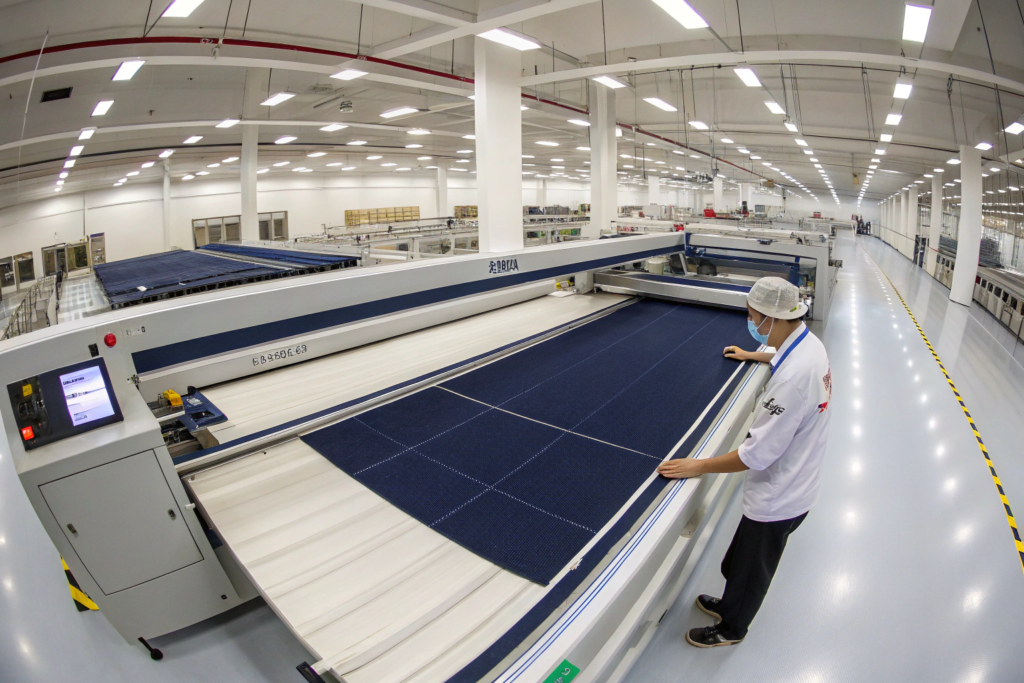
Automated cutting technology is essential for precision apparel manufacturing because it eliminates the cumulative human error inherent in manual cutting of multi-ply fabric spreads. Human cutters, even with thirty years of experience, introduce variations of 2mm to 5mm per piece due to hand fatigue, blade angle drift, and the physical difficulty of cutting through 50 layers of slippery fabric. Automated systems maintain a cutting accuracy of +/- 0.5mm across the entire spread, ensuring that every sleeve, collar, and front panel matches the digital pattern exactly. This precision is not just about aesthetics; it directly impacts the fit consistency of the final garment, reduces fabric waste by up to 15% through optimized nesting, and enables the production of complex designs that are physically impossible to cut accurately by hand.
At Shanghai Fumao, we invested in automated cutting lines specifically because we serve brands that cannot afford size drift or pattern misalignment. Let me show you exactly why this technology changes everything about how your clothes are made.
How Does Manual Cutting Introduce Errors That Automated Systems Eliminate?
You might think cutting fabric is simple. You trace a line and you cut along it. How hard can it be? Now imagine doing that with a knife that weighs four pounds. The fabric stack is six inches thick. The blade is vibrating at 3,000 RPM. You have been standing for five hours. Your back hurts. Your wrist is tired. You are on piece rate, so you need to move fast. The line on the paper marker is under the stack. You cannot see it perfectly. You are guiding the knife by looking at the edge of the paper on top. If the paper shifts by 1mm, the cut shifts by 1mm. If you tilt the knife slightly to get around a curve, the bottom layer is cut 3mm smaller than the top layer. This is not a lack of skill. This is physics and human biology.
Manual cutting introduces errors through four specific mechanisms that automated systems are designed to neutralize. First, "Blade Deflection" occurs when a straight knife bends slightly under pressure from dense fabric, creating a beveled edge where the bottom ply is smaller than the top. Second, "Operator Fatigue" leads to inconsistent speed and pressure, causing notches to be overcut or curves to become jagged polygons instead of smooth arcs. Third, "Marker Slippage" happens when the thin paper pattern moves during the cutting process, shifting the cut line without the cutter noticing. Fourth, "Inconsistent Ply Height" results in variations in the number of layers cut, affecting the repeatability of the piece shape. Automated systems use vacuum compression to lock the fabric stack in place and a computer-controlled blade that maintains perfect vertical alignment regardless of stack height.
When a client comes to Shanghai Fumao, we show them the difference between a hand-cut placket and a machine-cut placket under a magnifying glass. The difference is visible to the naked eye.
What Is Blade Deflection and Why Does It Ruin Symmetrical Pieces?
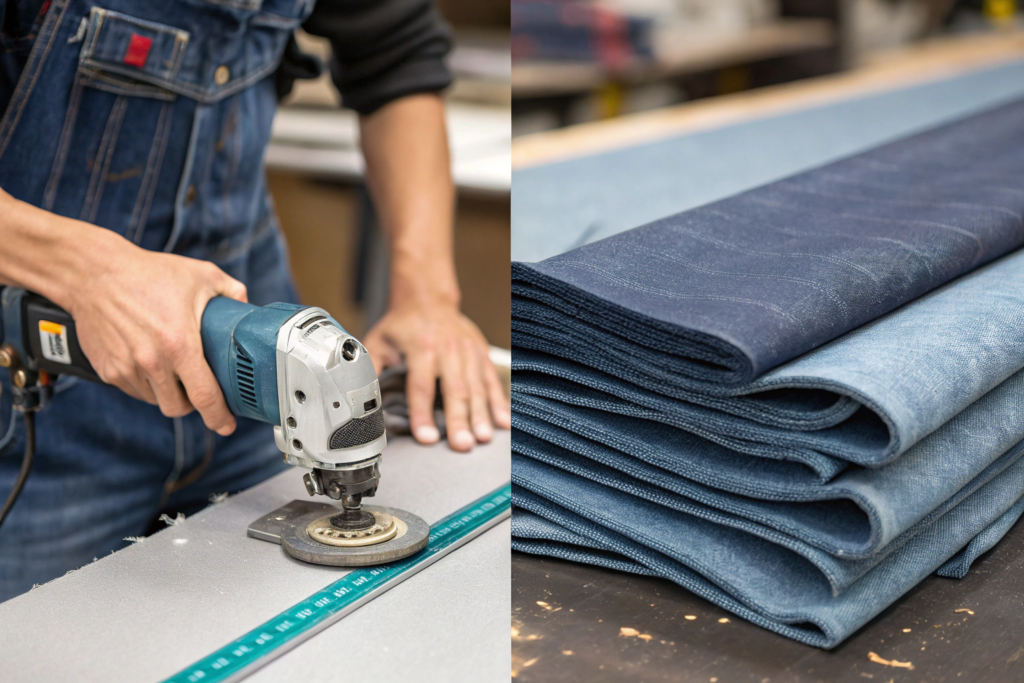
Fabric is not paper. It has density and friction. When a manual cutter pushes a vertical reciprocating knife through 50 layers of heavy French terry or denim, the resistance is enormous. The blade is a thin piece of steel. It wants to bend. This bending is called deflection.
Imagine you are cutting a men's tailored jacket front panel. The pattern has a gentle curve at the lapel. As the cutter pushes the knife around the curve, the blade bends outward, away from the curve. The top layer is cut on the correct line. The middle layers are cut slightly inside the line. The bottom layer is cut 4mm inside the line. When the sewer picks up that bottom panel, it is a different shape than the top panel. The two front panels of the jacket will not match. One lapel will roll differently than the other.
Last October, a client who makes performance polo shirts came to us after a failed run at another factory. The plackets on his polos were inconsistent. Some were 1.25 inches wide. Some were 1.5 inches wide. The buttons were not centered. The problem was blade deflection during the cutting of the placket pieces. The placket is only 2 inches wide. A 2mm deflection on each side equals a 4mm total width variance. That is visually obvious on a garment.
Our automated cutting system uses a drag knife or oscillating blade controlled by a gantry. The computer knows the exact X and Y coordinates of the blade tip. It compensates for the curve radius automatically. It adjusts the blade angle in real-time to keep it perfectly tangent to the cut line. The result is a placket that measures exactly 1.375 inches wide on every single piece, from the top ply to the bottom ply.
How Does Manual Notch Cutting Lead to Sewing Errors?
Notches are the small cuts or marks on the edge of a fabric piece that tell the sewer where to match two pieces together. They are the GPS coordinates of garment assembly. If the notch is in the wrong place, the sleeve is set into the armhole twisted. The collar does not meet the center front correctly.
Manual cutters use a small tool to snip a notch into the edge of the fabric stack. They do this by hand, for thousands of pieces. Fatigue sets in. The snips get shallower or deeper. Sometimes they miss the mark by 2mm. A 2mm error on a sleeve cap notch changes the ease distribution. The sleeve will have puckers or the shoulder will twist forward.
I recall a specific issue with a woven blouse with gathered sleeves. The client complained that the gathers were never evenly distributed. One sleeve had more gathers at the front. One had more at the back. We traced the issue back to the manual notching on the sleeve cap. The cutter had marked the notches inconsistently. The sewers were doing their best to match bad marks.
With automated cutting, the machine does not use a physical notch tool. It cuts a precise V-shaped wedge out of the edge of the fabric exactly 3mm deep. The computer places this notch at the exact coordinate specified in the digital pattern file. The placement tolerance is under 0.2mm. The sewer cannot put the sleeve in wrong because the notches only align one way. This is how you get consistent gathers across 5,000 blouses.
How Does Automated Cutting Impact Fabric Utilization and Cost Savings?
You look at your cost sheet. Fabric is the largest line item. It represents 50-60% of your total garment cost. If you can save 5% on fabric, you increase your gross margin by 3 percentage points. That is the difference between a profitable season and breaking even. Manual cutting relies on a human to arrange the pattern pieces on the fabric. They do this with paper markers. They have limited time. They use standard templates. They leave gaps between pieces to make cutting easier. Automated cutting uses a computer algorithm to nest the pieces together like a puzzle. The computer tries a thousand different arrangements in thirty seconds. It finds a layout that a human would never see. This is not just saving money. This is smart resource management.
Automated cutting technology improves fabric utilization by an average of 10-15% compared to manual marker making and cutting. This saving comes from three technological advantages. First, "Algorithmic Nesting" allows the software to rotate pieces at micro-angles and place them in spaces that a human marker maker would consider "waste." Second, "Common Line Cutting" enables the machine to cut adjacent pieces with a single shared cut line, eliminating the fabric gap required for manual knife clearance. Third, "Bufferless Placement" reduces the safety margin between pieces from 5-6mm (needed for manual cutting) to 1-2mm (controlled by machine precision). For a brand producing 10,000 units per year with an average fabric cost of $3.50 per yard, a 10% saving translates to approximately $12,000 to $18,000 in reduced material costs annually.
At Shanghai Fumao, we pass these fabric savings directly to our clients. It makes their retail pricing more competitive.
How Does Algorithmic Nesting Work for Complex Pattern Shapes?
A human marker maker works from experience. They know that a sleeve fits next to a collar. They arrange pieces in logical groups. But the human brain struggles with non-intuitive geometry.
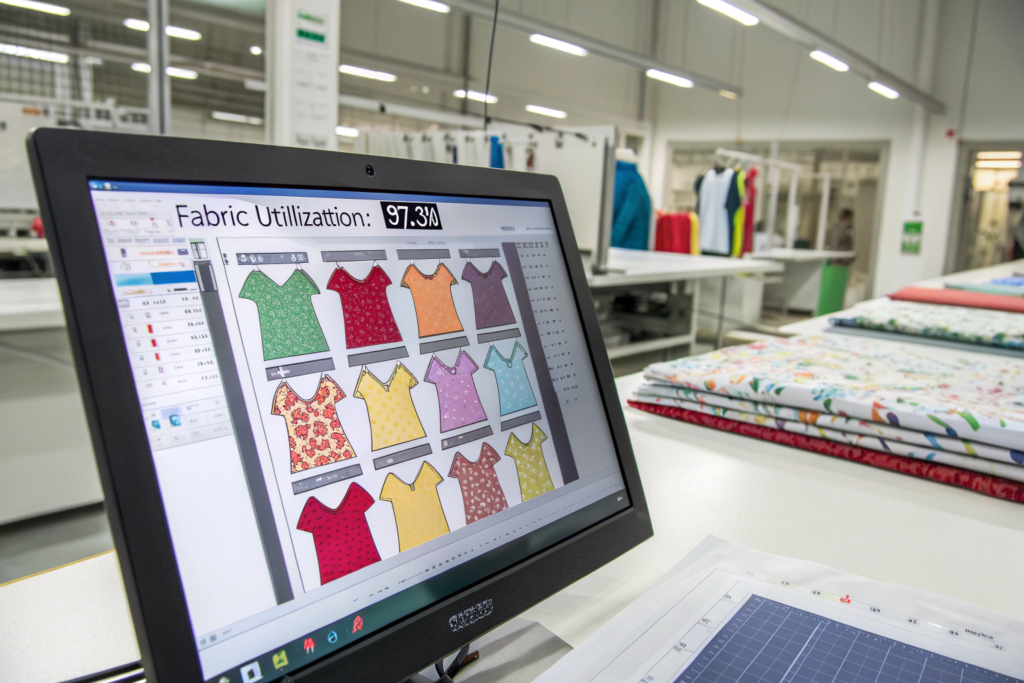
Automated nesting software uses a mathematical process called NFP (No-Fit Polygon) calculation. The software calculates the exact shape of the empty space around a piece. It then searches a database of other piece shapes to find one that fits into that empty space with zero overlap and minimal waste. It can rotate a piece by 0.37 degrees to squeeze it into a gap that a human would ignore.
Here is a real example. We produced a wrap dress with an asymmetrical front panel. The panel had a strange, sweeping curve. A manual marker placed these panels in rows, leaving large triangular voids between them. The automated system nested them like interlocking puzzle pieces. It rotated some panels 180 degrees to fit the curves together like spoons. The utilization on that specific style increased from 78% (manual estimate) to 86.5% (automated actual). On an order of 800 dresses using rayon challis at $4.20 per yard, that 8.5% saving was significant. It paid for the cutting labor for the entire order.
What Is Common Line Cutting and How Does It Eliminate Waste?
This is a feature that manual cutting physically cannot replicate. In a manual lay, the cutter needs a "lane" between pieces. This lane is where the knife travels. It is usually 5-6mm of empty fabric. That fabric becomes scrap on the cutting room floor.
In automated cutting, two pieces can share a boundary. If the straight edge of a pocket lines up perfectly with the straight edge of a facing, the machine can cut them with one single line. The software detects adjacent straight or gently curved edges and merges them into a "common line."
For example, in a men's dress shirt, the top edge of the pocket is a straight line. The bottom edge of the front band facing is also a straight line. In a manual marker, these pieces are separated by a 5mm lane of waste. With common line cutting, they are butted up against each other. The machine cuts one line that serves as both the bottom of the facing and the top of the pocket. Zero waste between those pieces.
Over the course of a full shirt marker, common line cutting can recover 2-3 inches of fabric per yard. That is 2-3% of your total fabric cost saved just by using a smarter blade path. This is pure efficiency that goes straight to your bottom line.
| Cutting Method | Typical Fabric Utilization | Safety Margin Between Pieces | Complex Curve Accuracy |
|---|---|---|---|
| Manual (Hand Shears) | 70-75% | 8-10mm | Low; relies on cutter skill and steady hand. |
| Manual (Electric Straight Knife) | 75-80% | 5-8mm | Medium; curves become segmented due to blade width. |
| Automated (Conveyor Cutter) | 82-88% | 1-2mm | High; continuous smooth curves with tangential blade control. |
| Automated (Laser Cutter) | 85-90% | 0mm (sealed edges) | Very High; ideal for synthetic fabrics and intricate lace. |
How Does Automated Cutting Ensure Consistent Fit Across Large Production Runs?
You have a fit model. You spend hours perfecting the sample. The armhole is the right depth. The shoulder slope is natural. The chest has exactly 4 inches of ease. You approve it. Now the factory has to make 3,000 of these. If the cutting is inconsistent, the fit is inconsistent. You will get returns. You will get bad reviews saying "runs small" or "weird fit in the shoulders." The customer does not care that the cutter was tired on Tuesday. They only know that their shirt does not fit like the one in the photo.
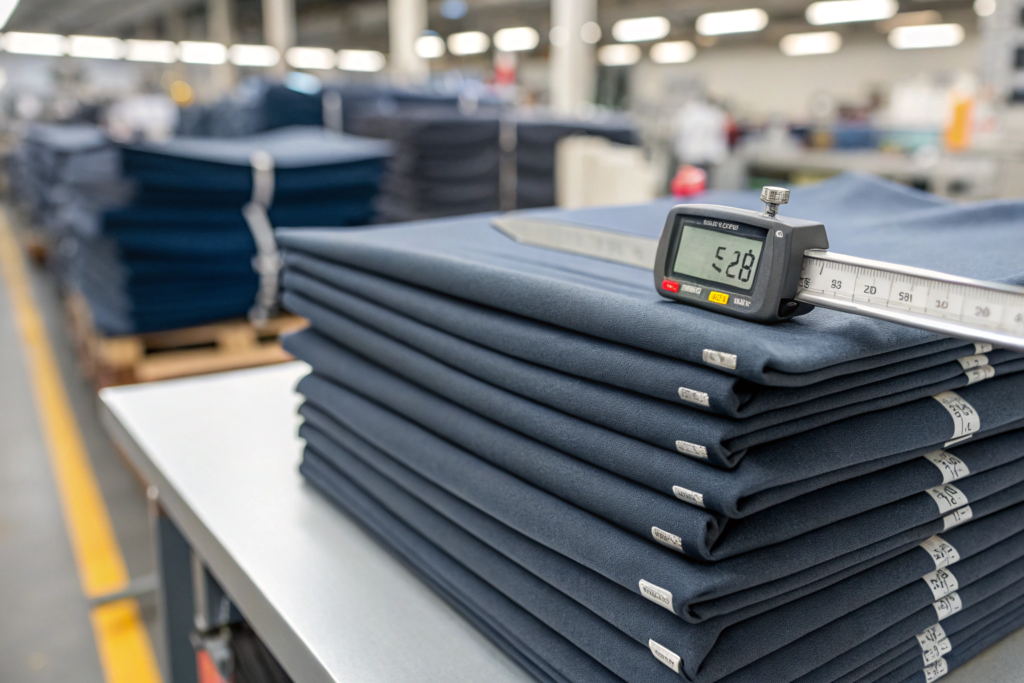
Automated cutting ensures consistent fit across large production runs by maintaining identical piece geometry for every unit in the order. In manual cutting, the combination of blade deflection, marker shifting, and ply compression creates a "size distribution" within a single size run. A stack of 50 size Medium front panels will actually contain a range of sizes from "Small-Medium" (bottom ply) to "Medium-Large" (top ply). When these pieces are randomly distributed to the sewing line, the resulting garments have a bell curve of measurements. Automated cutting eliminates this intra-size variance. Every piece, from the first cut to the last, matches the digital pattern file within a tolerance of +/- 0.5mm. This geometric consistency means the sewer sews the same seam allowance every time, producing a garment that measures identically to the approved sample.
At Shanghai Fumao, we measure our cut panels against the hard pattern every morning. The variance is so small it is difficult to see with the naked eye.
Why Does Intra-Size Variance Destroy Brand Trust?
Imagine a customer buys a shirt from you online. It is a size Large. It fits perfectly. She loves it. She orders the same shirt in a different color two months later. It is also a size Large. She puts it on. The shoulders are tight. The sleeve is shorter. She measures it against the first shirt. It is 3/4 inch narrower in the chest. She is confused. She thinks your brand has "inconsistent sizing." She leaves a three-star review. She does not buy again.
This is intra-size variance. It is caused by the manual cutting process where pieces from the top of the stack are slightly larger than pieces from the bottom. The factory does not track which ply a piece came from. They sew them randomly. The resulting box of finished goods contains a mixture of "generous" Large shirts and "slim" Large shirts. This is a silent brand killer.
Last year, we worked with a client who sold linen button-down shirts online. They had a 15% return rate for "fit issues." They thought it was the design. They thought it was the linen fabric. We moved their production to our automated cutting line. We cut all 2,000 shirts for their Spring collection with the automated system. The return rate for fit issues on that specific style dropped to 4% for the same season the following year. The only variable that changed was the cutting method. The fabric was the same. The sewing line was the same. The cut pieces were just more consistent.
How Does Consistent Seam Allowance Depend on Precise Cutting?
Sewing operators rely on guides. On an industrial machine, there is a metal plate with markings. The operator aligns the edge of the fabric with a marking to sew a 1/4 inch or 1/2 inch seam. This works perfectly if the edge of the fabric is where it is supposed to be.
If the cutting was wavy, the operator cannot follow the guide accurately. They have to guess. They might trim a bit off or leave a bit on. This changes the finished measurement of the garment.
With automated cutting, the edge is a perfectly straight line or a mathematically smooth curve. The operator can run the fabric edge against the guide with confidence. The seam allowance remains constant around the entire perimeter of the piece.
Consider the armhole of a tailored jacket. It is a complex curve. A manual cutter might create small flat spots on the curve due to the straight blade. The sewer then tries to sew a 3/8 inch seam on a curve that has a flat segment. The result is an armhole that is slightly distorted. It does not match the sleeve cap correctly. The automated cutter produces a continuous, fluid curve. The sleeve fits into it like a puzzle piece. The finished garment has a clean, professional hang. This is the difference between a garment that looks "homemade" and one that looks "designed."
How Does Automated Cutting Enable More Complex and Detailed Designs?
You have a design in your head. It has sharp, geometric corners. It has intricate, interlocking panels. You sketch it. Your pattern maker says, "This is beautiful, but it will be expensive to cut." You ask why. She says, "The cutter will have to slow down for every sharp corner. They might overcut the seam allowance. We will have high waste." You simplify the design. You compromise your vision because the manufacturing process cannot support it. Automated cutting removes this limitation. The machine does not care if the corner is 90 degrees or a smooth curve. It does not care if the pattern has 50 small pieces or 5 large ones. The time to cut a complex shape is the same as a simple shape. This opens up a new world of design possibilities.
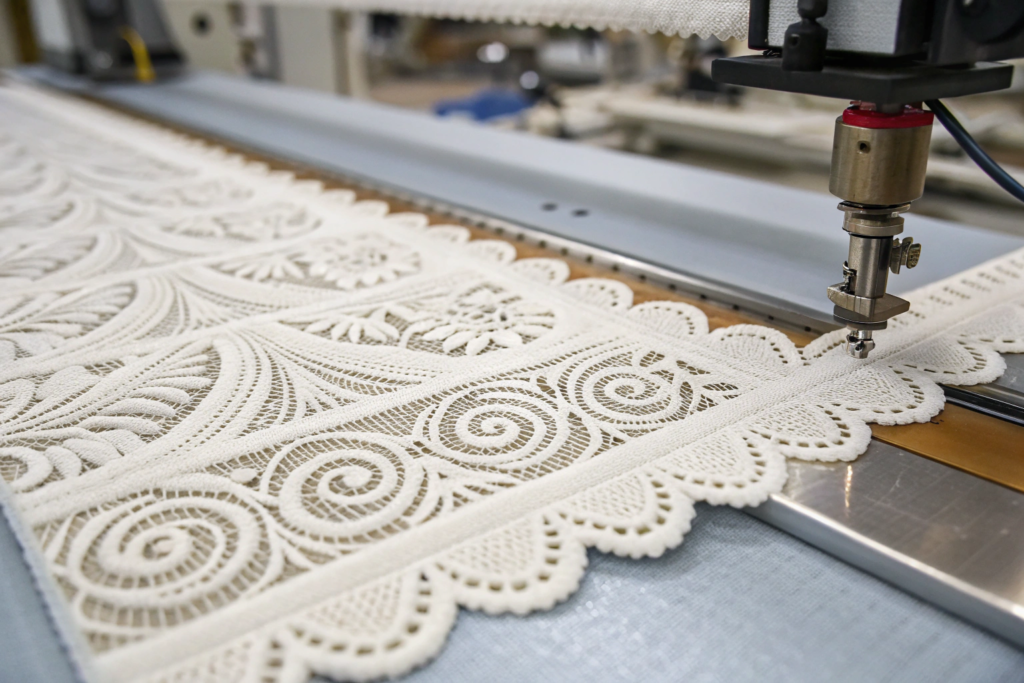
Automated cutting technology enables complex and detailed apparel designs that are commercially unviable with manual cutting methods. Three specific design features become feasible with automation: (1) Sharp internal corners and notches that require a precise change in blade direction without overcutting the seam allowance, (2) Intricate interlocking pattern pieces used in color-blocking or contrast panel designs where alignment is visually critical, and (3) Contour cutting of printed fabrics where the cut line must follow a specific element of the print (e.g., a floral border or geometric repeat). Manual cutters simply cannot achieve the required accuracy or speed for these operations at scale. Automation allows designers to push creative boundaries without increasing production cost or defect rates.
At Shanghai Fumao, we encourage our clients to use our automated capabilities as a design asset. Show us the complicated piece. We can cut it.
Why Is Contour Cutting Impossible Without Automation?
Contour cutting means the cut line is not a simple geometric shape. It follows a printed design. Imagine a dress with a large floral print. You want the hem to follow the edge of a specific flower petal. You want the neckline to mirror a vine in the print.
With manual cutting, this is a nightmare. The cutter would have to look at the print on the top layer and try to follow it. The layers below are hidden. They would be cut randomly through the middle of the flowers. The result would be a mess.
Automated systems use vision registration. A camera on the cutting head scans the printed fabric. It recognizes specific registration marks or the print pattern itself. The software then adjusts the digital cut file in real-time to align with the print. The machine cuts every single layer so that the flower petal is exactly at the hem, on every single garment in the run.
We produced a printed maxi dress last summer for a client in California. The design had a large border print along the selvedge. She wanted the border to run perfectly along the hem of the skirt. We used the vision system on our cutter. The camera locked onto the border edge. The machine cut every skirt panel so the border was exactly 1/2 inch from the hem fold line. It was perfect on all 600 dresses. This kind of precision creates a high-end, "expensive" look that commands a higher retail price. Manual cutting cannot deliver this.
How Does Automation Handle Sharp Corners Without Overcutting?
A sharp corner on a pattern piece is a stress point. If the cutter cuts even 1mm past the corner, that creates a weak point where the fabric can tear. This is called "overcutting." Manual cutters are trained to stop short and snip with scissors. But on a thick stack, the bottom layers often get overcut because the blade tip is hidden.
Automated cutting systems use corner deceleration. The software sees the sharp corner coming. It slows the blade down to almost zero speed right at the apex of the corner. It then changes direction precisely and accelerates away. The cut is sharp and stops exactly at the intersection of the seam lines.
This is essential for welt pockets, lapel points, and slit openings. A jacket lapel with a slightly rounded tip looks soft and cheap. A lapel with a razor-sharp point looks tailored and expensive. That sharp point is only possible with automated cutting precision. The cutter does not round the corner to save time or avoid overcutting. It follows the math exactly.
| Design Feature | Manual Cutting Feasibility | Automated Cutting Feasibility | Visual/Brand Impact |
|---|---|---|---|
| Razor-Sharp Lapel Point | Low; often rounded off | High; precise corner deceleration | Signals high-end tailoring and attention to detail. |
| Contour Cut Printed Border | Impossible at scale | High; uses vision registration | Creates a designer look; elevates perceived value. |
| Complex Interlocking Panels | Medium; high waste from misalignment | High; perfect piece matching | Enables unique color-blocking and seam-line designs. |
| Intricate Lace or Cutwork | Very Low; fabric distortion | High; especially with laser cutting | Allows for premium, delicate detailing. |
Conclusion
Automated cutting technology is not just a shiny machine on a factory floor. It is the quiet foundation of a consistent, profitable, and well-fitting apparel brand. When you hold a shirt that drapes perfectly, whose collar sits flat, and whose seams match exactly, you are likely holding a garment cut by a computer-guided blade.
We have walked through the specific failures of manual cutting. Blade deflection steals millimeters from the bottom layer of fabric, creating size drift. Manual notching leads to twisted sleeves and misaligned collars. The inefficiency of human marker making burns 10-15% of your fabric budget on the cutting room floor. And the limitations of the human hand force designers to simplify their creative vision.
Automated cutting solves these problems at the root. It guarantees that every piece in your production run is an identical twin of the approved sample. It ensures the sewer has a clean, precise edge to guide their seam. It recovers fabric waste that pays for the technology itself. And it allows you to design garments with sharp corners, matched prints, and intricate panels that would be impossible to produce by hand.
At Shanghai Fumao, we made the decision to invest in automated cutting lines because we saw the frustration in our clients' eyes. The frustration of inconsistent fit. The frustration of high fabric costs. The frustration of having to say "no" to a beautiful design because it was "too hard to cut." We believe that precision manufacturing should be accessible to brands of all sizes, not just the global giants.
If you are ready to experience the difference that true precision makes in your apparel production, we are here to help. Our automated cutting systems are integrated with our pattern making and sewing operations to deliver a seamless, consistent product. Whether you are cutting simple t-shirts or complex tailored jackets, the math is the same. The accuracy is the same.
To discuss how our cutting capabilities can improve the consistency and profitability of your next collection, please reach out to our Business Director, Elaine. She can provide you with a detailed overview of our cutting room technology and how it translates to better-fitting garments for your customers.
Email: elaine@fumaoclothing.com