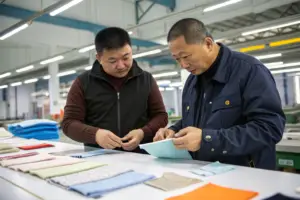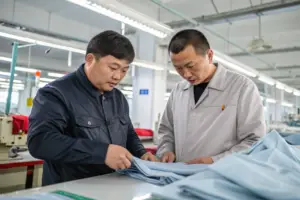
I have run a clothing factory for over twenty years. I have seen many of my clients struggle with one thing more than anything else. It is not finding a factory. It is not negotiating prices. It is managing their inventory after the goods leave my dock. They order a container of beautiful jackets. They are excited. Then the jackets arrive. They fill a warehouse. Money that should be in their bank account is now sitting in a stack of boxes. They cannot pay their bills. They cannot order the next collection. They are stuck. I have watched some of my best clients fail not because their designs were bad, but because they did not manage their inventory well.
Mastering wholesale apparel inventory management is about balancing three things: having enough stock to meet demand, not having so much stock that your cash is trapped, and knowing exactly what you have at all times. The art is in the systems you build. When you have the right systems, you can forecast accurately, turn inventory quickly, and free up cash for growth. Without these systems, your inventory becomes a liability instead of an asset.
This is what I want to share with you today. I am a factory owner who has watched successful brands manage inventory brilliantly and struggling brands make costly mistakes. I will walk you through the principles I have learned from my clients. I will use real examples from my own factory experience. By the end, you will have a framework for managing wholesale apparel inventory that protects your cash flow and supports your growth.
How do you forecast demand accurately for wholesale orders?
Forecasting is the foundation of inventory management. Get it right, and your inventory turns smoothly. Get it wrong, and you have too much or too little. I have seen both problems hurt my clients.

What data should you use to build your forecast?
The best forecast uses multiple data sources. I learned this from a client in Chicago who ran a children's wear brand. They never had stockouts. They never had excess inventory. I asked them how they did it. They showed me their forecasting system. They used five types of data:
-
Historical sales data: They looked at what sold in the same season last year. They adjusted for growth.
-
Current sell-through rates: They tracked how fast products were moving right now.
-
Pre-order data: They offered pre-orders to their best customers. Those orders told them what was hot.
-
Marketing calendar: They knew which products would be promoted. They planned inventory for those spikes.
-
External trends: They watched fashion trends. They read industry reports. They adjusted their forecast based on what was coming.
I remember one season when they saw a trend for color-blocked hoodies on social media. They added a small test order to their forecast. That test sold out in two weeks. They quickly placed a reorder. Because they had the data and the system, they captured the trend without overcommitting.
Here is a simple forecast template we share with our clients:
| Data Source | What to Track | How Often to Review |
|---|---|---|
| Historical sales | Units sold by SKU, by season | Quarterly |
| Sell-through rate | % of inventory sold per week | Weekly |
| Pre-orders | Units pre-ordered by customers | Before production |
| Marketing promotions | Expected lift from each campaign | Before campaign |
| Industry trends | Emerging styles and colors | Monthly |
How do you account for lead times in your forecast?
Lead time is the gap between placing an order and receiving the goods. If you do not account for lead time, you will run out of stock. I have seen this happen so many times.
A client from Los Angeles in 2022 learned this lesson. They had a successful t-shirt line. They sold out in three weeks. They were happy. Then they tried to reorder. Our lead time was 90 days from fabric sourcing to delivery. By the time the new shirts arrived, the season was over. They missed three months of sales. Their customers went to other brands.
Now, that client plans differently. They know their lead time. They order 90 days before they need the inventory. They build safety stock for best-sellers. They order a second batch when the first batch is 50% sold. They never run out again.
Here is how lead time affects your order timing:
| Lead Time Component | Typical Duration | What to Do |
|---|---|---|
| Fabric sourcing | 2-6 weeks | Order fabric early for core styles |
| Production | 4-8 weeks | Plan production slots in advance |
| Shipping | 3-6 weeks | Factor in ocean freight time |
| Customs clearance | 1-2 weeks | Work with a reliable broker |
| Total lead time | 10-22 weeks | Order 3-5 months before needed |
At Shanghai Fumao, we help our clients with this. We give them our production schedule. We tell them when to order to hit their launch dates. We work with them to plan reorders. A client who plans with us never has a stockout. That is the goal.
What inventory management systems protect your cash flow?
Inventory is cash. When you buy inventory, you are converting cash into goods. When you sell those goods, you convert them back into cash. The faster this cycle, the healthier your business. Systems that slow this cycle are dangerous.

How do you calculate and improve inventory turnover?
Inventory turnover is the number of times you sell and replace your inventory in a year. A higher turnover is better. It means your cash is moving fast.
In apparel, a good turnover is 3 to 5 times per year. That means your inventory sits for about 2 to 4 months before it sells. I have seen brands with turnover of 1 or 2 times per year. They have cash tied up for 6 to 12 months. That is a problem.
Here is how to calculate turnover:
Turnover = Cost of Goods Sold ÷ Average Inventory Value
For example, if you sold $500,000 worth of goods in a year and your average inventory was $100,000, your turnover is 5 times per year.
A client in Denver taught me about turnover. They tracked it weekly. When turnover dropped below 3, they ran promotions. They offered discounts to move slow stock. They used the cash to order new styles. Their turnover stayed at 4 to 5 consistently. Their business grew 40% in two years without needing outside investment.
Here are turnover benchmarks for apparel:
| Turnover Rate | Performance | What It Means |
|---|---|---|
| 1-2 times per year | Poor | Cash is tied up for 6-12 months. High risk of obsolescence. |
| 3-4 times per year | Good | Cash turns every 3-4 months. Healthy business. |
| 5-6 times per year | Excellent | Cash turns every 2 months. Very efficient. |
| 7+ times per year | Exceptional | Usually only for fast fashion or very high demand items. |
What is the 80/20 rule in inventory management?
The 80/20 rule applies to inventory. About 20% of your SKUs will generate 80% of your sales. These are your best-sellers. The other 80% of your SKUs are slow-movers. They tie up cash.
I had a client in New York who learned this the hard way. They launched a collection with 50 styles. They thought more styles meant more sales. They ordered minimum quantities for each style. After six months, 10 styles had sold 85% of the total units. The other 40 styles were sitting in a warehouse. They had $80,000 tied up in slow-moving inventory. They could not order the next collection until they sold that stock.
Now, that client uses the 80/20 rule. They focus on their best-sellers. They order deeper on those styles. They test new styles with small orders. If a new style becomes a best-seller, they reorder quickly. If it does not sell, they clear it out fast. Their cash flow improved dramatically.
Here is how to apply the 80/20 rule:
| Category | % of SKUs | % of Sales | Action |
|---|---|---|---|
| Best-sellers | 20% | 80% | Order deeper. Keep in stock. Promote heavily. |
| Test styles | 20% | 15% | Order small. Test quickly. Reorder if successful. |
| Slow-movers | 60% | 5% | Clear out. Discount. Do not reorder. |
At Shanghai Fumao, we help clients apply this rule. We offer smaller minimum order quantities for test styles. We help them reorder quickly for best-sellers. We work with them to plan inventory that matches their sales patterns.
How do you manage seasonal inventory without getting stuck?
Seasonal inventory is the hardest to manage. Winter coats in July are not worth much. Summer dresses in December are hard to sell. If you do not manage seasonality, you will end each season with leftover stock that becomes a loss.

When should you place orders for seasonal products?
Timing is everything for seasonal inventory. Order too early, and you pay for storage for months. Order too late, and you miss the season.
A client in Seattle taught me a simple rule. They order winter goods in March and April. That is 6 to 7 months before the season starts. Why so early? Because production takes time. Shipping takes time. They want the goods in their warehouse by August. That gives them time to sell to retailers before the winter season begins.
For summer goods, they order in September and October. The goods arrive in February. They sell to retailers in March and April. Their customers have the goods in time for the summer selling season.
Here is a seasonal ordering timeline we recommend:
| Season | Order Placement | Production | Shipping | In Warehouse By | Sell To Retailers |
|---|---|---|---|---|---|
| Spring/Summer | September-October | November-December | January-February | February-March | March-April |
| Fall/Winter | March-April | May-June | July-August | August-September | September-October |
If you miss these windows, you miss the season. I have seen clients order winter coats in August. They arrived in November. By then, retailers had already placed their orders. The client had to hold the coats for a full year. That cash was tied up for 12 months.
What strategies clear seasonal inventory before it becomes dead stock?
Dead stock is inventory that you cannot sell at full price. It becomes a loss. The goal is to clear seasonal inventory before it becomes dead stock.
I learned a strategy from a client in Texas. They had a simple rule. Six weeks before the end of the season, they started marking down slow-moving seasonal items. They offered 20% off to their wholesale customers. Then 30% off. Then 40% off. By the time the season ended, they had very little left.
They told me, "I would rather sell it at 50% off than hold it for a year." They were right. Selling at a discount recovers some cash. Holding it costs money for storage. And next year, the style might not be popular anyway.
Here is a clearance timeline for seasonal inventory:
| Time | Action | Discount |
|---|---|---|
| 6 weeks before season end | Identify slow-movers | Start at 20% off |
| 4 weeks before season end | Promote to wholesale buyers | 20-30% off |
| 2 weeks before season end | Final push to retailers | 30-40% off |
| Season end | Sell remaining to off-price channels | 40-60% off |
| After season | Donate or liquidate | 70%+ off or write off |
One client in Florida used this system for a swimwear line. They cleared 95% of their seasonal inventory before the end of summer. The 5% that remained was donated to a charity. They took a tax deduction. Their cash flow stayed healthy. They ordered the next season with confidence.
At Shanghai Fumao, we help clients plan for seasonality. We tell them when to order to hit their seasonal windows. We offer flexible production schedules so they can reorder if a style takes off. We want them to succeed with their seasonal planning.
How do you build a relationship with your factory to support inventory management?
Your factory is your partner in inventory management. If you treat them as a vendor, you will have problems. If you treat them as a partner, they will help you manage your inventory better.

How does transparent communication improve your inventory planning?
I have seen this work both ways. Clients who share their sales data with us get better service. We know what is selling. We know what they will need next. We can plan our production schedule around their needs.
A client in Austin shares their sell-through reports with us every month. They tell us which styles are selling fast. They tell us which colors are popular. They tell us their forecast for the next season. With this information, we reserve production capacity for them. We source fabric in advance. When they need a reorder, we can start production immediately. Their reorder lead time is half of what it is for clients who do not share data.
Here is what we can do when a client shares information:
| Information Shared | What We Can Do | Benefit to Client |
|---|---|---|
| Sell-through data | Reserve fabric for best-sellers | Faster reorder times |
| Forecast for next season | Block production capacity | Guaranteed production slots |
| Marketing calendar | Plan for demand spikes | Ready inventory for promotions |
| Inventory levels | Suggest reorder quantities | Optimal stock levels |
How do flexible production runs support your inventory needs?
Minimum order quantities are a challenge for inventory management. If a factory requires large minimums, you have to order more than you need. That creates excess inventory.
At Shanghai Fumao, we offer flexible production runs. For core styles that sell consistently, we offer lower minimums. For test styles, we offer sample runs of 50 to 100 pieces. For reorders, we can run small batches to top up inventory.
I had a client in Boston who loved this flexibility. They would order 500 pieces of a new style. If it sold well, they would reorder 500 more. They never had too much inventory. They never ran out of stock. Their inventory turnover was 6 times per year. Their business grew steadily without cash flow problems.
Flexible production runs require planning. We need to know your needs in advance. But when we work together, we can build a production schedule that matches your sales pattern.
Here are the flexible options we offer:
| Order Type | Minimum Quantity | Best For |
|---|---|---|
| Test run | 50-100 pieces per style | New styles, limited editions |
| Standard production | 300-500 pieces per style | Core styles, proven sellers |
| Reorder | 100-200 pieces per style | Topping up best-sellers |
| Bulk production | 1,000+ pieces per style | High-volume core styles |
At Shanghai Fumao, we want to be your partner in inventory management. We do not just make clothes. We help you plan. We help you forecast. We help you reorder quickly. We help you avoid excess inventory. When you succeed, we succeed.
Conclusion
Mastering wholesale apparel inventory management is an art. It takes practice. It takes systems. It takes discipline. But it is possible. I have seen my clients do it. They start with accurate forecasting. They use historical data, pre-orders, and trend analysis to know what to order. They account for lead times so they never run out. They track their inventory turnover. They know which styles are their best-sellers and which are slow. They manage seasonality by ordering at the right time and clearing inventory before it becomes dead stock. And they build a partnership with their factory that gives them flexibility and speed.
When you master these skills, your cash flow improves. You can order new collections without worrying about old stock. You can grow your business without taking on debt. Your inventory becomes an asset that works for you, not a liability that holds you back.
At Shanghai Fumao, we are committed to helping our clients manage their inventory well. We share our production schedules. We offer flexible minimums. We communicate openly. We want to be your partner in building a healthy, growing business.
If you are looking for a factory that understands the importance of inventory management, I invite you to talk to us. Let us discuss how we can help you forecast better, order smarter, and turn your inventory faster.
You can contact our Business Director, Elaine, directly. She can walk you through our production planning process. She can explain how we support our clients with flexible orders and reorder capabilities. Her email is: elaine@fumaoclothing.com. Let us help you master the art of inventory management together.