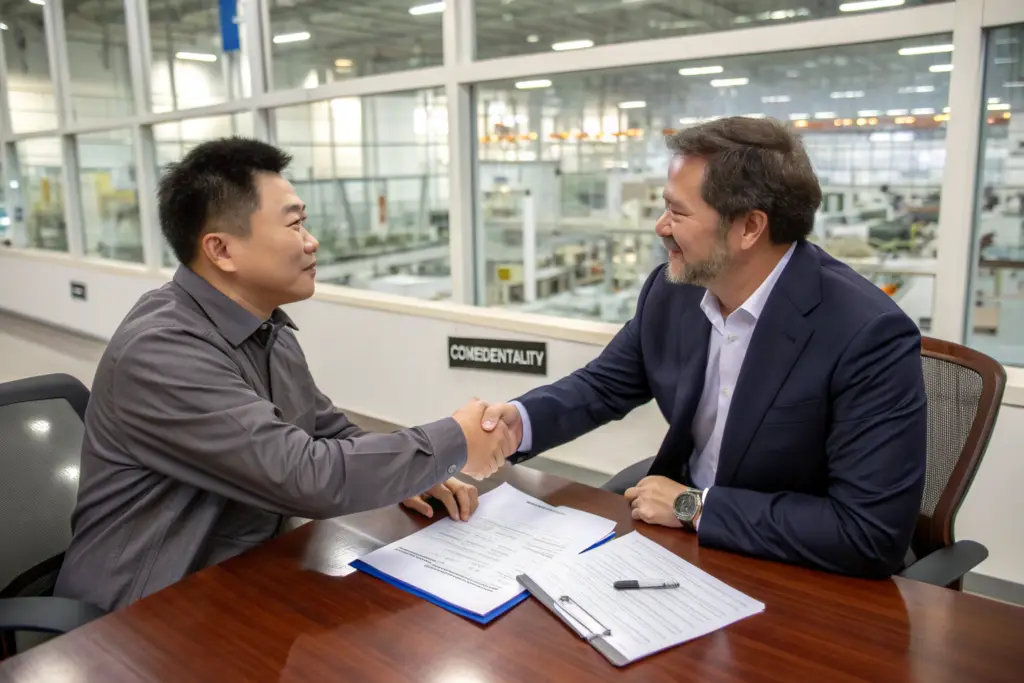
I have been in the garment manufacturing business for over twenty years. In that time, I have signed hundreds of Non-Disclosure Agreements. Some were a single page. Some were twenty pages. Every American brand that comes to my factory wants protection. They want to know their designs will not be copied. They want to know their suppliers will not be stolen. They want to know their costs will not be shared. I understand this completely. Your designs are your assets. Your supplier relationships are your advantage. Your pricing is your margin. You need to protect them. But here is the truth I have learned. An NDA is just a piece of paper. Enforcement is what makes it real.
Enforcing a strict Non-Disclosure Agreement with a garment factory requires a combination of careful factory selection, precise contract drafting, physical separation of production, digital security measures, and a clear understanding of the legal jurisdiction. An NDA alone will not stop a bad actor. But a well-structured agreement paired with operational controls creates a system where the factory has both the incentive and the practical limitation to protect your secrets.
This is what I want to share with you today. I am a factory owner who has operated under strict NDAs for major American brands. I know what works and what does not. I will walk you through the practical steps to enforce confidentiality. I will use real examples from my own experience. By the end, you will have a clear framework for protecting your intellectual property when manufacturing overseas.
How do you select a factory that will respect your confidentiality?
The enforcement of an NDA starts before you sign it. It starts with who you choose to work with. Not all factories are the same. Some have a culture of confidentiality. Some do not. You need to find the ones that do.

What questions should you ask before signing an NDA?
I have sat on the other side of the table many times. A brand buyer comes to visit my factory. They ask questions. The questions they ask tell me a lot about how serious they are about protection. Here are the questions I think you should ask any potential factory partner:
- "How many NDAs have you signed in the last three years?"
- "Can you show me your confidentiality training materials for staff?"
- "How do you physically separate production for different clients?"
- "Who in your organization has access to client design files?"
- "What is your process for handling digital files?"
- "Have you ever had a confidentiality breach? How was it handled?"
A good factory will have clear answers. They will not be defensive. They will see these questions as normal. A bad factory will hesitate. They will say "trust us" without providing details. That is a red flag.
I remember a client from Los Angeles in 2022. They were launching a new activewear line. They visited three factories. The first two gave vague answers about confidentiality. The third, which was our factory, showed them our secure server system. We showed them our locked design room. We showed them our training log where staff signed confidentiality agreements. The client chose us. They told me later that our transparency about security was the deciding factor.
How does a factory's reputation and client history matter?
Reputation is hard to verify. But it is important. A factory that has worked with established American brands for years is less likely to risk that relationship. The cost of a breach is too high. They would lose their best clients.
In 2021, a client from New York asked me for references. They wanted to talk to other American brands we had worked with. I provided three contacts. All three gave positive feedback about our confidentiality practices. One brand told the client, "We have given them our full tech packs for five years. We have never seen our designs copied." That reference was powerful. The client signed with us.
I suggest you ask for references. Call them. Ask specific questions about confidentiality. Ask if the factory has ever shared their designs with others. Ask if they have ever had a supplier poached. The answers will tell you a lot.
At Shanghai Fumao, we have a policy. We do not disclose client names without permission. But with client permission, we are happy to provide references. We are proud of our reputation. We have worked with over 30 American brands in the last decade. None have reported a confidentiality breach from our side. That track record is our strongest selling point.
What key elements make an NDA enforceable in China?
An NDA is only as good as the legal system behind it. Many American brands make a mistake. They use a template from the United States. They translate it into Chinese. They think it is enforceable. It is not that simple. Chinese contract law is different. You need an agreement that works within the Chinese legal framework.
Why does jurisdiction matter in your NDA?
The first question you need to answer is this: where will disputes be resolved? If your NDA says "New York law applies and disputes will be heard in New York courts," you have a problem. A Chinese factory is not going to travel to New York to defend a lawsuit. And a New York judgment is difficult to enforce in China.
The better approach is to use Hong Kong arbitration. Hong Kong has a separate legal system. It is recognized by both China and the United States. Arbitration awards from Hong Kong are enforceable in China under the New York Convention. This is a practical solution that both sides can accept.
I have seen this work. In 2020, a client from Chicago had a dispute with a different factory. They had a Hong Kong arbitration clause. The factory breached the NDA. The client filed for arbitration. The factory knew they had to respond. They settled before the hearing. The arbitration clause gave the client leverage.
At Shanghai Fumao, we accept Hong Kong arbitration in our NDAs. We also accept international arbitration in Singapore. We prefer these neutral venues. They are fair to both sides. They are also enforceable. When a client sees that we are willing to accept binding arbitration, they know we are serious about the agreement.
What specific terms should your NDA include?
A generic NDA is not enough. You need specific terms that match your business. Here are the key elements I recommend:
-
Definition of Confidential Information: Be specific. Do not just say "all information." List categories. Design files, tech packs, supplier lists, pricing, production volumes, sampling details. The more specific, the easier to enforce.
-
Exclusions: Define what is not confidential. Information that is already public. Information the factory developed independently. Information you shared with others without restriction. This protects the factory from unfair claims.
-
Duration: How long does the obligation last? For design files, I see 5 to 10 years. For supplier lists, perpetual confidentiality is common. Be reasonable. A lifetime NDA on everything may be seen as unfair.
-
Permitted Disclosures: Specify who can see the information. Usually, only employees who need to know. Subcontractors must sign separate NDAs. This prevents the factory from sharing your information with their vendors without your permission.
-
Return of Materials: What happens when the project ends? The factory must return or destroy all confidential materials. We have a process for this. We provide a certificate of destruction for digital files.
-
Liquidated Damages: This is important. Specify a damage amount for breach. It should be reasonable. Too high, and a court may not enforce it. Too low, and it does not deter breach. I see amounts between $50,000 and $200,000 for most projects.
-
Injunctive Relief: The NDA should state that monetary damages are not enough. You have the right to seek a court order to stop the breach. This is critical for design protection.
I remember a client from San Francisco in 2023. Their NDA was very detailed. It specified that their pattern makers' names were confidential. It specified that their fabric sourcing agent was confidential. It specified that their per-unit cost breakdown was confidential. The factory owner was surprised by the detail. But he signed. He knew the client was serious. That seriousness made him more careful.
How do operational controls reinforce your NDA?
A contract is a promise. But operational controls make it hard to break that promise. I have learned that physical and digital separation is the most effective way to protect client information.
How do you separate production for different clients?
In our factory, we have a simple rule. Client A's production does not mix with Client B's production. We use different cutting tables. We use different storage bins. We use different production lines when possible. This separation serves two purposes. First, it prevents accidental mixing. Second, it prevents one client from seeing another client's product.
In 2022, we had two activewear clients producing at the same time. Both were using similar fabrics. Both were making leggings. But the designs were different. One was a premium brand. One was a mid-tier brand. We kept them completely separate. We assigned different production teams. The teams did not share information. The premium brand client visited during production. They saw their product on their dedicated line. They saw no sign of the other brand. They commented on how professional the separation was.
Physical separation extends to sample rooms. We have a locked sample room. Only designated staff have access. All client samples are stored in locked cabinets. When a client visits, they see only their own samples. They do not see work from other clients unless we have permission to show it.
At Shanghai Fumao, we have a policy. No client sees another client's product. Not in sampling. Not in production. Not in storage. This physical separation is a form of enforcement. It makes it practically impossible for us to accidentally or intentionally share your designs.
What digital security measures should your factory have?
Digital security is where many factories fall short. Your designs exist as digital files. Tech packs are emailed. Patterns are shared. Photos are taken. If these files are not protected, your NDA is worthless.
I recommend you ask your factory about these digital security measures:
-
Secure file transfer: Does the factory use encrypted file sharing? Or do they ask you to email files? Email is not secure. We use a secure portal. Each client has their own login. Files are encrypted in transit and at rest.
-
Access controls: Who can see your files? In our factory, only the pattern maker, the production manager, and the quality control manager have access. Other staff do not have passwords. We also have a policy. No personal phones in the design room. No photos of tech packs.
-
Server security: Are servers protected? Do they have firewalls? Do they have access logs? We keep logs of who accesses each file. We can trace any breach to a specific person and time.
-
Offboarding: What happens when an employee leaves? Do they keep access to files? We have a process. When an employee leaves, their access is revoked immediately. They sign a confidentiality agreement upon departure. We have never had a former employee take client files.
I remember an incident in 2021. A new employee took a photo of a client's tech pack with their phone. They wanted to ask a question about the design. The photo was on their personal device. Our quality manager saw this. He reported it. We immediately deleted the photo from the employee's phone. We also had a conversation with the employee about our policies. We reported the incident to the client. The client appreciated our transparency. They were reassured that we took even small breaches seriously.
Here is a checklist of digital security measures to discuss with your factory:
| Security Measure | What to Ask | Why It Matters |
|---|---|---|
| File transfer method | "Do you use encrypted portals or email?" | Email is vulnerable. Portals provide tracking and security. |
| Access logs | "Can you show me who accessed my files?" | Traceability deters unauthorized access. |
| Personal device policy | "Are phones allowed in design areas?" | Prevents photos of confidential materials. |
| Server location | "Where are your servers located?" | Servers in China have different legal protections. |
| Offboarding process | "What happens when an employee leaves?" | Prevents former employees from taking files. |
How do you monitor and enforce compliance over time?
Enforcement is not a one-time event. It is an ongoing process. You need to monitor compliance. You need to check that the factory is following the rules. And you need to have a plan for when things go wrong.
How often should you audit your factory's confidentiality practices?
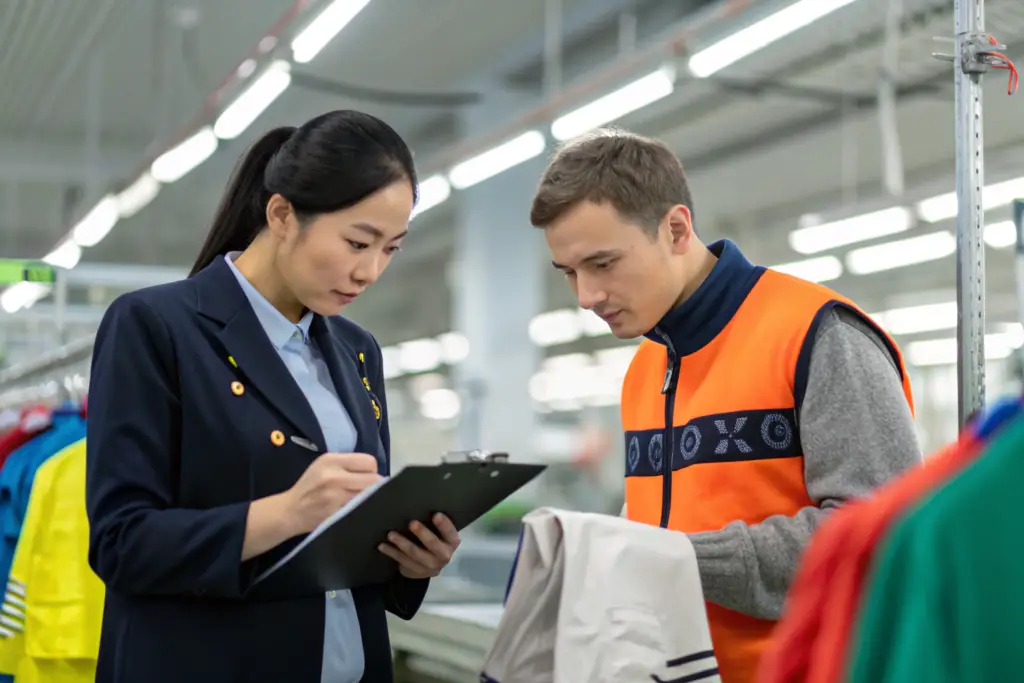
I recommend regular audits. Not just quality audits. Confidentiality audits. These can be done during your regular factory visits. But they should be separate in focus.
When you visit, ask to see:
- The access log for your digital files.
- The sign-in sheet for your sample room.
- The confidentiality training records for staff working on your order.
- The physical separation of your materials.
In 2023, a client from Austin visited our factory. They did not just look at production. They asked to see our server room. They asked to see our firewall configuration. They asked to interview three of our sewing operators about confidentiality policies. The operators told them that they had signed agreements. They told them that they were not allowed to take photos. The client was impressed. They said they had never seen a factory so open to scrutiny.
Regular audits serve two purposes. First, they catch problems early. Second, they remind the factory that you are watching. This ongoing attention is a form of enforcement. It keeps confidentiality top of mind for everyone.
What should you do if you suspect a breach?
This is the hardest part. You have a relationship with the factory. You have orders in production. You suspect a breach. What do you do?
I have been on the factory side of this situation. A client thought we had shared their supplier information. They were angry. They called me at 10 PM. They demanded answers. Here is what I recommend:
-
Gather evidence first: Do not accuse without facts. Collect what you know. Emails, photos, dates.
-
Contact the factory principal: Do not go through a sales representative. Call the owner or the general manager. Speak directly. Calmly state your concern.
-
Ask for an investigation: Give the factory a chance to investigate. A responsible factory will take this seriously. They will look into it. They will report back.
-
Document everything: Keep a record of communications. This is important if you need to take legal action later.
-
Know your leverage: If you have unpaid deposits or pending orders, you have leverage. Use it carefully. Do not threaten. State facts.
In the case I mentioned, the client's concern was a misunderstanding. A new employee had mistakenly copied an email to a wrong address. No information was actually shared. We investigated. We reported the findings. We retrained the employee. The client accepted our findings. They continued working with us. The relationship actually grew stronger because we handled the situation professionally.
If a breach does occur, your NDA should provide a path. Arbitration or litigation. But in my experience, most breaches are resolved without going to court. Factories do not want to lose clients. Brands do not want to spend money on lawsuits. A clear NDA gives you a framework to negotiate a resolution.
Conclusion
A Non-Disclosure Agreement is essential for protecting your designs, your suppliers, and your costs when manufacturing overseas. But a signed document is just the beginning. True enforcement comes from a combination of careful selection, precise contract terms, operational controls, and ongoing monitoring.
I have seen this system work for my clients. When a brand chooses a factory with a strong reputation for confidentiality, they start from a position of trust. When they draft a specific NDA with Hong Kong arbitration and clear definitions, they have legal leverage. When they enforce physical and digital separation in the factory, they make breach practically difficult. And when they monitor compliance over time, they keep confidentiality as a priority.
At Shanghai Fumao, we have built our business on this foundation. We have worked with over 30 American brands. We have never had a confidentiality breach that resulted in a client's designs being copied or their suppliers being poached. This is not luck. It is the result of systems and culture. We take confidentiality seriously because we know it is the foundation of trust between a brand and its factory.
If you are looking for a manufacturing partner that will respect your confidentiality, I invite you to talk to us. We can show you our security systems. We can walk you through our NDA process. We can provide references from American brands who have trusted us with their most sensitive information.
You can contact our Business Director, Elaine, directly. She can discuss your confidentiality needs. She can explain how we protect client information at every stage of production. Her email is: elaine@fumaoclothing.com. Let us build a partnership based on trust and protection.