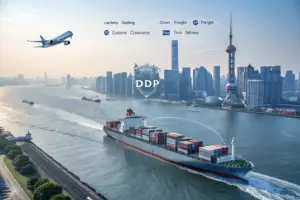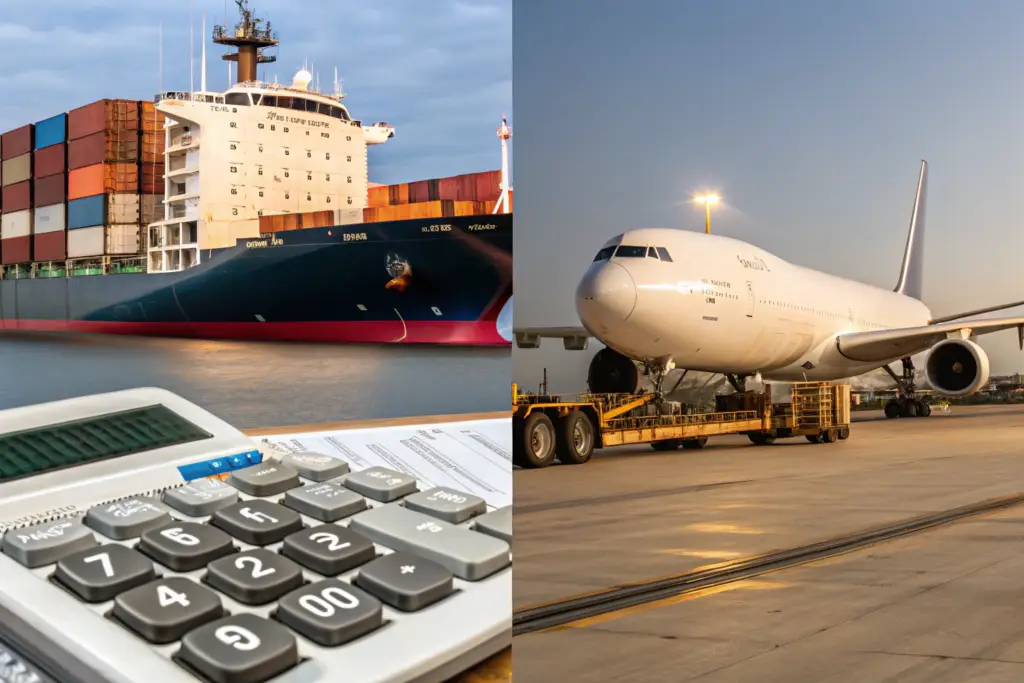
Your collection is ready. Your launch date is approaching. You have two choices. Ship by sea. It is cheap. It takes four to six weeks. Ship by air. It is expensive. It takes five to ten days. You look at the prices. Air freight is three to five times more. You choose sea freight. You wait. The ship is delayed. Your launch is delayed. You lose sales. You wonder if you made the right choice. The true cost is not just the freight bill. It is the cost of time. It is the cost of risk. It is the cost of missed opportunities.
The true cost of air freight versus sea freight for wholesale clothing is not simply the freight charge. Sea freight has a lower direct cost but carries higher inventory carrying costs, longer lead times, greater risk of delay, and the potential for missed sales. Air freight has a higher direct cost but reduces inventory holding costs, improves cash flow, allows for faster response to trends, and reduces the risk of stockouts. The right choice depends on your margin, your cash flow, your launch deadlines, and your risk tolerance. The cheapest freight is not always the lowest total cost.
I have run a clothing factory for over a decade. I have shipped thousands of containers by sea. I have also shipped thousands of cartons by air. I have seen clients choose sea freight to save money. I have seen them lose more money in lost sales than they saved. I have also seen clients choose air freight to capture a trend. They paid more for shipping. They made more in profit. The true cost is about the whole picture, not just the freight invoice.
What Are the Direct Cost Differences Between Air and Sea Freight?
The direct costs are what most people think of. They look at the freight quote. They compare. Sea freight is cheaper. But the direct costs are more than just the freight rate. You need to understand the full breakdown.
How do ocean freight costs break down for wholesale clothing?
Sea freight is the most common method for wholesale clothing. The cost per unit is low. But the cost structure is complex. You need to understand all the components.
Sea freight costs include:
- Ocean freight: The base rate for shipping a container. Costs vary by route, season, and carrier. A 40-foot container from China to the US West Coast typically costs $3,000 to $8,000 depending on market conditions.
- Trucking (drayage): Transporting the container from the port to the warehouse. Usually $300 to $500 per container.
- Port fees: Terminal handling charges, customs inspection fees, and documentation fees. $300 to $800 per container.
- Customs brokerage: Fees for clearing customs. $100 to $200 per shipment.
- Insurance: Typically 0.5% to 1% of the cargo value.
- Inland freight: If your warehouse is not near the port, additional trucking costs.
A client in Chicago shipped a 40-foot container of jackets. The ocean freight was $5,000. Trucking from the port to Chicago was $2,500. Port fees were $600. Brokerage was $150. Insurance was $300. Total direct cost was $8,550. For 5,000 jackets, the freight cost per unit was $1.71. Very low.
You should work with a freight forwarder who specializes in apparel. They can give you accurate quotes. They can handle the complex documentation.
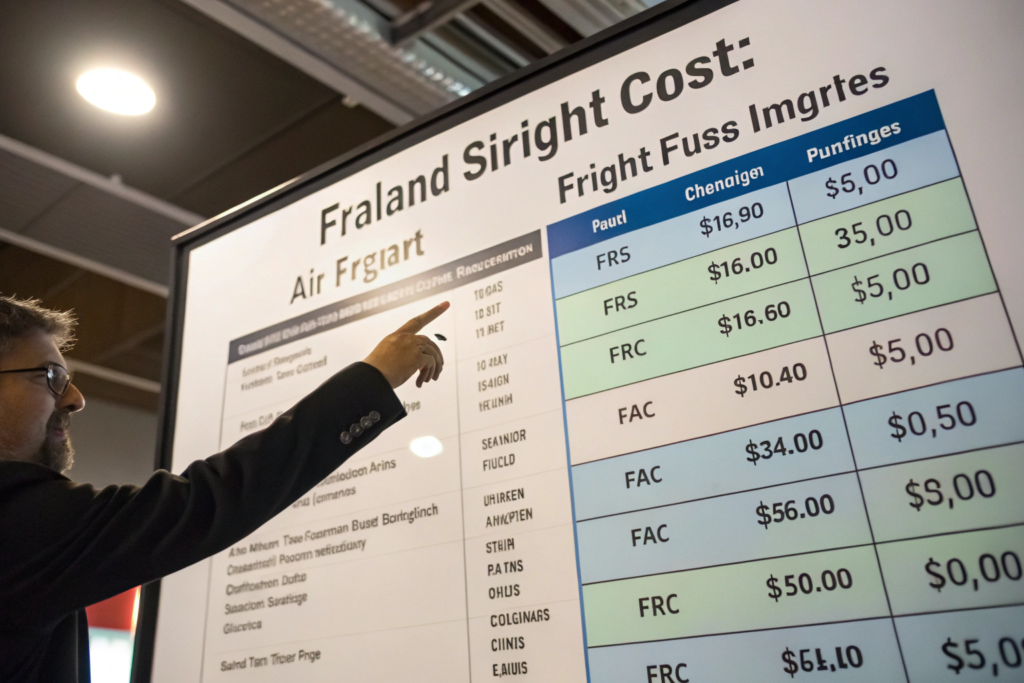
How do air freight costs break down for wholesale clothing?
Air freight is more expensive. But the cost structure is simpler. You pay by weight or volume, whichever is higher.
Air freight costs include:
- Air freight charge: Based on chargeable weight. For garments, the density is low. Volume often determines the charge. Rates vary from $5 to $12 per kilogram depending on route and speed.
- Fuel surcharge: A percentage of the freight charge. Usually 15% to 25%.
- Security fees: Small fees for screening and handling.
- Customs brokerage: Similar to sea freight.
- Trucking: From the airport to your warehouse.
- Insurance: Similar to sea freight.
A client in New York shipped 500 jackets by air. The total weight was 800 kilograms. The air freight rate was $8 per kilogram. Freight was $6,400. Fuel surcharge was $1,280. Security fees were $100. Brokerage was $150. Trucking was $200. Insurance was $200. Total direct cost was $8,330. For 500 jackets, the freight cost per unit was $16.66. Much higher than sea freight.
The direct cost difference is clear. Sea freight is much cheaper. But direct cost is not the only cost.
What Are the Hidden Costs of Sea Freight?
Sea freight has hidden costs. They are not on the freight invoice. They appear in your operations. They affect your cash flow. They affect your ability to respond to the market. These hidden costs can make sea freight more expensive than it seems.
How does inventory carrying cost impact your total cost?
When you ship by sea, your goods are in transit for four to six weeks. Then they sit in your warehouse until they sell. This inventory costs you money. You have capital tied up. You have storage costs. You have insurance costs. You have the risk of obsolescence.
Inventory carrying cost is typically 20% to 30% of the product value per year. This includes:
- Cost of capital: Money tied up in inventory could be used elsewhere.
- Storage: Warehouse rent, utilities, labor.
- Insurance: Inventory insurance.
- Obsolescence risk: Styles may go out of fashion before they sell.
- Damage and shrinkage: Inventory can be damaged or stolen.
A client in Los Angeles shipped 10,000 t-shirts by sea. The t-shirts cost $10 each. Total inventory value was $100,000. The goods were in transit for 5 weeks. They took 10 weeks to sell. Total inventory holding time was 15 weeks. At 25% annual carrying cost, the carrying cost for 15 weeks was about $7,200. That was $0.72 per t-shirt. The sea freight cost was $1.71 per t-shirt. Total logistics cost was $2.43 per t-shirt.
If the client had shipped by air, the holding time would have been much less. The higher freight cost might have been offset by lower carrying cost.
You should calculate your inventory carrying cost. Include it in your total logistics cost. It is a real cost.
What is the cost of missed sales due to sea freight delays?
Sea freight is slow. It is also unpredictable. Ships are delayed by weather, port congestion, customs holds, and carrier schedule changes. A delay of two to three weeks is common. A delay of four to six weeks happens.
When your goods are delayed, you miss sales. If you have a launch date, you may miss it. If you have a holiday season, you may miss the peak. The cost of missed sales is often much higher than the freight savings.
A client in Boston ordered winter jackets by sea. The ship was delayed by 3 weeks. The jackets arrived in late December. The holiday sales window was over. The client had to mark down the jackets by 40% to sell them. The lost margin was $15,000. The sea freight savings compared to air freight were $4,000. The client lost $11,000 by choosing sea freight.
You should assess your risk tolerance. If missing a launch date is catastrophic, air freight may be worth the premium. If you have flexibility, sea freight may be acceptable.
How does cash flow impact your business with sea freight?
Sea freight ties up cash. You pay for production months before you receive revenue. You pay for freight. You pay for inventory. You wait. Your cash is not available for other investments.
With sea freight:
- Order placed: Cash out for production
- 4-6 weeks: Production
- 4-6 weeks: Shipping
- Goods arrive: Cash out for freight and duties
- 8-12 weeks: Sell through
- Revenue received: Cash in
Total cash cycle: 16 to 24 weeks. Your cash is tied up for months.
With air freight:
- Order placed: Cash out for production
- 2-4 weeks: Production (often faster for air freight orders)
- 1 week: Shipping
- Goods arrive: Cash out for freight and duties
- 4-8 weeks: Sell through
- Revenue received: Cash in
Total cash cycle: 7 to 13 weeks. Your cash is freed up much faster.
A client in Denver had tight cash flow. They switched from sea freight to air freight for their best-selling styles. They reduced their cash cycle by 8 weeks. They could reinvest their cash faster. The higher freight cost was worth the improved cash flow.
You should model your cash flow. See how freight choice affects your working capital. Sometimes air freight pays for itself in cash flow benefits.
What Are the Hidden Benefits of Air Freight?
Air freight has benefits beyond speed. These benefits are not on the freight invoice. They affect your ability to grow your business. They give you flexibility. They reduce risk.

How does air freight enable faster response to trends?
Fashion moves fast. Trends emerge and fade quickly. If you ship by sea, you are committing to styles months in advance. You are guessing. If you ship by air, you can wait. You can see what is selling. You can reorder winners quickly.
A client in Seattle used air freight for their test-and-reorder strategy. They shipped initial test orders by air. The test orders arrived in 2 weeks. They saw which styles sold. They placed reorders. The reorders arrived in 3 weeks. They captured the full demand. Their competitors who shipped by sea missed the trend. The air freight cost was higher. But the sales volume was much higher.
You should consider air freight for test orders and reorders. The speed allows you to be responsive. The higher freight cost is offset by higher sell-through and fewer markdowns.
How does air freight reduce markdown risk?
Markdowns destroy margin. You take a perfectly good garment. You sell it for less than you planned. The markdown cost can be huge. A 20% markdown on a $50 garment is $10. Air freight might cost $2 more per unit. If air freight helps you avoid a 20% markdown, it pays for itself many times over.
A client in Austin had a history of markdowns. They always shipped by sea. Their goods arrived late. They missed the peak demand. They marked down. They switched to air freight for key styles. The goods arrived on time. They sold at full price. The air freight cost was $3 per unit. The avoided markdown was $8 per unit. The net benefit was $5 per unit.
You should calculate your markdown rate. If you typically mark down 20% of your inventory, the cost of that is significant. Air freight can reduce markdowns by getting goods to market on time.
How does air freight enable smaller, more frequent orders?
Sea freight encourages large orders. You want to fill a container. You want to spread the fixed costs. This leads to overbuying. You have too much inventory. You have too much risk.
Air freight allows smaller, more frequent orders. You can order what you need. You can reorder as you sell. This reduces inventory risk. It reduces cash tied up. It reduces markdowns.
A client in San Francisco switched to a just-in-time model with air freight. They ordered 500 units at a time instead of 5,000. They reordered every 4 weeks. Their inventory turns increased from 3 to 8 per year. Their markdowns dropped from 25% to 5%. The higher freight cost was more than offset by lower inventory costs and higher margins.
You should evaluate your inventory turns. If you can increase turns by using air freight, the financial benefit can be substantial.
How to Decide Which Freight Method Is Right for Your Brand?
The choice between air and sea freight is not simple. It depends on your brand. It depends on your products. It depends on your market. You need a framework to make the decision.

What factors should you consider in your freight decision?
Consider these factors for each style or order:
- Time sensitivity: Does this product have a hard launch date? Is it seasonal? Will it be obsolete if delayed?
- Order size: Is this a test order or a full production order? Small orders are easier to air freight.
- Product margin: High-margin products can absorb higher freight costs. Low-margin products may not.
- Cash flow: Do you have the cash to tie up in inventory? Or do you need faster turns?
- Risk tolerance: Can you accept the risk of delay? Or do you need certainty?
- Customer expectations: Do your customers expect fast delivery? Or are they willing to wait?
A client in New York created a simple matrix. High-margin, time-sensitive styles went by air. Low-margin, basic styles went by sea. Test orders went by air. Reorders of winners went by air. Core basics went by sea. This hybrid approach balanced cost and speed.
You should develop your own decision framework. Use it consistently. Review it as your business evolves.
When does sea freight make sense?
Sea freight makes sense in these situations:
- Basics and core styles: Styles that sell year-round with no seasonality. You can hold inventory.
- Large volume, low margin: When margins are thin, you cannot afford air freight.
- Long lead times are acceptable: If you have a long planning horizon and can commit early.
- Stable demand: When demand is predictable and you can forecast accurately.
- Retailers with long lead times: Some retailers plan months in advance. Sea freight works.
A client in Chicago sold basic t-shirts. The styles did not change. The demand was steady. They shipped by sea. The freight cost was low. They held inventory. The model worked.
If your business fits this profile, sea freight is likely the right choice.
When does air freight make sense?
Air freight makes sense in these situations:
- Test orders: You need to test new styles quickly. Air freight gets them to market fast.
- Reorders of winners: A style is selling out. You need to restock before the trend fades.
- Seasonal products with hard deadlines: Holiday styles, summer collections. You cannot miss the window.
- High-margin products: You have room in your margin to absorb higher freight.
- Fast fashion: You are chasing trends. Speed is your competitive advantage.
- Inventory constraints: You do not have warehouse space or cash to hold large inventory.
A client in Los Angeles built their entire business on air freight. They launched new styles every week. They produced small quantities. They air freighted everything. Their margins were high. Their inventory turns were high. Their customers loved the constant newness.
If your business is fast-paced, air freight may be a strategic investment, not just a cost.
How can you use a hybrid approach?
Most brands use a hybrid approach. They use sea freight for core styles and long-lead items. They use air freight for test orders, reorders, and time-sensitive styles. This balances cost and speed.
A client in Denver used this hybrid model:
- Sea freight: Core t-shirts, basics, and 70% of seasonal styles ordered 6 months in advance.
- Air freight: 30% of seasonal styles ordered 3 months in advance based on early sales data.
- Air freight: All test orders and reorders of winners.
This hybrid approach reduced their overall logistics cost while improving their responsiveness. They had the best of both worlds.
You should work with your factory to enable hybrid shipping. Some factories can split orders. Part by sea, part by air. This gives you flexibility. You can get a small quantity quickly while the bulk comes by sea.
Conclusion
The true cost of air freight versus sea freight is not just the freight bill. It is the total cost of getting your product to market and selling it. Sea freight has lower direct costs. But it has higher inventory carrying costs. It ties up cash. It has longer lead times. It has greater risk of delay and missed sales.
Air freight has higher direct costs. But it reduces inventory holding. It improves cash flow. It enables faster response to trends. It reduces markdown risk. It allows smaller, more frequent orders.
The right choice depends on your business. For basics and core styles with stable demand, sea freight makes sense. For test orders, reorders, and time-sensitive products, air freight is often worth the premium. Many brands use a hybrid approach. They use sea freight for the bulk of their inventory. They use air freight for flexibility and responsiveness.
Do not make the decision based on freight cost alone. Calculate your total landed cost. Factor in inventory carrying cost. Factor in the cost of missed sales. Factor in cash flow. Factor in your ability to respond to trends. The cheapest freight is not always the lowest total cost.
At Shanghai Fumao, we help our clients make the right freight decisions. We offer both sea and air options. We can split orders. We work with reliable freight forwarders. We help our clients balance cost and speed. We know that the right logistics strategy can be a competitive advantage.
If you are planning your next order and want to discuss the best freight strategy for your brand, we would like to help. Our Business Director, Elaine, can walk you through the options. She can help you calculate the true cost of each method for your specific situation. You can reach her at elaine@fumaoclothing.com. Let us find the right logistics solution for your business.