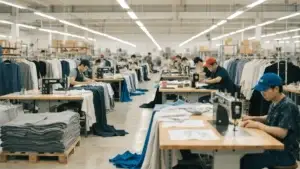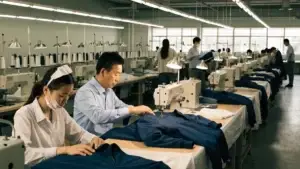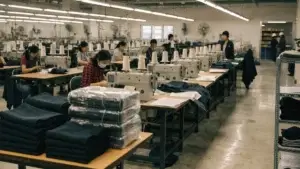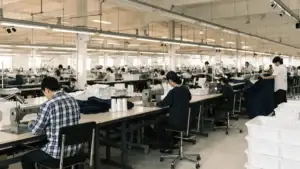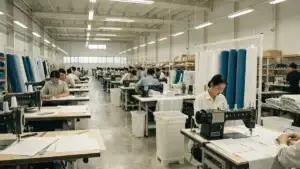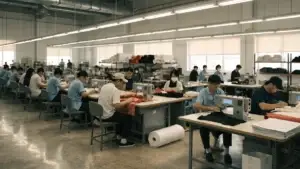
I have been in the apparel manufacturing business for over fifteen years. In that time, I have seen what happens when quality control fails. I have seen a container full of shirts returned because the collar points did not match. I have seen a brand lose a major retail contract because a batch of trousers had inconsistent inseam lengths. I have seen the look on a buyer's face when they open a carton and find a problem that should have been caught at the factory.
These problems are preventable. They are preventable with a systematic, rigorous inspection process. At Shanghai Fumao, quality control is not an afterthought. It is built into every stage of production. But the final inspection, when the goods are 100% complete and packed, is the last line of defense. This is where we catch any issues before the container leaves our door.
The ultimate checklist for inspecting finished garment goods is a comprehensive, multi-point system that checks everything from measurements and workmanship to fabric quality, labeling, and packing. It is a checklist that leaves no room for assumptions. It is based on international standards like AQL, but it goes beyond them to include the specific details that matter to your brand and your customers.
In this article, I will share the exact checklist we use at our factory. I will break it down section by section. I will explain why each point matters. I will give you real examples from my experience. This checklist is designed to be used by you, your third-party inspector, or your factory partner. It gives you the confidence that what you ordered is exactly what you will receive.
What are the essential measurement checks for consistent fit?
Fit is everything. A garment can be beautifully made, but if it does not fit the customer, it will be returned. I have seen brand owners lose sleep over inconsistent sizing. One batch fits perfectly. The next batch, from the same factory, is off by half an inch in the chest. Customers complain. Returns pile up. The brand's reputation suffers.
The first line of defense against fit issues is measurement inspection. This is not just about checking a few key points. It is about checking every critical measurement point on the garment against the approved specification sheet. And it is about doing this for a statistically significant sample size.
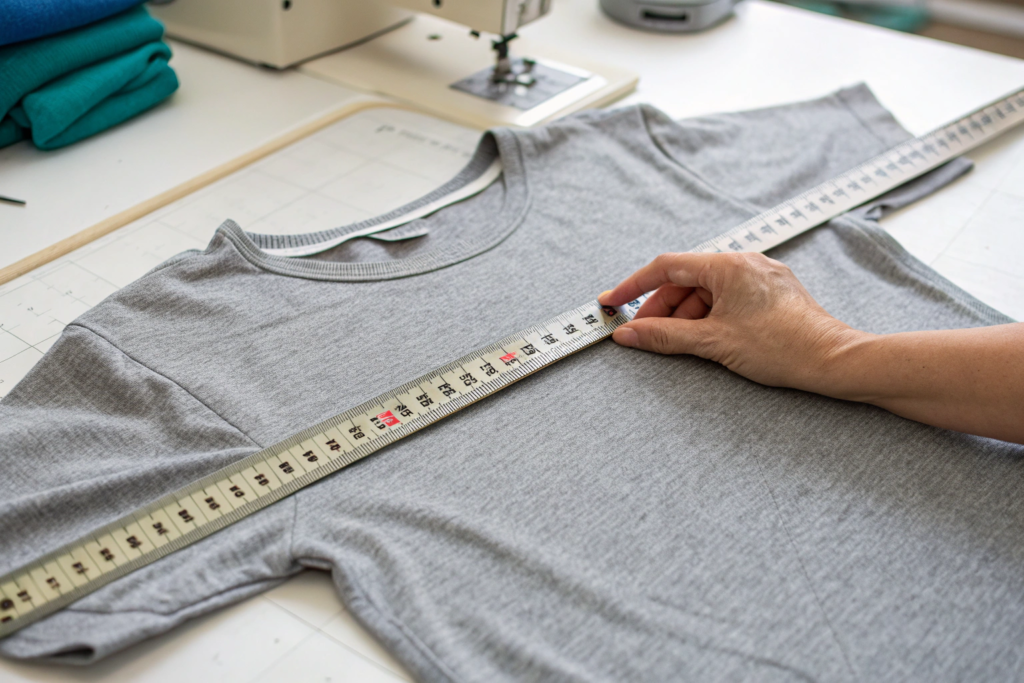
Which measurement points should be on your checklist?
The specific measurement points depend on the garment type. A t-shirt has different critical points than a tailored jacket. But there is a standard set of measurements that apply to most categories.
Here is a table showing common measurement points by garment category:
| Garment Type | Critical Measurement Points |
|---|---|
| Tops (T-shirts, Blouses, Shirts) | Chest (1" below armhole), Shoulder width, Front length (from HPS to hem), Back length, Sleeve length (from shoulder seam to cuff), Sleeve opening, Neck width, Armhole depth |
| Bottoms (Pants, Shorts, Skirts) | Waist (relaxed and stretched for elastic), Hip (at widest point), Thigh, Inseam length, Outseam length, Front rise, Back rise, Leg opening |
| Outerwear (Jackets, Coats) | Chest, Shoulder, Sleeve length (from shoulder to cuff), Center back length, Waist, Hem sweep, Armhole depth, Collar height and length |
| Dresses | Bust, Waist, Hip, Shoulder width, Front length, Back length, Sleeve length (if applicable), Armhole depth, Neckline width |
| Knitwear (Sweaters) | Chest (measured flat, 1" below armhole), Body length (from shoulder seam to hem), Shoulder width, Sleeve length, Sleeve opening, Neck rib height and width |
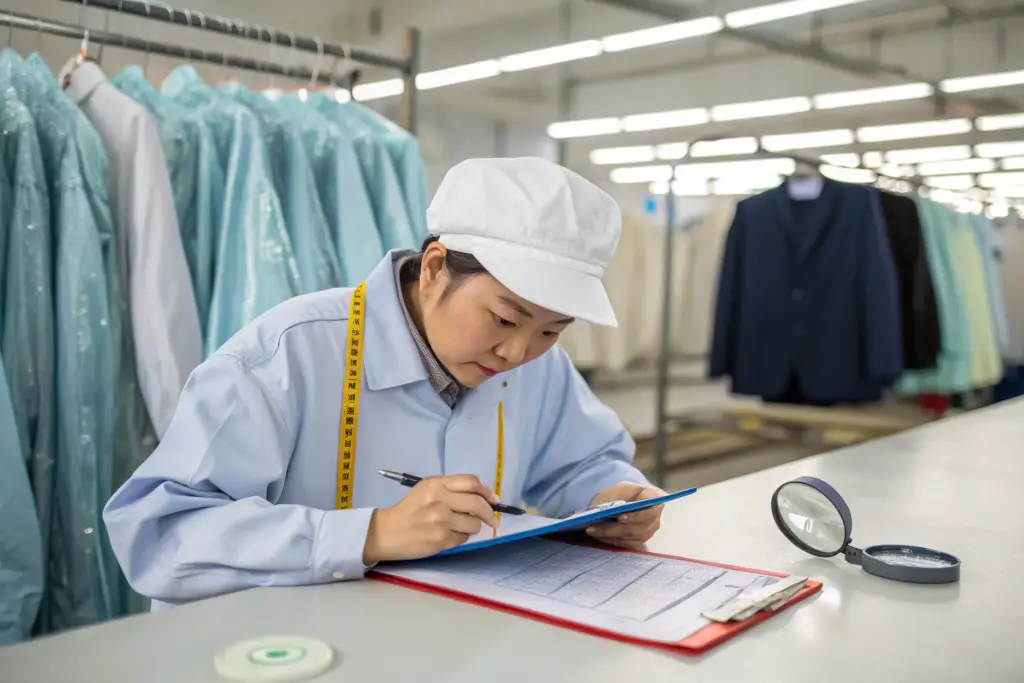
At Shanghai Fumao, we do not rely on memory or informal checks. Our quality control team uses a printed measurement spec sheet for every style. This sheet comes from the tech pack. It lists every measurement point with the target measurement and the acceptable tolerance range.
For example, if a men's t-shirt has a target chest measurement of 22 inches (flat), we set a tolerance of plus or minus 0.5 inches. This is standard for most knit garments. For woven garments, tolerances are often tighter. We check these measurements at multiple points during production. But the final inspection is the last check. We measure a random sample from the finished batch. If any measurement falls outside the tolerance, we pull that piece. If we see a pattern of measurements trending to one side of the tolerance, we investigate the cause.
Last year, we had a client from Texas who ordered a large run of women's woven blouses. Our final inspection showed that the sleeve length on 5% of the sample was 0.25 inches shorter than the target. This was still within tolerance, but it was a pattern. We stopped the packing. Our production manager traced the issue to a specific sewing operator who had been using a slightly different seam allowance. We corrected the issue. We re-inspected all affected pieces. The client never knew there was a problem. But we prevented a potential future issue where that small inconsistency could have grown.
How many pieces should you inspect using AQL standards?
This is a common question. You cannot inspect every single piece in a large order. It would take too long. It is also not necessary statistically. The industry standard is AQL, which stands for Acceptable Quality Limit. AQL is a sampling method. You select a random sample from the batch. You inspect that sample. Based on the number of defects found, you determine whether the entire batch passes or fails.
The most common AQL standard in apparel is 2.5 for major defects and 4.0 for minor defects. Here is how it works in simple terms:
- Major Defect: A defect that would likely cause the customer to return the product. Examples include a hole in the fabric, a missing button, a measurement outside tolerance, or a broken zipper.
- Minor Defect: A defect that does not affect the function or fit but may affect appearance. Examples include a loose thread, a slightly crooked label, or a small stain that can be cleaned.
The sample size depends on the total order quantity. For a typical order of 1000 pieces, the AQL standard would require inspecting about 80 pieces. If you find 3 or fewer major defects in that sample, the batch passes. If you find 4 or more major defects, the batch fails and requires 100% inspection or rework.
I encourage all my clients to understand AQL. When a client tells me they want to use AQL 2.5 for their inspection, I know they are serious about quality. We are happy to work with any third-party inspection company the client chooses. We also have our own internal AQL process. Our team is trained to use the same standards. We share the inspection reports with our clients. This transparency builds trust.
How to inspect workmanship and sewing quality?
Measurements are critical. But they are not the whole story. A garment can have perfect measurements and still have poor workmanship. Loose threads, uneven stitching, twisted seams, and puckered fabric all signal poor quality. These details matter to your customers. A customer may not know why a garment does not look right, but they will sense it. They will return it. They will not buy from your brand again.
Workmanship inspection is about looking at the garment with a critical eye. It is about checking every construction detail against the approved sample and the tech pack. It requires training and experience. A good inspector knows what to look for.
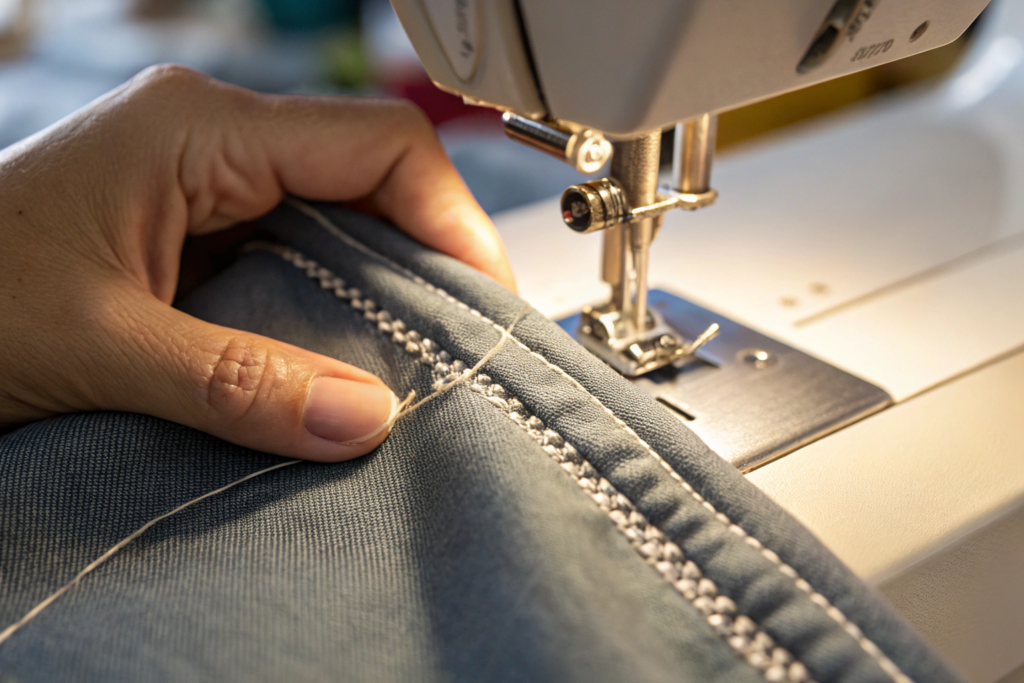
What are the most common sewing defects to check?
Over the years, I have seen certain sewing defects appear again and again. Some are more critical than others. Here is a list of common defects we check for in every final inspection:
| Defect Type | What to Look For | Severity |
|---|---|---|
| Stitch Tension | Stitches that are too tight (causing puckering) or too loose (causing loops on the seam). | Major |
| Seam Slippage | Seams that pull apart under light tension. Common in woven fabrics with low seam allowance. | Major |
| Uneven Stitching | Stitch length that varies along the seam. Inconsistent stitch density. | Minor to Major |
| Seam Puckering | Wrinkles along the seam line. Caused by improper tension or feeding. | Major |
| Raw Edges | Unfinished seams that fray. All internal seams should be finished (overlocked, bound, or flat-felled). | Major |
| Broken Stitches | Any break in the stitch line. | Major |
| Needle Damage | Visible holes in the fabric, especially around seam lines. Common in knit fabrics. | Major |
| Thread Color Mismatch | Thread that does not match the fabric color or the approved sample. | Major |
| Loose Threads | Uncut threads at seams, hems, and buttonholes. | Minor (but numerous loose threads become a major issue) |
| Button Attachment | Buttons that are loose, misaligned, or attached with incorrect thread tension. | Major |
| Buttonhole Quality | Buttonholes that are frayed, misaligned, or the wrong size for the button. | Major |
| Zipper Installation | Zippers that are wavy, misaligned, or do not close smoothly. | Major |
A client from Florida once told me about a previous supplier. The supplier's garments had perfect measurements. But the workmanship was poor. There were loose threads everywhere. The seams were puckered. The buttons were attached with thread that did not match. The client thought these were small issues. But his customers did not. Returns were high. His brand looked cheap.
When he came to Shanghai Fumao, he shared his frustration. We made sure our workmanship inspection was thorough. We checked every garment for the defects on this list. We had our team trim every loose thread. We rejected any garment with puckered seams. The client received garments that looked as good as they fit. His return rate dropped by 60%.
How do you verify that the sewing matches the tech pack specifications?
The tech pack is the master document. It should specify every construction detail. The inspector's job is to verify that the finished garment matches these specifications.
The tech pack might specify:
- Seam type: Is it a plain seam, a flat-felled seam, or a French seam?
- Stitch type: Is it a lockstitch, a chain stitch, or an overlock stitch?
- Stitch density: How many stitches per inch?
- Topstitching: Is there topstitching? What color thread? How many rows?
Our inspectors have the tech pack open during final inspection. They compare the garment to the specifications. They also compare the garment to the approved production sample. The production sample is the golden standard. Every piece in the order should match that sample.
I remember a client from Seattle who had a specific requirement for the stitching on her denim jackets. She wanted a chain stitch on the hem with a specific stitch density. Her previous supplier ignored this detail. They used a lockstitch instead. The jackets looked fine to the untrained eye. But to her, they were not correct. She felt the quality was compromised.
When she placed her first order with us, she sent her tech pack and the approved sample. She highlighted the chain stitch requirement. Our production manager noted it. Our quality control team checked it at every stage. During final inspection, we verified that every jacket had the correct chain stitch with the specified stitch density. She received her order and knew it was made exactly to her specifications. That attention to detail kept her as a loyal client.
What fabric and color quality checks are non-negotiable?
Fabric is the foundation of the garment. No matter how good the sewing is, if the fabric is poor, the garment will fail. Fabric issues can be subtle. A color that is slightly off. A hand feel that is different from the sample. Shrinkage that was not accounted for. These issues can ruin a collection.
Fabric and color inspection requires specific conditions. You need good lighting. You need the right tools. You need trained eyes. At Shanghai Fumao, we treat fabric quality with the same seriousness as construction quality.
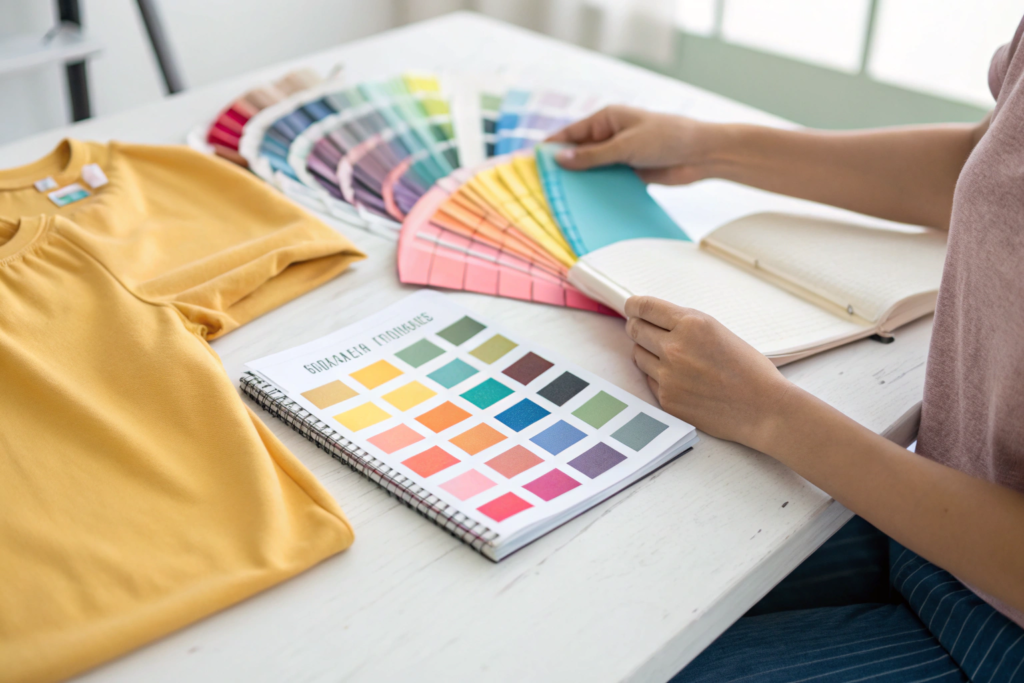
How do you ensure color consistency across the entire order?
Color inconsistency is a common problem in apparel production. Dye lots can vary. Different fabric rolls can have slight color differences. If these differences end up in the same garment or in the same shipment, the customer will notice.
The first step is to approve a color standard. This is usually a physical swatch. It could be a Pantone number, but physical swatches are better. Fabric takes dye differently than paper.
We keep a master color standard for every style. This standard is approved by the client. During production, we check the fabric when it arrives from the mill. We check it against the standard. We use a light box. A light box provides consistent lighting conditions. This ensures we are not fooled by different light sources.
During final inspection, we check color consistency again. We look at the color of the finished garment compared to the standard. We also check for color variation between different pieces in the same order. We lay pieces side by side to see if any look different.
A client from Chicago ordered a large run of men's polo shirts in a specific shade of navy. The fabric came from our mill in two different production batches. Both batches were within the acceptable color range. But they were slightly different. One batch was a shade warmer. The other was a shade cooler.
We caught this during our pre-production fabric inspection. We separated the two batches. We informed the client. We gave him options. He decided to use both batches but to pack them separately. The shirts from batch one went to one set of retailers. The shirts from batch two went to another set. This prevented any customer from receiving two shirts from different batches that did not match exactly. The client appreciated our transparency. He knew we had protected his brand's reputation.
What fabric performance tests should you require?
Beyond color, fabric needs to perform. Does it shrink? Does it pill? Does the color bleed? These performance issues may not be visible in a simple visual inspection. They require testing.
I recommend requiring fabric test reports from your factory. These tests should be done by a third-party laboratory or by a certified in-house lab. Here are the most common tests:
- Shrinkage Test: Fabric is washed and dried according to care label instructions. The shrinkage percentage is measured. This should match the specifications. If shrinkage is higher than expected, the garment dimensions will change after the customer washes it.
- Colorfastness Test: Fabric is tested for color bleeding. Tests include washing, rubbing (crocking), and light exposure. If colorfastness is poor, the garment will stain other clothes or fade quickly.
- Pilling Test: Fabric is rubbed against a standard fabric. The amount of pilling (little balls of fiber on the surface) is measured. This is especially important for knitwear and fleece.
- Tensile Strength Test: Fabric is pulled until it breaks. This tests durability. It is important for fabrics that will be under stress, like denim or workwear.
- Fabric Weight: The fabric weight (grams per square meter) is measured. This should match the specification. A lighter fabric than specified can affect the drape and feel.
Last year, a client from Denver asked us to produce a line of cotton sweaters. She was concerned about pilling. Her previous supplier had made sweaters that pilled badly after a few wears. We sourced a high-quality cotton yarn. We did a pilling test before production. The test showed the fabric was within the acceptable range. During production, we tested again from the finished sweaters. We shared the test reports with the client. She felt confident. Her customers loved the sweaters. They did not pill. She received repeat orders.
At Shanghai Fumao, we work with SGS for third-party testing when clients require it. We also have our own testing equipment for basic tests like shrinkage and colorfastness. We believe that testing is not a cost. It is an investment in your brand's reputation.
What labeling, packing, and presentation details matter most?
The final inspection is not complete until the packing and labeling are checked. I have seen beautiful garments ruined by poor packing. I have seen cartons arrive at U.S. warehouses with the wrong labels. I have seen products pulled from shelves because the care label had incorrect information. These are preventable errors. They happen when the factory rushes the final stage.
Presentation matters. When a customer opens a carton, they should see neatly packed, clean garments. When a retail customer buys your product, the labeling should be professional and correct. These details reflect on your brand.
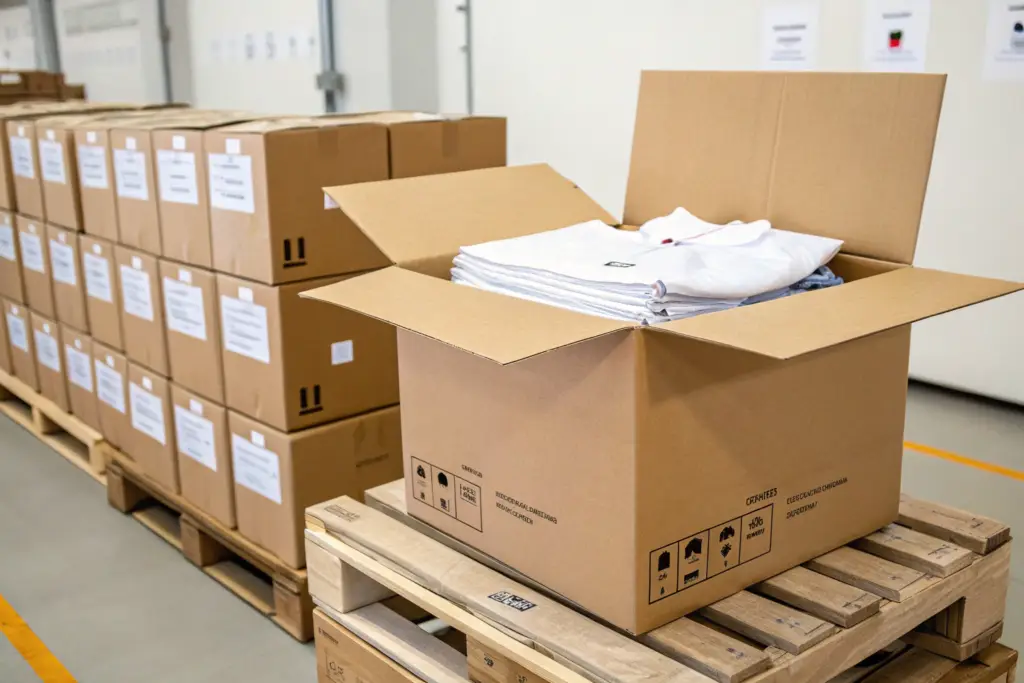
How to verify labeling accuracy and compliance?
Labeling is a legal requirement in the United States. The Federal Trade Commission (FTC) has rules for textile labeling. The wrong label can lead to your products being held at customs or removed from retail shelves.
The key labels to verify are:
- Brand Label (Main Label): The label with your brand name. Verify placement, spelling, and attachment.
- Size Label: The size indicator. Verify that it matches the garment's actual measurements.
- Care Label: The label with washing instructions, fiber content, and country of origin. This is a legal requirement in the U.S. The care label must be permanently attached. The fiber content must be accurate. For example, if the garment is 100% cotton, the label cannot say 95% cotton and 5% spandex.
- Hang Tags: Any additional tags with pricing, marketing information, or barcodes. Verify they are attached correctly.
During final inspection, our team checks every label. We compare the care label to the tech pack. We verify the fiber content matches the fabric used. We check that the country of origin is correctly stated as "Made in China" or as specified.
I recall a client from Boston who had a shipment held at U.S. customs. The issue was the care label. The factory had used a label that said "Made in China" but the fiber content did not match the actual fabric. The client was frustrated. He had to hire a customs broker to resolve the issue. It cost him time and money.
When he came to Shanghai Fumao, he made labeling a priority. We created a labeling checklist for his orders. We verified every label against his specifications. We sent him photos of the labels for approval before packing. He never had another customs issue with us.
What packing checks prevent damage during shipping?
Packing is the garment's protection for its journey across the ocean. Poor packing leads to damage. Crushed boxes, moisture damage, and wrinkled garments are all signs of inadequate packing.
Here is what we check during final packing inspection:
- Carton Quality: Are the cartons sturdy enough for the weight of the garments? Are they the correct size? Overpacked cartons can burst. Underpacked cartons can crush.
- Folding: Are the garments folded consistently? Is the folding method appropriate for the fabric? Some fabrics require special folding to prevent creasing.
- Inner Packing: Is there tissue paper between layers? Are poly bags used for individual garments? Are the poly bags the correct type (with suffocation warning holes if required)?
- Carton Sealing: Are the cartons sealed properly with strong tape? Are the cartons banded or strapped for extra security?
- Carton Markings: Does the carton have the correct style number, size breakdown, and quantity? Are the markings clear and legible? Does the carton have "Made in China" markings as required?
- Moisture Protection: Is there a moisture barrier inside the carton if needed? Are the cartons stored on pallets to keep them off the floor?
A client from Atlanta learned this lesson the hard way. His previous factory packed his denim jeans into oversized cartons. The cartons were not fully filled. During shipping, the cartons stacked on top crushed the ones below. He received a container of wrinkled, damaged jeans. He had to spend hours pressing them before they could be sold.
When he started working with us, we discussed his packing requirements. We agreed on the carton size. We used carton dividers to keep the jeans in place. We banded each carton for extra stability. His jeans arrived in perfect condition. He told me the extra attention to packing saved him hours of labor and prevented damaged goods.
Conclusion
The ultimate checklist for inspecting finished garment goods is a comprehensive system. It covers measurements, workmanship, fabric quality, color consistency, labeling accuracy, and packing integrity. It is based on international standards like AQL, but it goes beyond them to include the specific details that matter to your brand.
I have shared the checklist we use at Shanghai Fumao. We have built this checklist over fifteen years of working with U.S. brands. We have refined it based on client feedback and real-world issues. We use it for every order, no matter the size. We believe that quality control is not a department. It is a culture. It is a commitment we make to every client.
I encourage you to use this checklist. Share it with your current or potential factory partners. Ask them to show you their inspection reports. Visit their quality control area during a video tour. Make sure they take these checks as seriously as you do.
If you are looking for a factory partner who treats quality control as a priority, I invite you to reach out to us. At Shanghai Fumao, we are ready to show you our process. We are ready to work with your third-party inspectors. We are ready to give you the confidence that your finished goods will meet your standards, every time.
Please contact our Business Director, Elaine, to discuss your next order. You can reach her at elaine@fumaoclothing.com. She will be happy to walk you through our quality control process and answer any questions you have about how we ensure your products arrive exactly as you expect.