When designers face endless choices, creativity can get buried in chaos. But when choices are narrowed, something powerful happens: ideas get sharper.
Limiting options can actually spark innovation. By working within boundaries like minimal piece counts or limited color palettes, designers often come up with bolder, smarter solutions.
In this article, I’ll explore how smart constraints make capsule collections stronger—not weaker. As a factory owner who partners with fashion brands worldwide, I’ve seen firsthand how minimalism drives results.
Can Limiting Pieces Lead to Stronger Concepts?
When faced with an open field of possibilities, designers can feel lost in direction. But when the number of SKUs or design pieces is set in stone, every decision matters.
Yes, limiting the number of capsule items often leads to more deliberate and cohesive design stories. It forces clarity, purpose, and innovation in how each piece is created.

How Do Designers Prioritize When Every Piece Counts?
In capsule creation, every piece must earn its place. When working with only 6 to 10 garments, designers can’t afford redundancy. A single top might need to match three bottoms. A dress must layer under jackets or work alone. These decisions aren’t just stylistic—they’re strategic.
For example, I’ve worked with clients who limited their drops to 8 pieces and still outperformed larger lines. Why? Because every item was purposeful. Each had defined versatility and style. Buyers didn’t feel overwhelmed with choices. Instead, they saw possibilities.
This kind of discipline helps remove filler products. It tightens the production plan. It reduces development costs and lead times. For overseas buyers like Ron, who seek high-margin resell opportunities, this translates to faster turnarounds and better sales performance.
Why Minimal SKUs Improve Brand Communication?
From a branding point of view, fewer pieces create a sharper message. When you look at brands like Everlane or Uniqlo, many of their capsule promotions focus on under 10 core items. Consumers get it fast. They can remember the collection. They can mix and match.
As a manufacturer, I often advise clients not to stretch beyond 12 SKUs in a capsule unless they’re working with very large teams. Small to medium labels benefit most from tighter drops because they can control design execution and avoid sampling waste.
How Color and Fabric Restrictions Drive Innovation?
Having fewer fabric choices may seem like a limitation. But in capsule design, it’s often the source of new creative direction.
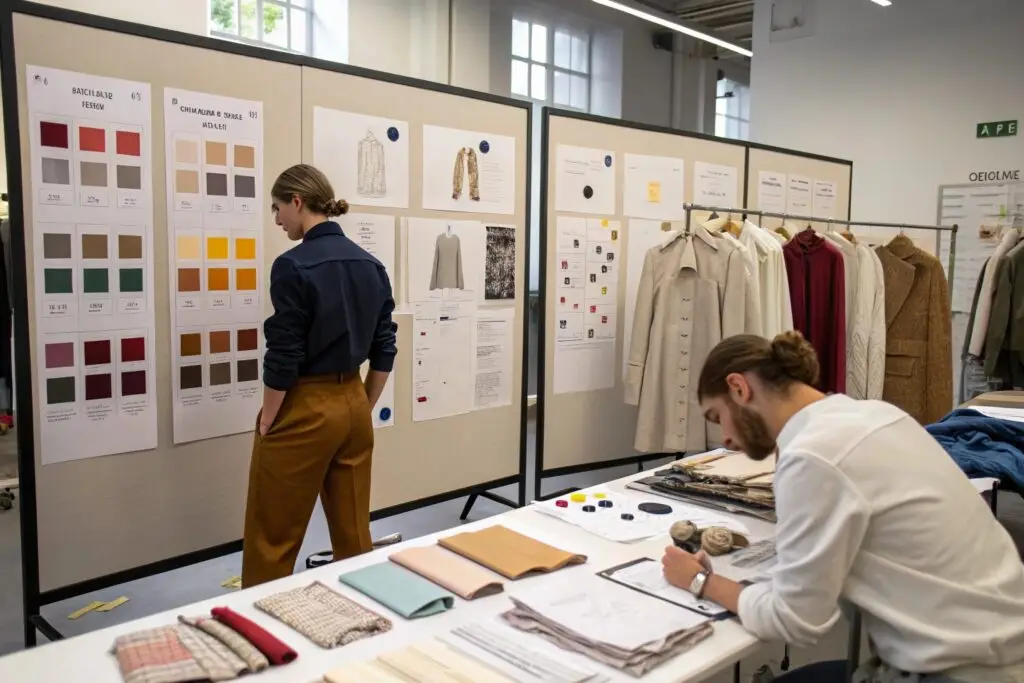
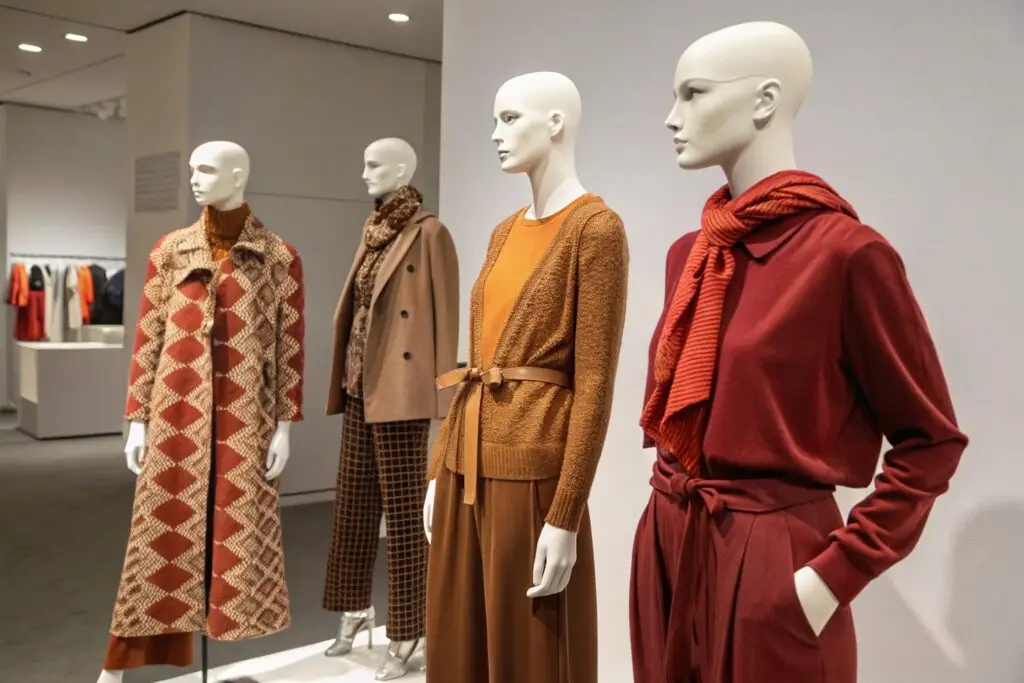
Color and fabric restrictions push designers to think deeper about silhouettes, textures, and contrast. These limits foster cohesion while encouraging bolder styling within a set palette.
How Can One Fabric Create Multiple Visual Effects?
I once supported a brand that limited its entire drop to two fabrics: a mid-weight cotton twill and a stretch jersey. At first glance, this looked risky. But the results were impressive. They played with rib textures, asymmetric paneling, reverse layering—all while staying within a unified material base.
It reduced cost. It kept dye lots tight. It ensured that every piece shared the same visual temperature. And it allowed buyers to cross-merchandise outfits more easily, which matters especially for retailers looking for styling cohesion in stores or on e-commerce.
A limited fabric approach also helps us as a supplier manage MOQ requirements better, especially for startups or boutique brands that can’t meet high minimums across multiple materials.
Does a Fixed Palette Limit Styling Possibilities?
Not necessarily. When we keep colors within two neutrals and one seasonal accent, something unexpected happens. Designers stop relying on shade variety and start exploring cuts, contrast stitching, or tonal overlays.
For capsule brands, this leads to signature looks. One client who only uses oatmeal, charcoal, and navy in their seasonal drops is now known for that minimal color identity. Every new collection feels like a continuation—not a reset.
And that level of brand consistency makes it easier for returning customers to add pieces that match their existing wardrobe.
Why Design Boundaries Enhance Brand Identity?
It’s tempting to chase every trend. But when brands try to do everything, they often lose what makes them unique.
Strong capsule design uses boundaries—SKU limits, material caps, or design codes—to reinforce a clear visual voice that customers remember.

How Can Constraints Define a Visual Signature?
Brands like COS, The Frankie Shop, or even certain minimalist streetwear labels have leaned heavily into clear design rules. That might mean never using prints. Or keeping silhouettes oversized. Or always favoring drop shoulders over darts.
These rules might sound rigid. But they are tools for creating brand memory. As a supplier, I see how this influences manufacturing choices too. When clients stick to their boundaries, we’re able to optimize cutting patterns, reuse trims, and bulk source fabrics without sacrificing uniqueness.
It’s the difference between producing “just another white shirt” and “a white shirt that looks exactly like your brand.”
Why Does Simplicity Build Long-Term Trust?
Buyers—especially those like Ron, who source for resale—aren’t just looking for fast-turnaround items. They’re building private labels. What they need is consistency.
Design boundaries deliver that. When each drop sticks to the same rules, sizing stays predictable. Quality benchmarks are easier to manage. Customers feel secure buying new capsules because they know the brand won't suddenly pivot to neon or asymmetrical cuts.
From my factory floor, this consistency also means fewer errors in tech packs, smoother sewing instructions, and clearer QC metrics.
Turning Minimal Options into Maximum Impact?
Capsule fashion isn’t just about doing less—it’s about doing less better. When you focus your resources, the impact often multiplies.
By limiting pieces, fabrics, and design choices, brands can create focused statements that resonate deeper with consumers and maximize perceived value.
Can One Jacket Define a Whole Collection?
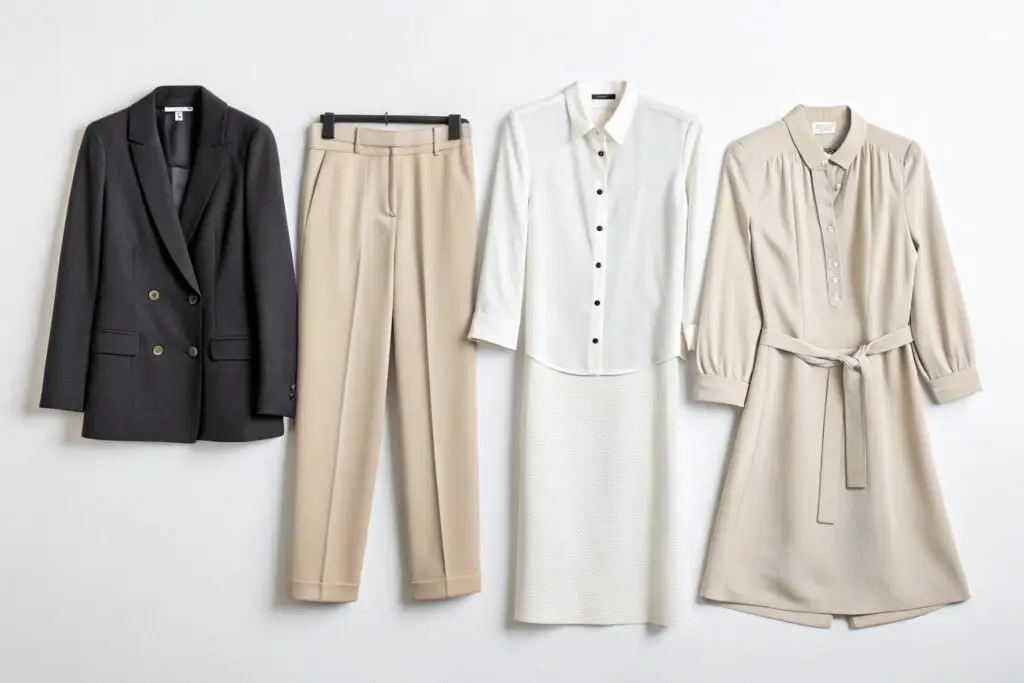
Absolutely. Some of the most successful capsules we’ve produced started with a hero item. A wrap coat. A utility shirt. A wide-leg trouser.
Once that centerpiece is set, the rest of the line builds to support it. Tops that tuck in perfectly. Shoes that match the hemlines. Accessories that echo the design lines.
This makes styling and storytelling easier. For lookbooks, editorials, and influencer campaigns, having a core item helps drive social buzz. I’ve seen clients sell out of one piece and then upsell the supporting styles through smart bundling.
How Do Minimal Lines Deliver Stronger ROI?
It might seem risky to launch with only 6 or 8 pieces. But when each one is produced in deeper quantity, you lower your unit cost. You also simplify your pick-and-pack logistics.
Fewer SKUs mean better stock control. Faster reorders. Less overproduction. And for buyers who are reselling capsules under private labels, this also means fewer SKUs to educate staff or create marketing for.
At Fumao Clothing, we often advise our clients to test a capsule with a narrow range first. We help refine that core line, manage MOQ efficiency, and support high-impact photography and color matching. That way, even with a minimal drop, the market response is maximized.
Conclusion
Working within boundaries doesn’t limit creativity—it focuses it. The most memorable capsule designs often emerge not from abundance, but from restraint, clarity, and consistency.