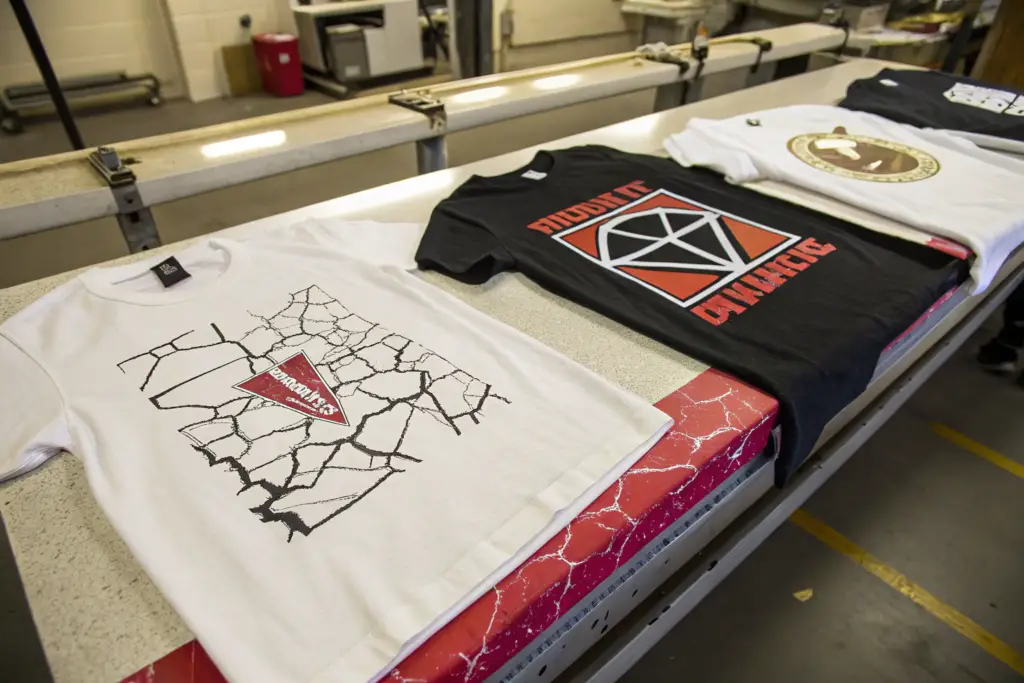
I once made a mistake that cost a client from New York nearly $8,000 in wasted inventory. He wanted his brand logo on 400 premium polo shirts. He insisted on screen printing because it was cheaper. "It’s just a small chest logo," he said. Six months later, he sent me a photo. The logo was cracked. It looked like a dry riverbed. The shirts were expensive Pima cotton, but that cheap print made them look like something from a discount bin. He couldn’t sell them at full retail. He had to dump them at a loss.
Custom logo embroidery elevates high-end apparel by providing permanent, three-dimensional texture that signals craftsmanship and durability. Unlike prints that fade or peel, embroidered logos withstand hundreds of wash cycles while maintaining their premium appearance. The tactile nature of thread on fabric creates a sensory experience that subconsciously communicates higher value to the consumer.
When you touch an embroidered logo, your fingers feel the raised surface. Your brain registers this as “substantial.” It’s the same psychological principle that makes a heavy watch feel more expensive than a light one, even if both tell time equally well. At Shanghai Fumao, we’ve produced both printed and embroidered garments for American brands. The difference in retail pricing power is dramatic. A hoodie with an embroidered logo consistently commands a 20% to 35% higher price point than the identical hoodie with a screen print. Let me explain exactly why this happens and how you can leverage it.
How Does Embroidery Increase Perceived Value Over Printing
Screen printing is fast. It’s cheap. It’s perfect for concert t-shirts that someone will wear three times and then use as a rag. But high-end brands don’t sell rags. They sell heirlooms. They sell pieces that customers want to keep in their closet for five years. The problem with screen printing on premium garments is the material mismatch. You’re putting a thin layer of plastic ink on top of expensive, breathable natural fibers. Eventually, that plastic cracks. The garment lives longer than the decoration. That’s a failure of design.
Embroidery increases perceived value because it integrates the branding into the fabric structure itself, creating a permanent bond that ages gracefully with the garment rather than deteriorating against it.
Think about the luxury brands you admire. Ralph Lauren. Patagonia. Lululemon. What do their premium lines use? Almost exclusively embroidery. They understand that the decoration must match the quality of the base material. When a customer pays $80 for a polo shirt, they expect the logo to outlast the collar. Only embroidery digitizing and stitching can guarantee that longevity.
What Psychological Triggers Does Textured Branding Activate in Buyers?
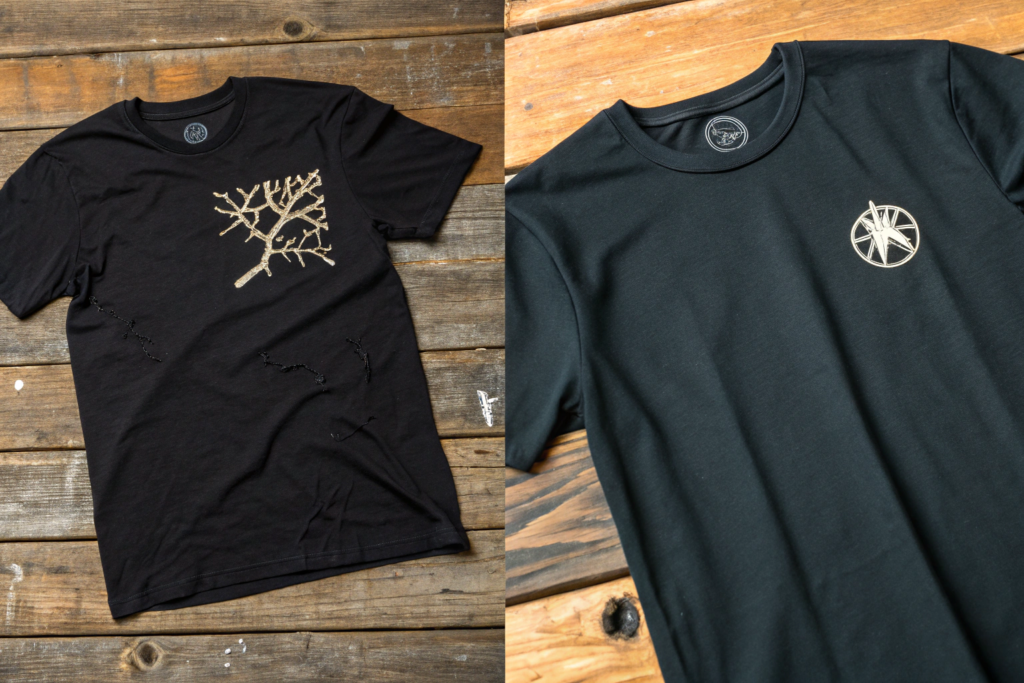
Humans are tactile creatures. We judge objects by how they feel in our hands before we fully process how they look. This is called “haptic perception.” When a shopper runs their fingers over an embroidered logo, several things happen in their brain simultaneously.
First, the raised texture triggers associations with craftsmanship. It reminds them of hand-stitched details, monogrammed towels at a nice hotel, or a tailored suit label. It feels intentional.
Second, the weight of the thread creates a sense of permanence. It doesn’t feel like it will wash away. This is crucial for brands that market sustainability and “buy less, buy better” philosophies. A printed logo contradicts that message. An embroidered logo reinforces it.
| Decoration Method | Tactile Experience | Subconscious Consumer Message |
|---|---|---|
| Screen Print | Smooth, flat, sometimes rubbery or plastic-like. | “Mass produced. Temporary. Trend-focused.” |
| Heat Transfer | Stiff, shiny film. Can feel like a sticker. | “Cheap. Will peel after three washes.” |
| Direct-to-Garment | No texture. Feels like the fabric itself. | “Nice, but delicate. Handle with care.” |
| Embroidery | Raised, textured, soft thread loops. | “Luxury. Permanent. Worth the investment.” |
At Shanghai Fumao, we often advise new brand owners to touch the sample before approving it. Close your eyes. If you couldn’t see the logo, would you still know it was there by touch? If the answer is no, it’s probably not high-end.
Why Does Embroidery Outlast Other Decoration Methods by Years?
The science here is simple physics. Screen print ink sits on top of the fabric fibers. Heat and agitation in a washing machine cause the fibers to stretch and move, but the ink does not. It cracks under the stress.
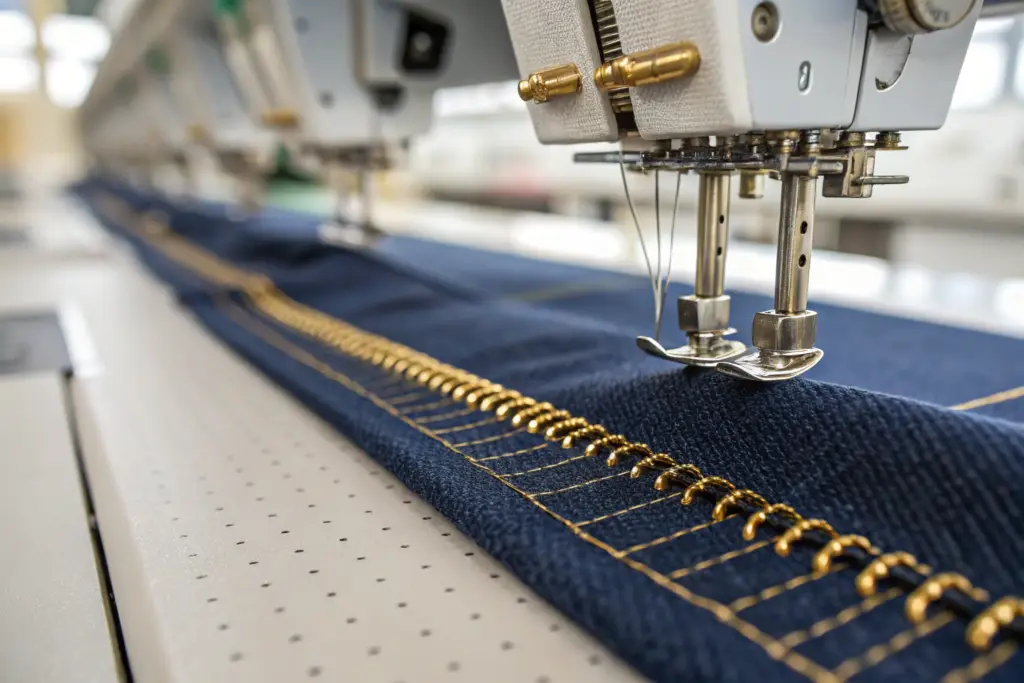
Embroidery thread passes through the fabric and locks underneath with a backing material. The polyester or rayon thread is actually stronger than the cotton fabric it’s sewn into. Over time, the shirt might fade from UV exposure, but the logo will remain intact and legible.
I have a sample in my office from a client in Chicago. It’s a work jacket we made six years ago. It has been washed at least a hundred times. The navy twill has softened and faded to a beautiful vintage patina. The white embroidered logo? It looks exactly the same as the day we stitched it. That’s the kind of durability that builds a loyal following. Customers remember that your brand didn’t let them down.
What Are the Technical Limitations of Alternative Logo Methods
Every decoration method has its place. I’m not saying embroidery is the only way to make clothes. If you’re making performance athletic wear with four-way stretch spandex, a heavy embroidery patch might restrict movement. If you’re doing a massive 14-inch back graphic with photo-realistic gradients, embroidery will look blocky and cost a fortune.
However, for the primary brand identifier—the chest logo, the sleeve patch, the hat emblem—alternative methods consistently fail to meet the high-end durability standard. Understanding these technical limitations helps you avoid the trap my New York client fell into.
Alternative methods like screen printing, heat transfer vinyl, and direct-to-garment printing suffer from inherent material limitations related to adhesion, stretch recovery, and wash fastness that make them unsuitable for long-term premium branding.
Let’s look at the specific failure points of each competitor technology. These aren’t theoretical problems. These are the reasons we get emails asking if we can “fix” or “cover up” a bad print job from another factory.
Why Does Screen Printing Crack on Premium Fabric Blends?
This is the most common complaint I hear from brands switching to us. They used a local printer for small runs. The print looked great for the first two weeks. Then the emails started coming in from angry customers.
Screen printing uses Plastisol ink, which is essentially PVC particles suspended in plasticizer. It sits on the surface and cures at around 320°F. It does not chemically bond with the fabric; it mechanically wraps around the top fibers.
When you print on a 100% ringspun cotton t-shirt, the ink has plenty of tiny fibers to grab onto. It holds fairly well. But high-end apparel increasingly uses tri-blends (Cotton/Poly/Rayon) or performance polyesters. These fabrics are smoother. There are fewer loose fibers for the ink to grip. The result? The ink sits on top like a thin pancake.
Then you add fabric softener. American consumers love fabric softener. They pour it into every load. Fabric softener works by coating fibers with a waxy lubricant. This lubricant works its way under the Plastisol ink film. Eventually, the ink lifts off like a sticker. Embroidery doesn’t care about fabric softener. The thread is locked in place by the bobbin thread underneath.
How Does Heat Transfer Vinyl Fail the Premium Test?
Heat transfer vinyl is popular for small batch customizations because the equipment is cheap. You cut the design on a Cricut or Roland plotter, weed it, and press it with a heat press. Simple.
But HTV is just a thin layer of colored polyurethane with a heat-activated glue backing. The edges of the design are a sharp 90-degree angle where the vinyl meets the fabric. In a washing machine, those edges are the first point of attack.
Here is the failure sequence:
- Water Intrusion: Water and detergent seep under the sharp edge of the vinyl.
- Adhesive Degradation: The glue softens over repeated hot wash cycles.
- Edge Lift: The corner of the letter “R” or “A” catches on another garment in the dryer.
- Catastrophic Peel: The vinyl peels back, leaving a sticky residue and a ruined garment.
Furthermore, HTV does not breathe. A customer wearing a premium merino wool t-shirt with a large HTV logo on the chest will have a sweaty, uncomfortable plastic patch right over their heart. That is the opposite of premium comfort. Embroidery allows air to pass through the perforations created by the needle.
Which Embroidery Techniques Define True Luxury Apparel
Not all embroidery is created equal. Just because a logo is stitched doesn’t mean it looks expensive. Walk into a big box sporting goods store and look at the embroidery on a $12 promotional cap. It’s often thin, loose, and puckered. The fabric around the logo looks like a crumpled napkin. That’s what happens when you use the wrong backing, the wrong stitch density, or the wrong thread tension.
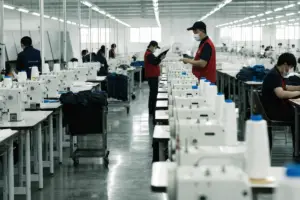
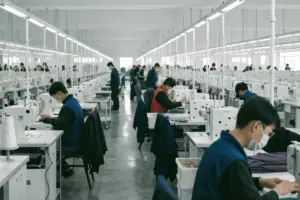
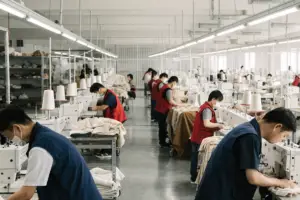
True luxury embroidery is a science of tension and texture. It requires understanding how different thread weights interact with different fabric weights. At Shanghai Fumao, the difference between a $2 embroidery job and an $8 embroidery job is invisible to the naked eye at first glance, but it’s immediately obvious to the hand and over time.
Luxury embroidery is defined by specific techniques including 3D puff foam application for dimension, high stitch count density for rich color saturation, and precise underlay stitching to prevent fabric puckering on delicate materials.
When you’re sourcing for a high-end brand, you need to know the vocabulary of these techniques. Otherwise, the factory will default to the cheapest, fastest method—which will make your expensive garment look cheap.
How Does 3D Puff Embroidery Create Visual Impact?
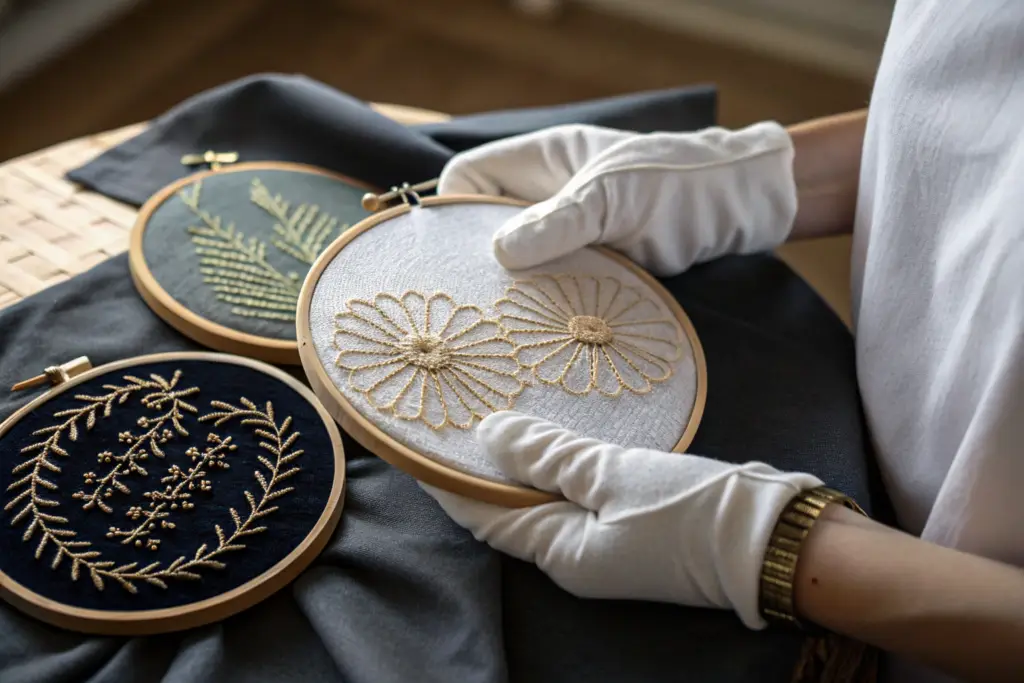
If you want a logo that literally stands out from the crowd, you want 3D Puff. This technique places a thin sheet of foam under the top stitching. The needle passes through the foam and fabric, and the thread wraps around the foam edge, encasing it.
The result is a logo that rises off the surface of the cap or jacket by about 1/16 to 1/8 of an inch. It catches the light differently. It casts a small shadow. It screams “premium” because it’s a more complex and expensive process that low-end factories avoid.
However, 3D Puff is risky on thin fabrics like lightweight t-shirts. The foam can make the fabric stiff and uncomfortable. Here is a quick reference for where each luxury technique works best:
| Technique | Best Application | Luxury Effect | Caution |
|---|---|---|---|
| 3D Puff | Structured caps, heavy hoodies, jacket backs | Bold, dimensional, modern streetwear aesthetic. | Too stiff for lightweight tees; can be uncomfortable on bare skin. |
| High-Density Fill | Left chest logos on polos, woven shirts | Looks like a solid woven patch; incredibly rich color. | Requires skilled digitizing to avoid thread breaks. |
| Satin Stitch Border | Delicate text, fine outlines | Clean, crisp edge that looks hand-tailored. | Needs precise hooping to avoid misalignment. |
| Tonal Embroidery | Upscale corporate apparel, minimalist brands | Subtle, elegant. The logo is visible only by texture. | Requires exact thread color matching to fabric. |
Why Does Stitch Density Determine the Final Premium Look?
Stitch density is the number of stitches per square inch. A cheap embroidery job might use 4,000 stitches to cover a 2-inch square area. A premium job from Shanghai Fumao might use 8,000 stitches for the exact same area.
Higher density means the threads are packed tighter together. The fabric background doesn’t show through. The color appears more saturated and vibrant. The surface feels smoother to the touch.
But there is a trade-off. Too many stitches on thin fabric will cause puckering—that ugly wrinkling around the logo. This is why we use underlay stitches. Underlay is a hidden layer of stitching laid down before the visible top layer. It acts like a foundation for a house. It stabilizes the fabric and gives the top thread something to sit on.
If you receive a sample and the logo area feels stiff or the fabric around it is wavy, the factory skipped the proper underlay step. They tried to save time and thread. The result is a garment that looks like it was embroidered in a hurry in someone’s garage, not in a professional facility.
What Mistakes Do Brands Make When Specifying Embroidery
The most expensive mistake in custom apparel happens before a single stitch is sewn. It happens in the design file. A graphic designer working in Adobe Illustrator creates a logo with tiny 6-point text, fine lines thinner than a human hair, and a complex gradient fade. It looks stunning on a 27-inch Retina display. It looks like a blurry mess when translated into thread.
Brands often treat embroidery like printing. They expect a 1:1 translation from pixels to stitches. It doesn’t work that way. Thread has physical thickness. A needle has physical width. You cannot stitch a detail smaller than the needle itself.
The primary mistake high-end brands make is failing to design for the embroidery medium, resulting in illegible text, distorted shapes, and an overall unprofessional appearance that undermines the premium quality of the garment.
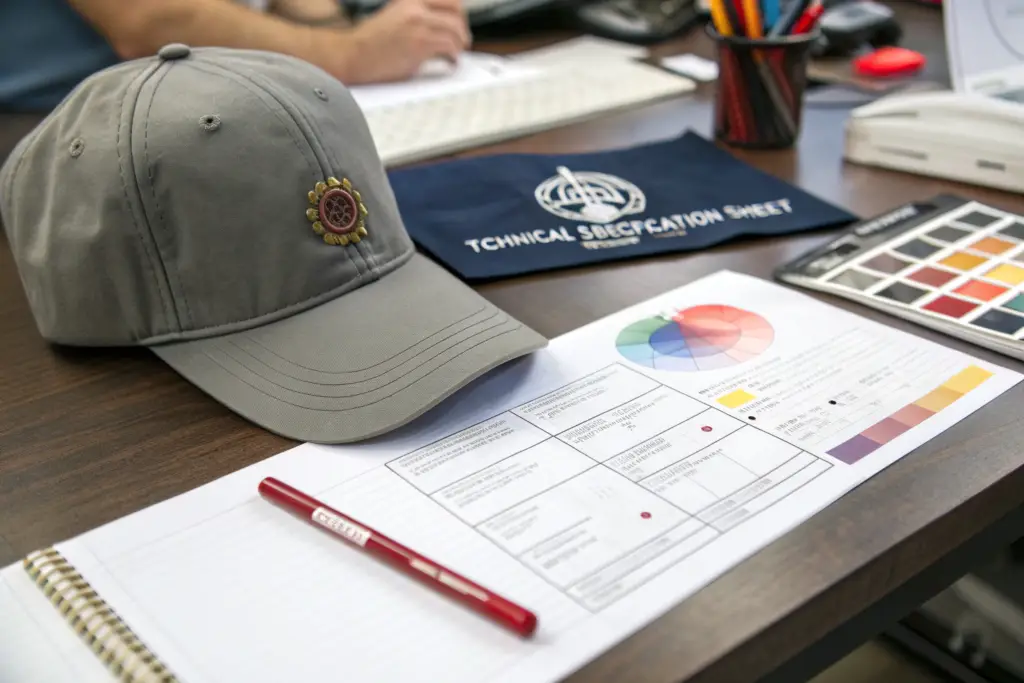
I have had difficult conversations where I’ve had to tell a client, “This logo is beautiful for a website, but it’s impossible to sew at 2 inches wide.” This is where a good manufacturing partner adds value. We provide digitizing feedback before production starts. We adjust the artwork to fit the physics of thread and fabric.
Why Does Small Text Become Illegible in Thread?
Thread is thick. Even the finest 60-weight thread used in commercial embroidery has a measurable diameter. When you try to stitch a letter that is less than 0.25 inches tall, the thread fills in the open spaces.
Imagine writing your name in the sand with a shovel instead of a stick. The “e” closes up. The “a” becomes a blob. The same thing happens with embroidery.
The rule we follow at Shanghai Fumao is simple: Minimum letter height for legible text is 0.25 inches for uppercase and 0.30 inches for lowercase.
Also, the font matters enormously. A thin, elegant serif font like Garamond or Didot is a disaster for embroidery. The thin strokes will break or disappear. A clean, bold sans-serif font like Helvetica or a block font stitches beautifully.
If your brand guidelines demand a serif font at a small size, we often recommend switching to a woven label for that specific detail and using embroidery for the main icon. Combining techniques is a hallmark of sophisticated brand design.
How Does Incorrect Backing Choice Damage the Garment?
The back of an embroidered logo is not pretty. There is a layer of stabilizer material, sometimes called “backing,” that holds the stitches in place. This backing sits against the wearer’s skin.
Cheap factories use a thick, scratchy backing paper that feels like sandpaper on your chest. It’s the number one reason people say, “I don’t like embroidered shirts; they’re itchy.”
Premium factories use soft, tear-away backing that is removed after stitching, leaving only the soft thread loops. For performance wear, we use no-show mesh backing that is soft and flexible.
Ask your supplier: “What type of backing will you use on my lightweight modal t-shirts?” If they can’t answer that question immediately and specifically, they are not a high-end embroidery house. They are a bulk decorator. The backing is as important as the thread on top because it determines the comfort of the garment. A high-end brand cannot afford to make a shirt that customers refuse to wear because it scratches them all day.
Conclusion
Embroidery is not just another decoration option. It is a strategic business decision for high-end apparel brands. We’ve examined how the tactile, three-dimensional nature of thread triggers a subconscious perception of luxury and durability that screen printing simply cannot replicate. We’ve exposed the technical weaknesses of alternative methods—the cracking, the peeling, the fading—that inevitably cheapen a premium garment over time. We’ve defined the specific techniques, from 3D puff to high-density fill, that separate true craftsmanship from amateur stitching. And we’ve highlighted the common design pitfalls that turn a good logo into a bad embroidery job.
The goal of a high-end brand is longevity. You want your customer to pull that jacket out of the closet in three years and still feel proud to wear it. You want the logo to be a badge of quality, not a warning sign of poor construction. Embroidery delivers that promise. It integrates your identity into the very fibers of the fabric.
Choosing the right partner to execute that embroidery is just as important as choosing the thread color. You need a factory that understands the nuances of backing materials, stitch density, and design digitizing. You need a team that will tell you when your design needs adjustment, rather than just taking your money and shipping a subpar product.
If you are ready to elevate your brand with embroidery that truly reflects the quality of your apparel, let’s discuss your specific logo and fabric requirements. We can provide a digitized sample proof and guide you through the technical options that best suit your collection.
For personalized assistance with your embroidery project, please contact our Business Director, Elaine.
Contact Elaine at: elaine@fumaoclothing.com