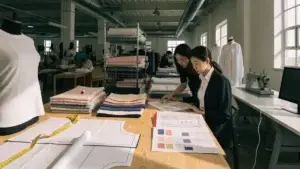
I still remember the sinking feeling. A few years ago, a promising brand owner from Denver emailed me in a panic. He had just received a shipment of 2,000 organic cotton t-shirts. The hangtags said "100% Organic." The invoice said "GOTS Certified." But the fabric felt stiff and scratchy—like cheap conventional cotton sprayed with starch. He asked me to look at the certificate the supplier had sent. It took me maybe fifteen seconds to spot the problem. The certificate number was missing a digit, and the logo was slightly pixelated. He had paid a premium price for a lie printed on a piece of paper.
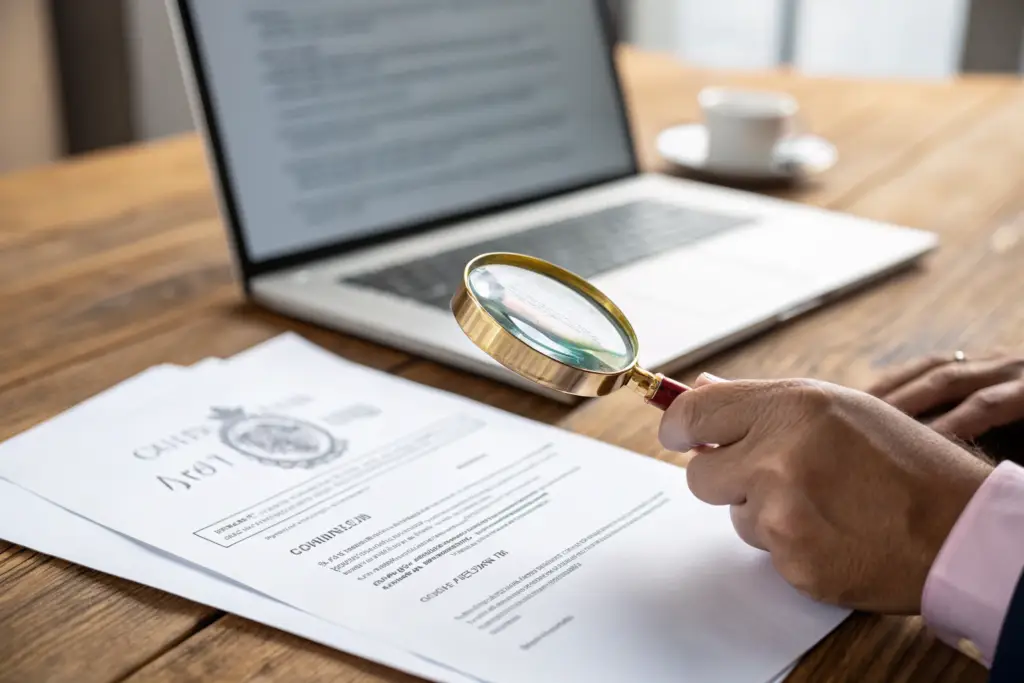
To identify fake quality certificates, you must cross-reference the certificate number on the issuing body's official public database. Additionally, scrutinize the document for visual inconsistencies like blurry logos, incorrect date formats, and misspelled accreditation names. Finally, verify that the scope of the certificate actually covers the specific factory address and product category you are purchasing.
Let's be blunt about this. The reason fake certificates exist is because American brands are willing to pay 30% to 50% more for "certified" goods. A factory that can fake a piece of paper can fake their profit margin. At Shanghai Fumao, we keep our certifications current and publicly verifiable because we know our clients are one lawsuit away from disaster if those papers aren't real. The burden of proof is on the supplier. You should never feel embarrassed about demanding to see the live database entry. Here is exactly how you separate the real documents from the Photoshop jobs.
What Are the Visual Signs of a Forged Compliance Document
You don't need to be a forensic scientist to spot a bad fake. Most forged certificates coming out of unscrupulous factories are created by a graphic designer who has never seen a real audit report. They are under pressure to "just make it look official." They make sloppy mistakes because they are rushing. Your job is to slow down and look at the paper as a piece of evidence, not just a checkmark on a sourcing spreadsheet.
Visual inconsistencies are the first and fastest filter for detecting fraudulent certificates. Look for low-resolution logos, inconsistent font usage, and formatting errors in the date or company address that do not match the issuing body's standard template.
I've seen certificates where the factory name was typed in Arial, but the rest of the document used Times New Roman. That's a huge red flag. Official bodies use strict templates. They don't let factories type in their own information. Think of it like checking a driver's license at a bar. If the hologram is a sticker instead of embedded, or if the photo looks like it was glued on, you reject it. The same logic applies to textile compliance documents.
Why Do Blurry Logos and Pixelated Stamps Indicate Fraud?
In the modern world of vector graphics, there is no excuse for a blurry logo. Official issuing bodies provide factories with a secure, high-resolution PDF of the certificate. When a factory tries to alter an old certificate to change the date or the company name, they often take a screenshot or use a low-res scan. They then paste a new logo over the old one.
The result is a "halo effect" around the logo—a slight white or gray outline where the pixels don't match. Or the stamp looks like it was printed with a broken inkjet printer from 1998.
Take a real look at the hologram sticker if one is present. On legitimate documents from bodies like WRAP or BSCI, the hologram is often a multi-layer foil seal affixed by the auditor on-site. It is not printed as part of the paper. You can usually feel the edge of the sticker with your fingernail. If you can't touch it, ask the supplier to send a close-up video of the certificate, tilting it against the light. A printed hologram won't reflect light correctly. It will just look like a dull gray circle.
How Do Incorrect Date Formats Expose Fake Documentation?
This is a simple detail that trips up many forgers, especially those in countries that use a Day/Month/Year format when forging a US or European-facing document. If the certificate is from a European body like OEKO-TEX, the date should be in the DD.MM.YYYY format. If it's written as MM/DD/YYYY, your alarm bells should ring loudly.
Similarly, check the validity period. Most GOTS certificates are valid for exactly one year from the date of issue. If you see a certificate issued on "March 10, 2026" that expires on "March 09, 2028," it is a fake. The expiration date is mathematically wrong. This kind of error happens when someone just types random numbers into an old template. It takes thirty seconds to check this, but it can save you from a six-month headache with US Customs.
Why Is the Public Database the Only Reliable Source of Truth
Seeing the paper is not the same as seeing the truth. I cannot stress this enough. A piece of paper, no matter how shiny the gold foil stamp is, is just a claim. The public database is the evidence. Every major and legitimate certification standard operates an online portal where the public can verify the status of a certified facility. It is the equivalent of checking a bank's SWIFT code—without it, you are just trusting a stranger's handwriting.
The only way to be certain a certificate is authentic is to locate the unique license number or ID on the document and manually enter it into the official registry website of the certifying body, not a link provided by the supplier.
This step removes the supplier's ability to deceive you. Even if they show you a perfectly photoshopped document with the correct fonts and a shiny sticker, they cannot hack the official database. If the number doesn't pop up with the correct factory name and address, the document is worthless. At Shanghai Fumao, we send our clients a direct link to our public listing on the OEKO-TEX website. We want you to check. It builds trust faster than any sales pitch.

What Are the Correct URLs for Major Certification Databases?
Be very careful here. Sophisticated scammers will sometimes send you a link to a fake "verification" website they built themselves. It looks like the real thing, but it will always say "Valid." You must navigate to the official site on your own.
Bookmark these official directories. This is your toolkit for verification:
| Certification Body | Official Database URL (Type in yourself) | What to Look For |
|---|---|---|
| OEKO-TEX | www.oeko-tex.com/en/label-check | Enter the full certificate number. Verify the factory name and address match exactly. |
| GOTS | www.global-standard.org/public-database | Search by Company Name or License Number. Check the "Scope" for specific processes (e.g., dyeing, trading). |
| WRAP | www.wrapcompliance.org/en/find-certified-facility | Search by Facility Name. Look for the "Certificate Expiration Date." |
| BSCI | www.bsci-intl.org/public-search | Requires the DBID number found on the audit report. |
If a supplier gives you a number and it's not in this system, do not accept excuses like "the website is down for maintenance." These systems have 99.9% uptime. A "down" website is a lie.
How Can You Confirm the Certificate Scope Matches Your Product?
This is a subtle but expensive trap. Let's say you find the factory in the GOTS database. Great! But scroll down and look at the "Product Categories" or "Scope of Certification."
I had a client who bought "organic cotton fleece hoodies." The supplier was GOTS certified... but only for woven fabric trading. They were not certified for knitted garment manufacturing. They bought organic yarn but sewed it in a non-certified sweatshop. This is called "scope creep" and it voids the certification's value for your brand.
Always check the specific activities listed. Look for phrases like:
- "Manufacturing of finished apparel"
- "Dyeing and Finishing"
- "Private Label Production"
If your product requires a specific process (like garment washing or printing) and that process is not listed in the scope, you are not buying a certified finished good. You are buying a story.
What Questions Expose a Supplier's True Knowledge of Audits
Sometimes the fastest way to find a fake is not by looking at the paper but by listening to the person who handed it to you. When you ask a sales rep a technical question about their audit, their reaction tells you everything. A legitimate factory manager can discuss their last audit like they discuss the weather. They know the auditor's name. They know what minor non-conformity they had to fix. A trader with a fake certificate will get defensive or vague.
Asking specific, experience-based questions about the audit process will quickly separate a factory that owns the certificate from a factory that just bought a JPEG of one.
Here is the secret: Third-party auditors don't just look at payroll. They walk the floor. They check the fire exits. They open the chemical storage cabinet. They take photos of things that need fixing. A real factory will remember the pain points of the audit because they had to spend money to fix them. A fake factory has never felt that pain.

Why Ask About "Corrective Action Plans" Instead of Just the Certificate?
Never ask, "Do you have a BSCI certificate?" They will just say "Yes." Instead, ask this: "What was the corrective action from your last BSCI audit, and how long did it take to close it out?"
This question is a stun gun for liars. Every real audit has findings. It's extremely rare to get a perfect score with zero issues. There is always a missing sign, a loose wire, or a first-aid kit that needs restocking.
If the supplier says, "We had no issues, perfect score," they are either lying or they bribed the auditor. Neither is good for your brand's long-term supply chain ethics.
At Shanghai Fumao, I can tell you exactly what happened in our last audit. We had to update the multilingual emergency exit signs because the English translation was faded from the sun. It took two days and cost fifty bucks to fix. That's a real answer. It's boring, but it's true. A scammer can't make up that level of boring, specific detail on the spot.
What Are the Red Flag Responses When Asking About Certification?
Pay attention to the language they use. Words matter. Here is a translator for common dodges used by suppliers with fake papers:
| Supplier Says | What They Mean |
|---|---|
| "We have all the certificates you need." | "We have a folder of PDFs on a computer. We don't know which ones are real." |
| "Our certificate is in renewal right now." | (If this lasts more than 3 weeks) "We failed the audit and lost it." |
| "It's the same standard, just different name." | "We are showing you an expired or irrelevant cert." |
| "We can get it for a small extra fee." | "We will buy a fake one from a guy on Taobao." |
Also, listen for confusion between a Certificate and a Test Report. A test report is a one-time lab test on a specific piece of fabric (e.g., a CPSIA test for children's wear). A Certificate is an annual audit of the entire factory system. If they show you a lab test report for lead content and call it a "GOTS Certificate," they either don't know the industry (bad) or they are playing you for a fool (worse).
What Other Document Errors Signal a Lack of Professionalism
The fake certificate is the headline, but the fine print is where the story really falls apart. If a supplier is willing to lie about a major certification, they are definitely cutting corners on the small stuff. And the small stuff—the invoices, the packing lists, the labels—is what gets your shipment held up in customs for weeks. You're focused on the quality of the sewing, but the Customs and Border Protection officer is focused on the quality of the paperwork.
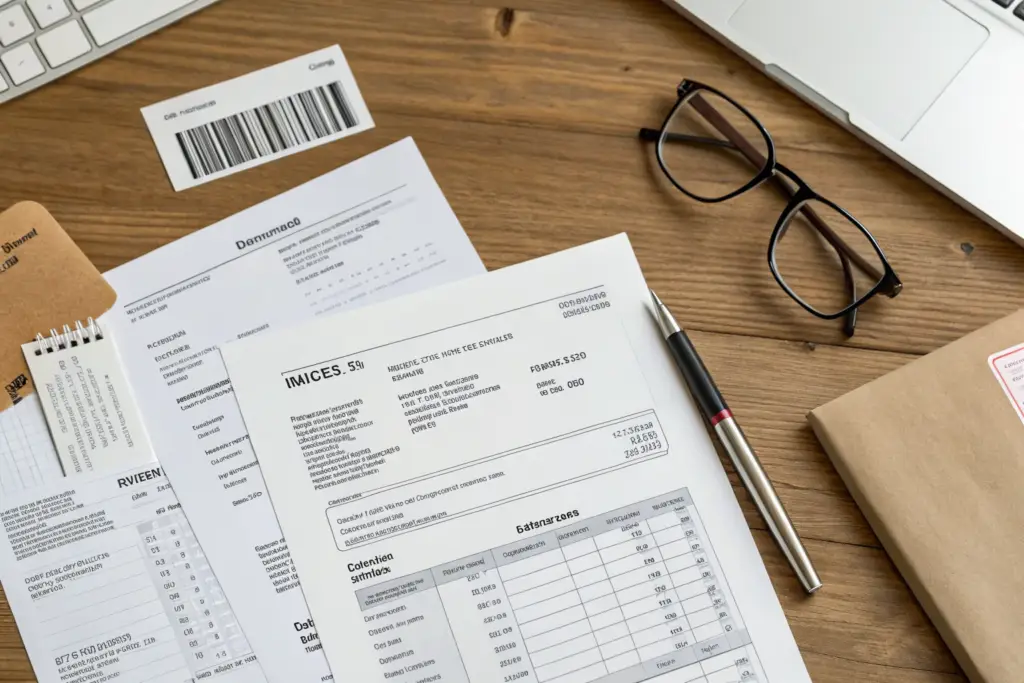
Inconsistencies in supporting shipping and commercial documents often mirror the fraud in quality certificates, revealing a fundamental disregard for regulatory compliance and detail.
Think of the whole set of documents as a person's outfit. The certificate is the blazer. The commercial invoice is the socks. If the socks are mismatched and full of holes, you probably shouldn't trust the blazer either. Everything a professional factory like Shanghai Fumao touches should be clean, aligned, and correct.
How Do Invoice Discrepancies Correlate With Fake Certs?
Look at the Commercial Invoice they sent for your deposit. Does the company name on the invoice match exactly the company name on the certificate? I mean character for character.
I've seen cases where the certificate says "Shanghai Fumao Garment Co., Ltd." but the invoice says "Shanghai Fu Mao Clothing Factory." That is a different legal entity. In the eyes of US Customs, that is a different company. If they are two different companies, the certificate doesn't apply to the goods you're buying.
Also, check the Bank Account Details. If the certificate is for a company in Shanghai, but they ask you to wire money to a shell company account in Hong Kong or the Cayman Islands, that's a huge problem. It's a classic money laundering and duty evasion red flag. It also means if there is a quality dispute, you have zero legal recourse because the factory you thought you were dealing with technically never received your money.
Why Does Mismatched Address Information Break Compliance?
This is the most common error we see in the industry. A factory group might have five different buildings spread across a city. They only got the audit for Building A, but they are making your premium orders in Building C (which has never seen an inspector).
Check the address on the certificate. Then check the address on the Bill of Lading or Packing List.
- Certificate Address: No. 1888 Huqingping Road, Qingpu District, Shanghai
- Packing List Address: No. 2888 Lianyou Road, Songjiang District, Shanghai
These are two different locations. The certificate is not valid for the facility that packed the box. This is a violation of the Lanham Act if you try to sell those goods as "Certified" in the US market. You could face a product seizure or a fine.
Demand a floor plan or a photo of the building exterior with a visible address number. Compare it to the address on the certificate. If they won't show you the address, they are hiding the location for a reason. You don't want to find out that reason when your shipment is stuck at the Port of Long Beach.
Conclusion
Identifying a fake quality certificate isn't about finding a secret watermark. It's about applying a layer of logical, methodical scrutiny that scammers are too lazy or too rushed to defeat. We've covered the visual clues—the blurry logos, the wrong fonts, and the impossible dates. We've established that the only true source of data is the official public database, not the piece of paper in front of you. We've armed you with the conversational questions about audits and corrective actions that make liars stumble over their words. Finally, we've shown you how the smallest details on an invoice can reveal the biggest lies on a certificate.
The cost of getting this wrong is more than just a bad batch of clothes. It's the cost of a damaged brand reputation. It's the cost of a lawsuit. It's the cost of watching your hard-earned customers walk away because they can't trust your "eco-friendly" or "premium" labels.
You don't have to do this alone. The right manufacturing partner makes this verification process transparent and easy. They should welcome your questions about their facility address, their audit history, and their database listings. That is the standard we hold ourselves to every day.
If you're looking for a partner that provides genuine, verifiable quality and takes the guesswork out of overseas sourcing, let's talk. We can walk you through our current certifications and show you exactly where to find us in the official registries.
For a direct conversation about compliance and production, please reach out to our Business Director, Elaine.
Contact Elaine at: elaine@fumaoclothing.com