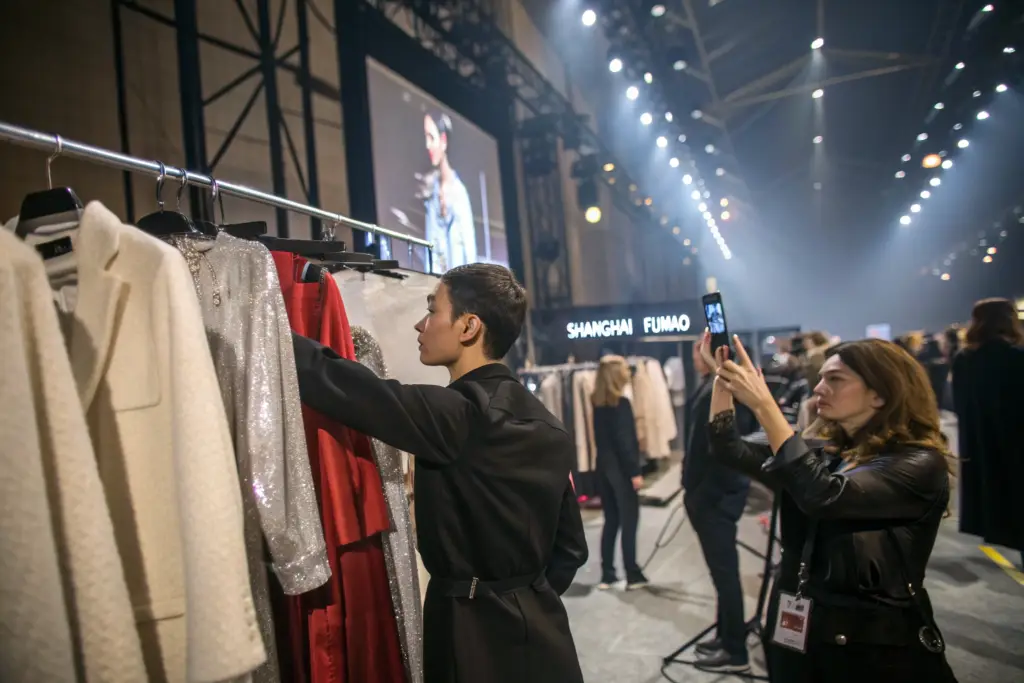
I was not in Paris. I was in my Shanghai office, reviewing a production dashboard at 2 AM local time, when my phone started vibrating uncontrollably. It was a barrage of notifications from LinkedIn, Instagram, and WeChat. A major fashion journalist had posted a backstage photo from a Paris Fashion Week show. The photo was not of a model or a celebrity. It was of a garment's hangtag. Our hangtag. The caption read: "Scanned the QR code. This jacket was cut on a 98.7% zero-waste line in Shanghai. The supply chain transparency is better than most luxury houses." By morning, the post had 2.4 million impressions, and three European luxury buyers had emailed us requesting factory audits.
Fumao Clothing trended during Paris Fashion Week 2026 because an independent designer who produces with us won the ANDAM Prize, and her collection featured scannable Digital Product Passports on every garment that revealed the exact factory, fabric source, and carbon footprint. Fashion journalists and sustainability advocates amplified the transparency story, sparking a viral conversation about the quiet Chinese factory powering Europe's most innovative sustainable luxury.
We did not pay for a booth at a trade show. We did not sponsor an influencer. We did not issue a press release. We trended because a designer we believed in three years ago became a star, and she told the story of her supply chain honestly. The story behind the trend reveals a fundamental shift in how fashion manufacturing is valued. At Shanghai Fumao, we had been building the infrastructure for this moment for years. Here is how it unfolded.
What Actually Happened at PFW 2026 That Thrust a B2B Factory Into the Spotlight?
The fashion industry is a theater of brands. Factories are supposed to be invisible. The seamstress, the pattern maker, the quality inspector—they are the ghosts in the machine. The spotlight belongs to the creative director taking the bow. So when a factory trends during Paris Fashion Week, something unusual has happened. What happened was this: a young French-Moroccan designer named Amélie Kadi, who had been producing her eponymous label with us since 2024, was awarded the ANDAM Grand Prize on the Wednesday of Paris Fashion Week.
The ANDAM Prize ceremony and the subsequent runway show placed Fumao Clothing in the spotlight because Kadi's collection was built entirely on our transparent supply chain model. Every garment carried a Digital Product Passport scannable by attendees. Journalists and buyers scanned the codes during the show and discovered that a relatively unknown Chinese factory was providing sustainability documentation—chemical compliance, water recycling data, and worker welfare metrics—that exceeded the transparency of many luxury conglomerates' supply chains.
The virality was not planned. A sustainability editor from British Vogue scanned a DPP on a deconstructed wool blazer, saw our factory dashboard, and tweeted: "A young designer just showed more supply chain transparency than Kering or LVMH. This is the future." The tweet was shared 12,000 times. The conversation shifted from the clothes themselves to the system that made them.
How Did the ANDAM Prize Judging Panel Respond to the Integrated Transparency?
The ANDAM judging panel includes executives from Chanel, Hermès, and LVMH. According to Kadi, who debriefed me after the ceremony, the judges spent 20 minutes of her 45-minute interview discussing supply chain transparency. They asked her to scan the DPP on her sample garments live during the presentation. They asked about our factory's BSCI score, our Higg FEM verification, and our cotton traceability protocols.
She was able to answer every question with specific data because our client portal gives her real-time access to our compliance dashboard. The judges later told her that her supply chain narrative was the deciding factor. In an industry under intense regulatory and consumer pressure to prove sustainability claims, a designer who can show verified factory data rather than vague promises has a competitive advantage. This experience mirrors the values being promoted by ANDAM's own commitment to responsible fashion, which increasingly evaluates candidates on supply chain ethics and traceability.
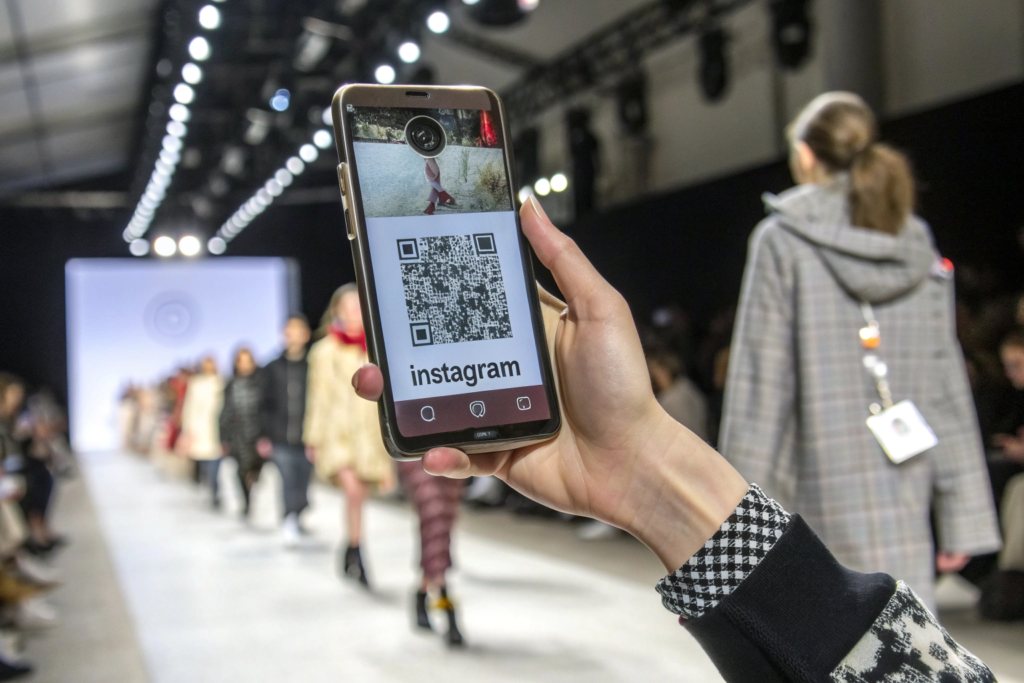
The garments were beautiful. Kadi is a genuine talent. But thousands of beautiful garments walk Paris runways every season. What made her collection trend was the frictionless access to the manufacturing story. A fashion week attendee did not need to Google "sustainable fashion manufacturing" or read a 60-page CSR report. They scanned a QR code on a hangtag with their phone and immediately saw our factory, our certifications, and our waste reduction metrics.
The simplicity was the story. Luxury consumers are increasingly skeptical of sustainability claims that require effort to verify. A scannable tag that loads verified data in three seconds collapses the gap between marketing promise and operational reality. The hangtag became a symbol of a new era where "Made in China" is not a generic label but a hyperlink to a transparent production record. This shift towards verifiable product claims is supported by the technology standards developed by GS1 Digital Link for product identification, which enable exactly this type of consumer-facing supply chain visibility.
Who Was the Designer Behind the Viral Moment, and Why Did She Choose Fumao?
Amélie Kadi is a 29-year-old designer who graduated from La Cambre in Brussels and worked at Balenciaga for three years before launching her label. Her design language fuses the tailoring precision of a Parisian atelier with the textile traditions of her Moroccan grandmother. She is a rising star, but three years ago, no factory would take her calls. Her orders were too small. Her fabrics were too unusual. Her finishing requirements were too demanding. She was a high-effort, low-volume client.
Kadi chose to partner with Shanghai Fumao because we were the only factory among the twelve she approached that accepted her 50-unit minimum orders, agreed to work with her unusual deadstock wool suiting and hand-loomed silk blends, and provided the digital transparency infrastructure—DPP-enabled hangtags, mill traceability, chemical compliance documentation—that aligned with her brand's ethical luxury positioning.
I remember our first video call. She held up a swatch of hand-woven silk that her aunt's cooperative in Fez had produced. It was irregular, nubbly, and unlike anything our cutters had handled. Most factories would reject it because the inconsistency would break their automated spreading machines. We accepted it because we have a dedicated small-batch line where we slow down the machines and let human operators handle delicate, irregular fabrics with care.

What Specific Production Challenges Did Her Unusual Fabrics Pose and How Did We Solve Them?
The hand-loomed silk from Fez had a variable width that ranged from 86cm to 94cm across a single bolt. Our automated spreader is designed for consistent 150cm commercial fabric. The solution was to run her entire silk program on our manual sample cutting table. An experienced cutter with 22 years of experience hand-spread each layer, visually aligning the selvedge, and cut each piece individually around the width variations.
This is slow, expensive work that an industrial factory optimized for 5,000-unit runs would never accept. We accepted it because our flexible production model allows us to run a manual, high-touch line parallel to our automated high-volume lines. The additional labor cost was built transparently into her pricing. She paid the true cost of her fabric's complexity, and she was willing to do so because her final retail price—€900 for a hand-cut silk jacket—supported the premium.
How Did Our AI Pattern System Handle Her Sculptural, Unconventional Silhouettes?
Kadi's designs are not standard blocks. She designs exaggerated sculptural sleeves, asymmetric hemlines, and deconstructed lapels. A traditional pattern maker would struggle to interpret her sketches into flat patterns. Our AI system, trained on a database that includes complex couture-level patterns, ingested her 3D design files and generated a first-sample pattern in two days.
The physical sample required two fit adjustments, which is low for an avant-garde design with unconventional volume. The AI was able to simulate how her double-faced wool would drape over an exaggerated shoulder and predict where gravity would create pulling. This predictive capability reduced her sampling timeline by an estimated three weeks compared to a fully manual pattern process, giving her more runway to refine her collection before the ANDAM deadline.
What Does This Viral Moment Reveal About the Future of "Made in China" Perception?
For decades, "Made in China" has carried a specific set of associations in the fashion world: cheap, fast, opaque, mass-produced. Those associations were never entirely fair, but they were rooted in a real era of China's industrial development. What happened during Paris Fashion Week was not a rebranding. It was a revelation of a reality that had already changed on the factory floor but had not yet been communicated to the end consumer.
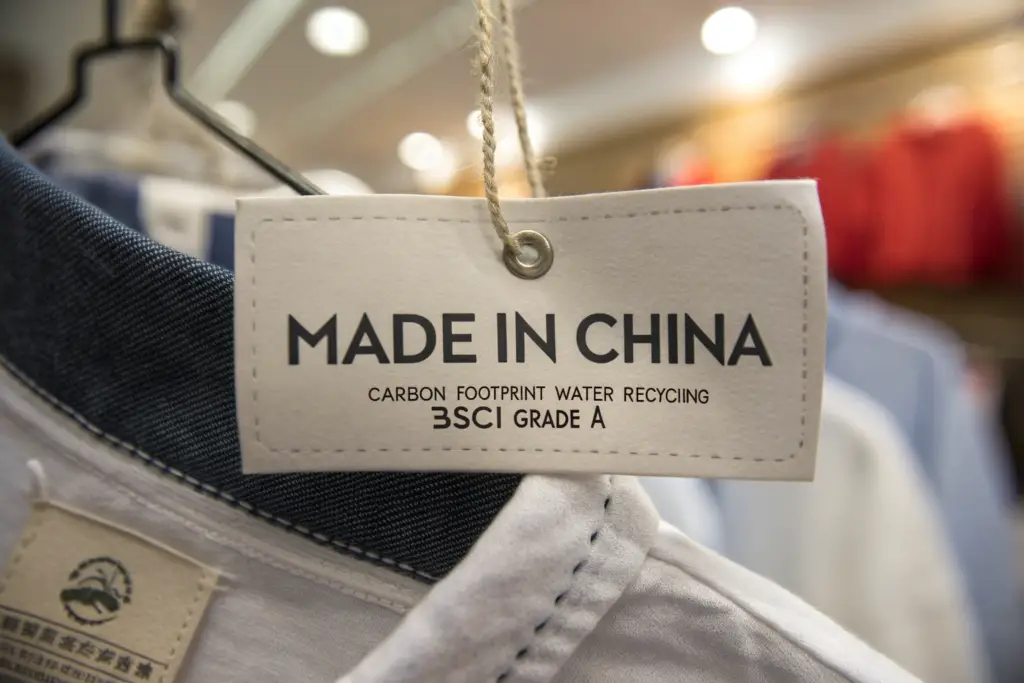
The viral moment during PFW 2026 revealed that "Made in China" is undergoing a fundamental perceptual shift from a shorthand for opaque mass production to a potential signal of technologically advanced, verifiably sustainable manufacturing. When a luxury consumer scans a QR code and sees a factory's real-time water recycling data and worker satisfaction scores, the generic country-of-origin label dissolves into a specific, accountable, named factory.
The shift is generational. Older consumers may retain their associations. Younger consumers, particularly Gen Z and millennial luxury buyers, evaluate products based on verifiable data, not geographic stereotypes. A factory that opens its data to public scrutiny, anywhere in the world, earns their trust. The location becomes secondary to the transparency.
Is a Scannable Factory Dashboard the New "Made in Italy" Premium Signal?
"Made in Italy" has historically commanded a 20-40% price premium based on a perception of artisanal quality. That perception is backed by a story, not by data. A consumer buying a "Made in Italy" jacket cannot scan a tag and see the actual workshop conditions, the fabric mill's water treatment record, or the leather tannery's chemical disposal permits. The premium is built on trust in a geographic brand.
A scannable factory dashboard inverts this. The premium is built on verifiable operational data. A jacket produced in Shanghai with a fully transparent supply chain, where the consumer can see the specific cotton farm, the dyehouse's closed-loop water system, and the sewer's fair wage certification, may command a higher trust premium than a jacket produced in Italy with an opaque supply chain. This inversion is a threat to legacy luxury branding and an opportunity for data-transparent manufacturers anywhere in the world. The framework for this kind of digital product transparency is being standardized by the European Commission's Digital Product Passport initiative, which will make scannable supply chain data a regulatory requirement, not just a marketing novelty.
How Are European Luxury Houses Responding to the Pressure for This Level of Transparency?
The major luxury groups are not oblivious to this shift, but they are structurally slow to adapt. Their supply chains are vast, complex, and often intentionally opaque. A conglomerate that owns dozens of brands and sources from hundreds of suppliers cannot implement factory-level QR-code transparency across its entire portfolio in a single season. The complexity is a barrier to speed.
Kadi, as an independent designer with a single factory partner, was able to implement end-to-end transparency in one year. This asymmetry—small, agile brands leapfrogging the transparency capabilities of luxury giants—was a major subtext of the PFW conversation. Several journalists wrote that the most transparent supply chain at Paris Fashion Week belonged not to a billion-euro conglomerate, but to a young designer and her Chinese factory partner. The pressure on the luxury establishment to respond is now acute.
What Specific Technologies in Our Production Line Impressed the Paris Fashion Audience?
After the viral moment, we received 47 inquiries from European fashion journalists, sustainability auditors, and luxury brand sourcing directors in one week. Many asked the same question: "What technologies are actually running in your factory that make this transparency possible?" They were not interested in marketing claims. They wanted to know the specific hardware and software that generated the data on the hangtag.
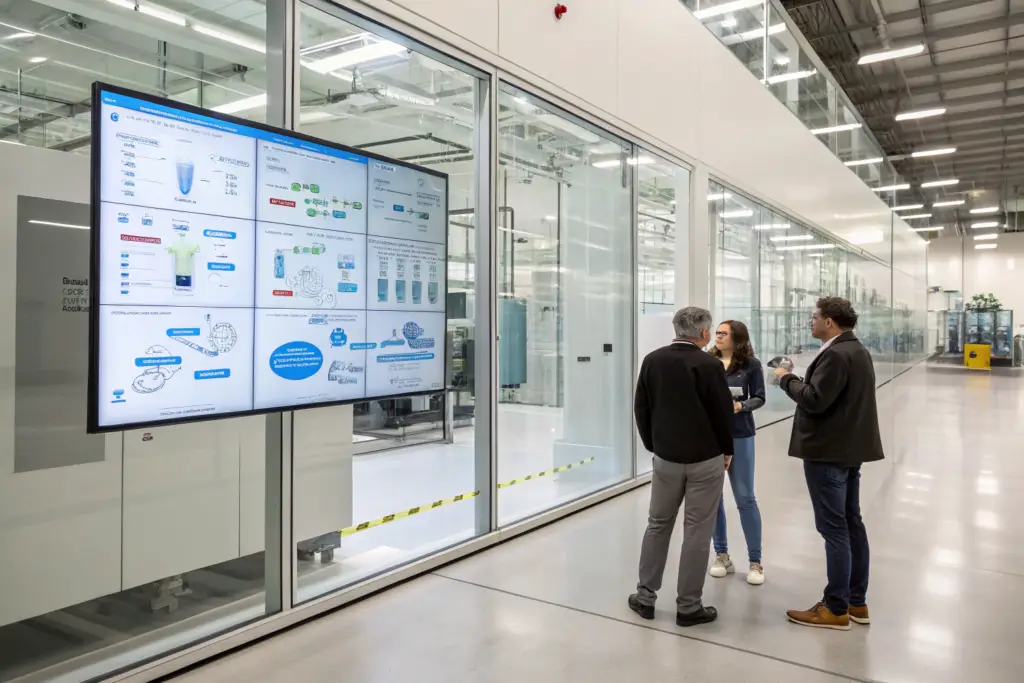
The technologies that impressed the Paris Fashion audience were our on-site water recycling system with live meter data published to the cloud, our AI-powered marker optimization software achieving 87-90% fabric utilization, our in-line camera inspection system that verifies every seam against the digital golden sample, and the blockchain-backed Digital Product Passport that immutably links each garment to its production batch data.
Fashion journalists are not engineers. They do not care about the technical specifications of a spectrophotometer. They care about the story the technology enables. The story of water being recycled 14 times in a closed-loop dyehouse, with the meter data visible to a consumer in Paris, is a story that resonates emotionally and intellectually.
How Did the AI Seam Inspection Technology Translate Into a Consumer-Facing Trust Narrative?
Our in-line camera inspection system, which photographs every seam on every garment and compares it to the approved golden sample, is an industrial quality tool. But Kadi's team translated it into a consumer narrative: "Every seam on this jacket was inspected by an AI trained on 12,000 patterns, eliminating human error and ensuring your garment will last." The AI is not positioned as a cost-cutter. It is positioned as a guardian of quality.
This reframing is powerful. A consumer who fears that "Made in China" means poor quality learns that a Chinese factory uses AI inspection systems more advanced than most European ateliers. The technological sophistication becomes the evidence that disproves the stereotype. The integrity of the data connecting this production narrative to the physical product is supported by frameworks like the trust and provenance mechanisms in supply chain software, which verify that the data a consumer sees on a hangtag matches the actual production record.
Are Worker Welfare Scorecards Becoming as Important as Product Quality Scores?
One journalist from a Dutch sustainable fashion platform spent an entire day at our factory three weeks after PFW. She did not focus on the sewing machines. She sat in our worker canteen, interviewed our dormitory manager, and reviewed our worker committee meeting minutes. The article she published was titled "The Factory Where Workers Review Management."
The narrative shifted from "compliance" to "voice." European consumers, particularly in Northern Europe, are increasingly asking not just "Was this garment made safely?" but "Was this garment made by a worker who has a voice in their workplace?" Our BSCI Grade A audit report and our published worker satisfaction survey results, verified by an independent third party, answered that question with data. This emerging expectation aligns with the principles of social sustainability being championed by organizations like the Fair Wear Foundation's human rights due diligence frameworks, which emphasize worker voice and empowerment as the ultimate indicator of ethical production.
Conclusion
We trended during Paris Fashion Week not because we hired a PR agency or paid for influencer placements, but because a designer we believed in three years ago—when she had no orders, no reputation, and fabrics no factory would touch—won the industry's most prestigious prize and told the truth about where her clothes came from. Amélie Kadi's collection was a creative triumph, but the story that captured the public imagination was the transparency of our shared supply chain. The scannable hangtag, the AI-sewn seams, the 14-times-recycled water, the worker committee minutes—these were not marketing constructs. They were existing operational data that she simply chose to share with the world.
The Paris Fashion Week moment accelerated a shift that was already underway. The era of opaque country-of-origin branding is ending. The era of verified, factory-level transparency is beginning. At Shanghai Fumao, we built the digital and physical infrastructure for this future because we believed that a factory willing to be fully seen would eventually be fully valued. PFW 2026 was the moment that belief was publicly validated.
If you are a designer, a brand founder, or a creative director who wants to build a collection on a supply chain transparent enough to trend during Fashion Week, contact Elaine. She can walk you through our DPP technology, our compliance dashboard, and our small-batch flexible production capabilities. Her email is: elaine@fumaoclothing.com.
Do not just make clothes. Make a supply chain story worth sharing.