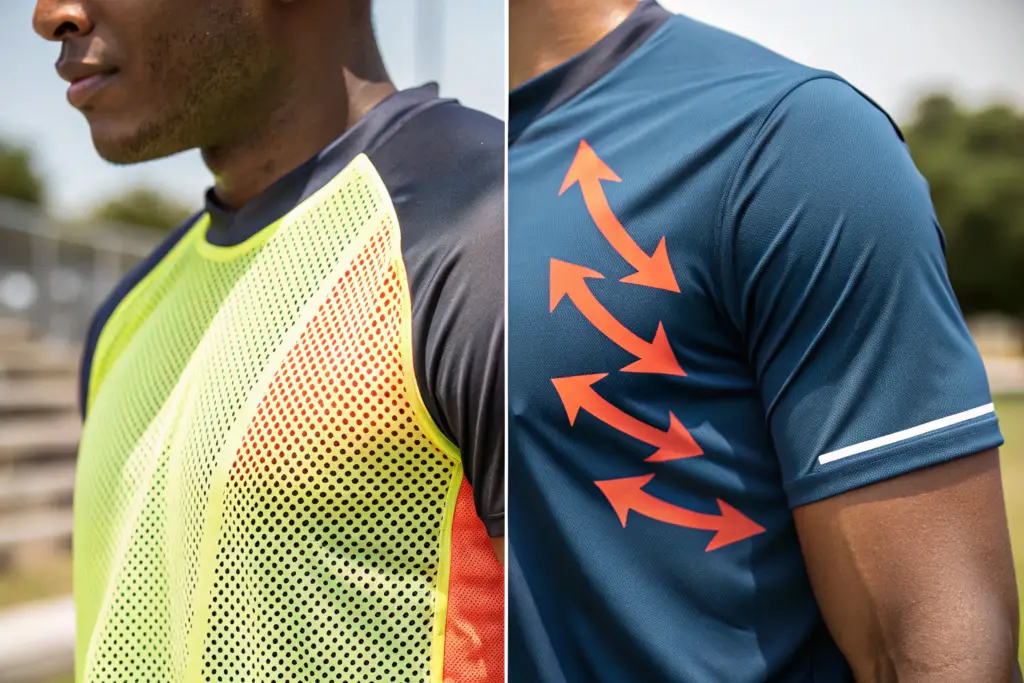
You are designing your next activewear line. Your customer is a serious athlete, or someone who just wants to stay cool and dry during a tough workout. You are looking at fabric options, and you see one that is full of tiny holes: mesh. You wonder, "Is this actually functional, or is it just a design trend? Does it really make a difference in keeping the body cool?" A product designer for a leading sports brand told me, "Mesh is not just a 'nice-to-have' in sports clothes. It's a fundamental engineering tool for thermal regulation. If you're not strategically using mesh, you're not making true performance gear."
Yes, mesh fabric is exceptionally good for ventilation in sports clothes. Its primary function is to maximize airflow and minimize the barrier between the skin and the outside air. The open structure of the knit allows for rapid convective heat transfer, pulling hot, humid air away from the body. When strategically placed in high-heat zones (like the back, underarms, and side panels), mesh panels act as engineered cooling vents, dramatically improving the garment's overall breathability and thermoregulation.
At Shanghai Fumao, we incorporate various types of performance mesh into the activewear we manufacture for our B2B partners. We understand that venting is a science, not just a look. Let me explain why mesh is so effective, the different types available, and how to use it strategically to create garments that truly perform.
What Is the Science Behind Mesh and Breathability?
The cooling effect of mesh is not magic; it is physics. The human body cools itself by sweating. For sweat to effectively cool the skin, it must evaporate. This process is dramatically accelerated by airflow. A solid, tightly woven fabric, even a thin one, creates a barrier that traps a layer of hot, humid air against the skin. Mesh removes that barrier. It is an engineered structure that prioritizes air permeability above all else.
Mesh works on the principle of maximizing convective airflow. Its open, porous knit structure has a very high Air Permeability rating, meaning it offers very little resistance to air passing through it. This allows hot, humid air from the body's microclimate to escape freely and be replaced by cooler, drier ambient air. This constant exchange accelerates the evaporation of sweat, which is the body's most effective cooling mechanism. The larger and more numerous the pores, the greater the ventilation.
I recall an activewear brand that was struggling with complaints that their running tops felt "stuffy" and "hot." They were using a solid, high-gauge polyester knit. We worked with them to redesign the top, incorporating strategic panels of a high-airflow, honeycomb mesh across the upper back and under the arms. The difference in the wear-test feedback was night and day. Runners reported feeling a noticeable cooling effect exactly where the mesh was placed. The science was proven in the real world. This is the functional power of an engineered ventilation system .
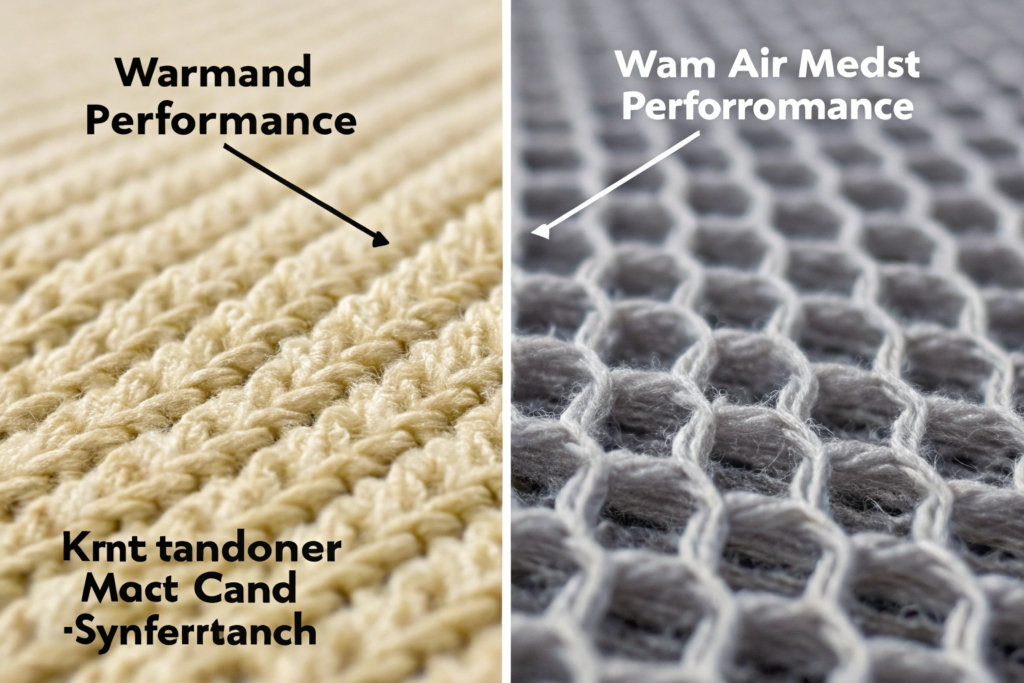
What Is the Difference Between Air Permeability and Moisture Vapor Transmission?
This is a key distinction in performance textiles.
- Air Permeability: Measures how easily air can flow through a fabric. This is the primary mechanism of mesh. It is about convective cooling.
- Moisture Vapor Transmission Rate (MVTR): Measures how easily water vapor (sweat in its gaseous form) can pass through a fabric. This is a property of the fiber and the tightness of the weave.
Mesh excels at Air Permeability. It creates a direct, physical pathway for hot air to escape. This is the focus of our performance fabric technology .
Is "More Holes Always Better"? The Trade-Off Between Ventilation and Support.
It is a balance. A very open, large-hole mesh provides maximum ventilation but offers zero support and can be fragile. A tighter, smaller-hole mesh provides good venting with more structure and durability. The art of sports design is choosing the right type and placement of mesh to balance cooling with the functional requirements of the specific garment and sport. This is a key part of our activewear design expertise .
What Are the Best Types of Mesh for Different Sports Applications?
"Mesh" is a broad category, not a single material. Different knit structures create meshes with vastly different properties in terms of openness, stretch, weight, and durability. A mesh designed for the back panel of a soccer jersey is different from a mesh used to line a pair of running shorts. Understanding these variations is key to using mesh intelligently in your designs.
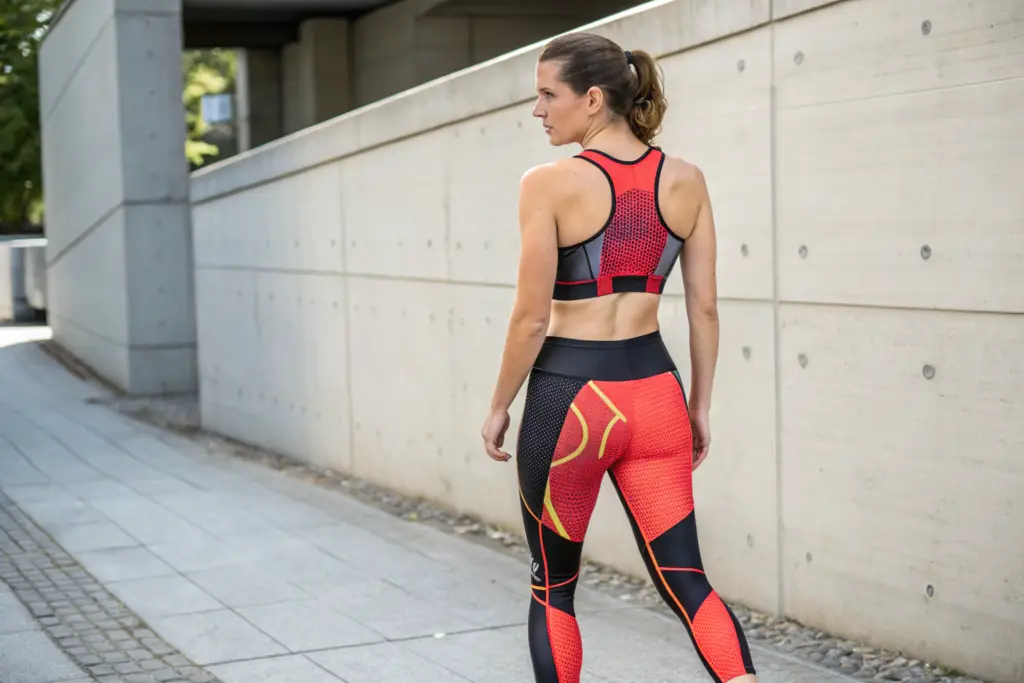
The best type of mesh depends on the application. For high-heat zones like the upper back, a wide-open honeycomb mesh (often made of 100% polyester) maximizes airflow. For side panels and underarms, a stretch mesh with elastane allows for ventilation without restricting movement. For linings in shorts or bras, a lightweight, soft, fine-hole mesh provides breathability and moisture management without adding bulk or chafing. The choice is a strategic one based on the specific need.
A brand we work with that designs for high-intensity interval training (HIIT) uses a very specific approach. Their tops feature a large panel of an open, lightweight 100% polyester hex-mesh across the entire back for maximum heat dumping. The underarm panels are a stretch mesh with spandex for a mobile, chafe-free fit. The combination is a garment that feels incredibly cool and unrestrictive during the most intense workouts. They did not just add mesh; they engineered a cooling system. This is the level of thoughtfulness we bring to our performance activewear development .
What Is the Ideal Material Composition for a Durable, High-Airflow Mesh?
For the main venting panels, where stretch is not required, a 100% Polyester mesh is ideal. Polyester is inherently hydrophobic (it does not absorb water), so it stays light and dries incredibly fast. It is also very strong and resists tearing. For areas needing stretch, a Polyester/Spandex blend (e.g., 85/15) provides the necessary give while maintaining ventilation. This is a key part of our material selection for activewear .
How Can You Use Mesh for Lining in Shorts and Sports Bras?
A lightweight, soft, fine-hole polyester mesh is perfect for moisture-wicking linings. In shorts, it provides a breathable, chafe-free inner brief. In sports bras, it can be used for a ventilating lining that helps manage sweat and heat in a critical area. The key is choosing a mesh with a smooth, soft handfeel to prevent any irritation against the skin.
Where Are the Most Strategic Places to Put Mesh Panels?
The effectiveness of mesh is not just about the material; it is about placement. Throwing a random mesh panel on a sleeve is a fashion statement. Placing mesh where the body actually generates the most heat and sweat is functional design. The most advanced sports garments are engineered using body heat maps, placing ventilation exactly where it is needed most.
The most strategic places for mesh panels are the body's "hot spots." These are the areas with the highest concentration of sweat glands and where heat tends to build up. The primary zones are: 1) The Center Upper Back (the largest and most effective venting area), 2) The Underarms (a critical zone for sweat and heat), 3) The Side Panels or Ribs (for lateral airflow), and 4) The Back of the Knees. Placing mesh in these specific locations creates an engineered cooling system.
A running brand we work with uses a specific mapping approach. Their long-sleeve performance tops have a large, laser-cut venting pattern across the upper back and a lightweight stretch mesh panel running from the underarm down the side ribcage. Their leggings have a small, breathable mesh panel behind the knee. They do not use mesh for decoration. Every piece is functional. Their customers, who are serious runners, notice and appreciate the thought. This data-driven placement is what separates real performance wear from fashion activewear. This is the core of our functional design philosophy .
Why Is the Upper Back the Most Critical Zone for Ventilation?
The upper back has a high concentration of sweat glands, and it is an area that generates significant heat during exercise. Placing a large, highly breathable mesh panel here creates a powerful "chimney effect," allowing a massive amount of hot air to escape, which cools the entire body. It is the single most effective placement for a venting panel.
How Do Underarm Mesh Panels Improve Comfort and Reduce Chafing?
The underarm is a high-friction, high-sweat zone. A standard seam and solid fabric can trap moisture and rub, causing painful chafing. A soft, stretchy mesh panel in this area improves airflow, keeps the skin drier, and provides a more forgiving, friction-free surface. It is a critical detail for comfort in any running or training top.
How Does Fumao Integrate Mesh to Create High-Performance Activewear?
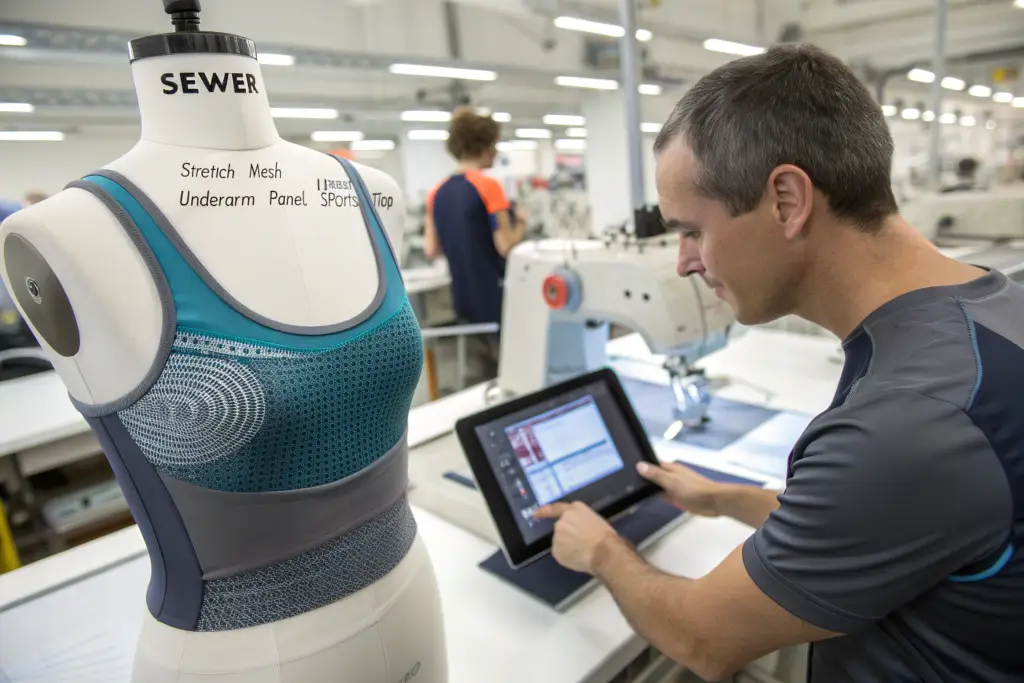
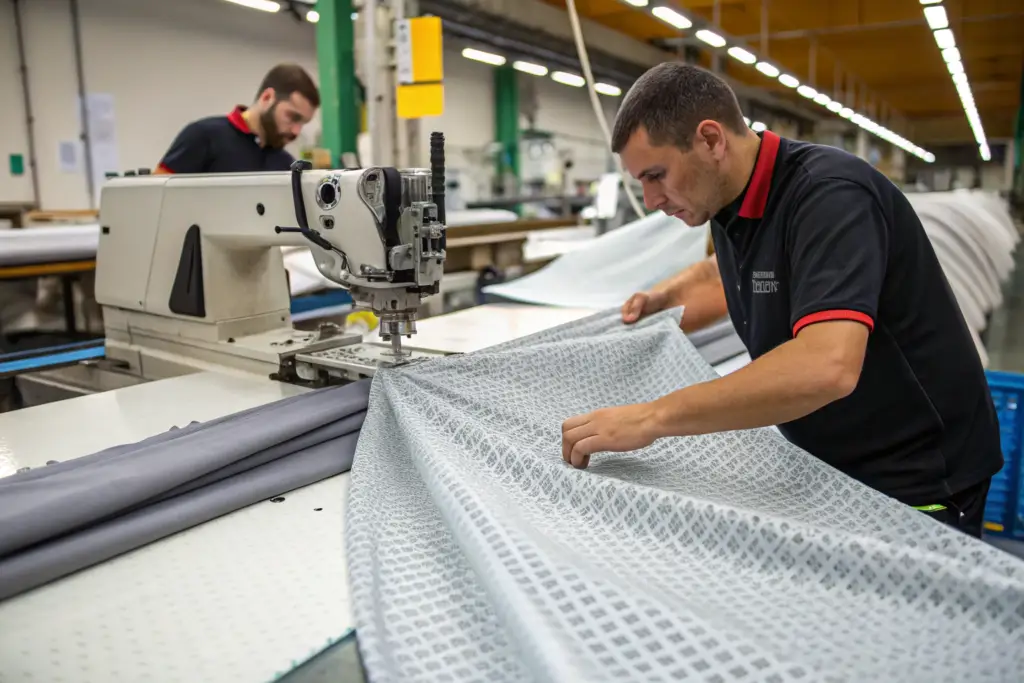
Working with technical mesh requires expertise. It is often lightweight, slippery, and stretchy, making it challenging to cut and sew without puckering or damaging the fabric. Our factory has the specialized machinery and the skilled sewers to handle these performance materials and integrate them seamlessly into complex activewear designs. We turn your functional design concept into a perfectly executed, high-performance reality.
Fumao integrates mesh effectively by pairing our deep material knowledge with specialized construction expertise. We source a wide variety of performance meshes, from open honeycombs to fine stretch venting materials. Our cutting room uses precise, automated methods to handle these lightweight fabrics without distortion. Our sewing lines are equipped for attaching mesh with durable, chafe-free flatlock seams. We ensure the mesh is not just an add-on, but an integrated, functional, and beautiful part of the garment.
A brand partner came to us with a concept for a high-ventilation triathlon top. They needed a very specific, ultralight, four-way stretch mesh for the back panel that would not degrade in chlorine. Our sourcing team found the perfect material. Our production team then perfected the process of cutting and sewing this delicate fabric into the complex, multi-panel top without any puckering. The finished product performed flawlessly. The brand owner told us, "You handled that technical fabric like it was a standard cotton. I couldn't have done this anywhere else." That is our expertise in action. This is the value of a specialized activewear manufacturing partner .
How Do You Source the Right Technical Mesh for a Specific Sport?
We work with a network of specialized performance fabric mills. We can source meshes with specific properties: ultralight for trail running, super-stretchy for yoga, chlorine-resistant for swim, or extra-durable for contact sports. We guide our partners to the right material based on the intended use of the garment. This is a key part of our fabric sourcing service .
What Seams Work Best for Attaching Mesh to Maintain Stretch and Comfort?
The non-negotiable standard for performance activewear is the flatlock seam. This seam lies completely flat against the skin, eliminating chafing. It is also strong and highly elastic, allowing the mesh panel to stretch and move with the body without the seam popping or puckering. This is our standard for all activewear construction .
Conclusion
Mesh fabric is an essential, high-performance engineering tool for ventilation in sports clothes. It works by leveraging the simple physics of airflow to cool the body's hot spots. The key to its success is not just using any mesh, but choosing the right type of mesh and placing it strategically based on the body's physiological needs.
At Shanghai Fumao, we are experts in the science of performance. We help our B2B partners design and manufacture activewear that uses mesh intelligently to create garments that truly perform. We handle the technical complexity so you can build a brand that athletes trust.
If you are ready to incorporate advanced ventilation into your next activewear line, let's talk. Our Business Director, Elaine, can share our library of performance mesh options. Please email Elaine at: elaine@fumaoclothing.com.