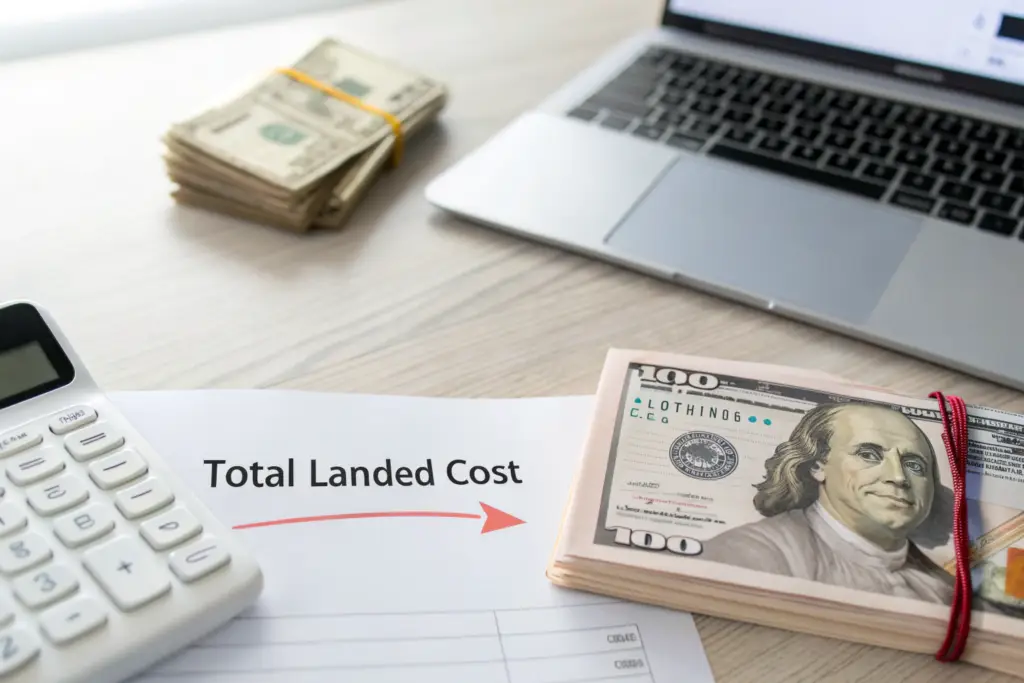
A founder of a children's organic cotton line sat across from me at a coffee shop in Austin last year. She pulled out her laptop and showed me her current cost breakdown from a boutique cut-and-sew operation in Los Angeles. Her cost per unit for a simple organic romper was $14.70, and her retail price was $36. She was losing money after shipping, returns, and marketing. She asked me, almost apologetically, if she was wasting my time. I pulled up our cost calculator on my phone. Our landed cost for an identical romper, with GOTS-certified organic cotton, full safety testing, and DDP delivery to her Austin warehouse, was $9.80. She stared at the number for 15 seconds. Then she said, "That changes everything."
Shanghai Fumao saves small brands up to 30% on total landed cost by eliminating the margin-stacking of multiple intermediaries, reducing fabric waste through AI-driven marker efficiency, and providing full-package manufacturing that bundles design, sourcing, production, and logistics into a single transparent price. The brand pays one invoice instead of six, and the aggregate savings compound to a structural cost advantage.
Small brands are not inefficient because their designs are bad. They are inefficient because they are forced to buy small quantities of fabric at retail prices, pay separate fees to pattern makers, graders, cutters, sewers, printers, and freight forwarders, and absorb the premium of every intermediary who touches the product. At Shanghai Fumao, we designed our entire service model to collapse that fragmented chain into a single unified process. Here is exactly where the 30% savings comes from.
Where Do Small Brands Leak Money in a Traditional Multi-Vendor Supply Chain?
The biggest cost for a small brand is not the fabric. It is the transaction friction. Every time a brand coordinates between a separate fabric supplier, a separate pattern maker, a separate cutting room, a separate sewing contractor, and a separate freight forwarder, they pay a margin markup at every handoff. Each vendor adds their profit layer, and the brand pays retail prices for services that a vertically integrated factory procures at cost.
Small brands leak money in a traditional multi-vendor chain through fabric retail markup (25-40% above mill-direct pricing), pattern development fees paid to external freelancers ($300-$500 per style), cutting room minimum charges for small-batch work, and freight brokerage fees that add 15-20% above carrier-direct rates. These costs are not visible on a single invoice, so brands often overlook them.
I audited a brand's cost structure last year. They had six different vendors for a single hoodie program. The aggregate of the hidden markups—fabric agent commission, separate grader invoice, cutting house surcharge, print shop minimum fee—added $4.70 per unit, or 31%, to their final landed cost compared to our all-in quote for the identical garment.
How Much Does Buying Fabric "Retail" Instead of Mill-Direct Actually Cost?
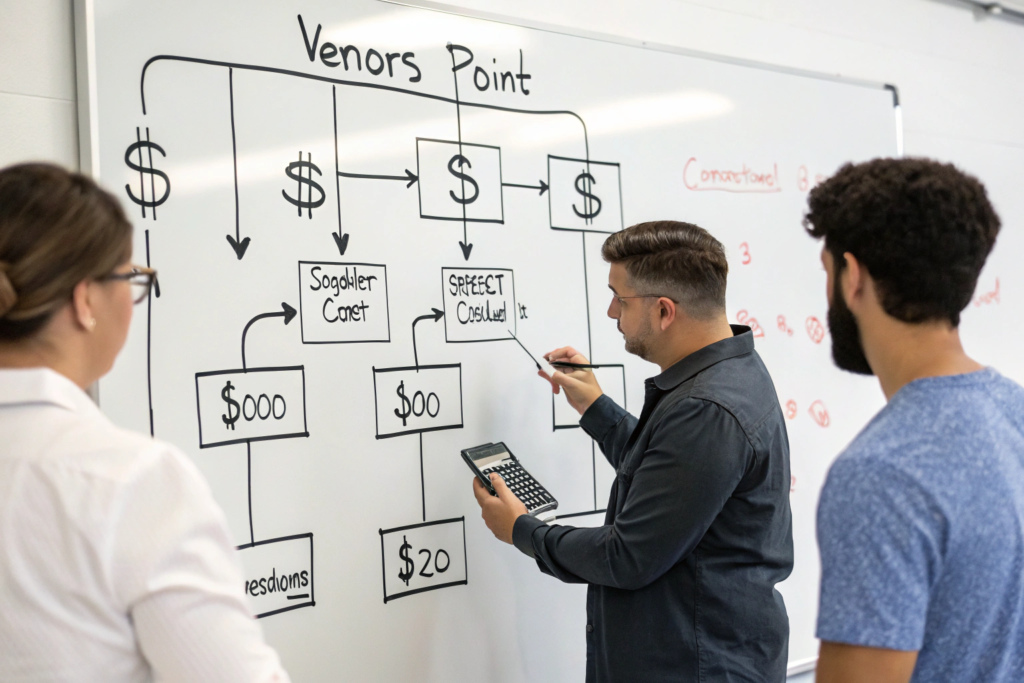
A small brand walks into a fabric jobber in Los Angeles or orders swatches from an online deadstock retailer. They pay $6.50 per yard for organic French terry. A factory like ours, which buys that same fabric directly from the mill in Jiangsu at 5,000-yard increments, pays $4.10 per yard. That is a 37% markup before the fabric even reaches the cutting table.
The small brand is not being cheated. The jobber provides a genuine service: stocking small quantities, accepting small orders, shipping quickly. But the service comes at a premium. When a brand moves under our full-package umbrella, their fabric cost instantly shifts from the jobber's retail price to the mill's wholesale price because we aggregate the fabric purchase with our larger volume. The brand does not need to order 5,000 yards. They can order 200 yards and still pay the mill-direct rate because we combine their order with other clients' requirements.
What Are the Hidden "Admin Taxes" of Managing Five Separate Vendors per Garment?
The admin tax is the value of the brand owner's time spent managing logistics instead of designing and selling. A brand that manages five vendors for one hoodie spends roughly 12 hours per week on emails, phone calls, freight coordination, quality complaint follow-ups, and invoice reconciliation. Twelve hours a week. That 12 hours, valued at the founder's opportunity cost, is roughly $900 per week on a modest $75/hour valuation.
Multiply that by 50 production weeks, and the admin tax is $45,000 per year. That is not a line item on a vendor invoice. It is a silent drain on the brand's highest-value resource: the founder's attention. Our single-invoice, single-point-of-contact model eliminates this tax. The brand sends a tech pack to one person, receives a single sample, approves one invoice, and receives the shipment. When you factor in this time-saving alongside the direct cost savings, the full economic advantage of vertical integration becomes even more significant, a fact supported by sourcing research on supply chain consolidation benefits.
How Does Full-Package ODM Manufacturing Compress the Cost Structure?
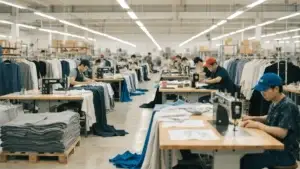
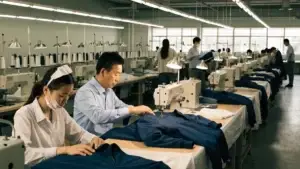
Full-package manufacturing, also called ODM or Original Design Manufacturing, means the factory handles everything from design interpretation to final delivery. The brand provides the design concept, the tech pack, and the approval. The factory provides the fabric procurement, pattern making, grading, marker making, cutting, sewing, finishing, quality control, and logistics. One entity, one responsibility, one cost structure.
Full-package ODM manufacturing compresses the cost structure by removing the profit margins of three to five intermediaries between the brand and the finished garment. The factory earns its margin once, on the integrated service, rather than a chain of specialized vendors each adding their separate profit layer. For a complex garment like a lined jacket, this can reduce the total cost by 25-35%.
Our full-package model is not just about bundling. It is about aligning incentives. Because we control the fabric procurement, we are incentivized to minimize waste. Because we control the cutting, we are incentivized to nest efficiently. Because we control the shipping, we are incentivized to consolidate containers. In a fragmented chain, no single vendor has an incentive to optimize the total cost. They optimize their own piece.
Why Does Owning the Design-to-Delivery Chain Eliminate the "Finger-Pointing" Tax?
Every time a garment fails in a multi-vendor chain, an expensive ritual begins. The brand notices a defect. The sewing contractor blames the fabric quality. The fabric supplier blames the cutting house for stretching the fabric during spreading. The cutting house blames the pattern maker for a faulty marker layout. The brand spends a week mediating a blame game.
In our integrated model, there is no one to point fingers at except ourselves. If a defect occurs, we own it, we fix it, and we pay for it. This accountability eliminates the cost of the blame game itself—the rework negotiation, the credit memo disputes, the shipping of rejected goods back and forth. But more importantly, it creates a powerful internal incentive to prevent defects from reaching the brand. When you own the entire chain, quality failures hit your own bottom line directly. This accountability structure mirrors the quality assurance principles of ISO 9001 management responsibility but applies them across the entire supply chain under single ownership.
How Does In-House Pattern and Marker Making Directly Reduce Fabric Cost?
A separate pattern maker working on a freelance basis charges by the style. They have no financial incentive to nest the pattern pieces tightly on the marker, nor do they have the information about the specific fabric width the cutting room will use. We have built the entire pre-production process to optimize material costs. Our AI-assisted marker-making system achieves fabric utilization rates of 87-90% on complex woven garments, compared to an industry average of 80-82%.
On a production run of 500 pairs of linen trousers, an 8% improvement in fabric utilization saves approximately 180 yards of fabric. At $6 per yard for premium linen, that is $1,080 saved on one style alone. The savings on fabric directly reduce the cost per unit for the brand. The integration of pattern making, marker making, and cutting under one roof makes this optimization possible. The key technology here is automated marker nesting, which has been refined by specialist software firms like Gerber Technology's industry solutions to reduce the fabric offcuts that are thrown away during manual marker planning.
What Is the True Profit Impact of Saving 30% on Landed Cost for an Indie Label?
Let me show you the arithmetic that changes a brand owner's life. The clothing brand founder at that Austin coffee shop understood her numbers intuitively, but she had never seen them laid out with this clarity. A 30% reduction in cost does not just increase profit by 30%. It can double or triple net profit because of the way the fixed costs of running a brand interact with the per-unit margin.
A 30% reduction in landed cost for an indie label typically translates to a 50-100% increase in net profit margin because the fixed overhead costs (studio rent, website, marketing, salaries) remain constant while the per-unit contribution margin expands significantly. The brand can either bank the profit, reinvest in marketing to accelerate growth, or strategically lower the retail price to capture market share.
The decision of what to do with the margin windfall is strategic. Some brands choose to increase their marketing budget, knowing they can spend more to acquire a customer while maintaining the same profitability. Others choose to reduce retail prices, undercut competitors, and gain market share. There is no single right answer, but having the option is the point.

Can You Show the Math on a Real Organic Kids' Wear Example from Sample to Scale?
Let me walk through the actual numbers from the Austin brand I mentioned. She makes organic cotton baby rompers. Retail price: $36. Her old cost structure, using a U.S. cut-and-sew contractor and local fabric sourcing, versus our full-package cost:
| Cost Component | Old U.S. Multi-Vendor Model | Shanghai Fumao Full-Package |
|---|---|---|
| Fabric (GOTS organic cotton jersey) | $4.20/unit | $2.80/unit |
| Pattern & Grading (amortized over 300 units) | $1.10/unit | $0.00 (included) |
| Cutting & Sewing Labor | $5.60/unit | $3.20/unit |
| Trims & Labels | $0.80/unit | $0.55/unit |
| Safety Testing (CPSIA) | $1.50/unit | $0.85/unit |
| Freight & Customs (DDP) | $1.50/unit | $1.40/unit |
| Total Landed Cost | $14.70/unit | $9.80/unit |
| Retail Price | $36.00 | $36.00 |
| Gross Margin per Unit | $21.30 | $26.20 |
| Gross Margin Percentage | 59.2% | 72.8% |
For a 1,000-unit production run, the difference in gross profit is $4,900. For a brand doing three seasonal drops per year at 1,000 units each, that is an additional $14,700 in annual gross profit. That is a salary for a part-time marketing assistant, a down payment on a studio space, or the budget for a professional photoshoot.
Should You Drop Retail Prices or Expand Marketing With the Cost Savings?
This is the strategic fork in the road. Dropping the retail price from $36 to $30 could increase unit sales volume, but it sacrifices margin per unit. Investing the savings into Meta and TikTok ad spend could grow the customer base without touching the retail price. The math favors reinvestment in most cases.
If the brand maintains the $36 retail price and invests $5,000 of the $14,700 annual savings into additional marketing, they only need to acquire 139 new customers at a $36 average order value to break even on the marketing spend. Any additional new customers are pure growth. This reinvestment flywheel—cost savings funding customer acquisition, customer acquisition funding more production volume, more volume enabling even better pricing from the factory—is how small brands become mid-sized brands. The growth mechanics of direct-to-consumer brand scaling, where gross margin generated from efficient sourcing directly fuels customer acquisition spend, is widely recognized as the core engine that separates growing brands from stagnant ones.
What Are the Long-Term Scaling Benefits That Compound Beyond the Initial 30%?
The initial 30% savings is the headline. But the compounding benefits of a strategic manufacturing partnership are where the real transformation happens. A brand that stays with a factory for three seasons, five seasons, ten seasons, unlocks savings that a transactional, order-by-order sourcing strategy can never access.
The long-term scaling benefits of a continuous partnership with a single full-package manufacturer compound through fabric pre-booking discounts, prioritized production slots during peak season, access to the factory's design library for trend-responsive development, and a shared inventory program that allows the brand to hold safety stock without tying up their own working capital.
I have a client who has been with us for four years. Their first order was 200 hoodies. Their most recent order was 5,000 units across six styles. Over those four years, their cost per unit has declined an additional 12% beyond the initial savings, driven entirely by volume-based efficiency and the elimination of redundant sampling as our team internalized their fit DNA.
How Does a Factory "Fit DNA" Profile Eliminate Sampling Costs Over Multiple Seasons?
When a brand develops with a new factory every season, they pay for the learning curve each time. The factory must learn their fit preferences from scratch. A new pattern, multiple fit samples, and back-and-forth adjustments consume fabric, labor, and shipping. With a continuous partnership, the factory builds a Fit DNA Profile—a digital record of the brand's specific fit preferences, grading nuances, and construction standards.
Our AI system stores this profile. When the brand submits a new tech pack for Season 5, the pattern engine loads their Fit DNA and generates a first sample that already reflects their preferences. The sampling revision rounds drop from three to one, sometimes zero. Over five seasons, a brand that develops 10 styles per season saves approximately $15,000 in sampling costs alone, not including the time saved and the faster speed-to-market.
What Happens When a Growing Brand Can Pre-Book Fabric at Lower Bulk Rates?
A transactional buyer orders fabric per PO, at whatever the market rate is that month. A strategic partner pre-books core fabric allocations at the beginning of the year, locking in a lower bulk rate. By the time a brand reaches $500,000 in annual volume, they can participate in our annual fabric pre-booking program.
For example, a brand that knows they will need approximately 8,000 yards of 400GSM cotton fleece across their fall and winter drops can reserve that capacity with us in January at a fixed price. We buy the greige in February at a bulk discount, and the brand avoids the 10-15% price increase that often hits spot-market fabric buyers in August when demand spikes. This pre-booking discipline is a direct benefit of a trusted, long-term factory relationship. The concept is similar to supply chain strategies that lock in commodities, as discussed in procurement forums like those hosted by industry trade groups, but applied specifically to the textile inputs that drive apparel costs.
Conclusion
The 30% savings we deliver is not a marketing promise that requires asterisks and fine print. It is the arithmetic consequence of a vertically integrated model that removes the intermediaries, optimizes the fabric utilization, and bundles the logistics into a single transparent price. The Austin children's brand founder I met last year is now running her entire production through Shanghai Fumao. She reinvested her first year's savings into a professional e-commerce website and a micro-influencer campaign that tripled her Instagram following. She did not lower her retail price by a single dollar. She just took the margin, turned it into marketing fuel, and grew.
The brands that thrive in the next decade will be the ones that treat their manufacturing partner not as a cost to be minimized, but as a growth engine to be optimized. The 30% savings is the entry point. The compound benefits—the Fit DNA, the pre-booked fabric, the shared inventory, the communication rhythm built over years—are where the true strategic advantage lies.
If you want to see a detailed cost comparison for a specific product in your current line, send the tech pack and your current cost breakdown to Elaine. She will return a transparent, line-by-line Fumao costing that shows exactly where the savings live. Her email is: elaine@fumaoclothing.com.
Stop paying the intermediary tax. Start building a manufacturing partnership that multiplies your margins.