You have just received a large shipment of your beautiful private label collection. The cartons are stacked in your garage, a spare room, or a rented storage unit. You are focused on selling, which you should be. But weeks and months pass. You finally open a carton to fulfill an order, and your heart sinks. The colors have faded. A musty smell has permeated the fabric. Delicate silks have deep, permanent creases. Your valuable inventory has been slowly, silently damaged by improper storage. A brand owner told me, "I was so focused on getting my product made that I never thought about how to protect it once it arrived. I lost thousands of dollars worth of inventory to humidity and poor storage. It was a painful lesson."
Safely storing bulk apparel inventory is a science of controlling four key environmental enemies: light, temperature, humidity, and physical stress. To prevent long-term fabric damage, you must: 1) Create a Climate-Controlled Environment (cool, dry, and dark), 2) Use Proper Physical Storage Methods (hanging for structured garments, flat for heavy knits, in breathable materials), and 3) Implement a Strict "First-In, First-Out" (FIFO) Inventory Rotation System to prevent any single item from being stored for too long. Your inventory is your business's lifeblood; it must be protected.
At Shanghai Fumao, we care about the lifecycle of your garments long after they leave our factory. We see too many beautiful products damaged by poor storage. Let me share the professional, archival-level principles of garment storage that you can apply to protect your valuable private label inventory and your bottom line.
What Are the "Four Silent Killers" of Stored Garments?
Your stored garments are not inert. They are slowly reacting to their environment, even while sitting in a box. The damage is often invisible until it is too late. Understanding the four primary agents of degradation is the first step to preventing them. These are the silent killers that can ruin your inventory if left unchecked.
The four silent killers of stored garments are: 1) Light (especially UV radiation, which causes fading and weakens fibers), 2) Extreme or Fluctuating Heat (which accelerates chemical degradation and can melt synthetic fibers), 3) Humidity (which promotes mold, mildew, and musty odors), and 4) Physical Stress (which includes creasing from improper folding, stretching from hanging heavy garments, and dust accumulation). A successful storage strategy is designed to mitigate all four.
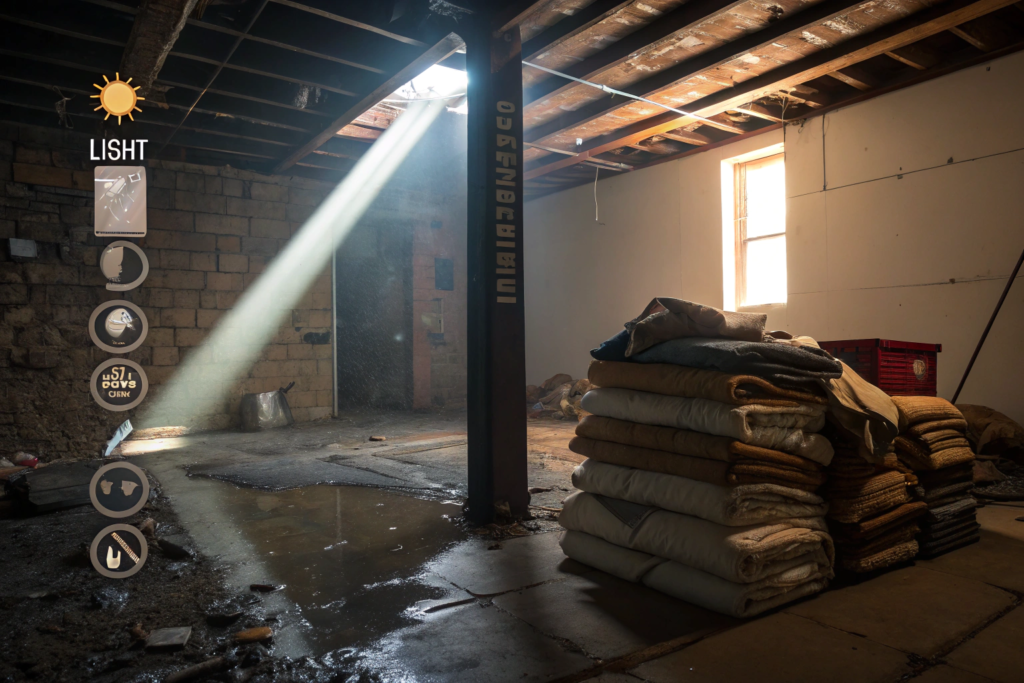
I recall a brand founder who stored a pallet of beautiful, dark-colored cotton dresses in a storage unit with a small, high window. She did not realize that for a few hours each day, a beam of direct sunlight hit the side of the cartons. After three months, when she opened those boxes, the shoulder of every dress on that side of the pallet was noticeably faded. The entire batch had to be heavily discounted. The culprit was simple, unfiltered light. She learned that even in a sealed box, prolonged exposure to heat from sunlight can damage fabrics. Now, she stores everything in a completely dark environment. This is a fundamental rule of inventory preservation .
Why Is Humidity the Single Most Dangerous Element?
While light and heat cause slow degradation, humidity is the fastest and most catastrophic destroyer of stored textiles. High humidity (above 60%) creates a perfect breeding ground for mold and mildew. Once mold sets into fabric, it is virtually impossible to remove completely. It creates permanent stains, a persistent musty odor, and can actually rot natural fibers like cotton and linen. Controlling humidity is non-negotiable. This is a core part of our garment care guidance .
How Does Improper Folding or Hanging Create Permanent Damage?
Plastic hangers can stretch the shoulders of a heavy knit. Folding a delicate silk along a sharp crease can, over time and under pressure, cause the fibers to actually break along that line, creating a permanent, irreversible mark. Gravity and pressure are constant forces. Your storage method must counteract them by providing proper support and minimizing stress. This is the principle of correct physical storage .
What Are the Best Practices for Physical Storage and Organization?
Once you have the environment under control, the next layer of protection is the physical method of storage. A one-size-fits-all approach does not work. A delicate silk blouse needs to be treated differently from a heavy wool coat or a printed t-shirt. The way you hang, fold, and package each type of garment will determine whether it emerges from storage ready to wear or ruined by the very method meant to protect it.
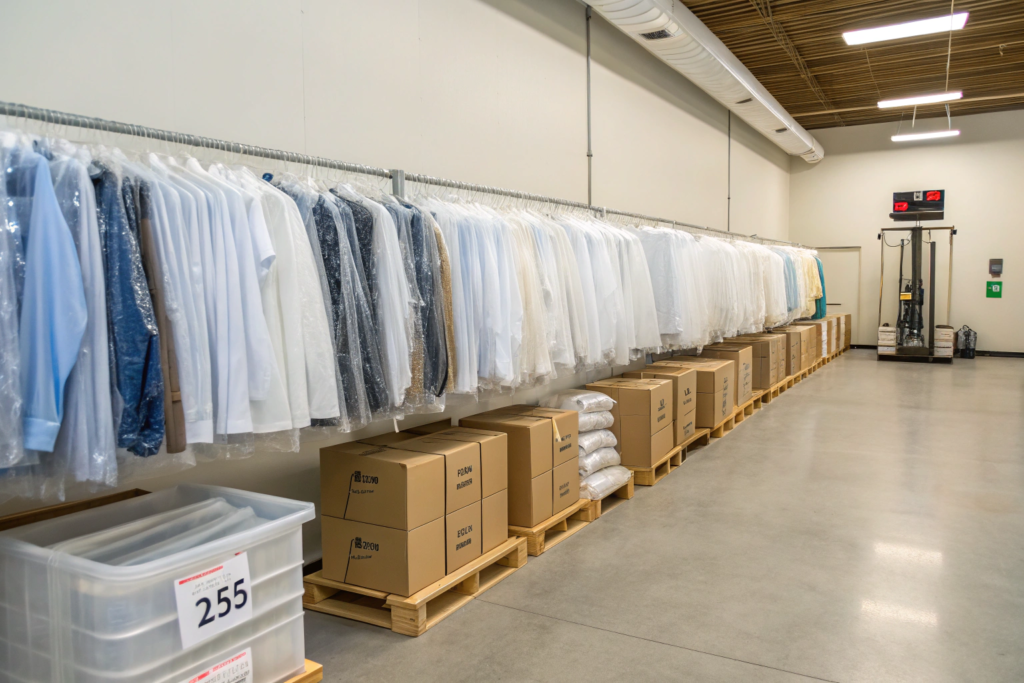
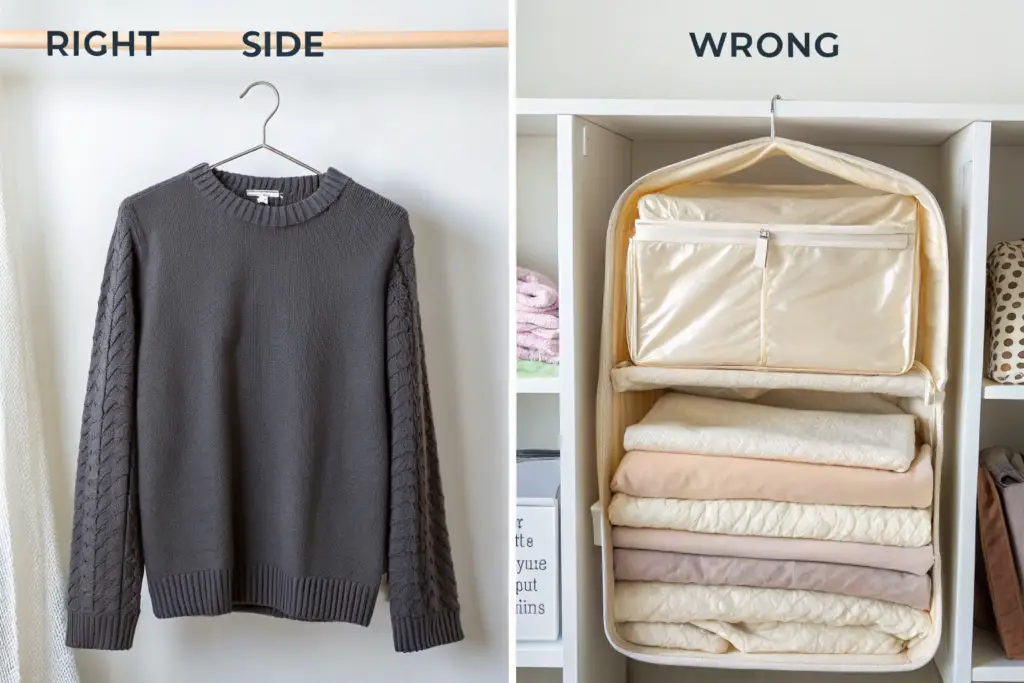
The golden rule of physical storage is to mimic the stress the garment was designed for. Structured garments (blazers, tailored coats) should be hung on padded hangers to support their shape. Heavy knits (sweaters, heavy hoodies) should be neatly folded and stored flat to prevent the fabric from stretching under its own weight. Delicate fabrics (silk, viscose) should be stored in breathable garment bags to protect them from dust and snags, never in plastic dry-cleaning bags which trap moisture. All cartons should be stored off the floor on pallets.
A brand that makes premium wool coats ensures every unit in storage is hung on a wide, padded hanger inside a breathable cotton garment bag. This preserves the shoulder shape and protects the fabric from dust. A streetwear brand we work with learned a painful lesson when they stored their first run of heavyweight hoodies on hangers. After a few weeks, the weight of the garment had stretched the shoulders and created unsightly "dimples." They now fold their knits and store them on shelves. They learned that matching the storage method to the fabric and construction is essential. This is the core of our inventory care protocols .
Why Should You Use Padded Hangers for Structured Garments?
A thin, hard hanger creates a single, stressful pressure point that will deform the shoulder of a tailored jacket. A padded hanger distributes the weight over a wider, softer area, supporting the garment's natural shape and preventing permanent dimples or stretching. This is a small investment that protects the value of expensive tailored pieces.
How Should You Store Printed or Embellished Garments to Prevent Damage?
Prints can stick together under pressure or heat. Fold printed tees and sweatshirts with acid-free tissue paper between the folds to prevent the design from cracking or sticking. For heavily embellished pieces, wrap them in tissue and store them flat in a box to prevent the weight of the embellishments from pulling on the fabric. Each material requires a thoughtful approach. This is part of our specialty garment care .
How Can a "First-In, First-Out" System Prevent "Dead Stock" Damage?
Even in a perfect environment, time is a factor. The goal of storage is not permanence, but preservation for a defined period. The longer a garment sits, the greater the risk of damage from environmental factors or simple neglect. A disciplined "First-In, First-Out" (FIFO) inventory rotation system is the management practice that ensures no single unit is left behind. It is the final, critical defense against "dead stock" that degrades because it was simply forgotten in the back of a shelf.
A strict FIFO (First-In, First-Out) system is essential for preventing long-term storage damage. This means organizing your inventory so that the oldest stock is always sold and shipped first. This requires clearly labeling every carton with the manufacturing or receiving date. By constantly cycling through your inventory, you ensure that no single garment is left to the ravages of time, dust, and pressure for longer than intended. It also helps you identify and liquidate slow-moving stock before it becomes damaged goods.
A brand we work with that operates a successful online store has a brilliantly simple system. All incoming cartons from us are immediately labeled with a large, clear "Date Received" sticker. Their small warehouse is organized on simple shelving, with the oldest dates always at the front. When fulfilling orders, their team is trained to always pick from the front. This simple visual system ensures perfect rotation. They learned its value when they discovered a box of a discontinued style that had been misplaced for over a year. The garments had a musty smell and had to be discarded. They now swear by their FIFO system. This is a fundamental practice of sound inventory management .

How Should You Label Your Cartons for Effective Rotation?
Do not rely on memory. Every carton should have a large, clear, waterproof label that states, at minimum:
- Your Style Number & Color
- Size Run
- Quantity
- Date of Manufacture or Date Received
This simple practice allows anyone on your team to instantly identify and rotate stock correctly. This is a key part of our recommended receiving protocols .
How Can You Handle and Store "Buffer Stock" for Long Periods?
For your core, reorderable styles, you might hold a larger buffer of raw materials or finished goods. This stock is at the highest risk of long-term storage damage. For this "deep storage," consider vacuum-sealing finished goods (if appropriate for the fabric) to dramatically reduce volume and protect from air and moisture. For raw fabric, store it on rolls, not folded, to prevent permanent creases. These extra precautions protect your long-term investment. This is a key consideration in our supply chain planning .
How Does Fumao's Knowledge of Fabrics Help You Protect Your Inventory?
Our responsibility to your product does not end at the factory gate. Our deep knowledge of the very fabrics we sew gives us a unique perspective on how to protect them. We know that a beautiful garment that is damaged in storage is a loss for everyone. We share this knowledge proactively with our B2B partners to help them protect their valuable inventory.
Fumao helps you protect your inventory by sharing our deep, fabric-specific knowledge. We know the specific vulnerabilities of the fabrics we work with—how a viscose crepe can stretch, how a silk can be crushed, how a dark dye can fade. We provide our partners with tailored guidance on the best storage practices for their specific products. Our goal is to ensure that the quality we built into the garment at our factory is the same quality your customer receives, even months later.
A new brand founder was storing her beautiful collection of Tencel dresses in a slightly humid basement. We noticed on a call and warned her about the specific risk of mildew on cellulosic fibers. She immediately moved her inventory to a climate-controlled facility. She later told us, "That one piece of advice saved my entire season's inventory. I had no idea Tencel was so susceptible." This is the value of a manufacturing partner with deep material expertise. We do not just make your clothes; we help you protect them. This is the essence of our full-service partnership .

What Specific Storage Advice Do You Give for Different Fabric Types?
We provide guidance for every material we work with:
- Silk & Delicates: Hang on padded hangers, inside breathable cotton bags. Never in plastic.
- Heavy Knits: Fold flat on shelves. Never hang.
- Cotton & Linen: Store folded in a cool, dry, dark place. Beware of mildew.
- Synthetic Activewear: Does not need to be hung, but should be kept cool as extreme heat can damage elastic fibers.
This fabric-specific knowledge is a key part of our after-production support .
How Can Proper Storage Planning Reduce Your Long-Term Costs?
Proper storage is an investment that pays for itself. It reduces inventory loss from damage, eliminates the need for deep discounting of "shop-worn" goods, and protects your brand's reputation by ensuring every customer receives a pristine product. The cost of a dehumidifier and padded hangers is a fraction of the cost of a lost inventory write-off. This is the financial wisdom of proactive inventory care .
Conclusion
The safe, long-term storage of your bulk apparel inventory is a critical, yet often overlooked, business discipline. Your inventory is not just a cost; it is your company's lifeblood, frozen in physical form. Protecting it from the silent killers of light, heat, humidity, and physical stress is essential for protecting your profit margins and your brand's reputation for quality.
At Shanghai Fumao, we care about the entire lifecycle of your product. Our expertise in fabrics and construction allows us to provide you with the tailored knowledge you need to create a storage environment that preserves the beauty and quality of your garments until the moment they reach your customer. We are your partner in quality, from the first stitch to the final delivery.
If you want to learn more about best practices for storing your specific collection, let's talk. Our Business Director, Elaine, can share our garment care guidelines. Please email Elaine at: elaine@fumaoclothing.com.