You have a list of potential CMT (Cut, Make, Trim) factories. You have exchanged introductory emails. Now comes the moment of truth: the first real conversation. This is not a standard factory vetting call. You are about to entrust a partner with your most valuable assets—the unique fabric and custom trims you have spent months sourcing. The questions you ask must be specific to the unique responsibilities and risks of the CMT model. A brand owner told me, "My first CMT vetting call was a disaster. I asked all the standard questions, but I forgot to ask how they'd handle my materials. I realized I was interviewing for the wrong job."
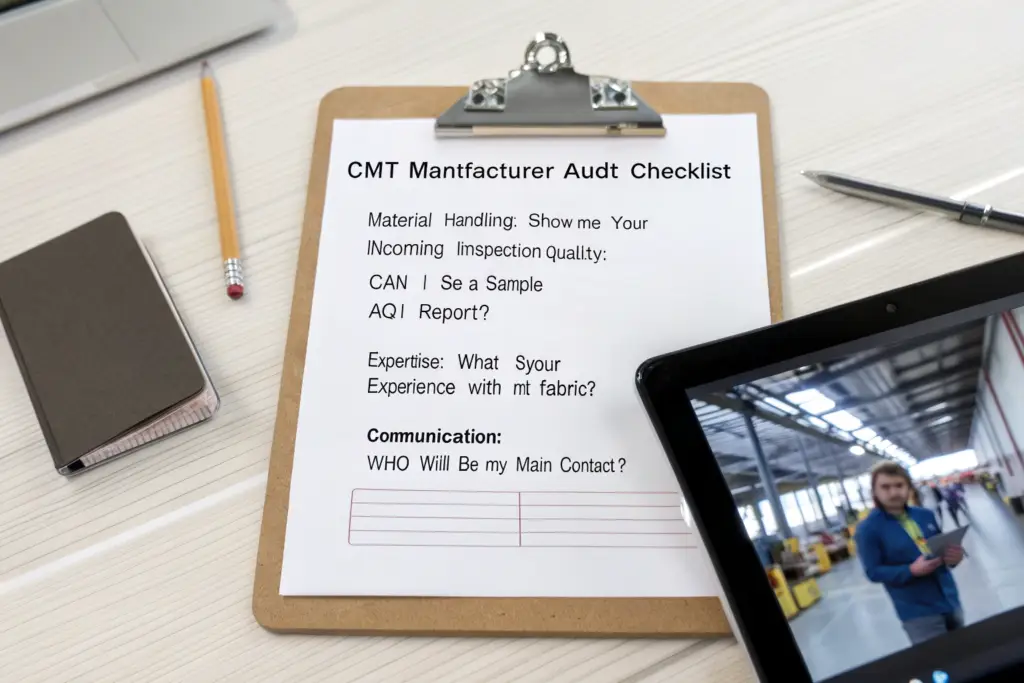
Vetting a CMT manufacturer requires a specific, targeted set of questions that go far beyond standard factory due diligence. You must probe four critical areas: 1) Their systems for Handling and Protecting Client-Supplied Materials (the most important CMT-specific question), 2) Their Quality Control Process and, crucially, their Transparency in reporting, 3) Their Specific Expertise and Equipment for your exact fabric type, and 4) Their Communication and Project Management Style for a remote partnership.
At Shanghai Fumao, we welcome these specific, pointed questions. We know that a well-prepared brand is a brand that is serious about building a successful CMT partnership. Let me give you the ultimate list of questions you should be asking any potential CMT clothing manufacturer , along with the rationale behind each one and the kind of answers that signal a true, professional partner.
What Questions Verify Their Core CMT Competency: Material Handling?
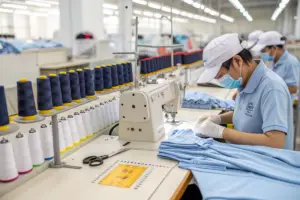
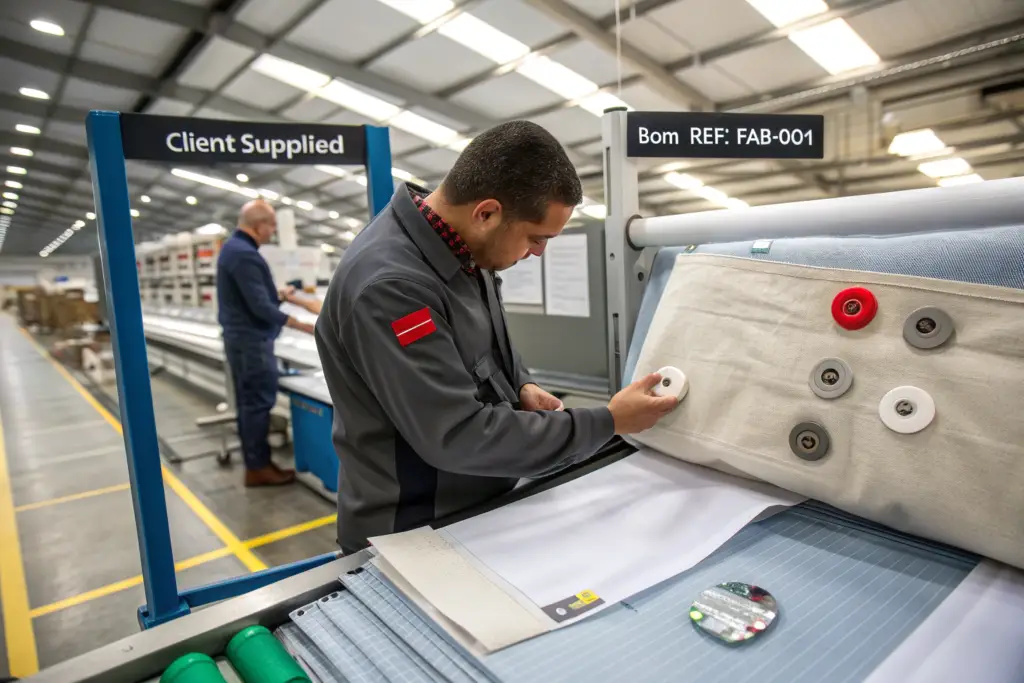
In a standard factory audit, you ask about their sewing lines. In a CMT audit, the most important questions are about their receiving dock, their inspection table, and their trim storage room. You are looking for evidence of a system that treats your materials as the valuable, client-owned assets they are, not just as another roll of fabric. This is the single most important differentiator between a generalist factory and a true CMT partner.
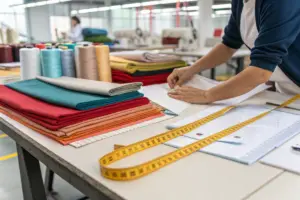
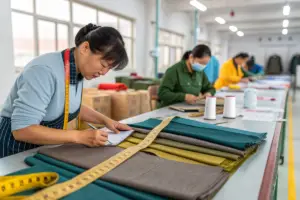
The most critical CMT-specific questions verify material handling. Ask: "Can you walk me through your Incoming Inspection process for client-supplied materials? Do you use a backlit table and document flaws with photos?" and "How do you label, track, and store my fabric rolls and trims to ensure they are never mixed up with another client's materials?" A professional CMT factory will have clear, documented procedures and be eager to show you these systems in action during a virtual tour.
A brand founder I mentor always asks a factory to show her their trim storage area during a live video tour. She asks, "Show me where my custom buttons would be kept." A factory that has a chaotic, unlabeled shelf is a red flag. A factory that shows her a clearly labeled bin, in a designated area, with a client-specific label and a matching BOM reference number is a factory that understands CMT. This is the level of detail that separates a partner from a pretender. This is the standard of our material management for CMT .
What Does a Professional Incoming Inspection Report Look Like?
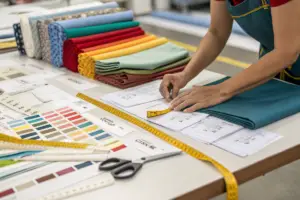
Do not just accept the word "inspection." Ask to see a sample report. A professional report should include:
- A roll-by-roll log of your fabric.
- Photos of any flaws found, with a ruler for scale.
- A shade banding assessment under a D65 lightbox.
- A count and quality check of your trims.
This report is your evidence to hold your own suppliers accountable. This is a key part of our CMT quality transparency .
How Does the Factory Ensure Shade Consistency Across Your Supplied Rolls?
Ask them to explain their "shade banding" process. A good answer is: "We evaluate every roll under a D65 lightbox and group them into light, medium, and dark bands. Our cutting plan then ensures all parts for a single garment come from the same shade band." This is a critical process that prevents mismatched sleeves on the sewing line. This is our standard procedure for color consistency in CMT .
What Questions Reveal Their True Approach to Quality Control and Transparency?
Every factory will say they have "great quality." Your job is to separate the slogans from the systems. You need to uncover if their QC is proactive or reactive, if it is based on objective data or subjective opinion, and if they are willing to share that data with you transparently. This is especially critical in CMT, where you cannot easily be on-site for spot checks. You are relying on their system and their reporting.
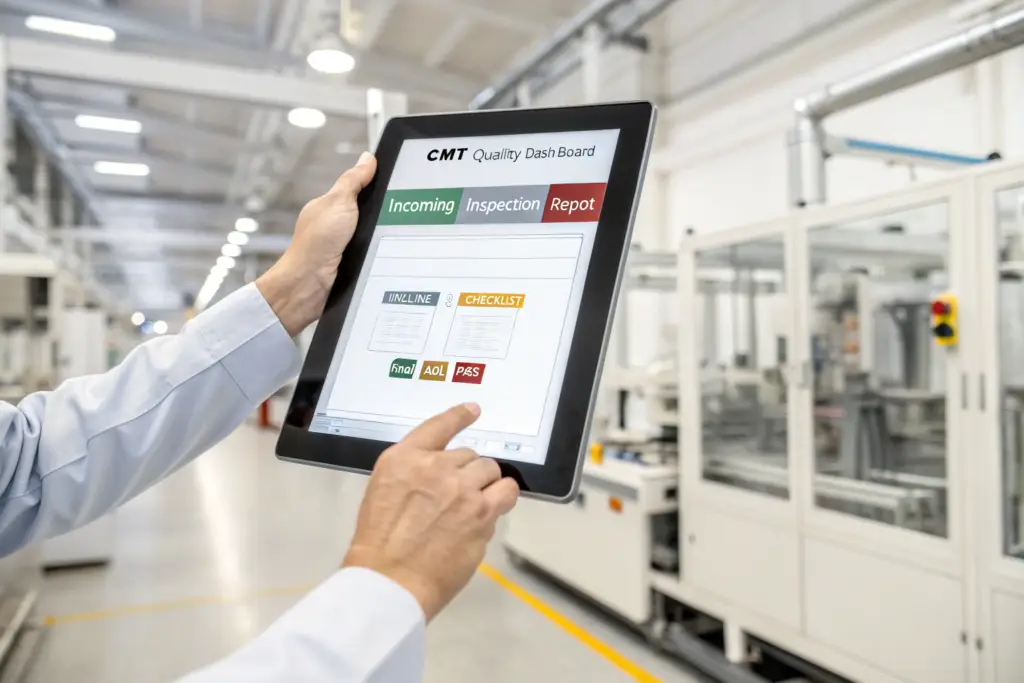
To assess their QC system, ask specific, data-driven questions: "What AQL standard do you use for final inspection, and can you show me a redacted sample report?" and "What happens if your in-line QC inspector finds a recurring defect? Can you walk me through your corrective action process?" A great factory will describe a proactive process of stopping the line, identifying the root cause, and implementing a fix. They will be proud to show you their data. A weak answer is, "We fix it at the end."
A brand that was vetting us asked for a sample AQL report. We provided a redacted one from a previous CMT order. She saw the detailed defect list, the classifications (Major vs. Minor), and the photos. She told us, "This is the first time a factory has been able to show me their quality data. It gives me so much more confidence than just a promise." This is the transparency you should demand. This is the foundation of our data-driven quality assurance .
What Is the Right Answer to "How Do You Prevent My Sample Quality from Drifting in Bulk?"
Listen for the phrase "Sealed Sample." A professional factory will explain: "The approved PP Sample is sealed and kept on the production floor. Our in-line QC inspectors use it as the physical reference standard for every operation, comparing bulk production against it constantly. This prevents any drift." This is the gold standard for maintaining consistency.
Can You See a Sample of Their In-Line QC Checklist?
This reveals their process. Ask to see a blank or redacted sample. It should have specific checkpoints for the style, not just a generic form. It shows they are proactively checking during the sewing process, not just at the end. This is a key indicator of a proactive quality culture .
How Do You Verify Their Specific Expertise for Your Garment and Fabric Type?
You are likely using CMT because your product is special—a delicate silk, a heavy wool, a technical performance fabric. A generalist factory will ruin these materials. You must verify that the factory has not just general sewing skills, but specific, proven experience and the right equipment for your exact type of fabric. This is where many CMT partnerships fail before they even begin.
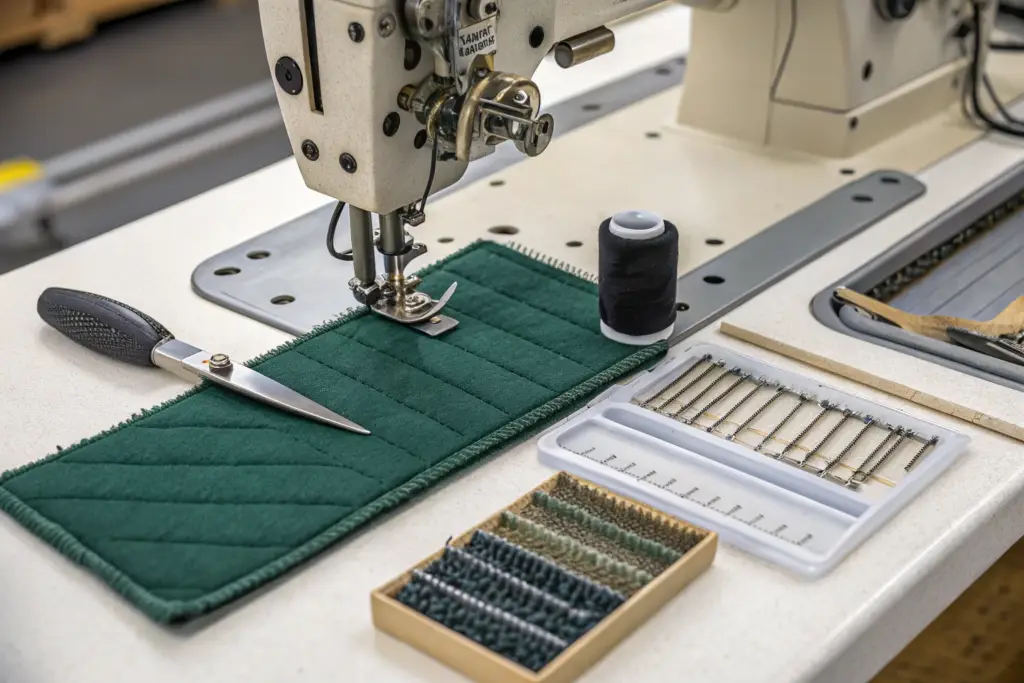
To verify specific expertise, ask direct, technical questions: "Do you have dedicated lines or teams for handling delicate fabrics like silk, or heavy fabrics like wool coating? What specific equipment do you use?" and "Can you show me photos of a recent CMT project you completed using a similar fabric to mine?" A factory with genuine specialization will be able to answer with specific details about needle types, machine feet, and specialized finishing equipment.
A women's wear designer who works with silk charmeuse always asks to see a factory's "silks kit." She looks for fine needles (size 70/10), a clean, smooth work surface, and operators who can articulate the specific challenges of sewing silk. A factory that cannot show her these things does not get her business. This is the level of scrutiny you should apply. This is why we maintain dedicated specialty fabric lines and are proud to show them off.
What Questions Should You Ask About Their Experience with Your Specific Fabric?
Be direct:
- "What is the most challenging fabric you have worked with recently in a CMT project?"
- "What specific needle type and machine settings would you recommend for my fabric?"
- "Can you show me photos of a finished garment made from a similar heavy wool/slippery silk?"
A factory with genuine expertise will answer these questions confidently and with technical detail. A generalist will give vague answers. This is a key part of vetting a specialized CMT partner .
Why Is the Presence of a Walking-Foot Machine a Key Indicator for Outerwear CMT?
A walking-foot (or compound feed) machine is essential for sewing heavy, lofty, or slippery fabrics like wool coating, thick fleece, or even leather. It prevents the layers from shifting. If you are doing outerwear CMT, asking to see these machines on the floor is a quick, non-negotiable test of their capability. This is the core of our outerwear expertise .
What Questions Uncover Their Communication and Project Management Model?
The best production capabilities in the world are useless if the communication is poor. In a remote CMT partnership, your Project Manager is your eyes, ears, and voice on the factory floor. You need to understand exactly how they will keep you informed and who will be your point of contact. You are not just hiring a factory; you are engaging with a communication and project management system.
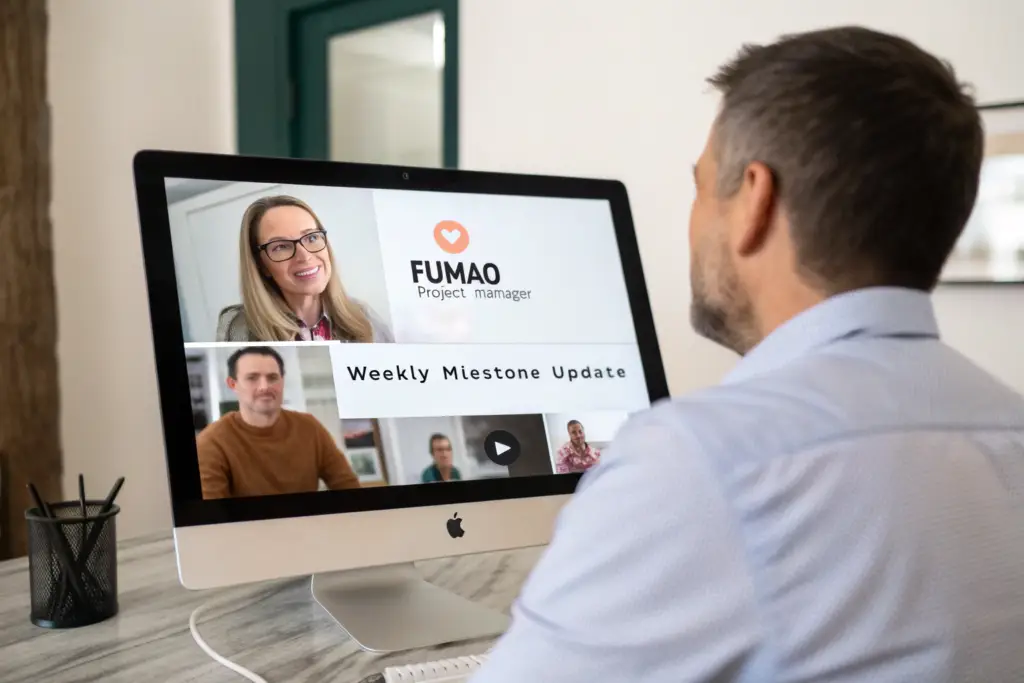
Uncover their communication model by asking: "Who will be my single, dedicated point of contact after the order is placed? (The answer should be a Project Manager, not a salesperson)." and "What does a typical weekly update look like? Will I receive photos of my actual production?" A professional CMT factory will describe a structured, proactive process with a dedicated Project Manager who provides regular, visual updates. This is the key to a stress-free remote partnership.
A brand owner told me the deciding factor in choosing us was the communication model. She asked, "What happens if I have a question at 9 AM my time?" We explained our Project Manager's shifted schedule to overlap with US time zones and our 24-hour email response policy. She said, "That's the answer I was looking for. I need a partner, not a black box." This is the level of service you should expect. This is the standard of our dedicated CMT project management .
Why Is a Dedicated Project Manager More Valuable Than a Sales Contact?
A Sales Rep is focused on bringing in new orders. A Project Manager is an operations specialist who owns the successful fulfillment of your order. They are your single point of accountability. They translate your needs to the factory floor. They are your advocate. This single, accountable role is the cornerstone of a professional CMT partnership.
How Can You Test Their Proactive Problem-Solving?
Ask a hypothetical: "Let's say you discover a flaw in the fabric I supplied during incoming inspection. Walk me through exactly what happens next." A proactive partner will describe a clear process: they document it with photos, they file a detailed report, they immediately notify you, they quarantine the defective material, and they work with you on a solution (using the buffer stock, etc.). A reactive factory will just say, "We'll let you know." This answer is very revealing.
Conclusion
The questions you ask a CMT manufacturer are the most powerful tools you have to de-risk your supply chain and find a true partner. You must probe beyond the surface and verify their specific systems for material handling, quality transparency, specialized expertise, and clear communication. The quality of their answers will tell you everything you need to know.
At Shanghai Fumao, we do not shy away from these questions. We welcome them. We believe that a well-informed client is the best kind of partner. Our transparent answers to these specific CMT questions are the foundation upon which we build the deep, trusting B2B relationships that allow our clients' brands to flourish.
If you have a list of questions and are ready to interview a potential CMT partner, let's talk. Our Business Director, Elaine, is prepared to give you clear, direct answers and demonstrate the Fumao difference. Please email Elaine at: elaine@fumaoclothing.com.