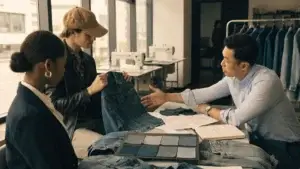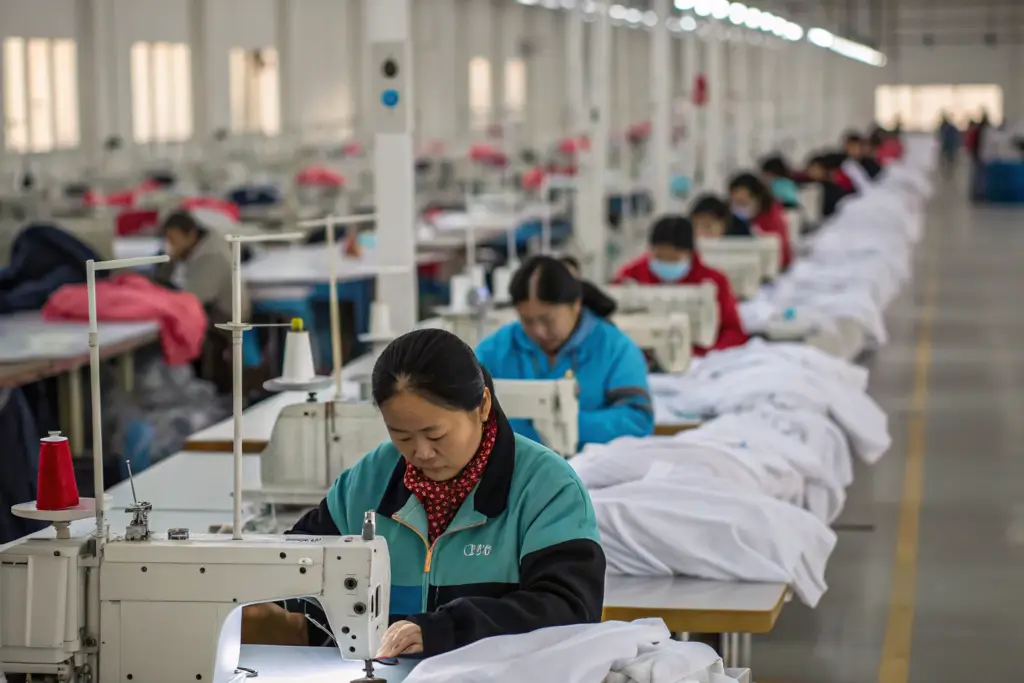
I have walked through the production floors of dozens of garment factories across China in my 15 years in this business. Some of them have the exact same sewing machines as we do at Shanghai Fumao. They have the same fabric suppliers. They even have workers with similar skill levels. Yet their defect rate is three times higher than ours. Their on-time delivery record is spotty. And their clients are constantly stressed about quality control. The difference does not live in the machinery. It lives in the management office. It lives in the leadership structure that sets the tone for every single stitch that goes into your wholesale order.
Strong factory leadership is the single most important yet least discussed factor in achieving consistent wholesale clothing quality because the leadership team establishes the non-negotiable systems for quality control training and supply chain accountability that machinery alone cannot provide. A factory with weak leadership will produce inconsistent quality even with the best equipment while a factory with disciplined leadership can produce premium garments even with standard equipment.
I want to give you a clear view of what happens behind the loading dock doors. In this article I will explain how the organizational structure of a factory directly impacts the garments you receive six months from now. I will show you why a factory's management philosophy matters more to your bottom line than their quoted price per unit. And I will share specific examples from my own experience running operations at Shanghai Fumao where leadership decisions have saved our clients thousands of dollars in preventable quality issues.
How Does Factory Management Structure Impact Garment Consistency?
When you place a wholesale order for 5,000 units you are not buying a product. You are buying a process. That process involves dozens of individual human beings. There is the person who spreads the fabric on the cutting table. There is the person who aligns the pattern pieces. There is the operator who sews the side seam. And there is the person who trims the loose threads at the end. If any one of those people is unclear about the standard they are supposed to meet the entire batch suffers. Factory management is the glue that holds all these individual actions together.
Factory management structure impacts garment consistency by defining clear reporting lines and accountability checkpoints. In a well-managed factory every piece of fabric that moves through the production line passes through a series of inspection gates where a specific supervisor is responsible for signing off on quality before the garment can proceed to the next operation.
What Is the Role of a Production Line Supervisor in Quality Control?
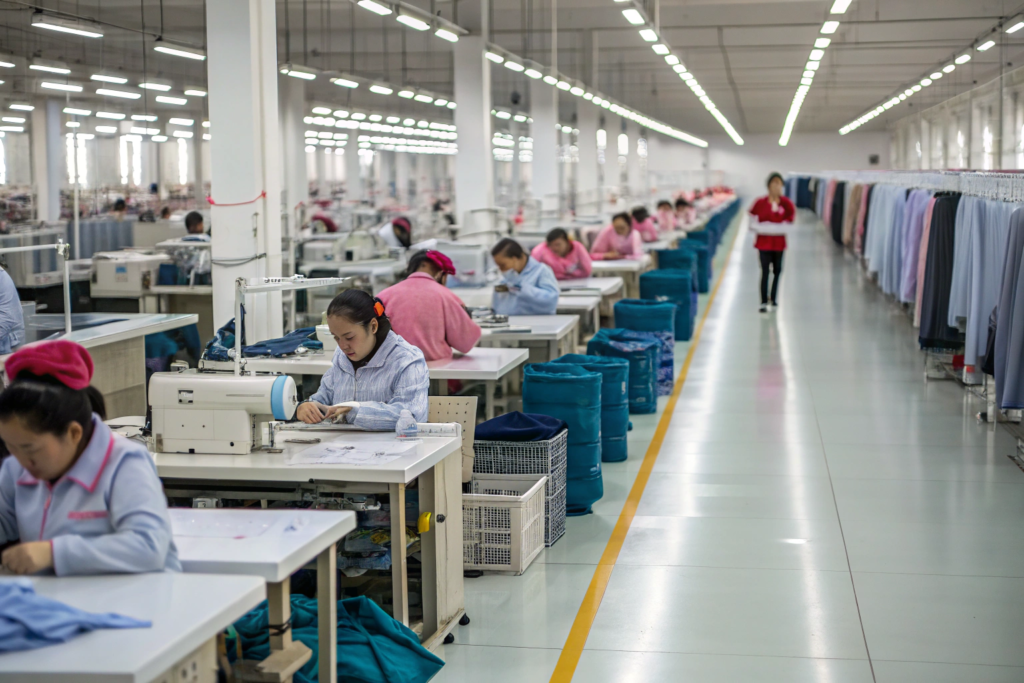
In many low-cost factories the line supervisor has one job. Speed. They are paid a bonus based on how many pieces come off the end of the line each hour. This creates a dangerous incentive. The supervisor ignores a slightly crooked collar because stopping the line to fix it costs them bonus money. That crooked collar gets packed into a carton and shipped to your warehouse in New Jersey.
At Shanghai Fumao we structure our incentives differently. Our line supervisors are evaluated on three equal metrics. Output quantity is one of them. But the other two are First-Pass Quality Rate and On-Time Completion Rate. If a supervisor pushes the line to go fast but the QC inspector rejects 15% of the batch that supervisor loses their quality bonus. This simple change in leadership policy changes behavior on the floor. The supervisor now has a financial reason to stop the line and fix the collar immediately. They become an ally of quality not an enemy of it.
I recall a specific production run in September 2025 for a women's blouse with a complex ruffled neckline. The operator on station four was rushing and the gathering stitch was uneven. Our supervisor Ms. Wang noticed it during her hourly patrol. She did not yell. She stopped the line for 90 seconds. She showed the operator a reference sample and said "This is what the brand owner expects. Let us make it look like this." The line restarted. The remaining 2,400 blouses in that batch had perfect ruffles. In a factory with weak leadership that operator would have kept sewing 2,400 defective blouses and the problem would have been discovered only at final inspection when it was too late to fix without missing the ship date.
Why Do Family-Owned Factories Often Have Better Attention to Detail?
This is a pattern I have observed over many years and it is worth understanding as a buyer. Large corporate-owned factories often suffer from a disconnect between the owners and the factory floor. The owner is an investment fund in another city or another country. They look at spreadsheets. They push for cost reductions. They do not see the fabric. In a well-run family-owned factory the owner's name is on the door. Their reputation is tied directly to the quality of every single carton.
At Shanghai Fumao we are a family-managed operation. That means I am personally involved in the pre-production meetings for our five production lines. When a new client comes on board with a complicated technical design I sit in the meeting. I review the fabric test reports myself. I do not delegate that to a junior merchandiser and hope for the best. This hands-on leadership approach filters down through the entire organization. The cutting master knows that the boss might walk by and check the spread tension. The finishing manager knows that the boss inspects random cartons before they are sealed.
This is not just about feeling good. It is about risk management. A corporate factory manager might hide a quality problem to protect their quarterly bonus. A family owner cannot hide. Their business reputation is their retirement plan. We have a client in California who produces premium denim. They told me once "I pay a 7% premium to work with you versus the big corporate factory down the road. I pay it happily because I know you will answer the phone at 9pm if a shipment is delayed. I cannot get that from a faceless corporation."
What Leadership Practices Prevent Common Supply Chain Delays?
The most common complaint I hear from U.S. brand owners about their previous suppliers is not about quality. It is about communication. "They promised delivery in October. Now they are saying December. They did not tell me until I asked." This delay is rarely caused by a sewing machine breaking down. It is almost always caused by a failure of leadership to plan ahead and communicate proactively. A factory leader who is only looking at today's output is going to fail their clients next month.
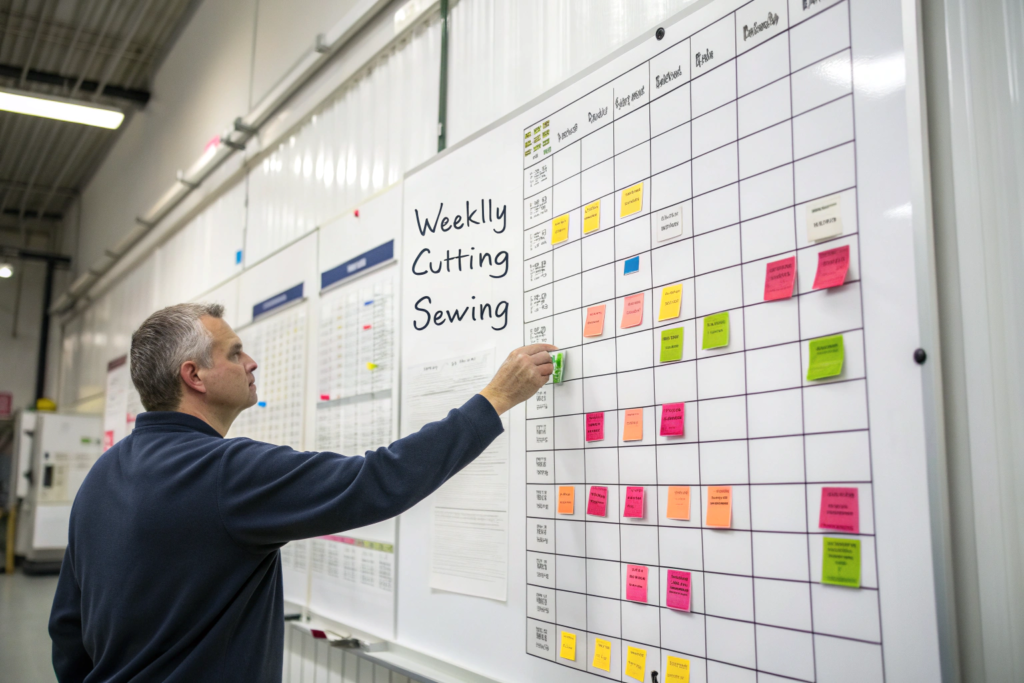
Effective leadership prevents supply chain delays through rigorous forward-planning meetings and a culture of transparent communication. A strong leader mandates that raw material inventory is checked against the production calendar 30 days before cutting begins and forces the merchandising team to flag potential delays to clients before the client has to ask about them.
How Does Proactive Fabric Procurement Avoid Production Bottlenecks?
Fabric is the lifeblood of garment manufacturing. If the fabric is not in the warehouse the sewing line sits idle. Idle sewing lines cost money and miss shipping deadlines. A weak factory leader waits for the client's purchase order and deposit to arrive before even checking fabric availability. Then they discover the specific 320gsm French Terry is out of stock for 6 weeks. The delay is locked in before a single stitch is sewn.
A strong leader runs a Pre-Production Risk Assessment before the contract is even signed. At Shanghai Fumao we have a policy. If a client is serious about an order we will pre-book the greige fabric inventory based on a letter of intent. We take a small risk on holding the material but we remove the 6-week delay from the client's calendar. This is a leadership decision. It is not a line worker decision.
I have a recent example from Q1 of 2026. A brand owner in the activewear space needed a specific 86% Nylon 14% Spandex blend for leggings. The mill we use had a limited supply due to a raw material shortage. Our production planning team flagged this during the quote stage. Instead of waiting for the PO we secured the remaining 2,000 yards of that lot under our own account. When the client sent the deposit two weeks later we were already cutting fabric while other factories were telling their clients "Sorry fabric is out of stock until May." That client's order shipped on time for their spring break marketing push. The brand owner told us "You saved my season." That is what strong leadership looks like in practice.
Why Is a Transparent Production Calendar Essential for Wholesale Buyers?
Your wholesale business depends on selling seasons. You have a window for Fall delivery and a window for Spring delivery. If goods arrive late you lose margin because you have to put them on sale immediately. A factory leader who respects your business model will provide a Shared Production Calendar that you can access online.
We provide our clients with a login to a simple portal. It is not fancy. It shows the following stages with a color code:
| Production Stage | Planned Date | Actual Completion Date | Status Indicator |
|---|---|---|---|
| Fabric Sourcing | Jan 15 | Jan 12 | Green (On Track) |
| Cutting | Jan 28 | Jan 29 | Green (On Track) |
| Sewing Line 2 | Feb 10 | Feb 12 | Yellow (2 Days Delay) |
| Finishing & Packing | Feb 22 | Pending | Yellow (Watch) |
When a client sees a yellow flag on February 12th they can adjust their downstream plans. They can notify their 3PL that the shipment might be two days late. This transparency eliminates the panicked email on February 25th asking "Where is my shipment?" It turns a potential conflict into a collaborative adjustment. This system only works if the factory leader mandates that the production planning data is updated honestly every single day. If the leader hides bad news to avoid a difficult conversation the system fails. At Shanghai Fumao I tell my team "I would rather have a client upset about a 2-day delay they knew about than a 2-week delay they discovered on their own." That is a cultural value that starts at the top.
Can Factory Leadership Influence Ethical and Sustainable Practices?
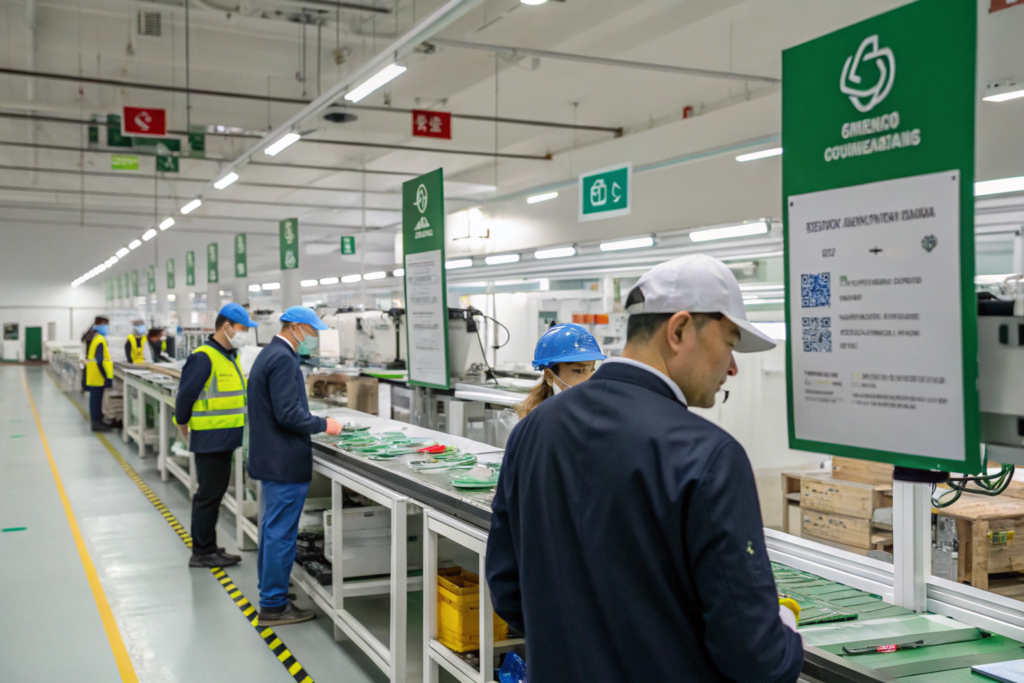
In 2026 sustainability and ethics are not just nice-to-have marketing bullet points. They are compliance requirements. Major U.S. retailers now require vendor certifications for social compliance and environmental standards. A factory that cannot pass a third-party audit is a factory that cannot sell to big wholesale accounts. But passing an audit is not about having the right paperwork in a binder. It is about the daily behavior of the leadership team.
Factory leadership is the direct determinant of whether a facility genuinely operates ethically or merely performs ethics during an audit. A strong leader enforces safety protocols even when no auditor is present and invests in proper ventilation and lighting because it improves worker retention and therefore product quality.
How Does Worker Training and Retention Affect Stitch Consistency?
The apparel industry in China faces a severe labor shortage. Young people do not want to sit at a sewing machine for 10 hours a day. The factories that survive and thrive are the ones that treat their workers well enough that they stay for 5 10 or 15 years. When a worker has been sewing the same type of collar on our line for a decade their muscle memory is perfect. They can spot a tension issue before the machine even beeps.
In factories with high turnover you have a new operator every six months. They are learning on your order. That is when you see inconsistent seam allowances and broken needles left in garments. We invest heavily in our team at Shanghai Fumao. We provide housing subsidies and we pay for skills upgrade training. This is a direct cost to the factory but it is an investment in your quality. We recently calculated that our average sewing operator tenure is 6.8 years. Our defect rate on complex woven shirts is 1.9%. A nearby factory with similar equipment but a 1.2-year average tenure has a defect rate of 5.4%. The difference in leadership approach to employee retention translates directly into fewer returns and chargebacks for your wholesale orders.
What Audits and Certifications Should a Quality-Focused Leader Maintain?
A strong factory leader does not hide from audits. They welcome them. They use them as a tool to identify weaknesses before a client finds them. For U.S. wholesale buyers the most relevant certifications are WRAP (Worldwide Responsible Accredited Production) and BSCI (Business Social Compliance Initiative) . These are not easy to get. They require an unannounced walkthrough of the dormitories and the factory floor.
Here is a quick guide to what these certifications mean for your supply chain security:
| Certification Body | Focus Area | Why It Matters for Wholesale Buyers |
|---|---|---|
| WRAP | Lawful ethical and humane manufacturing. | This is the gold standard for U.S. importers. It covers forced labor prevention and working hours. |
| BSCI | Social compliance aligned with European standards. | Recognized by many global retailers. Ensures basic worker rights. |
| OEKO-TEX Standard 100 | Chemical safety of textiles. | Guarantees no harmful substances in the fabric touching skin. Critical for children's wear. |
| ISO 9001:2015 | Quality Management Systems. | Proves the factory has documented processes for continuous improvement. |
I recall a situation in late 2025. A buyer for a national retail chain was vetting potential suppliers. They asked for our WRAP certificate number. We provided it within 15 minutes. They cross-referenced it on the WRAP public database and confirmed we were in good standing. The buyer told us later that two other factories on their shortlist could not produce a valid certificate. One had an expired cert. The other had never even heard of WRAP. We won the $400,000 annual contract not because we were the cheapest but because our leadership had invested in maintaining the WRAP certification. That investment paid for itself a hundred times over.
What Questions Should You Ask to Evaluate a Factory's Management Team?
You may not be able to fly to China to walk the factory floor yourself. Even if you do you might see a clean well-lit room and think everything is fine. The real test of leadership is not how the factory looks on the day of a scheduled visit. It is how the management team answers difficult questions about failure and problem-solving. The way they answer these questions will tell you more than any audit report.
To evaluate a factory's management team effectively you should ask specific questions about their problem-resolution process for past orders rather than general questions about their capabilities. A strong leadership team will answer with concrete examples including timelines and specific actions taken while a weak team will give vague assurances or deflect blame.

How to Vet a Factory's Problem-Solving Culture Before Signing a Contract?
During your onboarding call or Zoom meeting ask this exact question. "Tell me about a time in the last six months when a production order went wrong. What was the problem and how did your team fix it?"
Watch how they respond. A weak manager will say "We never have problems. Our quality is perfect." That is a lie. Every factory has problems. Fabric arrives late. A dye lot is slightly off. A machine breaks. The question is not whether problems happen. The question is how the leadership handles them.
A strong leader will answer like this. "Three months ago we had a batch of zippers that were 1cm shorter than spec. We did not catch it until the sample stage. Our merchandiser immediately informed the client and offered three solutions. Option one was a 5% discount on the order. Option two was a 10-day delay while we air-freighted the correct zippers. Option three was using the shorter zippers with a slightly adjusted fly facing. The client chose option two. We split the cost of the air freight with them as a gesture of goodwill. The order shipped only 5 days late."
That answer tells you everything. It shows accountability. It shows communication. It shows a willingness to share financial responsibility. That is a factory you can trust with your brand. This approach aligns with principles of supply chain risk management where transparency is the foundation of resilience.
Why Is a Video Walkthrough More Revealing Than a Curated Photo Gallery?
Anyone can take ten beautiful photos of a factory corner that is kept clean for visitors. Ask for a Live Video Walkthrough using WeChat or WhatsApp. Do not let them schedule it for a specific time. Just ask them to walk onto the floor right now and show you what is happening.
Look at the workers' faces. Are they looking up at the camera with fear? That is a sign of a harsh management style. Are the aisles clear of fabric debris? That is a sign of good daily discipline. Look at the whiteboard on the wall. Is it filled in with yesterday's production data or is it blank? A blank whiteboard means management is not tracking daily output.
I offer this to every new client at Shanghai Fumao. I will walk the floor with my phone and show you your specific fabric on the cutting table. I will show you the QC station where your size set is being measured. This is not a marketing tactic. It is a leadership commitment to transparency. If a factory owner is unwilling to show you a live video of the production floor there is a reason. And that reason is usually not good.
Conclusion
The quality of the clothing you receive in your wholesale shipment is not determined by luck. It is not determined by the brand name on the sewing machine. It is determined by the decisions made by the factory leadership team every single day. A strong leader builds systems that catch defects before they leave the cutting room. A strong leader creates a culture where supervisors feel responsible for quality not just speed. A strong leader communicates delays proactively and shares the financial burden when things go wrong.
When you are evaluating potential manufacturing partners do not just compare the price per unit on the quote sheet. Compare the leadership philosophy behind that quote. Ask the hard questions about how they handle failure. Look for evidence of investment in worker retention and ethical certifications. Look for signs that the owner still cares about what happens on the factory floor.
The factory is not just a vendor. It is the operational backbone of your wholesale business. If the backbone is weak your entire brand will collapse under the weight of returns missed deliveries and unhappy retail buyers. If the backbone is strong you can focus on what you do best which is designing beautiful products and building relationships with your customers.
At Shanghai Fumao we have built our reputation on this kind of leadership. We are not perfect but we are accountable. We invite you to test our commitment to transparency and quality. If you are looking for a manufacturing partner who understands that consistent quality starts with strong management we are ready to earn your business. For more information or to schedule a video walkthrough of our facility please contact our Business Director Elaine. You can reach her directly at elaine@fumaoclothing.com.