I have a confession to make. Even though I own a clothing factory in China I still use Alibaba to research my competitors and to understand what my potential clients are seeing when they start their sourcing journey. And what I see worries me. The platform is flooded with listings that look almost identical. Gold suppliers with verified badges. Glossy photos of the same five jacket styles. Promises of "best quality" and "fast delivery." But behind those polished profile pages there is a massive gap between the real factories and the trading companies pretending to be factories. I know this because I have been on the other side of those inquiries. I have seen the confusion and the costly mistakes that happen when a brand owner chooses a supplier based on the wrong signals.
Effectively using Alibaba to screen potential wholesale clothing factories requires moving beyond the platform's built-in verification badges and conducting your own independent investigation. You must learn to decode the listing language identify the difference between a manufacturer and a middleman and ask a specific sequence of technical questions in your first message that a real factory can answer instantly but a trading company will stumble over.
In this article I will give you the insider's playbook. I will show you exactly how I would screen a factory if I were a brand owner sitting in the U.S. with no prior connections in China. I will share the red flags I see in listings and the specific questions that separate the legitimate operations like Shanghai Fumao from the office-based traders who have never touched a sewing machine.
What Are the Red Flags in Alibaba Clothing Factory Listings?
The first screen of search results is where most brand owners make their biggest mistake. They sort by price low to high. Or they click on the listing with the most polished hero image. Or they are drawn to the supplier with the "Verified" badge and assume that means the factory is legitimate. The verified badge only means a third-party service checked that the business exists legally. It does not mean they own a sewing machine. It does not mean they have quality control. It does not mean they will ship your order on time.
The most reliable red flags in Alibaba clothing factory listings are an overly broad product catalog that spans unrelated categories generic stock photography that appears on multiple different supplier pages and a company address that maps to a commercial office tower rather than an industrial zone. These signals indicate a trading company rather than a direct manufacturer.
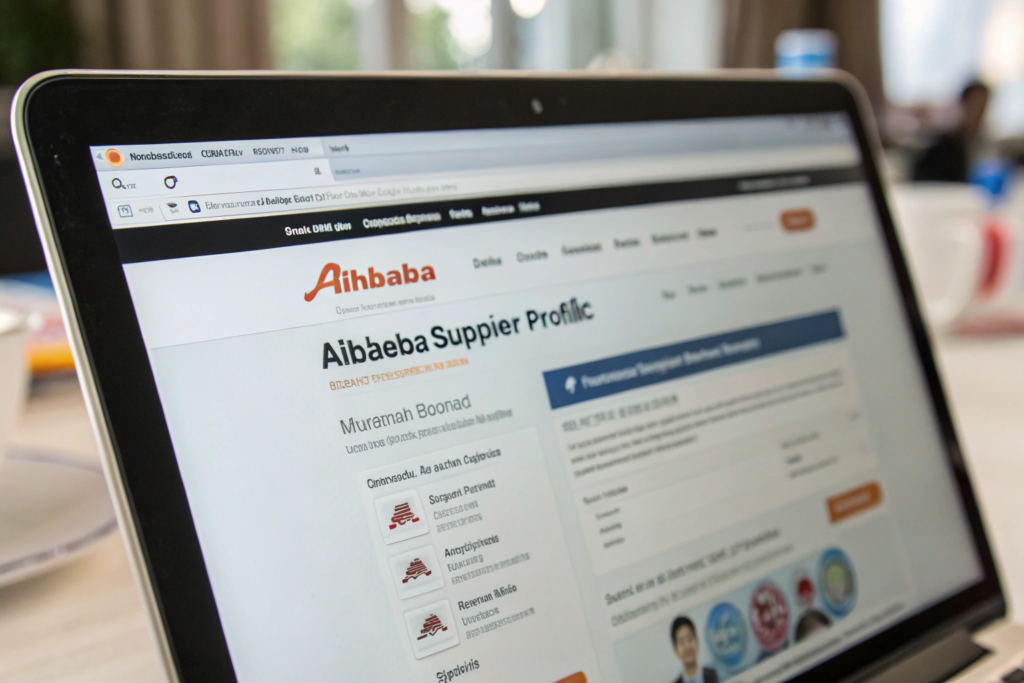
A real garment factory specializes. We have specific machinery for specific fabric types. My factory floor at Shanghai Fumao is set up for cut-and-sew knitwear and woven garments. We have overlock machines flatlock machines and buttonhole machines. We do not have injection molding machines for plastic toys. We do not have welding equipment for metal furniture.
When you see a supplier listing that offers "Men's T-Shirts Women's Dresses Yoga Pants Promotional USB Flash Drives and Stainless Steel Water Bottles" you are looking at a trading company. They have an office with computers and a network of small workshops they call when they get an order. They have no control over the production quality because they do not own the production.
I checked a random listing last week while preparing for a client call. The supplier claimed to be a "Professional Garment Manufacturer Since 2005." But their product categories included "Garments" "Shoes" "Bags" "Electronics" and "Furniture." That is not a factory. That is a sourcing agent with a nice website. I advise all my clients to check the "Company Profile" tab on Alibaba and look at the "Main Products" list. If it is longer than 10 items and spans multiple unrelated industries move on to the next supplier. A real factory's product list will be narrow and deep. For example Shanghai Fumao focuses exclusively on apparel. Knitwear. Wovens. Outerwear. That is our world. We do not sell phone cases.
How Can You Verify if the Factory Photos Are Authentic or Stock Images?
This is a simple but powerful trick. Download the factory photos from the Alibaba listing. Right-click and save them to your desktop. Then go to Google Images and drag that photo into the search bar. If the exact same photo appears on 15 different Alibaba supplier pages from different companies with different names it is a stock photo purchased from a template website. It is not their factory.
A real factory owner is proud of their facility. They take photos with their own phone. The lighting might not be perfect. There might be a specific piece of equipment or a unique layout visible. We update the photos on our own listing every few months to show current production. I took a photo last month of our new automatic cutting machine. It has our company logo on the wall in the background. That photo cannot be found anywhere else on the internet because it is ours.
Another verification method is to look at the background details. Are the workers wearing a uniform with a logo that matches the company name? Is the floor layout consistent across multiple photos? Trading companies often steal photos from different real factories. In one photo you see a modern LED-lit facility. In the next photo you see a dimly lit workshop with old wooden tables. The inconsistency is the tell. The reverse image search technique is free and takes 30 seconds. It is the single most effective filter for eliminating fake factory profiles.
What Specific Questions Should You Ask in Your First Alibaba Inquiry?
Most first messages on Alibaba are useless. They say something like "Hi I like your products. Please send me a catalog and price list." A trading company loves this message. They have a beautiful PDF catalog ready to go. They will send you a list of low prices to get you hooked. Then they will figure out which workshop to use later. A real factory owner or manager reads this message and sighs. We know you are not a serious buyer yet because you have asked zero technical questions.
Your first Alibaba inquiry should include at least three specific technical questions that demonstrate you understand garment manufacturing. You should ask about minimum order quantities for custom fabric not just stock fabric. You should ask for a specific production timeline for a sample. And you should request a photo of a current production line with a handwritten note showing the date.
Why Should You Ask for a Specific Fabric Weight or Stitch Type?
This is a test. It is not just about getting information. It is about seeing how the supplier responds. A real factory can answer a technical question in minutes because they live this every day. A trading company has to forward your question to a workshop and wait for an answer. The delay or the vagueness of the response tells you everything.
Here is an example of a weak inquiry versus a strong inquiry based on the messages I receive daily.
| Inquiry Type | Example Message | Supplier Interpretation |
|---|---|---|
| Weak Inquiry | "What is your price for hoodies?" | This buyer is price shopping. They do not know what they want. I will send a low generic price. |
| Strong Inquiry | "Can you produce a hoodie in 440gsm 100% cotton French Terry with a cross-grain hood lining and flatlock stitching on the shoulder seams? Please confirm MOQ for custom dye." | This buyer knows their fabric. They understand construction. They are a serious brand. I will prioritize this response. |
I respond to strong inquiries within 4 hours. I respond to weak inquiries when I have spare time which might be two days later. If you want to get the attention of a quality factory you must speak their language. Using specific terms like "GSM" "combed cotton" "flatlock" and "custom dye" signals that you are not a beginner who will waste their time. This approach aligns with supplier vetting best practices that emphasize technical communication.
How Does Requesting a Live Video Call Filter Out Unreliable Suppliers?
This is the ultimate test and one I recommend every brand owner perform before placing a deposit. After you have exchanged a few messages and you are serious about a supplier ask for a Live Video Walkthrough. Do not accept a pre-recorded video. Ask them to open WeChat or WhatsApp video right now and walk onto the production floor.
A trading company cannot do this. They do not have a production floor. They will make excuses. "The factory is closed today for cleaning." "The manager is not available." "Our video camera is broken." These are lies. A real factory owner like me will say "Give me two minutes to walk to the cutting room." I will show you the fabric on the table. I will show you the workers at the machines. I will even wave at the camera if you want.
I had a situation in late 2025 where a brand owner contacted me after a bad experience. He had found a supplier on Alibaba with great photos and good communication. He sent a 30% deposit of $14,000 for a production run. When he asked for a video call the supplier's camera was "broken" for three weeks straight. He eventually hired a third-party inspection service to visit the address listed on Alibaba. The address was a virtual office in a shared workspace. The company was gone. He lost his deposit. This is a painful lesson that is completely avoidable with a 10-minute video call.
At Shanghai Fumao we offer a video walkthrough to every serious client. It is the best way to build trust across 7,000 miles. You see the machines. You see the workers. You see the organization. There is no substitute for this level of visual transparency.
How Do You Verify Quality Claims Beyond the Alibaba Profile?
The Alibaba profile of every supplier says the same thing. "High Quality." "Strict QC." "100% Inspection." These words are meaningless because they cost nothing to type. You need to verify these claims with independent evidence. You need to see documentation that proves the factory has been held to a standard by an outside organization.
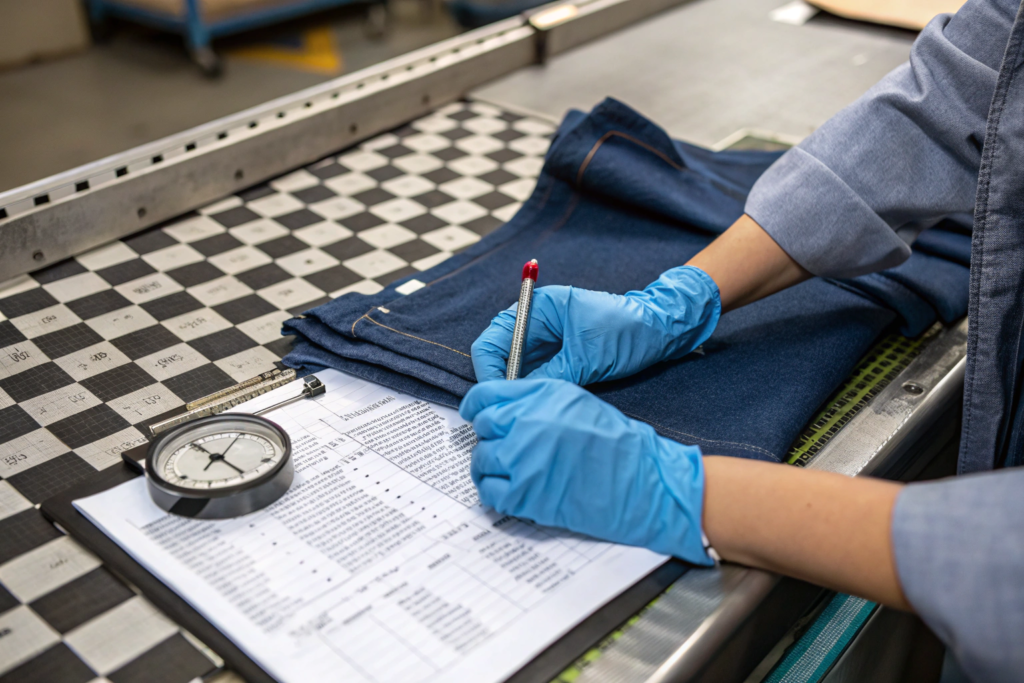
Verifying quality claims beyond the Alibaba profile requires requesting copies of third-party audit reports such as WRAP or BSCI certifications and asking for a sample inspection report from a previous client's order. A legitimate factory will have these documents readily available and will share them with identifying client information redacted.
What Third-Party Audits Should a Legitimate Factory Be Able to Produce?
For apparel manufacturing destined for the U.S. market there are specific audit standards that matter. A factory that has invested the time and money to pass these audits is a factory that takes quality and compliance seriously. A factory that has never heard of these audits is a risk.
Here are the key certifications I would look for if I were in your position:
| Certification | What It Verifies | How to Confirm Authenticity |
|---|---|---|
| WRAP | Ethical manufacturing no forced labor safe working conditions. | Ask for the certificate number and verify it on the WRAP public database. |
| BSCI | Social compliance aligned with European retailer standards. | Ask for the audit report with the unique ID number. |
| SEDEX | Supply chain transparency and ethical data exchange. | Requires a membership ID that can be cross-referenced. |
| OEKO-TEX Standard 100 | Fabric safety no harmful chemicals. | Certificates are issued per fabric batch or product class. |
I keep our WRAP certificate scanned and ready to send. When a client asks for it I email it within 15 minutes. It is a PDF with a specific certificate number and an expiration date. If a supplier hesitates to provide this document or says they are "in the process of applying" for two years they are not a legitimate factory. They are a workshop operating below industry standards.
Why Is a Sample Inspection Report More Valuable Than a Promise?
Promises are free. An inspection report is evidence. Before you place a bulk order you should ask the supplier to send you a redacted copy of a recent AQL inspection report from a previous order. They should black out the client's name and the style details. But the format of the report and the defect categories should be visible.
A real factory uses professional inspection software or standardized forms. The report will show a sample size based on AQL tables. It will list the number of critical major and minor defects found. It will state whether the lot passed or failed. This proves the factory has a documented quality system.
I send these reports to potential clients regularly. It shows that we do not just talk about quality. We measure it statistically. The ISO 2859-1 standard for AQL sampling is the language of professional quality control. If a supplier cannot produce a sample report it means they either do not inspect their goods or they do not want you to see the results of their inspections. Either way it is a red flag.
How Can You Negotiate Better MOQs and Pricing Through Alibaba?
The listed MOQ on Alibaba is often a starting point not a fixed rule. Many listings say "MOQ 500 pieces." But the factory might be willing to do 200 pieces for a new brand if the style is simple or if they have idle capacity. The key is understanding how to negotiate from a position of knowledge rather than just asking "Can you do less?"
Negotiating better MOQs and pricing through Alibaba requires demonstrating that you are a low-maintenance long-term partner. You can achieve lower minimums by offering to pay a small surcharge for the setup labor or by agreeing to use fabric that the factory already has in stock for another client's order.

What Trade-Offs Are Acceptable for Securing a Lower Minimum Order?
You need to understand the factory's cost structure. The reason MOQs exist is not to be difficult. It is because there are fixed costs associated with starting a production run. Changing the thread color on 20 machines takes time. Cutting a single layer of fabric for one sample is inefficient.
If you want a lower MOQ you should offer a concession that offsets the factory's inefficiency. Here is a table of common negotiation trade-offs I see work effectively:
| Your Request | Factory's Concern | Acceptable Trade-Off You Can Offer |
|---|---|---|
| Lower MOQ (e.g. 200 units vs 500) | Setup labor cost per unit is too high. | Agree to a 10% to 15% surcharge on the per-unit price. This covers the setup time. |
| Faster Lead Time | Disrupts planned production schedule. | Offer to pay for Air Freight instead of Ocean Freight. The faster shipping makes up for the production delay. |
| Custom Fabric Color (Small Batch) | Dye house minimums are high. | Ask if the factory has any Deadstock Fabric available. You take a color they already have but at a premium quality. |
I had a new brand owner approach us last spring. She needed 150 units of a women's top for a pop-up shop test. Our standard MOQ is 300 units per style. She offered to pay a 15% surcharge on the labor cost and she agreed to use a beautiful deadstock linen blend we had sitting in our warehouse from a previous order. We accepted the order. The surcharge covered our setup costs. She got her 150 units at a landed cost that was still profitable for her test run. The pop-up was a success. She is now ordering 800 units per style. That is how you build a relationship.
Why Is Offering Payment Flexibility Sometimes Better Than Demanding a Lower Price?
Cash flow is king for a factory. We have to pay the fabric mill and pay our workers every month regardless of when the client pays us. A brand that offers favorable payment terms can sometimes get a better overall deal than a brand that squeezes every last penny on the unit price.
Standard terms in the industry are 30% deposit and 70% balance before shipment. If you offer 50% deposit upfront I have more working capital. I can buy fabric in larger quantities and get a better price from the mill. I might pass some of that savings on to you in the form of a slightly lower per-unit cost or a waived sample fee.
At Shanghai Fumao we value clients who understand the partnership aspect of manufacturing. A client who pays deposits promptly and communicates clearly is a client we will prioritize when capacity is tight. We might not be the absolute cheapest on the first quote. But over the course of a year and multiple orders the value of a reliable transparent partnership far outweighs the $0.30 you saved per unit at a factory that caused you constant stress. The negotiation of payment terms is a sophisticated strategy that separates amateur buyers from professional supply chain managers.
Conclusion
Alibaba is a powerful tool but it is just a doorway. It is not a guarantee. The platform gives you a list of names and faces. It does not tell you who actually owns a sewing machine and who owns a laptop in a coffee shop. The responsibility to screen and verify falls entirely on you the buyer.
You must look beyond the gold badges and the polished photos. You must learn to read the language of the listing. A catalog full of unrelated products is a warning sign you cannot ignore. A refusal to do a live video walkthrough is a dealbreaker. The questions you ask in your first message determine whether you will be taken seriously by a real factory or targeted by a middleman looking for an easy commission.
The factories that produce consistent high-quality garments for U.S. wholesale brands are not the ones hiding behind stock photos. They are the ones who can answer a technical fabric question in four minutes. They are the ones who can show you their WRAP certificate without hesitation. They are the ones who will walk the floor with a smartphone and show you the cutting table in real-time.
Screening suppliers effectively takes more time upfront. It requires more effort than clicking the first listing and wiring a deposit. But that upfront time investment is the cheapest insurance policy you will ever buy for your brand. It protects you from the lost deposits the shipment delays and the quality disasters that kill a clothing brand before it ever gets off the ground.
If you want to skip the guesswork and speak directly to a factory that values transparency and technical expertise we are here. Our team at Shanghai Fumao is ready to answer the specific technical questions that matter to your brand. For a consultation or to schedule a live video walkthrough of our facility please contact our Business Director Elaine. You can email her at elaine@fumaoclothing.com. Let us show you what a real manufacturing partnership looks like.