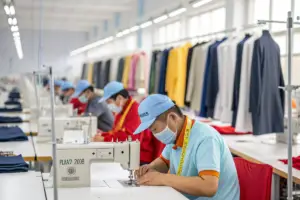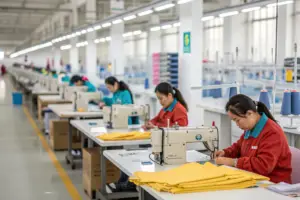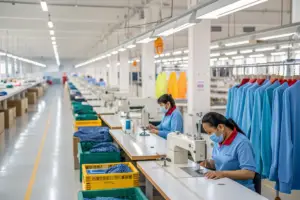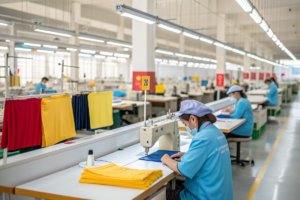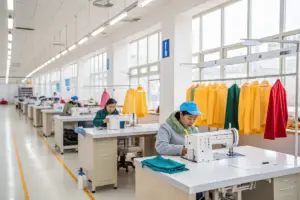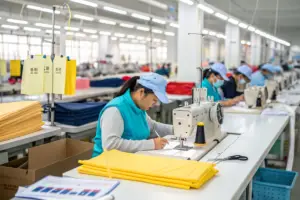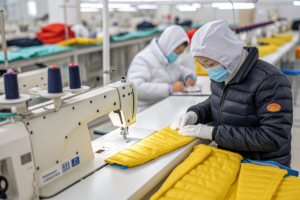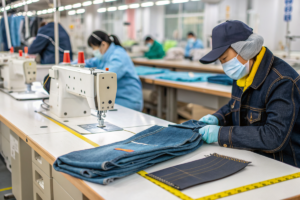
Every year around August I start receiving the same type of email from brand owners. The subject line is some variation of "URGENT Holiday Restock" or "Can You Add 5,000 Units for November?" The email is always written in a tone of mild panic. The brand owner had a product go viral on TikTok or their sales forecast was simply too conservative. Now they are staring at a stockout right before their busiest selling season. They need more inventory and they need it fast. But my production calendar is already full. The fabric mills are backed up. The shipping lanes are congested with everyone else's holiday orders. This is the moment when a brand's relationship with their manufacturer is truly tested.
The best ways to handle seasonal demand spikes with your manufacturer involve proactive capacity reservation months in advance maintaining a strategic buffer stock of greige fabric for core styles and utilizing flexible production line scheduling that allows for rapid reallocation of resources to high-priority restock orders. Success during peak season is not about reacting faster in November. It is about planning smarter in February.
I want to share the strategies that actually work from the factory floor perspective. At Shanghai Fumao we have managed seasonal spikes for brands ranging from small boutiques to national retailers. In this article I will explain exactly how we navigate capacity constraints how we use data to predict bottlenecks and what you as a brand owner can do to secure your spot on the cutting table when everyone else is scrambling.
How Can I Secure Production Capacity Before Peak Season Starts?
The single biggest mistake I see brand owners make is waiting until they have a confirmed purchase order from their own retail partners before they talk to me about capacity. By the time you get that PO and send it to me my production lines for that delivery window are already fully allocated to the brands who reserved space months earlier. You are now asking for a favor. And in manufacturing favors cost money in the form of overtime wages or rush fees.
Securing production capacity before peak season requires a formal capacity reservation agreement with your manufacturer. This is a non-binding or partially binding commitment that guarantees your brand a specific number of production line hours during a specific future month. You provide a forecast and a small deposit and the factory blocks the time on the master production schedule.

What Is a Capacity Reservation Agreement and How Does It Work?
This is a tool that the most sophisticated brands use but many smaller brands do not know exists. A capacity reservation agreement is a simple document that states "Brand X intends to produce approximately 15,000 units for delivery in September. Shanghai Fumao agrees to reserve Line 3 for Brand X from August 1st to August 20th. Brand X agrees to provide a finalized purchase order by June 30th and a 10% capacity deposit."
This agreement protects both parties. It protects you because you know the factory cannot sell your production slot to another client. It protects the factory because we have some financial commitment from you and we can plan our raw material procurement and labor scheduling with confidence.
I had a client in the men's swimwear space who learned this lesson the hard way in 2024. They came to us in June wanting 8,000 units for a January delivery to surf shops. January is our peak season for Spring/Summer production. I had to tell them we were fully booked for that window. They ended up using a backup factory they had never worked with before. The quality was inconsistent and the shipment was three weeks late. They lost two major retail accounts. In 2025 they came to us in February. We signed a capacity reservation agreement. They provided monthly forecast updates. When their orders from retail buyers came in May we were ready. The goods shipped on time and the quality was perfect. The cost of the 10% deposit was nothing compared to the cost of losing those accounts.
Why Is Forecast Sharing Critical for Mill Fabric Preparation?
Your production cannot start if the fabric is not in our warehouse. And the fabric cannot be in our warehouse if the mill does not know how much to produce. The mill also has capacity constraints and lead times. If you wait until June to tell me you need 3,000 yards of custom-dyed jersey for September delivery the mill may already be booked solid with orders from larger brands.
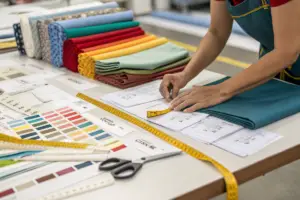
Strong factory leadership at Shanghai Fumao involves pushing clients for a Rolling 12-Month Forecast. I know this sounds like corporate jargon. But it is simply a spreadsheet with your best guess. You update it every month. In January you think you need 5,000 units for September. In March that number might change to 7,000. In May it might firm up to 6,500. That is fine. The value is that I can show the fabric mill a forecast in March that says "My client will need approximately 8,000 yards of this specific 320gsm fleece in July." The mill can then reserve greige yarn capacity and schedule the dyeing vat. When your final PO arrives in May we are already ahead of the game. The fabric lead time drops from 45 days to 15 days. This is how we compress the production calendar and hit tight seasonal windows. This approach aligns with principles of supply chain collaboration.
How Do Manufacturers Manage Quick Turnaround for Restock Orders?
Sometimes despite all the planning you get a surprise. A style sells three times faster than forecasted. You need more units and you need them before the season ends. A manufacturer who only knows how to run long slow production batches will fail you here. You need a partner who has built flexibility into their operations.
Manufacturers manage quick turnaround for restock orders by maintaining a modular line setup that can be rapidly reconfigured for smaller batch sizes and by keeping an inventory of undyed greige fabric for core programs. This allows the factory to bypass the longest lead time item which is usually custom fabric dyeing and finishing.
What Is a Modular Production Line and Why Does It Enable Speed?
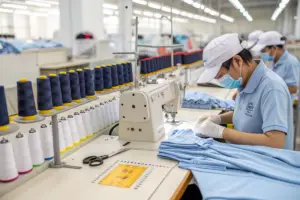
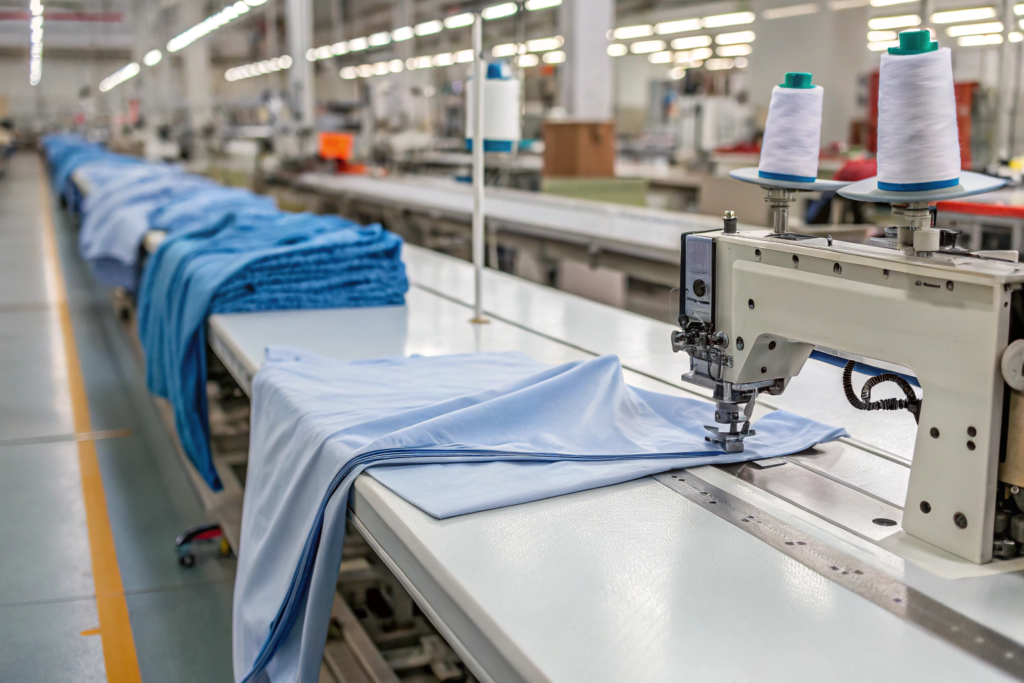
A traditional long assembly line is designed for efficiency on large orders. Fifty operators sit in a row. Each operator does one small task. Operator 1 sews the shoulder seam. Operator 2 attaches the collar. This is very fast for 10,000 units of the exact same style. But it is very slow to change over to a different style. Tearing down the line and retraining the operators takes hours.
A modular line also called a cellular manufacturing system is different. A small team of 5 to 8 cross-trained operators sits in a U-shaped cluster. This team is responsible for assembling the entire garment from start to finish. They can switch from sewing a hoodie to sewing a t-shirt in under 30 minutes because they do not need to retrain an entire line of 50 people. They just change the fabric bundle and the machine settings at their cluster.
At Shanghai Fumao we reserve one of our five production lines as a dedicated modular quick-response line during peak season. This line is not the most efficient for 20,000 unit orders. But it is perfect for a 1,500 unit restock order that needs to ship in 21 days. We charge a small premium for this service usually about 8% to 12% above the standard bulk price to cover the lower efficiency. Most brands are happy to pay it because the alternative is being out of stock during their highest revenue weeks.
I recall a situation last November with a women's knitwear brand. Their cable-knit sweater was the hero product of their holiday campaign. They sold through their initial 4,000 unit order by November 10th. They called me in a panic. We moved the restock order of 1,200 units onto our modular line. We used greige yarn we had pre-positioned based on their forecast. The order was cut sewn and shipped via air freight in 18 days. It arrived in their warehouse on December 2nd still in time for the peak gift-buying window. They captured an additional $85,000 in revenue that would have been lost.
How Does Greige Fabric Inventory Reduce Restock Lead Times?
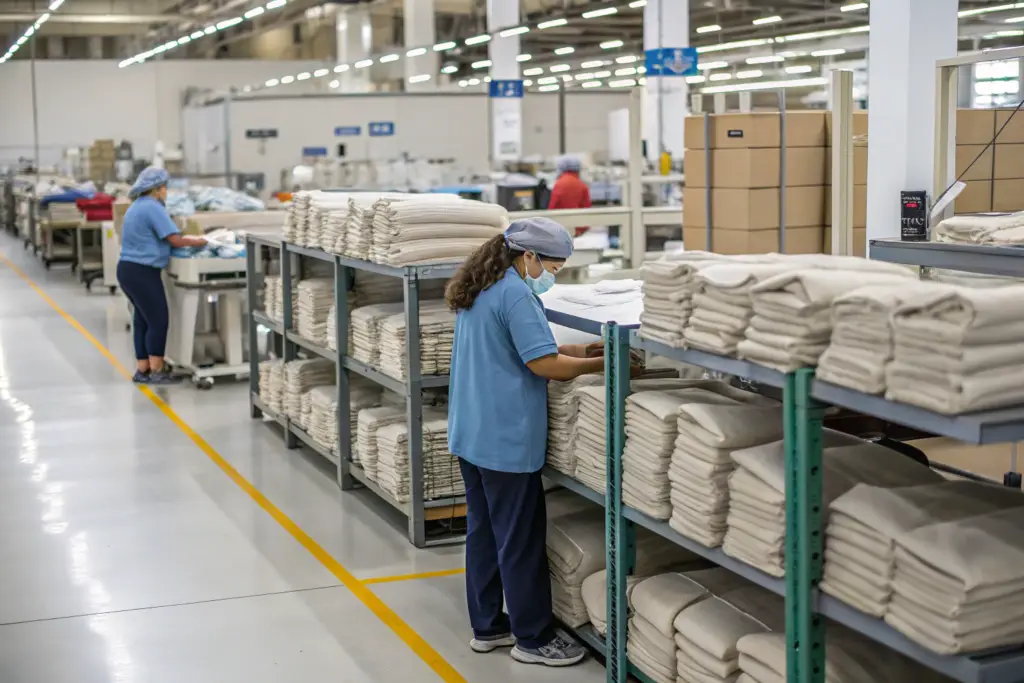
Greige fabric is un-dyed unfinished fabric straight off the knitting machine or loom. It is the raw canvas. The longest part of the fabric supply chain is not the knitting. It is the dyeing and finishing. Dyeing requires scheduling a spot in a dye vat at a specialized facility. During peak season dye houses are backed up for 4 to 6 weeks.
If you know a particular fabric quality is a core part of your brand you should consider a greige inventory program. You purchase and store a roll of undyed greige fabric at the factory. When you need a quick restock we send that greige fabric to the dye house for a small rush batch. The lead time drops from 45 days to 10 days.
Here is a comparison of the two restock paths based on a real order we processed in October 2025:
| Restock Scenario | Fabric Lead Time | Production Lead Time | Total Restock Timeline |
|---|---|---|---|
| Standard Path (No Greige Inventory) | 45 Days (Mill to Dye to Factory) | 21 Days (Cut & Sew) | 66 Days |
| Greige Inventory Path | 10 Days (Dye Only from Stored Greige) | 14 Days (Modular Line) | 24 Days |
The difference is 42 days. That is the difference between capturing holiday sales and receiving a shipment of sweaters on December 28th that will sit in your warehouse until next year. This strategy requires an upfront investment in the greige fabric inventory. But for core styles with predictable demand the return on that investment is massive. The greige fabric strategy is a hallmark of mature brands.
What Communication Protocols Prevent Peak Season Shipping Delays?
During peak season the volume of emails and messages multiplies by a factor of ten. The merchandising team is managing dozens of orders simultaneously. It is easy for a single email about a revised packing list to get buried in an inbox. When that happens a carton gets mislabeled. The shipment gets delayed at the port because the documents do not match. The brand owner is furious and does not understand why a "simple change" was missed.
Effective communication protocols prevent peak season delays by establishing a single source of truth for all order documentation and a scheduled weekly touchpoint that is non-negotiable regardless of how busy both parties become. Relying on ad-hoc WhatsApp messages during peak season is a recipe for disaster.
Why Should You Insist on a Weekly Status Report Versus Daily Emails?
Daily emails create noise. They create a long thread that is impossible to search. The factory merchandiser spends two hours a day just replying to "Any update?" emails from various clients. Those are two hours they are not spending on the production floor solving actual problems.
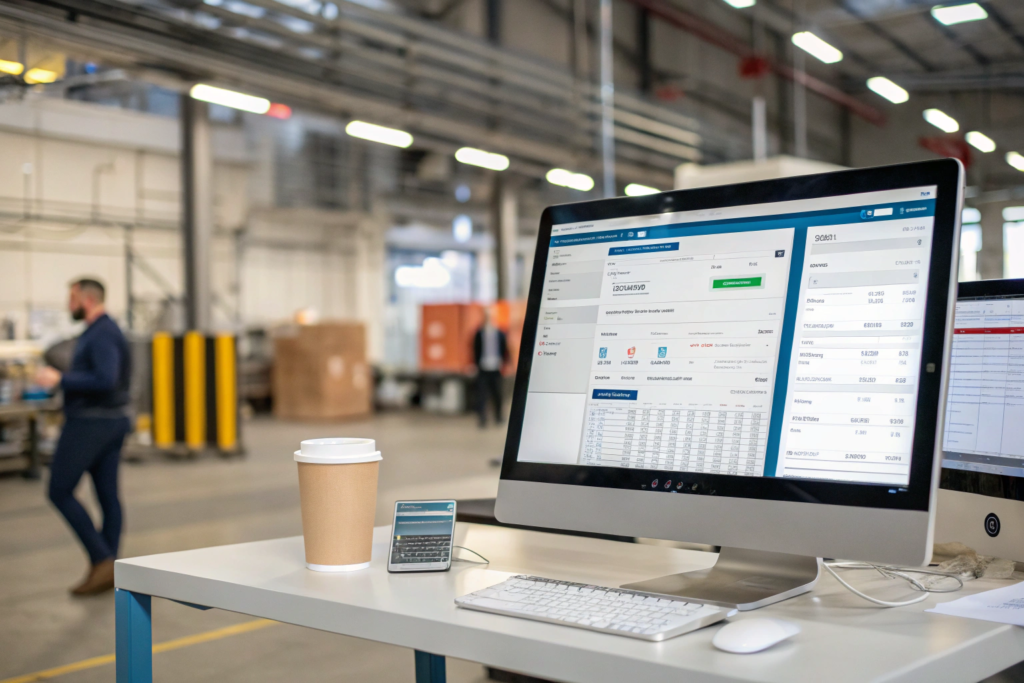
A structured weekly status report sent every Friday morning eliminates this noise. The report should follow a consistent template. Here is the exact format we use at Shanghai Fumao for all clients during peak season:
| Order Reference | Style Name | Planned Ship Date | Current Production Status | Blockers / Risks | Action Required from Brand |
|---|---|---|---|---|---|
| PO-1122 | Classic Hoodie | Oct 15 | Cutting Complete; 40% Sewn | Zipper pull shipment delayed 2 days by courier | None; Watching situation |
| PO-1123 | Jogger Pant | Oct 22 | Fabric in transit from dye house | Dye house backlog of 3 days | Confirm if we can ship partial quantity early |
| PO-1145 | T-Shirt 3-Pack | Oct 08 | 100% Packed | NONE | Provide warehouse delivery appointment |
This report takes our team 45 minutes to compile for all active clients. It answers 90% of the questions a brand owner would otherwise send in an email. It surfaces problems early when there is still time to fix them. And it creates a written record of communication that prevents the "I told you" arguments that happen when a shipment is late.
I had a client in 2024 who refused to use the report. He insisted on daily WhatsApp voice messages. It was chaos. We missed his request to change the hangtag placement because it was buried in a voice note from three weeks prior. The entire 5,000 unit order had to be re-tagged at the 3PL at a cost of $1,250. He now reads the weekly report religiously.
During peak season you might make a small change to a garment specification. Maybe you decide to use a slightly darker thread color on the hem. If you email this change to the merchandiser and the merchandiser forgets to update the master file on the factory server the production line uses the old spec. You open the carton and the thread is wrong.
A shared cloud-based tech pack solves this. We use a simple Google Drive folder for each client. There is only one file named "MASTER_Tech_Pack_Hoodie_v4_FINAL." When you want to make a change you do not email a new PDF. You update the shared file and you send a one-line email that says "Updated thread color to Pantone 19-4024 TPX in v5 of master tech pack." The cutting room supervisor and the sewing line supervisor both access that same file from their tablets on the floor. There is zero confusion about which version is the correct version.
This sounds like a small detail. But in the chaos of peak season when a factory is running at 110% capacity version control is the difference between a perfect shipment and a costly rework. The version control principle applies directly to apparel manufacturing.
How Can Strategic Warehousing Smooth Out Seasonal Inventory Swings?
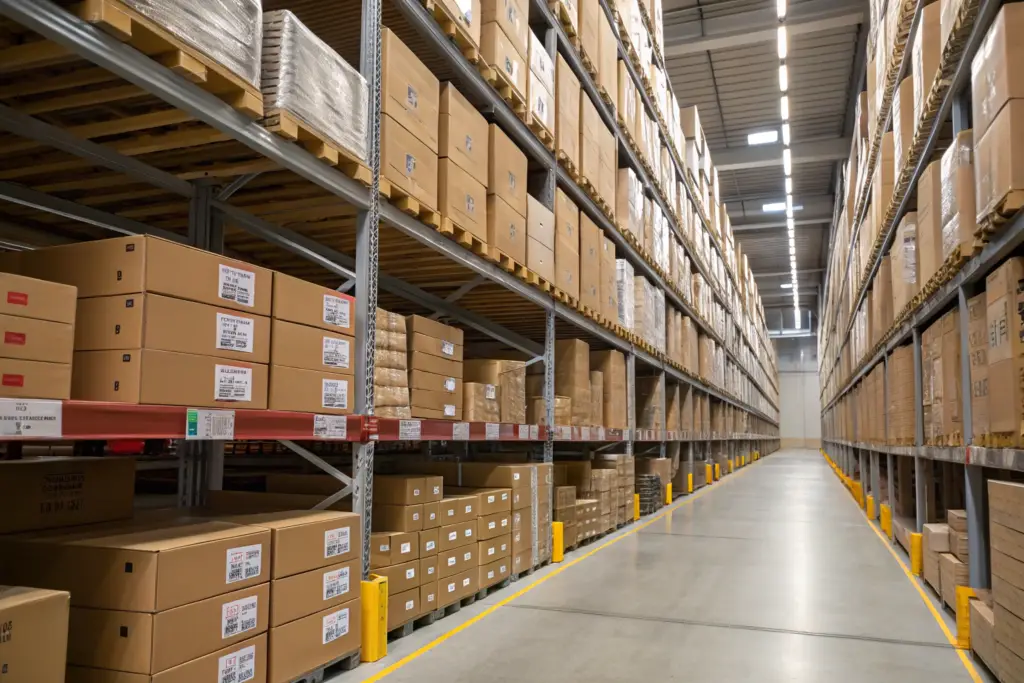
One of the most effective ways to handle seasonal spikes is to shift the timing of the spike itself. You cannot change when the consumer wants to buy a winter coat. But you can change when that coat arrives in the United States. Instead of shipping everything in August when ocean freight rates are at their annual peak and ports are congested you can ship in June or July when the supply chain is quieter.
Strategic warehousing involves shipping finished goods early during off-peak logistics windows and storing them in a U.S.-based warehouse or 3PL facility until they are needed for the selling season. This decouples the production timeline from the selling timeline and significantly reduces the risk of late delivery due to port congestion.
What Are the Benefits of a U.S.-Based 3PL for Peak Season Fulfillment?
A 3PL is a third-party logistics provider. They are a warehouse company that stores your inventory and picks packs and ships orders to your customers or your wholesale accounts. Using a 3PL strategically can smooth out your entire year.
Here is the seasonal cash flow and risk profile for two different approaches based on a brand that does 60% of its annual revenue in Q4:
| Approach | Production Timing | Shipping Timing | Peak Season Risk |
|---|---|---|---|
| Just-In-Time (JIT) | July-August | September | High. Any port strike or weather delay means missed Q4 sales. |
| Early Warehouse Strategy | May-June | July | Low. Inventory is safely in the U.S. by August 1st regardless of ocean delays. |
The trade-off is that you pay for warehousing storage fees for two or three extra months. For a pallet of goods that might cost $25 per month. That is a small insurance premium to pay for the certainty of having your holiday inventory on hand.
I worked with a toy and apparel brand last year that sells heavily at holiday craft fairs and through their website in December. We produced their entire holiday assortment in June. We shipped it DDP to their 3PL in Salt Lake City by July 20th. When the Canadian port strikes happened in August and the East Coast port labor negotiations created uncertainty their competitors were panicking. They were not. Their inventory was already on U.S. soil. They ran their entire Q4 marketing campaign with zero stress about supply chain disruptions. Their cost of extra warehousing was $900. Their peace of mind was priceless.
How Does a Buffer Stock Agreement with Your Manufacturer Work?
This is a variation of the warehousing strategy but the inventory stays in our factory warehouse in China rather than moving to the U.S. Under a buffer stock agreement you pay for the finished goods but you ask us to hold them in our secure warehouse for an agreed period usually 30 to 60 days. This is useful if your 3PL is full or if you want to consolidate multiple smaller shipments into one larger container to save on freight.
The benefit is flexibility. If a retail buyer suddenly places a large order for immediate delivery we can pull from the buffer stock and ship it air freight within 48 hours. If you need to redirect a shipment from your New York warehouse to your Los Angeles pop-up shop you can instruct us to change the delivery address on the bill of lading.
We provide this service to several of our long-term partners at Shanghai Fumao. We charge a nominal storage fee of $0.12 per carton per week. A brand we work with in the outdoor apparel space used this strategy brilliantly in early 2026. They produced 12,000 units of a new jacket style. They had us hold 4,000 units as buffer stock in Shanghai. When a major outdoor retailer placed a last-minute reorder for 800 units for a spring promotion we shipped those 800 units directly from the buffer stock via air freight. The brand avoided a stockout at the retailer. The retailer was impressed with the speed and increased their fall order by 30%. The cost of holding the buffer stock was $280. The value of the increased order was $45,000. This is how strategic thinking about inventory placement creates competitive advantage.
Conclusion
Handling seasonal demand spikes successfully is not about having a manufacturer who can magically produce garments faster than the laws of physics allow. Sewing a sleeve takes the same amount of time in August as it does in February. The difference is in the planning and the systems that surround the actual sewing.
You need a manufacturer who forces you to think ahead with capacity reservations and forecast sharing. You need a partner who has invested in flexible modular production lines that can pivot quickly to restock orders. You need a communication protocol that surfaces problems on a Friday status report rather than hiding them until the shipping deadline is missed. And you need to think strategically about where your inventory sits and when it moves.
The brands that navigate peak season smoothly are the ones who treat their manufacturer as a true planning partner not just as a vendor who receives a purchase order. They share data. They reserve capacity. They invest in greige fabric programs for their core styles. They understand that the cheapest per-unit price in June might cost them their entire holiday season in November if that factory cannot deliver on time.
At Shanghai Fumao we have built our entire operational model around these principles. We work with our clients months in advance to map out the seasonal calendar. We offer flexible production solutions for restocks. We provide transparent weekly reporting. We are not the cheapest factory in China on a per-unit FOB basis. But we are one of the most reliable when it matters most which is during the chaos of peak season.
If you want to discuss how we can help you plan for your next seasonal spike or if you want to establish a capacity reservation for an upcoming production window please reach out to our Business Director Elaine. You can email her at elaine@fumaoclothing.com. Let us help you turn seasonal chaos into seasonal success.