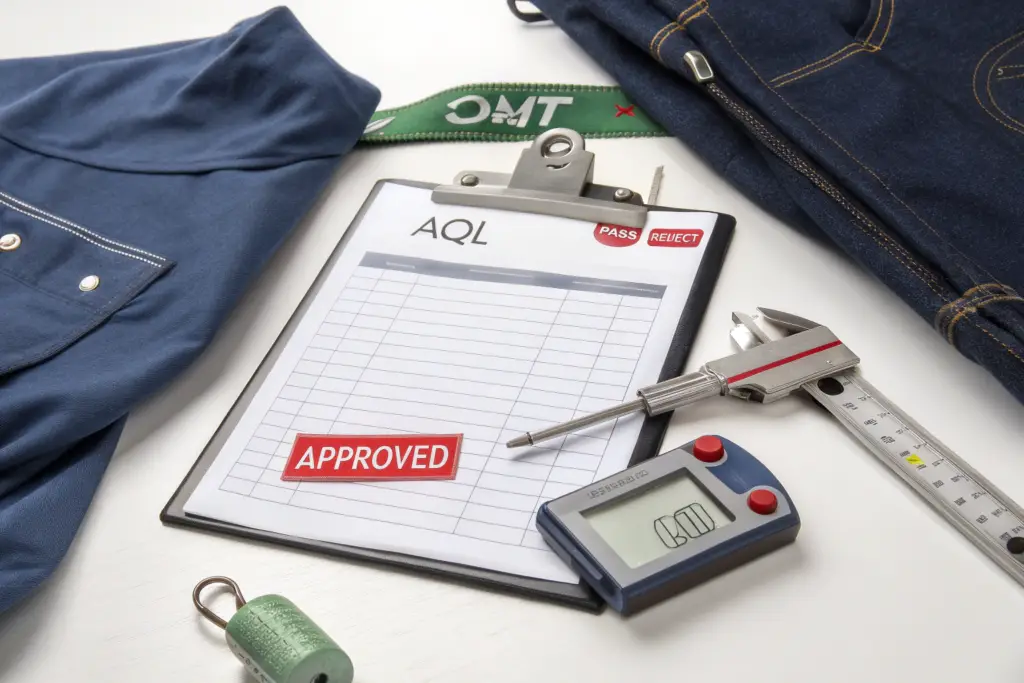
You have invested your capital in sourcing the most beautiful fabric. You have spent months designing the perfect collection. You have shipped your precious materials to your CMT (Cut, Make, Trim) factory. Now, the finished garments arrive. You open the first box... and your heart sinks. The seams are puckered. The buttons are loose. The quality is simply not there. Your beautiful materials have been wasted. A brand owner told me, "I learned the hardest lesson in CMT: a cheap factory is the most expensive mistake you can make. They ruined my expensive fabric. Top quality is not a 'nice-to-have'; it's the only thing that protects my entire investment."
Top quality is absolutely non-negotiable in CMT production because the brand has already made a significant financial and emotional investment in the raw materials. A quality failure in CMT is a double loss: the cost of the ruined fabric and trims, plus the cost of the wasted manufacturing labor. Only a factory with a rigorous, multi-layered, and transparent quality control system can protect this investment and ensure the finished product meets the brand's standard.
At Shanghai Fumao, quality is not a department; it is the bedrock of our entire CMT service. We know that our B2B partners are entrusting us with their most valuable assets. Let me explain why a fanatical commitment to quality is the only way to make the CMT model work, and show you the specific systems we use to protect your investment at every stage.
How Does Incoming Inspection Protect Your CMT Material Investment?
In a traditional Full-Package model, the factory owns the materials, and a quality issue is their financial problem. In CMT, you own the materials. If a flaw in your supplied fabric is not caught before cutting, you suffer the financial loss. This fundamental difference means that quality control in CMT must begin at the very first moment your materials arrive at the factory. The incoming inspection is the most critical step in protecting your investment.
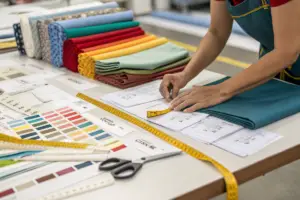
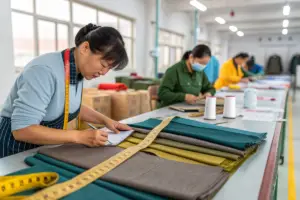
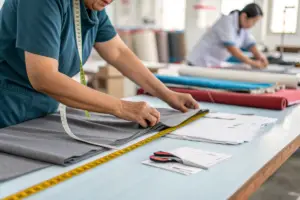
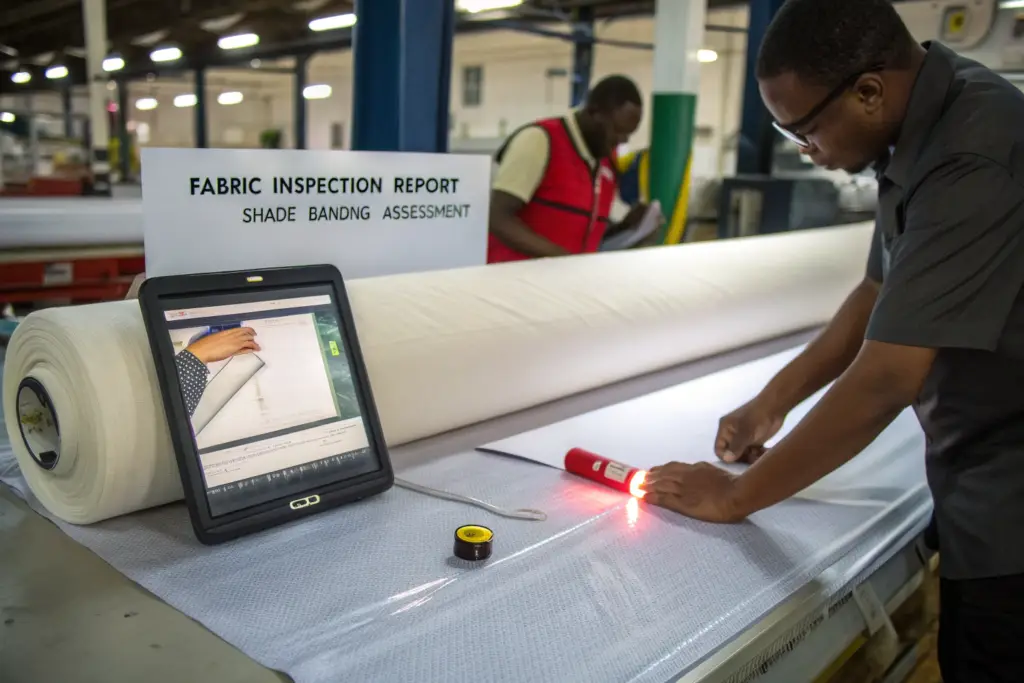
A rigorous Incoming Inspection is the non-negotiable first line of defense in CMT. We perform a 100% inspection of all client-supplied fabric and trims before they are released to production. For fabric, every roll is checked on a backlit table for weaving flaws, stains, and shade consistency. For trims, we verify color, function, and quantity against the BOM. This process catches supplier errors before a single cut is made, protecting the client from the devastating double loss of wasted materials and production time.
I recall a brand that shipped us a beautiful, expensive wool coating for a CMT blazer order. During our incoming inspection, our team discovered a subtle "barre" mark—a faint horizontal stripe—across several rolls. It was a weaving defect that their supplier had missed. We immediately quarantined the rolls, photographed the flaw, and sent a detailed report to the client. They were able to return the defective yardage to the mill for a full credit. If we had skipped this step, we would have cut into the flawed fabric, producing dozens of blazers with a hidden defect. This is the invaluable protection of a thorough incoming inspection. This is a standard part of our CMT quality assurance .
What Is "Shade Banding" and Why Is It Crucial for CMT?
Even within a single dye lot, color can vary subtly from roll to roll. To prevent a garment from having a mismatched sleeve, our inspectors perform Shade Banding. They evaluate every roll under a calibrated D65 lightbox and group them into "light," "medium," and "dark" bands. The cutting plan then ensures all panels for a single garment come from the same shade band. This meticulous process guarantees color consistency within each piece. This is a detail that defines a premium garment .
How Does Verifying Your Trims Protect Your Brand's Identity?
Your custom buttons, labels, and zippers are your brand's identity. Our team counts and inspects a sample of all your supplied trims. We verify the color match against your Pantone standard, check the functionality of the zippers, and ensure the quantities match your BOM. Discovering that you are short 50 buttons or that the zippers are the wrong shade before sewing starts saves hours of downtime and prevents a last-minute scramble that could compromise quality. This is a key part of our brand protection in CMT .
How Do In-Line Audits Prevent a "Quality Slide" During Bulk Production?
In a lesser factory, quality control is a final, reactive gate. They inspect the goods at the end. The problem is, by that point, if a systemic error has occurred, you have hundreds or thousands of defective units. In top-tier CMT, quality is a continuous, proactive process that happens during the sewing phase. This is where small errors are caught and corrected in real-time, preventing them from becoming large-scale, investment-destroying batch defects.
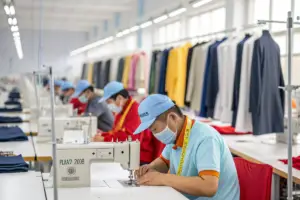
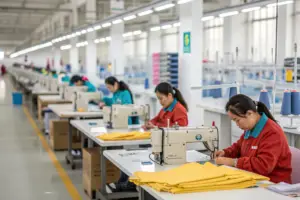
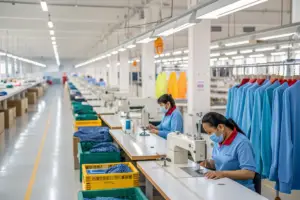
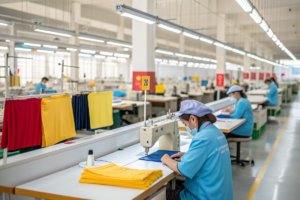
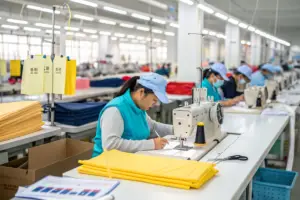
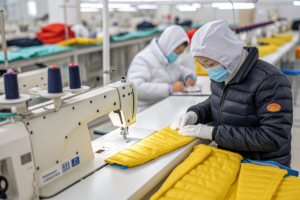
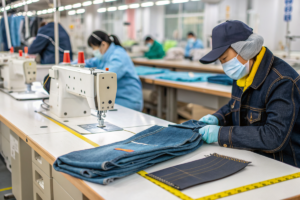
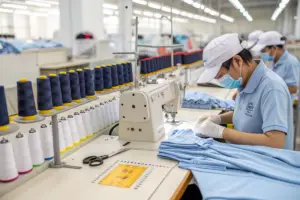
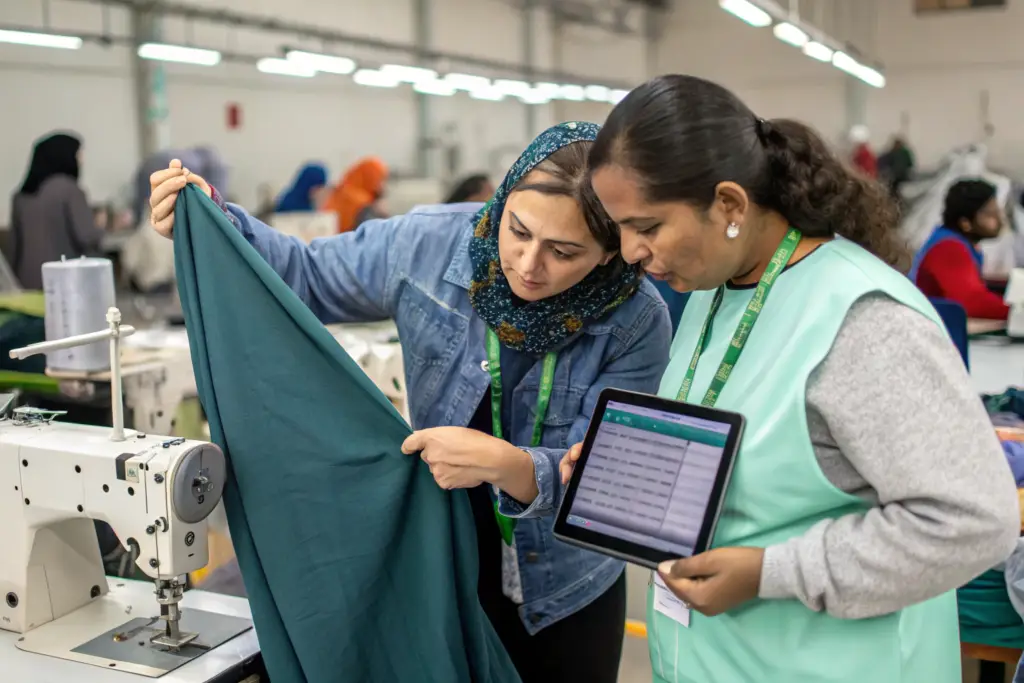
Proactive In-Line Audits are essential for preventing a "quality slide" during bulk production. Our roving QC inspectors continuously pull random samples from the sewing line and inspect them against the approved Sealed Sample and Tech Pack. If they find a recurring defect—a skipped stitch, a crooked seam—they have the authority to stop the line immediately. They then work with the supervisor to identify the root cause and implement a corrective action before hundreds of defective units are produced, protecting the client's valuable materials from being wasted.
A men's wear client of ours had a CMT order for 2,000 shirts with a specific, detailed pocket construction. During an in-line audit, our inspector noticed that the pocket placement on the first 40 units was consistently 1/4 inch too low. It was a subtle drift caused by a worn guide on the pocket-setting machine. She stopped the line. The guide was replaced in 15 minutes. The next 1,960 shirts had perfectly placed pockets. Without that in-line audit, the error would have continued, wasting the client's fabric and requiring costly, time-consuming rework. This proactive intervention saved the order. This is the power of a robust in-line QC system .
What Specific Defects Do In-Line Inspectors Catch?
Our inspectors are trained to spot issues that would compromise a premium product:
- Skipped Stitches & Broken Threads: Weak points in the seam.
- Puckering: Fabric gathers along the stitch line.
- Incorrect Seam Allowance: Affecting the fit.
- Misaligned Seams: Stripes or plaids not matching.
- Incorrect Trim Application: The wrong button or a misplaced label.
Catching these early protects your materials and ensures a flawless finished garment. This is a core part of our quality culture .
How Is the "Sealed Sample" Used as the Ultimate Reference?
The Sealed Sample is not locked in an office. It is on the factory floor. The in-line inspector carries it (or a high-res photo of it) and does a Side-by-Side Comparison. They check the collar roll, the pocket shape, and the seam finish against the approved standard. This constant, physical reference is the anchor that prevents the quality standard from drifting over a long production run. This is how we guarantee sample-to-bulk consistency .
How Does Final AQL Inspection Provide an Objective, Verifiable Quality Guarantee?
After production is 100% complete, the goods face the final, formal gate: the Pre-Shipment Inspection (PSI) . In professional CMT, this is not a casual glance. It is a rigorous, statistical audit using the globally recognized AQL (Acceptable Quality Limit) standard. This is the objective, data-driven process that determines if the shipment is released to the client, providing a verifiable guarantee of the quality level.
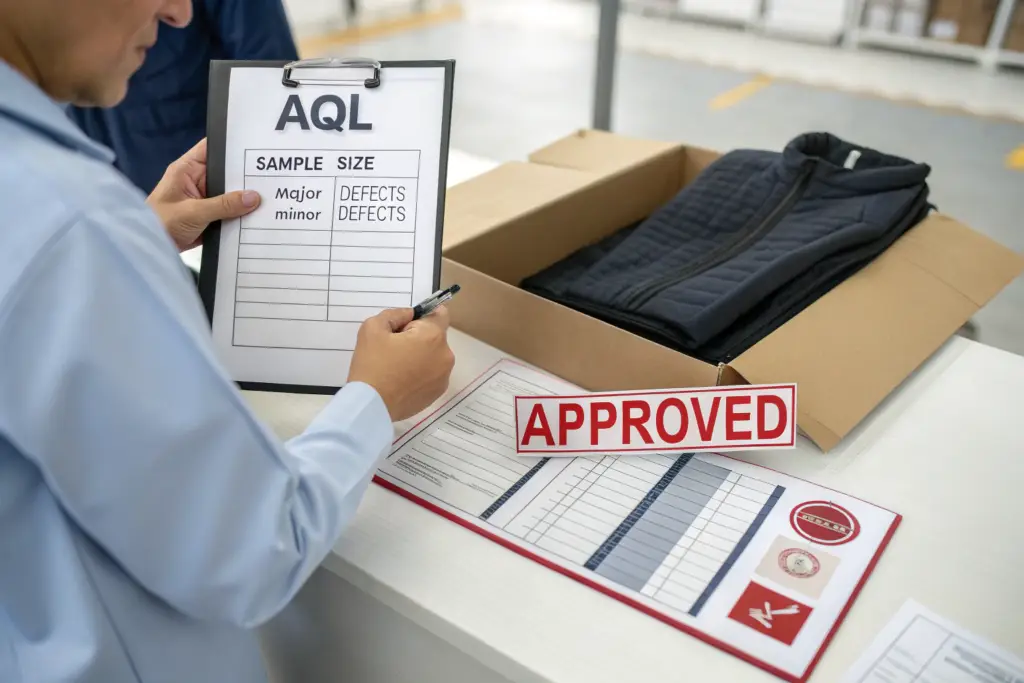
The Final AQL Inspection provides an objective, verifiable quality guarantee. Using the agreed-upon standard (e.g., AQL 2.5, Level II), our QC team randomly selects cartons and inspects a statistically significant number of units. Each unit is examined for defects, which are classified as Major or Minor. The lot passes or fails based on a pre-determined threshold. The client receives a full report with the findings, providing transparent, data-driven proof of the shipment's quality level.
For a recent CMT order of 3,000 units, we performed an AQL 2.5, Level II inspection. The AQL tables required inspecting a random sample of 125 units. Our inspection found 2 major defects (a small hole, a broken zipper) and 5 minor defects (loose threads). The lot passed. We provided the client with the full report, including photos of the defects. They had a clear, objective picture of the quality of their shipment before it even left our factory. This is the transparency and rigor of a professional final QC process .
What Is the Difference Between a Major and Minor Defect in an AQL Audit?
This classification is critical and standardized:
- Major Defect: A flaw that would likely cause a customer to return the garment (e.g., a hole, a broken zipper, a stain).
- Minor Defect: A noticeable imperfection that does not prevent the sale (e.g., a loose thread).
We are strict on Major Defects, as these are the ones that damage a brand's reputation. This is part of our data-driven quality assurance .
What Happens If a CMT Order Fails the AQL Inspection?
If the number of defects in the sample exceeds the AQL limit, the lot fails. We do not ship. We immediately inform the client. We then conduct a 100% inspection of the entire order. Every single unit is inspected, and all defects are sorted out. The defective units are either repaired or replaced using the client's buffer stock. The order is then re-inspected. While this causes a delay, it is the only responsible course of action. It protects the client from receiving substandard goods. This is our commitment to accountability in CMT .
How Does Fumao's Obsession with Quality Translate to Your Brand's Success?
In the CMT model, your brand's reputation is in our hands. A quality failure for us is a reputational disaster for you. We do not take this responsibility lightly. Our entire operational culture, from the receiving dock to the shipping bay, is built on a fanatical commitment to protecting your materials and ensuring the final product is a flawless representation of your vision. Our obsession with quality is your competitive advantage.
Fumao's obsession with quality directly translates to your brand's success. It means a lower return rate, protecting your margins and your reputation. It means a consistent product that your customers can trust. It means you can confidently use premium, expensive materials, knowing they will be handled with the care they deserve. Our transparent, data-driven quality system provides the peace of mind that allows you to focus on design and sales, knowing the manufacturing is in safe hands.
A brand founder told us, "Before Fumao, I used to dread opening boxes. I never knew what I was going to get. Now, I don't even think about it. I know the quality is going to be perfect. That trust is the most valuable thing a manufacturer can give me." That is the standard we hold ourselves to. We protect your investment, your vision, and your brand's good name with an unwavering commitment to top-tier quality. This is the foundation of a trusted B2B CMT partnership .

How Does a Low Defect Rate Directly Protect Your Profit Margins?
Every returned garment costs you money in refunds, shipping, and customer service. It also damages your brand's reputation and reduces repeat purchases. Our rigorous quality system, which catches defects at the source, keeps your return rate exceptionally low. This directly protects your profit margins and maximizes the lifetime value of your customers. This is the financial impact of a high-quality CMT partner .
How Does Our Quality Transparency Give You a Competitive Edge?
You can use our quality data in your own marketing. You can tell your customers that your garments are manufactured by a partner with a verifiable, data-driven quality system. You can share your quality metrics with wholesale buyers. This level of transparency is a powerful differentiator in a market where quality claims are often just empty words. We give you the data to back up your promise. This is the value of our transparent manufacturing .
Conclusion
In CMT production, top quality is not a luxury or a marketing slogan. It is the absolute, non-negotiable foundation upon which the entire model is built. Because the brand's own capital is invested in the raw materials, a quality failure is a catastrophic financial event. Only a rigorous, multi-layered, and transparent quality system can mitigate this risk.
At Shanghai Fumao, this system is the very core of our B2B CMT service. From the meticulous inspection of your materials to the proactive audits on the sewing line and the final statistical guarantee, we protect your investment at every single step. We do not just sew clothes; we safeguard your vision and your brand's reputation.
If you are looking for a CMT partner whose commitment to quality is as uncompromising as your own, let's talk. Our Business Director, Elaine, can walk you through our quality control system in detail. Please email Elaine at: elaine@fumaoclothing.com.