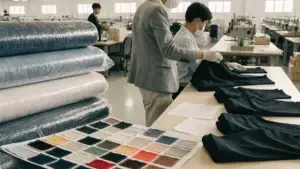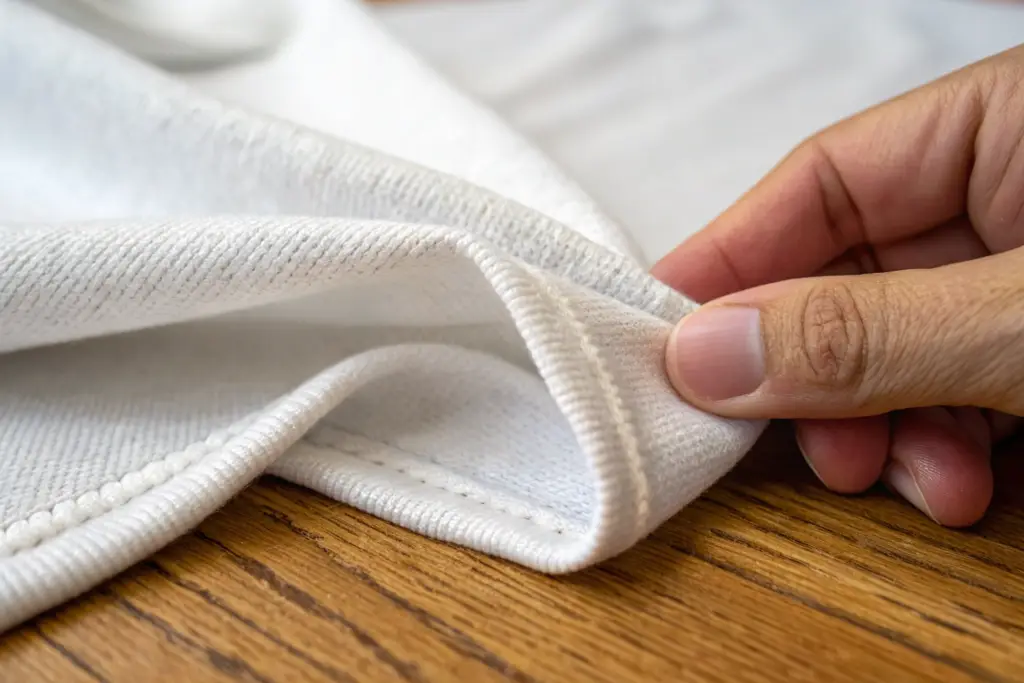
I learned this lesson about twelve years ago from a streetwear brand owner in Los Angeles. He sent me a competitor's t-shirt and said, "Feel this. This is what my customers expect." The shirt was a simple black tee with a white print. But the feel of it... it was heavy. It had weight. It had structure. When I held it up to the light, I could not see my hand through the back. That was the moment I understood why heavy weight cotton is not just another fabric option. It is a statement.
Heavy weight cotton is superior for custom graphic tees because of its combination of print surface stability, garment longevity, and perceived value. The dense weave prevents ink from bleeding through to the back, holds its shape through dozens of washes, and gives the wearer a sense of quality that lightweight, flimsy tees simply cannot match.
At Shanghai Fumao, we cut more heavy weight tees for the U.S. market than almost any other single category. Let me break down exactly why this fabric has become the gold standard for brands that care about their image.
How Does Fabric Weight Impact the Quality of a Screen Print?
If you are a graphic designer, you spend hours perfecting the lines of your logo or artwork. You want those lines to be crisp. You want the colors to be vibrant. None of that matters if you print on a fabric that acts like a paper towel. Lightweight cotton, especially the cheap 4.5 oz stuff, is porous and unstable. It stretches under the pressure of the screen printing pallet. When it snaps back, the print looks distorted.
Heavy weight cotton, typically classified as 6.0 oz per square yard or higher, provides a stable and flat printing surface. The density of the yarns prevents the ink from seeping into the back of the shirt (grin-through) and allows for a softer hand feel after curing because the ink sits higher on the fabric surface rather than embedding deep into the fibers.
I always tell my brand partners: The blank is half the design. Choose a bad blank, and even the best apparel printer in the world cannot save you.
Why Does Heavy Cotton Prevent Ink Bleeding and Grin-Through?
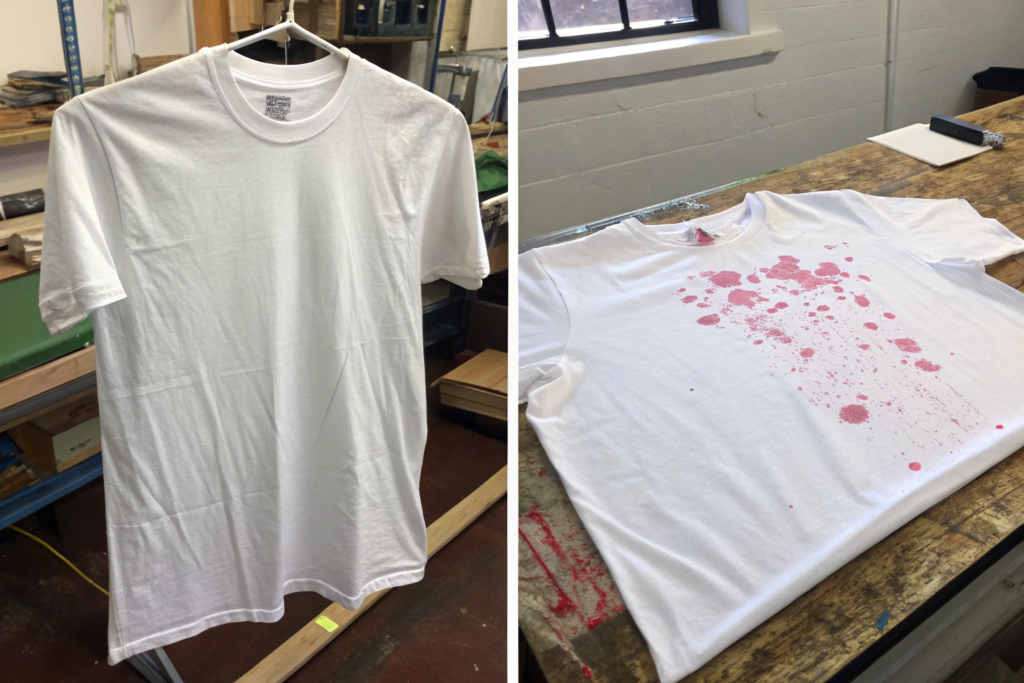
"Grin-through" is the industry term for when you can see the print from the inside of the shirt. It looks cheap. It feels scratchy on the skin. It happens because the ink seeps through the gaps between the yarns.
Here is a technical comparison based on how we set up our printing at Shanghai Fumao:
| Fabric Weight | Yarn Count (Typical) | Weave Density | Printing Result |
|---|---|---|---|
| 4.5 oz (Lightweight) | 30/1 or finer | Loose / Open | High risk of bleeding. Requires heavy ink deposit. Shirt feels like cardboard after print. |
| 6.0 oz (Mid/Heavy) | 20/1 or 18/1 | Tight / Compact | Minimal bleeding. Ink stays on surface. Softer hand feel. |
| 7.0 oz+ (Premium Heavy) | 16/1 or 14/1 | Very Dense | Zero show-through. Works perfectly with water-based or discharge inks. |
I remember a specific order for a brand that wanted to use discharge printing for a vintage look. Discharge ink removes the dye from the fabric and replaces it with pigment. On a 4.5 oz shirt, the chemical would have weakened the thin yarns and created holes after a few washes. We insisted on a 6.5 oz ringspun cotton blank. The result was a soft, faded print that looked like a true vintage find, not a cheap knockoff.
How Does Fabric Stability Affect Registration in Multi-Color Prints?
Registration is the alignment of colors. If you have a design with a black outline and a red fill, those two screens need to hit the exact same spot. Lightweight fabric shifts. It stretches when the first screen lifts off. When the second screen comes down, the artwork is slightly off. You get a blurry "ghost" effect.
Heavy cotton has what we call "Boardiness." It lays flat like a piece of paper. It does not move. For complex customizable logo designs with tight traps and fine details, this is non-negotiable. We recently printed a 6-color simulated process graphic on a 7.0 oz tee for a men's wear client. The detail was photographic. That level of precision is impossible on a flimsy fashion tee.
Why Do Consumers Perceive Heavy Tees as Higher Value?
Perception is reality in fashion. And the reality is that weight equals worth in the mind of the American consumer. We do not just buy clothes with our eyes. We buy them with our hands. That first touch, when a shopper pulls the tee out of the polybag, is the moment they decide if the price was fair.
Consumers associate heavy weight cotton with durability, luxury, and a "premium" fit. The structured drape of a heavier fabric conceals body imperfections better than clingy lightweight material, and the garment's ability to maintain its shape after laundering reinforces the perception of long-term value and justifies a higher retail price point.
I have seen brands raise their retail price by $10 or $15 simply by switching from a 5.0 oz blank to a 7.0 oz blank. And the sell-through rate increased. Why? Because the product looked and felt like it was worth the money.
How Does Drape and Silhouette Differ Between Light and Heavy Blanks?
This is a fit issue that many new designers overlook. They design the graphic on a flat screen. They do not think about how the fabric interacts with the human body.
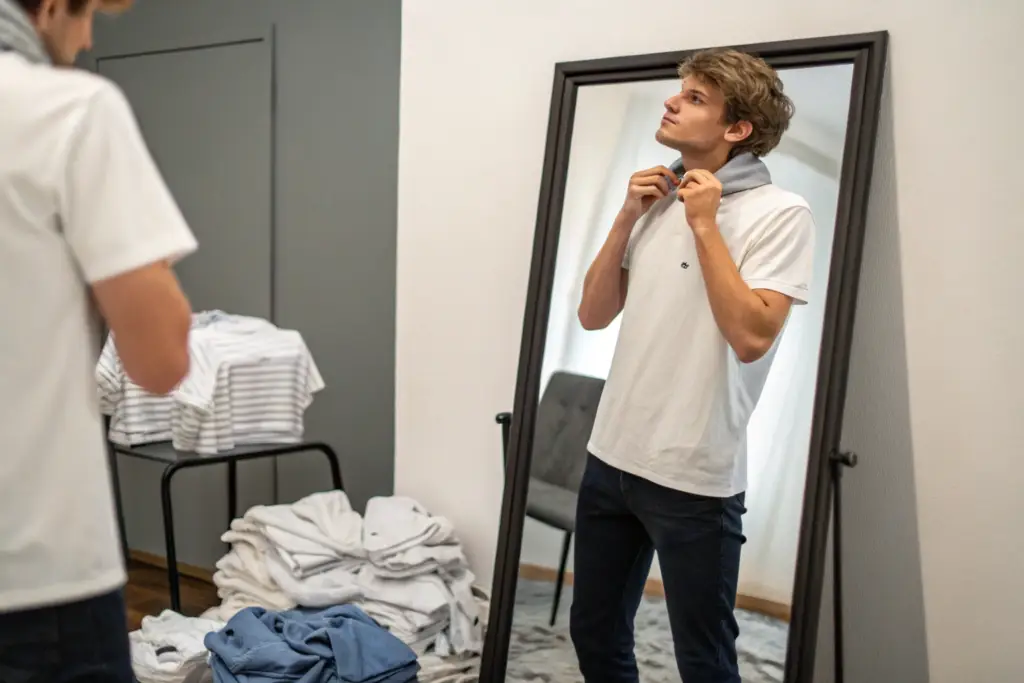
- Lightweight Tee (4.5 oz) : Clings to the body. Shows every curve, every love handle, and every undershirt line. It drapes like a tissue. For many American men, this is an unflattering look.
- Heavyweight Tee (6.5 oz+) : Hangs straight from the shoulders. It has "Sleeve Structure." The sleeves do not curl up immediately after one wash. It creates a clean, boxy silhouette that is the cornerstone of modern streetwear and workwear aesthetics.
I had a client who sold activewear for gym-goers. They wanted the softest, lightest tee possible for "breathability." We made a sample in a 6.0 oz slub cotton instead. The client was worried it would be too hot. But the wear-test feedback was unanimous. Men preferred the heavier tee because it didn't cling to their sweaty chest. It hung off the body, providing airflow and hiding sweat marks. That is a counter-intuitive win for heavy cotton.
Why Does Heavy Cotton Age Better Than Thin Fashion Tees?
Fast fashion has trained us to expect a t-shirt to die after ten washes. It loses its shape. The collar gets wavy. The hem curls up. Heavy cotton is the antidote to this.
The durability comes from the yarn twist and ply.
- Ring-spun Yarn: This is standard for premium heavy tees. The fibers are twisted tightly, making the yarn smoother and stronger.
- Combed and Ring-spun: This removes the short fibers that cause pilling.
At Shanghai Fumao, we source fabric that is both combed and ring-spun. I tell my clients: "This shirt will look better after the 50th wash than a cheap shirt looks after the 2nd wash." The natural fabric develops a patina. It softens but does not thin out. It becomes a favorite closet staple. That kind of longevity builds brand loyalty. When a customer loves how the tee feels a year later, they come back to your website to buy three more in different colors.
What Are the Technical Specifications of a Premium Heavy Weight Tee?
Not all heavy tees are created equal. I have seen factories try to make a "heavy" tee by using cheap, coarse yarn that feels like sandpaper. Weight is just a number. Handfeel is the real goal. You want a tee that is heavy and soft, not heavy and stiff. Achieving that requires specific technical choices in the knitting and finishing process.
The specifications of a premium heavy weight tee include a fabric weight between 6.0 oz and 7.5 oz per square yard, the use of ring-spun or open-end yarns for softness, a tightly knitted jersey stitch for opacity, and reinforced construction details such as shoulder-to-shoulder taping and a durable 1x1 rib collar with spandex for recovery.
When you discuss a custom cut-and-sew program with us, these are the details we lock in before we cut a single yard.
What Is the Difference Between Open-End and Ring-Spun Heavy Cotton?
This is the secret language of textile mills. If you just ask for "heavy cotton," you might get Open-End (OE) yarn. OE is cheaper and faster to produce. It feels drier and rougher against the skin. It is what you find in cheap workwear or promotional giveaways.
Ring-Spun Cotton is softer because the fibers are aligned and twisted in a way that eliminates protruding fiber ends.
Here is a quick guide I share with buyers:
| Yarn Type | Handfeel | Durability | Cost | Best Use Case |
|---|---|---|---|---|
| Open-End (OE) | Rough, Dry, Coarse | Good (abrasion resistant) | Low | Promotional tees, industrial garments. |
| Carded Ring-Spun | Soft, Smooth | Very Good | Medium | Mid-tier streetwear, volume basics. |
| Combed Ring-Spun | Silky, Luxurious, Zero Pilling | Excellent | High | Premium graphic tees, luxury blanks. |
For custom graphic tees, I always steer clients toward Carded Ring-Spun as the baseline. If the budget allows, Combed Ring-Spun is the gold standard. We recently developed a 7.2 oz Combed Ring-Spun blank for a brand in Brooklyn. It feels like a vintage tee from the 1990s that has been washed a thousand times, but it is brand new. That is the magic of the right yarn.
Why Are Neck Rib and Seam Construction Critical?
The graphic gets the attention, but the collar keeps the customer. A "bacon neck" is the kiss of death for a t-shirt brand. That is when the collar rib stretches out and never recovers.
Key Construction Points for a Durable Heavy Tee:
- Neck Rib Fabric: Must be a 1x1 Rib with Spandex (Lycra) . Usually 95% Cotton / 5% Spandex. This gives the collar "memory." It snaps back.
- Shoulder Taping: A strip of fabric sewn over the back neck seam. This prevents the seam from stretching out over time and adds a detail of quality that consumers notice when they fold the shirt.
- Coverstitched Hem: The double row of stitching on the bottom hem and sleeves. This is standard, but the thread tension matters. Too tight, and the hem puckers. Too loose, and it unravels.
I recall a specific kids' wear project where we had to adjust the neck rib tension. Children pull shirts over their heads with more force than adults. A standard adult rib would have popped threads. We used a heavier rib and a double-needle topstitch around the collar. The shirts held up to the abuse of a 5-year-old, and the brand received zero returns for collar issues.
How Does Heavy Cotton Support Sustainable and Ethical Branding?
There is a shift happening in the U.S. market. Consumers, especially younger ones, are tired of buying a shirt, wearing it three times, and throwing it away. They want fewer, better things. Heavy cotton fits perfectly into this narrative. It is the physical opposite of "disposable."
Heavy weight cotton aligns with sustainable branding because its inherent durability extends the product lifecycle, keeping garments out of landfills longer. The perception of quality and longevity reduces the churn of fast fashion consumption, allowing brands to market their tees as investment pieces rather than seasonal disposables.
I have had clients specifically request heavy cotton so they can use "Buy Once, Wear Forever" as a marketing slogan. That message only works if the product can back it up.
Does Fabric Weight Reduce the Environmental Impact of Returns?
Returns are a dirty secret of e-commerce fashion. The return rate for apparel is often 20-30%. Every return involves extra shipping (carbon emissions) and often, the returned item ends up in a landfill because it is cheaper to trash it than to inspect and repack it.
Heavy weight tees have a lower return rate in my clients' data. Why?
- Consistent Fit: Because the fabric is stable, the sizing is predictable. A Medium actually fits like a Medium wash after wash.
- Perceived Value: When a customer opens the package and feels the weight, they are less likely to have "buyer's remorse." The product exceeds their tactile expectation.
I worked with a direct-to-consumer brand that tracked returns by fabric weight. Their 4.5 oz fashion tees had a 22% return rate due to "fit/quality." Their 7.0 oz heavy tees had a 9% return rate. The reduction in reverse logistics cost alone paid for the higher price of the blank.
Can Heavy Cotton Be Sourced Responsibly?
Yes. Weight is about construction, not necessarily chemical input. However, you must ask about the mill. A cheap heavy tee might be heavy because it uses coarse, conventional cotton grown with heavy pesticide use.
At Shanghai Fumao, we offer heavy weight options in BCI (Better Cotton Initiative) and Organic Cotton (GOTS) certifications. The price premium for organic heavy cotton is about 15-20%, but it gives the brand a powerful story.
I remember a client who switched to a 7.0 oz GOTS certified organic tee. They raised the retail price by $12. They put a small hangtag on the shirt explaining the weight and the organic origin. The shirts sold out faster than the cheaper, conventional version. The customer was buying the quality and the story together. The weight of the fabric made the sustainability claim feel tangible and real.
Conclusion
Heavy weight cotton is the best fabric for custom graphic tees because it does everything a blank is supposed to do: it makes the print look better, it makes the body look better, and it lasts long enough to become someone's favorite shirt. It turns a simple piece of clothing into a durable canvas for your art.
You might pay a little more per unit upfront. But you save on print rejects. You save on returns. And you build a brand reputation that is associated with quality, not cheapness. In a market flooded with thin, see-through fashion tees, a heavy shirt stands out. It feels different in the hand. It tells the customer, "This brand cares about the details."
If you are ready to upgrade your t-shirt program to a blank that reflects the quality of your designs, let's talk. At Shanghai Fumao, we have developed a range of premium heavy weight blanks that we can customize to your exact fit and finish requirements. Reach out to our Business Director, Elaine. She can send you a sample pack of our fabrics so you can feel the difference yourself. Email her at strong>elaine@fumaoclothing.com</strong. Let's make something heavy that your customers will love to wear.