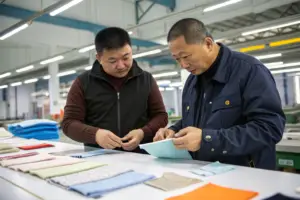
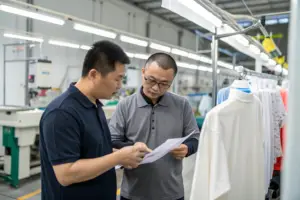
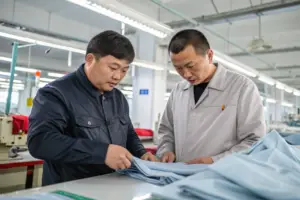
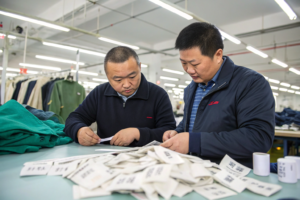
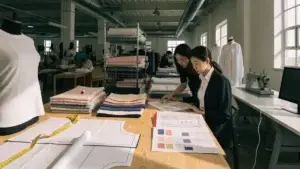
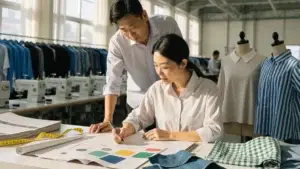
You have just finished a video call with your factory. You discussed three small changes to the collar and the fit of the sleeve on your new blazer. In the past, this would mean another round of physical samples, another two weeks of waiting, and another $150 in shipping fees. But this time, the factory says, "We'll update the 3D model and send it for your approval this afternoon." You feel a mix of excitement and skepticism. "Can a digital image really replace the feel of a real garment?" A brand owner told me, "I was a 3D skeptic. I thought nothing could replace touching the fabric. Then I cut my sampling time in half. I'm a convert."
Digital sampling is not completely replacing physical garment samples, but it is fundamentally transforming and drastically reducing the need for them. We are moving from a model of "multiple physical samples" to a "one physical sample" workflow. Digital sampling (3D prototyping) is now the standard for the early, iterative stages of design and fit approval. It allows for rapid, zero-waste communication and refinement. The physical sample's role is evolving into the final, definitive "Golden Sample" that verifies the exact handfeel and makes of the bulk fabric.
At Shanghai Fumao, we are actively integrating 3D digital sampling into our product development workflow for our B2B partners. We see it not as a replacement for our skilled sample makers, but as a powerful new tool that makes the entire process faster, more sustainable, and more precise. Let me give you a realistic look at where digital sampling excels, where the physical sample remains essential, and how we use both to give our private label partners a competitive advantage.
How Is 3D Prototyping Revolutionizing the Design and Fit Approval Process?
The traditional sampling process is a game of "telephone" played across continents with expensive physical objects. You send a sketch, you wait, you receive a sample, you pin it, you write an email, you ship it back, you wait again. This cycle is slow, expensive, and generates immense material waste. 3D digital prototyping shatters this old model. It moves the iterative, messy, creative part of the process into a fast, collaborative, and waste-free digital space.
3D prototyping revolutionizes the early-stage development process by enabling rapid, visual, and collaborative iteration. Designers can see a photorealistic simulation of their garment on a customizable avatar. They can check proportions, fit, and design details from every angle. They can share the 3D model with the factory, and both can annotate it in real-time during a video call. This allows for 2-3 rounds of digital "sampling" in the time it would take to produce and ship a single physical sample, dramatically compressing the development timeline and eliminating material waste.
I recall a men's wear client who was a notorious perfectionist, often going through 4-5 rounds of physical fit samples. We introduced him to our 3D process. He was able to see the initial model, and we spent an hour on a video call, tweaking the shoulder slope and the collar roll in real-time on the screen. He approved the second digital model. We then cut the first physical sample. It was 95% correct. He went from 5 physical samples to 2. He saved over three weeks and nearly $800 in development costs. He was amazed. This is the power of moving the iteration to the digital realm. This is the core of our digital product development offering.

What Can You Actually Evaluate Accurately on a 3D Model?
With a high-quality 3D simulation, you can accurately evaluate:
- Overall Silhouette and Proportions: How the shape looks on a body.
- Design Details: Placement of pockets, seams, and collar shapes.
- Fit and Ease: On an avatar that matches your target customer's measurements.
- Color and Print Scale: How a pattern looks on the full garment.
This covers 90% of the feedback that typically requires a first physical sample. This is a key part of our Tech Pack and 3D design services .
How Does 3D Sampling Compress the Development Timeline?
It eliminates the shipping and waiting time. A digital revision can be made and shared in hours, not weeks. This means you can accomplish 3-4 rounds of iteration in the time it used to take for one physical round. For a brand trying to hit a tight market window, this speed is a massive competitive advantage. It allows you to be more agile and responsive. This is the speed of our modern sampling process .
Why Can't the Physical Sample Be Completely Eliminated (Yet)?
For all its power, 3D technology currently has one critical limitation: it cannot transmit handfeel. It cannot let you feel the buttery softness of a premium jersey, the crisp dryness of a fine linen, or the substantial weight of a heavy wool. The final verification of the tactile experience of the garment remains the essential, irreplaceable role of the physical sample. This is why the goal is not elimination, but evolution.
The physical sample cannot be completely eliminated because it provides the essential, multi-sensory verification that a screen cannot replicate. The final "PP Sample" or "TOP Sample" is necessary to confirm the exact handfeel, weight, and drape of the bulk fabric. It is also essential for verifying the precise color matching under different lighting conditions and for conducting physical wash and durability tests. The physical sample is evolving from a design iteration tool into a final quality assurance and material verification tool.
A women's wear client who designs with luxurious silk charmeuse loves the speed of 3D for checking the silhouette of her bias-cut dresses. But she will never approve bulk production without holding the final PP Sample made from her actual bulk silk. She needs to feel the liquid drape and see the exact luster of the fabric in person. The physical sample is her final, non-negotiable quality gate. She trusts the 3D model for fit, but she trusts only her hands for the feel. This is the perfect hybrid workflow. This is why we maintain a world-class physical sampling department alongside our digital capabilities.

What Is the Critical Role of the "Handfeel" and Drape Verification?
This is the sensory experience of the garment. It is the difference between a fabric that feels luxurious and one that feels cheap. It is how the garment moves and flows on the body. This complex interaction of fiber, yarn, and finish is currently impossible to perfectly replicate digitally. The human sense of touch remains the ultimate arbiter of textile quality. This is why the final physical sample is non-negotiable for premium brands.
How Does the Physical Sample Verify True Bulk Fabric Quality?
The physical PP Sample is made from a cut of your actual bulk fabric. It is the first time you see and feel the exact material that will be used for your entire order. This allows you to verify that the bulk fabric matches the approved lab dip in handfeel and color. It is your final, tangible quality check before committing to the full production run. This is a core part of our quality assurance process .
What Is the New "Hybrid" Workflow for Modern Apparel Development?
The future of apparel development is not a choice between digital or physical. It is a smart, integrated "Hybrid Workflow" that leverages the unique strengths of each. This new model is faster, cheaper, more sustainable, and ultimately leads to a higher quality final product. It is the new standard for professional brands and forward-thinking manufacturers.
The modern hybrid workflow combines the speed and efficiency of digital sampling with the essential sensory verification of a single, final physical sample. The process typically involves: 1) Creating a "Digital Twin" of the chosen fabric, 2) Conducting 2-3 rounds of design and fit iteration on a photorealistic 3D model, and only then, 3) Cutting a single, final Pre-Production (PP) Sample for handfeel, drape, and bulk fabric verification. This approach can cut total development time by up to 50% and reduce sampling waste by 70-80%.
A brand we recently onboarded was amazed by this hybrid workflow. We created a digital twin of their beautiful, textured linen. We perfected the fit of their new dress over two quick digital rounds. We then cut the final PP Sample. The dress was perfect. They went from initial sketch to approved bulk production in just under 7 weeks—a process that used to take them 14-16 weeks. This is the power of the hybrid model. It is how we help our private label partners move faster and smarter. This is the future of efficient apparel development .

What Is a "Digital Twin" of a Fabric and How Is It Created?
A digital twin is created by scanning a physical fabric swatch with specialized equipment. This scan captures the exact visual appearance, but also the precise physical data: weight, thickness, stretch, bending stiffness, and drape. This data file is then used in 3D software to create a simulation that is remarkably true to life. This is the foundational technology of the hybrid workflow. This is a key service we offer in our fabric sourcing and development .
How Many Physical Samples Does This Hybrid Model Typically Require?
The goal of the hybrid model is to reach "One Sample Approval." By handling all the design and fit iteration digitally, the first physical sample you receive should be the final, perfect PP Sample, ready for your sign-off to proceed to bulk. This is a dramatic reduction from the 3-5 physical samples that are common in a traditional workflow. This saves significant time and money.
How Is Fumao Integrating This Hybrid Model to Benefit Our B2B Partners?
We are not just observers of this shift; we are active participants in building the hybrid workflow for our B2B partners. We have invested in the technology and, more importantly, the training to seamlessly integrate 3D digital sampling into our core development process. Our goal is to make this powerful new tool accessible and easy for all our clients, regardless of their technical expertise.
Fumao is integrating the hybrid model by offering in-house 3D design and digital twin creation services. Our pattern makers can build a 3D model from your Tech Pack or sketch. We can manage the digital iteration process collaboratively with you. This allows our B2B partners to benefit from the speed and efficiency of digital sampling without needing to invest in expensive software or become 3D experts themselves. We provide the expertise and the platform.
A brand founder who is "not tech-savvy" was initially intimidated by the idea of 3D. We simply asked for her sketch and her fabric swatch. We created the digital twin and the first 3D model. We then hopped on a video call, shared our screen, and walked her through it. She pointed to the sleeve and said, "Can we make that a bit fuller?" We adjusted it in real-time. She was thrilled. She said, "This is so much easier than I thought. You made it simple." That is our goal. To provide the power of advanced technology with a human, supportive touch. This is the future of our collaborative development partnership .

What If a Brand Doesn't Have 3D Capabilities or a "Digital Twin" of Their Fabric?
We handle it for you. You send us a physical swatch of your chosen fabric. We can have it scanned to create the digital twin. Our in-house team then builds the 3D model. You do not need any special software or skills. You just need to be able to view the images and videos we send and provide your feedback. We make the technology work for you. This is a key part of our full-service CMT and development .
How Does This Hybrid Approach Make the CMT Model Even More Powerful?
The CMT model often involves expensive or unique fabrics where sampling waste is a major concern. The hybrid model is a perfect fit for CMT. It allows you to perfect the fit and design digitally, minimizing the need to cut into your precious, limited-yardage materials. This protects your material investment and aligns perfectly with the lean, controlled ethos of the CMT model. This is a key advantage of our tech-enabled CMT services .
Conclusion
Digital sampling is not a wholesale replacement for the physical garment sample, but rather its most powerful new ally. We are in the era of the hybrid workflow, where the speed and efficiency of 3D prototyping are seamlessly combined with the essential, irreplaceable sensory verification of a final physical sample. This new model is faster, more sustainable, and leads to a higher-quality final product.
At Shanghai Fumao, we are embracing this hybrid future. We provide our B2B partners with the tools, the expertise, and the supportive guidance to navigate this new landscape. We help you leverage the best of digital technology while maintaining the rigorous physical quality standards that define a premium brand.
If you are ready to experience the speed and efficiency of a modern, hybrid sampling process, let's talk. Our Business Director, Elaine, can show you how our 3D capabilities can streamline your next collection. Please email Elaine at: elaine@fumaoclothing.com.