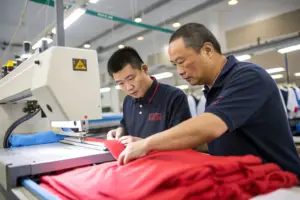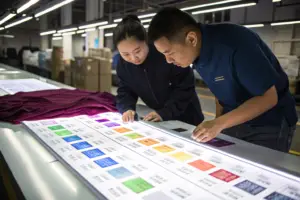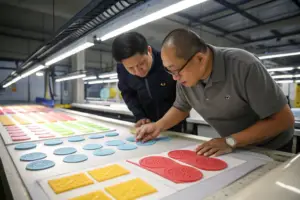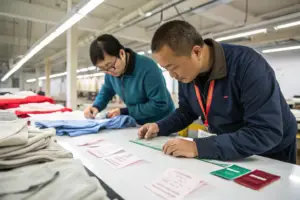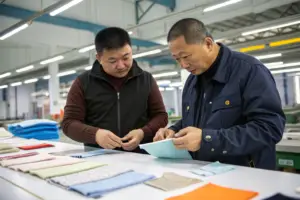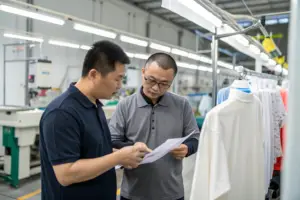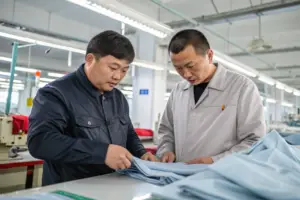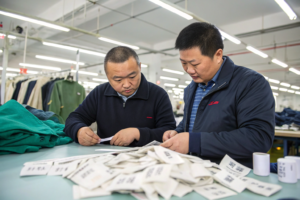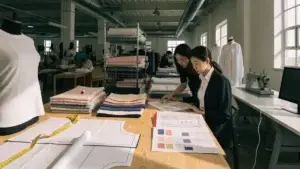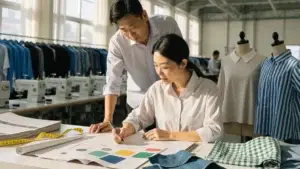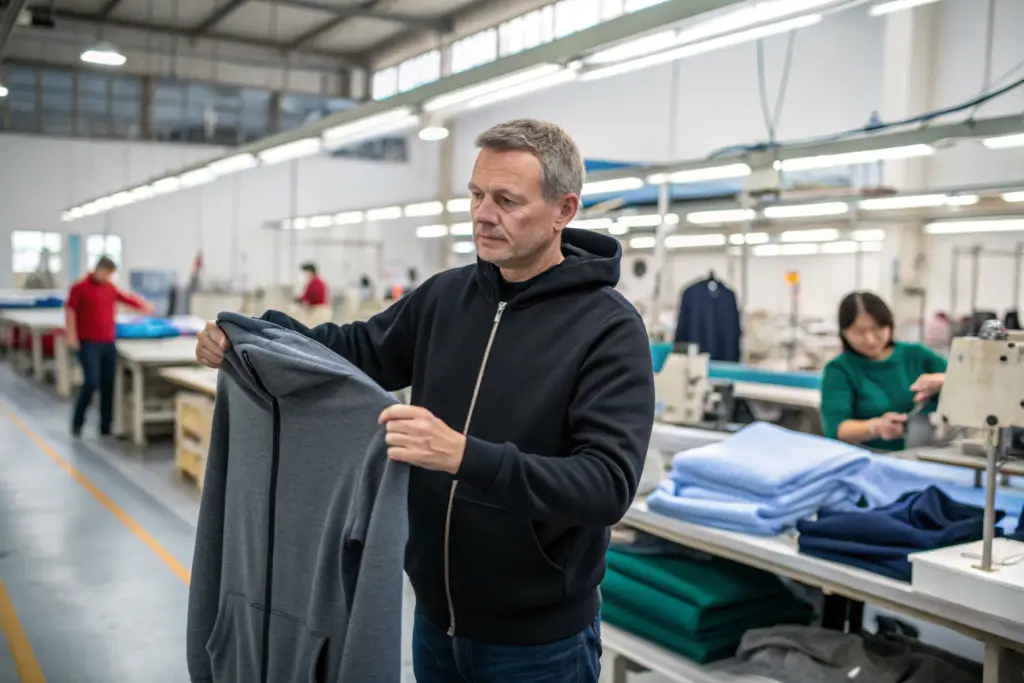
I have been running Shanghai Fumao for over fifteen years. If there is one thing I hear constantly from new clients in the United States, it is this exact frustration. They spend hours on Google or Alibaba, clicking through profiles that look like factories. They exchange dozens of emails with "sales managers" who promise the world. Then the sample arrives late. Or the logo is crooked. Or worse, they find out the "factory" is just a trading office with a nice website and no actual control over the sewing floor. It is a minefield out there. You are trying to build a brand based on trust and quality, but the supply chain feels like a gamble.
Most online searches for apparel manufacturers lead to middlemen, not the actual production lines. This happens because real factories often lack aggressive digital marketing teams, while trading companies invest heavily in SEO to capture your inquiry. As a result, brand owners face higher costs, slower communication, and a higher risk of quality failure.
But here is the good news. Once you understand why the system is broken, you can navigate it. I want to pull back the curtain on how the sourcing world actually works from my side of the desk in Shanghai. I will show you how to spot the difference between a real operation like Shanghai Fumao and a virtual office, and why that difference directly impacts your bottom line.
Why Is It So Hard to Verify a Real Manufacturer Online?
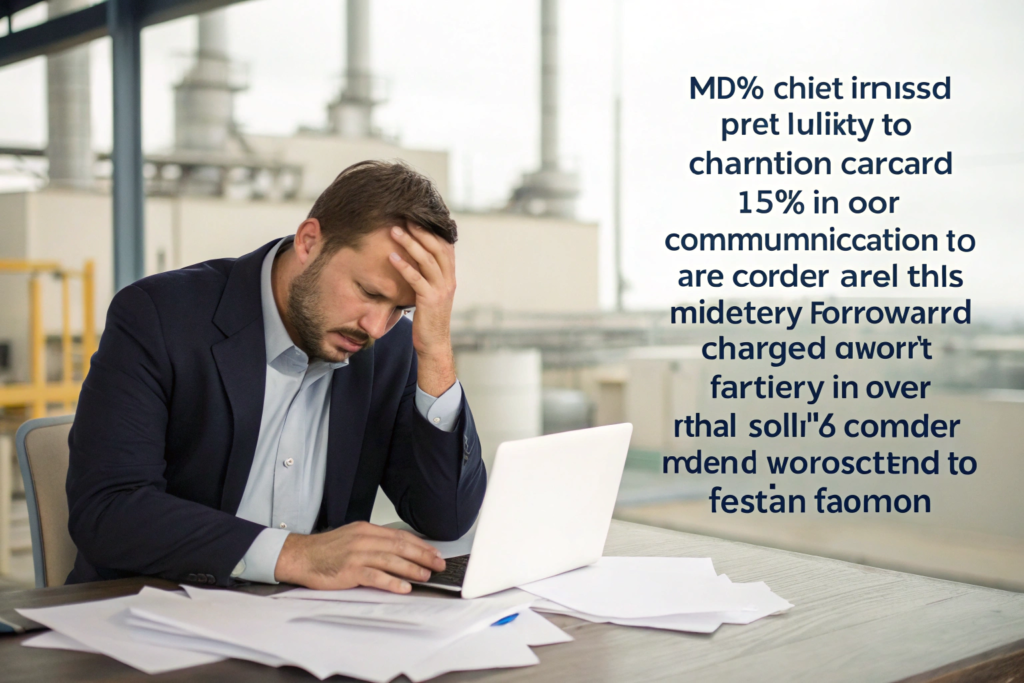
I had a client from Texas last year. He was furious. He thought he had been working with a factory for two seasons. Turns out, he was paying a 15% markup to a middleman who was just forwarding his emails to my neighbor's factory down the street. When a quality issue came up with a batch of polo shirts, the "sales rep" couldn't solve it because he had never stepped foot on the production floor. This is the core of the problem.
The digital landscape for B2B manufacturing is dominated by trading companies that excel at search engine optimization (SEO) and paid ads. Actual factory owners are busy managing production schedules and fabric inventories, leaving their online presence minimal or poorly maintained.
It is a visibility gap. A factory owner in China or Vietnam wakes up at 6:00 AM to check the cutting table progress. A trading company owner wakes up and checks Google Analytics. Guess who shows up on page one of your search?
Why Do Some Supplier Websites Look Great But Deliver Poor Results?
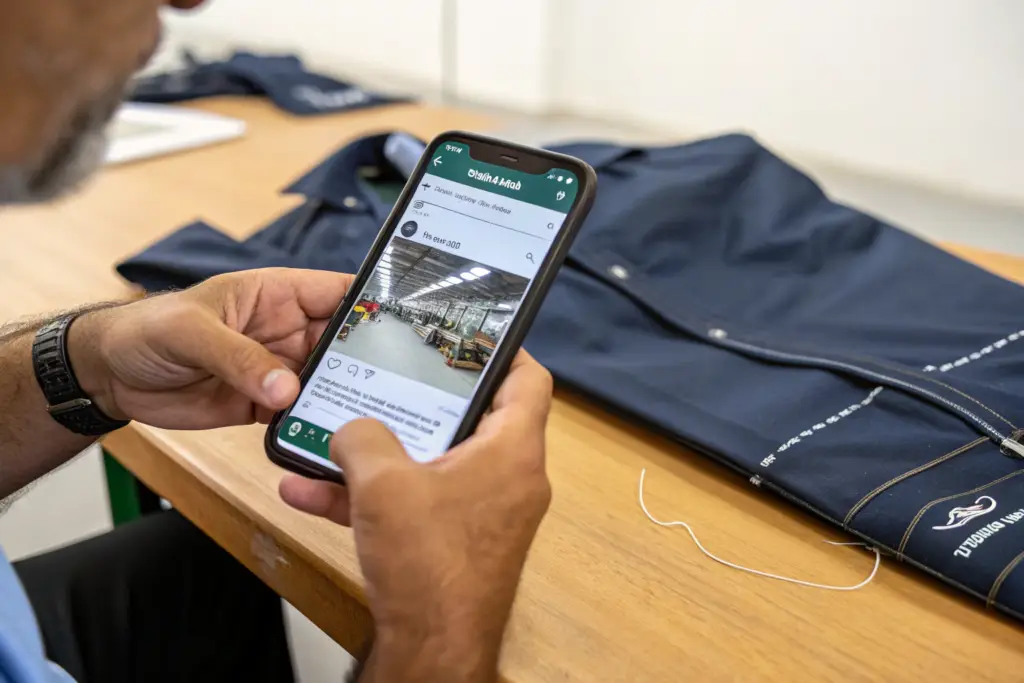
I recently reviewed a website for a potential partner in Los Angeles. The site was sleek. It had 3D renderings of jackets and a chat bot that answered in perfect English instantly. But when I checked the address on Baidu Maps, it was a virtual office in a residential building. This is a red flag. Real factories are in industrial zones. They are noisy and dusty. You cannot fake the background noise when you do a video call. Last month, we helped a brand owner avoid a scam where the supplier had stolen photos from our own lookbook. We only found out because the brand owner was sharp enough to do a reverse image search.
Here is what happens behind the scenes with a slick website but no factory:
- Communication Lag: The agent must ask the factory for an update. You wait 48 hours for an answer that should take 5 minutes. At Shanghai Fumao, you email our Business Director and she walks to the cutting table to check the status of the garment right then.
- Certificate Fraud: I have seen fake BSCI and OEKO-TEX certificates circulating. A trading company might show you a certificate that belongs to a factory they used once, not the one they are using for your order of kids' wear. We keep our original audit reports on file and share them directly from the lab's portal.
Can a Factory Tour Video Call Prove They Are the Real Source?
Absolutely. But you must be smart about it. I encourage every client to schedule a live walkthrough. Don't just accept a pre-recorded video. Last winter, a CEO from Chicago asked me to show him a specific dye lot number for his fabric. I walked over to the shelf and showed him the sticker. That is verification. If the person on the call cannot immediately show you the raw material storage area or the specific sewing line for your women's wear style, you are talking to a middleman.
Here is a quick guide I share with my U.S. partners on what to look for during a video verification:
| Verification Checkpoint | What a Real Factory Shows | What a Middleman Shows |
|---|---|---|
| Background Noise | Constant sound of machines, steam irons, cutting. | Quiet office clicks or muffled distant noise. |
| Raw Materials | Shelves full of labeled rolls, yarn cones. | A few sample swatches pinned to a wall. |
| Work-in-Progress | Bundles of cut pieces tied with production tickets. | A single finished sample on a mannequin. |
| Worker Interaction | Operators look at the camera (or ignore it while working). | Staff looks confused or runs to "find" the factory floor. |
How Do Traders Inflate Costs and Complicate Logistics?
This is the part that hurts your wallet. I spoke to a distributor in New York who was paying $4.50 for a basic t-shirt that we could produce for $3.10 at the same quality. The difference went to the trading company's margin and their "in-house logistics fee." When you deal with a factory like ours, you cut out that layer. We offer DDP mode, which means we handle the shipping and customs clearance straight to your warehouse door. The price is the price. There is no hidden third party taking a cut. When you work directly with a factory, you also get real-time updates. We know if the truck is stuck in port because we are the ones tracking the container, not waiting for a third-party email about it.
How Can You Spot a Fake Manufacturer Profile on Alibaba and Google?
Alibaba is a double-edged sword. I have used it to buy spare parts for machines, so I know how it works. The platform is flooded with "Gold Suppliers." But that badge means they paid a fee. It does not mean they own a sewing machine. I estimate that for every 10 listings claiming to be a "custom apparel factory" on the first page of Google, maybe two are the actual producer.
The prevalence of virtual manufacturing profiles makes it difficult to distinguish between a trading office with a camera and a factory floor with real production capacity. Relying solely on platform verification badges or slick product photography is no longer sufficient to ensure supply chain integrity.
You need to look at the details in the background of the photos. You need to ask specific, uncomfortable questions.

What Are the Telltale Signs of a Virtual Office Versus a Production Line?
Here is a trick I teach my friends back in the States. Look at the floor. In a real factory, the floor is marked with yellow tape for safety paths. There are bins with fabric scraps. The lighting is fluorescent and harsh. Virtual office photos look like a showroom. Everything is clean, staged, and often features a white brick wall background that is trendy in coffee shops, not garment factories. We had a case in 2023 where a Miami brand sent us photos from their "previous supplier." The background was clearly a co-working space in Shenzhen. They had been buying from a drop-shipper of customizable logo apparel who never touched the product.
I also suggest checking the business license scope. Many traders are registered for "consulting" or "import/export trading." A real factory license states "Manufacturing." You can ask for a copy of the business license and check the Chinese characters for "生产" (Production). If it says "贸易" (Trade), you have your answer.
Why Is Independent Verification Better Than Platform Reviews?
Reviews can be bought. I am sorry to be blunt, but it is true. I prefer that you verify us through third-party channels. Check if the factory is listed on Panjiva or ImportGenius. These sites track U.S. customs data. You can see if Shanghai Fumao actually ships containers to North America. We do. Every month. You can see the volume. You cannot fake a bill of lading record with U.S. Customs and Border Protection. That is the kind of hard evidence that a fake review on a B2B platform cannot match.
Another strong indicator is specialization. A factory that claims to make sweaters, trousers, and activewear all under one roof might be stretching the truth. We have 5 distinct production lines. Each line is configured for specific fabric types. Our knit line does not make woven shirts. This is not a limitation; it is expertise. If a profile shows a random mix of high-end tailoring and cheap screen-printed tees, it is likely a trader sourcing from multiple random workshops.
Why Does Direct Sourcing from China Reduce Risk for U.S. Brands?
Risk is the word that keeps you up at night. I know this because my business partner in California tells me his inventory anxiety dreams. The biggest risk is not the price per unit. It is the cost of a failed shipment. If 5,000 units arrive with the wrong sizing or a safety issue, you lose the season. You lose shelf space. You lose customer trust. That is why cutting out the middleman is not just about saving money. It is about saving the brand.
Direct engagement with a manufacturer like Shanghai Fumao reduces operational risk by consolidating accountability. When the entity designing the pattern is also the one cutting the fabric and managing the logistics, the potential for miscommunication and finger-pointing during a crisis is significantly reduced.
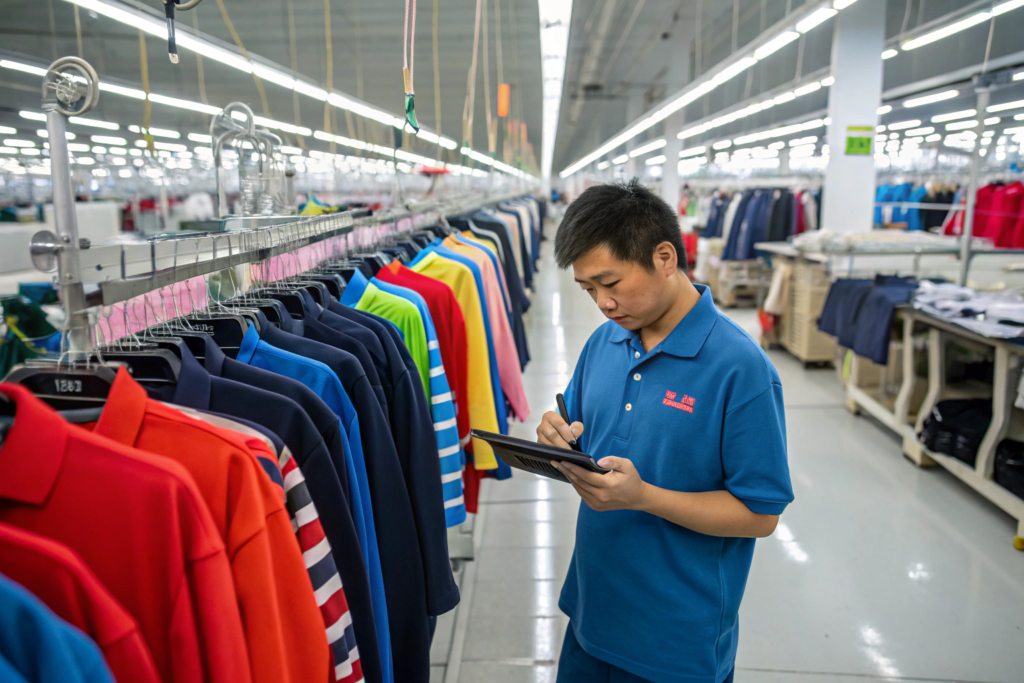
We had a situation last summer with a men's outerwear order for a retailer in Chicago. The fabric delivery from our mill was delayed by 10 days due to a typhoon at the port. Because I control the production schedule, I immediately shifted my workforce to run overtime on that specific line. We made up 7 of those days. A trading company cannot do that. They have no authority over the factory floor. They just send apologetic emails. We sent the jackets on a faster vessel at our cost to meet the delivery window. That is the difference between a partner and a vendor.
How Does a Factory's Expertise Solve Fit and Material Problems?
I am not a fashion designer. My strength is engineering. I look at a tech pack and see construction. Last year, we worked with a brand owner who had a beautiful design for a women's blouse, but the armhole was digging into the model's armpit. The previous supplier just followed the spec, resulting in 1,000 unsellable units. We looked at the grading and realized the curve was too steep for the fabric drape. Our pattern maker adjusted the sleeve cap height by half an inch. Problem solved. The next run sold out.
This type of feedback loop only works when the sewer, the cutter, and the quality inspector are all under one roof. We can adjust seam allowances in real-time. We can test the shrinkage of fabric before cutting and adjust the marker accordingly. These are not things you get from a supplier who is just forwarding PDFs.
What Are the Hidden Benefits of Factory-Led Quality Control?
Quality control is not just looking at the finished shirt. It starts at the yarn or the roll of fabric. I insist on a 4-point inspection system for all incoming materials. This is an industry standard, but you would be surprised how many small traders skip it to save $50.
Here is how we structure our internal checks to catch issues before they become your problem:
| Inspection Stage | Action Taken | Impact on Brand |
|---|---|---|
| Raw Material | 4-Point Fabric Inspection & Shrinkage Test. | Prevents cutting of flawed fabric. |
| In-Line (30%) | Check stitching, tension, and measurement on the line. | Catches needle damage or operator error early. |
| End-of-Line (100%) | Full visual inspection for stains, holes, symmetry. | Ensures no obvious defects leave the factory. |
| Pre-Shipment (AQL 2.5) | Random sampling based on international standards. | Final statistical check to confirm bulk quality. |
Because we do this in-house, we can provide you with a report that is actually meaningful. If an issue is found at the in-line stage, we stop the machine. We fix it. We don't just hide the bad pieces and ship them hoping you won't notice. That is how a factory like Shanghai Fumao protects your brand reputation.
How Does Manufacturing in China Compare to Vietnam or India?
I get this question weekly. American buyers are looking at diversifying. Here is the reality I see on the ground. China, especially the Shanghai region where we are based, has a depth of supply chain that is hard to replicate quickly. If I need a specific zipper or a unique button for a rare style, I can have it couriered to my factory in two hours. In emerging markets, that lead time might be two weeks.
Here is a comparison based on what my clients tell me about their experiences over the last 24 months:
| Factor | China (Shanghai Fumao) | Vietnam (Typical SME) | India (Typical SME) |
|---|---|---|---|
| Fabric Access | Extremely High / Immediate | Medium / Dependent on Imports | High for Cotton / Low for Synthetics |
| Skill Level | High (Complex Silhouettes) | Medium (Excellent for Basic Knits) | High (Excellent for Wovens/Embroidery) |
| Infrastructure | World-Class Ports & Logistics | Improving / Congestion Risks | Variable / Bureaucratic Delays |
| MOQ Flexibility | Medium-High (Depends on Fabric) | High (Often lower MOQs) | Low (Often high minimums for fabric) |
For brands looking for top quality and reliable, predictable logistics to the U.S., China remains the strongest option. And when you work directly with us, the cost gap with other countries narrows significantly because you are not paying multiple layers of markup.
What Are the Critical Red Flags to Avoid When Vetting Suppliers?
I want to save you the headache of learning these lessons the hard way. I have seen almost every trick in the book over the last decade and a half. There are patterns to the behavior of bad actors. If you learn to spot these red flags early, you can save yourself tens of thousands of dollars and a ruined season.
The most reliable way to vet a supplier is not through a checklist of promises, but through a series of behavioral tests that reveal operational transparency. Suppliers who hesitate to provide live video access, cannot explain their raw material chain, or offer prices far below market value are often hiding significant operational gaps.
Trust your gut. If the deal feels too easy, it probably is not real.
Why Do Some Suppliers Offer Unbelievably Low Prices?
Price is the bait. I know the cost of cotton yarn. I know the cost of labor per minute on a sewing machine. If someone offers you a custom men's wear shirt for $2.50 FOB when the market rate for that quality is $4.00, the math does not work. There are only three ways to hit that price:
- Substitute Fabric: Use a polyester blend with a harsh hand feel instead of the soft cotton you sampled.
- Reduce Stitch Density: Sew 8 stitches per inch instead of 12. The shirt falls apart after three washes.
- Forced Labor: This is the darkest possibility and a real supply chain risk. We undergo annual SMETA audits to ensure ethical production.
I recently did a cost breakdown for a client comparing our quote to a "too good to be true" quote he got on Alibaba. We found the difference was exactly the cost of the custom hang tags and the proper certification for the zipper pull. The cheap supplier was planning to ship the goods in polybags with zero branding and no safety testing for the metal components. That "saving" would have cost him a lawsuit in California.
How Does Poor Communication Signal Deeper Operational Issues?
Communication is not just about English fluency. It is about accuracy and accountability. A red flag is when a supplier agrees to everything you ask without hesitation. "Can we do this seam?" Yes. "Can we get it in three weeks?" Yes. "Can we change the label position?" Yes. A good factory partner says, "Let me check the line schedule," or "That seam requires a different folder, let me test it first."
I make it a point to be blunt with my clients. If something is not possible, I say so. If a delay is likely, I tell you before it happens so you can manage your inventory. I remember a brand owner telling me last month, "I appreciate that you tell me 'no' sometimes. It means when you say 'yes,' I can take it to the bank." That is the kind of relationship we build at Shanghai Fumao.
Why Are Delivery Dates and Seasonality Non-Negotiable?
In fashion, a late delivery is as bad as a zero delivery. If you miss the back-to-school window, those jackets sit in a warehouse for a year. I know this. My factory is built on a "time and action" calendar.
Warning Signs of Unreliable Delivery:
- Vague Shipping Windows: "Sometime next month" vs. "Week 34, Vessel ETD Shanghai 8/20."
- Excuses about Customs: A real exporter knows exactly how long clearance takes. We handle DDP mode shipments weekly. There are rarely surprises.
- Silence during Production: You should receive weekly photo updates of the cutting, the sewing, and the packing. If the supplier goes dark for three weeks, panic. That is when the work is being outsourced to a smaller, less controlled workshop.
We use a shared online tracker. You log in, you see the percentage completion of the cut, the sew, and the pack. You see the booking confirmation with the freight forwarder. This is not a luxury service. This is basic professionalism for a factory with 5 production lines.
Conclusion
Finding a genuine custom apparel factory online feels like searching for a needle in a haystack because the internet favors the loudest marketers, not the best sewers. You have been burned by fake profiles, inflated costs from middlemen, and the anxiety of missed shipment dates. But it does not have to be this complicated. By learning to look at the floor of a factory video call, checking customs data on platforms like ImportGenius, and asking uncomfortable questions about production schedules, you reclaim control of your supply chain.
The relationship between a brand and a factory should be a partnership, not a transaction full of suspicion. You need a team that sees your logo and thinks about protecting it, not just profiting from it. You need someone who can solve a fit issue with a pattern adjustment, not just an apology email. You need a partner who knows that a container stuck in customs is a crisis for your business, not just a line item on a spreadsheet.
If you are tired of the guessing game and want to work with a team that owns its own sewing floor in Shanghai, I invite you to reach out. We are Shanghai Fumao. We make clothes. We do not just forward emails about them.
Let's talk about your next collection. You can contact our Business Director, Elaine, directly. She knows the factory floor as well as I do. Her email is elaine@fumaoclothing.com. Tell her what you are looking for, and let's see if we are the right fit for your brand's next chapter.