I have a confession to make. When I started Shanghai Fumao many years ago, I thought making clothes was about following a spec sheet. You give me measurements. I cut fabric. I sew. Done. But I learned a hard lesson early on. I made a batch of women's wear blouses for a small boutique in Austin, Texas. The measurements were perfect. The stitching was clean. The fabric was high-end cotton. And they sat on the shelf. Why? The client said, "It feels... stiff. It doesn't have that flowy, West Coast ease." That was the day I realized there is a massive gap between "making clothes" and "understanding American aesthetics."
Finding an overseas factory that grasps American fashion requires more than just technical skill. It demands a partner who understands the cultural nuances of fit, the specific drape expectations for casual wear, and the speed of the U.S. trend cycle. A factory with deep experience in the U.S. market will prioritize comfort, specific body proportion grading, and the subtle design details that distinguish a premium American brand from a generic one.
You are not just looking for a sewer. You are looking for a partner who can see what you see. Someone who knows that an American size Medium fits differently than a European 40. Someone who understands that "soft handfeel" is not a suggestion; it is a requirement for the U.S. market. Let me walk you through how to find that partner.
What Defines "American Fashion Aesthetic" in Garment Manufacturing?
I had a long conversation with a client from Denver last fall. He said, "In Europe, they dress to go out. In America, we dress to be comfortable while we're out." That simple line unlocked a lot for me. It changed how I look at fabric sourcing and pattern cutting. American fashion, even at the higher end, leans heavily on ease of movement and tactile comfort.
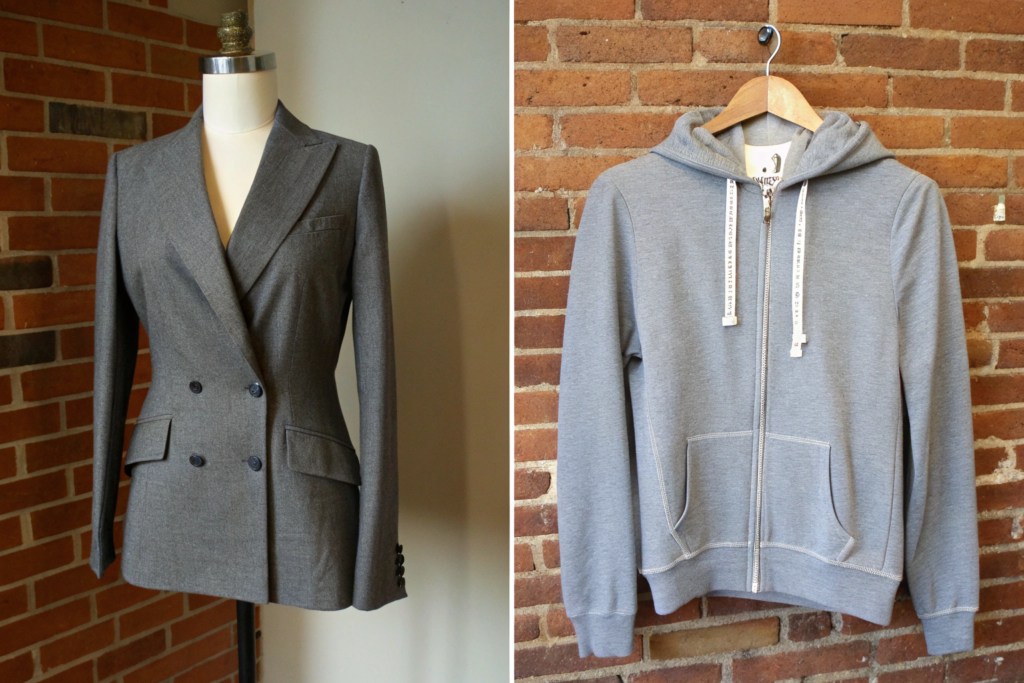
The American fashion aesthetic is characterized by a preference for casual comfort, athletic-inspired silhouettes, and a "lived-in" look even in new garments. From a manufacturing perspective, this translates to specific fabric finishing techniques (enzymes washes, silicone softeners), a looser fit tolerance in key stress points, and an emphasis on knitwear that mimics the softness of vintage favorites.
If your factory is only used to making stiff, structured formalwear for the Asian or European market, they will struggle to nail that "effortless" American vibe. They might over-engineer the shoulder pad or use a fusible interfacing that is too stiff for a casual blazer.
How Do Fit and Sizing Expectations Differ for the U.S. Market?
This is the number one technical issue I correct when a new American brand comes to me with a failed sample from another factory. They show me a tech pack based on standard ASTM measurements, but the sample feels wrong. It pulls across the back or the armhole is too high.
Here is the reality of the U.S. market I have observed over thousands of samples:
- Sleeve Length and Shoulder Slope: Americans, generally, have a slightly different shoulder slope than standard Asian dress forms. We grade our patterns to allow for more range of motion in the upper back. I always ask for a fit model's measurements, not just a size chart.
- Vanity Sizing: This is a cultural beast. A U.S. size 8 is not the same as a UK 12 or an EU 40. If a factory just converts numbers on a spreadsheet without understanding the psychology of a woman wanting to feel like she fits in a smaller number, the brand's return rate skyrockets.
- Tolerance for Ease: American activewear and casual men's wear demand more ease in the waist and thigh. I remember a project for a brand in Oregon. They wanted a "tech pant" that looked tailored but felt like sweatpants. We had to adjust the crotch curve extension by 3/4 inch and use a 4-way stretch fabric with high recovery. A standard factory would have just sewn a stiff woven pant and called it a day.
We use a grading rule table that we have refined over a decade. It specifically accounts for the "American Fit." This is not a secret formula. It is just data collected from reducing returns for our clients. When you talk to a factory, ask them: How do you adjust your base block for an American fit model versus an Asian fit model? If they look confused, keep looking.
Why Does Fabric Handfeel Matter More to American Consumers?
American shoppers touch the garment. It is the first test in the fitting room or when the box arrives from the e-commerce site. If it feels like sandpaper, it goes back. I learned this when we lost a re-order for a girls' blouse line. The first run sold out because the print was cute. But the reviews said "fabric is scratchy." The second run didn't sell.
Here is a look at the finishing processes we use to achieve that specific American "soft hand":
| Finishing Technique | Effect on Fabric | American Market Application |
|---|---|---|
| Garment Dye | Breaks down fiber surface for softness and subtle color variation. | Premium t-shirts, casual woven shirts. |
| Enzyme Wash | Uses natural enzymes to eat away fuzz and pills, leaving a smooth, cool hand. | Vintage-look trousers and chinos. |
| Silicone Softener | Coats the yarn with a slick, slick finish. | Activewear and performance fleece. |
| Peach Finish | Mechanically brushing the surface to raise fibers. | Flannel shirts, cozy outerwear linings. |
I tell my sourcing team: "Buy the cheapest cotton, but spend the money on the wash." A factory that understands American aesthetics has a relationship with a good laundry. They know that a 20-minute enzyme wash with pumice stones is the difference between a $12 wholesale hoodie and a $22 wholesale hoodie that feels like a cloud.
How Can You Vet a Factory's Design Sensibility and Trend Awareness?
You cannot just ask, "Do you understand American style?" They will say yes. You have to test their eye. I believe that a factory with good aesthetic sense is a factory that is curious. They look at what is selling in SoHo and on Melrose Avenue, not just what is cheap to make.
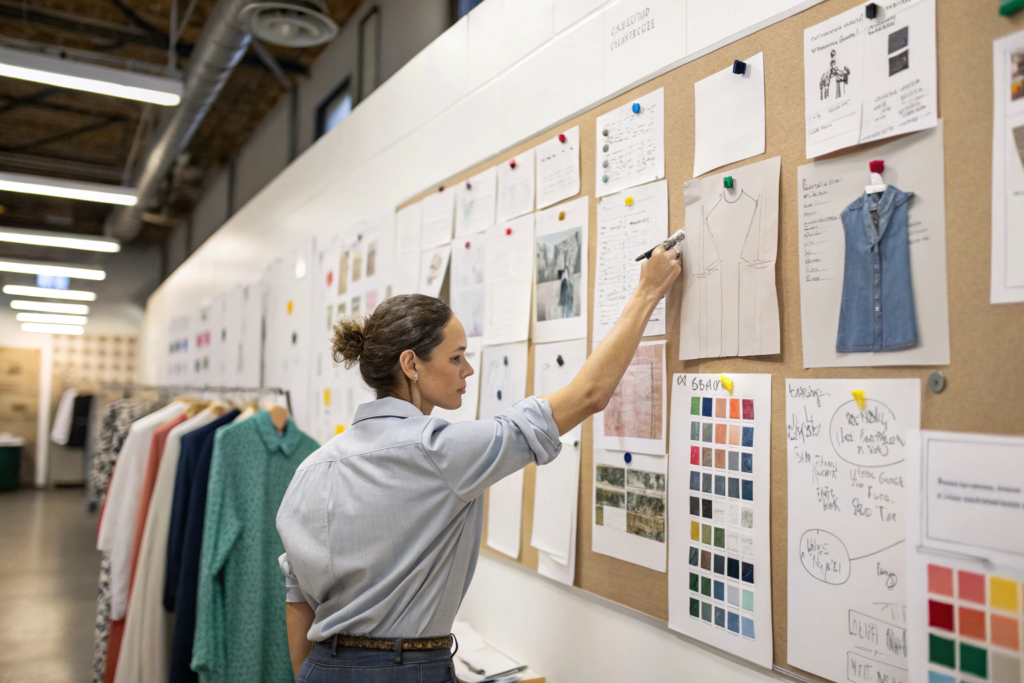
Vetting a factory's design sensibility involves assessing their ability to interpret visual references rather than just follow blind measurements. A strong partner will have an internal library of trims and fabrics that align with current U.S. market trends and will offer proactive suggestions to improve the "cool factor" or "wearability" of a design without being asked.
I have a folder on my desktop of "Rejected Samples." They are perfectly sewn garments that look like they belong in a 1990s department store catalog. They are technically flawless and aesthetically dead. You want to avoid the factory that makes those.
Can a Factory Offer Constructive Feedback on Your Tech Pack?
This is my favorite test. Send a tech pack with a small, intentional "mistake" or an overly complicated detail that would drive up cost without adding value. A commodity factory will just quote the price exactly as drawn. They do not care if the garment sells or not. A partner factory will push back.
Just last month, a client from San Francisco sent a design for a women's wear skirt with a very narrow, double-fold hem on a thick crepe fabric. It looked clean on paper, but in reality, that hem would have been wavy and thick. My sample room manager emailed her back: "This hem spec will not lay flat with this fabric weight. Suggestion: Baby hem (1/4 inch) or faced hem. See attached photo of similar issue from past trial."
That is what you are paying for. You are paying for the 10,000 hours of sewing experience that can look at a line drawing and predict a physical problem. At Shanghai Fumao, we keep a "Lessons Learned" binder. It is full of physical swatches of failed techniques. We show these to clients to explain why a certain seam finish works better for the U.S. market's wash and wear cycle.
How Important Is a Factory's Trim and Accessory Library?
Details make the brand. But details are also where offshore manufacturing usually falls apart. A Chinese factory's default button or zipper might be perfectly functional but visually off-brand for an American label. It might be too shiny. Or the teeth are too chunky. Or the logo print is just slightly off-register.
I invested heavily in building a trim library that mirrors what you see in American apparel stores. We have matte black YKK zippers instead of only shiny silver ones. We have a range of customizable logo patches in different textures.
Here is a quick checklist of aesthetic details we review with clients:
- Zipper Tape Color: Does it match the garment wash? (American brands often prefer tonal or matte finishes).
- Button Thickness: Natural Corozo buttons vs. cheap Polyester resin. The weight feels different in the hand.
- Drawcord Tips: Metal aglets vs. plastic dipped. The sound and feel matter for outerwear.
If a factory's default answer is "We only have this one type," they are not aligned with the American market's desire for differentiation. A good factory will have a book of trim options from various suppliers and know how long it takes to import a specific Italian button if the design truly needs it.
What Communication Strategies Bridge the Aesthetic Gap with Overseas Factories?
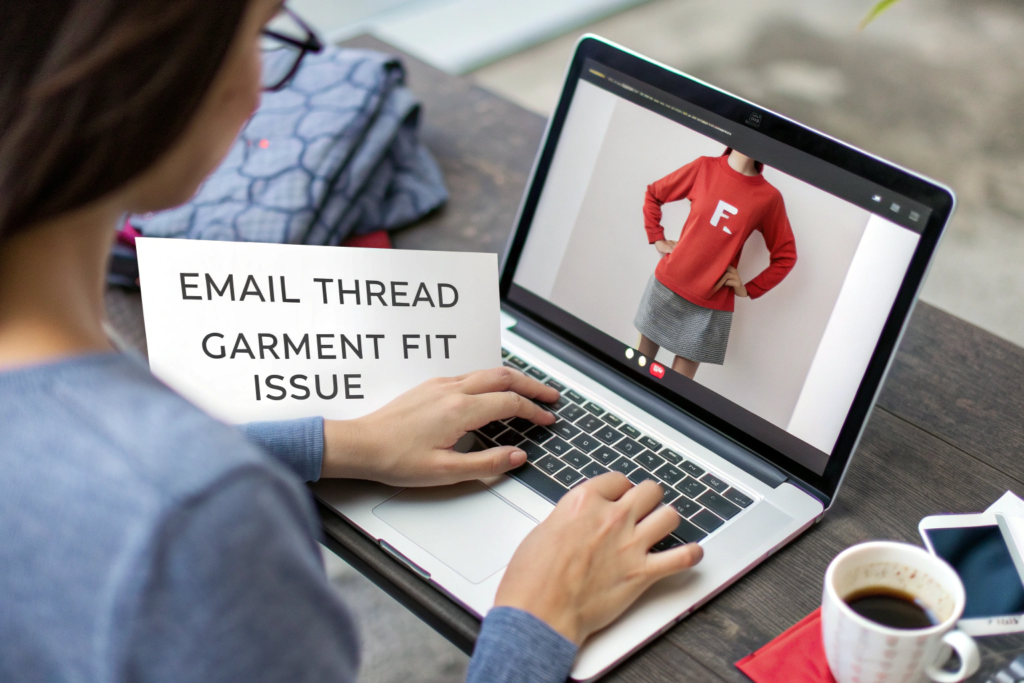
Language is a barrier. I speak English, but my sewing team does not. If you send me a three-paragraph email describing how you want the shirt to "feel like a lazy Sunday morning with a hint of nostalgia," I can translate that. But I cannot put that on a production ticket. You must learn to speak in a way that translates across cultures. You need to speak in images and numbers.
Bridging the aesthetic gap requires a shift from abstract, emotional language to concrete, visual references and measurable benchmarks. Successful communication with overseas factories relies on physical reference samples, annotated photos with circles and arrows, and "Do's and Don'ts" comparison boards rather than lengthy descriptive paragraphs.
The most successful brands I work with send me "Do Not" photos as often as "Do" photos. They say, "Make the collar like THIS picture (soft roll), NOT like THIS picture (stiff band)." That is a language every sewer in the world understands.
Why Are Physical Reference Samples Better Than Digital Specs?
Digital colors lie. Your monitor is calibrated differently than mine. The lighting in your New York office is not the LED lighting in my Shanghai factory. I cannot stress this enough: Send a physical garment.
I remember a project for a kids' wear brand in Florida. They wanted a specific shade of "Sea Foam Green." The Pantone chip looked one way. The digital file looked another. We went back and forth for two weeks. Finally, they overnighted a competitor's t-shirt that had the exact color they wanted. I took that shirt to the dye house and said, "Match this." We hit the color on the first lab dip. It cost $40 to ship the shirt. It saved $400 in lab dip fees and two weeks of calendar time.
At Shanghai Fumao, we encourage clients to send a "Gold Seal Sample." This is the approved garment that we can touch and feel. We can feel the thickness of the screen print. We can feel the tension of the elastic. We can hear the sound of the zipper. You cannot email that.
How Do You Explain "Vibe" or "Drape" to a Pattern Maker?
This is the art of translation. You want the dress to have "swing." That is a vibe word. I need to turn that into a measurement and a fabric choice.
| Translation Table for Designers: | American Vibe Word | Technical Manufacturing Translation |
|---|---|---|
| "Swingy" / "Flowy" | Increase bottom sweep circumference by 4 inches. Use lightweight rayon or crepe de chine fabric. | |
| "Slouchy" / "Oversized" | Drop shoulder seam by 1.5 inches. Widen bicep and sleeve opening. | |
| "Crisp" / "Structured" | Use a heavier weight cotton poplin. Add a fusible interfacing to collar and cuffs. | |
| "Snatched" / "Curve-Hugging" | Use high-recovery Spandex blend. Reduce ease at waist to negative 1 inch. |
I had a client who kept saying a jacket looked "too boxy." I asked her to send me a photo of a jacket that wasn't boxy. She sent a photo of a Levi's Trucker Jacket. I measured the waist suppression on that vintage jacket and applied that curve to our pattern. Problem solved. She didn't need to know how to grade a pattern. She just needed to show me the silhouette.
How Do You Ensure Consistent Quality That Matches the American Standard?
Understanding the aesthetic is one thing. Repeating it 5,000 times without drifting is another. The American market has a low tolerance for variation. If the first shipment is soft and drapey, and the second shipment is stiff and crunchy, the brand looks inconsistent. Consumers think the quality dropped.
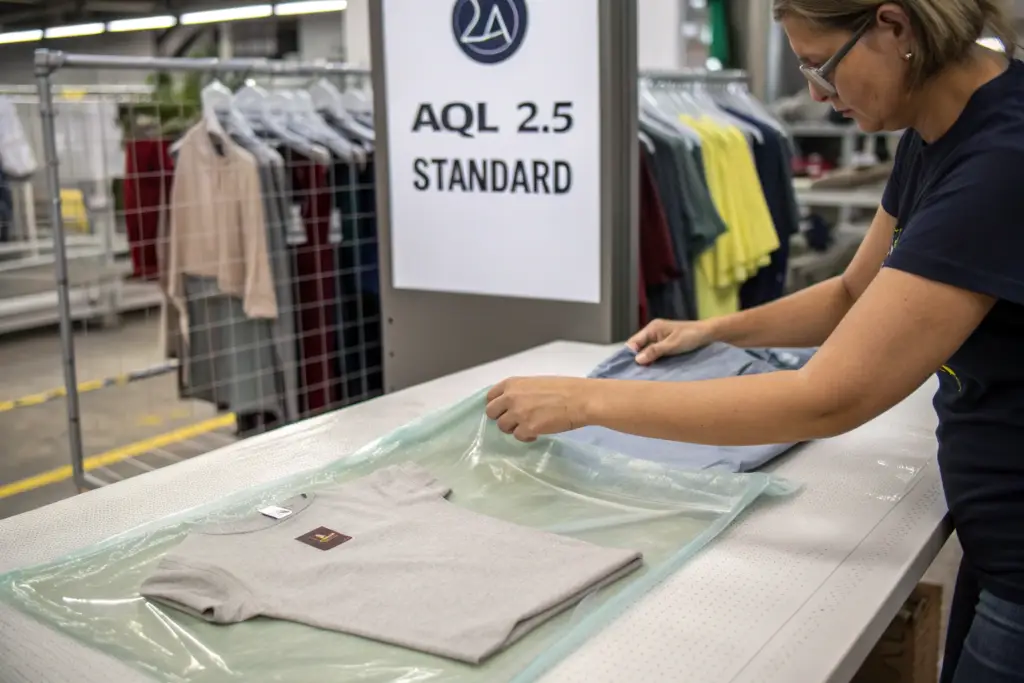
Consistent quality requires a documented standard that goes beyond seam strength. It requires "Handfeel Standards" and "Aesthetic Approval" sign-offs that are just as binding as the measurement chart. Factories must implement inline checks specifically for visual and tactile attributes to prevent aesthetic drift during bulk production.
I learned this the hard way with a fleece hoodie program. The first 1,000 units were brushed perfectly soft. The second 1,000 units were noticeably less soft because the laundry changed their brushing machine settings. The client noticed. The end consumer noticed. Now, we keep a "Handfeel Standard Swatch" in the QC office.
Why Is Inline Inspection Critical for Aesthetic Attributes?
You cannot fix a bad garment wash after the shirt is sewn. You have to catch the fabric before it hits the cutting table. And you have to catch the wash effect while it is happening.
Here is how we maintain aesthetic consistency across large production runs at Shanghai Fumao:
| Production Phase | Aesthetic Checkpoint | Action if Failed |
|---|---|---|
| Fabric Mill | Handfeel vs. Approved Standard Swatch. Shade band continuity. | Reject roll before cutting. |
| Cutting | Print placement alignment. Pattern matching at pockets. | Stop cutting; adjust marker. |
| Sewing Line | Puckering on seams. Symmetry of collar points. | Retrain operator; adjust machine tension. |
| Finishing/Wash | Softness consistency. Color fastness after wash. | Adjust wash cycle time or chemical mix. |
| Final Audit | Overall "look and feel" vs. Gold Seal Sample. | 100% re-inspection or re-wash. |
This takes more labor hours. It means my QC staff is not just looking for holes and stains. They are looking for "Does this look like the picture on the website?" They are trained to understand that an American customer will return a shirt if the stripes don't match at the side seam, even if the stitching is perfect.
How Do You Handle Garment Dye and Wash Variation?
This is the biggest aesthetic variable in modern American fashion. Everyone wants that perfect faded vintage look. But that look is achieved through controlled imperfection. It is a nightmare for consistent manufacturing.
I sat down with the owner of a laundry in Hangzhou that we partner with. We developed a specific "Recipe Book" for our clients.
- Recipe #7 (The Malibu Fade) : 45 min enzyme wash, 10 min stone tumble, cold rinse. Acceptable variation: +/- 5% color depth.
- Recipe #12 (The East Coast Vintage) : Pigment dye with heavy enzyme wash. Acceptable variation: Slight mottling expected.
I explain this to U.S. buyers upfront. "You will get variation. That is the nature of this rare style. But we will keep it within a commercial tolerance." The key is setting that expectation. A factory that promises perfectly identical garment dye units is lying. A good factory shows you a "Shade Band" of what is acceptable (Light, Standard, Dark) and gets your approval on the range.
Conclusion
Finding a factory that understands American fashion aesthetics is about finding a partner with a cultural translator built-in. It is not just about the cost per minute of sewing. It is about the softness of the wash, the ease in the sleeve, and the awareness that a woman in Chicago wants her blouse to feel as good as it looks on Zoom.
You need to look for a factory that pushes back on bad design for the U.S. market. You need a factory that has a library of matte black trims and a relationship with a laundry that knows how to make cotton feel like cashmere. You need a factory that asks for your "Do Not" photos and your reference samples.
That is the kind of factory we strive to be at Shanghai Fumao. We are based in Shanghai, but our eyes are on the American street. We watch what you wear. We read the reviews you leave on retail sites. We know that a return is more expensive than a re-cut.
If you are tired of explaining "effortless cool" to a factory that only understands "stiff and formal," let's have a conversation. Our Business Director, Elaine, speaks the language of design as well as the language of production. Reach out to her at elaine@fumaoclothing.com. Send her a picture of what you love. Send her a picture of what you hate. Let's build something that feels right for the American closet.