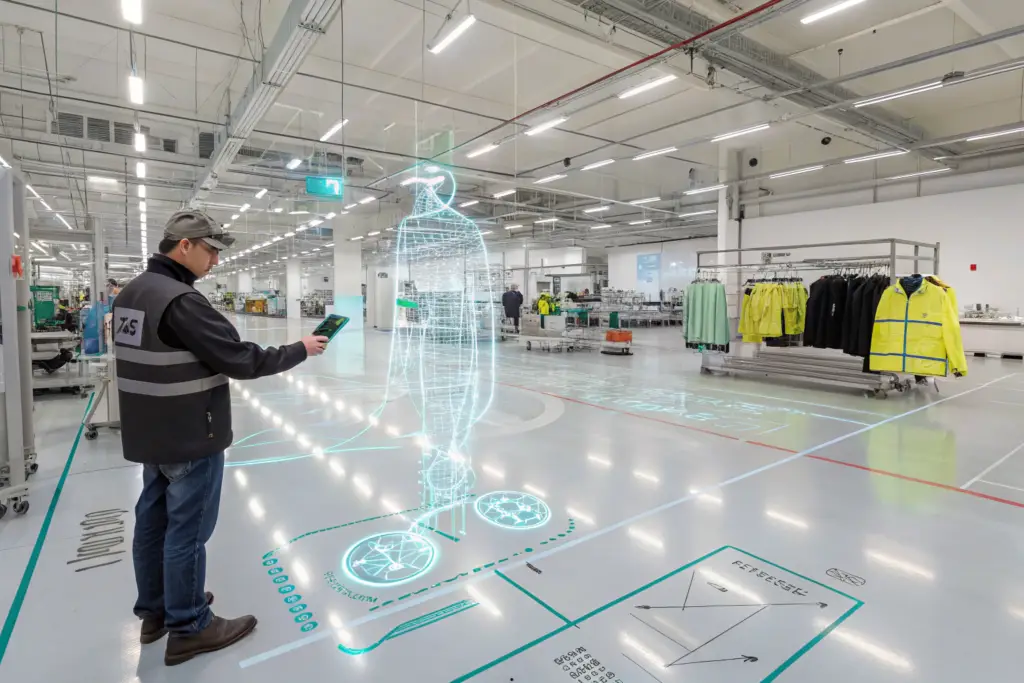
You are planning your supply chain for the coming years. You have seen the power of the CMT (Cut, Make, Trim) model—the control, the transparency, the ability to use unique materials. But you are also a forward-thinker. You wonder, "Is CMT a model of the past, or is it the future? How will technology and global shifts change the way I work with a CMT partner in 2026 and beyond?" A tech-savvy brand owner told me, "I don't want to just optimize for today. I want a manufacturing partner who is building the supply chain of tomorrow. I want to know where CMT is headed."
The future of CMT manufacturing in 2026 and beyond is one of intelligent, transparent, and hyper-efficient partnership. It is not about replacing the core CMT model, but supercharging it with technology. The key trends are: 1) AI-Powered Transparency & Quality Control (real-time defect detection and predictive analytics), 2) Digital Sampling & 3D Prototyping (slashing development waste and lead times), and 3) A Deepening Focus on Sustainable & Ethical Integration (using CMT as the preferred model for verified, circular supply chains).
At Shanghai Fumao, we are not waiting for the future. We are actively building it into our CMT services today. We see these technological and strategic shifts as powerful tools to make our B2B partnerships even stronger, more transparent, and more efficient. Let me share our vision for the future of CMT and how we are already preparing to give our partners a competitive edge in 2026.
How Will AI and Digital Tools Enhance Transparency and Quality in CMT?
One of the inherent challenges of CMT is the brand's reliance on the factory's internal quality control systems. In the future, this reliance will be augmented by powerful, transparent, AI-driven tools. The "black box" of the factory floor will become increasingly transparent, giving brands real-time, verifiable data on the quality and status of their CMT orders. This technology will build an unprecedented level of trust and accountability.
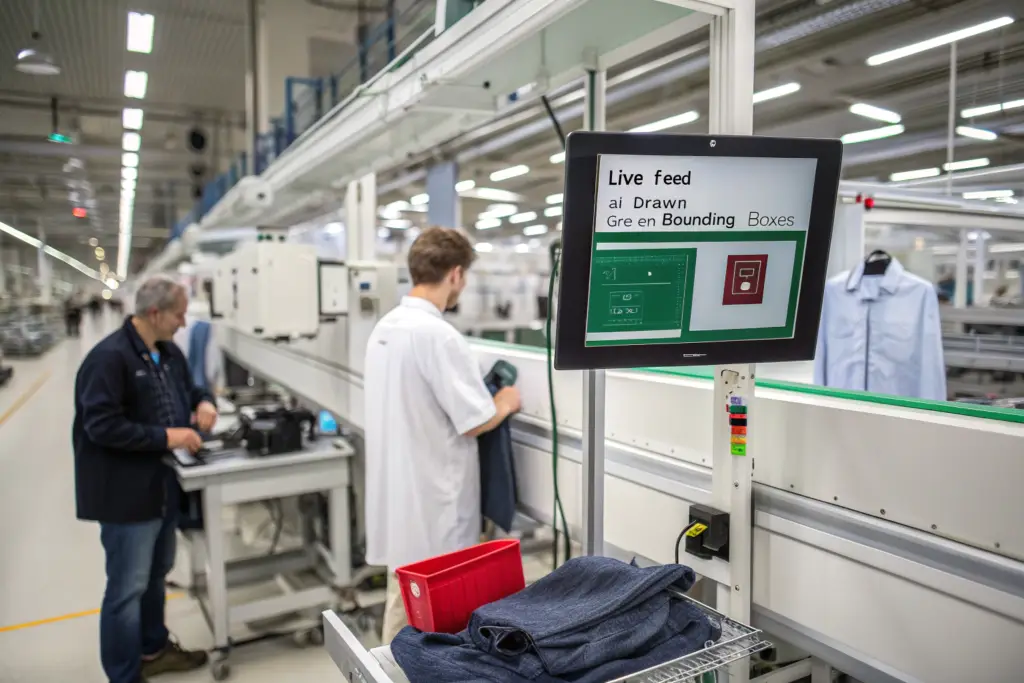
AI and digital tools will revolutionize CMT transparency and quality. Computer vision systems, powered by AI, will perform real-time defect detection on the sewing line, catching errors with superhuman consistency and providing a verifiable data log. Predictive analytics will forecast potential supply chain delays. This technology will provide CMT brands with a level of remote visibility and quality assurance that was previously impossible, turning the factory floor into a transparent, data-rich environment.
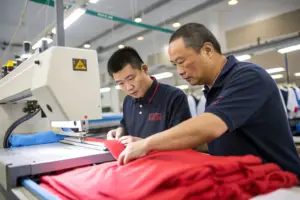
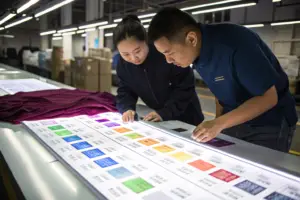
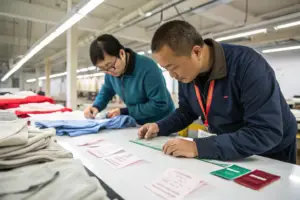
We are already piloting AI-powered computer vision on our finishing tables. The system scans each garment and flags potential defects for our human QC team, who then make the final judgment. This makes our inspectors faster and more accurate. Looking ahead, this technology will allow us to provide our CMT clients with a real-time "Quality Score" and an image-based defect log for their production run. A brand owner will be able to log into a portal and see exactly how their order is performing against quality metrics. This is the future of transparent, data-driven CMT quality assurance .
How Will AI-Powered Defect Detection Change the CMT Quality Game?
AI vision systems do not get tired. They do not get distracted. They inspect every square inch of every garment with unwavering consistency. This means a higher, more uniform level of quality. For a CMT brand, this translates directly to fewer returns, a stronger brand reputation, and verifiable data to share with their own customers or retail partners. It is a powerful new tool for building trust.
What Does a "Predictive Logistics" Dashboard Mean for CMT Planning?
Imagine a dashboard that analyzes millions of data points—weather, port congestion, vessel locations—and alerts you weeks in advance that your specific fabric shipment has an 80% probability of being delayed. This is predictive logistics. For a CMT brand managing their own material pipeline, this is a game-changer. It allows for proactive replanning and communication, turning a potential crisis into a managed adjustment. This is the future of CMT supply chain management .
What Role Will Digital Sampling and 3D Prototyping Play in CMT?
The physical sampling process is one of the most time-consuming and wasteful phases of apparel development, and it is especially acute in CMT, where the fabric is often expensive or limited. The future of CMT development is digital. 3D prototyping will move the iterative process of perfecting fit and design from the physical world to the virtual one, saving immense amounts of time, money, and precious materials.
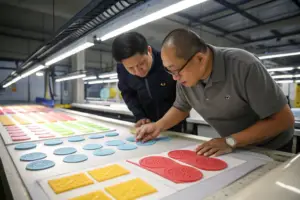
Digital sampling and 3D prototyping will become the standard for CMT development. Brands will be able to upload their unique fabric's "digital twin" (a data file capturing its exact weight, drape, and stretch) into 3D software. They can then perfect the fit and design on a virtual avatar, sharing the 3D model with the factory for instant feedback. This will slash the number of physical samples needed, compressing development timelines from months to weeks and virtually eliminating material waste in the sampling phase.
A brand we work with, who uses rare deadstock fabrics, is a perfect candidate for this technology. Sending her precious, limited yardage back and forth for multiple fit samples is a huge risk. With 3D prototyping, she could perfect the fit of a new blazer design digitally, using a digital twin of her specific wool. She would only need to cut one final, physical PP Sample. This saves her weeks of time and protects her valuable, irreplaceable fabric. This is not a distant dream; it is the future of efficient, sustainable CMT product development .
How Does a "Digital Twin" of a Fabric Work?
A digital twin is created by scanning a physical fabric swatch with specialized equipment. This scan captures not just the look, but the precise physical properties: weight, thickness, stretch, drape, and how it reflects light. This data file is then uploaded into 3D design software, allowing the designer to see a 95%+ accurate simulation of how that specific fabric will look and behave in a finished garment.
How Will This Technology Democratize CMT for Smaller Brands?
This is a crucial point. 3D prototyping drastically lowers the cost and time barrier for sampling. A small brand can perfect their design digitally before committing to expensive physical samples. This makes the CMT model, with its requirement for multiple fit rounds, far more accessible and less financially risky for emerging designers. It is a great equalizer. This is part of our commitment to supporting emerging brands .
Why Will CMT Be the Preferred Model for Sustainable and Circular Fashion?
The fashion industry is under immense pressure to move towards a circular and sustainable model. This requires radical transparency and a verifiable chain of custody for materials. The traditional, opaque Full-Package model is ill-equipped for this new reality. The CMT model, with its inherent unbundling and direct brand-supplier relationships, is perfectly positioned to be the manufacturing backbone of the sustainable fashion future.
CMT will be the preferred model for sustainable and circular fashion because it provides the essential ingredient: an unbroken, brand-owned chain of custody. The brand directly sources its certified (GOTS, GRS) or innovative (deadstock, bio-based) materials and holds the Transaction Certificates (TCs). A transparent CMT factory provides the final link, allowing the brand to create a complete, verifiable Digital Product Passport (DPP). This level of transparency is impossible in an opaque, Full-Package supply chain.
A pioneering sustainable brand we work with is already using our CMT services to build the foundation for their Digital Product Passport (DPP) . They source their GOTS cotton directly from the farm collective and their recycled buttons from a verified supplier. We provide the final manufacturing data. Together, we can create a complete, transparent, and verifiable story for every single garment. When the EU's DPP regulations come into full effect, this brand will be ready. Their CMT-based supply chain is not just a manufacturing choice; it is a strategic, future-proofing asset. This is the power of CMT for the circular economy .

How Does CMT Enable a Fully Verifiable Digital Product Passport (DPP)?
A DPP requires data from every step of the supply chain. In CMT, the brand directly owns the relationships with the fiber and fabric suppliers. They have the primary data and certifications. This makes compiling the information for a DPP significantly easier and more credible than trying to extract it from an opaque Full-Package network. CMT is the supply chain architecture of transparency.
How Does CMT Support Zero-Waste and Made-to-Order Business Models?
CMT is inherently more compatible with small-batch, made-to-order, and zero-waste models. The brand can source exact yardage, including small-batch deadstock or artisan fabrics, and a flexible CMT factory can produce only what is needed. This minimizes overproduction and textile waste at every stage. It is the manufacturing model for a post-fast-fashion world.
How Is Fumao Preparing Its CMT Services for the Future of Fashion?
We are not just observing the future of CMT; we are actively investing in it. Our goal is to ensure that our B2B partners are not just keeping up, but are leading the way. We are building the technological infrastructure and strategic expertise to make the future of CMT a reality for our clients today.
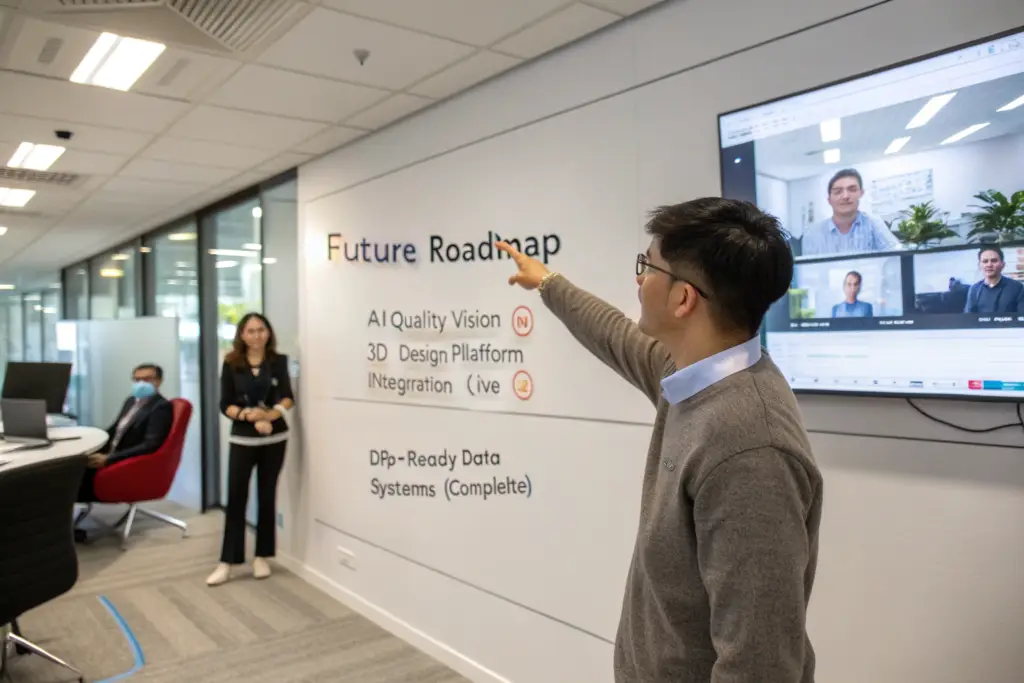
Fumao is preparing for the future by strategically investing in the key technologies that will define CMT in 2026. We are integrating AI-powered quality control systems, building out our 3D digital sampling capabilities, and ensuring our data systems are DPP-ready. Our goal is to provide our CMT partners with a seamless, transparent, and future-proof manufacturing platform that combines our deep traditional expertise with the power of next-generation technology.
A brand partner recently asked us about our roadmap for DPP compliance. We were able to show them our internal project plan for making our production data fully compatible with emerging DPP standards. They were relieved and impressed. They told us, "Knowing you are already thinking about this gives us a huge competitive advantage. We don't have to figure this out on our own." That is our role. To be the forward-thinking, strategic partner that helps our clients navigate and thrive in the future of fashion. This is the commitment of our future-focused CMT services .
What Investments Are You Making in Technology That Benefits CMT Clients?
Our key investments are focused on:
- Transparency & Quality: AI-powered inspection and real-time production dashboards.
- Speed & Efficiency: 3D digital prototyping and sampling.
- Sustainability & Compliance: DPP-ready data management systems.
These investments directly address the core needs and future challenges of our CMT partners.
How Will These Advancements Make the CMT Process Even More Seamless?
The combined effect of these technologies is a dramatic reduction in friction. Communication will be more visual and precise (3D models). Quality will be more consistent and verifiable (AI inspection). Supply chains will be more transparent and compliant (DPP data). The entire CMT journey—from concept to consumer—will be smoother, faster, and more reliable. This is the future we are building for our B2B partners .
Conclusion
The future of CMT manufacturing in 2026 is bright. It is a future where the core strengths of the model—control, transparency, and material integrity—are amplified by powerful new technologies. AI will provide unprecedented quality assurance and visibility. Digital prototyping will slash development waste and time. And the CMT model will become the gold standard for building the transparent, verifiable supply chains required for a sustainable, circular fashion economy.
At Shanghai Fumao, we are not just a CMT factory. We are a technology-enabled, future-focused manufacturing partner. We are investing today to ensure that our B2B partners have the most advanced, transparent, and reliable CMT platform for the challenges and opportunities of 2026 and beyond.
If you want to build your brand's future with a CMT partner who is already building for tomorrow, let's talk. Our Business Director, Elaine, can share more about our technology roadmap and how it will benefit your supply chain. Please email Elaine at: elaine@fumaoclothing.com.