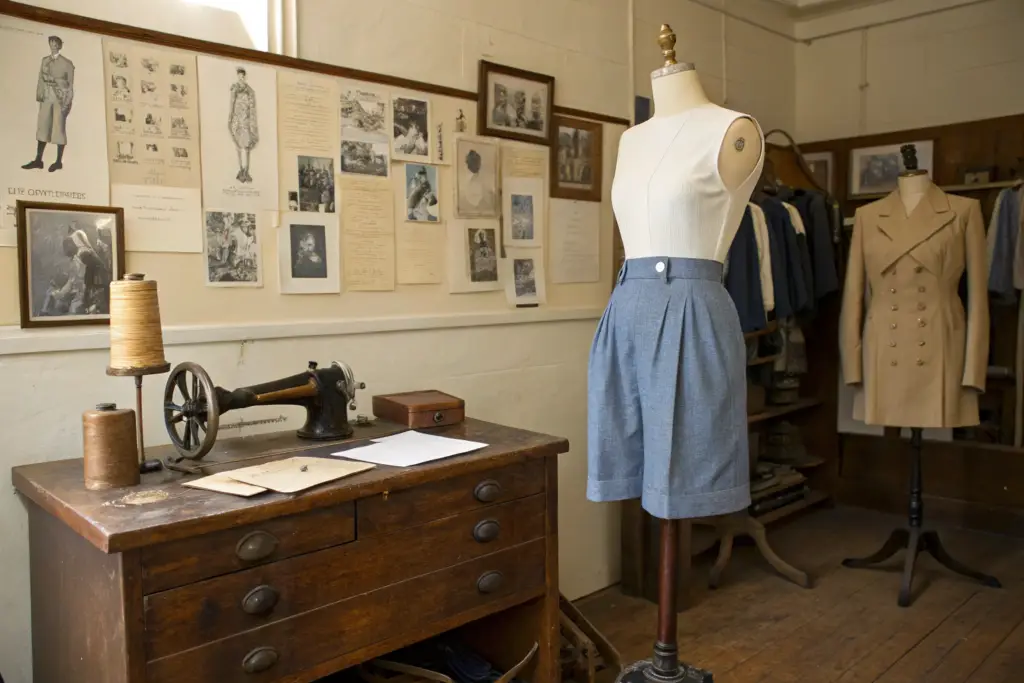
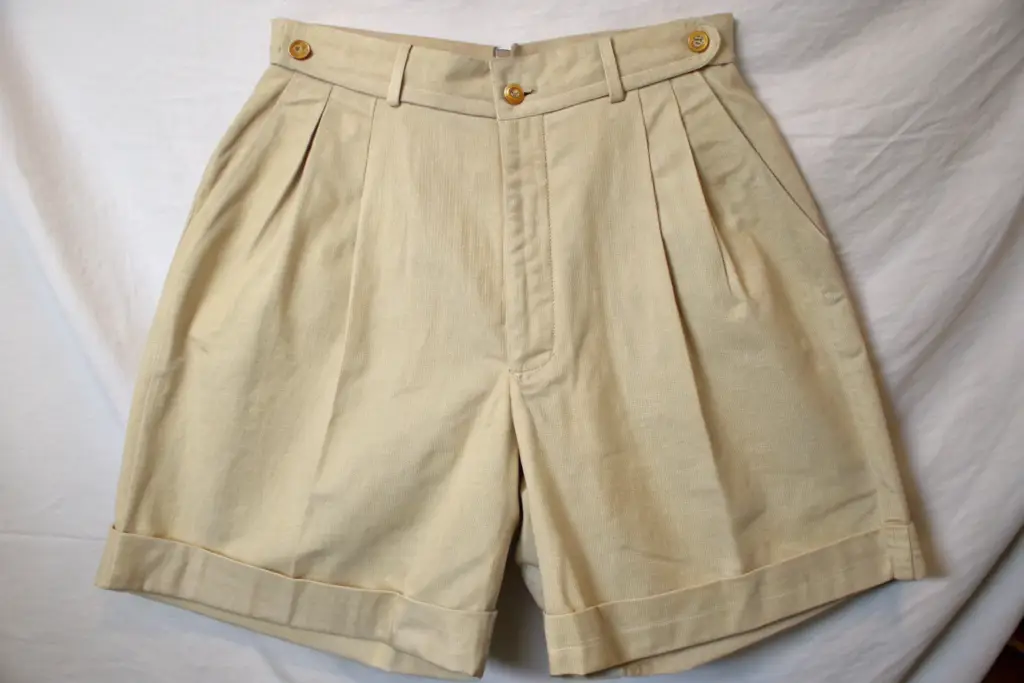
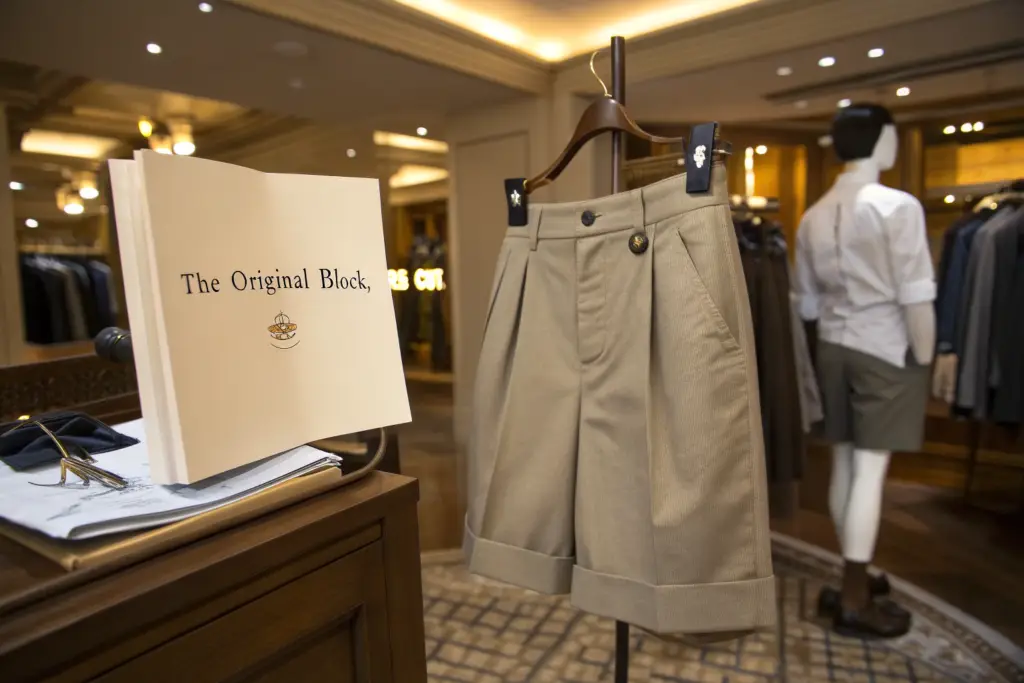
A few months ago, I received an unusual email from a fashion historian who was curating an exhibition on men's tailored clothing. She had come across the term "classical types of shorts" in a 1950s menswear manual and wanted to know if we could reproduce the silhouettes exactly as they were made before 1960. Not modernized, not updated, but historically accurate. I pulled out our oldest pattern archives. We had blocks for high-waisted, pleated, cuffed shorts that I had not cut in years. We made a sample. It looked nothing like the shorts that dominate the market today. It had a rise that sat above the navel. It had deep, inward-facing pleats. It had a full, generous leg that ended in a crisp, pressed cuff. It looked strange to the modern eye, and yet, when worn, it had a proportion, a dignity, and a sense of permanence that our modern silhouettes have largely lost.
If the term "classical types of shorts" were restricted to refer only to pre-1960s silhouettes, it would define a specific, historically-anchored category of garments characterized by a high natural waist, a pleated front for volume and comfort, a full, straight or gently tapered leg, and a cuffed hem, a silhouette that originated in British and American military tailoring and civilian resort wear in the early twentieth century and that represents a fundamentally different philosophy of garment design, one based on draping and proportion derived from the structure of the body, in contrast to the lower-rise, flat-front, slimmer silhouettes that emerged in the 1960s and have dominated the market since.
At Shanghai Fumao, this project forced me to confront something. The modern short, the one I manufacture every day, is a relatively recent invention. The true "classic" short, the one that was developed, refined, and worn for the first half of the twentieth century, is a different garment entirely. Let me walk you through the history, the construction, and the surprising relevance of these pre-1960s silhouettes.
What Exactly Defined a Men's Short Silhouette Before 1960?
The pre-1960s men's short was not a casual garment. It was a tailored garment, cut and constructed using the same principles and the same techniques as a pair of full-length trousers. The pattern was drafted from a trouser block. The waistband sat at the natural waist. The pleats were functional, not decorative. The leg was generous, allowing full freedom of movement. The hem was cuffed, adding weight and structure to the leg opening. This silhouette was not a design choice. It was the logical outcome of the tailoring principles of the era.
The pre-1960s men's short silhouette was defined by four structural characteristics derived directly from trouser tailoring: a high-rise waistband that sits at or above the navel, anchoring the garment on the narrowest part of the torso and creating a balanced, elongated proportion; a pleated front, typically one or two inward-facing pleats, which provided the extra fabric volume needed to sit comfortably and to allow the leg to move without the pocket pulling open; a full, straight leg with a wide leg opening, which provided airflow in hot climates and a clean, unbroken line from the hip to the hem; and a cuffed hem, which added weight and structure, keeping the leg line crisp and preventing the fabric from flapping or curling.
How Did the High-Waisted, Pleated Construction Function Differently?
The high-waisted, pleated short is engineered around the mechanics of the human body in a way that the modern flat-front, low-rise short is not. The natural waist, the narrowest point of the torso, is a stable anchor point. It does not change circumference significantly when the wearer moves from standing to sitting. A waistband that sits at the natural waist, therefore, does not need to accommodate dynamic movement.
The pleats are the mechanism that provides the accommodation. When the wearer stands, the pleats lie flat, and the front of the short is clean and tailored. When the wearer sits, the pleats open, releasing the extra fabric volume stored within them. The thigh and seat of the short expand to accommodate the body. The waistband stays in place. The pockets do not pull open. The short remains comfortable and presentable in both positions. This is a fundamentally different engineering solution than the modern approach of using stretch fabric and a lower rise to achieve a similar level of comfort, often with less success. This tailoring principles for men's trousers explains the function of pleats and the high rise.
What Was the Cultural and Social Context of the "Classic" Pre-1960s Short?
The pre-1960s short was not a garment of rebellion or youthful casualness. It was a garment of leisure for the established adult male. It was worn by British colonial officers in tropical postings, by American university students on Ivy League campuses, and by affluent vacationers at Palm Beach and Bermuda. It was a garment that signified status, respectability, and a certain formality, even in the context of leisure.
The idea that a man would wear shorts in a public, social setting without a jacket, without knee socks, or without a collared shirt was a novelty that only began to emerge in the very late 1950s and early 1960s. The pre-1960s short was embedded in a complete, formalized outfit. The silhouette was part of a total system of dress that is now largely extinct. This history of men's shorts as tailored garments provides the cultural and social context.
How Did the Post-1960 Shift to Flat-Front, Low-Rise Shorts Fundamentally Change the Fit?
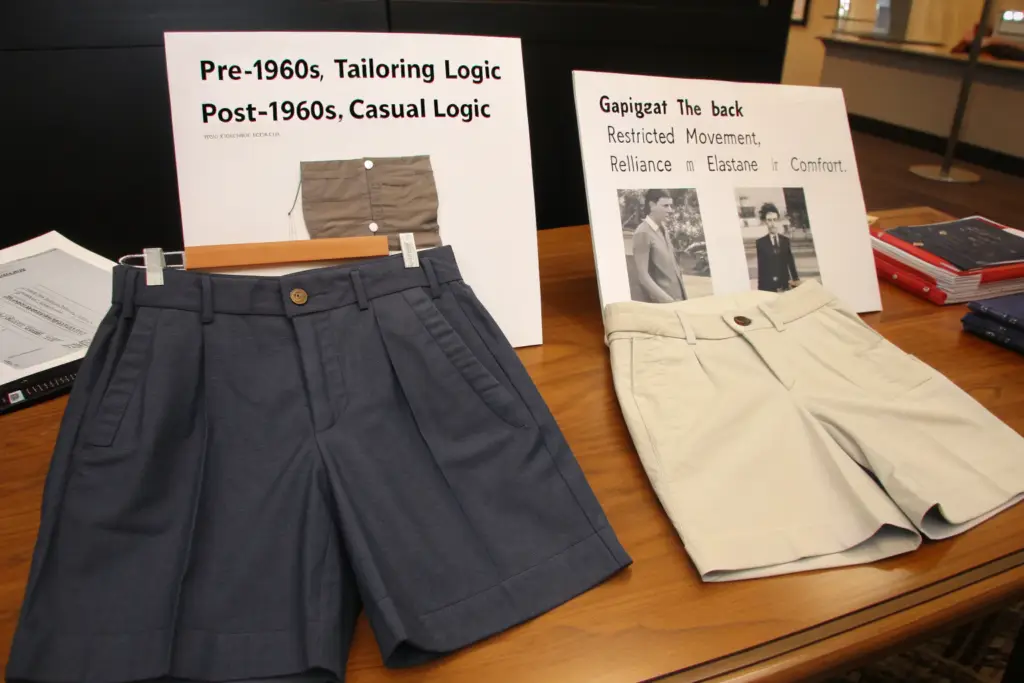
The 1960s marked a seismic shift in menswear. The casualization of dress, driven by the youth culture revolution, the decline of formal tailoring, and the rise of ready-to-wear manufacturing, fundamentally changed the short. The high rise was lowered to sit on the hip. The pleats were removed to create a cleaner, more streamlined front. The leg was slimmed and shortened. The cuff was abandoned. The short was transformed from a tailored garment into a casual garment. The fit and the comfort philosophy changed with it.
The shift from the pre-1960s tailored short to the post-1960s casual short replaced the structural comfort provided by the high rise and the pleats with a simplified, lower-cost construction that introduced new fit problems: the lower rise created the persistent issue of the back waistband gap, as the waistband now sat on a dynamic part of the body that changed shape with movement; the removal of the pleats eliminated the built-in volume needed for sitting, forcing the garment to pull and stretch across the lap; and the narrower, shorter leg altered the garment's visual proportion, shortening the leg line and creating the modern silhouette that we now accept as standard.
What Fit Problems Did the Low-Rise, Flat-Front Shift Introduce?
The modern flat-front, mid-to-low-rise short is plagued by a specific set of fit problems that are almost universally experienced but rarely attributed to their structural cause. The back waistband gap, where the waistband stands away from the body at the back, is caused by the waistband sitting on the curved, dynamic hip rather than the stable natural waist. The pocket flare, where the side pockets pull open and gape, is caused by the absence of the extra fabric volume that the pleats once provided. The tightness across the lap and the thigh when sitting is caused by the same lack of volume.
The modern solution to these problems is stretch fabric. The addition of elastane to the cotton allows the fabric to stretch and recover, masking the structural deficiencies of the pattern. The pre-1960s solution was structural. The garment was cut to accommodate the body's movement from the start. The pre-1960s short, made from rigid, non-stretch cotton, is often more comfortable to sit in than a modern short made from stretch cotton, because the comfort is built into the shape, not reliant on the fabric's elasticity. This fit problems in modern men's shorts and trousers provides a detailed analysis of these structural issues.
Why Did the Market Abandon the Tailored Short Silhouette?
The shift was driven by a confluence of cultural and economic forces. The youth culture of the 1960s rejected the formality of their parents' generation. The tailored short, associated with the establishment, the country club, and the older generation, was an easy target for rejection. The rise of casual sportswear, jeans, and t-shirts as everyday clothing further eroded the market for tailored shorts. The economics of manufacturing also played a role. A flat-front, low-rise short is simpler and cheaper to produce than a high-waisted, pleated, cuffed short. The mass-market retailers who drove the apparel industry from the 1970s onward naturally favored the simpler, cheaper construction.
The result was a near-total extinction of the pre-1960s short from the mainstream market. The silhouette survived only in niche, high-end tailoring houses and in the Bermuda short tradition, which maintained its formal dress code. The modern consumer has largely never seen or worn a short cut to the pre-1960s standard. This history of casualization in menswear explains the broader cultural shift.
Is There a Modern Market for a Genuine Pre-1960s Short Block?
The pre-1960s short may have been abandoned by the mass market, but it has not been abandoned by all consumers. There is a small but growing niche of men who are dissatisfied with the fit and the proportion of modern shorts. They have discovered, often through vintage clothing, the comfort and the elegance of the older silhouette. They are looking for brands that can offer them a genuine, historically-informed alternative. This is not a mass-market opportunity. It is a premium, niche opportunity for a brand that is willing to educate its customer.
There is a viable modern market for a genuine pre-1960s short silhouette, positioned not as a retro costume piece but as a premium, engineered solution to the fit problems of modern shorts, marketed to a specific consumer who values fit, comfort, and proportion over trend, who is often well-educated in menswear history, and who is willing to pay a premium price for a garment that is cut and constructed to a standard that the mainstream market no longer provides, with the marketing narrative focusing on the structural benefits of the high rise and the pleats rather than on a purely nostalgic appeal.
How Should the Garment Be Positioned to Avoid the "Costume" Trap?
The risk of launching a historically-accurate pre-1960s short is that it will be perceived as a costume piece, a novelty for history enthusiasts or themed events. The brand must avoid this trap by positioning the garment as a contemporary solution, not a historical replica. The marketing should not focus on the 1940s or 1950s. It should focus on the fit. "Finally, a short that does not gap at the back." "Engineered for sitting, not just standing." "The comfort of pleats, rediscovered."
The styling should be resolutely modern. The high-waisted, pleated short should be shown with a simple, untucked crewneck t-shirt or a contemporary linen shirt, not with a vintage polo and knee socks. The consumer should see the short as a better, smarter version of the shorts they already wear, not as a garment from a different era. This marketing heritage products to modern consumers explains the importance of modern contextualization.
What Is the Specific Consumer Profile for This Silhouette?
The target consumer for a pre-1960s short silhouette is a man who is dissatisfied with the fit of modern shorts. He is likely over 30, with a developed sense of personal style. He may have a background in classic menswear, tailoring, or vintage clothing. He values quality, craftsmanship, and authenticity. He is willing to spend more for a garment that fits him properly and that is made to last. He is not a follower of fast fashion trends.
This consumer is small in number but high in value. He is a repeat purchaser. He is a brand evangelist. He is looking for exactly this product. The brand that can reach him, through the right channels, the classic menswear blogs, the specialty retailers, the online communities, and present him with a genuinely well-made product, will earn his loyalty. This consumer profile for premium classic menswear provides a detailed description of this market segment.
Conclusion
If the term "classical types of shorts" referred only to pre-1960s silhouettes, it would define a category of garments that are fundamentally different from the modern short. The high, natural waist, the functional pleats, and the generous, straight leg represent a tailoring tradition that prioritized structural comfort and elegant proportion over the simplified, lower-cost construction that has dominated the market for the past sixty years. This older silhouette solved, through pattern engineering, many of the fit problems that modern shorts attempt to solve with stretch fabric.
While this silhouette is no longer the mainstream standard, it is not extinct. A small but dedicated market exists for a genuine, well-made pre-1960s short, positioned not as nostalgia but as a premium fit solution. The brands that understand this opportunity, and that can execute the pattern, the construction, and the marketing correctly, can capture a loyal, high-value customer base.
At Shanghai Fumao, I have preserved and maintained the pattern blocks and the construction techniques for these pre-1960s silhouettes. If you are a brand interested in exploring the potential of a true classic short, contact our Business Director, Elaine, at elaine@fumaoclothing.com. Let's discuss how to bring the past's understanding of fit into the present.