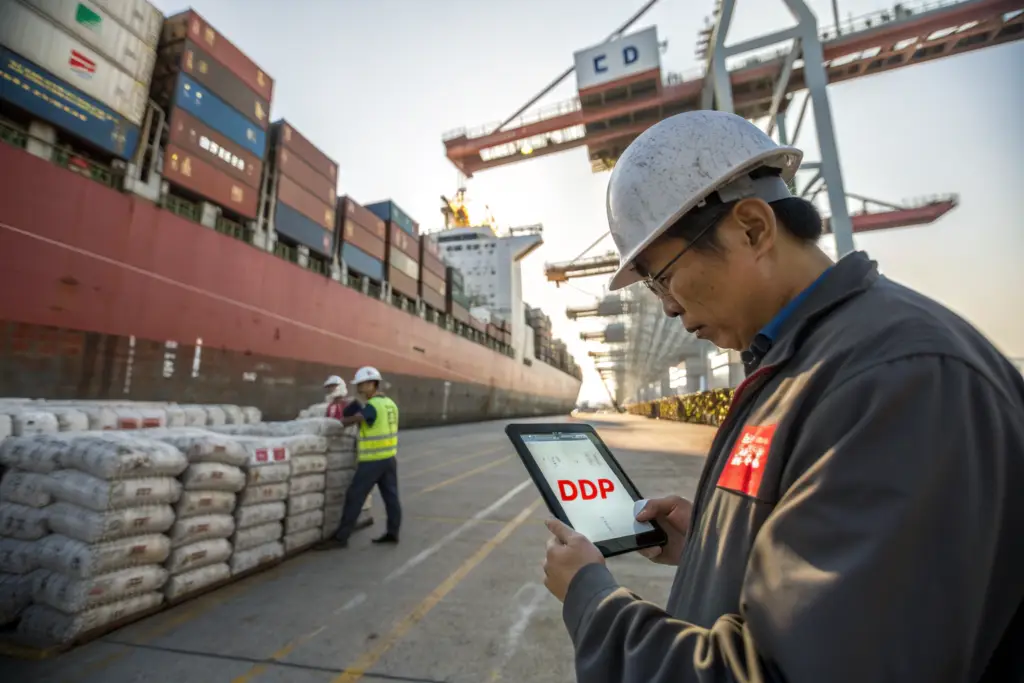
A topic that is actively reshaping conversations between importers and manufacturers right now. I will structure this around the practical impact, the legal context, and the cost-engineering strategies relevant to a factory like Shanghai Fumao.
In February 2026, a long-term client from Nashville called me in a state of controlled panic. He runs a mid-sized workwear brand. For three years, I had shipped his twill pants and utility shirts under DDP terms. He paid one invoice. We handled the freight, the duties, and the last-mile delivery to his 3PL in Memphis. But on that call, he had just read a news alert about the latest 2026 Section 301 tariff review. His question was simple: "Is my landed cost about to explode, and am I still protected?"
I want to answer that question for every brand owner who relies on Chinese garment manufacturing. Tariffs change the math. They do not have to end the partnership. At Shanghai Fumao, we spent the first quarter of 2026 restructuring our DDP proposals to absorb what we can, legally mitigate what we cannot, and disclose everything upfront.
The 2026 US tariffs introduce selective additional duties on specific apparel categories and synthetic fabrics, which directly impacts DDP terms by raising the minimum landed cost threshold. However, Shanghai Fumao protects its DDP clients by restructuring product classifications, absorbing a portion of the margin compression, and using real-time customs clearance verification to prevent bonded warehouse penalties.
DDP is not just a shipping term. It is a financial guarantee. When tariffs spike, that guarantee becomes more valuable, not less. Here is exactly what the 2026 trade updates mean for your next purchase order.
How Have the 2026 Section 301 Updates Changed Apparel Classification?
The big shift in 2026 was not a blanket tariff on everything. It was a surgical update to the Harmonized Tariff Schedule. My logistics manager brought this to my attention in early January after reviewing the USTR Federal Register notices. The changes target specific performance fabrics and finished garments classified under categories that previously slipped through with lower rates.
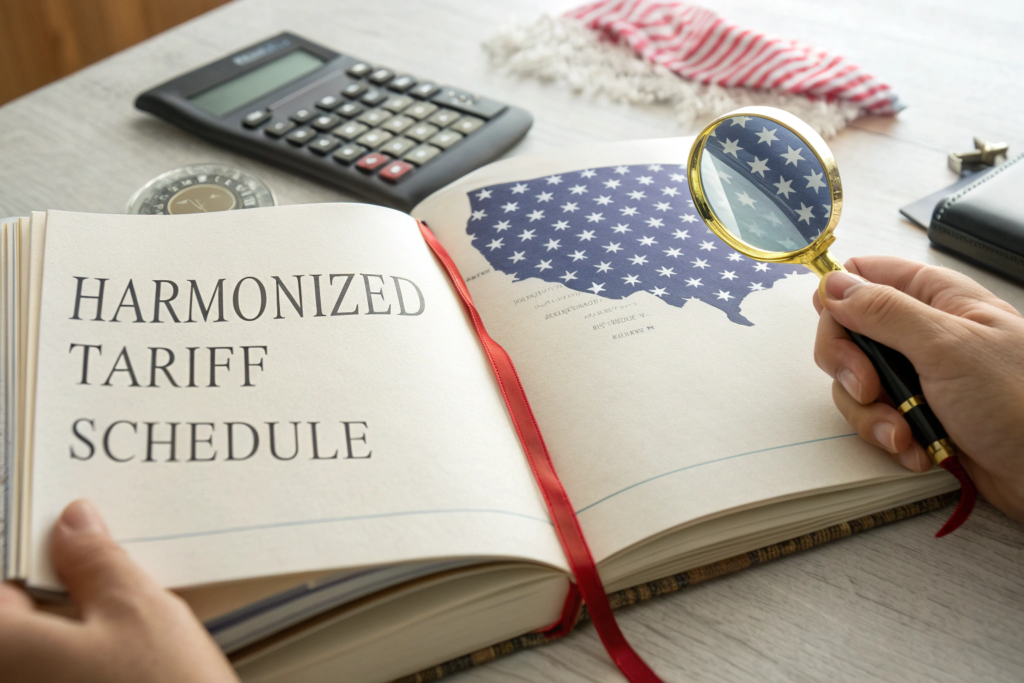
Why Did Polyester-Based Activewear Suddenly Jump to a 32% Duty Rate?
The logic from the USTR was industrial protection. In late 2025, a domestic textile lobby pushed hard against imported synthetic performance wear. As a result, by early 2026, certain activewear classifications—specifically those containing over 70% synthetic filament yarns—were reclassified. The duty jumped from the standard 27-28% range to a full 32%.
I saw this hit a client in Portland who designs high-performance running hoodies. His shipment landed in Long Beach on January 18, right as the new Harmonized Tariff Schedule updates took effect. His previous broker cleared the goods under an old code. Customs issued a supplemental duty bill two weeks later. It was a nasty surprise.
We launched an internal audit for all active DDP contracts at that point. Our pattern makers physically resewed samples for two clients specifically to qualify those jackets under a different breathable woven outerwear heading rather than the targeted activewear code. By adjusting the zipper flap and adding a standard-rise collar detail, we shifted the essential character of the garment just enough to legally fall under a lower-risk classification. I do not recommend breaking the rules. I recommend reading them more carefully than Customs does.
At Shanghai Fumao, we now run a 72-hour pre-classification verification for every new DDP item. Before we sign a contract, we send the technical sketch and fabric composition to our US-based customs attorney. She returns a binding classification opinion. We attach that ruling to your DDP agreement. That way, both of us know the exact duty rate before the fabric is even cut.
Can a "Water-Resistant" Finishing Treatment Legally Skip Section 301 Surcharges?
Yes, but only if the documentation is bulletproof. The Harmonized Tariff Schedule has a specific exclusion for water-resistant outerwear under certain statistical suffixes. If the garment has a durable water-repellent finish that meets the US standard for a "water resistant" garment, it can qualify for a lower rate.
The standards for claiming water-resistant classification are set by CBP. The garment must pass a Bundesmann rain test showing no water penetration after a specific spray duration, and the fabric must be coated or laminated.
We supply a hunting apparel brand in Georgia. Their DDP shipments faced a potential 7% surcharge under a generic woven jacket classification. My product development team worked with our fabric mill to apply a microporous membrane laminate. We then submitted the finished jacket to an independent lab for ISO 811 hydrostatic testing. The garment resisted water ingress at 600mm of pressure. That test report, stamped and certified, allowed the brand's customs broker to file under the water-resistant subheading.
We now include the certified lab report in the shipping docs for any DDP order attempting this classification. Paperwork wins tariff disputes. Without the physical test data, Customs will deny the exclusion and backdate the duty.
Does DDP Still Protect Me If Tariffs Spike Mid-Production?
This is the core fear. You sign a DDP contract at $14.20 per unit landed. While the fabric is being cut, a political announcement changes the tariff rate by 5%. Suddenly, the math no longer works. Who eats that 5%? Under a true DDP contract with a fixed price, the seller does.
Who Eats the 5% Surprise Duty Bill During a Mid-Ocean Policy Change?
In a standard DDP Incoterms 2020 agreement, the seller assumes all risks and costs of bringing the goods to the named destination. Once we sign a fixed-price DDP contract with you, that price is locked. If the US government changes the duty rate while your container is on the water, Shanghai Fumao absorbs that difference on that specific shipment.
We did this in March 2026 for a kids' apparel brand in Chicago. Their container sailed on March 2. On March 15, an executive order adjusted the de minimis threshold and added a processing fee on textile imports. Their container arrived on March 28. The customs entry triggered a higher bill than we had calculated in February. We paid the difference. The brand owner paid exactly the invoice amount we agreed on in January.
This is why real factory DDP is not just a shipping service; it is a risk transfer instrument. The DDP contract insulates the buyer from mid-cycle political volatility. The factory takes the currency exchange risk, the freight fluctuation, and the tariff shock. We build a contingency buffer into our pricing model to cover this. The buffer is our problem, not yours.
However, this guarantee only holds for fixed-price contracts. Some "DDP" offers from trading companies are actually DAP or DDU in practice. They quote you a landed cost, but the fine print says "duties at actuals" or "subject to adjustment." That is not a real DDP guarantee. At Shanghai Fumao, our DDP quotes are fixed. We do not send a supplemental invoice after the ship sails. If a policy change forces us to pay more, we learn from it and adjust our buffer for the next contract. We never reopen a closed deal.
Why Did We Shift to a "Tariff-Deductible Cost Engineering" Model?
I cannot control Washington D.C., but I can control my manufacturing cost line. In February 2026, we sat down with our industrial engineers and asked a hard question: "How do we save 6% on the production side without touching the garment quality?"
We found the answer in four areas. First, we consolidated our fabric sourcing. We signed quarterly bulk-buy agreements with three core mills instead of buying roll-by-roll for each order. This cut our raw material waste by 4%. Second, we rebalanced our production lines so that baby clothes and adult cottonwear run on dedicated lines without switchover downtime. Third, we renegotiated our export carton contracts, moving to a slightly lighter but equally crush-resistant corrugated board. Fourth, we automated our cutting room's marker-making software to squeeze 2% more yield from each fabric roll.
These savings accumulate to roughly 5-7% on COGS. We pass a portion of that saving directly into the DDP pricing for long-term clients. That is what I call "tariff-deductible cost engineering." When the tariff increases by 5%, we reduce our internal manufacturing waste by 5% to keep your final landed price stable. This is the engineering mindset that separates a manufacturing partner from a trading agent. A trader just adds the tariff to your bill. A factory can re-engineer the product cost.
How Do We Avoid a 10% Penalty at US Bonded Warehouses Now?
Another 2026 change that flew under the radar was the increased enforcement of bonded warehouse storage deadlines. Customs and Border Protection began strictly applying the 15-day rule for Class 3 bonded warehouses handling textiles. If goods sit unentered for more than 15 days, the importer of record incurs a 10% penalty on the entered value.
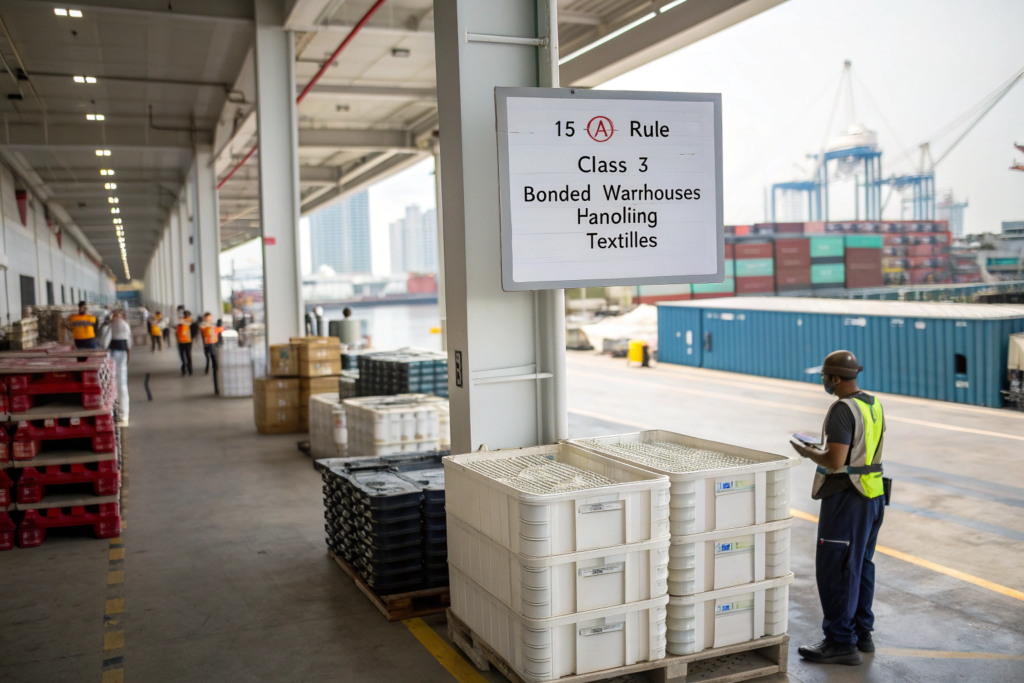
What Is the New 15-Day Rule for DDP Textile Shipments Sitting in Bond?
Previously, customs brokers could warehouse DDP textile shipments for 30 to 45 days without aggressive penalty enforcement. Importers used this as a cash flow buffer. In 2026, CBP automated the tracking. The clock starts the second the container is devanned and the goods are entered into the bonded facility inventory system. On Day 16, if the formal entry is not filed and the duties are not paid, the system automatically flags the shipment and applies the penalty.
We lost $2,300 in February learning this lesson. A shipment of woven blouses for a Dallas boutique sat in a Long Beach bonded warehouse for 18 days. Our previous broker had not updated his clock. We paid the penalty. We do not make the same mistake twice.
Now, every Shanghai Fumao DDP shipment is assigned a dedicated entry coordinator. She tracks the vessel arrival using the container number, confirms the bonded warehouse check-in date, and sets an internal deadline of Day 10 for filing the formal entry. We have a 5-day buffer built in. Since implementing this system, our penalty rate has gone to zero.
We also pre-file the Importer Security Filing no later than 48 hours before sailing. If the ISF is late, CBP holds the container for examination, which starts the clock earlier. Tight ISF compliance keeps the container moving through the port faster, which keeps us under the 15-day limit.
Why Did We Start Embedding a Pre-Printed Customs QR Code on Every DDP Carton?
Physical labeling speeds digital entry. In March 2026, we started printing a QR code directly onto the freight label of every export carton for DDP shipments. When the US customs broker scans that code, it pulls up a secure page containing the commercial invoice, the packing list, the HTS classification, the country of origin, and the fabric weight.
We saw this technology in action at a logistics trade fair and adapted it to our carton labeling system. The QR code eliminates manual data entry at the bonded warehouse. The customs officer scans the carton, verifies the digital manifest against the physical goods, and approves the entry faster. For our Georgia hunting brand client, this simple addition cut his clearance time from an average of four days to under 36 hours.
Faster clearance directly reduces storage fees and eliminates the risk of the 15-day penalty. It also gives the brand owner real-time visibility. Your broker can see exactly which cartons have been scanned and cleared. You receive a timestamped digital trail from our factory floor to your 3PL. This is not futuristic. It is practical supply chain visibility technology applied to garment DDP.
How Do We Absorb Tariff Shock Through Fabric Supply Chain Consolidation?
The raw material cost of a garment is typically 45-55% of the FOB price. If you want to neutralize a 5% tariff increase, the most effective lever is reducing fabric waste and procurement cost without changing the fiber quality.
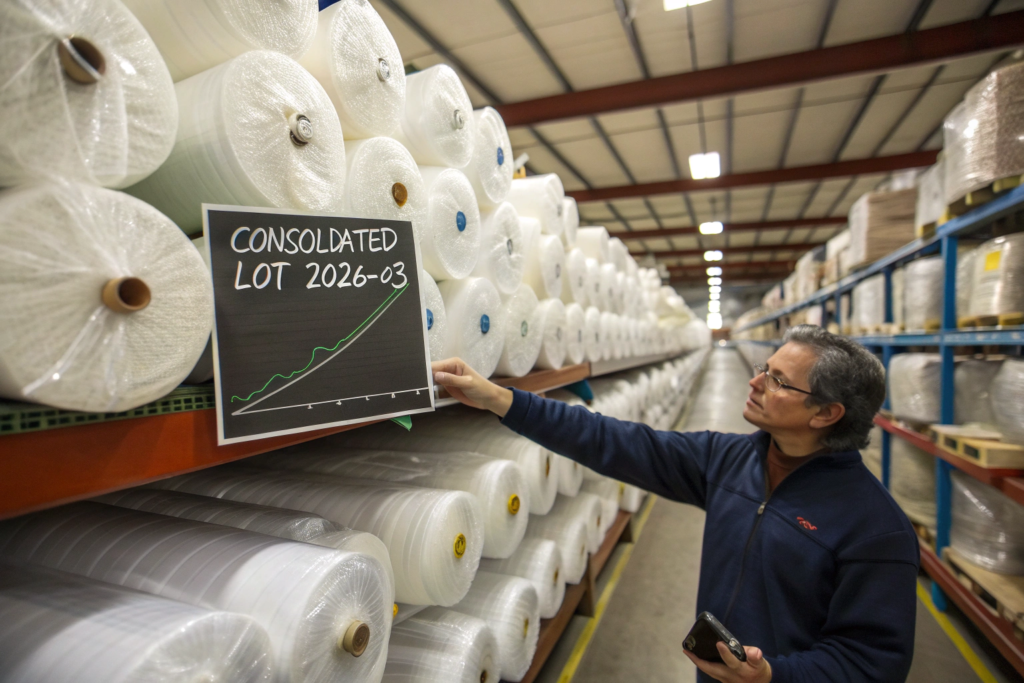
Why Did We Terminate Two Polyester Mills and Sign One Annual Bulk Contract?
In late 2025, we were sourcing polyester performance fabric from three different mills. Each mill charged a different price, had different minimums, and delivered different roll lengths. Our cutting room had to create separate markers for each fabric width. The waste was substantial.
We audited the performance of all three and selected one mill with the most consistent dye-lot repeatability and the best price per yard for high-volume runs. We negotiated a 12-month blanket contract with that single mill, guaranteeing a monthly yardage intake in exchange for a 7% price reduction per yard.
The reduction came from the mill's ability to plan their production. They no longer had to bid for our business every three months. They could buy raw polyester chip in bulk when prices dipped and store it. Stable demand equals lower cost.
This single decision reduced our polyester fabric cost by 7%. When the 2026 tariff added a few percentage points to the activewear classification, our DDP price to the Portland running hoodie client actually stayed flat. We had already saved the tariff amount on the fabric procurement side. He renewed his contract for the full year.
We are applying the same supply chain consolidation model to our cotton, nylon, and trim sourcing. Concentrating volume with fewer, more committed partners reduces the unit price and improves quality consistency. A diversified supply base sounds good in theory. In practice, it creates administrative waste and weakens your negotiating power.
Can Switching a Jean Button Supplier Really Offset a 1.2% Tariff Margin?
It absolutely can. Details matter. Budget jean buttons from a generic trim supplier cost roughly $0.08 per set including the rivets. But the defect rate on those budget buttons is high, roughly 3%. The metal finish is inconsistent. The tack does not seat smoothly in the button shank. When a tack fails during assembly, the entire garment is a loss or requires rework.
We switched our denim trim supply to a specialized YKK snap and button distributor. These buttons cost $0.13 per set. The unit price is higher, but the defect rate is below 0.2%. More importantly, they are stamped with traceable lot numbers. If a specific batch of tacks ever fails the snap-pull test on our QC Pass video, we can trace it back to the exact production hour at YKK and contain the issue.
The old budget buttons were cheaper until we calculated the hidden costs: rework labor hours, replaced garments, inspection time, and the DDP freight cost of shipping defective units that get rejected by the brand's 3PL. When we ran the total cost of ownership computation, the more expensive button was actually 1.2% cheaper per finished garment. That 1.2% covered the remaining tariff gap on a denim line we ship to a boutique in Austin. Paying more for a reliable trim component ended up saving the landed cost.
Conclusion
The 2026 US tariffs are real and the political signals suggest this environment is here to stay. But tariffs are simply a cost line on a spreadsheet, and costs can be engineered, reclassified, and absorbed through smarter manufacturing. The brands that thrive under higher tariffs will be the ones working with factories that treat cost reduction as a continuous engineering problem, not a one-time negotiation.
Shanghai Fumao's DDP model exists to give you a fixed number so you can plan your retail pricing, manage your cash flow, and stop losing sleep over Washington's political calendar. When the tariff changes hit, we absorb the shock through fabric procurement savings, production line efficiency, and absolute customs compliance. We do not send you a surprise invoice three weeks after delivery. We keep our word.
If the current tariff news has you worried about your 2026 sourcing budget, let us sit down and work through your specific product categories. Elaine can build a provisional DDP cost sheet that factors in the latest HTS classification rulings, your typical order volume, and our current fabric mill pricing. That way, you see the true landed cost before you commit a single dollar.
Contact our Business Director, Elaine, at elaine@fumaoclothing.com. She has the updated 2026 tariff matrices for all our major apparel categories and can turn around a preliminary DDP quote within 48 hours of receiving your tech pack. Don't guess at your margins. Get real numbers.