A father from Ohio once called me, feeling completely overwhelmed. He had a wonderful idea for a line of organic cotton pajamas for toddlers, featuring his own hand-drawn animal characters. But he had no idea where to start. He had never made a tech pack, did not know what "GSM" meant, and was terrified of ordering thousands of pieces that would not fit a real three-year-old. He had the passion but lacked the roadmap.
Developing a private label kids wear collection is a step-by-step journey from a concept in your mind to a finished product on a hanger. It involves careful planning, clear communication with your factory, and a deep understanding of the unique needs of the children's market—safety, comfort, durability, and of course, fun designs. With the right partner, this process is not only manageable but also incredibly exciting.
My name is David, and I run Shanghai Fumao, a garment factory that has helped many first-time brand owners and established companies bring their children's wear visions to life. Over the years, I have guided dozens of clients through this exact process. Based on these experiences, I want to share a clear, practical guide to help you develop your own private label kids wear collection, from the first sketch to the final shipment arriving at your door.
What Are The First 3 Steps To Start A Kids Clothing Line?
I remember a young entrepreneur from Chicago who emailed me with just a name for her brand and a lot of enthusiasm. She wanted to skip straight to production. She was frustrated when I asked her about her target age range, fabric preferences, or price points. She thought I was being difficult. In reality, I was trying to save her from making a very expensive mistake by launching a collection with no foundation.
The first three steps are all about research and planning before any fabric is cut. You need to define your specific customer, understand your competition, and translate your ideas into a technical document that a factory can actually use. Skipping these steps is like building a house without a blueprint. Many new brand owners focus only on the creative side—the logo, the name, the colors. But the commercial and technical sides are just as important. Let's break down these foundational steps.
How do you define your target age range and market niche?
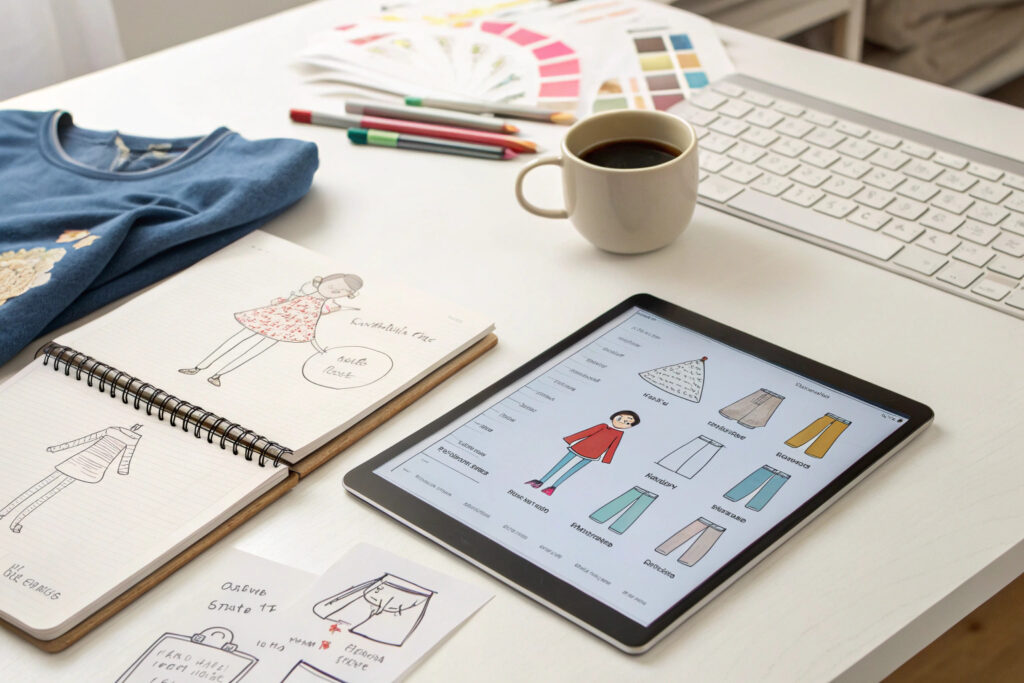
Kids wear is not one single market. A onesie for a newborn has nothing in common with a hoodie for a ten-year-old. You must be specific. Will you focus on baby girls (0-24 months)? Boys' activewear for ages 4-7? Or sustainable, gender-neutral pieces for toddlers? Defining this clearly affects everything: fabric choices, safety requirements (like choking hazards on buttons for under-3s), sizing charts, and even your marketing visuals. Study successful brands in your chosen niche on platforms like WGSN for trend forecasting to see how they position themselves. A clear niche helps you stand out and speak directly to a specific parent's needs.
Why is creating a detailed tech pack non-negotiable?
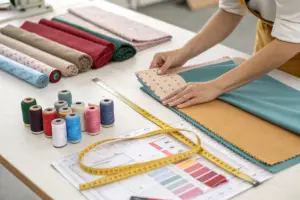
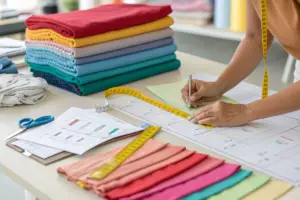
A tech pack is the instruction manual for your factory. It includes flat sketches with measurements, bill of materials (every thread and button), colorways, and stitching details. Without it, you leave everything to interpretation, which guarantees mistakes. I once had a client who just sent a photo of a dress from Pinterest. The sample came back in the wrong fabric with the wrong zipper. After we created a proper tech pack together, the second sample was perfect. For guidance on creating one, resources like TechPack HQ offer templates and tutorials. At Shanghai Fumao, our product development team can also help you refine your tech pack based on our manufacturing expertise, ensuring it is ready for production.
How Do You Choose The Right Fabrics For Children's Apparel?
A client from Seattle once insisted on using a beautiful, textured linen for a line of toddler shorts. The fabric looked amazing in photos. But I had to gently steer him away. Linen wrinkles easily and can feel rough on sensitive skin. More importantly, it does not have the stretch and durability needed for a child running around a playground. He would have faced a flood of returns and unhappy customers.
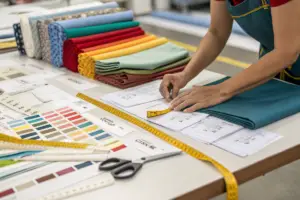
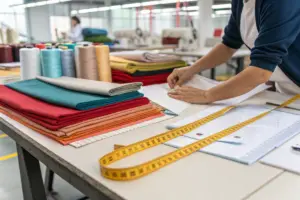
Choosing fabric for kids wear is different from choosing for adults. Your main priorities must be safety, comfort, durability, and ease of care. Parents want clothes that can survive repeated washes, allow for free movement, and are made from materials they trust near their child's skin. The fabric is the single most important element of your garment's quality. You need to think like a parent. What would make you buy this outfit for your own child? The answer is usually a combination of softness and practicality. Let's look at the most common and reliable options.
What are the best fabric types for different kids' garments?
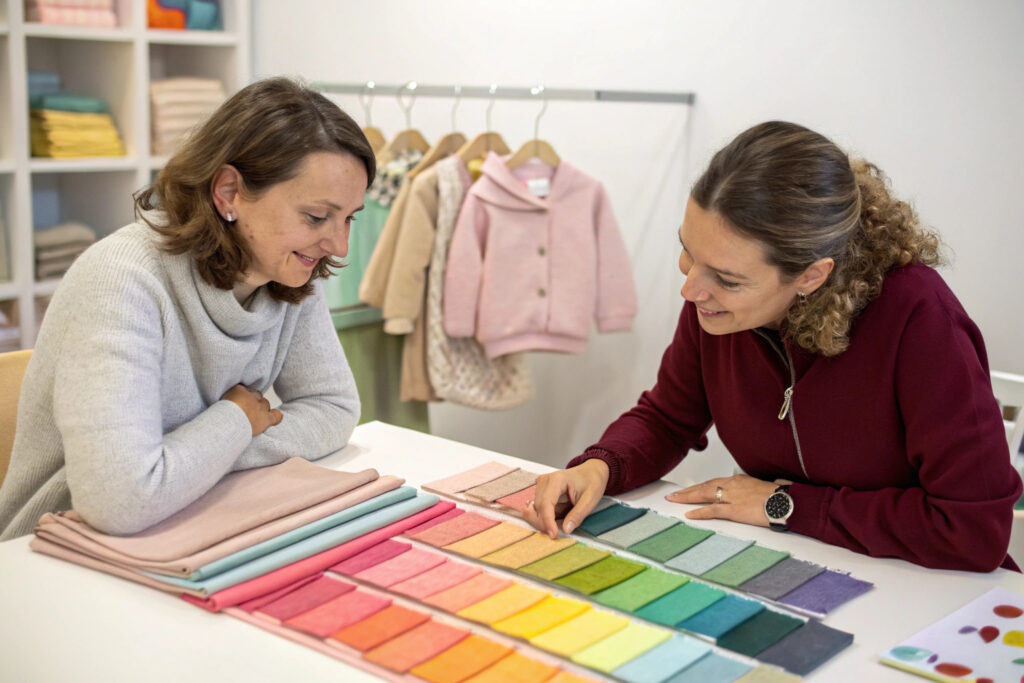
For everyday wear like t-shirts and leggings, cotton jersey is a fantastic choice. It is soft, breathable, and easy to wash. For colder weather items like hoodies and pants, cotton fleece provides warmth and comfort. For activewear, blends with a small percentage of spandex or elastane (around 5%) add necessary stretch for play. For babies, organic cotton is highly popular with parents concerned about pesticides and chemicals. You can check the properties of these materials on sites like CottonWorks. We source a wide variety of these fabrics for our clients' kids' wear collections at competitive prices through our established supply chain.
Which safety certifications must your children's fabrics have?
This is not optional. For any garment intended for children under 12, especially babies and toddlers, you must ensure your fabrics and finished products meet strict safety standards. The most important is the OEKO-TEX Standard 100, which certifies that every component is free from harmful levels of over 100 substances. For items sold in the US, you also need to comply with the CPSIA (Consumer Product Safety Improvement Act), which includes lead and phthalate limits, as well as flammability standards for sleepwear. A reliable factory will handle this for you. We always provide our partners with the necessary certification documentation to ensure a smooth entry into the US market.
How Many Samples Do You Need Before Bulk Production?
A brand owner from Boston once asked me to skip sampling entirely and go straight to production on 2,000 pieces of a new children's jacket. He was in a hurry to beat the back-to-school season. I refused. I explained that even with the best tech pack, the first sample almost always needs adjustments. He reluctantly agreed to one sample. When it arrived, the armholes were too tight for a child's winter layer. We fixed it, and the bulk order was perfect. He later thanked me for saving his brand from a costly disaster.
You should plan for at least two to three rounds of sampling before approving bulk production. Each round serves a specific purpose: first to check the design and fit, second to confirm fabric and construction, and finally a pre-production sample to validate the entire process before committing to large quantities. This system catches errors when they are cheap to fix.
Patience during the sampling phase is a virtue. Rushing it is the number one cause of bad bulk orders. Think of sampling as your insurance policy. Let us look at the standard journey.
What is the purpose of the first development sample (PPS)?
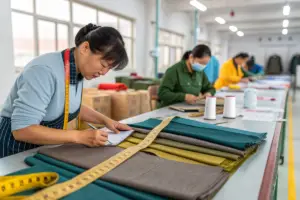
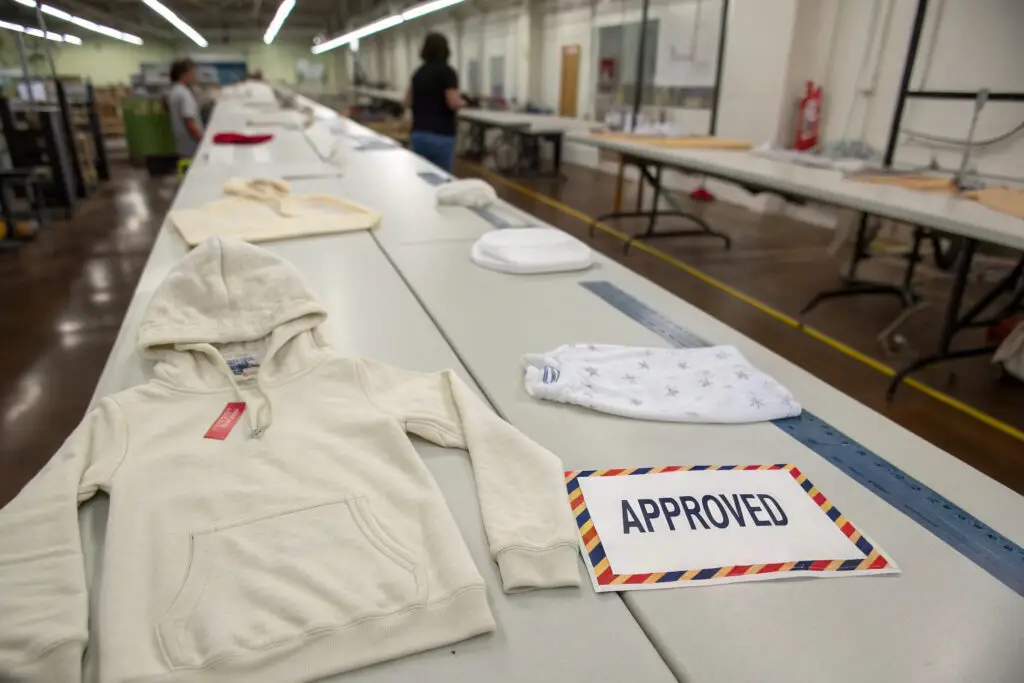
The first sample, often called a "fit sample" or "development sample," is usually made in a similar, readily available fabric to check the pattern and construction. Its main job is to see if your design translates correctly from a 2D drawing into a 3D garment. We check the proportions, the seams, and how the pieces go together. For a kids' item, we pay special attention to areas like neck openings (must be wide enough for a child's head) and armholes. It is common to find 5 to 10 small adjustments needed at this stage. This is completely normal and part of the process.
Why is the pre-production sample (PP) so important?
After you approve the fit and fabric of the second sample, the factory creates the Pre-Production sample. This one is made using the exact fabrics, trims, labels, and thread that will be used in the bulk order. It is often cut from the same fabric rolls and made by the same sewing operators who will work on your production. Approving the PP sample is your final green light. It is your last chance to catch any issues with the actual materials or construction before we cut thousands of pieces. This step is crucial for maintaining quality control standards. For a deeper look into the garment sampling process, the Sourcing Journal frequently publishes articles on best practices.
What Are The Key Fit And Sizing Challenges For Kids Wear?
A few years ago, a client sent us a sample of a beautiful winter coat for 4-year-olds that he had developed with another factory. On a hanger, it looked perfect. But when I asked our pattern maker to check the measurements against standard U.S. growth charts, we found a problem. The coat was cut for a slim, static child, with no room for a sweater underneath or for normal toddler movement. It looked good, but it would not function well for a real child playing in the snow.
Sizing for children is more complex than for adults because children grow quickly and have diverse body shapes. Your fit must accommodate not just the child's current size but also allow for movement and a bit of growth. Using standard, age-appropriate measurement charts and conducting fit tests on real children in your target market are essential steps to ensure customer satisfaction and reduce returns.
Fit is what builds brand loyalty. If a mom buys your brand once and the fit is perfect, she will come back. If it is off, she will likely never buy again. Here is how to get it right.
How do you create a size chart that works for American children?
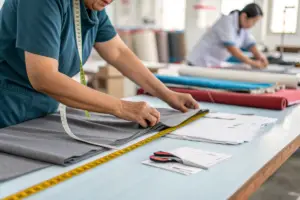
You cannot rely on generic Asian size charts, which often run smaller. At Shanghai Fumao, we work with our clients to develop size charts based on ASTM (American Society for Testing and Materials) standards or by analyzing data from successful U.S. brands in the same niche. We also consider "grow room"—adding a little extra length in sleeves and torso so the garment lasts a few months longer. For example, for toddler pants, an elastic waistband is almost always better than a fixed waist for comfort and adjustability. We provide our clients with detailed measurement specs for every size, from newborn to girls' 14, ensuring consistency.
Why should you test your fit on real children?
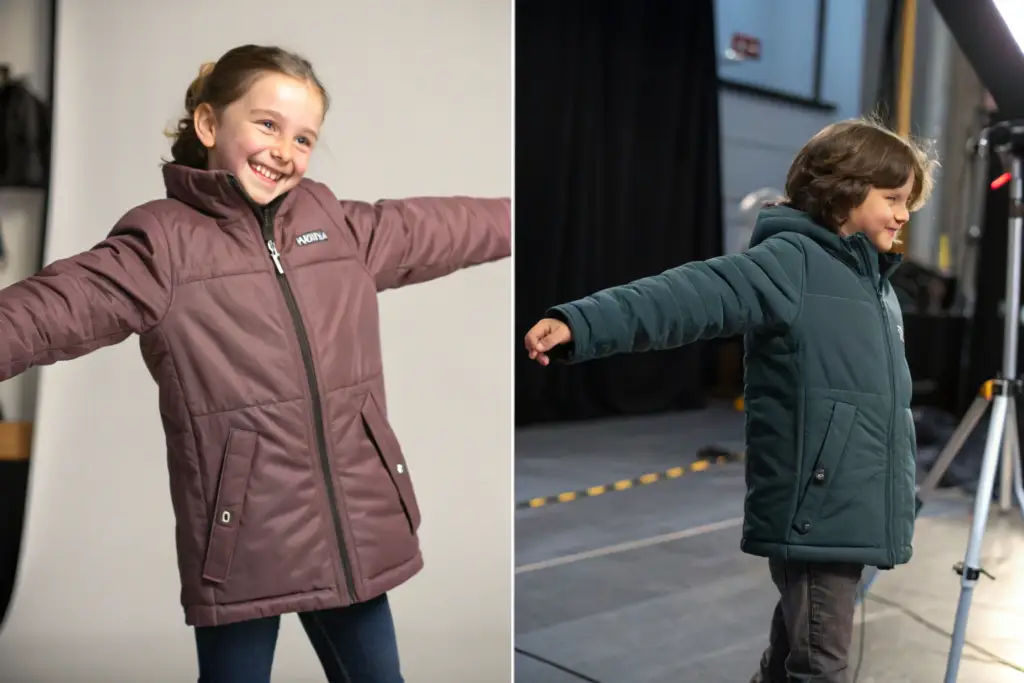
A fit sample on a mannequin is useful, but it is not enough. The final test should involve a real child in your target age range. Have them wear the sample, move around, sit down, and raise their arms. This is where you discover issues like a neck hole that is too small, a waistband that digs in, or shorts that ride up when walking. This real-world testing is invaluable. Organizations like the American Apparel & Footwear Association (AAFA) provide resources on fit and sizing standards. We always encourage our clients to do this final fit test with their own pre-production sample before we begin bulk manufacturing. For our women's wear and kids' lines, this attention to detail has saved countless orders from fit-related failures.
Conclusion
Developing a private label kids wear collection is a journey of many small, careful steps. It starts with solid planning and a detailed tech pack, not just a dream. It requires choosing fabrics that are safe, soft, and durable enough for active children. It demands patience through multiple sampling rounds to perfect the design and construction. And it relies on accurate, child-friendly sizing that ensures real comfort and builds lasting customer trust. By following this structured process, you move from being just someone with an idea to being a true brand owner with a product ready for the market.
At Shanghai Fumao, we have walked this path with countless entrepreneurs and established brands. We understand the unique challenges of the children's wear market because we have helped solve them firsthand—from adjusting a sleeve pattern for a client in Texas to sourcing the perfect organic cotton for a brand in Oregon. We provide the technical expertise, the rigorous quality control, and the reliable communication you need to avoid the common pitfalls and bring your vision to life successfully.
If you are ready to start developing your kids wear collection and want a partner who will guide you through every single step, I invite you to reach out. Please contact our Business Director, Elaine, directly at elaine@fumaoclothing.com. Let us turn your sketches into best-sellers.