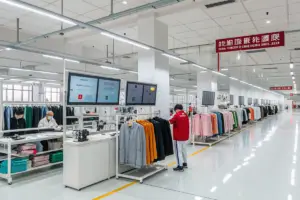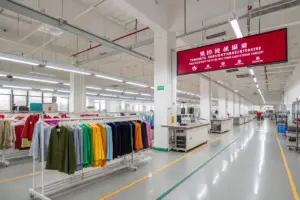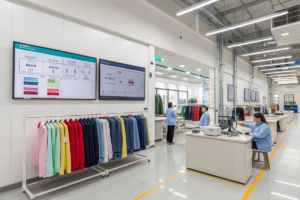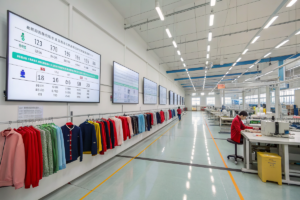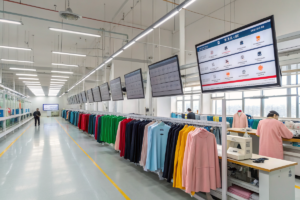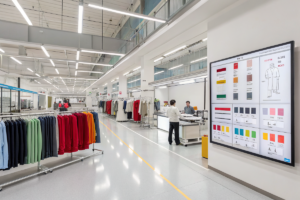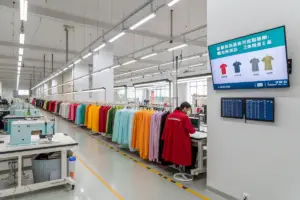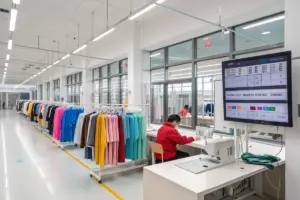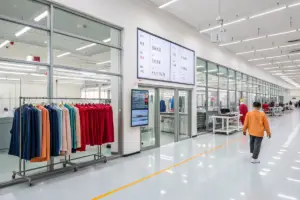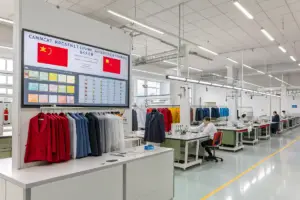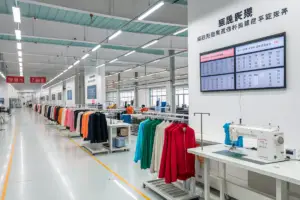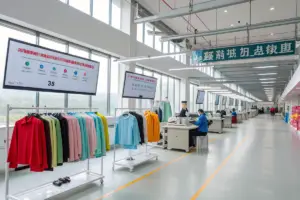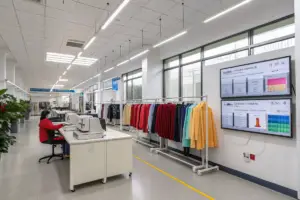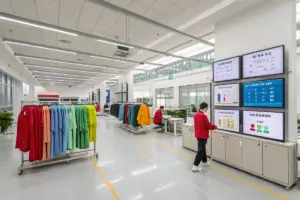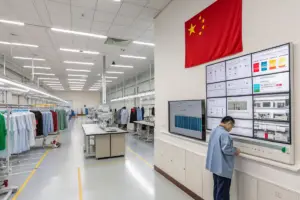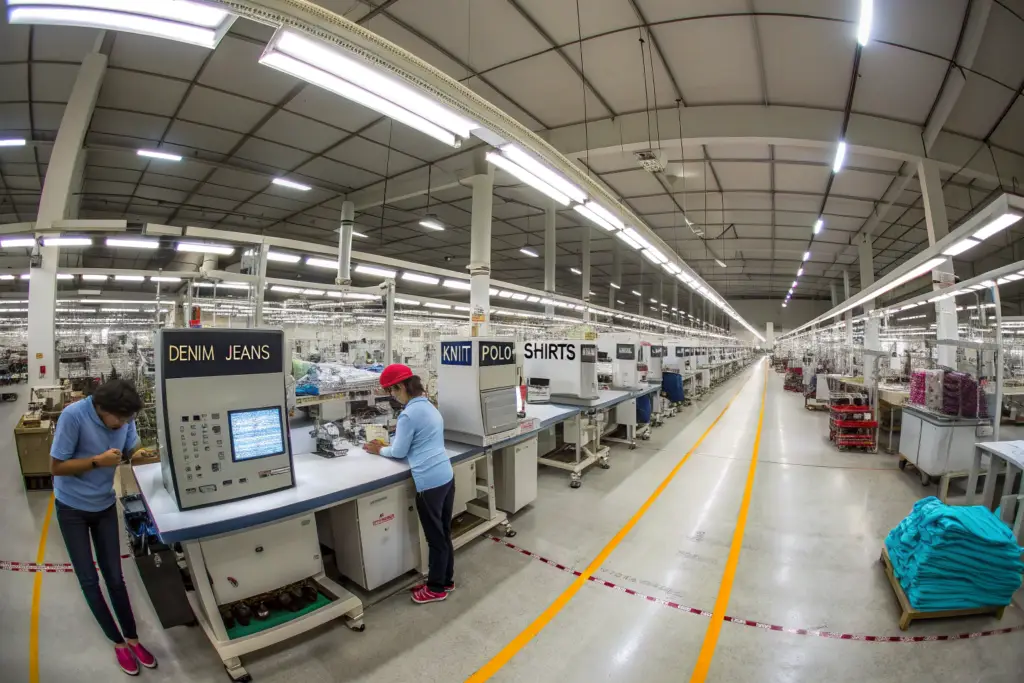
Six years ago, I almost destroyed my factory by trying to become too big. I had expanded to nine production lines, chasing a massive contract from a European fast-fashion conglomerate. The volume was intoxicating. But within eight months, the reality of managing nine lines became a nightmare. One line would sit idle waiting for a delayed fabric delivery while another was drowning in overtime rush orders. The cutting room became a bottleneck, forcing lines to stop and wait. The quality control team was stretched so thin they were sampling only 2% of finished units instead of the standard 10%. A single large client’s payment delay caused a cash flow crisis that nearly missed payroll for 180 workers. I learned the hard way that in garment manufacturing, size is not power. Agility is power. And agility has a specific, optimal structural number: five lines.
Precisely five active production lines represent the absolute sweet spot for agile garment manufacturing because this structural number allows a factory to simultaneously run one large anchor order of 3,000-5,000 units on line one, two medium boutique brand orders of 500-1,500 units each on lines two and three, one small-batch premium order of 100-300 units on line four, and one fully flexible rapid-response R&D and rush order line on line five, creating a self-balancing portfolio where the stable cash flow from the anchor line funds the operational flexibility of the smaller lines, and no single client’s cancellation or delayed payment can threaten the factory’s total payroll obligation.
At Shanghai Fumao, my five production lines are not an accident of limited factory space. They are a deliberately engineered capacity configuration, designed to maximize client type diversity, absorb demand shocks, and maintain a level of quality oversight that is mathematically impossible at ten lines and financially unsustainable at two.
How Does a Five-Line Factory Perfectly Balance Anchor Clients and Boutique Brand Agility?
A New York brand owner once asked me during a factory tour: "Can you handle our 5,000-unit basic t-shirt program without making us wait behind your smaller, more interesting fashion clients?" It was a fair, pointed question. He had been burned before by factories that prioritized high-margin boutique orders and treated his large, steady, basic program as a boring space-filler. The question revealed the fundamental tension inside every factory: large orders pay the electricity bill, but small orders keep the factory creatively sharp and market-responsive. A five-line structure solves this tension architecturally.
A five-line factory perfectly balances anchor clients and boutique brand agility by physically dedicating production line one to the large, stable, 3,000-5,000 unit orders with dedicated, permanently assigned sewing teams who achieve maximum speed and consistency on a narrow range of base styles, while lines two through four rotate smaller, more complex boutique orders through a cross-trained, multi-skilled workforce that switches styles weekly, and line five remains unallocated, serving as a pressure-release valve for urgent reorders from either type of client without displacing work already in progress.
The anchor line is the factory’s heartbeat—steady, predictable, revenue-generating. The boutique lines are the factory’s brain—adaptive, creative, relationship-building. The fifth line is the factory’s immune system—responding to emergencies before they infect the rest of the schedule.
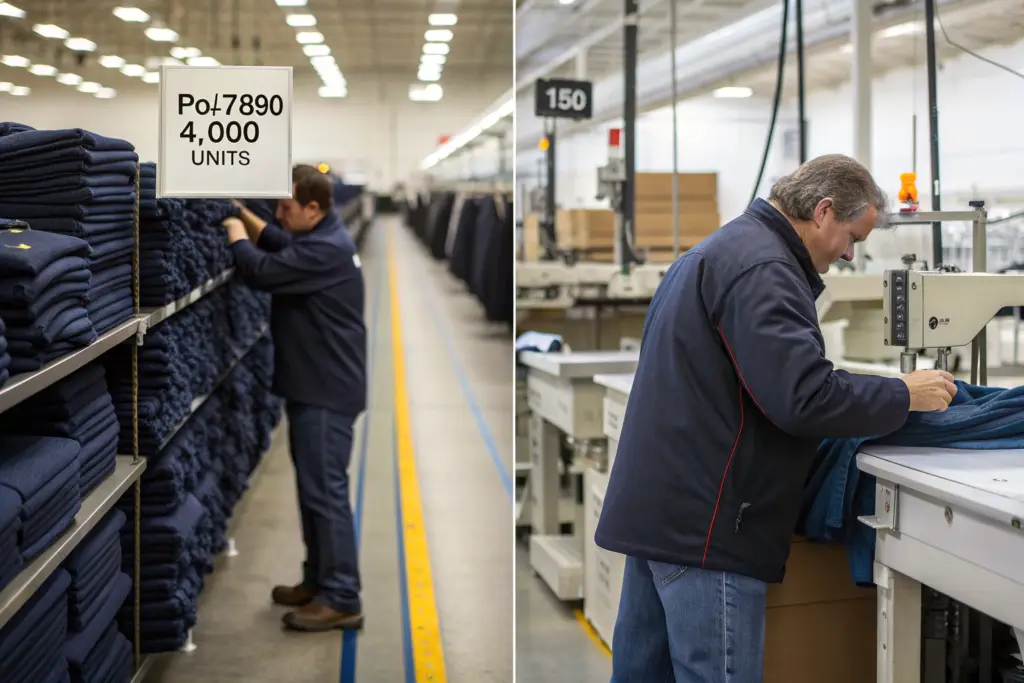
Why Does a Dedicated "Anchor Line" Workforce Achieve 22% Higher Output Than a Rotating Team?
A sewing operator who stitches the same five-panel cap day after day develops extreme muscle memory and micro-efficiency. Her hands know the exact position of the next seam without conscious thought. Her output per hour rises from an average of 6 units on a new style to 11 units after two weeks on the same style. By permanently assigning a specific team to the anchor line, we stabilize our unit labor cost on that line and can offer the large brand buyer a more competitive FOB price. This price advantage is a direct structural benefit.
How Does the Unallocated "Fifth Line" Absorb a Sudden Celebrity-Driven Demand Spike?
A Los Angeles brand we work with had one of their hoodies worn by a major musician on a late-night show. Within 48 hours, their e-commerce inventory was zero, and they needed a reorder of 800 units in fourteen days. A factory with four fully-booked lines would have said "sorry, production slots are full for six weeks." Our fifth line exists for exactly this scenario. The brand called. The fifth line was available. Fabric, held in our greige buffer stock, was dyed within three days. The 800 units shipped in twelve days.
What Is the Exact Maximum Capacity Management Formula That Prevents Factory Overcommitment?
A Chicago workwear brand once lost a $70,000 wholesale contract because their previous factory over-promised and spectacularly under-delivered. The factory owner had said "no problem" to four rush orders from different clients simultaneously, loading his production schedule to 127% of theoretical maximum capacity. The inevitable delay caused a cascading failure: fabric that should have been cut on Monday was delayed to Thursday, which pushed sewing to the following Tuesday, which missed the shipping cut-off, which missed the retailer’s penalty-free delivery window. The factory’s reputation for reliability died in that single month of overcommitment.
The exact maximum capacity management formula that prevents factory overcommitment is: Allocate a maximum of 85% of each line’s theoretical weekly unit output to confirmed purchase orders, reserve 10% of capacity for buffer stock production of bestselling greige fabrics, and hold the remaining 5% as completely unallocated emergency absorption capacity, which mathematically prevents the schedule from ever exceeding 100% of actual, achievable output even when a dye lot delay or a fabric inspection failure consumes part of the buffer allocation.
The 85% rule is a hard, non-negotiable internal policy. Sales managers are not allowed to ink a contract that pushes a specific line beyond 85% of its proven, historical output.
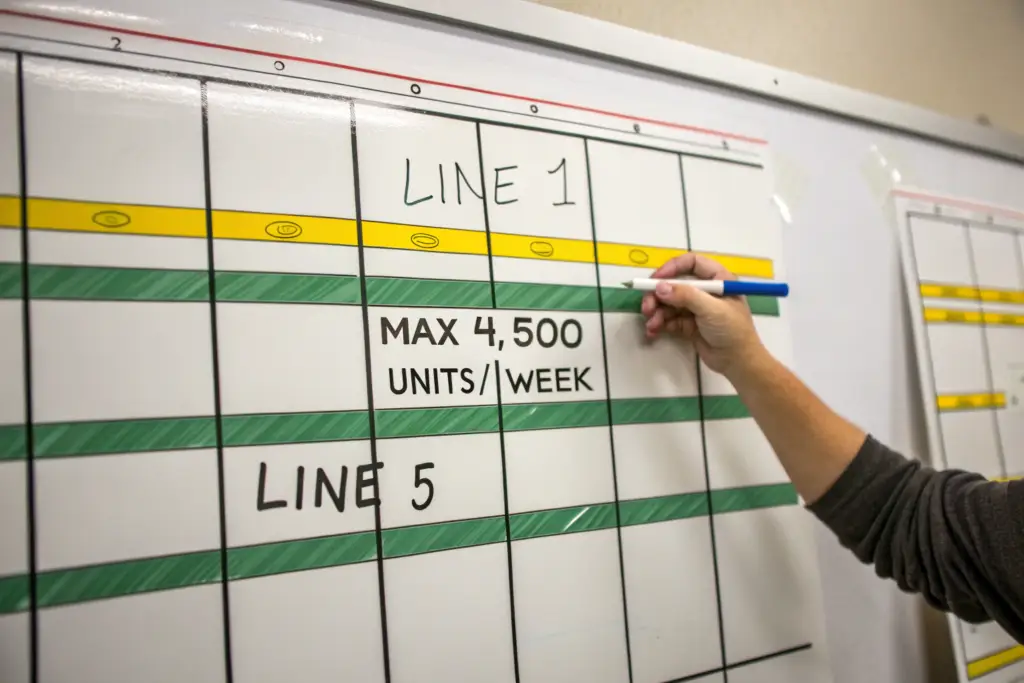
How Is "Proven Output" Calculated Differently from "Theoretical Maximum Output"?
A machine manufacturer’s specification sheet might rate a line at 5,000 units per week. This theoretical maximum assumes zero machine breakdowns, zero operator absenteeism, zero defect rework, and zero style changeover downtime. Real factory data shows that style changeover, machine maintenance, and operator fatigue consistently consume about 15% of theoretical output. My "Proven Output" figure for each line is calculated on actual production data from the previous twelve months, not the optimistic machine manual.
Why Does a Strict "No Slot Selling" Policy Protect Your Delivery Date More Than a Penalty Clause?
Some factories sell production slots to a second client even after the first client has committed, planning to "figure out the capacity later." This is called slot selling. A penalty clause provides financial compensation, but if the line is double-booked, the goods are still physically late. I enforce a "Slot Sold, Slot Gone" policy. The moment a Purchase Order is signed, that capacity block is visually greyed out on the production planning board.
How Do Five Lines Enable Specialized Quality Control That Ten Lines Cannot Sustain?
A premium Australian womenswear brand once conducted an unannounced factory audit on a supplier they were considering. The factory had twelve production lines. During the walk-through, the brand’s auditor noticed that the QC team consisted of only three final inspectors responsible for all twelve lines. The inspectors were sampling just 1.5% of finished garments before packing. Defects were piling up on a "rework" rack that nobody had touched in three days. The factory was producing volume but not quality. The brand walked away from the negotiation.
Five lines enable specialized quality control that larger factories cannot sustain because each production line can be assigned a dedicated inline QC inspector who monitors the sewing process continuously from the first piece off the machine, rather than relying on a small, overwhelmed final inspection team that samples only a statistically insignificant fraction of output, creating a quality density of one dedicated inspector per line that is affordable within the cost structure of a mid-sized factory but prohibitively expensive at scale.
Quality is a function of inspector-to-machine ratio. The higher the number of sewing machines a single inspector must monitor, the lower the probability that a systemic defect will be caught early.
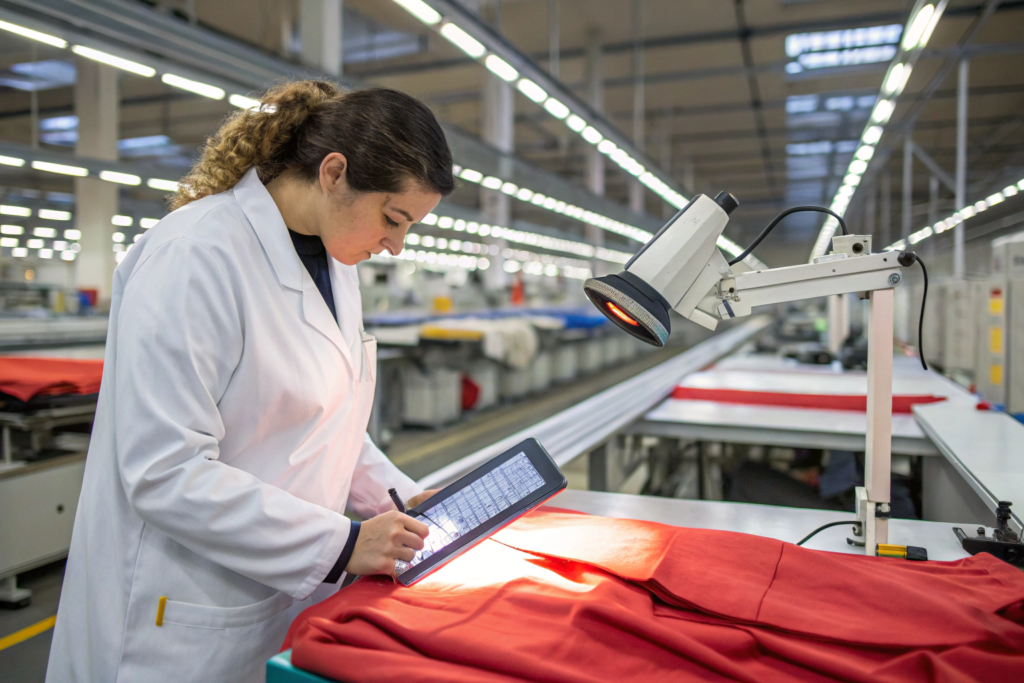
How Does an Inline QC Inspector’s "Station Zero Check" Catch a Defect Before It Multiplies Across 2,000 Units?
An inline inspector does not wait at the end of the line. She stands at station zero—the first sewing station on the line—and checks the first five finished pieces from that station before the operator continues. If the tension is wrong or the seam allowance is off, only five pieces are defective. The operator is corrected immediately. The remaining 1,995 units are flawless. At scale, catching a defect at piece five versus piece 2,000 saves hundreds of units of wasted labor and fabric.
What Is the "QC Visibility Distance" Problem in a 12-Line Factory Versus a 5-Line Factory?
In a factory with twelve lines spread across a vast floor, the QC manager cannot physically see all lines from a single vantage point. Quality issues on line nine can persist unobserved because the manager is occupied at line three. In a five-line configuration, every line is within a 40-meter visual arc. I can stand at the center point of my factory floor and physically observe every single production line’s end-of-line QC board, reading the daily defect count and the defect type classification, within a single sweep of my vision.
Why Does a Concentrated Five-Line Workforce Create a Radically Stronger Company Culture?
During the Shanghai lockdowns of 2022, the human cost of factory size became sharply visible. I heard stories of massive factories with 500 workers where the owner did not know the names of employees who had been there for four years. When the lockdown hit, those workers were treated as interchangeable production units, and the communication breakdown between management and floor staff was catastrophic. My factory, with approximately 100 workers across five lines, is a community where I know every single person by name, know their hometown province, and know their children’s education status.
A concentrated five-line workforce of approximately 80-120 workers creates a radically stronger company culture because the factory owner can maintain direct, personal relationships with every employee, communicate a consistent quality and safety message in daily in-person line meetings without cascading through multiple management layers, and respond to individual worker concerns in real-time, creating a loyalty environment where the annual worker turnover rate stays below 8% compared to the industry average of 25-35% in larger factories, directly preserving the accumulated sewing skill and efficiency inside the company.
A low-turnover workforce is not just a warm cultural story. It is a hard, measurable quality and efficiency advantage. An experienced sewer who has been on the same line for five years is 20-30% faster and produces far fewer defects than a new hire on her third month.

How Does a Low Worker Turnover Rate Directly Preserve Your Brand’s Production Consistency?
When a sewer leaves, her replacement requires four to six weeks of training to reach acceptable speed and quality on your specific product. During those weeks, defect rates spike, output drops, and the line’s schedule slips. High-turnover factories constantly bleed accumulated skill. My Shanghai Fumao low-turnover rate means that the team sewing your reorder this season is largely the same team that sewed your first order last season.
Why Does the Owner’s Personal Relationship With Each Line Supervisor Accelerate Problem Resolution?
In a large factory, a brand owner’s urgent message travels from the brand, to the sales rep, to the merchandising manager, to the production manager, to the line supervisor—a five-step telephone game. In my five-line factory, you can email me directly, and I can walk to the supervisor’s station on the relevant line within ninety seconds to diagnose a quality concern on a live video call with you.
Conclusion
The number five is not a mystical number. It is an equilibrium point derived from the operational constraints of real garment manufacturing. One line creates fatal client concentration risk where a single cancelled order destroys the business. Twelve lines create an anonymous, high-turnover, quality-dilution machine. Five lines allow a balanced portfolio of one anchor client and multiple boutique partners, creating financial stability and creative variety. Five lines enable the 85% maximum capacity rule that prevents over-commitment. Five lines support a dedicated inline QC inspector per line, maintaining quality density. Five lines preserve a community-sized workforce where the owner knows every sewer’s name and skill level, preserving accumulated expertise.
At Shanghai Fumao, my five production lines are deliberately maintained as a strategic choice, not expanded opportunistically. I have turned down large, single-client contracts that would have required me to add a sixth line because the financial concentration risk and the cultural dilution would have structurally weakened the factory’s agility and quality performance.
If you are a brand looking for a manufacturing partner whose entire operational architecture is designed around delivering your orders on time, at a consistent quality, without over-commitment, I invite you to experience the five-line difference firsthand. Contact our Business Director, Elaine. She can walk you through our current line allocation, show you exactly where your order would fit in the scheduling board, and introduce you to the supervisor who would personally run your production. Reach Elaine at: elaine@fumaoclothing.com. A mid-sized factory with a perfectly balanced structure is not a compromise between speed and quality. It is the configuration that maximizes both.